For a DSO managing 10+ locations, AI cannot be deployed as a one-off plugin per practice. The effective architecture is a centralized AI orchestration layer that connects via secure APIs to each practice's PMS instance. This layer ingests events—like a new appointment booked in Dentrix or a claim denial logged in Eaglesoft—processes them through shared AI models for tasks like no-show prediction or denial reason extraction, and returns intelligent actions (e.g., a personalized SMS reminder, a corrected claim batch) back to the local system. This keeps the core business logic and data governance centralized while execution remains localized, ensuring consistency and reducing per-practice IT overhead.

Integration
AI Integration for Multi-location Dental Practices
Scalable AI integration blueprint for DSOs and group practices. Centralize intelligence while executing locally across multiple Dentrix, Eaglesoft, Open Dental, or Curve Dental instances to drive consistency, efficiency, and patient experience at scale.
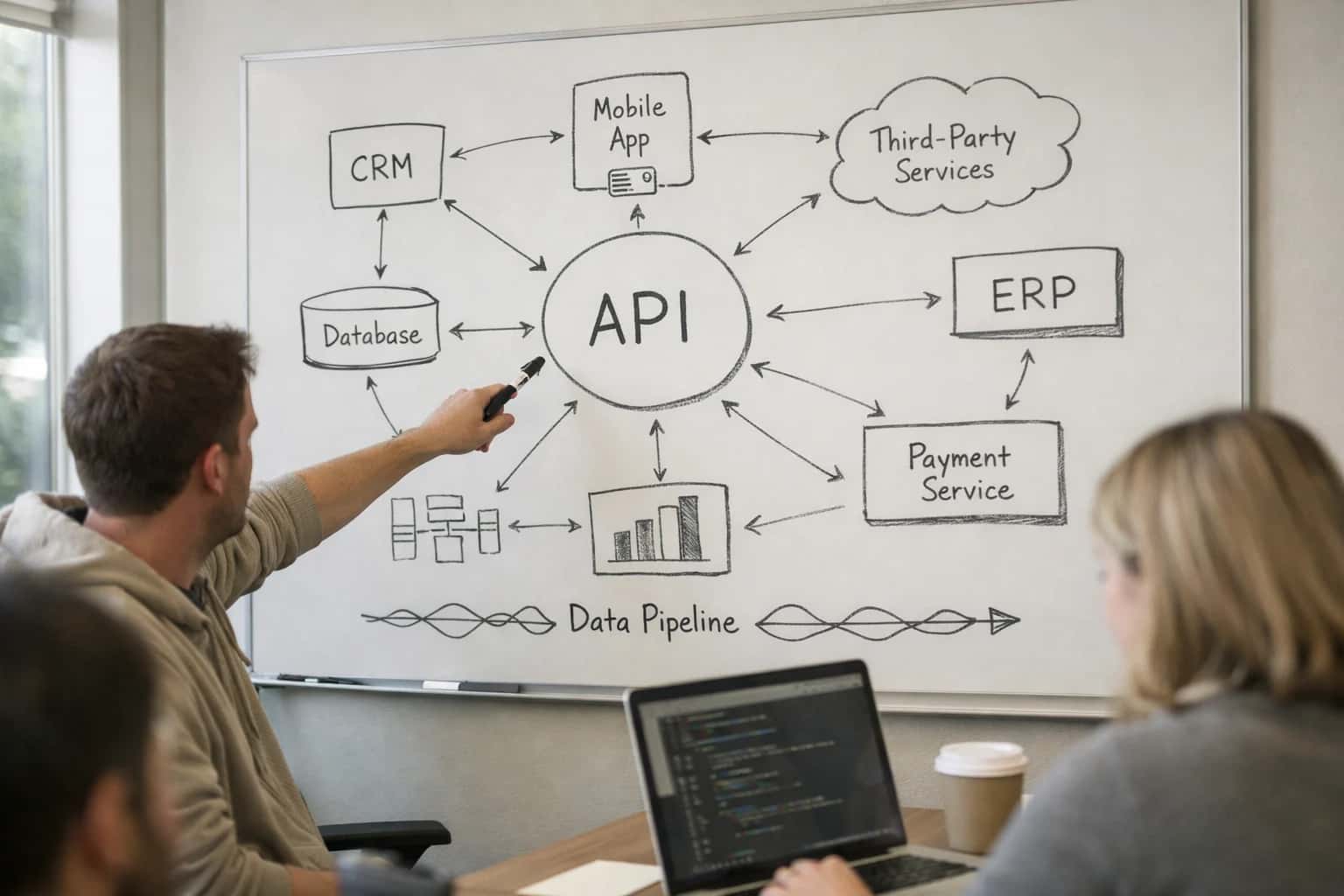
ARCHITECTURE FOR DSOs AND GROUP PRACTICES
Centralized AI for Distributed Dental Operations
A scalable integration blueprint for deploying unified AI intelligence across multiple, independent instances of Dentrix, Eaglesoft, or Open Dental.
Implementation hinges on a unified data model that normalizes key objects—Patient, Appointment, Claim, Clinical Note—across different PMS platforms. A middleware service maps each system's native API schema (Dentrix's SOAP API, Eaglesoft's .NET API, Open Dental's REST API) to this common model. High-impact workflows to orchestrate include: automated insurance verification triggered at check-in, cross-practice hygiene schedule optimization to fill open columns, and centralized analysis of A/R aging to prioritize collection efforts across the portfolio. AI agents act on this normalized data, with results written back through the same middleware, ensuring each practice's workflow and UI remain unchanged for staff.
Rollout requires a phased, practice-by-practice deployment, starting with a single location to validate the data mappings and AI performance. Governance is critical: a centralized dashboard should monitor all AI activity, track accuracy metrics (e.g., prediction recall), and maintain audit logs of all data accesses across PMS instances to ensure HIPAA compliance. This model allows DSOs to gain enterprise-wide intelligence—like predicting regional demand for orthodontic services—while executing hyper-locally, turning data silos into a coordinated competitive advantage. For a deeper technical breakdown, see our guide on Dental Practice Management API integration.
AI INTEGRATION FOR MULTI-LOCATION DENTAL PRACTICES
Where AI Connects Across Your PMS Landscape
The Core Orchestration Layer
For a DSO, the first AI connection point is a centralized intelligence layer that sits above individual PMS instances (Dentrix, Eaglesoft, Open Dental). This hub ingests standardized data feeds—appointment schedules, patient demographics, clinical notes, and insurance claim statuses—from each location via their respective APIs or database exports.
Here, AI models run on the aggregated data to identify cross-practice trends, such as regional no-show patterns, optimal hygiene column utilization, or common claim denial reasons. The hub then pushes intelligent recommendations and automated tasks back to each localized PMS. This architecture ensures consistent AI governance, model retraining, and data security policies across the entire organization, while allowing for location-specific execution rules.
SCALABLE AI INTEGRATION FOR DSOS
High-Value Use Cases for Multi-Location Dental Practices
For DSOs and group practices, AI integration must deliver centralized intelligence with localized execution. These use cases target common pain points across multiple instances of Dentrix, Eaglesoft, Open Dental, or Curve Dental, enabling scalable automation without disrupting individual practice workflows.
01
Centralized Insurance Claim Scrubber
A single AI service processes claim batches from all locations, using NLP to review clinical notes, validate CDT codes, and check for common denial triggers before submission via each PMS's clearinghouse. Centralized learning improves accuracy across the group.
First-pass acceptance +15%
Typical improvement
02
Group-Wide Recall & Reactivation Engine
AI analyzes patient visit history, hygiene status, and engagement patterns across all locations to prioritize recall lists. It orchestrates personalized SMS/email campaigns through each PMS's patient communication module, driving hygiene column fill rates.
Batch -> Real-time
Campaign execution
03
Multi-Location Schedule Optimizer
AI models predict no-show risk and procedure duration using historical data from all practices. It suggests dynamic overbooking, buffer times, and even cross-location appointment transfers to maximize overall provider utilization and reduce lost production.
Hours -> Minutes
Daily schedule review
04
Unified Financial Operations Dashboard
An AI-powered BI layer aggregates data from each PMS's billing engine to provide a group-wide view of A/R aging, production by provider, and collection effectiveness. It flags outliers, predicts cash flow, and recommends location-specific interventions.
Same day
Consolidated reporting
05
Standardized Clinical Note Assistant
A centralized AI model provides voice-to-text and auto-summarization for clinical notes, ensuring consistent documentation quality across all providers and locations. It integrates with each PMS's charting module, suggesting codes and populating structured data fields.
50% faster
Charting time
06
Intelligent Supply Chain Coordinator
AI predicts consumable and lab supply needs for each location based on scheduled procedures and historical usage. It automates purchase order generation, negotiates with preferred vendors at group rates, and tracks deliveries back to each practice's inventory module.
1-2 week buffer
Optimized inventory
CENTRALIZED INTELLIGENCE, LOCALIZED EXECUTION
Example AI Orchestration Workflows
For multi-location DSOs, AI orchestration connects a central intelligence layer to individual practice management system (PMS) instances. These workflows show how to automate operations, standardize care, and scale insights without disrupting local clinic workflows in Dentrix, Eaglesoft, or Open Dental.
Trigger: A batch job runs nightly from the central AI service, querying all PMS instances for patients overdue for recall.
Context/Data Pulled: For each patient, the system retrieves:
- Last prophylaxis date and periodontal status
- Historical appointment attendance (no-show/cancel rate)
- Preferred communication channel (SMS, email, portal)
- Outstanding treatment plans and account balance
- Insurance benefits expiration date (if applicable)
Model or Agent Action: A central AI model scores each patient on:
- Reactivation Priority: Based on time since last visit, periodontal risk, and open treatment.
- Channel & Message Optimization: Selects the highest-conversion message template and channel.
- Incentive Eligibility: Flags patients who may qualify for a reactivation promotion.
System Update or Next Step: The AI service pushes personalized campaign tasks to each local PMS's marketing module or integrated CRM. For example:
- Schedules an SMS reminder in Eaglesoft's integrated messaging system.
- Creates a task for the front desk to call a high-priority, high-balance patient.
- Updates the patient record in Dentrix with a
reactivation_campaign_sentflag and next follow-up date.
Human Review Point: The practice manager at each location receives a daily digest of AI-suggested reactivations and can override the channel or message for any patient before campaigns are sent.
CENTRALIZED INTELLIGENCE, LOCALIZED EXECUTION
Implementation Architecture: Hub-and-Spoke Model
A scalable AI integration blueprint for DSOs and group practices managing multiple, often disparate, dental practice management system instances.
For a multi-location dental organization, AI integration cannot be a point-to-point patchwork. The hub-and-spoke model establishes a central AI orchestration layer (the hub) that connects via secure APIs to each individual PMS instance—be it Dentrix, Eaglesoft, Open Dental, or Curve Dental (the spokes). The hub ingests standardized event streams—new appointments, completed clinical notes, updated insurance EOBs—from each spoke, processes them through shared AI models for tasks like no-show prediction or claim scrubbing, and returns actionable commands (e.g., send_recall_SMS, flag_claim_for_review) back to the originating PMS. This keeps intelligence and model management centralized while execution remains within the local practice's familiar workflow.
Implementation requires a lightweight agent or webhook listener installed at each spoke to handle bidirectional communication with the hub. Critical data flows include patient demographics and appointment history for scheduling optimization, clinical chart data for note summarization, and insurance transaction records for revenue cycle automation. The hub uses a unified data model to normalize differences between PMS platforms, enabling a single set of AI workflows—like a predictive hygiene column optimizer—to work across a mixed estate of Dentrix and Eaglesoft practices. Governance is centralized: access controls, audit logs, and model performance monitoring are managed at the hub level, ensuring compliance and consistency across all locations.
Rollout is phased, typically starting with a single high-volume practice or a low-risk, high-ROI workflow like automated patient recall. This allows for tuning the data pipelines and AI prompts against real-world data before scaling to additional locations and more complex clinical or financial workflows. The architecture's key advantage is scalability: adding a new practice location becomes a matter of deploying the spoke agent and configuring its connection, without rebuilding core AI logic. This model future-proofs the investment, allowing the central hub to incorporate new AI capabilities—from diagnostic image analysis to advanced collections scoring—and deploy them uniformly across the entire organization.
CENTRALIZED AI ORCHESTRATION FOR DISTRIBUTED PMS INSTANCES
Code & Payload Examples
Centralized Webhook Router for Multi-Instance Events
A core architectural pattern for DSOs is a central AI service that listens to webhook events from multiple, independent PMS instances (e.g., Dentrix at Location A, Eaglesoft at Location B). This router normalizes events, enriches them with location context, and dispatches them to the appropriate AI workflow.
python# Example: Central webhook listener for multi-location PMS events from flask import Flask, request, jsonify import os from pydantic import BaseModel app = Flask(__name__) class PMSWebhookPayload(BaseModel): pms_instance_id: str # e.g., 'dentrix_location_123' event_type: str # e.g., 'appointment_scheduled', 'claim_submitted' patient_id: str location_id: str raw_payload: dict @app.route('/webhook/pms-event', methods=['POST']) def handle_pms_event(): data = request.json try: payload = PMSWebhookPayload(**data) # 1. Enrich with location-specific config (timezone, provider list) location_config = get_location_config(payload.location_id) # 2. Route to AI workflow based on event_type and location rules route_to_ai_workflow(payload, location_config) # 3. Log for audit and centralized monitoring log_central_event(payload) return jsonify({"status": "dispatched"}), 200 except Exception as e: # Centralized error handling and alerting log_error(payload.pms_instance_id, e) return jsonify({"error": "processing_failed"}), 500
This pattern ensures a single point of control for AI logic, governance, and monitoring, while executing actions that are localized to each practice's PMS instance.
FOR DENTAL DSOs AND GROUP PRACTICES
Realistic Time Savings & Operational Impact
How centralized AI integration transforms administrative and clinical workflows across multiple PMS instances, reducing manual effort and improving consistency.
| Metric | Before AI | After AI | Notes |
|---|---|---|---|
Multi-location schedule optimization | Manual review by each office manager | Central AI suggests fill patterns | Considers provider skills, patient history, and local preferences |
Insurance verification across locations | Front desk calls per patient, per location | Batch API checks at patient check-in | Updates all PMS instances; flags coverage gaps |
Standardized patient recall campaigns | Inconsistent manual calls/emails by location | Central orchestration with local personalization | Uses unified patient history; 80% automated, 20% staff review |
Clinical note summarization for DSO reporting | Manual chart review for quality audits | AI extracts key findings per provider, per location | Generates compliance and quality dashboards for leadership |
Centralized supply forecasting | Manual inventory counts and orders per office | AI predicts usage based on aggregated schedule data | Automates purchase orders; reduces overstock and rush orders |
Cross-location no-show prediction | Reactive waitlist calls after cancellation | Proactive risk scoring triggers confirmations | Reduces lost production; model improves with multi-site data |
DSO-level financial reporting | Weekly manual consolidation from each PMS | Daily automated aggregation with anomaly detection | Provides unified P&L view; flags outliers for investigation |
CENTRALIZED CONTROL WITH LOCALIZED EXECUTION
Governance, Security & Phased Rollout
A practical framework for deploying and governing AI across multiple dental practice locations without disrupting daily operations.
For a DSO or group practice, AI governance starts with a centralized orchestration layer that connects to each location's PMS instance (Dentrix, Eaglesoft, Open Dental) via its API. This layer manages all AI agents, prompt libraries, and data flows, ensuring consistent logic and security policies are applied everywhere. Local PMS databases remain the system of record; the AI service acts as a read/write copilot, pushing actions like updated appointment notes or insurance verification status back into the correct patient chart. Role-based access control (RBAC) is mirrored from the PMS, so AI tools respect existing staff permissions for clinical and financial data.
Security is non-negotiable. All data in transit is encrypted, and PHI is never persisted in the AI service's logs beyond the immediate session needed for a task. Implement a strict audit trail that logs every AI-initiated action—like a chart note addition or a claim submission—back to the initiating user and the specific AI agent, creating a transparent chain of custody within the PMS's own audit system. For cloud PMS like Curve Dental, this integration uses secure webhooks and OAuth; for server-based systems, a lightweight on-premise connector handles secure tunneling.
Rollout should be phased by workflow and location. Start with a single pilot location and a non-clinical, high-volume task like automated recall reminders or insurance eligibility checks. This validates the integration, builds staff trust, and provides clear metrics on time saved. Phase two introduces clinical support agents, such as SOAP note summarization, initially in a 'copilot mode' where suggestions require hygienist or dentist review before being saved to the chart. Finally, expand proven workflows to all locations, using the centralized layer to push updates and monitor performance dashboards that track AI-assisted completion rates and error flags across the entire group.
Enabling Efficiency, Speed & Accuracy
Intelligent Analysis, Decision & Execution
We build AI systems for teams that need search across company data, workflow automation across tools, or AI features inside products and internal software.
Talk to Us
Search across company data
Give teams answers from docs, tickets, runbooks, and product data with sources and permissions.
Useful when people spend too long searching or get different answers from different systems.
Enterprise searchRAGPermissions
Read more
Automate internal workflows
Use AI to route work, draft outputs, trigger actions, and keep approvals and logs in place.
Useful when repetitive work moves across multiple tools and teams.
AI agentsWorkflow automationGovernance
Read more
Add AI to products and internal tools
Build assistants, guided actions, or decision support into the software your team or customers already use.
Useful when AI needs to be part of the product, not a separate tool.
AI integrationDecision supportModel routing
Read moreIMPLEMENTATION AND SCALABILITY
Frequently Asked Questions
Common questions from DSOs and group practices about architecting and rolling out AI across multiple dental practice management system instances.
We implement a centralized AI orchestration layer that connects to each PMS instance (Dentrix, Eaglesoft, etc.) via its API or a secure database bridge. The architecture typically includes:
- Central AI Service: Hosted in your cloud (AWS, Azure) or ours, containing your agents, models, and business logic.
- Location-Specific Connectors: Lightweight, secure adapters installed at each practice or in a central network zone. These handle authentication, data translation, and event syncing for that specific PMS instance.
- Event Bus & Queue: A message broker (e.g., Amazon SQS, RabbitMQ) that routes events (e.g.,
new_appointment,claim_denied) from any location to the central AI service and returns actions.
This pattern keeps intelligence centralized for consistency and governance, while execution is distributed and respects each location's data isolation. Permissions and data access are scoped per location using role-based access controls (RBAC) within the connector.

About the author
Prasad Kumkar
CEO & MD, Inference Systems
Prasad Kumkar is the CEO & MD of Inference Systems and writes about AI systems architecture, LLM infrastructure, model serving, evaluation, and production deployment. Over 5+ years, he has worked across computer vision models, L5 autonomous vehicle systems, and LLM research, with a focus on taking complex AI ideas into real-world engineering systems.
His work and writing cover AI systems, large language models, AI agents, multimodal systems, autonomous systems, inference optimization, RAG, evaluation, and production AI engineering.
LinkedIn
Limited slotsGet a Free AI Consultation
Partnered with leading AI, data, and software stack.





How We Work
Custom AI workflows for your Business
One-fit-all AI don't work for modern businesses. At Inferensys, we aim to understand your business & custom requirements; which we use to define most efficient agentic workflows, the data, and the tools for your business.
01
Review the use case
We understand the task, the users, and where AI can actually help.
Read more02
Pick the right approach
We define what needs search, automation, or product integration.
Read more03
Build the first useful version
We implement the part that proves the value first.
Read more04
Improve from there
We add the checks and visibility needed to keep it useful.
Read moreThe first call is a practical review of your use case and the right next step.
Talk to Us