AI integration targets two primary surfaces within Informatica's governance suite: Informatica Axon for collaborative policy workflows and Enterprise Data Catalog (EDC) for automated metadata intelligence. In Axon, AI agents can be triggered via API to review new data policy proposals, scan existing policies for conflicts or gaps, and auto-assign stewardship tasks based on data domain and user workload. Within EDC, AI processes scanned metadata—column names, sample values, lineage—to automatically suggest business terms, tag PII/PHI, and flag data quality anomalies for review, transforming a passive catalog into an active governance engine.

Integration
AI Integration for Informatica Data Governance
A technical blueprint for augmenting Informatica's Axon and Enterprise Data Catalog with AI to automate policy creation, data stewardship, and compliance workflows, reducing manual effort from days to hours.
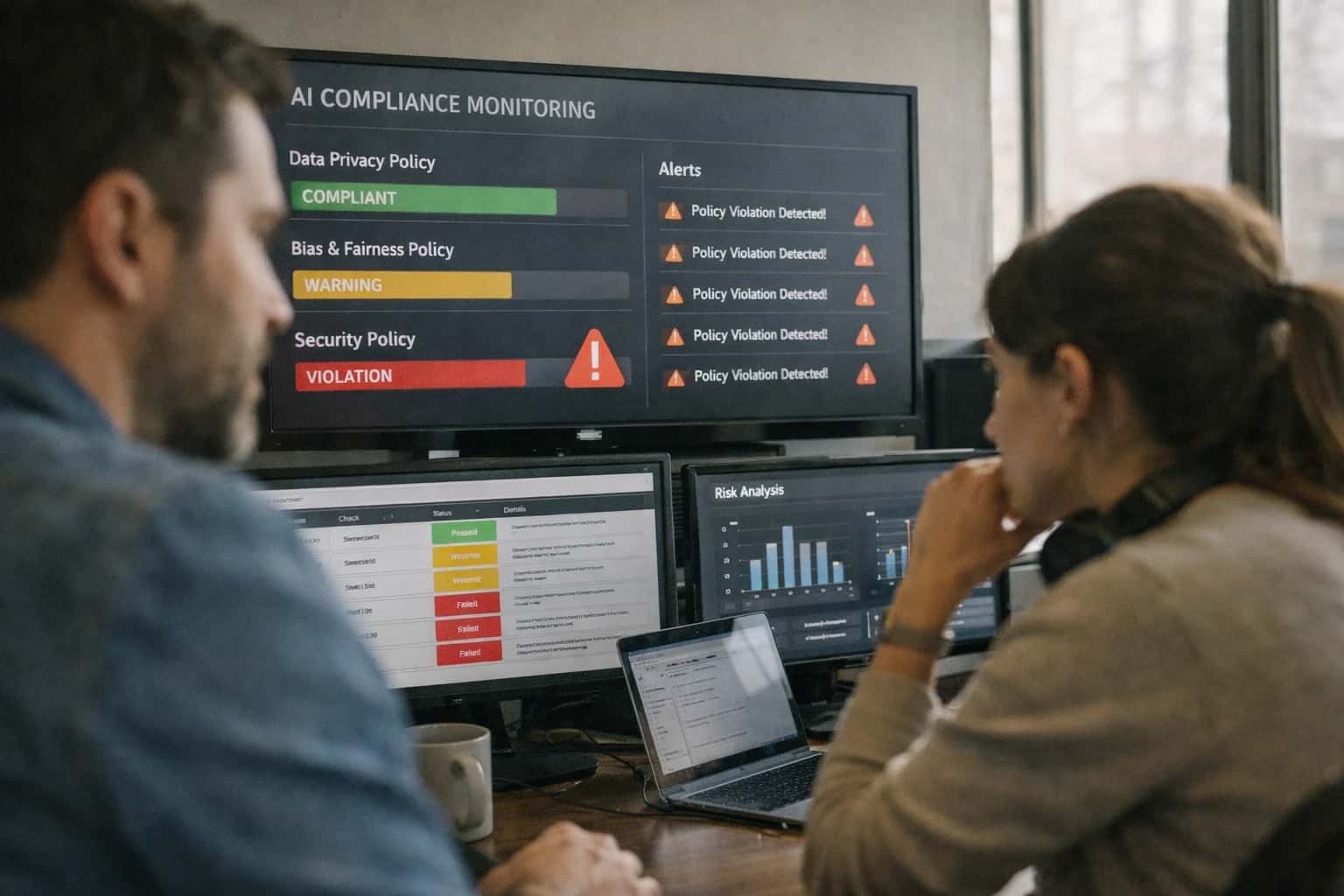
ARCHITECTURE BLUEPRINT
Where AI Fits into Informatica's Governance Stack
A practical guide to embedding AI agents within Informatica Axon and Enterprise Data Catalog (EDC) to automate policy enforcement, stewardship, and compliance workflows.
Implementation typically involves a middleware layer (e.g., a lightweight service on AWS Lambda or Azure Functions) that subscribes to Informatica's webhooks for events like scan.completed or policy.created. This service calls LLMs (like GPT-4 or Claude) with relevant context—such as a sample of scanned data or a policy draft—and returns structured actions. For example, an AI agent can:<br>- Parse a new GDPR data retention policy in Axon and map it to specific tables in EDC.<br>- Review a proposed change to a customer data domain in Axon and suggest impacted reports and downstream systems using EDC lineage.<br>- Analyze scanned document files in EDC and generate a summary of sensitive content for a steward's review queue.<br>This moves governance from a periodic, manual audit to a continuous, automated feedback loop integrated directly into the platform's UI and notification systems.
Rollout should be phased, starting with assistive automation (AI suggests tags, stewards approve) before moving to fully automated workflows for low-risk, high-volume tasks. Critical governance decisions, like policy approvals or data access grants, should retain a human-in-the-loop, with AI providing summarized rationale and risk assessments. This integration requires careful RBAC alignment to ensure AI-suggested actions respect Informatica's existing role permissions and audit trails are maintained for all AI-generated recommendations. The result is a governance stack that scales with data volume, reduces steward toil on repetitive classification, and accelerates compliance for regulations like CCPA and HIPAA by proactively identifying and categorizing regulated data assets.
ARCHITECTURE BLUEPRINT
Key Integration Surfaces in Axon and EDC
Automating Governance Logic
Integrate AI with Informatica Axon to automate the creation and maintenance of data governance policies. LLMs can analyze existing documentation, regulatory texts, and past policy violations to draft new business rules, data quality standards, and privacy controls directly within Axon's collaborative workflows.
Example Workflow:
- An AI agent ingests a new GDPR amendment.
- It cross-references existing data assets in EDC to identify gaps.
- The agent drafts a new data retention policy in Axon, tagging relevant data classes and stewards for review.
- Stewards receive a pre-populated change request, accelerating compliance updates from weeks to days.
This surface connects via Axon's REST API, allowing AI to create Policy objects, link them to Data Assets, and assign Stewardship Tasks.
INFORMATICA AXON & EDC
High-Value AI Use Cases for Data Governance
Integrate AI with Informatica's governance suite to automate policy definition, stewardship workflows, and compliance scanning, turning manual governance into a proactive, intelligent layer.
01
Automated Policy & Rule Generation
Use LLMs to analyze existing data dictionaries, compliance documents (like GDPR, CCPA), and business glossaries to draft and suggest data policies, classification rules, and quality standards for review in Informatica Axon. Reduces policy definition from weeks to days.
Weeks -> Days
Policy definition
02
Intelligent Data Stewardship Triage
Deploy an AI agent that monitors the stewardship workflow queue in Axon. It can categorize, prioritize, and route data quality issues, term requests, and access reviews to the appropriate stewards based on issue type, data domain, and steward workload.
Batch -> Real-time
Issue routing
03
AI-Powered PII & Sensitive Data Discovery
Augment Informatica EDC's scanning with LLMs to identify unstructured PII and contextual sensitive data in document columns, comment fields, and file stores. AI suggests classification tags and confidence scores, dramatically improving coverage beyond regex patterns.
>90% Coverage
Unstructured data
04
Natural Language Lineage & Impact Analysis
Build a copilot that allows business users to ask, "What reports use this customer revenue field?" or "What will break if we change this source system column?" The AI queries and interprets EDC's technical lineage, returning a plain-English summary with visual mappings.
05
Automated Business Glossary Enrichment
Connect LLMs to scan ingested data assets in EDC and propose column descriptions, business term associations, and acronym definitions for steward approval in Axon. Continuously learns from steward accept/reject patterns to improve suggestions.
80% Less Manual Entry
Glossary maintenance
06
Compliance Audit Preparation & Reporting
Automate the assembly of evidence for audits (SOC 2, ISO 27001). An AI workflow queries Axon policies, EDC lineage, and access logs to generate narrative summaries, data flow diagrams, and gap reports, cutting manual evidence collection from days to hours.
Days -> Hours
Audit prep
INFORMATICA AXON & EDC
Example AI-Augmented Governance Workflows
These workflows illustrate how AI agents can be embedded into Informatica's governance surfaces to automate manual processes, enhance decision-making, and enforce policies at scale. Each flow is triggered by a governance event and results in a system update, audit log, or human-in-the-loop review within the Informatica platform.
Trigger: A data steward creates a new Business Term in Informatica Axon.
AI Agent Action:
- The agent ingests the term name, definition, and any initial context.
- It queries the connected Informatica Enterprise Data Catalog (EDC) to find candidate technical assets (tables, columns, reports) that semantically match the new term.
- Using an LLM, it generates a confidence-scored mapping proposal, citing evidence from column names, sample data, and existing lineage.
System Update:
- Proposed mappings are posted as comments on the Business Term in Axon.
- A task is automatically created for the assigned steward to "Review AI-Suggested Mappings," linking directly to the evidence.
Human Review Point: The steward approves, rejects, or modifies the proposals. Approved mappings create the formal relationship in Axon, auto-populating the lineage graph.
AUTOMATED POLICY ENFORCEMENT AND STEWARDSHIP
Implementation Architecture: Data Flow and Guardrails
A practical architecture for integrating AI agents with Informatica's governance suite to automate classification, policy workflows, and compliance scanning.
The integration connects LLM-based agents to Informatica Axon and Enterprise Data Catalog (EDC) via their REST APIs and event webhooks. Agents are triggered by events like a new data asset discovery in EDC, a policy creation request in Axon, or a scheduled compliance scan. The core data flow is: 1) An agent receives a payload (e.g., a sample of column data, a policy document). 2) It calls a governed LLM endpoint (like Azure OpenAI with content filters) to perform tasks such as PII detection, business term suggestion, or policy clause extraction. 3) The agent then uses the Informatica API to write results back—tagging assets in EDC, creating data quality rules, or populating workflow tasks in Axon for steward review.
High-value use cases include automating the initial classification of thousands of newly discovered database columns, generating draft data quality rules from regulatory policy PDFs, and summarizing data lineage for audit reports. For example, an AI agent can monitor the EDC discovery scan log, identify net-new tables in a customer schema, sample 100 rows, and automatically propose classifications (EMAIL, PHONE_NUMBER, NAME) with confidence scores, creating Axon tasks for any low-confidence items. This shifts stewardship work from manual, upfront tagging to reviewing and approving AI-generated recommendations, compressing policy rollout from weeks to days.
Production deployment requires guardrails: all LLM calls must be logged with the source data hash, user context, and prompt for audit trails. A human-in-the-loop approval step should be configured in Axon workflows for any AI-proposed policy changes or high-risk data classifications. The architecture is typically deployed as a containerized service (using Kubernetes) that subscribes to Informatica's event bus, ensuring scalability and resilience. For teams managing this, we provide reference implementations for secure credential management, rate limiting against API quotas, and fallback logic to default rules if the AI service is unavailable.
This approach makes AI a force multiplier for data governance teams, not a replacement. It allows scarce steward resources to focus on exception handling and complex judgment calls, while AI handles the repetitive pattern matching. For a deeper look at integrating AI with master data workflows, see our guide on AI Integration for Informatica. To understand how similar patterns apply to data quality automation, review our blueprint for AI Integration for Informatica Data Quality.
INFORMATICA DATA GOVERNANCE
Code and Payload Examples
Automating Policy Creation with AI
Use LLMs to analyze regulatory text and business glossaries to draft data governance policies directly in Informatica Axon. The AI agent can parse new regulations (like GDPR amendments), map requirements to existing data assets in the catalog, and generate structured policy proposals for steward review.
Example Python payload to create a policy suggestion via Axon API:
pythonimport requests # Payload from AI analysis of regulatory text policy_draft = { "name": "AI-Drafted: Customer Data Retention Policy", "description": "Generated from GDPR Article 17 analysis. Applies to all PII-labeled customer entities in EU region.", "policyType": "RETENTION", "associatedAssets": ["EDC://salesforce/contact", "EDC://sap/customer_master"], "rules": [ { "condition": "data_subject_region == 'EU' AND data_classification == 'PII'", "action": "DELETE_AFTER", "actionParams": {"unit": "YEARS", "value": 7} } ], "status": "DRAFT", # Requires steward approval "sourceAnalysis": "GDPR Article 17(right to erasure) processed by gpt-4" } # Post to Axon API for steward workflow response = requests.post( 'https://your-axon-instance/api/v2/policies', json=policy_draft, headers={'Authorization': 'Bearer <token>'} )
This automates the first draft, cutting policy definition time from days to hours.
AI-AUGMENTED DATA GOVERNANCE
Realistic Time Savings and Operational Impact
How integrating AI with Informatica Axon and Enterprise Data Catalog (EDC) changes key stewardship and compliance workflows.
| Governance Activity | Manual Process | AI-Assisted Process | Implementation Notes |
|---|---|---|---|
Policy Definition & Mapping | Weeks of workshops and documentation | Days with draft generation and gap analysis | LLMs analyze regulations; stewards refine and approve |
Data Asset Classification | Manual column-by-column review | Bulk classification with human validation | AI scans EDC metadata; stewards review high-confidence PII/PHI tags |
Business Glossary Population | Stewards interview SMEs and draft terms | Auto-generated term suggestions from data profiles | AI proposes definitions; stewards own final approval and relationships |
Privacy Impact Assessment | Manual questionnaire per data source | Automated scanning with risk scoring | AI scans EDC for PII, maps to processing activities, flags high-risk flows |
Issue Triage & Assignment | Manual routing based on steward capacity | Semantic routing to relevant stewards | AI analyzes issue description and data domain, suggests assignee |
Lineage Gap Investigation | Manual tracing of undocumented transforms | AI identifies probable gaps and suggests sources | LLMs parse job logs and SQL; stewards confirm and document |
Stewardship Report Generation | Days of manual data aggregation | Hours with automated draft compilation | AI pulls metrics from Axon/EDC APIs, generates narrative; stewards customize |
CONTROLLED AUTOMATION FOR DATA STEWARDS
Governance of the AI Integration and Phased Rollout
A practical framework for deploying and governing AI within Informatica's data governance suite to ensure compliance, trust, and measurable impact.
Integrating AI with Informatica Axon and Enterprise Data Catalog (EDC) requires a governance-first approach. Start by defining a controlled scope: use AI to automate the initial tagging of data assets in EDC, suggest business terms from column names, or draft data quality rule descriptions in Axon. This initial phase should target non-critical, high-volume workflows to build trust. All AI-generated outputs—like suggested classifications, policy summaries, or stewardship task assignments—must be routed through existing Axon workflows for steward review and approval before being committed to the governance registry, ensuring human oversight is baked into the automation loop.
For rollout, adopt a phased model. Phase 1 focuses on assistive intelligence: embedding an AI copilot within the Axon interface to help stewards draft definitions or search for similar policies. Phase 2 introduces targeted automation: using scheduled jobs to scan newly discovered assets in EDC, apply AI-driven PII detection, and create review tickets in Axon. Phase 3 enables predictive governance: analyzing lineage and usage patterns to recommend data retention policies or flag potential compliance drift. Each phase should be gated by success metrics, such as reduction in manual tagging time or increase in policy coverage, measured within Informatica's own reporting or a connected BI dashboard.
Operational governance is critical. Implement audit trails that log the AI's input prompts, source data samples, and generated outputs for every interaction with Axon or EDC APIs. This traceability is essential for compliance audits and model refinement. Furthermore, integrate the AI service with your organization's existing RBAC (Role-Based Access Control) to ensure only authorized stewards and administrators can trigger or approve automated actions. A well-governed integration turns AI from a black box into a accountable, scalable member of your data governance team, incrementally lifting the burden of manual curation while keeping policy enforcement firmly under steward control.
Enabling Efficiency, Speed & Accuracy
Intelligent Analysis, Decision & Execution
We build AI systems for teams that need search across company data, workflow automation across tools, or AI features inside products and internal software.
Talk to Us
Search across company data
Give teams answers from docs, tickets, runbooks, and product data with sources and permissions.
Useful when people spend too long searching or get different answers from different systems.
Enterprise searchRAGPermissions
Read more
Automate internal workflows
Use AI to route work, draft outputs, trigger actions, and keep approvals and logs in place.
Useful when repetitive work moves across multiple tools and teams.
AI agentsWorkflow automationGovernance
Read more
Add AI to products and internal tools
Build assistants, guided actions, or decision support into the software your team or customers already use.
Useful when AI needs to be part of the product, not a separate tool.
AI integrationDecision supportModel routing
Read moreINFORMATICA DATA GOVERNANCE INTEGRATION
FAQ: Technical and Commercial Considerations
Common questions from data governance leaders and architects planning AI integration with Informatica's Axon and Enterprise Data Catalog (EDC).
Successful integration requires grounding AI outputs in your established business glossary and rule sets.
Implementation Pattern:
- Trigger: A data steward initiates a new policy definition workflow in Axon.
- Context Pull: The AI agent retrieves the relevant data asset profile from EDC and searches the Axon glossary for related terms, existing policies, and regulatory requirements (e.g., GDPR Article 17).
- Agent Action: Using a structured prompt, the LLM drafts a policy description, control objectives, and potential technical rules (e.g., "Data containing
Customer_Emailmust be masked in non-production environments"). - Human Review: The draft is presented in Axon as a policy proposal, requiring steward review, adjustment, and formal approval before activation.
- System Update: Upon approval, the policy is published and linked to the relevant assets in EDC, creating an auditable lineage from AI suggestion to enacted governance.
This keeps humans firmly in the loop for validation, ensuring AI augments—rather than replaces—your governance authority.

About the author
Prasad Kumkar
CEO & MD, Inference Systems
Prasad Kumkar is the CEO & MD of Inference Systems and writes about AI systems architecture, LLM infrastructure, model serving, evaluation, and production deployment. Over 5+ years, he has worked across computer vision models, L5 autonomous vehicle systems, and LLM research, with a focus on taking complex AI ideas into real-world engineering systems.
His work and writing cover AI systems, large language models, AI agents, multimodal systems, autonomous systems, inference optimization, RAG, evaluation, and production AI engineering.
LinkedIn
Limited slotsGet a Free AI Consultation
Partnered with leading AI, data, and software stack.





How We Work
Custom AI workflows for your Business
One-fit-all AI don't work for modern businesses. At Inferensys, we aim to understand your business & custom requirements; which we use to define most efficient agentic workflows, the data, and the tools for your business.
01
Review the use case
We understand the task, the users, and where AI can actually help.
Read more02
Pick the right approach
We define what needs search, automation, or product integration.
Read more03
Build the first useful version
We implement the part that proves the value first.
Read more04
Improve from there
We add the checks and visibility needed to keep it useful.
Read moreThe first call is a practical review of your use case and the right next step.
Talk to Us