Traditional audit readiness is a reactive scramble, pulling teams away from active trial management to manually review thousands of documents across Veeva Vault eTMF, Medidata Rave, and Oracle Clinical One. An AI integration changes this by deploying agents that continuously scan these systems, using their native APIs and webhooks to monitor for critical gaps: missing essential documents in the eTMF, protocol deviations not logged in the CTMS, or unresolved data queries in the EDC. This creates a live, prioritized risk register instead of a static snapshot.

Integration
AI Integration for Clinical Trial Audit Management and Inspection Readiness
Deploy AI agents that continuously monitor eTMF, CTMS, and EDC data for compliance gaps, automate evidence collection, and simulate regulatory inspection questions—reducing prep time from weeks to days.
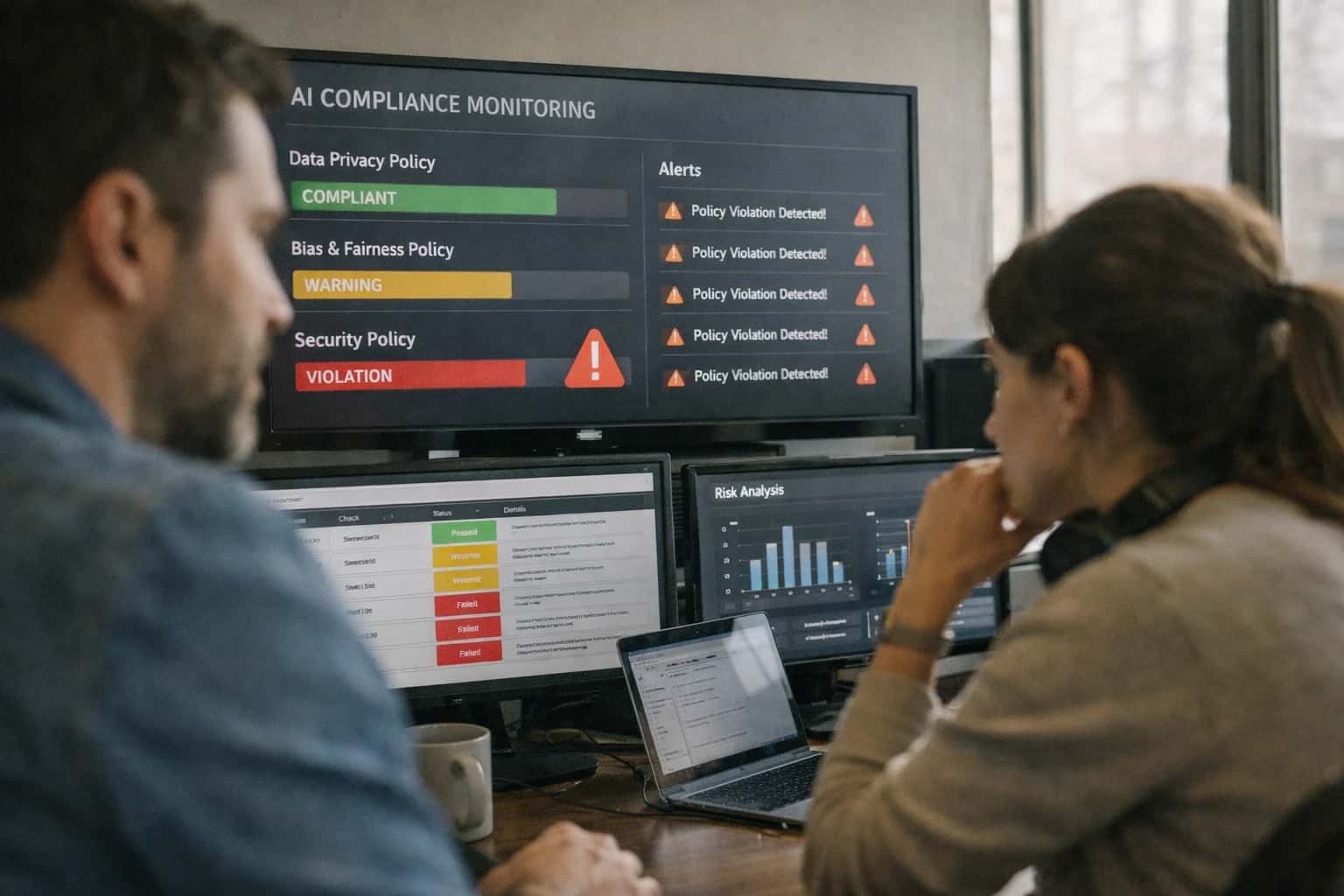
CLINICAL TRIAL AUDIT MANAGEMENT
From Reactive Audits to Continuous AI-Driven Readiness
Shift from manual, reactive audit preparation to a proactive, AI-powered system that continuously monitors your eTMF, CTMS, and EDC data for compliance gaps and inspection risks.
Implementation connects AI to the data model of each platform. For example, an agent can be triggered by a new document upload in Veeva Vault, using its classification to verify it against the TMF Reference Model and check for related signatures or versions. Another agent, listening to the Medidata Rave Web Services feed, can flag atypical data patterns that may indicate a site compliance issue needing pre-audit review. The output is a unified dashboard and automated alerts routed via existing systems like Veeva Vault CTMS task management or Microsoft Teams, ensuring findings lead to action.
Rollout is phased, starting with a single high-risk study or a specific document type (e.g., informed consent forms). Governance is critical; AI suggestions are routed to a Quality Assurance or Clinical Operations lead for review and approval before any system-of-record updates, maintaining a clear audit trail. This approach turns audit preparation from a quarterly fire drill into a daily operational rhythm, reducing last-minute findings and giving study teams confidence for any regulatory inspection.
AUDIT & INSPECTION READINESS
Where AI Connects: Key Integration Surfaces in Your Clinical Stack
Veeva Vault eTMF, SharePoint, and Regulated Content Hubs
AI integrates directly with your electronic Trial Master File (eTMF) to automate the continuous surveillance required for audit readiness. Key connection points include:
- Document Ingestion APIs: Automatically classify and tag newly uploaded documents (protocols, CVs, 1572s, monitoring reports) against the TMF Reference Model.
- Gap Analysis Workflows: Use AI to scan the complete eTMF structure, identifying missing or expired documents and triggering automated collection tasks for study teams.
- Content Summarization: Before an inspection, AI can pre-summarize key documents—like monitoring visit reports or significant protocol deviations—for rapid reviewer familiarization.
Integration typically uses the platform's native REST APIs (e.g., Veeva Vault API) to query metadata, retrieve documents for processing, and update compliance statuses, creating a real-time audit readiness dashboard.
CONTINUOUS COMPLIANCE MONITORING
High-Value AI Use Cases for Audit & Inspection Readiness
Move from reactive, manual audit preparation to proactive, AI-driven compliance. These integrations connect directly to your eTMF, CTMS, and EDC systems to monitor for gaps, automate evidence collection, and simulate agency questions.
01
Automated eTMF Gap & Completeness Analysis
AI continuously scans Veeva Vault eTMF or similar systems, comparing document uploads against the TMF Reference Model. It flags missing essential documents, expired versions, and incorrect classifications, generating daily readiness reports for study teams.
Weeks -> Daily
Compliance review cycle
02
Protocol Deviation Surveillance & Triage
Integrates with Medidata Rave EDC and CTMS to detect and categorize protocol deviations in real-time. AI analyzes the deviation against historical data and protocol complexity to auto-assign severity, suggest CAPA actions, and route for review within quality workflows.
Batch -> Real-time
Deviation detection
03
Inspection Question Simulation for Study Teams
Leverages a RAG system over your complete trial documentation (protocols, CSRs, monitoring reports) to generate likely agency questions. Study teams can run simulated inspections, with AI retrieving precise document excerpts and data points to support answers, building confidence and preparedness.
04
Centralized Monitoring for Remote Audit Support
AI agents analyze aggregated EDC and CTMS data feeds—enrollment rates, query volumes, SDV completion—to identify high-risk sites or data trends. This powers a centralized monitoring dashboard that provides evidence of oversight and pre-empts common inspection findings on data integrity.
Prioritized Alerts
For CRA resource allocation
05
Automated Regulatory Correspondence Tracking
Connects to eTMF and regulatory information management systems to ingest and summarize all agency communications (FDA, EMA queries). AI tracks response deadlines, drafts response elements by pulling from referenced documents, and ensures a complete audit trail of all interactions.
06
Patient Consent & ICF Compliance Verification
Integrates with eConsent platforms and site source documentation to verify that informed consent forms align with the approved protocol version and regulatory templates. AI flags discrepancies in study procedures or risks sections, ensuring a critical audit area is consistently managed.
100% Sample Check
Vs. manual spot-checking
CONTINUOUS COMPLIANCE MONITORING
Example AI Automation Workflows for Inspection Readiness
These workflows illustrate how AI agents can be integrated with CTMS, EDC, and eTMF systems to automate audit preparation, moving from reactive document scrambling to proactive, continuous compliance assurance.
Trigger: A scheduled nightly job or a document upload event in Veeva Vault eTMF.
Context/Data Pulled: The AI agent queries the eTMF's folder structure and metadata against the study's Trial Master File (TMF) Reference Model. It pulls the list of expected documents, their current statuses (e.g., 'Received', 'QC Failed', 'Missing'), and associated study milestones.
Model/Agent Action: An LLM classifies newly uploaded documents and maps them to the TMF Reference Model. A separate agent performs a gap analysis, identifying critical missing documents for upcoming milestones (e.g., missing Site Selection Visits forms before Site Initiation). It generates a prioritized remediation list.
System Update/Next Step: The agent creates tasks in the CTMS (e.g., Veeva Vault CTMS) for clinical trial associates, assigning them to collect specific missing documents from designated sites. It updates a real-time "Inspection Readiness Dashboard" with a compliance score.
Human Review Point: The gap analysis report and assigned tasks are routed to the Trial Master File Owner for review and approval before tasks are dispatched to sites.
A PRODUCTION BLUEPRINT FOR AI-AUGMENTED AUDIT READINESS
Implementation Architecture: Data Flow, APIs, and Guardrails
A secure, governed architecture for connecting AI to your eTMF, CTMS, and EDC to automate compliance monitoring and inspection preparation.
A production-ready integration connects to your Veeva Vault eTMF, Oracle Clinical One CTMS, and Medidata Rave EDC via their respective REST APIs and webhook frameworks. The core data flow begins with scheduled and event-triggered ingestion of key objects: eTMF document metadata and content, CTMS site status and monitoring visit reports, and EDC query logs and data anomaly flags. This data is processed through a secure pipeline where sensitive PHI is filtered or pseudonymized before being indexed in a dedicated vector database (e.g., Pinecone) for semantic search and a relational store for structured compliance rule checking. AI agents, built on a framework like CrewAI, are orchestrated to perform continuous surveillance against a configurable rulebook of audit readiness criteria.
The system surfaces findings through two primary channels: 1) Automated Gap Reports delivered to study managers via email or posted back to a dedicated Veeva Vault folder, highlighting missing essential documents or protocol deviations, and 2) an Interactive Audit Simulator, a chatbot interface where study teams can ask natural language questions (e.g., "Show all monitoring visit reports for Site 105 in the last quarter") and receive synthesized answers grounded in the latest eTMF and CTMS data. All AI-generated outputs—such as simulated agency questions or evidence summaries—are logged with full provenance (source documents, prompt version, model used) in an immutable audit trail within the system, supporting rigorous 21 CFR Part 11 compliance for electronic records.
Rollout follows a phased, study-by-study approach. We start with a pilot on a single, active trial to configure the rulebook, validate API connections, and establish a human-in-the-loop review workflow where the first 100 AI-generated findings are validated by the quality assurance team. Governance is managed through a centralized dashboard for AI model performance, tracking precision/recall on gap detection and allowing administrators to toggle specific monitoring agents on or off. This architecture ensures AI augments—rather than replaces—existing quality management processes, providing continuous inspection readiness while maintaining the sponsor's ultimate control and accountability.
AUDIT & INSPECTION READINESS
Code & Payload Examples for Key Integration Points
Automated eTMF Compliance Check
AI continuously monitors the eTMF (e.g., Veeva Vault eTMF) for missing or outdated essential documents required for inspection. It uses the TMF Reference Model to classify documents, check versioning, and flag gaps against the study's master list.
Example Payload for AI Analysis Trigger:
json{ "study_id": "T-12345", "trigger": "scheduled_audit_check", "source_system": "veeva_vault_etmf", "documents_to_validate": [ { "artifact_id": "ICF_v2", "expected_zone": "TMF RM 8.2", "required_by": "2024-10-15", "status": "pending_site_signature" } ], "request": "Analyze document status against inspection readiness checklist. Identify missing, expired, or incomplete artifacts." }
The AI agent returns a structured report of gaps, links to documents needing action, and a readiness score for the study team.
AI-POWERED AUDIT READINESS
Realistic Time Savings and Operational Impact
How AI integration for clinical trial audit management reduces manual effort, accelerates evidence collection, and improves inspection outcomes across eTMF, CTMS, and EDC systems.
| Audit Workflow | Manual Process | With AI Integration | Key Impact |
|---|---|---|---|
Gap Analysis in eTMF | 2-3 weeks for manual review | Continuous monitoring with daily reports | Identifies compliance risks 80% faster |
Evidence Packet Assembly | 40+ hours per major audit | Automated dossier generation in 2-4 hours | Reduces prep time by 90% for regulatory requests |
Inspection Question Simulation | Ad-hoc team workshops | AI-generated Q&A based on study data | Enables proactive team readiness drills |
Protocol Deviation Triage | Manual review of 1000+ listings | AI prioritizes high-risk deviations for review | Focuses QA effort on critical 20% of findings |
Corrective Action Plan Drafting | 5-10 hours per CAPA | AI suggests action text based on root cause | Accelerates CAPA workflow initiation by 70% |
Regulatory Correspondence Tracking | Spreadsheet and email monitoring | AI extracts commitments and deadlines from emails | Automates follow-up triggers to prevent misses |
Audit Finding Trend Analysis | Quarterly manual analysis | Real-time dashboards across studies | Provides continuous quality oversight for leadership |
A CONTROLLED APPROACH FOR REGULATED ENVIRONMENTS
Governance, Security, and Phased Rollout Strategy
Integrating AI into clinical trial audit workflows requires a deliberate, phased strategy that prioritizes data security, process integrity, and regulatory compliance.
Implementation begins with a read-only integration to the Veeva Vault eTMF and CTMS APIs, establishing a secure data pipeline for AI analysis without write-back capabilities. The AI agent is configured to continuously monitor key document types—protocols, informed consent forms (ICFs), monitoring visit reports, and safety narratives—and cross-reference them against CTMS data objects like site activation status, patient enrollment logs, and query metrics. This initial phase focuses on gap detection and compliance scoring, generating internal audit readiness dashboards that highlight missing documentation, expired certifications, or protocol deviations for manual review by the Quality Assurance team.
A human-in-the-loop approval layer is critical before any automated action. For example, when the AI identifies a potential critical finding, it drafts an audit observation summary but routes it through a configured workflow in the eTMF or a connected system like Veeva Vault QualityDocs for review by the Study Manager or Quality Lead. Only upon approval are tasks created in the CTMS for site follow-up. This governance model ensures audit trails are maintained, all AI-suggested actions are traceable to a human reviewer, and the system adheres to 21 CFR Part 11 and GCP requirements for electronic records and signatures.
Rollout follows a risk-based, study-by-study approach. Start with a single, low-complexity Phase IIIb or IV study to validate the AI's detection accuracy and workflow integration. Use this pilot to refine prompt templates for generating inspection question simulations and to calibrate the risk-scoring algorithms for document completeness. Gradually expand to more studies and introduce advanced capabilities like automated evidence packet assembly for specific audit triggers. Throughout, maintain a closed feedback loop where clinical operations and quality teams can flag false positives, continuously training the system to reduce noise and increase the precision of its findings, ensuring the AI becomes a reliable copilot for inspection readiness.
Enabling Efficiency, Speed & Accuracy
Intelligent Analysis, Decision & Execution
We build AI systems for teams that need search across company data, workflow automation across tools, or AI features inside products and internal software.
Talk to Us
Search across company data
Give teams answers from docs, tickets, runbooks, and product data with sources and permissions.
Useful when people spend too long searching or get different answers from different systems.
Enterprise searchRAGPermissions
Read more
Automate internal workflows
Use AI to route work, draft outputs, trigger actions, and keep approvals and logs in place.
Useful when repetitive work moves across multiple tools and teams.
AI agentsWorkflow automationGovernance
Read more
Add AI to products and internal tools
Build assistants, guided actions, or decision support into the software your team or customers already use.
Useful when AI needs to be part of the product, not a separate tool.
AI integrationDecision supportModel routing
Read moreAI FOR AUDIT READINESS
FAQ: Technical and Commercial Questions
Practical answers for teams evaluating AI to automate audit preparation, evidence collection, and compliance monitoring across eTMF, CTMS, and EDC systems.
AI integration for audit readiness typically uses a combination of APIs and event listeners to create a real-time compliance layer over your existing systems.
Typical Architecture:
- API Connections: Secure service accounts are configured to pull metadata and documents from your Veeva Vault eTMF, Veeva Vault CTMS, and Medidata Rave EDC via their respective REST APIs.
- Event-Driven Triggers: Webhooks or scheduled jobs monitor for key events:
- New document uploads to the eTMF.
- Protocol deviation entries in the CTMS or EDC.
- Site status changes or monitoring visit reports.
- Data Processing Pipeline: Extracted documents and metadata are processed through an AI pipeline that performs:
- Document Classification & OCR: For scanned PDFs and non-searchable files.
- Entity Extraction: Pulls out key audit-relevant data (e.g.,
site_id,patient_number,document_type,version_date,signatory). - Compliance Rule Checking: Applies configured rules (e.g., "All sites must have a current FDA 1572 on file") against the live data.
- Output & Actions: Findings are written back to a dedicated Audit Readiness Dashboard and can create tasks in your CTMS (e.g., "Missing CV for PI at Site 101") or flag documents directly in the eTMF.
Security & Permissions: The integration operates under a dedicated service account with read-only access to source systems and write access only to a segregated audit database or dashboard, preserving your system-of-record integrity.

About the author
Prasad Kumkar
CEO & MD, Inference Systems
Prasad Kumkar is the CEO & MD of Inference Systems and writes about AI systems architecture, LLM infrastructure, model serving, evaluation, and production deployment. Over 5+ years, he has worked across computer vision models, L5 autonomous vehicle systems, and LLM research, with a focus on taking complex AI ideas into real-world engineering systems.
His work and writing cover AI systems, large language models, AI agents, multimodal systems, autonomous systems, inference optimization, RAG, evaluation, and production AI engineering.
LinkedIn
Limited slotsGet a Free AI Consultation
Partnered with leading AI, data, and software stack.





How We Work
Custom AI workflows for your Business
One-fit-all AI don't work for modern businesses. At Inferensys, we aim to understand your business & custom requirements; which we use to define most efficient agentic workflows, the data, and the tools for your business.
01
Review the use case
We understand the task, the users, and where AI can actually help.
Read more02
Pick the right approach
We define what needs search, automation, or product integration.
Read more03
Build the first useful version
We implement the part that proves the value first.
Read more04
Improve from there
We add the checks and visibility needed to keep it useful.
Read moreThe first call is a practical review of your use case and the right next step.
Talk to Us