AI integration for Kangarootime focuses on three core surfaces: the Staff Schedules module for shift creation, the Time & Attendance APIs for real-time status, and the Staff Profiles data model containing credentials, availability, and labor rules. The goal is to inject intelligence into the existing scheduling workflow, not replace it. An AI agent can be triggered via Kangarootime's webhooks—such as when a new schedule period is created or a staff member calls out—to process constraints like staff-to-child ratios, certifications, preferred hours, and overtime thresholds.

Integration
AI Integration for Kangarootime Staff Scheduling
Embed AI into Kangarootime's scheduling surfaces to automate shift planning, match staff availability, suggest last-minute coverage, and forecast labor costs—reducing weekly planning from hours to minutes.
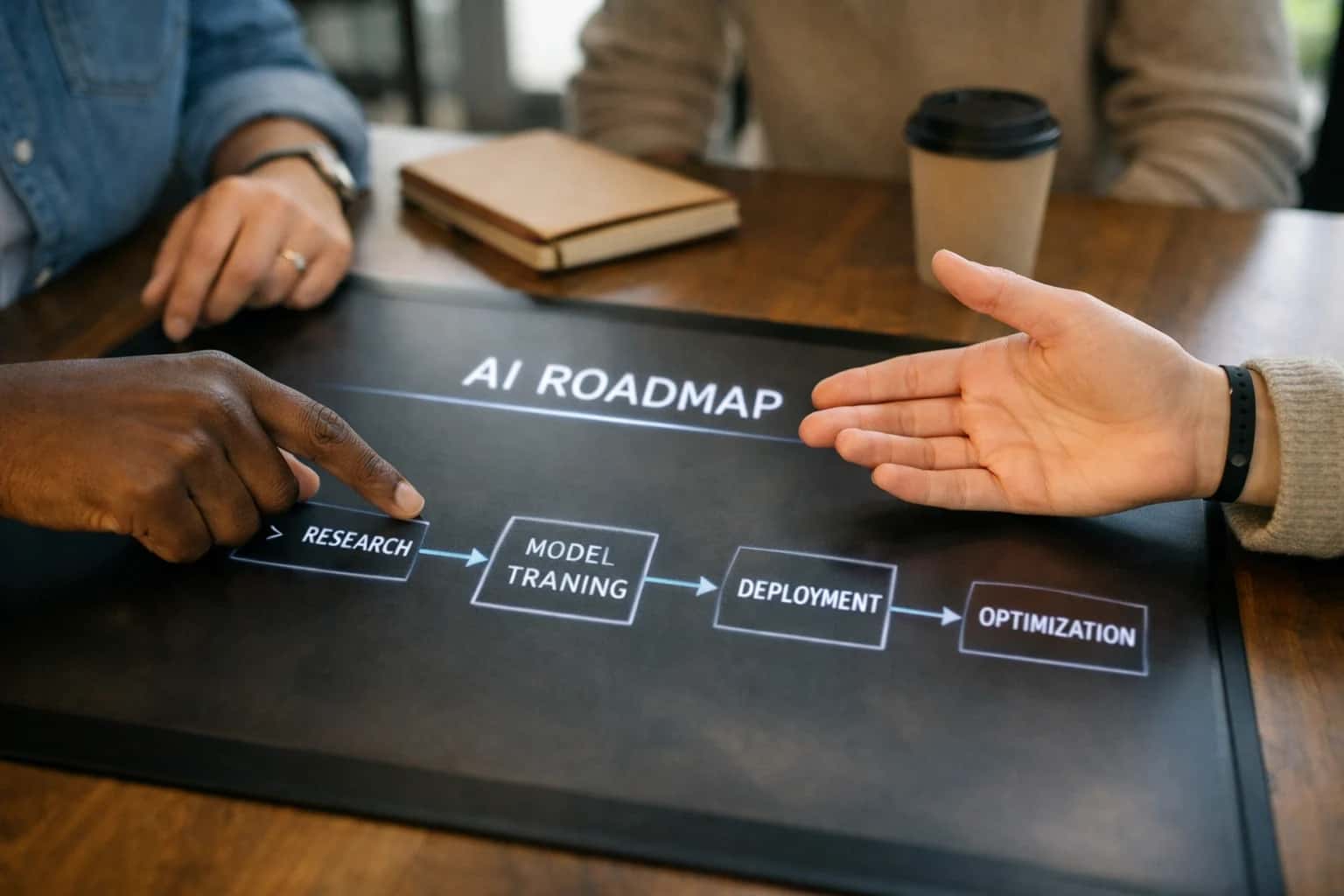
ARCHITECTURE AND ROLLOUT
Where AI Fits into Kangarootime Staff Scheduling
A practical blueprint for integrating AI-driven shift planning, coverage, and forecasting directly into Kangarootime's scheduling engine.
Implementation typically involves a middleware service that pulls live data from Kangarootime's REST API (e.g., /api/v1/schedules, /api/v1/staff, /api/v1/rooms), runs optimization logic or calls an LLM for reasoning, and posts back suggested shifts or coverage alerts. For example, an AI model can analyze historical absenteeism patterns and current room enrollments to generate a risk-adjusted schedule with float staff allocations. Another workflow uses natural language: a director can type "cover Jenny's toddler room shift next Tuesday" and an AI agent parses the intent, checks qualified substitutes, and creates a draft shift change for approval within Kangarootime.
Rollout should be phased, starting with assistive recommendations shown alongside the manual scheduler before progressing to automated shift publishing for pre-approved scenarios. Governance is critical: all AI-suggested changes should be logged in an audit trail linked to the Kangarootime StaffSchedule record ID, and human-in-the-loop approvals should be required for any schedule impacting labor costs or compliance. This approach allows centers to reduce daily planning time from hours to minutes while maintaining strict control over their most complex operational variable.
PLATFORM SURFACES
Kangarootime Scheduling Surfaces for AI Integration
Staff Profiles and Availability Feeds
AI-driven scheduling starts with clean, structured staff data. Kangarootime's Staff API surfaces employee profiles, roles (Lead Teacher, Assistant, Floater), certifications, and hourly wage data. The Availability module provides real-time feeds of staff-set availability, time-off requests, and preferred work locations (rooms or centers).
An AI agent can consume this data to:
- Match staff qualifications and certifications to state-required room ratios.
- Predict availability gaps using historical time-off patterns.
- Respect employee work preferences to improve retention.
Integrating here allows the AI to understand the human resource constraints before making a single shift assignment.
KANGAROOTIME INTEGRATION PATTERNS
High-Value AI Scheduling Use Cases
Integrating AI with Kangarootime's scheduling APIs and staff data models moves planning from reactive to predictive. These patterns focus on automating complex logic, matching constraints, and surfacing actionable insights directly within existing workflows.
01
Intelligent Shift Planning & Fairness
AI analyzes historical attendance, staff certifications (e.g., infant-qualified), and individual preferences to generate balanced weekly schedules. It respects seniority, avoids burnout patterns, and ensures equitable distribution of less-desirable shifts, all while maintaining required child-to-staff ratios.
Hours -> Minutes
Schedule creation
02
Real-Time Coverage & Substitution Matching
When a call-out occurs, an AI agent instantly scans the availability pool, considering location, qualifications, overtime limits, and commute time. It proposes optimal substitutes and can auto-send shift offers via Kangarootime's messaging APIs, reducing last-minute director scramble.
Batch -> Real-time
Coverage response
03
Predictive Labor Cost Forecasting
By connecting scheduled hours from Kangarootime with enrollment forecasts and budget data, AI models predict weekly labor costs. It flags weeks at risk of overstaffing or overtime breaches before the schedule is locked, allowing for proactive adjustments.
Same day
Budget visibility
04
Dynamic Ratio Compliance & Alerting
AI monitors real-time check-in/out streams and scheduled staff locations. It predicts impending ratio violations (e.g., a staff break causing a room to go out of compliance) and triggers pre-emptive alerts or suggests room merges via Kangarootime's room management APIs.
05
Staff Preference & Burnout Analytics
AI identifies patterns in shift trades, time-off requests, and schedule adherence to surface insights on staff morale and burnout risk. It provides directors with data to adjust schedules proactively, improving retention and job satisfaction.
06
Automated Credential & Training Compliance
An AI workflow cross-references the staff schedule against expiring certifications (CPR, First Aid) and required training. It blocks scheduling for non-compliant staff, routes managers alerts, and can integrate with external LMS platforms to track completion.
1 sprint
Audit prep time
CONCRETE IMPLEMENTATION PATTERNS
Example AI Scheduling Workflows
These workflows illustrate how AI agents connect to Kangarootime's scheduling APIs and data models to automate planning, optimize coverage, and reduce administrative overhead. Each pattern is designed for production, with clear triggers, data flows, and governance points.
Trigger: A director finalizes the weekly schedule template in Kangarootime or a new week begins.
Context Pulled: The AI agent calls Kangarootime's API to retrieve:
- Upcoming required shifts (rooms, times, required roles/credentials).
- Staff availability blocks, time-off requests, and preferred hours.
- Staff credentials, certifications, and room assignments.
- Historical shift acceptance/completion rates.
Agent Action: A deterministic planning agent (or an LLM with a structured output schema) evaluates all constraints and preferences to generate an optimal draft schedule. It prioritizes:
- Filling all required shifts with qualified staff.
- Respecting availability and time-off.
- Balancing hours fairly across staff.
- Pairing compatible staff in rooms.
The agent outputs a structured JSON schedule proposal.
System Update: The draft schedule is posted to a dedicated Kangarootime schedule version for director review. An automated notification is sent via Kangarootime's messaging API to the director.
Human Review Point: The director reviews the proposal in Kangarootime's interface, can make manual adjustments, and then publishes the final schedule. All changes are logged for audit.
FROM SCHEDULE DATA TO INTELLIGENT COVERAGE
Implementation Architecture: Data Flow & Guardrails
A production-ready AI integration for Kangarootime connects to core scheduling APIs, processes staff and shift data, and orchestrates coverage decisions within a governed workflow.
The integration architecture is anchored on Kangarootime's Staff API and Scheduling API. We ingest real-time data on staff profiles (credentials, roles, certifications, availability preferences), scheduled shifts, room assignments, and child attendance counts. This data is transformed and enriched, creating a unified view of labor supply and demand. The AI layer—typically a set of orchestrated agents—processes this context to generate recommendations for shift swaps, last-minute coverage, and optimal schedule creation, which are then pushed back to Kangarootime via its API for final approval and publishing.
Key implementation details include:
- Event-Driven Triggers: Webhooks from Kangarootime for shift cancellations, call-outs, or ratio alerts kick off the AI coverage agent.
- Approval Workflows: All AI-generated schedule changes are routed through a configurable approval step (director, room lead) via Kangarootime's interface or a separate dashboard before being applied.
- Audit Trail: Every AI recommendation is logged with a reasoning trace (e.g., "matched based on ECE certification and proximity to room 3") for transparency and compliance.
- Fallback Logic: The system includes predefined business rules (e.g., "never schedule a float teacher for more than 3 rooms in a day") that act as guardrails for the AI's suggestions.
Rollout is typically phased, starting with a recommendation-only mode where directors review AI suggestions alongside their manual process. After trust is built, automated triage for last-minute call-outs can be enabled, with the AI identifying and notifying qualified, available staff in seconds. Governance is critical; we implement role-based access controls (RBAC) so only authorized managers can modify AI parameters and review its performance dashboards, ensuring the center retains full oversight of its most critical operational asset: its staff.
KANGAROOTIME SCHEDULING API INTEGRATION
Code & Payload Examples
Matching Staff to Open Shifts
This workflow uses Kangarootime's GET /staff/availability and POST /shifts APIs to match open shifts with qualified staff based on credentials, certifications, and work preferences. An AI agent analyzes the shift requirements (e.g., room: 'Toddler A', required_certification: 'Infant CPR') against each staff member's profile and historical performance data.
Typical Payload for Shift Creation:
jsonPOST /api/v1/shifts { "center_id": "CTR-789", "room_id": "ROOM-456", "position": "Lead Teacher", "start_time": "2024-06-15T08:00:00Z", "end_time": "2024-06-15T17:00:00Z", "required_certifications": ["First Aid", "CDA"], "assigned_staff_id": "EMP-123" // AI-suggested match }
The AI can also trigger SMS or push notification offers via Kangarootime's communication APIs, asking staff to confirm the shift.
AI-POWERED SCHEDULING
Realistic Time Savings & Operational Impact
How AI integration with Kangarootime's scheduling APIs transforms weekly staff planning, coverage management, and labor forecasting.
| Workflow | Before AI | After AI | Implementation Notes |
|---|---|---|---|
Weekly shift plan creation | 2-3 hours manual spreadsheet work | 30-45 minutes with AI draft & review | AI ingests staff availability, certifications, and center ratios to generate an initial compliant plan. |
Last-minute coverage requests | 30+ minutes of calls/texts to find staff | AI suggests available, qualified substitutes in <5 minutes | Integrates with Kangarootime's availability feeds and sends automated shift offers via app. |
Labor cost forecasting | Manual extrapolation from past schedules | AI-driven projections with variance alerts | Analyzes scheduled hours against enrollment forecasts and budget, flagging over/under-staffing risks. |
Staff-to-child ratio monitoring | Reactive checks after violations occur | Proactive, real-time alerts with coverage suggestions | Connects to live attendance data; AI predicts potential violations 15-30 minutes before they happen. |
Certification & training compliance | Manual audit of expiring credentials | Automated tracking with schedule blocking for non-compliant staff | AI cross-references staff records with scheduled shifts, preventing assignment errors. |
Open shift communication | Bulletin board post or group text blast | Targeted, automated offers to qualified staff based on preferences | AI uses historical pickup rates and staff ranking to optimize fill rates and fairness. |
Schedule change impact analysis | Manual review of ripple effects on other rooms | Instant simulation of changes on ratios and costs | Before approving a swap or time-off request, AI evaluates the operational impact across the center. |
ARCHITECTING FOR CONTROL AND CONFIDENCE
Governance, Security & Phased Rollout
A production-grade AI integration for staff scheduling requires deliberate controls, data security, and a measured rollout to build trust and ensure operational stability.
Start with a sandbox and read-only access. Initial integration should connect to Kangarootime's API using a dedicated service account with scoped permissions, pulling data from the Staff, Availability, Shifts, and Rooms modules. This phase focuses on building and testing the AI's predictive models—forecasting labor costs, identifying coverage gaps, and generating draft schedules—without making any live writes to the production schedule. All data flows are logged for auditability, and personally identifiable information (PII) is pseudonymized or tokenized within the AI processing layer.
Introduce controlled writes through approval gates. The next phase enables the AI to post suggested schedules or coverage requests back to Kangarootime, but only as draft records flagged for manager review. This creates a human-in-the-loop checkpoint. Integration points include the Schedule API for posting draft shifts and the TimeOff or Swap APIs for suggesting coverage changes. Managers review and approve changes directly within the familiar Kangarootime interface, maintaining final authority over all personnel decisions.
Implement phased, role-based access and monitoring. Rollout begins with a single location or a pilot group of trusted managers. Use Kangarootime's existing role-based access control (RBAC) to govern which users can trigger AI suggestions or view AI-generated insights. Establish monitoring dashboards that track key metrics: AI suggestion acceptance rates, schedule adherence improvements, and reduction in last-minute coverage scramble time. This data validates ROI and informs iterative refinement of the AI's logic and prompts.
Governance is built on explainability and feedback loops. Every AI-generated schedule suggestion should include a brief, plain-English rationale (e.g., "Matches certified infant staff availability, optimizes for seniority preferences, maintains required ratios"). Implement a simple feedback mechanism—a "thumbs up/down" on suggestions within Kangarootime—to continuously improve the model. This transparent, feedback-driven approach ensures the AI remains a compliant, predictable tool that augments—rather than replaces—director expertise.
Enabling Efficiency, Speed & Accuracy
Intelligent Analysis, Decision & Execution
We build AI systems for teams that need search across company data, workflow automation across tools, or AI features inside products and internal software.
Talk to Us
Search across company data
Give teams answers from docs, tickets, runbooks, and product data with sources and permissions.
Useful when people spend too long searching or get different answers from different systems.
Enterprise searchRAGPermissions
Read more
Automate internal workflows
Use AI to route work, draft outputs, trigger actions, and keep approvals and logs in place.
Useful when repetitive work moves across multiple tools and teams.
AI agentsWorkflow automationGovernance
Read more
Add AI to products and internal tools
Build assistants, guided actions, or decision support into the software your team or customers already use.
Useful when AI needs to be part of the product, not a separate tool.
AI integrationDecision supportModel routing
Read moreAI-POWERED STAFF SCHEDULING
FAQ: Technical & Commercial Questions
Common questions from childcare directors and technical teams evaluating AI integration for Kangarootime's scheduling modules.
Our integration connects to Kangarootime's REST API, primarily focusing on the /staff, /shifts, /rooms, and /attendance endpoints. The AI agent acts as a middleware orchestration layer that:
- Pulls Context: Fetches real-time data on staff qualifications, certifications, availability preferences, room capacities, and child attendance.
- Processes & Optimizes: Uses constraint-based optimization models and LLMs to evaluate thousands of potential shift assignments against business rules (ratios, labor laws, budget).
- Writes Back: Creates, updates, or proposes shifts via API calls. We typically implement a draft-review-commit pattern, where proposed schedules are pushed to a
draftstatus for director approval before being made live.
Example API Payload for a Shift Proposal:
json{ "staff_id": "STF_789", "room_id": "TODDLER_A", "start_time": "2024-06-15T08:00:00Z", "end_time": "2024-06-15T16:30:00Z", "role": "Lead Teacher", "status": "draft", "notes": "AI-assigned: Matches ECE certification for Toddler room; completes required 8-hour coverage." }
This approach ensures the AI works within Kangarootime's existing data model and permission structure.

About the author
Prasad Kumkar
CEO & MD, Inference Systems
Prasad Kumkar is the CEO & MD of Inference Systems and writes about AI systems architecture, LLM infrastructure, model serving, evaluation, and production deployment. Over 5+ years, he has worked across computer vision models, L5 autonomous vehicle systems, and LLM research, with a focus on taking complex AI ideas into real-world engineering systems.
His work and writing cover AI systems, large language models, AI agents, multimodal systems, autonomous systems, inference optimization, RAG, evaluation, and production AI engineering.
LinkedIn
Limited slotsGet a Free AI Consultation
Partnered with leading AI, data, and software stack.





How We Work
Custom AI workflows for your Business
One-fit-all AI don't work for modern businesses. At Inferensys, we aim to understand your business & custom requirements; which we use to define most efficient agentic workflows, the data, and the tools for your business.
01
Review the use case
We understand the task, the users, and where AI can actually help.
Read more02
Pick the right approach
We define what needs search, automation, or product integration.
Read more03
Build the first useful version
We implement the part that proves the value first.
Read more04
Improve from there
We add the checks and visibility needed to keep it useful.
Read moreThe first call is a practical review of your use case and the right next step.
Talk to Us