An effective AI chatbot for childcare software acts as a context-aware layer on top of your existing data and workflows. It connects primarily to three surfaces: the parent-facing portal/app, the staff-facing dashboard, and the backend APIs that manage core objects like Child, Family, Attendance, BillingInvoice, and Classroom. For parent support, the chatbot is authenticated against the family account, allowing it to securely answer questions about today's schedule, upcoming payments, meal logs, or policy documents by querying the platform's REST APIs or GraphQL endpoints. For staff, it can serve as an internal copilot, pulling data from multiple modules to answer questions about room ratios, child allergies, or subsidy status without navigating several screens.

Integration
AI Integration for Childcare Software AI Chatbots
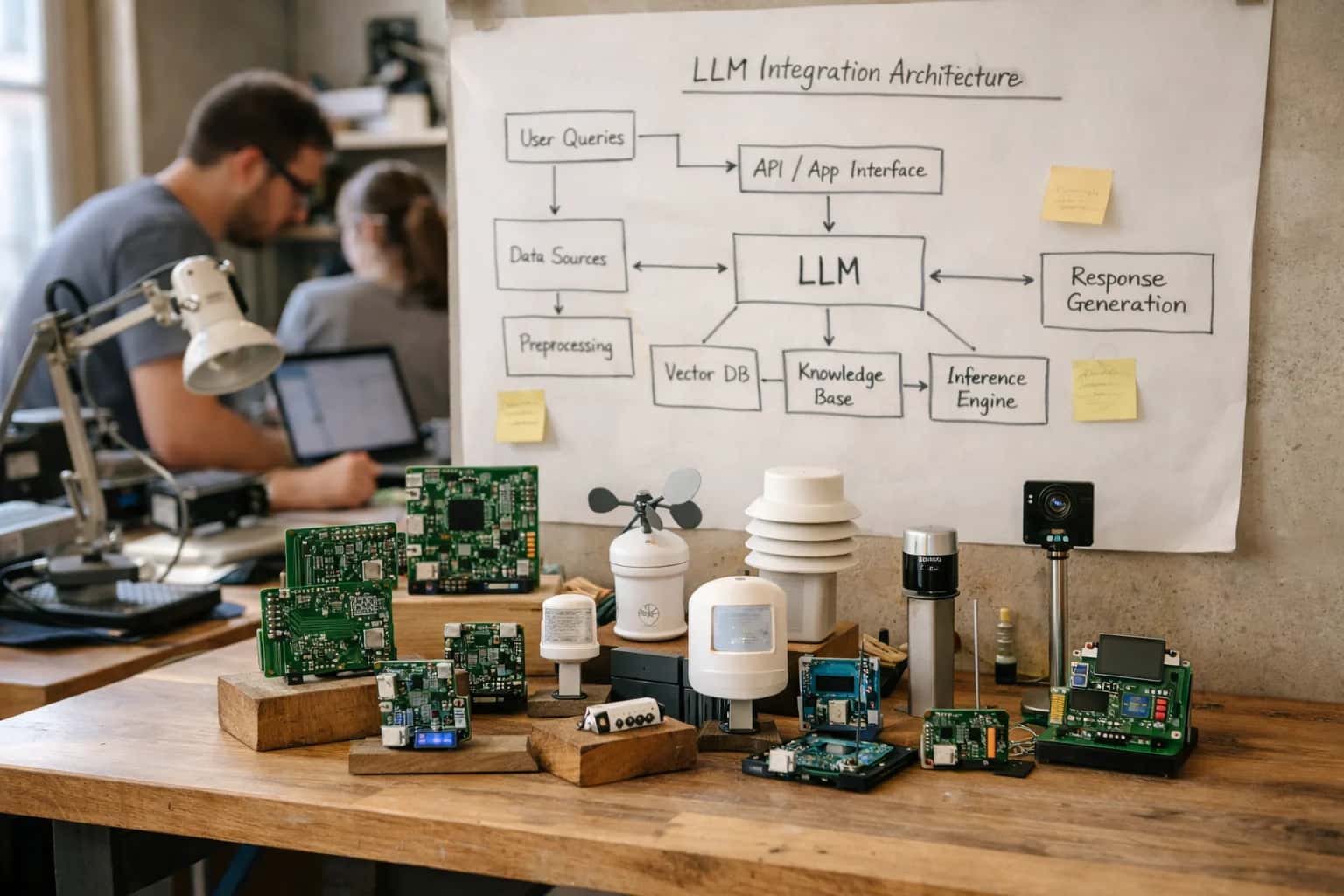
Where AI Chatbots Fit into Childcare Software
A practical guide to embedding AI chatbots in platforms like Brightwheel, Procare, Kangarootime, and Famly for parent and staff support.
Implementation typically involves a middleware service that handles authentication, tool calling, and response orchestration. This service subscribes to webhooks for events like invoice.created or attendance.checked_in to keep its context fresh. For example, when a parent asks, "When is my next payment due?", the service calls the billing API, retrieves the Invoice object, and uses a structured prompt to generate a natural, compliant response. High-value workflows to automate include:
- Billing and Tuition Support: Answering questions about invoice amounts, due dates, payment methods, and late fees.
- Schedule and Attendance: Confirming drop-off/pick-up times, reporting absences, and explaining holiday closures.
- Policy and Procedure Q&A: Retrieving information from handbooks or licensing documents using a RAG (Retrieval-Augmented Generation) system indexed on your center's policy PDFs.
- Staff Operational Queries: Helping teachers quickly find child emergency contacts, allergy lists, or daily activity plans.
Rollout should be phased, starting with a limited-access pilot for common, low-risk queries. Governance is critical: all chatbot responses should be logged with the underlying API calls and prompts used, creating an audit trail. Implement a human-in-the-loop review for escalations or uncertain answers, routing complex issues to a staff member via the platform's existing ticketing or messaging system. This approach reduces manual triage for front-desk staff and provides 24/7 support for parents, while keeping the core childcare software as the single source of truth. For a deeper look at architecting these data flows, see our guide on AI Integration for Childcare Software Data Migration.
Chatbot Integration Points by Platform
Embedding AI in Parent-Facing Surfaces
The parent portal and messaging modules are the primary surfaces for an AI chatbot. In platforms like Brightwheel, Famly, and Procare, these are often exposed via web APIs or webhook events for real-time interactions.
Key integration points include:
- In-app chat widgets for 24/7 Q&A on schedules, billing, and policies.
- Automated response to common parent inquiries triggered via messaging APIs (e.g., 'What's for lunch today?' or 'When is my payment due?').
- Personalized information retrieval where the chatbot accesses the child's profile, attendance records, and billing details via platform APIs to provide specific answers.
Implementation typically involves a secure middleware layer that authenticates with the childcare platform's API, retrieves context, and uses an LLM to generate grounded, accurate responses. This reduces front-desk call volume by handling routine queries instantly.
High-Value Chatbot Use Cases for Childcare Centers
Integrate AI chatbots into Brightwheel, Procare, Kangarootime, or Famly to automate routine inquiries, reduce front-desk load, and provide 24/7 support. These use cases focus on connecting to specific platform APIs and data models to deliver accurate, context-aware responses.
Parent FAQ & Policy Bot
Deploy a chatbot that answers common parent questions by querying the platform's APIs for real-time data. It can handle queries about daily schedules, tuition due dates, holiday closures, and center policies without staff intervention. The bot uses the child's profile ID to personalize responses about meals, naps, or upcoming events.
Billing & Payment Support Agent
An AI agent integrated with the billing module (e.g., Procare Billing API, Kangarootime Financials) to answer payment questions. It can explain invoice line items, confirm payment receipt, outline late fee policies, and generate payment plan summaries. For security, it only surfaces data via secure session tokens and never initiates transactions without a human-in-the-loop approval step.
Staff Procedure & Compliance Assistant
A RAG-based chatbot for teachers and directors that grounds answers in the center's employee handbook, state licensing regulations, and internal SOPs. Integrated with the platform's document storage (e.g., Famly's resource library), it helps staff quickly find procedures for incident reporting, ratio compliance, or medication administration, reducing training time and ensuring policy adherence.
Enrollment & Waitlist Status Bot
Automate inquiries from prospective families by connecting the chatbot to enrollment and waitlist modules. Using the family's application ID or email, the bot can provide current waitlist position, list required documents, share upcoming tour availability, and explain the next steps in the onboarding process, syncing all interactions back to the family's CRM record.
Attendance & Schedule Clarification
A chatbot that resolves common schedule conflicts by pulling real-time data from attendance APIs and classroom calendars. Parents can ask, "Is my child checked in?" or "What time is the holiday concert?" The bot can also process simple update requests (e.g., "Mark my child absent tomorrow") by creating a draft attendance exception for staff review.
Cross-Platform Health & Safety Triage
An AI agent that acts as a first point of contact for non-urgent health questions. Integrated with health tracking modules (e.g., Kangarootime Health Logs), it can answer policy questions about fever rules, medication drop-off, or allergy protocols. For potential incidents, it intelligently routes parents to the correct form or staff member based on severity, logging the interaction.
Example AI Chatbot Workflows for Parents and Staff
These workflows illustrate how AI chatbots can be integrated into childcare platforms like Brightwheel, Procare, Kangarootime, and Famly to handle common queries, automate support, and surface relevant information—without replacing human staff.
Trigger: A parent sends a message via the childcare platform's messaging interface or a dedicated chatbot widget.
Context/Data Pulled:
- Authenticate the parent and identify their child(ren).
- Query the child's schedule for the current day, checking for any early release, field trips, or special events.
- Retrieve the center's standard operating hours.
- Check for any ad-hoc alerts or announcements posted by the director.
Model/Agent Action:
- The LLM is provided with the structured context and the user's query.
- It formulates a concise, accurate response. Example: "Hi [Parent Name], regular pickup for [Child's Name] is by 6:00 PM today. There are no early releases scheduled. The center closes promptly at 6:15 PM."
System Update/Next Step:
- The response is delivered in the chat interface.
- The interaction is logged to the child's communication history for staff visibility.
Human Review Point: If the query involves a sensitive schedule change (e.g., "I authorized my sister for pickup"), the chatbot can be configured to recognize this intent and immediately escalate the conversation to a staff member with the relevant context.
Implementation Architecture: Data Flow, APIs, and Guardrails
A practical guide to wiring an AI chatbot into your childcare management platform's data layer and user workflows.
A functional parent support chatbot for platforms like Brightwheel, Procare, or Famly requires secure, real-time access to structured data. The core integration connects to the platform's REST APIs to fetch child-specific records (schedules, attendance, billing) and uses webhooks to listen for events like new messages or payment postings. For common policy questions, a RAG (Retrieval-Augmented Generation) system grounds responses in your center's handbook and state licensing documents, stored in a vector database like Pinecone or Weaviate. This creates a dual-source architecture: live transactional data from the platform APIs and contextual knowledge from your internal documents.
The agent's workflow begins when a parent asks a question in your branded parent portal or app. The request is routed to your orchestration layer (e.g., using n8n or a custom service), which first identifies the parent and child via authentication context. It then executes parallel calls: one to the childcare platform's API for the child's daily_schedule or account_balance, and another to the RAG system for tuition_policy or sick_policy context. The LLM (like GPT-4) synthesizes this into a concise, accurate answer. For transactional requests like "pay my invoice," the agent can generate a deep link to the payment portal or, with proper safeguards, trigger a secure tool call via the platform's API.
Governance is non-negotiable. Implement role-based access control (RBAC) so the agent only surfaces data the requesting parent is authorized to see, mirroring the platform's permissions. All queries and responses should be logged to an audit trail linked to the family and child record for compliance. For sensitive topics (health incidents, behavioral reports), the agent should be configured to escalate to human staff via a ticketing system like the platform's internal messaging or a connected Slack channel. A phased rollout starts with low-risk FAQ handling, then gradually introduces data-aware features after validation, ensuring the AI assistant reduces front-desk burden without creating new operational risks.
Code and Payload Examples for Core Chatbot Functions
Handling Common Parent Queries
This function processes natural language questions about schedules, billing, and policies by retrieving structured data from the childcare platform's APIs. The agent first classifies the intent, then fetches the relevant child or family record to provide a personalized, accurate response.
Example Workflow:
- Parent asks: "When is my payment for June due?"
- Agent extracts family ID from authenticated session.
- Calls billing API to retrieve the specific invoice.
- Constructs a grounded response: "Your payment of $1,200 for June is due on the 5th. The invoice was sent on May 25th."
Example API Call (Python):
pythonimport requests def get_family_billing_status(family_id, platform_api_key): headers = {'Authorization': f'Bearer {platform_api_key}'} # Example endpoint for Brightwheel/Kangarootime billing data response = requests.get( f'https://api.childcareplatform.com/v1/families/{family_id}/invoices?status=outstanding', headers=headers ) invoices = response.json().get('invoices', []) # LLM would summarize this data into a natural response return invoices
Realistic Time Savings and Operational Impact
This table illustrates the practical impact of integrating an AI chatbot into your childcare management platform, focusing on measurable time savings and operational improvements for staff and parents.
| Metric | Before AI | After AI | Notes |
|---|---|---|---|
Common Parent FAQ Resolution | Staff manually answers via phone/email (5-15 min per query) | AI chatbot provides instant, accurate answers (under 1 min) | Frees up 2-4 hours of staff time weekly; answers sourced from policy docs and child data |
Billing Inquiry Triage | Finance/admin staff pulls up account, calculates, explains (10-20 min) | Chatbot fetches account balance, explains charges, suggests payment (2-3 min) | Human agent only escalates complex disputes; reduces billing call volume by ~60% |
Schedule & Attendance Lookups | Teacher or admin logs into software, navigates to child's profile (3-5 min) | Parent asks chatbot, gets real-time check-in/out and schedule info instantly | Eliminates routine 'what time is pickup?' interruptions for classroom staff |
Policy & Form Retrieval | Admin searches drive or software docs, emails link to parent (5-10 min) | Chatbot surfaces correct policy PDF or digital form link in conversation | Ensures parents always get the latest version; tracks which forms are accessed |
After-Hours Support Volume | Messages pile up overnight, answered next business day | Chatbot handles 70-80% of overnight queries, flags urgent ones for morning | Improves parent satisfaction; staff start day with prioritized, complex issues only |
New Family Onboarding Queries | Repeated emails/calls about process, paperwork, and center policies | Chatbot provides guided onboarding checklist, pre-fills forms, schedules tours | Standardizes information delivery; integrates with enrollment modules like Procare or Brightwheel |
Staff Policy Reference | Searching physical binders or digital folders for procedures (2-5 min) | Staff ask internal chatbot, get precise answers from employee handbook (under 30 sec) | Speeds up training and ensures consistent application of center policies |
Governance, Privacy, and Phased Rollout
Deploying AI chatbots in childcare requires a deliberate approach to data privacy, staff oversight, and incremental value delivery.
A production chatbot for platforms like Brightwheel, Procare, or Famly must be architected with strict data governance from day one. This means implementing role-based access controls (RBAC) so the chatbot only surfaces child-specific data (e.g., schedule, billing balance) to authenticated parents, never to other families. All queries and responses should be logged to an immutable audit trail, linking to the parent and child records in the source system. For sensitive topics like health incidents or behavioral reports, the agent should be configured to escalate to a human staff member via the platform's native messaging or ticketing system, ensuring a clear chain of custody for critical communications.
Privacy is non-negotiable. The integration should never store persistent copies of Protected Health Information (PHI) or personally identifiable information (PII) outside the primary childcare software. Use the platform's APIs (e.g., Brightwheel's Family API, Procare's Child API) for real-time, permissioned data retrieval. For Retrieval-Augmented Generation (RAG) systems that ground answers in center policy documents, ensure the vector store is hosted in a compliant cloud environment with encryption at rest and in transit. Consider tools like Microsoft Copilot Studio or a custom CrewAI orchestration layer that can enforce data loss prevention (DLP) policies before any LLM call is made.
A phased rollout mitigates risk and builds trust. Start with a pilot group of staff and engaged parents, limiting the chatbot to low-risk, high-volume queries like 'What's for lunch today?' or 'When is tuition due?'. Use this phase to refine prompt grounding, measure deflection rates, and gather feedback. Phase two can introduce more complex workflows, such as guiding parents through the steps to submit a vacation request or report an absence, directly via the chatbot interface. The final phase integrates deeper operational intelligence, like using the chatbot to analyze attendance patterns to answer 'Why was I charged a late pickup fee last Tuesday?' by pulling and interpreting timestamped check-out logs from the platform.
Enabling Efficiency, Speed & Accuracy
Intelligent Analysis, Decision & Execution
We build AI systems for teams that need search across company data, workflow automation across tools, or AI features inside products and internal software.
Talk to Us
Search across company data
Give teams answers from docs, tickets, runbooks, and product data with sources and permissions.
Useful when people spend too long searching or get different answers from different systems.

Automate internal workflows
Use AI to route work, draft outputs, trigger actions, and keep approvals and logs in place.
Useful when repetitive work moves across multiple tools and teams.

Add AI to products and internal tools
Build assistants, guided actions, or decision support into the software your team or customers already use.
Useful when AI needs to be part of the product, not a separate tool.
FAQ: Technical and Commercial Questions
Practical answers on implementing AI chatbots for parent and staff FAQs in platforms like Brightwheel, Procare, Kangarootime, and Famly.
Security is paramount. Implementation involves a layered RBAC (Role-Based Access Control) model tied directly to your platform's existing permissions.
Typical Architecture:
- Authentication & Session Context: The chatbot interface (web widget, mobile SDK) passes a secure user session token to your backend.
- Policy Enforcement Layer: A middleware service (often built with your platform's SDK) validates the token and determines the user's role (e.g., Parent of Child A, Teacher in Room 3, Center Director).
- Query Scoping: Every user query is automatically scoped. For example:
- A parent asking "What did my child eat today?" has the query implicitly filtered to their child's
MealLogrecords. - A teacher asking "Who hasn't checked in yet?" is scoped to children in their assigned rooms.
- A parent asking "What did my child eat today?" has the query implicitly filtered to their child's
- Grounded Responses: The LLM call is made with only the pre-filtered, permissible data as context, preventing data leakage. Audit logs capture the user, query, data scope, and generated response for compliance.
This approach uses your childcare platform as the single source of truth for permissions, avoiding the need to duplicate complex access logic.

About the author
Prasad Kumkar
CEO & MD, Inference Systems
Prasad Kumkar is the CEO & MD of Inference Systems and writes about AI systems architecture, LLM infrastructure, model serving, evaluation, and production deployment. Over 5+ years, he has worked across computer vision models, L5 autonomous vehicle systems, and LLM research, with a focus on taking complex AI ideas into real-world engineering systems.
His work and writing cover AI systems, large language models, AI agents, multimodal systems, autonomous systems, inference optimization, RAG, evaluation, and production AI engineering.
Partnered with leading AI, data, and software stack.





How We Work
Custom AI workflows for your Business
One-fit-all AI don't work for modern businesses. At Inferensys, we aim to understand your business & custom requirements; which we use to define most efficient agentic workflows, the data, and the tools for your business.
01
Review the use case
We understand the task, the users, and where AI can actually help.
Read more02
Pick the right approach
We define what needs search, automation, or product integration.
Read more03
Build the first useful version
We implement the part that proves the value first.
Read more04
Improve from there
We add the checks and visibility needed to keep it useful.
Read moreThe first call is a practical review of your use case and the right next step.
Talk to Us