Traditional dashboards in Campspot, ResNexus, and Campground Master are built for known questions—occupancy rates, revenue per available site (RevPAS), or channel mix. An AI reporting agent connects directly to the platform's underlying SQL databases, reporting APIs, or data warehouse exports to answer the unpredictable questions owners and regional managers ask daily. Instead of navigating filters and date ranges, a manager can ask, "Which sites had the highest cancellation rate last month and why?" or "Compare the profitability of our 30-amp vs. 50-amp sites for the upcoming holiday weekend." The agent parses the intent, constructs the appropriate query against the platform's reservation, guest, and transaction objects, and returns a narrative summary with supporting data points.

Integration
AI for Campground Reporting and Business Intelligence
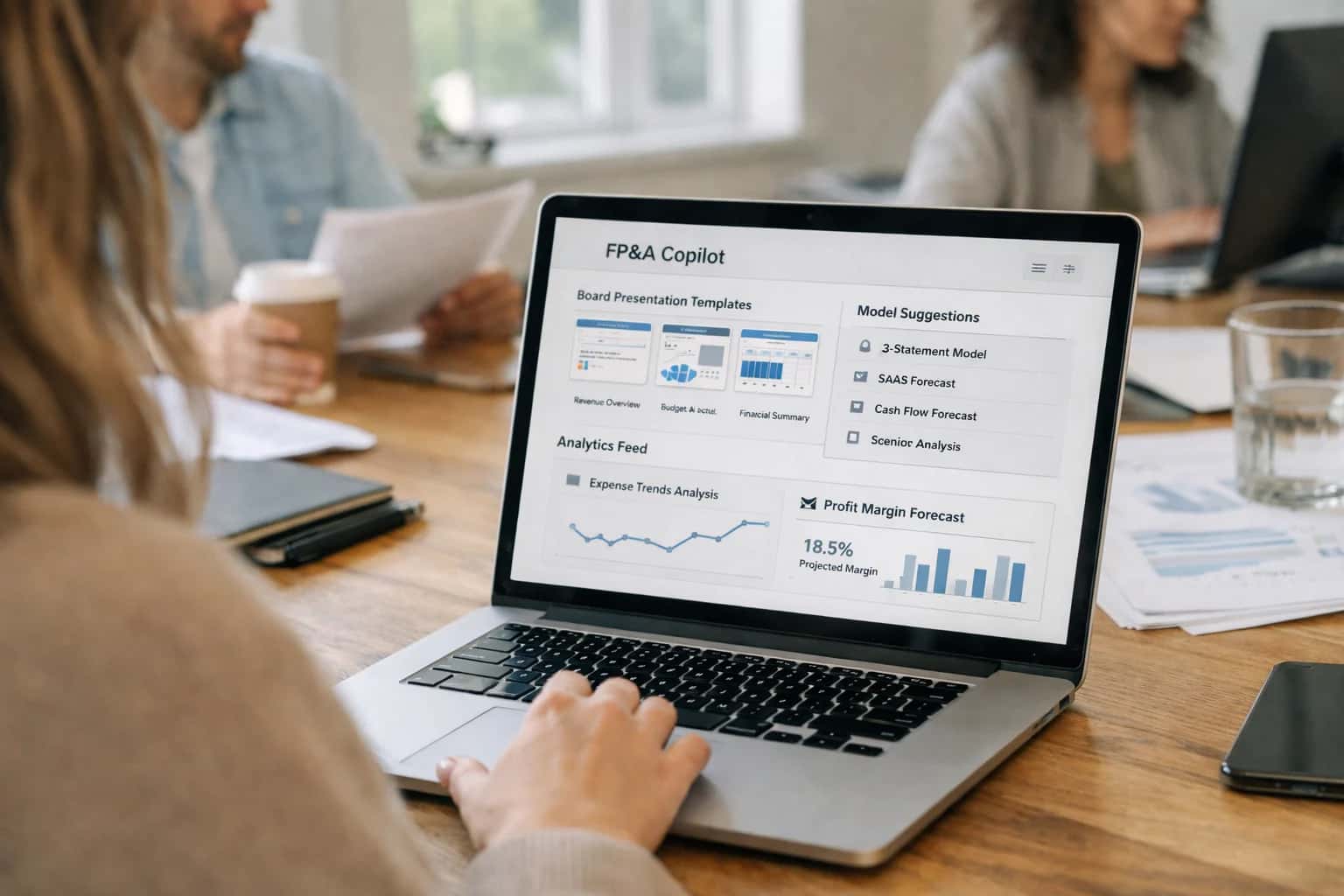
From Static Dashboards to Conversational Intelligence
Move beyond pre-built reports to an AI copilot that answers any business question using your campground platform data.
Implementation involves deploying a secure middleware layer—often a vector database like Pinecone or Weaviate—that indexes your platform's schema, key metrics definitions, and historical report outputs. An LLM orchestration framework (e.g., LangChain) handles the natural language-to-SQL translation, ensuring queries are grounded in your specific data model (e.g., Campspot's bookings table vs. ResNexus's Reservations object). For governance, all generated insights are logged with the source query and data lineage, and you can implement approval workflows for any AI-generated report before it's shared with stakeholders or triggers an automated action, like adjusting rates.
Rollout starts with a pilot focused on 2-3 high-value, ad-hoc reporting workflows: perhaps dynamic group booking analysis in Staylist or maintenance cost per site in Campground Master. The AI agent is initially deployed to a small group of power users via a Slack or Microsoft Teams integration, or a simple web interface. As trust builds, you expand its access to more data surfaces and complex joins, such as correlating guest satisfaction scores from review platforms with on-site spending data from your POS integration. The outcome isn't just faster answers; it's shifting your team from reactive reporting to proactive, conversational business intelligence that directly influences daily operations and revenue strategy.
Where AI Connects: Reporting Modules and Data Sources
Core Financial and Utilization Reporting
AI copilots connect directly to the core reporting surfaces in ResNexus, Campspot, and Campground Master where managers review daily performance. This includes:
- Nightly Revenue and Occupancy Reports: AI can summarize trends, highlight anomalies (e.g., a Tuesday outperforming a Saturday), and project month-end figures.
- Site-Type Performance: Analyze revenue per available site (RevPAS) by RV pad, tent site, or cabin. An AI agent can identify underperforming inventory and suggest promotional strategies.
- Channel Contribution Analysis: Automate the breakdown of bookings by source (direct website, Airbnb, ReserveAmerica). AI can flag channels with rising acquisition costs or declining conversion.
Implementation typically involves querying the platform's reporting API or a connected data warehouse. The AI generates narrative summaries and actionable alerts, turning raw dashboard numbers into executive briefings.
High-Value AI Reporting Use Cases for Campgrounds
Transform raw data from ResNexus, Campspot, and Campground Master into actionable insights. These AI-powered reporting patterns help owners and regional managers move from reactive data pulls to proactive, conversational business intelligence.
Executive Occupancy & Revenue Flash Report
An AI agent automatically queries the ResNexus or Campspot reporting API each morning, synthesizing yesterday's bookings, cancellations, ADR, and RevPAR. It compares against forecast, flags significant variances, and generates a concise narrative summary for owner distribution via email or Slack, turning a 30-minute manual task into a same-day automated insight.
Channel Performance & OTA Cost Analysis
Instead of manually comparing spreadsheets, an AI copilot connects to the platform's channel management data and external OTA fee schedules. It calculates net revenue per channel, identifies underperforming listings, and recommends rate or availability adjustments. This provides a clear, batch-to-real-time view of true profitability across booking sources.
Guest Sentiment & Review Intelligence Dashboard
AI aggregates and analyzes unstructured feedback from platform-integrated review sites and internal guest notes. It performs sentiment analysis, clusters themes (cleanliness, staff, amenities), and correlates low scores with specific site numbers or reservation dates. This creates a searchable dashboard in 1 sprint, pinpointing operational issues that impact future bookings.
Predictive Maintenance & Site Downtime Forecasting
By integrating Campground Master work order history with reservation schedules, an AI model predicts high-risk sites and assets. It generates a weekly forecast report showing which sites are likely to require maintenance during peak booking periods, enabling proactive scheduling and minimizing revenue loss from unexpected closures.
Group & Event Booking Profitability Analyzer
AI evaluates complex group bookings in Staylist or ResNexus by analyzing negotiated rates, resource usage (pavilions, equipment), and ancillary spend. It compares against transient booking value for the same dates and generates a profitability scorecard for each group inquiry, helping managers make data-driven accept/decline decisions in hours, not days.
Dynamic Pricing Model Performance Audit
For campgrounds using AI-driven pricing, this internal report agent audits the model's performance. It pulls daily rate decisions from the Campspot API, compares them against actual pick-up and competitor rates, and calculates revenue lift or leakage. The report highlights when to retrain models or adjust rules, ensuring the AI investment delivers measurable ROI.
Example AI Reporting Workflows in Action
See how AI copilots can transform raw data from ResNexus, Campspot, and Campground Master into actionable intelligence. These workflows connect directly to your platform's reporting APIs, dashboards, and data exports to automate analysis that would otherwise take hours of manual spreadsheet work.
Trigger: Scheduled job runs every morning at 6 AM local time.
Context Pulled:
- API calls to ResNexus
GET /reports/occupancyfor yesterday's final numbers. - API calls to Campspot
GET /reports/revenue_summaryfor yesterday's settled transactions. - Pulls prior year same-day data from the data warehouse for comparison.
AI Agent Action:
- The LLM receives the raw JSON/CSV payloads.
- It calculates key metrics: ADR, RevPAR, occupancy percentage, and net revenue change vs. prior year.
- It identifies notable patterns: e.g., "Mid-week occupancy dipped 15% despite a holiday weekend approaching."
- It generates a 3-bullet summary and a suggested action: "Consider a targeted email campaign for Tuesday-Wednesday stays to fill the mid-week gap."
System Update:
- The summary and key metrics are posted to a designated Slack channel for managers.
- A formatted HTML report is saved to a SharePoint/Google Drive folder for the archive.
- High-priority alerts (e.g., revenue drop >20%) trigger an SMS via Twilio to the owner's phone.
Human Review Point: The summary is presented as a draft. A manager can click a "Regenerate with deeper analysis" button in Slack, which prompts the AI to pull additional data on cancellation rates and channel mix.
Implementation Architecture: Data Flow, APIs, and the AI Layer
A practical blueprint for connecting AI to your campground platform's reporting data to generate insights, not just charts.
The core of this integration is a scheduled data extraction layer that pulls key reporting objects from your campground management platform—whether it's ResNexus, Campspot, or Campground Master. This typically involves querying their reporting APIs or designated data export endpoints for objects like DailyOccupancy, RevenueBySiteType, GuestOriginReport, CancellationSummary, and FutureBookings. This raw data is then staged in a cloud data store (like a data warehouse or lake) where it can be joined with external data sources, such as local event calendars or weather forecasts, to create a rich context layer for analysis.
The AI layer operates on this prepared data. A Retrieval-Augmented Generation (RAG) system, powered by a vector database like Pinecone, indexes historical reports, operational memos, and past performance summaries. When a manager asks a natural language question like "Why did cabin revenue dip last Tuesday?", the AI agent first retrieves relevant data points (e.g., occupancy, weather, competing local events) and relevant past documents. It then uses a large language model (LLM) to synthesize a concise, narrative insight, such as "Cabin revenue fell 15% on Tuesday, which coincided with a local festival that increased competition and a 20% increase in cancellations for standard sites." This moves beyond static dashboards to causal, explanatory intelligence.
For production rollout, the system is deployed as a secure API or embedded directly within the platform's UI via widgets or a chat copilot. Governance is critical: all AI-generated insights are logged with source data citations, and for high-stakes recommendations (e.g., major rate changes), the workflow can include a human-in-the-loop approval step before any action is taken via the platform's native APIs. This architecture ensures insights are grounded in your actual data, actionable within existing workflows, and deployed with appropriate oversight.
Code and Payload Examples
Querying Daily Performance Dashboards
An AI copilot can be triggered to analyze the previous day's performance by pulling key metrics from the platform's reporting API. This example fetches data from a ResNexus-like endpoint, structures it for analysis, and prompts an LLM to generate a summary with actionable insights.
pythonimport requests import json # Example: Fetch daily report data from campground platform API def fetch_daily_report(api_key, property_id, date): headers = {'Authorization': f'Bearer {api_key}'} params = { 'propertyId': property_id, 'reportDate': date, 'metrics': 'occupancyRate,adr,revpar,totalRevenue' } response = requests.get('https://api.campground-platform.com/v1/reports/daily', headers=headers, params=params) return response.json() # Structure payload for LLM analysis report_data = fetch_daily_report('your_api_key', 'prop_123', '2024-05-15') llm_payload = { "report_date": report_data['date'], "metrics": report_data['metrics'], "instruction": "Summarize key performance drivers. Flag any metric below target by 10%. Suggest one priority action for the manager." } # Send to LLM endpoint for insight generation
The LLM returns a concise narrative, highlighting if occupancy was soft despite high ADR, suggesting a promotional push for underperforming site types.
Realistic Time Savings and Business Impact
How AI copilots integrated with ResNexus, Campspot, and Campground Master dashboards transform manual data analysis into actionable intelligence for owners and regional managers.
| Reporting Workflow | Before AI | After AI | Operational Impact |
|---|---|---|---|
Daily Occupancy & Revenue Snapshot | Manual export, spreadsheet pivot (30-45 min) | Automated summary delivered via email/Slack (2 min) | Managers start day with key metrics, no manual prep |
Monthly P&L Variance Analysis | Cross-reference ledger exports, manual anomaly hunt (4-6 hours) | AI highlights top 5 deviations with probable causes (20 min review) | Finance team focuses on investigation, not data gathering |
Guest Satisfaction & Review Analysis | Read individual reviews across 3+ sites, spot trends manually | Sentiment dashboard with auto-generated issue themes (5 min) | Proactive operational fixes identified from aggregated feedback |
Channel Performance & OTA Cost Report | Log into each OTA portal, compile data, calculate net revenue | Unified dashboard with net yield per channel, auto-refreshed | Informed marketing spend decisions based on actual profitability |
Forecasting Next Month's Occupancy | Manual trend analysis from past years, gut-feel adjustments | AI-generated forecast with confidence intervals, factoring local events | More accurate staffing and purchasing, reduced waste |
Ad-hoc Query (e.g., 'Top 10 revenue-generating sites last quarter') | SQL query or complex filter building, requires technical skill | Natural language question in chat interface, instant answer | Empowers non-technical managers with self-service data access |
Weekly Operations Report for Owners/Investors | Copy-paste charts, write narrative, format for 2-3 hours | AI drafts narrative from selected KPIs, human edits for 30 min | Professional communication delivered consistently, saving leadership time |
Governance, Security, and Phased Rollout
Implementing AI for campground reporting requires a secure, governed approach that builds trust and delivers incremental value.
Governance starts with defining which data sources and user roles the AI can access. For a reporting copilot, this typically means read-only access to specific reporting APIs and dashboards in ResNexus, Campspot, or Campground Master—such as occupancy reports, revenue summaries, and guest demographics—while enforcing role-based access control (RBAC) so a front-desk agent cannot query owner-level financial projections. All AI-generated insights should be logged with an audit trail linking the query, the data source, the responding AI model, and the user, ensuring full transparency for compliance and debugging.
Security is non-negotiable when connecting AI to business intelligence systems. Implement the integration using secure service accounts with principle-of-least-privilege API keys, never exposing platform credentials within prompts. Data flows should be encrypted in transit, and any transient data used for context (like a summarized weekly report) should be purged from AI session memory after generation. For campgrounds handling PCI data for payments or sensitive guest information, the AI must be architected to avoid ingesting or exposing protected fields, often through data masking at the API query layer before the context is sent to the LLM.
A phased rollout de-risks implementation and demonstrates quick wins. Phase 1 could deploy a copilot for owners to ask natural-language questions about last week's occupancy and revenue against a single platform like ResNexus, validating accuracy in a controlled setting. Phase 2 expands to regional managers, enabling cross-property comparisons and trend analysis, while introducing a human-in-the-loop review step for any insight that would trigger a significant operational change. Phase 3 integrates predictive analytics, such as forecasting next month's revenue based on booking pace and local events, and automates the generation of scheduled insight digests emailed to stakeholders. Each phase includes user training, feedback collection, and iterative prompt tuning based on real usage.
Enabling Efficiency, Speed & Accuracy
Intelligent Analysis, Decision & Execution
We build AI systems for teams that need search across company data, workflow automation across tools, or AI features inside products and internal software.
Talk to Us
Search across company data
Give teams answers from docs, tickets, runbooks, and product data with sources and permissions.
Useful when people spend too long searching or get different answers from different systems.

Automate internal workflows
Use AI to route work, draft outputs, trigger actions, and keep approvals and logs in place.
Useful when repetitive work moves across multiple tools and teams.

Add AI to products and internal tools
Build assistants, guided actions, or decision support into the software your team or customers already use.
Useful when AI needs to be part of the product, not a separate tool.
Frequently Asked Questions
Common technical and strategic questions about building AI-powered reporting and business intelligence for campground management platforms like ResNexus, Campspot, and Campground Master.
The integration typically follows a three-tier architecture:
- Data Access Layer: Use the platform's native APIs (e.g., ResNexus API, Campspot API) or a direct database connection (if permitted) to pull raw data. Common endpoints include
/reports/occupancy,/financials/summary, or custom SQL queries against booking, revenue, and guest tables. - Processing & Orchestration Layer: An AI agent service (built with frameworks like LangChain or CrewAI) calls these APIs, structures the data, and formulates a natural language query for an LLM (like GPT-4 or Claude). The agent uses tools to execute calculations (e.g., YoY growth, ADR) that aren't pre-computed.
- Interface Layer: The agent's insights are delivered via:
- A chat interface embedded in the platform's admin UI (using iframes or custom widgets).
- Scheduled email/Slack digests with generated summaries.
- Voice queries via integrated UC platforms like Teams.
Key Consideration: Implement robust caching for report data to avoid hitting API rate limits and ensure fast response times for common queries like "last week's revenue."

About the author
Prasad Kumkar
CEO & MD, Inference Systems
Prasad Kumkar is the CEO & MD of Inference Systems and writes about AI systems architecture, LLM infrastructure, model serving, evaluation, and production deployment. Over 5+ years, he has worked across computer vision models, L5 autonomous vehicle systems, and LLM research, with a focus on taking complex AI ideas into real-world engineering systems.
His work and writing cover AI systems, large language models, AI agents, multimodal systems, autonomous systems, inference optimization, RAG, evaluation, and production AI engineering.
Partnered with leading AI, data, and software stack.





How We Work
Custom AI workflows for your Business
One-fit-all AI don't work for modern businesses. At Inferensys, we aim to understand your business & custom requirements; which we use to define most efficient agentic workflows, the data, and the tools for your business.
01
Review the use case
We understand the task, the users, and where AI can actually help.
Read more02
Pick the right approach
We define what needs search, automation, or product integration.
Read more03
Build the first useful version
We implement the part that proves the value first.
Read more04
Improve from there
We add the checks and visibility needed to keep it useful.
Read moreThe first call is a practical review of your use case and the right next step.
Talk to Us