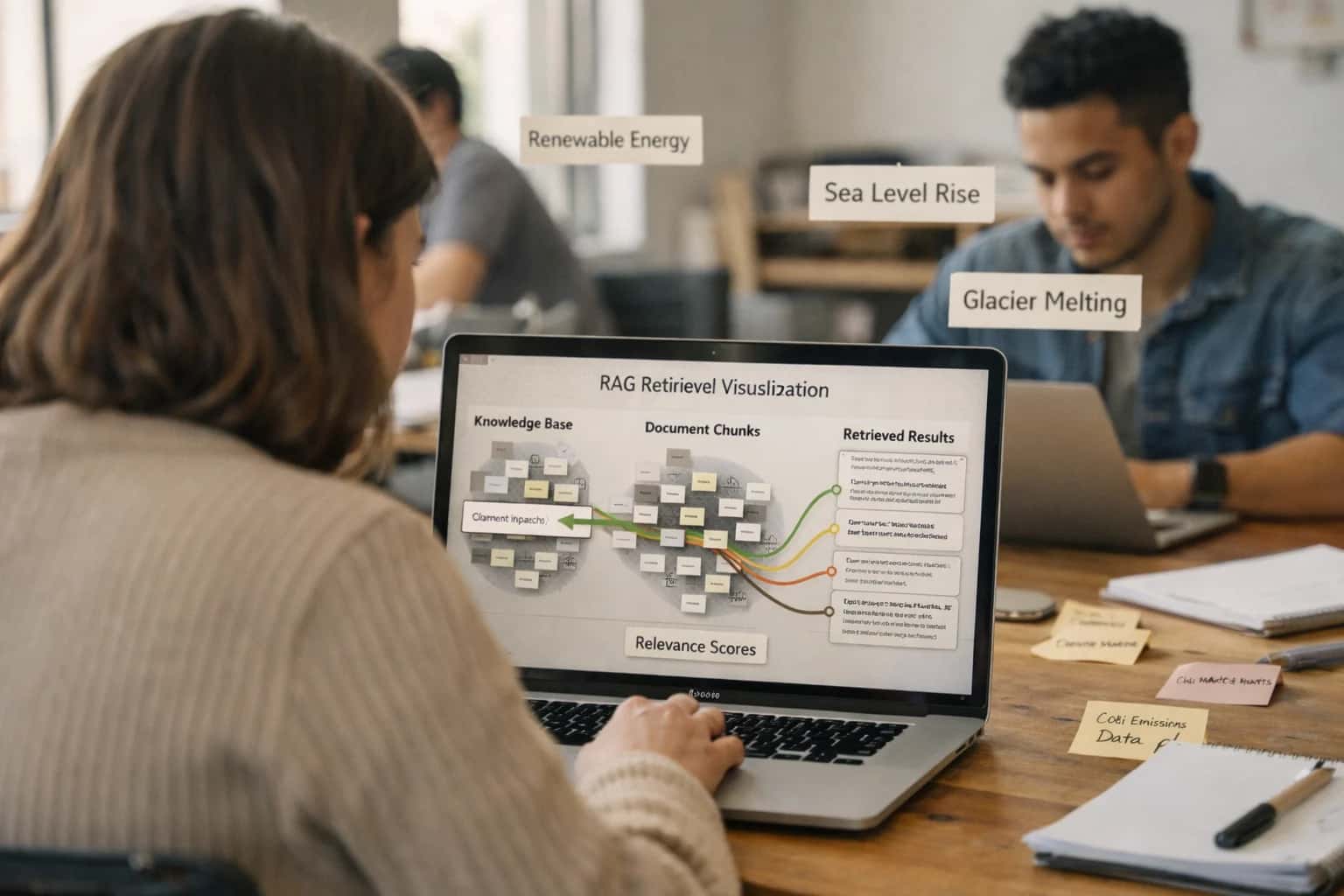
AI integration for iMIS support agents focuses on three primary surfaces: the member portal, the case management module, and the underlying knowledge base. The architecture typically involves a Retrieval-Augmented Generation (RAG) agent that grounds its responses in your iMIS data—querying member records, past case notes, event details, and policy documents—before generating an answer. This agent can be deployed as a chatbot on the member portal to handle common inquiries about dues, event registration, certification status, and document retrieval, logging each interaction as a case note or a resolved ticket in the iMIS case object.

Integration
AI Integration for iMIS Support Agents
Build AI-powered support copilots for iMIS help desks, using Retrieval-Augmented Generation (RAG) on knowledge bases and member records to answer tier-1 questions on dues, events, and credentials, with all interactions logged back to iMIS cases.
ARCHITECTURE & ROLLOUT
Where AI Fits into iMIS Support Operations
A practical blueprint for embedding AI copilots into the iMIS help desk to deflect tier-1 tickets and accelerate case resolution.
For internal staff, an AI copilot integrates directly into the case queue within the iMIS staff site. When an agent opens a case, the copilot can instantly summarize the member's history, suggest relevant knowledge base articles, and draft a first-response email by pulling context from the member's profile, past invoices, and event attendance. This reduces manual lookup time and ensures consistent, informed replies. Implementation connects via iMIS REST APIs or a direct database connection for real-time data retrieval, with responses governed by role-based access controls to protect sensitive member information.
Rollout should start with a pilot on a narrow, high-volume question domain—like 'dues and billing'—using a human-in-the-loop review process where all AI-generated responses are audited before being sent. This builds trust and refines the system. Governance requires clear logging of AI interactions in the case audit trail and regular evaluation of deflection rates and member satisfaction scores. For a deeper dive on building RAG systems for enterprise knowledge, see our guide on Vector Database and RAG Platforms.
ARCHITECTURE BLUEPRINT
iMIS Modules and Surfaces for AI Integration
Core Support Objects for AI Agents
The iMIS Case Management and Interaction Tracking modules are the primary surfaces for AI support agents. This is where member inquiries about dues, events, and credentials are logged. An AI copilot can be integrated here to:
- Auto-triage incoming emails and web forms into existing case types.
- Surface relevant member records (from the
IM_MEMBERtable) and past interactions as context for the agent. - Suggest canned responses or draft replies based on resolved cases with similar keywords.
- Log all AI-generated interactions back to the case history with a clear audit trail.
Implementation typically involves a middleware service that monitors the iMIS database for new case records, enriches them via a RAG pipeline against knowledge bases, and posts suggested actions or automated replies back via the iMIS REST API or a direct database update.
SUPPORT AGENT COPILOTS
High-Value AI Support Use Cases for iMIS
Deploy AI agents and copilots within iMIS to handle common member inquiries, reduce ticket volume, and empower staff with instant, contextual knowledge. These integrations connect directly to iMIS modules, knowledge bases, and member records to deliver accurate, logged support.
01
Tier-1 Member Inquiry Deflection
Deploy an AI chat agent on the member portal that answers common questions about dues status, event details, and certification requirements by querying iMIS member records, transaction history, and the event calendar. Logs all interactions as cases in iMIS for follow-up.
40-60% Deflection
Typical tier-1 ticket reduction
02
Case Summarization & Triage Assistant
When a support case is created or updated, an AI agent automatically summarizes the member's history, recent transactions, and past cases to provide context. Suggests priority, category, and potential resolution steps based on similar past cases, accelerating agent response.
Hours -> Minutes
Agent ramp-up time
03
Knowledge Base RAG for Staff Copilot
Embed a retrieval-augmented generation (RAG) system for internal staff. Agents use a natural language interface to search across iMIS help docs, policy PDFs, and past resolution notes to find answers to complex procedural questions without manual hunting.
Batch -> Real-time
Knowledge access
04
Personalized Renewal & Payment Support
AI agents handle sensitive financial inquiries by securely accessing iMIS billing data. They can explain invoice line items, process payment plan requests, and generate personalized renewal reminders based on member engagement, all while maintaining a full audit trail in the member record.
Same day
Payment issue resolution
05
Event Registration & Logistics Agent
Integrate an AI with the iMIS EMS module to manage common event queries. It can check registration status, modify attendee details, explain venue logistics, and process cancellations within policy rules. Automatically updates the event record and triggers refund workflows.
1 sprint
Implementation timeline
06
Credential Verification & Compliance Helper
For associations with certification programs, an AI agent verifies member credentials against iMIS records. It answers questions about CE credit status, exam eligibility, and renewal deadlines, and can generate verification letters or compliance reports for members and auditors.
Manual -> Automated
Verification workflow
TIER-1 TICKET DEFLECTION AND AGENT CO-PILOT
Example AI Agent Workflows for iMIS Support
These workflows illustrate how AI agents can be integrated into iMIS support operations, using RAG on your knowledge base and member records to handle common inquiries, draft responses, and log case details—freeing staff for complex issues.
Trigger: A member submits a support ticket via the iMIS web portal or sends an email with keywords like 'invoice', 'payment', or 'dues'.
Agent Action:
- The AI agent uses natural language understanding to classify the inquiry as a billing question.
- It retrieves the member's record via the iMIS API to access their current membership status, recent invoices, and payment history.
- Using RAG, it grounds its response in the association's official dues policy document and FAQ knowledge base.
- The agent composes a personalized response, explaining the charge, providing a payment link, and noting any upcoming renewals.
System Update: The agent logs the full interaction as a note in the iMIS case/activity record, marks the ticket status as 'Resolved - AI', and sends the response to the member. If the inquiry involves a dispute, the ticket is automatically escalated to a finance staff member with all context attached.
HOW TO DEPLOY A PRODUCTION-READY COPILOT
Implementation Architecture: Data Flow, APIs, and Guardrails
A practical blueprint for wiring an AI support agent into iMIS, covering data access, workflow triggers, and operational guardrails.
The integration architecture connects to iMIS through its REST API and database views to power a Retrieval-Augmented Generation (RAG) system. The AI agent's context is built by indexing key iMIS objects: Member records for profile and dues status, Event tables for session details, KnowledgeBase articles for policy FAQs, and resolved Case history. This vectorized knowledge layer sits in a dedicated Pinecone or Weaviate index, separate from the live iMIS database, to enable low-latency semantic search without impacting core system performance. For real-time actions like logging a new support case or updating a member's contact preference, the agent uses iMIS's webhook-enabled workflows or direct API calls, ensuring all interactions are recorded back to the member's activity timeline.
Deployment follows a phased rollout, starting with a human-in-the-loop pilot where the AI suggests answers to agents within the iMIS staff console. This allows for prompt tuning and validation against iMIS's specific data model and member vernacular. Once confidence is high, the agent is exposed as a 24/7 chatbot in the member portal, handling tier-1 queries on dues invoices (AR_INVOICE), event registration (EVENT_REGISTRATION), and certification status (CREDENTIAL). Critical guardrails include: RBAC-enforced data access so the agent only sees what the inquiring member is permitted to view; an audit log that records every query, retrieved source, and generated response for compliance; and a confidence scoring threshold that automatically escalates low-confidence or complex requests to a human agent, creating a new iMIS case with full conversation context.
This architecture ensures the AI augments, rather than replaces, the iMIS help desk. By handling routine inquiries, it reduces case volume for staff, allowing them to focus on complex member issues. The system is designed for association-specific nuances, such as understanding chapter hierarchies or membership tier benefits, making it a credible, governed extension of your existing iMIS investment. For related implementation patterns, see our guides on /integrations/association-management-platforms/ai-integration-for-imis-renewal-operations and /integrations/association-management-platforms/ai-integration-for-imis-membership-workflows.
iMIS SUPPORT AGENT INTEGRATION PATTERNS
Code and Payload Examples
Retrieving Context for Support Queries
A support agent's primary task is answering member questions by retrieving relevant context from iMIS records and knowledge bases. This example shows a Python function that queries a vector database (like Pinecone) with the member's question, then fetches the most relevant iMIS objects for grounding the AI's response. The function returns a structured context payload for the LLM.
pythonimport pinecone from imis_client import IMISClient # Hypothetical iMIS SDK def get_support_context(member_id, user_query): """ Retrieves relevant iMIS data and KB articles for a support query. """ # 1. Semantic search on vectorized knowledge base pc = pinecone.Index("association_kb") kb_results = pc.query( vector=embed(user_query), top_k=3, filter={"source": "imis_knowledgebase"} ) # 2. Fetch member record from iMIS imis = IMISClient(api_key=os.getenv('IMIS_API_KEY')) member = imis.get_member(member_id) recent_cases = imis.get_cases(member_id, limit=5) # 3. Build context payload context = { "member": { "name": member.full_name, "tier": member.membership_tier, "join_date": member.join_date, "status": member.status }, "recent_cases": [{"case_id": c.id, "subject": c.subject} for c in recent_cases], "kb_articles": [{"title": r.metadata["title"], "snippet": r.metadata["snippet"]} for r in kb_results] } return context
This pattern ensures the AI agent has structured, real-time member data and association policy documents before generating a response, which is then logged back to a new iMIS case.
AI SUPPORT AGENTS FOR iMIS
Realistic Time Savings and Operational Impact
How AI copilots integrated into iMIS help desks change daily operations for membership support teams.
| Metric | Before AI | After AI | Notes |
|---|---|---|---|
Tier-1 Member Inquiries | Manual lookup across KB and records | AI provides instant, sourced answers | Answers grounded in iMIS knowledge base and member data |
Case Resolution Time (common issues) | Hours to next business day | Minutes for instant deflection | For dues, event details, password resets, and document access |
Agent Handling Capacity | 15-20 concurrent cases | 25-35 concurrent cases with AI copilot | AI drafts responses and surfaces member history |
Knowledge Base Utilization | Manual search by agents | AI retrieves and cites relevant articles | Improves KB accuracy via feedback on failed retrievals |
After-Hours Member Support | Voicemail or next-day email | 24/7 AI chat for common questions | Logs all interactions back to iMIS as cases for follow-up |
Case Triage and Routing | Manual review and assignment | AI suggests category and priority | Reduces misrouting; human agent makes final assignment |
New Agent Ramp-Up Time | 4-6 weeks to proficiency | 2-3 weeks with AI copilot guidance | AI provides context and suggests next steps during training |
ARCHITECTING A CONTROLLED IMPLEMENTATION
Governance, Security, and Phased Rollout
Deploying AI support agents for iMIS requires a strategy that prioritizes data security, member trust, and operational stability.
A production-ready architecture for iMIS support agents typically involves a secure middleware layer that brokers all communication between the iMIS database and the AI model. This layer handles authentication via iMIS API tokens, enforces role-based access control (RBAC) to limit data exposure—ensuring agents only see member data relevant to the support case—and maintains a full audit log of all queries and responses. For Retrieval-Augmented Generation (RAG), member records, knowledge base articles, and policy documents are indexed in a separate, secure vector database. This setup ensures the AI agent provides grounded answers without directly querying or altering the live iMIS database, preserving system integrity and performance.
Rollout follows a phased, risk-managed approach. Phase 1 begins with a closed pilot, where the AI agent is made available only to internal staff via a dedicated interface, handling a narrow set of predefined queries (e.g., 'look up a member's dues status' or 'find the event cancellation policy'). All agent responses are logged in a shadow mode alongside human actions for accuracy evaluation. Phase 2 expands to a member-facing beta, perhaps within a specific committee portal, with clear disclaimers and a seamless human escalation path back to the iMIS case system. Phase 3 involves full integration into the primary member portal and help desk, with continuous monitoring for response quality, data drift, and user feedback.
Governance is critical for long-term success. Establish a cross-functional oversight team (IT, Membership, Legal) to review logs, approve prompt changes, and handle edge cases. Implement a human-in-the-loop review for any agent-suggested actions that modify member records or trigger financial workflows. Finally, integrate the agent's activity directly into the iMIS case object, automatically creating a case note for every interaction to maintain a complete audit trail and enable performance reporting. This controlled, iterative approach minimizes disruption, builds confidence, and ensures the AI agent becomes a reliable, governed extension of your iMIS support team.
Enabling Efficiency, Speed & Accuracy
Intelligent Analysis, Decision & Execution
We build AI systems for teams that need search across company data, workflow automation across tools, or AI features inside products and internal software.
Talk to Us
Search across company data
Give teams answers from docs, tickets, runbooks, and product data with sources and permissions.
Useful when people spend too long searching or get different answers from different systems.
Enterprise searchRAGPermissions
Read more
Automate internal workflows
Use AI to route work, draft outputs, trigger actions, and keep approvals and logs in place.
Useful when repetitive work moves across multiple tools and teams.
AI agentsWorkflow automationGovernance
Read more
Add AI to products and internal tools
Build assistants, guided actions, or decision support into the software your team or customers already use.
Useful when AI needs to be part of the product, not a separate tool.
AI integrationDecision supportModel routing
Read moreIMPLEMENTATION GUIDE
Frequently Asked Questions
Practical questions for teams planning to deploy AI support agents within iMIS, covering architecture, data security, rollout, and agent capabilities.
The agent operates via a secure, dedicated service account with granular, read-only permissions to specific iMIS REST API endpoints and database views. We implement a retrieval-augmented generation (RAG) architecture where:
- Data Indexing: Relevant knowledge base articles, policy documents, and anonymized member record snippets (e.g., membership tier, recent event registrations) are pre-processed and indexed into a private vector database.
- Real-Time Context: For live conversations, the agent uses the authenticated user's member ID to make a minimal, audited API call to iMIS, fetching only the context needed for the session (e.g.,
MemberStatus,LastRenewalDate). - Data Isolation: The vector index and the LLM never receive full member records. Personal identifiable information (PII) is masked or referenced via tokens during retrieval. All data flows are logged for compliance.
This approach ensures the agent provides personalized answers without exposing sensitive data to the AI model.

About the author
Prasad Kumkar
CEO & MD, Inference Systems
Prasad Kumkar is the CEO & MD of Inference Systems and writes about AI systems architecture, LLM infrastructure, model serving, evaluation, and production deployment. Over 5+ years, he has worked across computer vision models, L5 autonomous vehicle systems, and LLM research, with a focus on taking complex AI ideas into real-world engineering systems.
His work and writing cover AI systems, large language models, AI agents, multimodal systems, autonomous systems, inference optimization, RAG, evaluation, and production AI engineering.
LinkedIn
Limited slotsGet a Free AI Consultation
Partnered with leading AI, data, and software stack.





How We Work
Custom AI workflows for your Business
One-fit-all AI don't work for modern businesses. At Inferensys, we aim to understand your business & custom requirements; which we use to define most efficient agentic workflows, the data, and the tools for your business.
01
Review the use case
We understand the task, the users, and where AI can actually help.
Read more02
Pick the right approach
We define what needs search, automation, or product integration.
Read more03
Build the first useful version
We implement the part that proves the value first.
Read more04
Improve from there
We add the checks and visibility needed to keep it useful.
Read moreThe first call is a practical review of your use case and the right next step.
Talk to Us