The integration connects Cursor's context window to NetSuite's core surfaces: SuiteScript 2.x for server-side workflows, SuiteTalk (SOAP/REST) for system integrations, and the record browser for understanding custom objects and fields. Instead of generic code suggestions, Cursor can generate context-aware scripts for common tasks like creating a Sales Order from an Estimate, writing a Map/Reduce script for bulk record updates, or drafting a User Event script to enforce business logic. This is powered by feeding Cursor real-time schema definitions, sample N/search or N/record module usage, and your organization's specific scripting patterns.

Integration
AI Integration for Cursor with NetSuite
Connect Cursor's AI-powered editor directly to NetSuite's data model and APIs to accelerate SuiteScript and SuiteTalk development, automate custom workflow creation, and generate context-aware code for financials, CRM, and inventory operations.
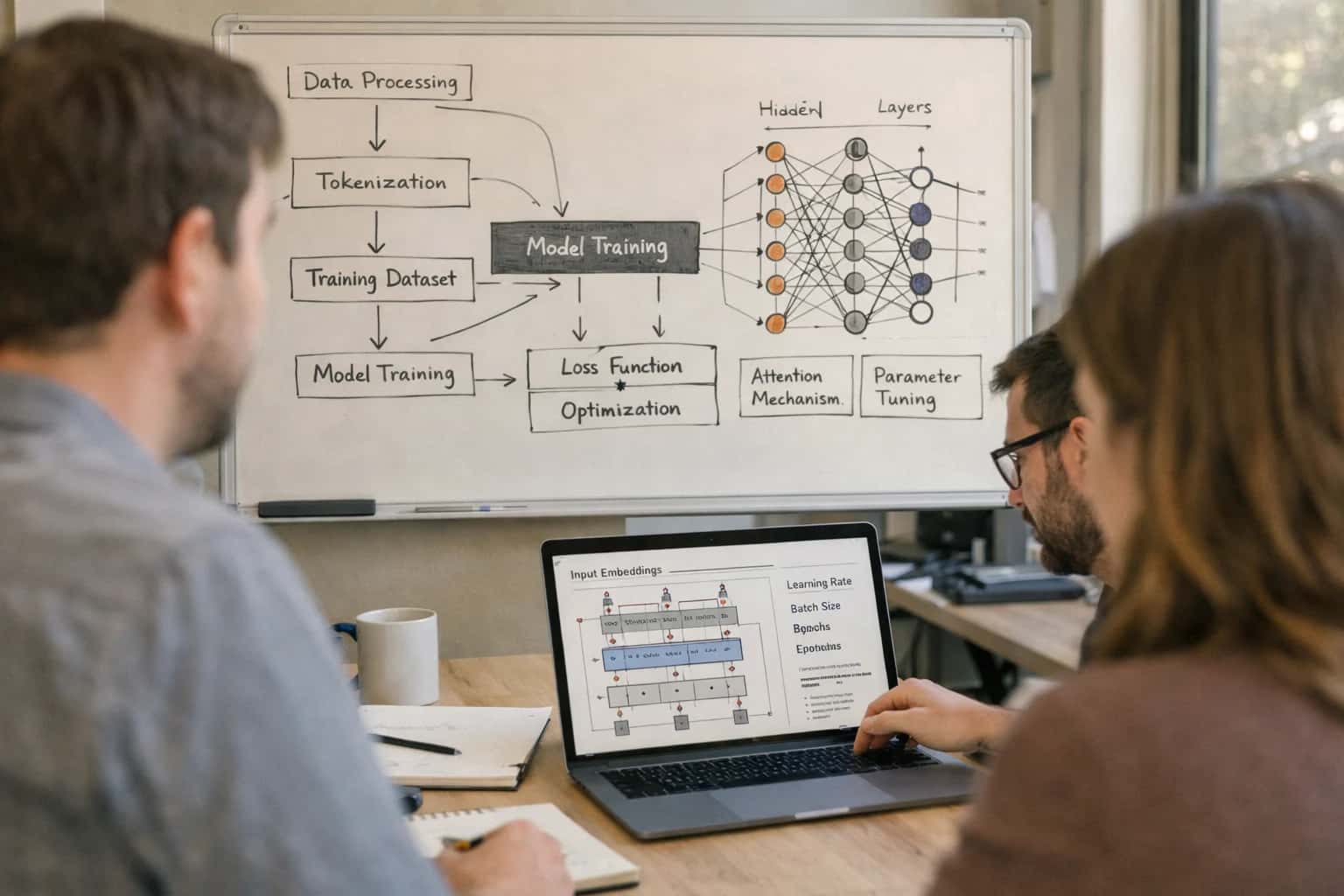
ARCHITECTURE AND ROLLOUT
Where AI Fits in NetSuite Development with Cursor
Integrating Cursor's AI-powered editor directly with NetSuite's data model and APIs transforms how developers build and maintain SuiteScript, SuiteTalk integrations, and custom workflows.
For implementation, we typically wire Cursor to a secure middleware layer that provides a read-only view of your NetSuite account's custom records, scripts, and roles. This allows the AI to reference actual object internal IDs, field types, and existing script libraries without direct production access. High-impact workflows include:
- Automated Script Generation: Describe a workflow like "create a scheduled script that emails overdue invoices every Monday" and get a complete, linted SuiteScript 2.0 file.
- Legacy Script Modernization: Feed Cursor a SuiteScript 1.0 file and prompt it to generate a functionally equivalent 2.0 version.
- Integration Stub Creation: Quickly generate the boilerplate for a SuiteTalk or RESTlet to sync items to an external warehouse system.
Rollout is phased, starting with a sandbox account and a pilot development team. Governance is critical: all AI-generated code must pass through standard NetSuite bundle promotion cycles, code review, and your existing SuiteCloud Development Framework (SDF) deployment pipeline. We configure Cursor to include mandatory code comments for audit trails and to flag scripts that interact with financial modules for additional review. This approach reduces initial script development time from hours to minutes while maintaining the control and compliance required for enterprise ERP customization.
SUITESCRIPT & SUITETALK SURFACES
NetSuite Development Surfaces for AI Integration
SuiteScript 2.x APIs for AI-Enhanced Logic
Server-side SuiteScript is the primary surface for injecting AI into NetSuite's core business logic. Use N/search, N/record, and N/task modules to build AI-driven automations that execute within NetSuite's governance layer.
Key Integration Points:
- User Event Scripts: Trigger AI agents before/after record submissions (e.g., auto-classify vendor invoices, suggest GL accounts, validate customer data).
- Scheduled Scripts: Run batch AI jobs for data enrichment, anomaly detection in transactions, or generating forecast summaries.
- Map/Reduce Scripts: Distribute large-scale AI processing across NetSuite records, such as sentiment analysis on customer communications or clustering similar items.
- RESTlets: Expose custom endpoints for external AI services to securely push/pull data, enabling real-time copilot interactions from tools like Cursor.
Example Workflow: A SuiteScript RESTlet accepts a natural language query from a Cursor plugin, translates it into a N/search query, and returns structured data for code generation context.
SUITESCRIPT & SUITETALK ACCELERATION
High-Value Use Cases for AI-Assisted NetSuite Development
Connect Cursor's AI-powered editor directly to your NetSuite data model and APIs to transform how your team builds customizations. These patterns turn complex SuiteScript and SuiteTalk development from a manual, error-prone process into a guided, high-velocity workflow.
01
Automated SuiteScript Generation for Workflows
Generate context-aware User Event, Client, and Scheduled scripts directly from a natural language prompt. Cursor, connected to your NetSuite account's metadata, can produce scripts for field validation, record auto-population, and post-save logic, reducing boilerplate coding and syntax errors.
1 sprint -> 1 day
Development time
02
SuiteTalk API Client & Integration Scaffolding
Accelerate external system integrations by having Cursor generate robust SuiteTalk (SOAP) or RESTlet client code. Describe the target record type and operation (create, update, query), and get production-ready code with proper error handling, logging, and pagination patterns.
Hours -> Minutes
Client setup
03
Custom Record Transformation & Mapping
Simplify complex data migrations and intermediary processing. Instruct Cursor to write scripts that map fields between custom records, subsidiaries, or item types, applying business logic for defaults, calculations, and status updates, ensuring data integrity across transformations.
Batch -> Real-time
Processing mode
04
Saved Search & Analytics Query Builder
Move beyond the UI builder for complex analytics. Use Cursor to generate SuiteScript for Saved Search creation or direct SuiteTalk queries. Describe the join logic, filters, and summary types needed for financial, inventory, or sales reports, and get executable code.
05
Script Deployment & Governance Automation
Streamline the promotion of scripts from Sandbox to Production. Cursor can generate scripts or configuration files to automate script deployment via CLI tools, manage script IDs, and enforce naming conventions, integrating with your CI/CD pipeline for controlled releases.
Same day
Deployment cycle
06
Legacy Script Refactoring & Documentation
Modernize and understand existing customizations. Point Cursor at legacy SuiteScript files to generate inline documentation, suggest refactors for performance, and identify deprecated API calls. This turns tribal knowledge into maintainable, commented code.
NETSUITE SUITESCRIPT & SUITETALK ACCELERATION
Example AI-Assisted Development Workflows
Integrating Cursor with NetSuite transforms how developers build and maintain customizations. These workflows show how AI can accelerate SuiteScript development, from generating boilerplate code to automating complex data transformations, by connecting Cursor's context-aware editor directly to your NetSuite account's metadata and data model.
Trigger: A developer starts a new file (e.g., CustomerStatusUpdate.js) in Cursor.
Context Pulled: Cursor's integration fetches the target NetSuite environment's schema for the Customer record and related custom fields (e.g., custentity_support_tier).
AI Action: Based on a comment prompt like // Create a User Event script that updates customer status on afterSubmit, the AI generates a complete, context-aware SuiteScript 2.0 module:
javascript/** * @NApiVersion 2.1 * @NScriptType UserEventScript */ define(['N/record', 'N/log'], (record, log) => { function afterSubmit(context) { if (context.type !== context.UserEventType.CREATE && context.type !== context.UserEventType.EDIT) { return; } const customerRec = context.newRecord; const totalOrders = customerRec.getValue('totalorders'); let newTier = 'BRONZE'; if (totalOrders > 1000) newTier = 'GOLD'; else if (totalOrders > 100) newTier = 'SILVER'; try { record.submitFields({ type: record.Type.CUSTOMER, id: customerRec.id, values: { 'custentity_support_tier': newTier }, options: { enableSourcing: false } }); log.audit('Tier Updated', `Customer ${customerRec.id} set to ${newTier}`); } catch (e) { log.error('Update Failed', e); } } return { afterSubmit }; });
System Update: The developer can immediately deploy this validated script to the NetSuite file cabinet via a connected CLI tool or SuiteCLI plugin.
Human Review Point: The developer reviews the generated logic, especially business rules (tier thresholds), before final deployment.
AI-ASSISTED SUITESCRIPT AND SUITETALK DEVELOPMENT
Implementation Architecture: Connecting Cursor to NetSuite
A practical blueprint for wiring Cursor's AI-powered editor directly into NetSuite's data model and automation layer to accelerate custom development.
The integration connects Cursor to NetSuite's SuiteTalk SOAP/REST APIs and SuiteScript 2.x context, enabling the AI to generate, validate, and test code against your actual account configuration. This is not about generic code completion; it's about grounding Cursor's suggestions in your specific custom records, saved searches, workflow definitions, and script deployment records. The architecture typically involves a secure middleware layer or a dedicated Cursor plugin that provides the AI with real-time schema access, allowing it to suggest accurate N/record module calls, proper search.create filters for your transaction types, and valid N/task scheduler patterns.
High-value workflows include generating scheduled scripts for nightly data reconciliation, user event scripts for custom validation logic on sales orders, and Suitelets for internal admin portals. For example, a developer can describe a need to "create a script that syncs approved estimates to projects and emails the project manager" and Cursor, with NetSuite context, can draft the complete script with correct internal IDs, role-based permissions, and email template placeholders. This reduces development cycles from days to hours by eliminating manual lookups for object paths and API nuances.
Rollout requires careful governance: scripts should be generated in a sandbox account first, with a human-in-the-loop review for business logic and security. The integration layer must enforce NetSuite's role-based access controls (RBAC) and maintain an audit log of all AI-generated code suggestions. For production stability, consider implementing a CI/CD pipeline that automatically deploys validated scripts from a version-controlled repository like GitHub, linking Cursor's output directly to your release process. Explore our related guide on AI Governance for Enterprise Development to establish these guardrails.
NETSUITE INTEGRATION PATTERNS
Code and Prompt Examples
Generate SuiteScript 2.x for Record Operations
Use Cursor's AI to create context-aware SuiteScript for common NetSuite workflows. Provide prompts that include the target record type, operation, and specific fields to manipulate. The AI can generate robust scripts with proper error handling and logging.
javascript// Example prompt for Cursor: // "Generate a SuiteScript 2.x User Event script that runs beforeSubmit on a Sales Order. // If the item is backordered, set a custom field 'Backorder Status' to 'Pending' and create a Task for the warehouse manager." // AI-generated code snippet: define(['N/record', 'N/task', 'N/log'], (record, task, log) => { function beforeSubmit(context) { if (context.type !== context.UserEventType.CREATE) return; const soRecord = context.newRecord; const lineCount = soRecord.getLineCount({ sublistId: 'item' }); for (let i = 0; i < lineCount; i++) { const quantity = soRecord.getSublistValue({ sublistId: 'item', fieldId: 'quantity', line: i }); const quantityCommitted = soRecord.getSublistValue({ sublistId: 'item', fieldId: 'quantitycommitted', line: i }); if (quantity > quantityCommitted) { soRecord.setValue({ fieldId: 'custbody_backorder_status', value: 'Pending' }); task.create({ title: 'Backorder Review Needed', assigned: 45, // Internal ID of warehouse manager message: `Sales Order ${soRecord.id} has a backordered item on line ${i+1}.` }); log.audit({ title: 'Backorder Task Created', details: soRecord.id }); break; } } } return { beforeSubmit }; });
AI-ASSISTED SUITESCRIPT AND SUITETALK DEVELOPMENT
Realistic Time Savings and Development Impact
How integrating Cursor's AI with NetSuite's data model accelerates custom development and reduces manual effort across key scripting and integration workflows.
| Development Task | Manual Process | With AI Integration | Implementation Notes |
|---|---|---|---|
SuiteScript (Client/User Event) Creation | 2-4 hours of research, drafting, and debugging | 30-60 minutes of AI-assisted generation and review | AI suggests context-aware scripts using correct record types and field IDs |
SuiteTalk (SOAP) Integration Stub Generation | Half-day to build and test client code | 1-2 hours to generate and validate from WSDL | AI reduces boilerplate coding and enforces best practices for authentication |
Custom Record Transformation Logic | Manual mapping and iterative testing | AI proposes mapping logic and validation rules | Human review required for complex business logic and edge cases |
Scheduled Script Deployment | Manual script record creation and parameter setup | AI-assisted script record generation with deployment checklist | Reduces configuration errors and ensures proper governance fields |
Workflow Action Script Debugging | Trial-and-error console logging and search | AI suggests common fixes and explains GlideRecord errors | Cuts down repetitive debugging cycles for known issues |
SuiteBuilder Custom Field/Form Scripting | Cross-referencing field IDs and UI contexts | AI auto-suggests script references based on form context | Prevents runtime errors from incorrect field API names |
RESTlet Development for External Systems | Day to design, code, and document endpoints | 2-4 hours with AI generating skeleton code and sample payloads | Accelerates prototyping; security and rate limiting still require manual design |
ENTERPRISE AI INTEGRATION FOR NETSUITE DEVELOPMENT
Governance, Security, and Phased Rollout
A secure, governed approach to connecting Cursor's AI to NetSuite's core data and automation layer.
Integrating Cursor with NetSuite requires a security-first architecture that respects the platform's data model and access controls. This typically involves creating a dedicated, scoped RESTlet or SuiteTalk integration role with explicit permissions for the specific scripts and records the AI will assist with, such as customrecord_*, transaction, or savedsearch objects. All AI-generated SuiteScript code should be executed in a sandbox environment first, with changes committed via a CI/CD pipeline that enforces code review and runs existing SuiteCloud Unit Tests. The integration layer itself should log all AI-assisted code generation events, linking prompts to the resulting script IDs and developer identities for a full audit trail.
A phased rollout mitigates risk and builds confidence. Start by enabling Cursor's AI for scheduled script and Map/Reduce script generation in non-production environments, focusing on repetitive data transformation tasks. Next, extend to Suitelet and RESTlet development for internal tools, where the AI can scaffold UI components and backend logic. Finally, target client scripts and user event scripts that modify critical transaction workflows, but only after establishing a human-in-the-loop review process where senior developers approve AI-generated logic before deployment to production. This controlled approach allows teams to measure impact—like reducing script development time from hours to minutes for common patterns—without disrupting live financial or operational data.
Governance extends to the AI's context. Use Retrieval-Augmented Generation (RAG) with a vector store containing your organization's approved SuiteScript style guides, custom record documentation, and deployment checklists. This grounds Cursor's suggestions in your internal standards, reducing style drift and security anti-patterns. For ongoing management, consider tools from our AI Governance and LLMOps pillar to monitor prompt effectiveness and code quality. By treating the AI as a governed development tool, you integrate Cursor's speed with NetSuite's requirement for stability, ensuring every generated line of code is traceable, testable, and secure.
Enabling Efficiency, Speed & Accuracy
Intelligent Analysis, Decision & Execution
We build AI systems for teams that need search across company data, workflow automation across tools, or AI features inside products and internal software.
Talk to Us
Search across company data
Give teams answers from docs, tickets, runbooks, and product data with sources and permissions.
Useful when people spend too long searching or get different answers from different systems.
Enterprise searchRAGPermissions
Read more
Automate internal workflows
Use AI to route work, draft outputs, trigger actions, and keep approvals and logs in place.
Useful when repetitive work moves across multiple tools and teams.
AI agentsWorkflow automationGovernance
Read more
Add AI to products and internal tools
Build assistants, guided actions, or decision support into the software your team or customers already use.
Useful when AI needs to be part of the product, not a separate tool.
AI integrationDecision supportModel routing
Read moreAI INTEGRATION FOR CURSOR WITH NETSUITE
Frequently Asked Questions
Practical questions for developers and architects connecting Cursor's AI-powered editor to NetSuite's SuiteScript and SuiteTalk APIs to accelerate customizations, integrations, and data workflows.
Cursor does not directly connect to NetSuite. Instead, you provide context via:
- Local Code & NPM Modules: Install and require SuiteScript type definitions (
@hitc/netsuite-types) and any internal SDKs in your project. Cursor reads these to understand the NetSuite API surface. - Documentation Files: Place key NetSuite record schemas, SuiteTalk WSDL summaries, or internal integration guides in your project's
/docsfolder. Cursor's AI indexes this text. - Example Scripts: Maintain a library of working SuiteScript examples (e.g., User Event, Scheduled, Map/Reduce scripts) that demonstrate patterns for loading records, using search, and calling RESTlets.
- Environment Variables for API Simulation: Use
.envfiles to define mock record IDs, internal IDs, and script deployment IDs that Cursor can reference when generating sample code.
Implementation Pattern: The integration is a development-time accelerator. You generate and refine scripts in Cursor, then deploy them to NetSuite via SuiteCloud CLI or the UI for execution.

About the author
Prasad Kumkar
CEO & MD, Inference Systems
Prasad Kumkar is the CEO & MD of Inference Systems and writes about AI systems architecture, LLM infrastructure, model serving, evaluation, and production deployment. Over 5+ years, he has worked across computer vision models, L5 autonomous vehicle systems, and LLM research, with a focus on taking complex AI ideas into real-world engineering systems.
His work and writing cover AI systems, large language models, AI agents, multimodal systems, autonomous systems, inference optimization, RAG, evaluation, and production AI engineering.
LinkedIn
Limited slotsGet a Free AI Consultation
Partnered with leading AI, data, and software stack.





How We Work
Custom AI workflows for your Business
One-fit-all AI don't work for modern businesses. At Inferensys, we aim to understand your business & custom requirements; which we use to define most efficient agentic workflows, the data, and the tools for your business.
01
Review the use case
We understand the task, the users, and where AI can actually help.
Read more02
Pick the right approach
We define what needs search, automation, or product integration.
Read more03
Build the first useful version
We implement the part that proves the value first.
Read more04
Improve from there
We add the checks and visibility needed to keep it useful.
Read moreThe first call is a practical review of your use case and the right next step.
Talk to Us