
Inferensys

Integration

AI Integration for LMS Accessibility and Translation

A technical blueprint for embedding AI into Canvas, Moodle, Blackboard, and Brightspace to automate accessibility compliance (WCAG) and multilingual support, reducing manual effort from hours to minutes.
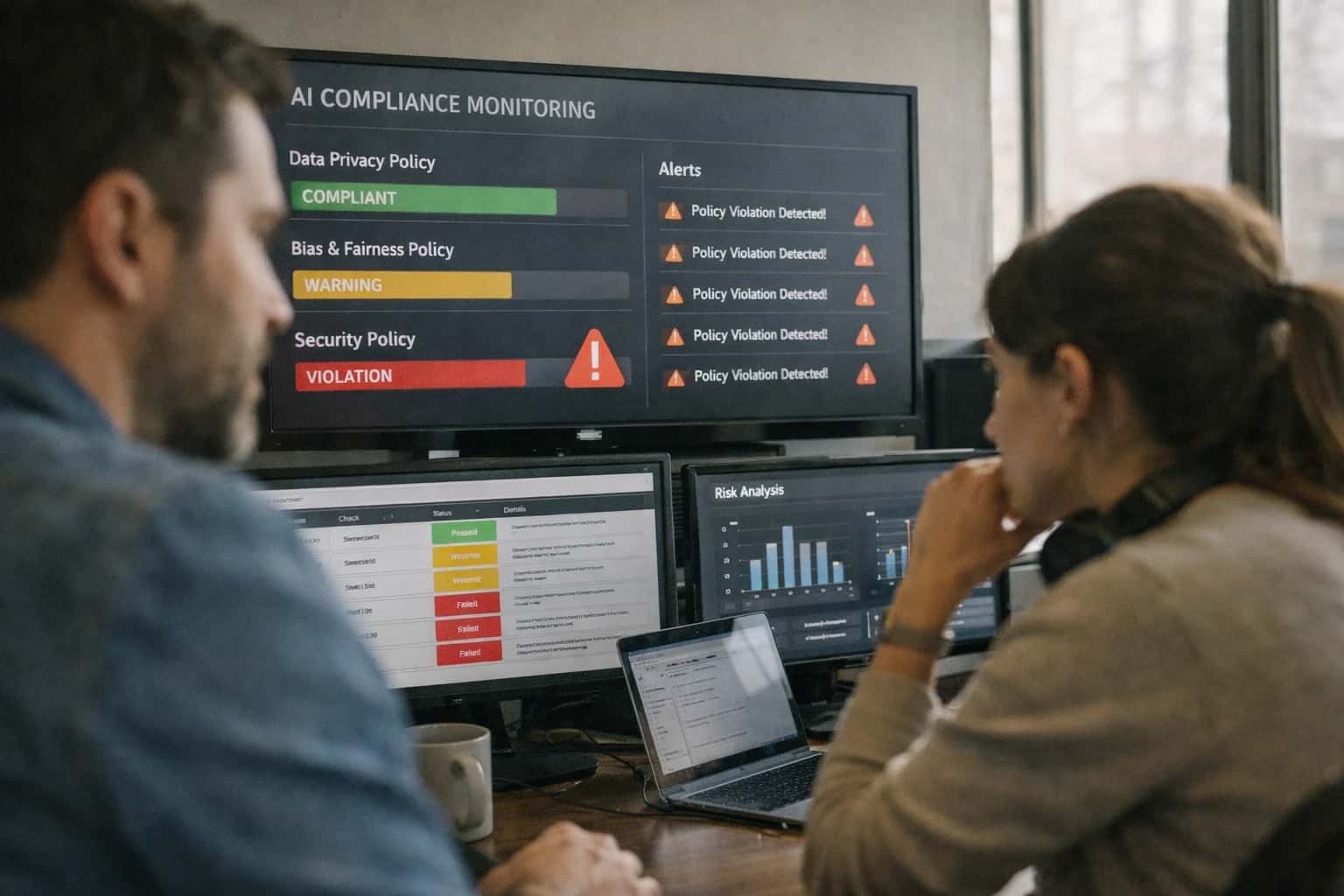
Compliance officer monitoring AI compliance agent on laptop, policy dashboards visible, modern WeWork desk setup.
ARCHITECTURE FOR INCLUSIVE LEARNING

Where AI Fits into LMS Accessibility and Translation Workflows

A technical blueprint for embedding AI agents into Canvas, Moodle, Blackboard, and Brightspace to automate accessibility compliance and multilingual content delivery.

AI integration targets specific LMS surfaces and data objects to automate high-effort, compliance-critical tasks. Core integration points include:

  • Content Modules & Files API: For batch processing uploaded images, PDFs, and videos to generate alt-text, closed captions, and audio descriptions.
  • Rich Text Editors & LTI Deep Linking: To inject real-time translation and transcription tools directly into the content creation workflow for instructors.
  • Course Copy & Migration APIs: To apply AI-powered translation and accessibility remediation during semester setup or course duplication, transforming a manual, days-long process into a same-day operation.
  • Student Activity Streams & Notifications: To deliver translated announcements or accessibility-adjusted content based on individual student profiles and preferences stored in the LMS.


Implementation typically involves an orchestration layer that listens for webhooks from the LMS (e.g., a new file upload in Canvas) and routes payloads to specialized AI agents. For example:

  1. An image uploaded to a Moodle resource triggers a webhook to an AI agent, which calls a vision model to generate descriptive alt-text and posts it back via the Files API.
  2. A lecture recording in Panopto (integrated with Brightspace) is processed for automatic transcription and translation into configured languages, with the SRT/VTT files attached to the media object via the External Tool API.
  3. A course exported from Blackboard Learn is analyzed by an AI agent that identifies untranslated materials and non-compliant elements, providing a remediation report and, with approval, executing the fixes via the Course Content API.

Rollout requires a phased, governance-first approach. Start with a pilot course to audit AI output quality and establish human review workflows, often managed through a separate dashboard that logs all AI actions against the LMS audit trail. Key considerations include:

  • Data Residency & Privacy: Ensuring audio/video processing for transcription complies with institutional policies (e.g., FERPA).
  • Model Selection: Choosing between cost-optimized, fast models for real-time lecture translation and high-accuracy, specialized models for complex diagram alt-text.
  • Fallback Protocols: Designing the system to gracefully degrade—for instance, flagging low-confidence translations for human review rather than auto-publishing—maintaining academic integrity and accessibility standards.

This architecture turns the LMS from a passive content repository into an active, inclusive learning environment, reducing the administrative burden of compliance while personalizing the experience for every student.

ARCHITECTURAL INTEGRATION GUIDE

LMS Touchpoints for AI Accessibility & Translation

Content & Asset Management

This surface covers the core repositories where instructional materials live. AI integrations here automate the creation of accessible alternatives and multilingual versions, directly within the LMS's native content tools.

Key Integration Points:

  • File/Image Upload APIs: Intercept uploads to auto-generate alt-text for images using vision models before the file is saved to the course.
  • Content Editor Webhooks: Process HTML/text content within rich-text editors (e.g., Canvas Rich Content Editor, Moodle Atto) to suggest readability improvements, identify complex jargon, and flag potential accessibility issues.
  • Module & Page APIs: Use LMS APIs (like Canvas Modules API or Moodle core_course_get_contents) to retrieve, translate, and republish entire pages or modules for different language cohorts, maintaining original structure and links.

Implementation Pattern: A background service listens for file.uploaded or content.updated events via webhook, processes the asset with configured AI models (e.g., GPT-4V for alt-text, a translation API), and posts the results back via the LMS API to populate description fields or create parallel content items.

LMS INTEGRATION PATTERNS

High-Value AI Use Cases for Accessible, Multilingual Learning

Practical AI integration patterns for Canvas, Moodle, Blackboard, and Brightspace that automate accessibility compliance and scale multilingual support, directly within existing course workflows and content modules.

01

Real-Time Lecture Transcription & Translation

Integrate AI audio processing with LMS-embedded video tools (Panopto, Kaltura) via their APIs. Automatically generate synchronized, searchable transcripts for live and recorded lectures. Provide real-time translation into multiple languages for captions, enabling inclusive participation. Outputs are stored as accessible attachments in the LMS content module.

Batch -> Real-time
Caption workflow
02

Automated Alt-Text for Course Images

Deploy an AI agent that monitors the LMS content repository (via REST API or webhook) for new image uploads in pages, announcements, and assignments. Use vision models to generate descriptive alt-text, then push the metadata back to the image object. Ensures WCAG 2.1 AA compliance without manual instructor effort.

1 sprint
Initial deployment
03

Dynamic Translation of Core Course Materials

Build a translation layer that connects to the LMS Content API. Instructors flag core documents (syllabi, assignment sheets, rubrics) for translation. AI generates and version-controls translations, publishing them as linked resources in the same module. Supports on-demand translation for student-initiated requests via an LTI tool.

Hours -> Minutes
Document translation
04

Accessibility Compliance Scanner & Remediation

An AI-driven scanner that periodically audits course sites via the LMS API, checking for missing alt-text, poor color contrast, untagged PDFs, and inaccessible video. Generates a prioritized remediation ticket in the instructor's dashboard with one-click fixes (e.g., generate contrast-adjusted themes, tag PDFs).

Same day
Course audit
05

Multilingual Discussion Board Moderator

Integrate an AI agent with the LMS Discussion API. The agent monitors forum posts, detects the language, and can provide real-time translation for peers. It also summarizes long threads in the student's preferred language and flags questions that match FAQ content, answering them in the thread.

06

Personalized, Translated Study Aid Generation

An LTI tool that lets students request a summary of the week's materials. The tool pulls content from the LMS module via API, uses AI to generate a concise study guide, and offers translation into the student's native language. Output is a private document stored in the user's LMS file area.

Hours -> Minutes
Study guide creation
ACCESSIBILITY AND TRANSLATION

Example AI Automation Workflows

These concrete workflows demonstrate how to connect AI models to your LMS's APIs and content surfaces to automate accessibility compliance and multilingual support, reducing manual effort from days to minutes.

Trigger: An instructor uploads an image file (.png, .jpg, .svg) to a course module, page, or assignment description in Canvas, Moodle, Blackboard, or Brightspace.

Context/Data Pulled:

  • The LMS fires a webhook or the integration polls the course's file repository via the LMS Files API (e.g., Canvas /api/v1/courses/:course_id/files).
  • The system extracts the new image file's URL, its parent context (e.g., "Week 3 Biology Lab Diagram"), and any existing alt attribute.

Model/Agent Action:

  1. The image is sent to a vision model (e.g., GPT-4V, Claude 3) with a structured prompt:
    code
    Describe this educational image in detail for a visually impaired student. 
    Context: It is uploaded to a course module titled "[Module Name]". 
    Output a concise, accurate alt-text (under 125 characters).
  2. The generated alt-text is validated for length and relevance.

System Update:

  • The integration uses the LMS's File Update API to patch the image's metadata, setting the alt attribute to the AI-generated description.
  • A log entry is created in the integration's audit trail, recording the file ID, original filename, generated text, and timestamp.

Human Review Point:

  • The instructor receives an in-LMS notification or email with the generated alt-text and a link to edit it if necessary. All auto-generated alt-text is flagged in the system's dashboard for periodic quality review by accessibility coordinators.
SECURE, SCALABLE, AND ACCESSIBLE BY DESIGN

Implementation Architecture: Data Flow, APIs, and Guardrails

A production-ready architecture for weaving AI-powered accessibility and translation directly into your LMS's content lifecycle and user experience.

The integration connects at two primary layers: the content management APIs and the real-time event webhooks. For platforms like Canvas or Brightspace, we use their File Upload and Content APIs to process static assets (PDFs, images, DOCX) uploaded to modules or assignments. An event-driven pipeline listens for new content creation via webhooks, extracts the asset, and sends it to vision or document AI models to generate descriptive alt-text, structured summaries, or translated versions. The processed content is then posted back to the LMS via the same APIs, often as a new file version or attached metadata, creating a seamless, automated remediation workflow for instructors.

For real-time accessibility, such as live lecture transcription and translation, the architecture taps into the LTI (Learning Tools Interoperability) framework and meeting platform integrations. An LTI 1.3 tool can be embedded as a "Live Captions" activity within a course. It connects to the institution's Zoom or Teams telephony API, streams audio to a speech-to-text model, and displays synchronized captions in the LMS interface. For translation, the text stream is processed through a translation model configured for the course's primary language, with outputs available as selectable subtitle tracks. This all occurs with student privacy guardrails, ensuring audio processing is ephemeral and compliant with FERPA.

Governance is critical. The system is built with role-based access control (RBAC) mirroring LMS permissions, so only instructors or course designers can trigger bulk processing. All AI-generated content is logged with an audit trail linking the source asset, model used, timestamp, and acting user. For high-stakes materials, a human-in-the-loop approval step can be configured within the workflow before alt-text or translations are published. We implement strict data handling: content is processed in-memory or within a secure enclave, never persisted in AI vendor logs, and all API calls between the LMS, our middleware, and AI models are encrypted. Rollout follows a phased approach, starting with a pilot course to calibrate model accuracy for specific academic jargon before expanding to department or institution-wide use.

IMPLEMENTATION PATTERNS

Code & Payload Examples

Image Analysis & LMS File Update

This pattern uses the LMS's File API to process uploaded images, generate compliant alt-text via a vision model, and update the file's metadata. It's typically triggered by a webhook on file upload or run as a batch job on existing course content.

Example Payload (Canvas API - Update File):

json
PUT /api/v1/courses/12345/files/67890
{
  "file": {
    "display_name": "cell_structure.png",
    "locked": false
  },
  "description": "A detailed diagram of a eukaryotic cell. The image labels the nucleus, mitochondria, endoplasmic reticulum, Golgi apparatus, and cell membrane. Color coding distinguishes membrane-bound organelles from the cytosol."
}

Workflow:

  1. Poll /api/v1/courses/:course_id/files for new images.
  2. Download file and send to multimodal LLM (e.g., GPT-4V, Claude 3) with a structured prompt for educational alt-text.
  3. Use the file update endpoint to inject the generated description, complying with WCAG 2.1.
ACCESSIBILITY AND TRANSLATION WORKFLOWS

Realistic Time Savings and Operational Impact

This table shows the operational impact of integrating AI into core LMS accessibility and translation workflows. Metrics are based on typical administrative and instructional support tasks within Canvas, Moodle, Blackboard, and Brightspace.

Workflow / TaskManual ProcessAI-Assisted ProcessImplementation Notes

Image alt-text generation for course materials

Instructor or designer manually writes descriptions for each image (2-5 mins per image)

AI auto-generates draft alt-text on upload; human reviews and edits (30-60 secs per image)

Integrates with LMS file upload APIs; human review ensures quality and context accuracy

Lecture video transcription

Outsource to third-party service (24-48 hr turnaround, $2-$5 per minute)

AI provides real-time or near-real-time automated transcription; editor reviews for accuracy

Hooks into LMS video platform APIs (Panopto, Kaltura); editor uses AI-highlighted sections for review

Translation of core course documents (syllabus, assignments)

Professional translation service (days to weeks, significant cost per word)

AI provides first-draft translation; instructor or language expert reviews and contextualizes

Works with LMS document repository; targets high-enrollment languages first; human-in-the-loop is critical

Live captioning for virtual classrooms / webinars

Dedicated CART provider or staff member captioning in real-time

AI provides real-time captions with moderator able to make quick corrections via a dashboard

Integrates with LMS virtual classroom tools (Zoom, Teams LTI); moderator tools reduce error rate

Checking existing content for WCAG compliance gaps

Manual audit by accessibility specialist (hours per course module)

AI scans and flags potential compliance issues (contrast, heading structure, etc.) for specialist review

Uses LMS Content API or exports; prioritizes issues for specialist, doesn't replace final human audit

Generating multilingual announcements & updates

Instructor writes base message, translates via tool or service, posts to each section

AI drafts translations; instructor reviews and posts to all relevant sections/shells via API

Orchestrates LMS Announcements and Section APIs; ensures consistent messaging across sections

Creating accessible text descriptions for complex charts/graphs

Subject matter expert (SME) or designer writes detailed descriptions (10-15 mins each)

AI analyzes chart image and data to propose a description; SME refines for pedagogical clarity

Leverages assignment and content APIs; final output must be pedagogically sound, not just technically descriptive

IMPLEMENTING AI FOR ACCESSIBILITY

Governance, Compliance, and Phased Rollout

A practical framework for deploying AI-driven accessibility and translation features in Canvas, Moodle, Blackboard, and Brightspace with controlled risk and measurable impact.

Integrating AI for accessibility touches sensitive student data and must align with institutional policy. A secure architecture typically involves a middleware layer that orchestrates between the LMS APIs and AI services. For Canvas, this means using the REST API and webhooks to listen for new file uploads in Files or Modules. For Moodle, the web service API and event triggers are used to process new resource or forum posts. This layer handles authentication, strips unnecessary metadata, and sends only the required content (e.g., image bytes, transcript audio, document text) to the chosen AI model—whether a hosted LLM like OpenAI or a local, on-premises model for stricter data governance. All processed outputs, like generated alt-text or translated materials, are written back to the LMS via the API and logged in an immutable audit trail alongside the original user and course context.

A phased rollout mitigates risk and builds institutional trust. Start with a pilot course in a single LMS instance, focusing on a non-critical, high-volume workflow:

  • Phase 1: Alt-Text for Legacy Images. Target a course with many unlabeled diagrams or charts. Use the LMS API to batch-process existing images in the Files area, generating descriptive alt-text with human review before publishing updates.
  • Phase 2: Real-Time Lecture Transcription. Enable AI-powered live captioning for new video lectures posted to integrated tools like Panopto or Kaltura, using their APIs to feed audio to the transcription service and post the SRT/VTT file back to the media asset.
  • Phase 3: On-Demand Material Translation. Activate a translation agent for designated course modules, allowing instructors to select specific Pages or HTML content via a custom LTI tool for translation into key languages, with a mandatory review step by a language specialist. Each phase should include clear opt-in/opt-out controls for instructors and students, performance monitoring (e.g., accuracy rates for alt-text, transcription latency), and a feedback loop to refine prompts and workflows.

Governance is anchored in compliance with ADA, Section 508, and FERPA. Implement role-based access controls (RBAC) so only authorized faculty or disability services staff can approve and publish AI-generated accessibility content. Ensure all AI processing for student data is covered under existing BAA agreements if using cloud AI services. Establish a review board to evaluate AI outputs for cultural sensitivity in translations and appropriateness of alt-text descriptions before they become part of the official course record. Finally, integrate these AI operations into the institution's existing IT change management and procurement processes, treating the AI middleware as a critical academic system that requires defined SLAs for uptime, support, and continuous improvement.

IMPLEMENTATION AND GOVERNANCE

Frequently Asked Questions

Practical questions for IT, accessibility officers, and instructional designers planning AI-powered accessibility and translation integrations for Canvas, Moodle, Blackboard, and Brightspace.

The standard pattern uses a secure middleware layer (often an Inference Systems-managed service) that sits between your LMS and the AI provider (e.g., OpenAI, Anthropic).

  1. Trigger: An event in the LMS (e.g., a new image upload via the files API, a video recording posted to Panopto/Kaltura) sends a webhook or drops a message into a secure queue.
  2. Context Pull: The middleware fetches the file and relevant metadata (course ID, user role) via the LMS's REST API using OAuth 2.0 or LTI Advantage credentials.
  3. AI Action: The file is sent to the configured AI model. For accessibility, this might be:
    • Alt-text: A vision model describes the image.
    • Transcription: An audio model transcribes lecture audio.
    • Translation: An LLM translates text-based content (HTML pages, DOCX).
  4. System Update: The middleware posts the AI-generated content back to the LMS via the appropriate API endpoint (e.g., updating the alt_text attribute of a file, posting a transcript as a separate attachment).
  5. Key Security Points:
    • Data in transit is encrypted (TLS 1.3).
    • LMS credentials are never exposed to the end-user browser.
    • AI providers with data processing agreements (DPAs) are used for regulated content.
    • Audit logs track all file access and AI processing events.
Prasad Kumkar

About the author

Prasad Kumkar

CEO & MD, Inference Systems

Prasad Kumkar is the CEO & MD of Inference Systems and writes about AI systems architecture, LLM infrastructure, model serving, evaluation, and production deployment. Over 5+ years, he has worked across computer vision models, L5 autonomous vehicle systems, and LLM research, with a focus on taking complex AI ideas into real-world engineering systems.

His work and writing cover AI systems, large language models, AI agents, multimodal systems, autonomous systems, inference optimization, RAG, evaluation, and production AI engineering.


