An effective AI integration for Envestnet targets specific surfaces within the Advisor Suite and Tamarac ecosystem where manual effort or data latency creates friction. Key integration points include: the client dashboard for real-time portfolio alerts and talking points; the model management module for change analysis and communication drafts; the rebalancing workflow for proposal generation and impact simulation; and the reporting engine for automated commentary on performance and attribution. AI agents act as a layer between the platform's rich data and the advisor, querying APIs for holdings, transactions, models, and client notes to power context-aware assistance.

Integration
AI Integration with Envestnet Advisor Copilot
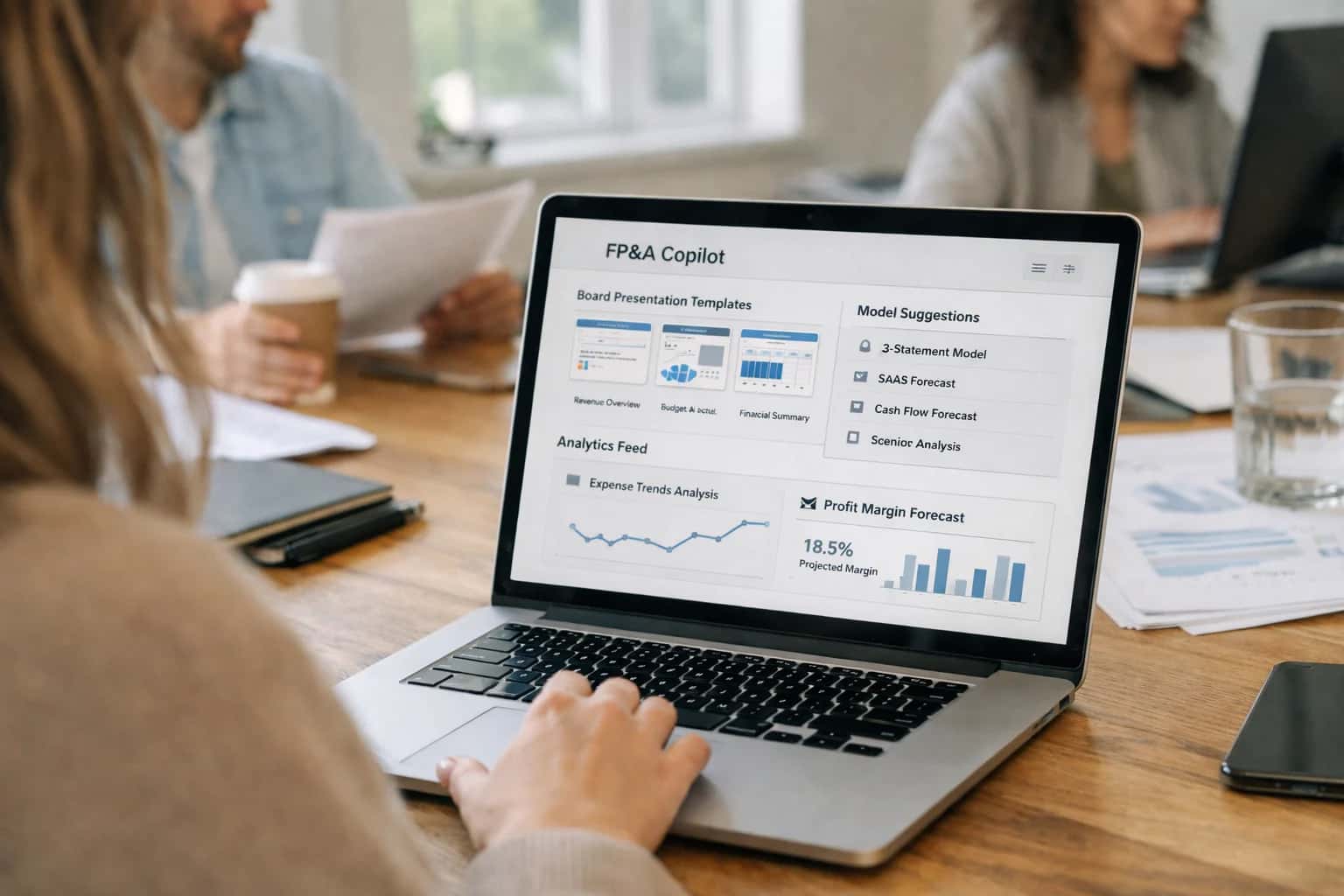
A technical guide to architecting and deploying AI copilots that augment Envestnet's advisor workflows, providing real-time portfolio guidance, model change analysis, and next-best-action recommendations.
ARCHITECTURE AND ROLLOUT
Where AI Fits into the Envestnet Advisor Workflow
A practical blueprint for integrating AI agents and copilots directly into the daily Envestnet Advisor Suite workflow.
Implementation typically involves a middleware service that subscribes to Envestnet webhooks for events like portfolio.rebalanced, model.updated, or client.document_viewed. This service uses RAG against the firm's research library and client IPS documents, then calls LLMs to generate drafts, summaries, or alerts. These are delivered back into the advisor's workflow via: API writes to create tasks or notes in Envestnet; email/SMS triggers for urgent alerts; or a sidebar copilot UI embedded in the platform. The impact is operational: turning hours of manual research synthesis into minutes, ensuring model change communications are same-day instead of next-day, and reducing the manual triage of client inquiries.
Rollout requires a phased approach, starting with a single high-value workflow like automated quarterly report commentary or model drift alerts. Governance is critical: all AI-generated content should be flagged as a draft, require advisor review/editing before client communication, and maintain a full audit trail linking the source data, prompt, and output. This controlled integration augments the advisor's judgment without bypassing compliance checks, making the Envestnet platform more intelligent while keeping the human firmly in the loop.
ARCHITECTURAL BLUEPRINT
Key Integration Surfaces in the Envestnet Ecosystem
Core Advisor Desktop & Portfolio Management
The Tamarac Advisor View and Envestnet | Tamarac platform serve as the primary advisor workstation. AI integrations here focus on augmenting the daily workflow by injecting real-time intelligence and automating manual analysis.
Key surfaces include:
- Portfolio Summary Dashboards: Inject AI-generated commentary on performance attribution, drift, and tax implications directly into dashboard widgets.
- Model Management Modules: Use AI to analyze model changes, simulate impacts across client books, and draft communication scripts for advisors.
- Rebalancing Proposals: Augment rebalancing logic with AI that considers tax-loss harvesting opportunities, cash flow needs, and client-specific constraints beyond basic drift thresholds.
- Client Account Views: Surface "next-best-action" prompts (e.g., "Client X has a concentrated position reaching threshold") and auto-generate pre-meeting briefs by pulling data from the account, CRM, and recent activities.
Integration is typically event-driven, using Tamarac APIs to fetch portfolio data and write back notes, tasks, or annotated alerts.
INTEGRATION PATTERNS
High-Value AI Use Cases for Envestnet Advisors
These practical integration patterns show where AI agents and automated workflows can connect to Envestnet's data models and advisor surfaces to augment, not replace, existing processes.
01
Model Portfolio Change Intelligence
An AI agent monitors Envestnet's model management data and generates plain-English summaries of material changes—drift, rebalancing actions, underlying fund updates. It drafts advisor and client communications, linking changes to specific accounts and investment policy statements. Integrates via Envestnet's API to read model data and write notes to client records.
Batch -> Real-time
Alert cadence
02
Automated Pre-Meeting Packet Assembly
Triggered by a calendar event or CRM task, an AI workflow pulls the latest portfolio performance, recent transactions, planning updates, and past meeting notes from Envestnet and linked systems. It synthesizes a one-page briefing with talking points, anomalies to discuss, and next-step suggestions, saving the document to the client's file. Uses Envestnet's reporting APIs and webhooks for event triggers.
Hours -> Minutes
Prep time
03
Portfolio Commentary & Anomaly Detection
Instead of static report commentary, an AI agent connected to Envestnet's performance data generates personalized, narrative summaries for each client review. It highlights top contributors/detractors, flags unusual activity (large cash flows, concentrated positions), and compares performance to the client's benchmark and goals. Output is formatted for direct insertion into Envestnet's reporting modules or client portals.
Same day
Commentary draft
04
Next-Best-Action for Client Service
An AI copilot analyzes Envestnet account data (inactivity, drift from target, cash buildup) combined with CRM activity to recommend specific advisor actions. Examples: "Client X's portfolio is 5% overweight equities; schedule a rebalancing review," or "No contact with Client Y in 90 days; send a market update." Recommendations surface in the advisor's dashboard or as tasks in the integrated CRM.
Proactive alerts
Workflow trigger
05
Compliance Pre-Screen & Suitability Check
Before a trade or model change is submitted in Envestnet, an AI agent reviews the action against the client's profile, IPS, and past holdings. It flags potential suitability issues (e.g., high-risk investment for conservative profile) or concentration warnings. This creates an automated, documented pre-check layer that integrates via Envestnet's trade/order APIs or by monitoring data feeds.
Pre-submission
Risk review
06
Research Synthesis for Investment Committees
An AI RAG (Retrieval-Augmented Generation) system ingests Envestnet's model manager research, third-party white papers, and economic reports. It answers natural language queries (e.g., "Summarize the current outlook for international small-cap") and generates concise briefing documents for investment committee meetings. Integrates by processing documents from Envestnet's research library and delivering insights back to the platform.
Volume -> Signal
Analysis focus
IMPLEMENTATION PATTERNS
Example AI-Powered Workflows for Envestnet
These concrete workflows illustrate how AI copilots and agents can be embedded into Envestnet's advisor desktop, automating high-frequency tasks and surfacing data-driven insights. Each pattern connects to specific Envestnet APIs, data objects, and user surfaces.
Trigger: An advisor schedules a client review meeting in their calendar (synced via Envestnet's calendar integration or CRM).
Context/Data Pulled:
- The agent calls the Envestnet API to retrieve the client's portfolio(s) and performance data for the period.
- It fetches recent transactions, model changes, and fee assessments.
- It pulls the last three meeting notes and action items from the client's record.
- It accesses the client's investment policy statement (IPS) and current allocation targets.
Model/Agent Action:
- An LLM analyzes the data to generate a concise, one-page briefing. It highlights:
- Portfolio performance vs. benchmark and IPS targets.
- Key drivers of returns (e.g., "Tech sector overweight contributed +1.2%").
- Notable transactions or drift requiring discussion.
- Unresolved action items from prior meetings.
- 3-5 suggested talking points and potential planning opportunities.
System Update/Next Step:
- The briefing is saved as a PDF and attached to the calendar event.
- A summary is posted as a note in the client's Envestnet record.
- The advisor receives a notification 24 hours before the meeting.
Human Review Point: The briefing is generated automatically, but the advisor can review and edit the note within Envestnet before the meeting.
PRODUCTION-READY AI INTEGRATION
Implementation Architecture: Data Flow, APIs, and Guardrails
A secure, event-driven architecture for embedding AI agents into Envestnet's advisor workflows without disrupting core operations.
A production integration connects to Envestnet's REST APIs and webhook systems to create a real-time, read-first architecture. The typical data flow starts with the AI system subscribing to events for key objects—like portfolio model changes, new client documents, or advisor calendar updates—via Envestnet's notification services. When an event is triggered, the system securely pulls relevant data (e.g., portfolio holdings from the Portfolio API, client profiles from the Client API, and firm models from the Model Management API) to build context. This data is processed through a RAG (Retrieval-Augmented Generation) pipeline that grounds the AI in the firm's specific investment philosophy, compliance guidelines, and client communication history stored in a private vector database. The AI agent then executes its assigned task, such as drafting a portfolio commentary or generating a next-best-action alert.
The agent's output is routed through a governance layer before any write-back occurs. This layer enforces firm policies, running checks for suitability, required disclosures, and pre-approved language. For high-impact actions—like a suggested model change—the workflow can be designed to require advisor approval via a lightweight task created in Envestnet's workflow engine or a notification in the advisor's dashboard. Approved outputs are then written back via secure API calls, creating notes in the Client Journal, updating tasks, or populating custom fields for reporting. All interactions are logged with a full audit trail, linking the AI's suggestion to the source data, the prompting logic, the governing rules applied, and the final human action (view, approve, modify).
Rollout follows a phased, role-based access control (RBAC) model. Initial pilots often start with a limited group of advisors and a single use case, such as automated meeting prep. Access is controlled via Envestnet's existing user permissions, ensuring only authorized personnel can trigger or view AI outputs. Performance is monitored through a separate LLMOps dashboard, tracking metrics like advisor usage, time-to-draft, and feedback on suggestion quality to iteratively refine prompts and data sources. This architecture ensures the AI augments the advisor's workflow within the guardrails of the platform's existing security, compliance, and data governance frameworks.
ENVESTNET ADVISOR COPILOT INTEGRATION PATTERNS
Code and Payload Examples
Retrieving Client Data for AI Context
Before an AI agent can provide relevant guidance, it needs a complete view of the client. This typically involves a multi-API call to assemble a context payload from Envestnet's Tamarac API.
Key Data Objects:
Client(profile, goals, risk tolerance)Account(list with balances and custodians)Portfolio(model assignments and holdings)Recent Activities(notes, tasks, transactions)
Example Payload Assembly Logic:
python# Pseudocode for building a client context object def get_client_context(client_id): context = { "client": api.get_client(client_id), "accounts": api.get_accounts(client_id), "portfolio": api.get_model_portfolio(client_id), "activities": api.get_recent_activities(client_id, limit=10), "alerts": api.get_active_alerts(client_id) } # Enrich with calculated fields context["total_aum"] = sum(acc["currentBalance"] for acc in context["accounts"]) context["model_deviation"] = calculate_model_deviation(context["portfolio"], context["accounts"]) return context
This structured context is then passed to the LLM as grounding data for generating recommendations or answering advisor queries.
ADVISOR WORKFLOW IMPACT
Realistic Time Savings and Business Impact
How AI integration transforms key Envestnet advisor workflows from manual, reactive tasks to proactive, assisted processes.
| Advisor Workflow | Before AI Integration | After AI Integration | Implementation Notes |
|---|---|---|---|
Client Meeting Preparation | 1-2 hours manual data pull and synthesis | 15-20 minutes with automated briefing packet | AI compiles portfolio changes, recent activities, and talking points from Envestnet data |
Portfolio Commentary & Reporting | Manual drafting for each client review | Assisted generation with personalized narratives | Human advisor reviews and edits AI-drafted performance summaries |
Model Change & Rebalancing Review | Manual analysis of drift and impact across accounts | Automated drift reports with proposed actions | AI flags outliers; advisor approves final trade lists |
Next-Best-Action Identification | Reactive, based on calendar or client calls | Proactive alerts on planning gaps or opportunities | AI analyzes client IPS, cash flow, and market data for recommendations |
Client Inquiry Triage | Email/portal review and manual data lookup | Initial response drafted with relevant account data | AI surfaces context; advisor sends personalized final response |
Research Synthesis for Client Topics | Hours reading and summarizing market reports | Minutes to generate a concise, cited summary | RAG system grounds answers in firm-approved research library |
Compliance Pre-Check | Manual review of IPS and guidelines post-trade | Pre-trade alert on potential suitability concerns | AI screens proposed actions against client profile; advisor retains final approval |
CONTROLLED DEPLOYMENT FOR FINANCIAL DATA
Governance, Security, and Phased Rollout
A practical approach to deploying AI in Envestnet that prioritizes security, compliance, and measurable advisor adoption.
Start with a read-only, sandboxed integration using Envestnet's API to access anonymized or test portfolio, model, and client data. This initial phase focuses on building and validating AI workflows—like generating portfolio commentary or summarizing model changes—without touching production systems or live client records. All AI outputs should be tagged with source data lineage and include a human review step before any action is taken or communication is sent.
For a production rollout, implement a phased, role-based approach. Begin with a pilot group of advisors using a copilot for internal research and meeting prep, where all outputs are drafts. Next, expand to automating specific, low-risk workflows like drafting initial client email responses or pre-populating meeting agendas, with mandatory advisor review and approval. Finally, integrate approved AI actions back into Envestnet, such as logging a note in the CRM, creating a follow-up task, or triggering a model change alert—all through secure, audited API calls that enforce your firm's existing permissions and compliance rules.
Governance is built into the architecture. Every AI interaction should be logged with the user, timestamp, source data context, and the full prompt/response payload for auditability. Implement prompt guards to prevent the AI from generating recommendations outside pre-defined boundaries (e.g., specific securities, unapproved models) and data filters to ensure sensitive information like Social Security numbers is never sent to an LLM. A phased rollout allows you to measure impact (e.g., time saved on report drafting, advisor satisfaction) and adjust guardrails before scaling, ensuring the AI augments—never disrupts—the trusted advisor-client relationship built on the Envestnet platform.
Enabling Efficiency, Speed & Accuracy
Intelligent Analysis, Decision & Execution
We build AI systems for teams that need search across company data, workflow automation across tools, or AI features inside products and internal software.
Talk to Us
Search across company data
Give teams answers from docs, tickets, runbooks, and product data with sources and permissions.
Useful when people spend too long searching or get different answers from different systems.
Enterprise searchRAGPermissions
Read more
Automate internal workflows
Use AI to route work, draft outputs, trigger actions, and keep approvals and logs in place.
Useful when repetitive work moves across multiple tools and teams.
AI agentsWorkflow automationGovernance
Read more
Add AI to products and internal tools
Build assistants, guided actions, or decision support into the software your team or customers already use.
Useful when AI needs to be part of the product, not a separate tool.
AI integrationDecision supportModel routing
Read moreIMPLEMENTATION AND ARCHITECTURE
Frequently Asked Questions
Common technical and strategic questions for teams planning to integrate AI copilots and agents into the Envestnet ecosystem.
The integration typically connects at three primary layers:
- Data Layer via APIs: The AI system pulls real-time and historical data using Envestnet's REST APIs for accounts, models, holdings, transactions, and performance. This provides the context for analysis and recommendations.
- Automation & Workflow Layer: AI-driven actions are executed via:
- Envestnet Tamarac Trading API: For generating model change proposals or rebalancing alerts.
- Webhook Listeners: To trigger AI analysis based on events like a significant market move, a client login, or a completed trade.
- CRM Integration (e.g., Salesforce Financial Services Cloud): Where the AI writes notes, suggests next-best-actions, or drafts client communications based on Envestnet data.
- User Interface Layer: The AI copilot can be embedded as:
- A sidebar or chat interface within the Envestnet Advisor Dashboard.
- A dedicated module in the Tamarac client portal.
- Notifications and insights delivered via email or the platform's alerting system.
The architecture is designed to augment, not replace, existing workflows, inserting intelligence at key decision points.

About the author
Prasad Kumkar
CEO & MD, Inference Systems
Prasad Kumkar is the CEO & MD of Inference Systems and writes about AI systems architecture, LLM infrastructure, model serving, evaluation, and production deployment. Over 5+ years, he has worked across computer vision models, L5 autonomous vehicle systems, and LLM research, with a focus on taking complex AI ideas into real-world engineering systems.
His work and writing cover AI systems, large language models, AI agents, multimodal systems, autonomous systems, inference optimization, RAG, evaluation, and production AI engineering.
LinkedIn
Limited slotsGet a Free AI Consultation
Partnered with leading AI, data, and software stack.





How We Work
Custom AI workflows for your Business
One-fit-all AI don't work for modern businesses. At Inferensys, we aim to understand your business & custom requirements; which we use to define most efficient agentic workflows, the data, and the tools for your business.
01
Review the use case
We understand the task, the users, and where AI can actually help.
Read more02
Pick the right approach
We define what needs search, automation, or product integration.
Read more03
Build the first useful version
We implement the part that proves the value first.
Read more04
Improve from there
We add the checks and visibility needed to keep it useful.
Read moreThe first call is a practical review of your use case and the right next step.
Talk to Us