AI integration for Orion is not about replacing the platform but augmenting its existing surfaces—primarily the Client Portal, Billing & Reporting modules, and advisor-facing dashboards. The goal is to inject intelligence at key friction points: where advisors manually compile data for reviews, where service teams handle routine client inquiries, and where operations staff validate complex fee calculations. This means connecting AI to Orion's REST API to read client/account data, portfolio performance, and billing statements, and to write back structured notes, tasks, or generated documents.

Integration
AI Integration for Orion
A technical blueprint for embedding AI agents and automated workflows into Orion's client portal, billing, and reporting surfaces to enhance advisor efficiency and client service.
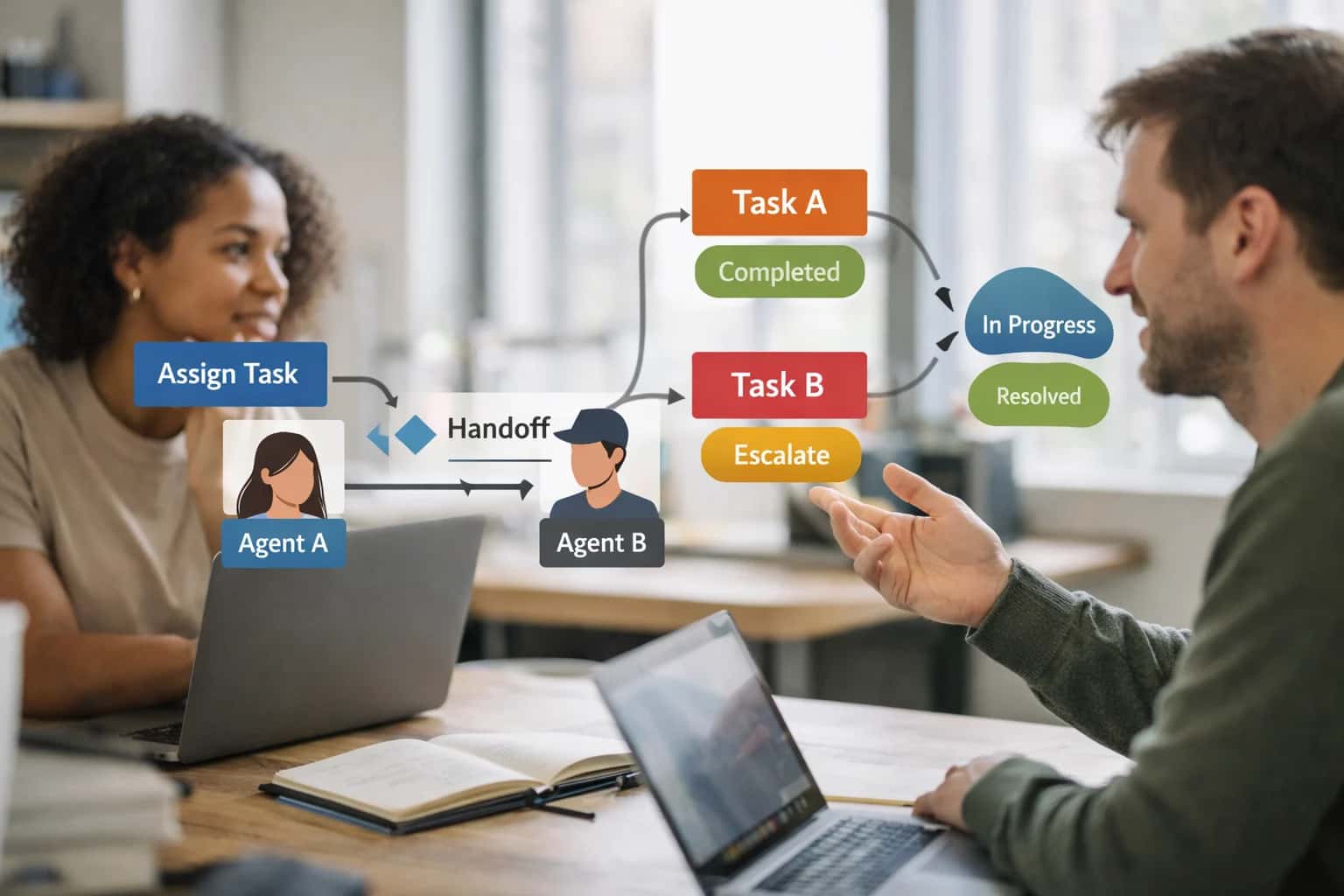
ARCHITECTURE & ROLLOUT
Where AI Fits into the Orion Ecosystem
A practical blueprint for integrating AI agents and automation into Orion's core advisor workflows without disrupting existing operations.
Implementation typically follows a phased, workflow-specific approach. For example, a Client Service Agent can be deployed first, integrated via webhook to monitor the portal for common inquiries ("What's my YTD performance?"). The agent uses a RAG system grounded in the client's specific Orion data to generate a accurate, personalized response, which is either posted back to the portal or routed to a service rep for review. Next, an Advisor Copilot might be added, using Orion's reporting APIs to automatically generate pre-meeting packets—pulling performance summaries, recent transactions, and billing alerts into a concise narrative draft, saving 30-60 minutes of manual prep per review.
Governance and rollout are critical. AI outputs, especially those touching client communications or billing, should flow through human-in-the-loop approval steps initially, logged in Orion's activity audit trail. Access is controlled via Orion's existing user roles and permissions; an AI agent acts under the service identity of a designated service account. Rollout focuses on non-regulatory, high-volume tasks first—document summarization, inquiry triage, meeting prep—to build trust and demonstrate value before advancing to more sensitive workflows like fee explanation or investment commentary.
WHERE TO PLUG IN AI AGENTS AND AUTOMATION
Key Orion Modules and Surfaces for AI Integration
Client Portal & CRM
This surface is the primary interaction layer for clients and advisors. AI can be integrated to automate service workflows and enhance communication.
Key Integration Points:
- Secure Message Center: Deploy AI agents to triage and draft responses to common client inquiries (e.g., "What's my balance?", "How do I update my address?").
- Document Vault: Use Retrieval-Augmented Generation (RAG) to enable natural language Q&A over stored documents (statements, tax forms, agreements).
- Client Profile & Household Data: Feed structured client data (goals, risk tolerance, account types) into AI copilots to personalize all generated content and recommendations.
- Activity & Note Logging: Automatically summarize client calls or meetings and log structured notes back to the client record, tagging relevant accounts and follow-up tasks.
Example Workflow: An AI agent monitors the portal for a "document request" message, retrieves the correct quarterly statement from the vault, and posts a secure reply with a download link and a brief, personalized performance highlight—all without advisor intervention.
ADVISOR EFFICIENCY & CLIENT SERVICE AUTOMATION
High-Value AI Use Cases for Orion
Integrate AI directly into Orion's client portal, billing, and reporting workflows to automate routine tasks, surface actionable insights, and enhance advisor-client interactions without disrupting existing operations.
01
Automated Client Inquiry Handling
Deploy an AI agent integrated with the Orion Client Portal API to handle common client questions about statements, performance, or fees. The agent retrieves real-time account data, generates a personalized response, and can log the interaction back to the client record, escalating only complex cases to an advisor.
Hours -> Minutes
Response time
02
Intelligent Billing & Fee Justification
Connect AI to Orion's billing modules to automate the review of fee calculations against IPS guidelines. Generate plain-language summaries for client statements, proactively draft responses to common billing inquiries, and flag potential discrepancies for operations review.
Batch -> Real-time
Explanation workflow
03
Performance Report Narrative Generation
Use AI to transform raw portfolio data from Orion's reporting engine into personalized, narrative-driven commentary. The system pulls performance, allocation, and transaction data via API, highlights key drivers of returns versus benchmarks, and drafts client-ready summaries, saving advisors hours of manual writing.
1 sprint
Report preparation
04
Meeting Preparation Copilot
Build an AI workflow that automatically compiles a pre-meeting packet for an advisor. It aggregates the client's recent performance (Orion), upcoming planning milestones (integrated planning software), past communications (CRM), and market context to generate a concise agenda with talking points and potential recommendations.
Same day
Packet assembly
05
Proactive Portfolio Drift & Rebalancing Alerts
Implement an AI layer on top of Orion's portfolio monitoring that goes beyond simple thresholds. Analyze drift in context of the client's IPS, market movements, and tax implications. Generate intelligent alerts with a proposed action (e.g., "Review for tax-loss harvesting") and a draft client communication explaining the rationale.
Batch -> Real-time
Insight delivery
06
Document Request & Onboarding Automation
Create an AI-guided workflow within the client portal for document collection (e.g., for annual reviews or onboarding). The agent uses Orion's client data to pre-fill forms, guides users through submission, performs initial checks for completeness, and triggers back-office workflows in Orion or a connected DMS upon completion.
Days -> Hours
Process duration
ORION INTEGRATION PATTERNS
Example AI-Powered Workflows
These workflows demonstrate how generative AI and automation can be embedded into Orion's core surfaces—client portal, billing engine, and reporting modules—to reduce manual effort and enhance advisor-client interactions.
Trigger: A client submits a question via the Orion client portal (e.g., "Why did my portfolio value drop last quarter?").
Context/Data Pulled:
- Orion API call to retrieve the client's portfolio performance data for the specified period.
- Pull recent transactions, asset allocation, and benchmark comparisons.
- Access the client's investment policy statement (IPS) and risk profile from Orion's client records.
Model or Agent Action: An AI agent analyzes the data and drafts a personalized, compliant response:
- Summarizes Performance: "Your portfolio decreased by 2.1% in Q3, primarily due to market-wide declines in the technology sector."
- Provides Context: "Your portfolio's allocation to the S&P 500 was the main driver. This compares to the benchmark decline of 2.4% over the same period."
- Reassures & Aligns: "This movement is within expected ranges given your moderate risk tolerance and long-term strategy as outlined in your IPS."
System Update or Next Step:
- The drafted response is posted as a note in the client's Orion record and queued for advisor review in a dedicated dashboard.
- The advisor can approve, edit, or reject the response with one click. Upon approval, the response is automatically posted back to the client portal and an email notification is sent.
Human Review Point: Advisor review is required before any AI-drafted communication is sent to the client, ensuring oversight and personal touch.
ORION INTEGRATION PATTERNS
Implementation Architecture: Data Flow & System Design
A practical blueprint for connecting AI to Orion's data model and automation surfaces without disrupting existing advisor workflows.
A production-ready integration typically connects to three primary surfaces in Orion: the Client Portal API for secure, read-write client interactions; the Reporting & Billing Data Warehouse for aggregated portfolio and fee data; and the Activity & Note Logging endpoints within the CRM module. The AI layer acts as a middleware service, subscribing to webhooks for events like new portal messages, uploaded documents, or scheduled review meetings, and using Orion's REST APIs to fetch client holdings, performance data, and household details to ground its responses.
For a client service automation agent, the data flow is event-driven: 1) A client query arrives via the portal, triggering a webhook to our AI service. 2) The service calls Orion's APIs to retrieve the client's recent portfolio performance, billing statements, and past communications. 3) A RAG pipeline queries internal firm documents and market research, while an LLM synthesizes a draft response. 4) The response is logged as a note in Orion, and if approved by a rule or human, posted back to the portal. This keeps all activity auditable within Orion's native audit trail.
Rollout should be phased, starting with a single, high-volume workflow like meeting packet generation or billing inquiry triage. Governance is critical: implement role-based access controls (RBAC) so the AI only accesses data appropriate to its function, and establish a human-in-the-loop review step for any AI-generated client communication before it's sent. Use Orion's existing permission sets to manage this. The goal is to reduce manual data gathering from hours to minutes while keeping the advisor firmly in control of the client relationship.
INTEGRATION PATTERNS FOR ORION'S API
Code and Payload Examples
Building a Retrieval-Augmented Client Copilot
Integrate an AI agent with Orion's Client Portal to answer natural language questions about portfolio performance, holdings, and documents. The agent uses RAG over the client's specific data, ensuring grounded, personalized responses.
Typical Integration Flow:
- User query triggers a webhook from the Orion portal to your agent service.
- Agent calls Orion's
GET /api/v1/clients/{id}/portfoliosandGET /api/v1/performanceendpoints to fetch current data. - Relevant data is formatted and injected into a prompt context alongside the user's question.
- The LLM generates a compliant, plain-language answer.
- Response is posted back to the portal's messaging interface or returned via the webhook.
Key Orion Objects: Client, Account, PortfolioHolding, PerformanceSummary, Document.
python# Example: Fetching context for a client Q&A import requests def get_client_context(client_id, orion_api_key): headers = {"Authorization": f"Bearer {orion_api_key}"} base_url = "https://api.orionadvisor.com" # Get portfolio summary portfolio_resp = requests.get( f"{base_url}/api/v1/clients/{client_id}/portfolios/summary", headers=headers ) portfolio_data = portfolio_resp.json() # Get recent performance perf_resp = requests.get( f"{base_url}/api/v1/performance/clients/{client_id}/summary?period=YTD", headers=headers ) perf_data = perf_resp.json() # Construct context string for LLM prompt context = f""" Client Portfolio Summary: - Total Value: {portfolio_data.get('totalMarketValue')} - Asset Allocation: {portfolio_data.get('assetAllocation')} YTD Performance: - Portfolio Return: {perf_data.get('returnPercent')}% - Benchmark Return: {perf_data.get('benchmarkReturnPercent')}% """ return context
AI INTEGRATION FOR ORION
Realistic Time Savings and Operational Impact
A module-by-module view of how AI integration reduces manual effort and accelerates workflows within Orion's platform, based on typical advisory firm implementations.
| Module / Workflow | Before AI Integration | After AI Integration | Implementation Notes |
|---|---|---|---|
Client Report Commentary | Manual drafting: 30-60 mins per report | Assisted drafting with review: 5-10 mins per report | AI pulls from portfolio data & market context; human advisor approves final text |
Billing Inquiry Triage | Manual review of statements & fee calculations: 15-20 mins per inquiry | Automated explanation & data retrieval: <2 mins | AI agent accesses Orion billing APIs to generate client-ready summaries |
Meeting Preparation Packet | Manual compilation from multiple systems: 45-90 mins | Automated assembly with AI summary: 10-15 mins | Orion client data + CRM notes + recent activities synthesized into agenda |
Portfolio Rebalancing Review | Analyst manually flags drift & runs scenarios: 1-2 hours | AI-driven drift alerts with proposal rationale: 15 mins review | System monitors model thresholds and pre-drafts communication for advisor |
Client Portal Q&A Handling | Service team researches and responds: 20-30 mins per complex query | AI-assisted answer drafting with source links: 5 mins review | RAG on client-specific documents & performance data; escalates to human |
Document Request Fulfillment | Manual search, compilation, and secure delivery: 15-25 mins | Automated retrieval and delivery workflow: <5 mins | AI identifies correct documents from Orion vault and triggers secure send |
Periodic Review Workflow Kick-off | Manual checklist and data gathering: 1 hour per client | AI-generated review checklist and data pre-fill: 10 mins | Triggered by Orion's reporting calendar; populates review template |
ARCHITECTING CONTROLLED DEPLOYMENT
Governance, Security, and Phased Rollout
A practical framework for implementing AI in Orion with appropriate controls, security integration, and a risk-managed rollout.
A production AI integration for Orion must operate within the platform's existing security and data governance model. This means authenticating via Orion's OAuth 2.0 API, respecting role-based access controls (RBAC) for client data, and ensuring all AI-generated outputs—like portfolio commentary or client email drafts—are written to the appropriate audit trails and activity logs. For sensitive workflows, such as automated fee billing explanations or portfolio rebalancing suggestions, we architect a human-in-the-loop approval step before any system-of-record update is committed, typically using Orion's task or note APIs to create a review item for the advisor or operations team.
We recommend a phased rollout, starting with a read-only copilot for internal teams. Phase 1 might deploy an AI agent that synthesizes Orion performance reports and market data to generate first-draft meeting prep documents, giving advisors a productivity boost without touching client data. Success here builds confidence. Phase 2 introduces controlled write-back, such as automating the summarization of client inquiries from the portal into Orion's CRM notes. Each phase includes clear guardrails: data scoping (e.g., limiting AI access to model portfolios only), output validation rules, and a defined rollback procedure.
Long-term governance requires monitoring for model drift in summarization quality and establishing a review cycle for AI-generated content templates. By treating the AI layer as a new, governed component within your Orion ecosystem—not a black-box replacement—you gain efficiency while maintaining the compliance and client trust that wealth management demands. For related architectural patterns, see our guides on AI Integration for Wealth Management Platforms and AI Governance and LLMOps Platforms.
Enabling Efficiency, Speed & Accuracy
Intelligent Analysis, Decision & Execution
We build AI systems for teams that need search across company data, workflow automation across tools, or AI features inside products and internal software.
Talk to Us
Search across company data
Give teams answers from docs, tickets, runbooks, and product data with sources and permissions.
Useful when people spend too long searching or get different answers from different systems.
Enterprise searchRAGPermissions
Read more
Automate internal workflows
Use AI to route work, draft outputs, trigger actions, and keep approvals and logs in place.
Useful when repetitive work moves across multiple tools and teams.
AI agentsWorkflow automationGovernance
Read more
Add AI to products and internal tools
Build assistants, guided actions, or decision support into the software your team or customers already use.
Useful when AI needs to be part of the product, not a separate tool.
AI integrationDecision supportModel routing
Read moreAI INTEGRATION FOR ORION
Frequently Asked Questions
Common technical and strategic questions about implementing generative AI and automation within Orion's platform to enhance advisor efficiency and client service.
AI integrates primarily through Orion's REST API and, where available, event webhooks. Key integration points include:
- Client/Account Data: Pulling portfolio holdings, performance data, and client profile information from endpoints like
/clients,/accounts, and/holdingsto provide context for AI agents. - Reporting Engine: Using the API to fetch pre-built report data (e.g., performance summaries, statements) which an AI model can then analyze to generate personalized narrative commentary.
- Client Portal: Injecting AI-generated insights or enabling a natural language Q&A feature via a secure, embedded iFrame or a custom portal module that calls your AI service backend.
- Notes & Tasks: Writing back summarized client interactions, next steps, or follow-up tasks to Orion's
activitiesornotesendpoints to keep the system of record updated.
A typical architecture involves a middleware layer (often hosted on your cloud) that:
- Authenticates with Orion OAuth.
- Retrieves and structures relevant data.
- Calls an LLM (like GPT-4) with a carefully engineered prompt.
- Processes the response and updates Orion or presents it in the portal.

About the author
Prasad Kumkar
CEO & MD, Inference Systems
Prasad Kumkar is the CEO & MD of Inference Systems and writes about AI systems architecture, LLM infrastructure, model serving, evaluation, and production deployment. Over 5+ years, he has worked across computer vision models, L5 autonomous vehicle systems, and LLM research, with a focus on taking complex AI ideas into real-world engineering systems.
His work and writing cover AI systems, large language models, AI agents, multimodal systems, autonomous systems, inference optimization, RAG, evaluation, and production AI engineering.
LinkedIn
Limited slotsGet a Free AI Consultation
Partnered with leading AI, data, and software stack.





How We Work
Custom AI workflows for your Business
One-fit-all AI don't work for modern businesses. At Inferensys, we aim to understand your business & custom requirements; which we use to define most efficient agentic workflows, the data, and the tools for your business.
01
Review the use case
We understand the task, the users, and where AI can actually help.
Read more02
Pick the right approach
We define what needs search, automation, or product integration.
Read more03
Build the first useful version
We implement the part that proves the value first.
Read more04
Improve from there
We add the checks and visibility needed to keep it useful.
Read moreThe first call is a practical review of your use case and the right next step.
Talk to Us