The final yard—from dock door to customer receipt—is dense with manual coordination and verification. AI integration targets two high-touch WMS surfaces: the outbound load management module (for appointment scheduling) and the delivery confirmation workflow (for proof of delivery). In platforms like Manhattan Active, SAP EWM, or Blue Yonder, this means connecting to load tables (SHIPMENT, APPOINTMENT), carrier master data, and the mobile task completion APIs used by drivers. The goal is to inject intelligence into the sequence of events: once a load is planned and tendered in the WMS, AI can analyze carrier capacity, historical dock performance, and real-time yard status to dynamically propose or book optimal appointment slots via carrier portals or EDI 214.

Integration
AI for Proof of Delivery and Appointment Scheduling
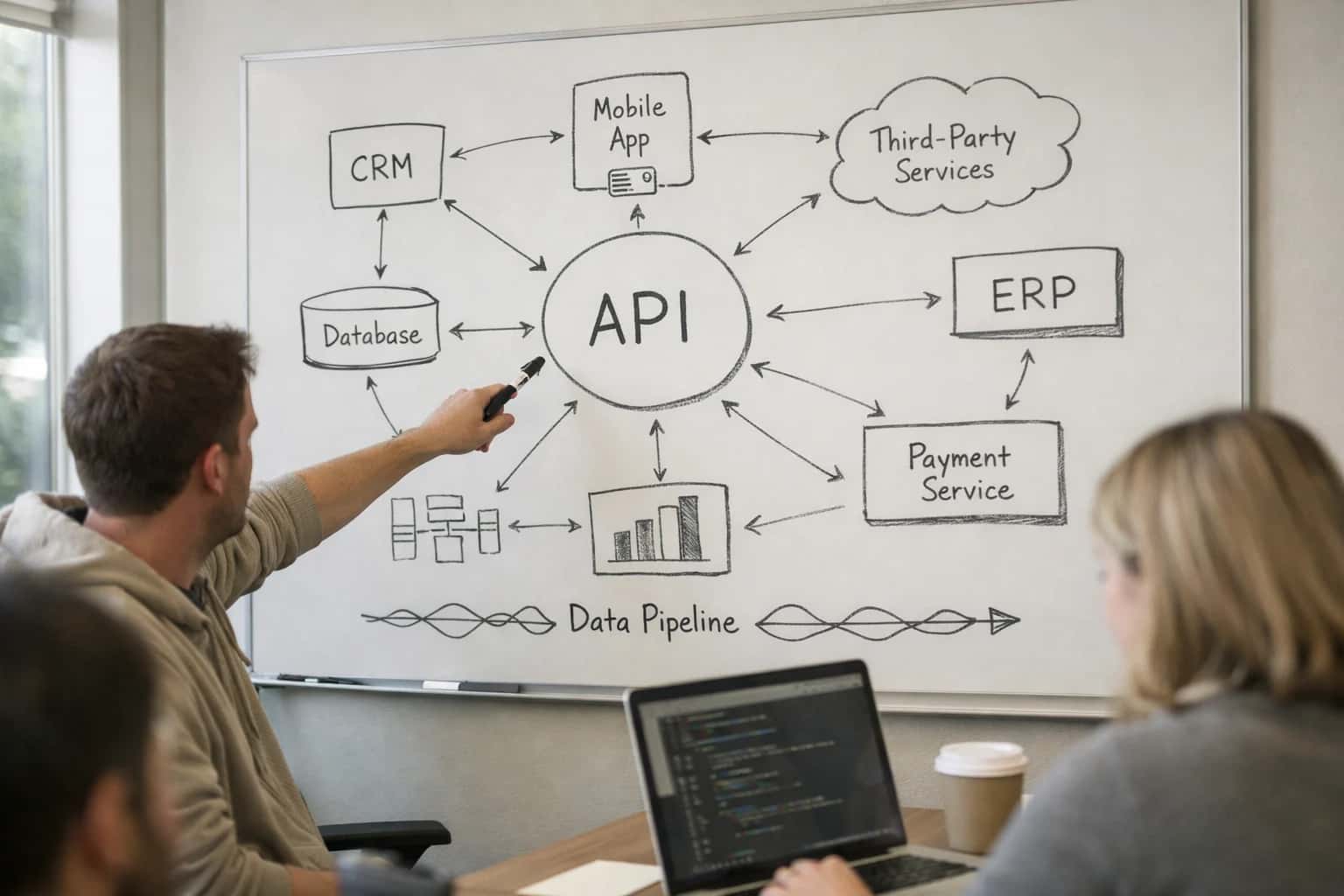
Where AI Automates the Last Yard of Fulfillment
Integrate AI to automate carrier coordination and final-mile verification, directly within your WMS outbound workflows.
For Proof of Delivery (POD), AI acts on the data captured at delivery. Integration points are the WMS delivery transaction and document attachment APIs. A typical workflow: 1) Driver uploads an image of a signed bill of lading or a delivery note via a mobile app. 2) An AI service, triggered by a webhook from the WMS, uses OCR and computer vision to extract key fields (consignee name, date/time, signature, exceptions). 3) The structured data is pushed back into the WMS, updating the SHIPMENT status to ‘Delivered’ and populating the POD record, while flagging any discrepancies (e.g., damaged goods noted) for immediate exception handling in the WMS incident management queue. This closes the fulfillment loop in minutes instead of days, accelerating invoicing and dispute resolution.
Rollout requires a phased approach. Start with a single carrier lane or facility. The AI layer typically sits as a middleware service, subscribing to WMS events (e.g., LOAD_CREATED, POD_IMAGE_UPLOADED) via REST APIs or message queues. Governance is critical: implement a human-in-the-loop review queue for low-confidence OCR extracts or scheduling conflicts before system updates are committed. This ensures the WMS remains the system of record, with AI providing assisted updates. For teams evaluating this integration, the priority is mapping the specific WMS APIs for appointment scheduling and document attachment, and defining the business rules for when AI can auto-confirm versus when it must escalate. See our guide on Real-Time Exception Handling in WMS for related architecture patterns.
Integration Surfaces in Your WMS and Gate Systems
Core WMS Integration Points
AI for Proof of Delivery (POD) and appointment scheduling primarily connects to the outbound shipping and load management modules within your WMS. Key integration surfaces include:
- Load/Manifest Records: The AI system reads finalized load details (carrier, trailer ID, PRO numbers, stop sequence) to initiate POD workflows and validate appointments.
- Shipment Status Fields: AI updates statuses (e.g.,
POD_PENDING,POD_RECEIVED,POD_EXCEPTION) and timestamps directly via WMS APIs, triggering downstream financial or customer service workflows. - Carrier Master Data: Integration uses the WMS carrier table to retrieve contact details, preferred communication channels (EDI, API, email), and service level agreements for intelligent scheduling.
This integration ensures the AI layer operates on the system of record for shipment execution, avoiding data silos.
High-Value Use Cases for AI in Outbound Logistics
Integrating AI directly into your Warehouse Management System (WMS) transforms manual, error-prone outbound workflows. These patterns automate data capture, optimize scheduling, and provide real-time visibility, directly linking to load management and gate operations.
Automated POD Capture via Mobile Image & OCR
Drivers use a mobile app to photograph delivery receipts. An AI agent extracts key fields (PON, date, signature, exceptions) via OCR, validates them against the WMS outbound load record, and updates the shipment status. Failed matches or damage notes trigger an immediate exception workflow for the logistics team.
Intelligent Carrier Appointment Scheduling
An AI scheduler analyzes WMS load ready times, dock door availability, carrier profiles, and historical yard congestion. It proposes or automatically books optimal appointment slots via carrier portals or EDI 214, minimizing dock dwell time and preventing gate congestion. Changes in load status trigger dynamic rescheduling.
Real-Time Gate Check-In & Exception Triage
At gate arrival, the AI cross-references the truck/container ID against scheduled appointments and WMS load details. It validates paperwork, flags discrepancies (early/late, wrong trailer), and provides immediate instructions to the driver—direct to dock, hold in yard, or proceed for document correction—updating the WMS in real time.
Automated Delivery Exception Documentation & Claims
When a driver notes shortages, damages, or refusals on the POD, AI classifies the exception type, extracts details, and attaches the annotated image to the WMS shipment record. It can auto-initiate a claim workflow in a connected TMS or ERP, populating required fields and routing for internal review.
Dynamic Dock Door Assignment & Sequencing
Integrating with WMS outbound staging and yard management systems, AI assigns incoming trucks to specific dock doors based on load characteristics (parcel vs. pallet), equipment at the door, and downstream carrier cutoff times. It sequences appointments to smooth labor peaks and maximize cross-dock flow.
Proactive Customer Communication & ETA Updates
Using POD confirmation and carrier telematics data, an AI agent triggers automated, accurate delivery notifications to customers via email or SMS. For delays detected at the gate or from carrier feeds, it calculates a revised ETA and updates both the customer portal and the WMS order status.
Example AI-Powered Workflows: From Trigger to System Update
These concrete workflows illustrate how AI agents integrate with your WMS and gate management systems to automate proof of delivery (POD) verification and intelligent carrier appointment scheduling, reducing manual effort and improving dock door throughput.
Trigger: A driver scans a barcode or submits a delivery note via a mobile app at the warehouse gate, marking a shipment as 'delivered' in the WMS.
Context/Data Pulled: The AI agent retrieves the associated outbound load from the WMS (e.g., SHIPMENT_ID, CARRIER, PURCHASE_ORDER_LIST, EXPECTED_QUANTITIES). It also fetches any pre-advised shipping documents (ASN, BOL) and the digital delivery note image submitted by the driver.
Model/Agent Action:
- OCR & Data Extraction: An AI model processes the delivery note image to extract key fields:
PO_NUMBER,ITEM_SKU,DELIVERED_QTY,DRIVER_SIGNATURE,TIMESTAMP. - Three-Way Match: The agent performs an automated match between:
- Extracted PO/Item data from the note
- Expected quantities from the WMS load record
- Pre-advised ASN data (if available)
- Discrepancy Classification: Any mismatches (shortages, overages, wrong SKU) are classified by the AI. For minor variances within a configurable tolerance (e.g., 2%), it can auto-approve.
System Update/Next Step:
- Match Success: The WMS
SHIPMENTstatus is automatically updated toDELIVERED_CONFIRMED. The POD image and extracted data are attached to the load record. A confirmation is sent to the carrier portal and the receiving party's system. - Discrepancy Found: The WMS load is flagged with status
DELIVERY_DISCREPANCY. The AI agent creates a task in the exception management queue with the specific issue (e.g., "SHORT: 5 units on PO#45012") and suggests next steps (e.g., "Initiate claims process with Carrier X").
Human Review Point: Major discrepancies (e.g., missing signature, large quantity shortages) are routed to a logistics coordinator's dashboard for manual review and resolution before the WMS status is finalized.
Implementation Architecture: Data Flow, APIs, and the AI Layer
A production-ready architecture for automating Proof of Delivery (POD) and carrier appointments by integrating AI directly with your Warehouse Management System (WMS).
The integration is built on a three-layer architecture that connects your WMS outbound data to external carrier systems and AI services. The Data Layer extracts load details (load ID, carrier, BOL number, planned delivery date) from the WMS—typically from tables like SHIPMENT, OUTBOUND_LOAD, or APPOINTMENT—via REST APIs or database hooks. This data populates a real-time queue for processing. The AI Processing Layer orchestrates two core workflows: 1) POD Capture & Validation, where a microservice receives driver-submitted images via a mobile app or email, uses OCR and computer vision to extract and validate BOL/consignee details against the WMS load record, and updates the WMS SHIPMENT_STATUS with a verified POD document link; and 2) Intelligent Appointment Scheduling, where an AI agent analyzes carrier ETAs, dock door availability from the WMS yard module, and historical carrier performance to propose or directly book optimal time slots via the carrier's scheduling portal API.
For POD automation, the system integrates with your WMS's document management or ATTACHMENT APIs to store the verified image and metadata. Key implementation details include setting up a human-in-the-loop review queue for low-confidence OCR results and configuring webhooks to notify the WMS GATE_MANAGEMENT module of a successful delivery, triggering automatic check-out and dock door release. For appointment scheduling, the AI layer acts as a decision engine, often built on platforms like Microsoft Copilot Studio or CrewAI, that calls the WMS API to check door capacity, evaluates carrier constraints (e.g., trailer type, driver hours), and executes bookings via carrier APIs like UPS CampusShip or project44. The result is a closed-loop system where status flows bi-directionally: appointments confirmed with carriers are written back to the WMS APPOINTMENT table, and POD confirmations automatically close the outbound load, updating inventory and triggering invoicing workflows in connected ERPs.
Rollout requires a phased approach, starting with a single carrier lane or facility. Governance is critical: all AI decisions (e.g., proposed time slots, POD validations) should be logged with traceability to the source WMS transaction for audit. Implement role-based access in the AI layer to match WMS permissions, ensuring only authorized users can override system-proposed appointments or POD approvals. This architecture reduces manual data entry and phone calls, turning same-day POD reconciliation and next-day appointment booking from multi-hour processes to near-real-time automated workflows. For a deeper dive on integrating AI agents specifically for gate and yard coordination, see our guide on AI for Yard Management Integration with WMS.
Code and Payload Examples for Key Integration Points
Triggering AI Analysis on Delivery Completion
When a driver marks a delivery as complete in a mobile WMS interface, the system should capture an image and send it, along with load data, to an AI service for validation. This typically involves a webhook from the WMS to a processing service.
Example Webhook Payload (JSON):
json{ "event_type": "delivery_completed", "load_id": "LD-2024-78910", "stop_id": "STP-001", "driver_id": "DRV-456", "timestamp": "2024-05-15T14:30:00Z", "image_urls": [ "https://storage.example.com/pod/load78910_1.jpg" ], "metadata": { "expected_receiver": "Acme Corp Dock 2", "purchase_order": "PO-555123" } }
The AI service processes the image via OCR and computer vision to extract signatures, timestamps, and receiver details, then posts the structured result back to the WMS to update the load's POD status and audit trail.
Realistic Time Savings and Operational Impact
How AI integration transforms manual, error-prone outbound processes into automated, data-driven workflows within your Warehouse Management System (WMS).
| Process | Before AI | After AI | Key Impact |
|---|---|---|---|
POD Capture & Validation | Manual photo review, data entry, and discrepancy investigation | Automated image/OCR analysis, auto-match to WMS load, flag exceptions | Reduces POD processing from hours to minutes, accelerates billing |
Carrier Appointment Scheduling | Phone/email coordination, manual calendar updates, last-minute changes | AI-driven optimization of dock door assignments, automated booking via API | Cuts scheduling time by 70%, reduces dock congestion and detention fees |
Exception Handling & Resolution | Reactive manual investigation after customer or carrier calls | Proactive AI flagging of mismatches (e.g., wrong SKU, quantity), suggests WMS adjustments | Identifies issues before invoicing, reduces claims and revenue leakage |
Gate Check-In Workflow | Driver provides paper BOL, manual data entry at kiosk or by guard | AI reads license plate/BOL via camera, auto-retrieves WMS appointment, prints dock ticket | Cuts gate processing from 5+ minutes to under 60 seconds per truck |
Load Closeout & Documentation | Manual compilation of PODs, BOLs, and manifests for each load | AI auto-assembles digital load packet, pushes to WMS and TMS/ERP via integration | Eliminates 1-2 hours of daily administrative work per clerk |
Carrier Performance Analytics | Monthly manual spreadsheet analysis of on-time performance | Real-time AI scoring of carrier ETAs, dwell times, and compliance, integrated into WMS dashboards | Provides data for quarterly business reviews and automated carrier scorecards |
Customer Service Inquiries | CSR manually searches WMS and calls warehouse for status updates | AI agent provides real-time load status and predictive ETA via integrated portal/chat | Reduces CSR handle time by 80% for delivery status inquiries |
Governance, Security, and Phased Rollout
A secure, governed approach to automating proof of delivery and carrier scheduling within your warehouse management system.
A production integration for AI-driven POD and appointment scheduling must be built on a secure, event-driven architecture. This typically involves a middleware layer (like an integration platform or custom service) that subscribes to WMS events—such as Load Confirmed or Gate Check-In—and orchestrates the AI workflow. For POD, this service receives an image payload from a mobile device or gate camera, calls a vision/OCR service for data extraction, validates the data against the WMS Shipment and Load objects, and then updates the WMS delivery status and Bill of Lading record. For appointments, it ingests carrier ETAs, analyzes real-time yard and dock door capacity from the WMS and YMS, and calls scheduling algorithms to propose or confirm slots, updating the WMS Appointment Schedule and triggering notifications.
Governance is critical. Implement role-based access control (RBAC) to ensure only authorized personnel (e.g., yard managers, logistics supervisors) can override AI-generated appointments or POD validations. All AI actions should generate immutable audit logs linked to the original WMS transaction ID. For POD, establish a human-in-the-loop review queue for low-confidence OCR reads or mismatched data (e.g., seal number doesn't match ASN), routing exceptions back to the warehouse management dashboard for manual resolution before the WMS record is updated.
A phased rollout mitigates risk. Phase 1 (Pilot): Integrate AI appointment scheduling for a single carrier lane and a subset of dock doors. Run the AI's recommendations in "shadow mode," comparing them against manual schedules to tune algorithms without impacting live operations. Phase 2 (Limited Go-Live): Activate AI-driven POD capture for inbound receipts only, automating the update of WMS Receipt statuses. Phase 3 (Scale): Expand to all outbound loads for POD and all carrier appointments, integrating the AI scheduler directly with your Transportation Management System (TMS) and carrier portals via APIs for closed-loop automation. Continuous monitoring of key metrics—like dock door utilization, appointment adherence, and POD processing time—ensures the AI system drives tangible operational gains, reducing manual data entry and cutting detention/demurrage costs.
Enabling Efficiency, Speed & Accuracy
Intelligent Analysis, Decision & Execution
We build AI systems for teams that need search across company data, workflow automation across tools, or AI features inside products and internal software.
Talk to Us
Search across company data
Give teams answers from docs, tickets, runbooks, and product data with sources and permissions.
Useful when people spend too long searching or get different answers from different systems.

Automate internal workflows
Use AI to route work, draft outputs, trigger actions, and keep approvals and logs in place.
Useful when repetitive work moves across multiple tools and teams.

Add AI to products and internal tools
Build assistants, guided actions, or decision support into the software your team or customers already use.
Useful when AI needs to be part of the product, not a separate tool.
FAQ: Technical and Commercial Considerations
Practical answers for teams integrating AI into warehouse outbound workflows for automated proof of delivery and intelligent carrier scheduling.
The integration typically uses a middleware layer or API gateway to connect three systems:
- Trigger: A
SHIPMENT_CONFIRMEDevent from your WMS (e.g., Manhattan Active, SAP EWM) or a status update from the Transportation Management System (TMS). - Data Flow: The integration pulls the load ID, carrier details, and expected delivery window. It then monitors for an inbound event from the carrier's mobile app or a gate management system (like FourKites or C3 Solutions) signaling arrival.
- AI Action: Upon truck arrival, the system prompts the driver (via SMS link or carrier portal) to upload delivery photos. A vision/OCR model processes the images to:
- Extract and validate the recipient's signature.
- Read and cross-check the Bill of Lading (BOL) or PRO number.
- Capture any visible damage or exceptions.
- System Update: A structured JSON payload is sent back to the WMS to automatically update the shipment status to
DELIVEREDand attach the AI-validated POD document to the load record. Any exceptions (missing signature, damage) trigger an alert in the WMS exception queue or a connected service like ServiceNow.
Key Integration Points: WMS Outbound Load API, Gate System Check-in API, Document Storage (e.g., SharePoint, S3).

About the author
Prasad Kumkar
CEO & MD, Inference Systems
Prasad Kumkar is the CEO & MD of Inference Systems and writes about AI systems architecture, LLM infrastructure, model serving, evaluation, and production deployment. Over 5+ years, he has worked across computer vision models, L5 autonomous vehicle systems, and LLM research, with a focus on taking complex AI ideas into real-world engineering systems.
His work and writing cover AI systems, large language models, AI agents, multimodal systems, autonomous systems, inference optimization, RAG, evaluation, and production AI engineering.
Partnered with leading AI, data, and software stack.





How We Work
Custom AI workflows for your Business
One-fit-all AI don't work for modern businesses. At Inferensys, we aim to understand your business & custom requirements; which we use to define most efficient agentic workflows, the data, and the tools for your business.
01
Review the use case
We understand the task, the users, and where AI can actually help.
Read more02
Pick the right approach
We define what needs search, automation, or product integration.
Read more03
Build the first useful version
We implement the part that proves the value first.
Read more04
Improve from there
We add the checks and visibility needed to keep it useful.
Read moreThe first call is a practical review of your use case and the right next step.
Talk to Us