
Inferensys

Integration

AI for Integration with Transportation Management Systems

A technical blueprint for implementing AI-driven orchestration between Warehouse Management (WMS) and Transportation Management (TMS) platforms to synchronize load building, dock scheduling, and carrier assignments, reducing dwell time and freight costs.
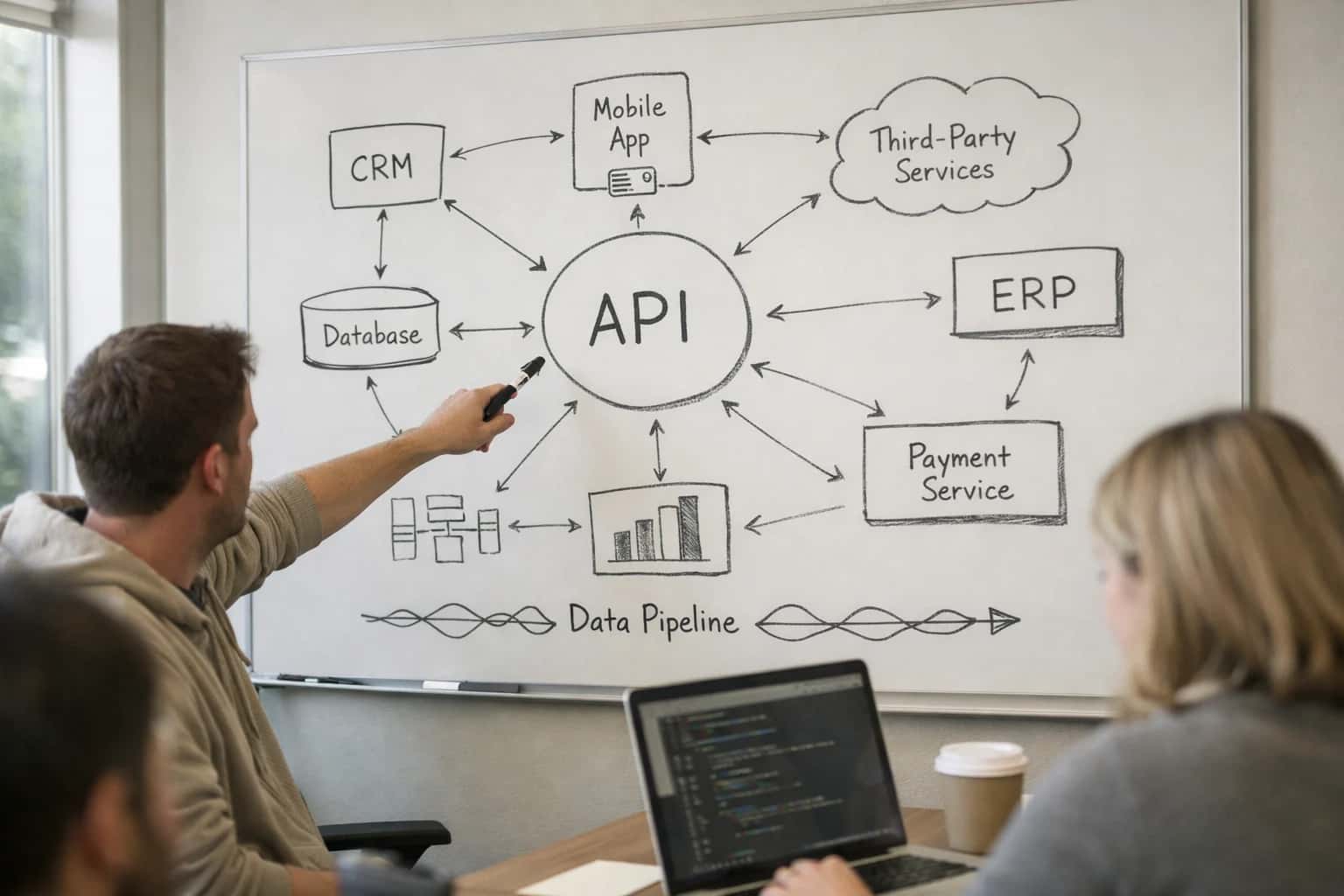
Enterprise integration architect reviewing API connections on laptop, diagram showing systems connecting, modern office setup.
ARCHITECTURAL BLUEPRINT

Where AI Fits in the WMS-TMS Handoff

A technical guide to embedding AI agents at the critical integration point between Warehouse and Transportation Management Systems.

The WMS-TMS handoff is a high-volume, time-sensitive data exchange where AI agents can act as an intelligent orchestration layer. Key integration surfaces include:

  • Load Building & Tendering: AI analyzes WMS wave/order completion status, carrier capacity, and real-time rates to trigger optimal TMS load creation and carrier tendering.
  • Dock Door Scheduling: Agents consume WMS inbound receiving forecasts and outbound load ready times to dynamically reserve and sequence TMS dock appointments, minimizing trailer dwell.
  • Exception Synchronization: An AI monitor correlates exceptions between systems—like a WMS pick short or a TMS carrier delay—and executes coordinated resolution workflows, updating both platforms.


Implementation typically involves a middleware agent service subscribed to events from both systems. For example, when a WMS marks an outbound SHIPMENT record as 'Ready for Loading', the AI service:

  1. Queries the TMS for available carrier contracts and spot rates via its REST API.
  2. Scores options based on cost, service level, and dock schedule.
  3. Executes the TMS CreateLoad and Tender API calls.
  4. Writes the resulting Load ID and Carrier SCAC back to the WMS shipment as custom fields for traceability. This creates a closed-loop, automated workflow that replaces manual cut-off checks and spreadsheet-based carrier selection.

Rollout should prioritize high-volume lanes first. Governance is critical: all AI recommendations for carrier selection or dock changes should be logged with a confidence score and rationale. Implement a human-in-the-loop approval step for exceptions or low-confidence decisions, with alerts routed via existing WMS/TMS task queues. This ensures control while automating the 80% of standard handoffs, turning a process that often takes hours into a same-day, exception-driven operation.

AI-DRIVEN LOGISTICS ORCHESTRATION

Integration Surfaces in WMS and TMS

Synchronizing Outbound Workflows

AI integration connects the WMS task completion feed with the TMS dock scheduling module. As picks are confirmed and staging lanes are assigned in the WMS, an AI agent analyzes the real-time status against carrier appointment windows, trailer availability from the yard management system (YMS), and labor capacity. It can dynamically propose or execute dock door reassignments in the TMS to minimize dwell time.

Key Integration Points:

  • WMS: outbound_staging.confirmation event webhook.
  • TMS: dock_door.schedule API endpoint.
  • YMS: trailer.spot_status API call.

This creates a closed-loop system where the TMS schedule is not a static plan but a dynamic reflection of actual warehouse throughput.

SYNCHRONIZE LOGISTICS EXECUTION

High-Value AI Use Cases for WMS-TMS Integration

Tight integration between Warehouse Management (WMS) and Transportation Management (TMS) systems is critical for modern supply chains. AI acts as the intelligent orchestration layer, using real-time data from both platforms to make predictive decisions, automate handoffs, and minimize dwell time and cost.

01

AI-Driven Dock Door Scheduling

AI analyzes real-time WMS data (outbound load readiness, inbound ASN status) and TMS carrier ETAs to dynamically assign dock doors. It sequences appointments to balance labor, minimize trailer wait times, and prevent yard congestion, updating both systems.

30-50%
Reduced trailer dwell
02

Intelligent Load Building & Carrier Selection

AI evaluates WMS-picked orders against TMS carrier contracts, capacity, and real-time rates. It optimizes load consolidation across orders and suggests the optimal carrier/service level combination, pushing the finalized load plan and labels back to both systems.

Batch -> Real-time
Decision speed
03

Predictive Cross-Dock Orchestration

AI scans inbound ASNs in the WMS against pending outbound orders in the TMS. It identifies cross-dock opportunities in real-time, generates flow-through put-to-light or sortation instructions, and updates both systems to bypass storage, reducing touchpoints.

Hours -> Minutes
Flow path planning
04

Dynamic Exception Resolution for Shipments

When a WMS scan failure or weight discrepancy delays a load, an AI agent automatically assesses the impact on the TMS appointment and carrier route. It can trigger a re-scan, adjust the load, or proactively notify the carrier and update ETAs across both platforms.

Same-day
Exception resolution
05

Proactive Yard & Trailer Management

Integrating WMS dock schedules with TMS yard management, AI predicts spotting needs based on load progress. It directs yard jockeys via mobile app, prioritizes empties for returns, and ensures the right trailer is at the right door at the right time.

1-2 hours
Advanced trailer spotting
06

Unified Customer Service Agent

A RAG-powered agent connected to both WMS (order/pick status) and TMS (carrier tracking) provides a single source of truth. Customer service can ask natural language questions ("Where is order 12345?") and get a synthesized status from warehouse to final mile.

Seconds
Status resolution
WMS-TMS INTEGRATION PATTERNS

Example AI Orchestration Workflows

These workflows illustrate how AI agents orchestrate data and decisions between Warehouse and Transportation Management Systems to synchronize operations, minimize dwell time, and reduce freight costs.

Trigger: WMS wave planning completes, releasing a batch of outbound orders.

Context/Data Pulled:

  • Order details (dimensions, weight, destination, service level) from WMS.
  • Real-time dock door availability and yard status from YMS/TMS.
  • Carrier contract rates, capacity, and appointment schedules from TMS.
  • Current warehouse labor plan and pick progress from WMS.

Model or Agent Action: An AI load optimization agent analyzes all variables to:

  1. Consolidate Orders: Group orders into optimal loads by destination, service level, and carrier lane.
  2. Select Mode & Carrier: Evaluate cost vs. service trade-offs using real carrier rates and capacity.
  3. Assign Dock & Time: Schedule the load to a specific dock door based on predicted completion time of picking/staging and carrier ETA to minimize door dwell.

System Update or Next Step: The agent pushes structured decisions back to both systems:

  • To WMS: Updates the wave or shipment with the assigned carrier, load ID, and staging location/dock door. Triggers label printing.
  • To TMS: Creates the shipment, assigns the carrier, books the appointment, and sends the load tender.

Human Review Point: The system flags any consolidation that falls below a configurable cost-saving threshold or requires an exception (e.g., unusual dimensions) for planner approval before tendering.

SYNCHRONIZING WMS AND TMS FOR REAL-TIME LOGISTICS INTELLIGENCE

Implementation Architecture & Data Flow

A technical blueprint for integrating AI-driven decisioning between Warehouse and Transportation Management Systems to automate load building, dock scheduling, and carrier assignments.

The core integration pattern establishes an AI orchestration layer that sits between the WMS (e.g., Manhattan Active, SAP EWM) and TMS (e.g., Oracle TMS, SAP TM). This layer consumes real-time events from both systems via their native APIs or message queues. Key data objects synchronized include: WMS outbound orders, inventory availability, dock door status, and labor plans; and TMS carrier contracts, rate shopping results, appointment schedules, and load tendering status. The AI model uses this fused dataset to make prescriptive recommendations, which are pushed back as executable instructions to each system.

A typical workflow begins when the WMS releases a wave of orders. The AI agent analyzes the order profiles (dimensions, weight, destination, service level) against real-time carrier capacity and costs from the TMS. It then generates an optimized load plan—grouping orders into shipments and selecting the optimal carrier and service—and pushes it to the TMS for tender. Simultaneously, it calculates the required staging labor and optimal dock door schedule based on carrier ETAs and warehouse congestion, updating the WMS labor management and yard management modules. This closed-loop flow reduces manual coordination and cuts dwell time by aligning warehouse execution with transportation capacity.

For governance, the architecture includes a human-in-the-loop approval step for high-cost or exception loads before tendering. All AI recommendations are logged with a full audit trail linking the input data, model reasoning, and the resulting system transactions in both WMS and TMS. Rollout typically starts with a single lane or facility, using the AI in a recommendation-only mode to build trust with planners and dispatchers before moving to automated execution. This phased approach minimizes operational risk while demonstrating tangible reductions in transportation spend and dock congestion.

This integration is foundational for a resilient supply chain. By treating the warehouse and transportation systems as a single, AI-optimized continuum, companies move from reactive firefighting to predictive orchestration. The result is lower costs per shipment, improved asset utilization, and reliable customer delivery promises. For a deeper dive on the warehouse-side data models, see our guide on AI for Dock Door Scheduling Optimization, or explore how this connects to broader network planning in AI for Multi-WMS and Network Orchestration.

TMS INTEGRATION PATTERNS

Code & Payload Examples

AI-Driven Load Optimization

Integrate an AI model with your TMS's load building API to dynamically consolidate orders into optimal shipments. The model analyzes order attributes (dimensions, weight, destination, service level) against carrier constraints and real-time rates to maximize cube utilization and minimize cost.

Example Python call to an AI scoring service from a TMS custom script:

python
import requests

# Payload: List of pending orders from WMS wave
orders_for_loading = [
    {"order_id": "SO-1001", "dest_zip": "90210", "weight_lbs": 45, "cube_ft": 8.2, "service": "GROUND"},
    {"order_id": "SO-1002", "dest_zip": "90210", "weight_lbs": 28, "cube_ft": 5.1, "service": "GROUND"},
    # ... more orders
]

# Call AI service for load grouping recommendation
aI_response = requests.post(
    'https://api.your-ai-service.com/tms/load-optimize',
    json={
        'orders': orders_for_loading,
        'carrier_constraints': {'max_weight': 15000, 'max_cube': 2800},
        'rate_deck_id': 'fedex_2025_q1'
    },
    headers={'Authorization': 'Bearer YOUR_API_KEY'}
).json()

# Response contains suggested loads and cost savings
aI_suggested_loads = ai_response['optimized_loads']
estimated_savings = ai_response['estimated_savings_vs_current']

# Push optimized load structure back to TMS via its REST API
for load in ai_suggested_loads:
    create_tms_load(load['order_ids'], load['carrier'], load['service_code'])
WMS-TMS INTEGRATION

Realistic Time Savings & Operational Impact

How AI-driven synchronization between Warehouse and Transportation Management Systems reduces dwell time and optimizes logistics costs.

WorkflowBefore AI IntegrationAfter AI IntegrationImplementation Notes

Load Building & Consolidation

Manual review of outbound orders and static rules

AI-optimized pallet/container builds based on real-time carrier rates & capacity

Integrates with WMS wave planning; updates TMS load plans automatically

Dock Door Scheduling

Fixed appointments or first-come, first-served

Dynamic scheduling based on predicted unload/load times and carrier ETA

Uses WMS task completion forecasts and TMS carrier tracking data

Carrier Selection & Tendering

Rate shopping based on historic contracts

Real-time multi-carrier scoring (cost, service, capacity) per shipment

API calls to carrier platforms; decisions pushed back to WMS for labeling

Exception Handling for Delays

Reactive calls and manual rescheduling

Proactive alerts with AI-suggested alternate doors or carriers

Monitors TMS tracking feeds and correlates with WMS dock status

Cross-Dock Workflow Triggering

Planned in advance, often underutilized

Dynamic cross-dock decisions based on real-time inbound ASN vs. outbound order match

AI analyzes WMS receiving data and TMS outbound plans to minimize staging

Documentation & BOL Generation

Manual data entry from WMS to TMS

Automated generation from WMS shipment data with AI validation

Reduces errors; ensures consistency for customs and carrier compliance

Post-Shipment Freight Audit

Monthly manual reconciliation

Near-real-time audit with anomaly flagging

AI compares WMS manifest data with TMS invoices and carrier bills

ARCHITECTING FOR PRODUCTION

Governance, Security & Phased Rollout

A secure, governed integration between your WMS and TMS requires a deliberate architecture and phased rollout to manage risk and demonstrate value.

A production-ready integration is built on a middleware layer or event bus (e.g., Apache Kafka, AWS EventBridge, Azure Service Bus) that sits between the WMS (like Manhattan Active or SAP EWM) and the TMS (like Oracle TMS or SAP TM). This orchestration layer ingests key events—such as a PICK_COMPLETE status from the WMS or a CARRIER_ETA_UPDATE from the TMS—and uses AI agents to make decisions (e.g., load consolidation, dock door assignment). All decisions are logged with a full audit trail, linking the AI's reasoning (prompt, context, model response) back to the original system transaction IDs for complete traceability.

Security is enforced at multiple levels: API credentials for the WMS and TMS are managed in a secrets vault, never hard-coded. The AI orchestration layer uses role-based access control (RBAC) to ensure only authorized agents or users can trigger certain workflows (e.g., overriding a carrier assignment). Data in transit is encrypted, and any PII or sensitive shipment data is masked or tokenized before being sent to external LLM APIs. For on-premise WMS deployments, a secure reverse proxy or API gateway handles outbound communication.

A phased rollout is critical. Start with a monitoring phase, where the AI integration runs in 'shadow mode'—it receives real events, makes recommendations, but all outputs are logged for comparison against human decisions without acting on the TMS. Next, move to a assistive phase for a single lane or warehouse, where the system suggests dock schedules or load plans to planners for approval within the TMS UI. Finally, after validating accuracy and reliability, enable closed-loop automation for specific, high-confidence workflows, like automatic carrier selection for standard parcel shipments, while maintaining human-in-the-loop overrides for exceptions and high-value freight.

IMPLEMENTATION QUESTIONS

FAQ: AI for WMS-TMS Integration

Common technical and strategic questions for architects and operations leaders planning AI-driven integration between Warehouse and Transportation Management Systems.

For production-scale AI integration, we recommend a separate orchestration service (often built on a workflow platform like n8n or as a custom microservice). This pattern provides several advantages:

  • Decoupled Logic: Keeps complex AI/ML models and multi-system business rules separate from your core WMS/TMS code, simplifying upgrades and maintenance.
  • Centralized Governance: All AI decisions, prompts, and model outputs are logged in one place for auditability and performance monitoring.
  • Resilience: The orchestration layer can handle retries, fallback logic, and graceful degradation if one system (WMS or TMS) is temporarily unavailable.

Typical Integration Points:

  • The orchestration service listens for events from the WMS (e.g., WAVE_RELEASED, LOAD_BUILT) via webhooks or message queues.
  • It calls internal APIs to fetch additional context from both WMS and TMS (carrier contracts, dock schedules, real-time yard status).
  • AI models or agents process this data to generate a recommendation (e.g., optimal dock door, carrier selection).
  • The service executes the decision by calling APIs on the TMS (to create a shipment) and/or WMS (to assign a dock door).
Prasad Kumkar

About the author

Prasad Kumkar

CEO & MD, Inference Systems

Prasad Kumkar is the CEO & MD of Inference Systems and writes about AI systems architecture, LLM infrastructure, model serving, evaluation, and production deployment. Over 5+ years, he has worked across computer vision models, L5 autonomous vehicle systems, and LLM research, with a focus on taking complex AI ideas into real-world engineering systems.

His work and writing cover AI systems, large language models, AI agents, multimodal systems, autonomous systems, inference optimization, RAG, evaluation, and production AI engineering.


