In regulated environments (e.g., pharmaceuticals, food & beverage, medical devices), compliance workflows are often manual, reactive, and error-prone. AI integration targets specific WMS data objects and logs to automate this burden. The primary surfaces are the transaction history tables (e.g., INV_TRAN_HIST in Manhattan, /SCWM/TR in SAP EWM), lot/serial tracking modules, quality management (QM) workflows, and the document management interfaces used for attachments like certificates of analysis (CoA) or bills of lading. AI agents are deployed to continuously monitor these streams, extracting entities like GTINs, lot numbers, expiry dates, storage condition breaches, and personnel IDs to build a structured, queryable compliance ledger.

Integration
AI for Audit Trail and Regulatory Reporting Automation
Automate the generation of FDA 21 CFR Part 11, GDP, and other regulatory reports by using AI to extract, structure, and validate data from WMS transaction logs, packing slips, and quality documents.
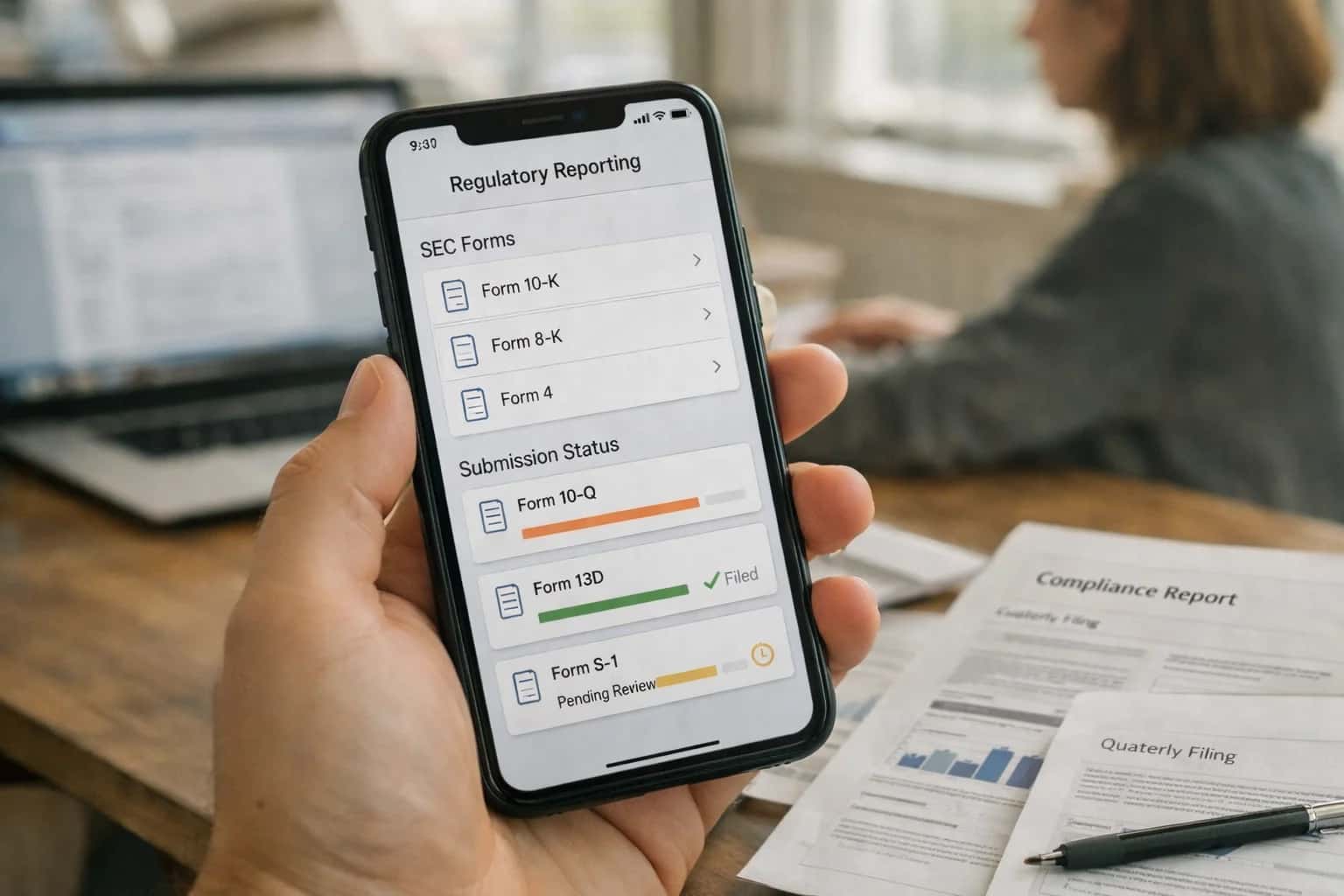
AUTOMATING AUDIT TRAILS AND REGULATED REPORTING
Where AI Fits into Warehouse Compliance Workflows
A technical blueprint for using AI to automate the generation of audit trails and regulatory reports by extracting and structuring data from WMS transaction logs.
A typical implementation involves a middleware layer subscribing to WMS event queues or polling database change logs. For each transaction—a goods receipt, putaway, pick, or cycle count—an AI document intelligence service parses any attached scanned documents (e.g., packing slips, invoices) while a separate process enriches the core WMS transaction data. This structured data is then mapped to required regulatory report schemas (e.g., FDA electronic product tracing, EU GDP requirements). The system can auto-generate and submit reports to portals or populate internal dashboards, flagging discrepancies like missing temperature logs or broken chain-of-custody for immediate human review. Impact is measured in reduced manual compilation time (from days to hours), improved audit readiness, and proactive risk identification before an inspection.
Rollout requires careful governance. AI models must be validated for accuracy in entity extraction, especially with poor-quality scans. A human-in-the-loop approval step is typically maintained for the first 90 days, with all AI-generated reports versioned in an audit trail of their own. Integration points must respect the WMS's security model, often using service accounts with read-only access to production data. The final architecture ensures the WMS remains the system of record, while the AI layer becomes the system of intelligence for compliance, creating a defensible, automated paper trail. For a deeper dive on integrating with specific platforms like SAP EWM or Manhattan Active for these use cases, see our guides on AI Integration for SAP EWM and AI for Compliance and Traceability in Regulated Warehousing.
ARCHITECTURE FOR AUDIT TRAIL AUTOMATION
Key Data Sources and Integration Points in Your WMS
The Primary Source for Audit Reconstruction
Every audit trail begins with the WMS's internal transaction logs. These are the immutable records of every putaway, pick, move, adjust, and cycle count. For AI-driven reporting, you need programmatic access to these logs, typically via:
- Database-level access to tables like
INV_TRANSACTION,MTL_TRANSACTION_ACCOUNTS(Oracle), or/SCWM/TR(SAP EWM). - Event-driven APIs that publish transaction events (e.g., Manhattan's
activity-streamAPI, SAP EWM'sBusiness Events). - Batch extracts of log files for legacy systems.
The AI pipeline ingests these streams, using the transaction type, user, timestamp, location, and item/LOT/SN data as the foundational facts. The goal is to transform raw system logs into a structured, queryable timeline of warehouse activity for any given SKU, lot, or order.
AUTOMATED COMPLIANCE WORKFLOWS
High-Value Regulatory Reporting Use Cases
For warehouses in life sciences, food & beverage, and other regulated industries, manual audit trail compilation is a major operational burden. These AI integration patterns automate the extraction, structuring, and reporting of transaction data from WMS logs to meet FDA, GDP, and other regulatory standards.
01
Automated GDP Audit Trail Generation
AI continuously monitors WMS transaction logs for temperature-controlled storage (e.g., cold chain modules). It extracts timestamps, location moves, and temperature excursions, automatically structuring them into a chronological audit trail for Good Distribution Practice (GDP) compliance reports, ready for quality review.
Batch -> Continuous
Compliance monitoring
02
Lot Integrity & Chain of Custody Verification
For FDA 21 CFR Part 11 compliance, AI cross-references WMS lot/serial movements with associated electronic signatures and system events. It flags breaks in the chain of custody for immediate investigation and auto-generates verification reports for lot history, reducing manual reconciliation before audits.
Hours -> Minutes
Report assembly
03
Automated Deviation & CAPA Documentation
Integrates with WMS exception logs (e.g., scan failures, weight discrepancies) and quality hold workflows. AI classifies events, drafts initial deviation reports with relevant transaction context, and suggests corrective actions, feeding structured data directly into connected QMS platforms like MasterControl or ETQ Reliance.
Same day
Initial documentation
04
Supplier & Receiving Compliance Reporting
AI analyzes WMS Advanced Shipment Notice (ASN) data against actual receiving records in systems like SAP EWM or Manhattan. It identifies discrepancies (shortages, damaged goods, incorrect temps), auto-generates supplier performance scorecards, and creates structured documentation for quality agreements and regulatory filings.
1 sprint
Manual process eliminated
05
Automated Training Record Reconciliation
In regulated warehouses, operator task assignments in the WMS must align with certified training. AI correlates WMS user IDs and task codes (e.g., hazardous material handling, sterile picking) with training records from the LMS. It generates gap reports and ensures audit-ready documentation of qualified personnel per SOP.
06
Environmental Monitoring & Reporting
For warehouses with mapped environmental zones, AI ingests IoT sensor data (temperature, humidity) linked to WMS storage locations. It identifies excursions against predefined specs, correlates them with affected inventory lots, and auto-generates the required documentation for environmental monitoring reports (EMR) to meet ISO or FDA standards.
Real-time
Excursion detection
WMS REGULATORY COMPLIANCE
Example Automated Audit Trail Workflows
These workflows illustrate how AI agents can automate the extraction, structuring, and reporting of audit trail data from WMS transaction logs to meet regulatory requirements for FDA 21 CFR Part 11, EU GDP, and other standards.
Trigger: A lot-controlled item is shipped from a regulated warehouse (e.g., pharmaceuticals).
Context/Data Pulled: The AI agent queries the WMS API for:
- All transaction history for the specific lot number (receiving, putaway, internal moves, picking, packing, shipping).
- Associated user IDs, timestamps, and location data from the WMS audit log.
- Handling unit (HU) and parent/child relationships.
- Temperature logs from integrated IoT sensors for the relevant storage locations and time periods.
Model/Agent Action: A document intelligence model structures the disparate log entries into a chronological narrative. It identifies and flags any gaps in the record (e.g., a missing scan between storage zones) or temperature excursions outside the validated range.
System Update/Next Step: The agent generates a formatted Chain of Custody report (PDF/JSON) including:
- A complete timeline of custody transfers.
- Attestation statements for each handoff.
- Attached temperature chart for the custody period.
- A summary of any anomalies for human review.
The report is saved to a designated document management system (e.g., SharePoint, Veeva Vault) and linked to the shipment record in the WMS.
Human Review Point: Any flagged anomalies (gaps, excursions) are routed via email to the Quality Assurance manager for disposition before the report is finalized.
AUTOMATING FDA, GDP, AND INTERNAL AUDIT COMPLIANCE
Implementation Architecture: Data Flow, APIs, and Guardrails
A production-ready blueprint for using AI to generate structured audit trails and regulatory reports from WMS transaction logs and operational data.
The core architecture extracts raw transaction data from the WMS database (e.g., INV_TRANSACTION, TASK_HISTORY, SHIPMENT_LOG tables) and document storage (scanned BOLs, inspection forms). This data is streamed via change data capture (CDC) or pulled via scheduled API calls from the WMS's REST or SOAP interfaces (like Manhattan Active's Activity APIs or SAP EWM's qRFC/RFC modules). The AI layer, typically a containerized service, processes this unstructured and semi-structured data: it classifies document types, extracts key entities (lot numbers, timestamps, operator IDs, temperature readings), and normalizes them against the WMS master data (items, locations, handling units).
For audit trail generation, the system uses a rules engine combined with a large language model (LLM) to map extracted events to a predefined compliance framework (e.g., FDA 21 CFR Part 11, EU GDP). It structures the output into a chronological, tamper-evident log, linking each action (e.g., 'Item X moved from QA Hold to Bulk Storage') to the user, system timestamp, and preceding event. For regulatory reports, a RAG (Retrieval-Augmented Generation) pipeline queries the now-structured audit data and relevant SOPs to draft narratives for incidents, deviations, or periodic reviews. All AI-generated content is routed through a human-in-the-loop approval workflow within the WMS or a connected system like a QMS (e.g., MasterControl, ETQ Reliance) before finalization.
Critical guardrails are implemented at multiple layers: Data Isolation ensures AI models only access de-identified or role-permitted data via the WMS's RBAC. Traceability is maintained by logging all AI inferences, prompts, and model versions used for each report, creating its own immutable audit trail. Validation Rules are applied post-generation to check for missing required fields or data inconsistencies against the source WMS records. Finally, the approved outputs are written back to the WMS as attached documents or to a dedicated compliance repository, triggering notifications and closing the loop on open quality events.
AUTOMATING FDA, GDP, AND INTERNAL AUDITS
Code and Payload Examples for Key Steps
Extracting Unstructured Logs for AI Processing
The first step is programmatically extracting raw transaction logs, system events, and operator notes from the WMS. This involves querying database tables or listening to event streams for activities like inventory moves, quality holds, and user overrides. The extracted data is then packaged into a structured JSON payload for the AI processing service.
Example Payload for a Single Transaction:
json{ "wms_transaction_id": "TX-2024-0512-001847", "timestamp": "2024-05-12T14:32:18Z", "facility": "WH-EAST-01", "user_id": "OPR-JSMITH", "transaction_type": "PICK_COMPLETE", "item": { "sku": "PH-100234", "lot_number": "LN48291A", "serial_number": null, "quantity": 12, "from_location": "PICK-ZONE-A-12", "to_location": "PACK-STATION-05" }, "system_notes": "Weight verification passed.", "manual_notes": "Carton seal was damaged, replaced before shipping.", "related_documents": ["PICKLIST-88421.pdf", "PACKSLIP-99231.pdf"] }
This payload captures the core 'who, what, when, where' needed for audit trail reconstruction, including both system-generated and human-entered data points.
AI-DRIVEN AUDIT TRAIL & REPORTING
Realistic Time Savings and Operational Impact
How AI integration transforms manual, error-prone audit and compliance reporting into an automated, structured workflow within your WMS.
| Process | Before AI | After AI | Key Notes |
|---|---|---|---|
Transaction Log Review for FDA/GDP Audit | Manual sampling of 1000s of WMS logs over 2-3 days | Automated extraction & structuring of relevant logs in 1-2 hours | AI identifies and flags non-compliant patterns for human review |
Compiling Chain of Custody Documentation | Cross-referencing multiple systems (WMS, TMS, IoT) over 1-2 days | Single automated report generated in under 1 hour | AI correlates lot/serial data with temperature logs and handling events |
Generating Quarterly Compliance Reports | Spreadsheet consolidation and manual formatting taking 3-5 days | Report drafted automatically, ready for final review in 1 day | Templates are dynamically populated with structured data from AI |
Responding to Regulatory Queries (e.g., Recall) | Manual trace-back through WMS history, taking 4-8 hours | AI-powered query system provides traceability map in minutes | Natural language questions return synthesized answers from WMS data |
Reviewing & Signing Off on Audit Trails | Managerial review of dense, unstructured log dumps | AI-summarized audit narrative with highlighted exceptions | Focus shifts from data gathering to exception-based oversight |
Correcting Data Discrepancies in Records | Reactive investigation after audit findings, often weeks later | Proactive anomaly detection flags potential errors daily | AI monitors transaction integrity against expected patterns |
Preparing for External Auditor Site Visits | Manual preparation of sample binders and evidence packets | AI-curated digital audit package available on-demand | All supporting documents are pre-linked to relevant WMS transactions |
ARCHITECTING FOR COMPLIANCE
Governance, Validation, and Phased Rollout
Implementing AI for audit and reporting requires a controlled, auditable framework to maintain data integrity and regulatory compliance.
The integration architecture must treat the WMS as the single source of truth. AI agents do not directly write to core transaction tables like LTAK (SAP EWM) or INV_TRANSACTIONS (Oracle). Instead, they operate on a read-only data feed—pulling from WMS logs, task completion records, and handling unit history—and write structured outputs to a separate audit staging database. This staging layer is then processed through existing WMS or ERP approval workflows (e.g., via a custom BAdI in SAP or a REST webhook in Manhattan Active) before any official records are updated. This ensures all AI-generated content is traceable, versioned, and subject to the same change controls as manual entries.
For regulatory reporting (e.g., FDA 21 CFR Part 11, EU GDP), validation is built into the document generation pipeline. Before a report like a Chain of Custody Summary or Temperature Excursion Log is finalized, the AI's extracted data points (lot numbers, timestamps, locations) are cross-referenced against the live WMS database via a real-time API call. Any discrepancies automatically flag the document for human review. The final output is not just a PDF but a structured data payload linked to the source WMS transaction IDs, creating an immutable audit trail from the original scan event to the generated compliance document.
Rollout follows a phased, location-based approach. Start with a single high-compliance zone (e.g., a quarantine or cold storage area) to generate audit trails for inbound receipts. Use this controlled environment to validate AI accuracy, tune prompts for your specific SOPs, and establish governance rules. Subsequent phases expand to other processes—cycle count reconciliations, outbound shipment documentation—and finally to full warehouse-wide reporting automation. Each phase includes a parallel run where AI-generated reports are compared against manual ones, with accuracy metrics tracked in a dashboard. This measured approach de-risks implementation and builds operational trust before scaling.
Enabling Efficiency, Speed & Accuracy
Intelligent Analysis, Decision & Execution
We build AI systems for teams that need search across company data, workflow automation across tools, or AI features inside products and internal software.
Talk to Us
Search across company data
Give teams answers from docs, tickets, runbooks, and product data with sources and permissions.
Useful when people spend too long searching or get different answers from different systems.
Enterprise searchRAGPermissions
Read more
Automate internal workflows
Use AI to route work, draft outputs, trigger actions, and keep approvals and logs in place.
Useful when repetitive work moves across multiple tools and teams.
AI agentsWorkflow automationGovernance
Read more
Add AI to products and internal tools
Build assistants, guided actions, or decision support into the software your team or customers already use.
Useful when AI needs to be part of the product, not a separate tool.
AI integrationDecision supportModel routing
Read moreAI FOR AUDIT TRAIL AND REGULATORY REPORTING AUTOMATION
FAQ: Technical and Commercial Questions
Practical answers on automating compliance documentation for FDA, GDP, and other regulations by extracting and structuring data from WMS transaction logs using AI.
The AI system needs structured access to specific WMS transaction logs and master data. Key sources include:
- Transaction History Tables: Records for all
PUTAWAY,PICK,CYCLE_COUNT,ADJUSTMENT, andSHIPMENTevents with timestamps, user IDs, location IDs, and lot/serial numbers. - Master Data:
ITEM_MASTER(including storage conditions, hazard codes),LOCATION_MASTER, andBUSINESS_PARTNER(supplier/customer) tables. - Quality & Inspection Records: Links to
HOLD,RELEASE, andDISPOSITIONtransactions for quarantine workflows. - Document References: Scanned ASNs, packing lists, and COAs stored in the WMS or linked ECM system.
- IoT & Sensor Feeds: Temperature/humidity logs from monitored storage areas, correlated by location and time.
The integration typically uses a combination of direct database replication (for high-volume transactions) and API calls to the WMS (e.g., Manhattan's MHE Integration APIs, SAP EWM's RFC modules) to pull this data into a staging area for AI processing.

About the author
Prasad Kumkar
CEO & MD, Inference Systems
Prasad Kumkar is the CEO & MD of Inference Systems and writes about AI systems architecture, LLM infrastructure, model serving, evaluation, and production deployment. Over 5+ years, he has worked across computer vision models, L5 autonomous vehicle systems, and LLM research, with a focus on taking complex AI ideas into real-world engineering systems.
His work and writing cover AI systems, large language models, AI agents, multimodal systems, autonomous systems, inference optimization, RAG, evaluation, and production AI engineering.
LinkedIn
Limited slotsGet a Free AI Consultation
Partnered with leading AI, data, and software stack.





How We Work
Custom AI workflows for your Business
One-fit-all AI don't work for modern businesses. At Inferensys, we aim to understand your business & custom requirements; which we use to define most efficient agentic workflows, the data, and the tools for your business.
01
Review the use case
We understand the task, the users, and where AI can actually help.
Read more02
Pick the right approach
We define what needs search, automation, or product integration.
Read more03
Build the first useful version
We implement the part that proves the value first.
Read more04
Improve from there
We add the checks and visibility needed to keep it useful.
Read moreThe first call is a practical review of your use case and the right next step.
Talk to Us