AI integration for anesthesia monitoring connects at two primary points within Provet Cloud's clinical workflow: the real-time data stream from connected monitoring devices (e.g., ECG, pulse oximeter, capnograph) and the post-procedure documentation phase where anesthesia records are finalized. The integration acts as a co-pilot, analyzing streaming vitals against patient-specific baselines (species, breed, weight, pre-op condition) to flag subtle deviations in heart rate, blood pressure, or oxygenation that might precede a critical event. These AI-generated alerts are pushed back into the Provet Cloud interface as contextual notifications for the attending veterinarian or technician, allowing for proactive intervention without disrupting the primary monitoring screen.

Integration
AI Integration with Provet Cloud Anesthesia Monitoring
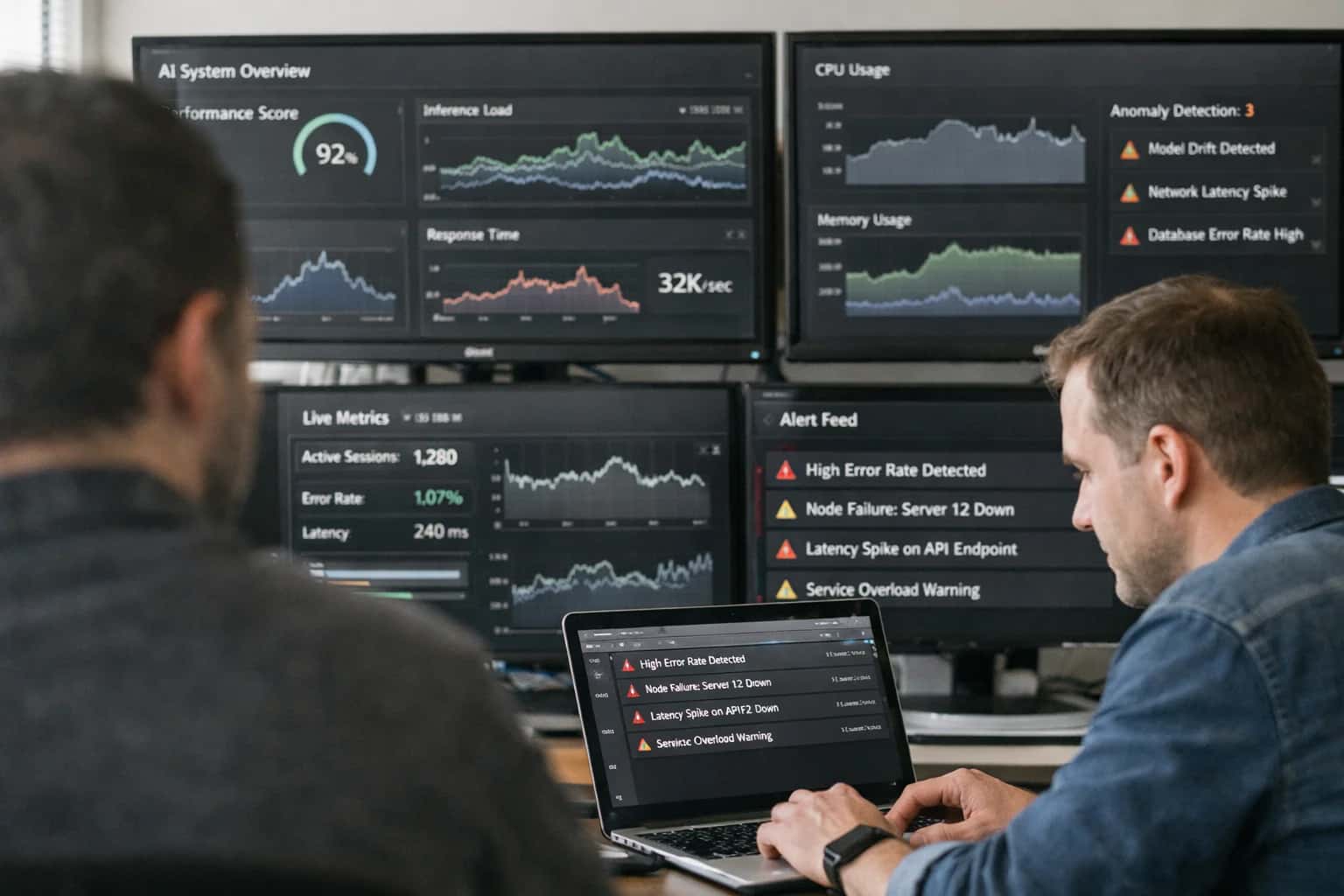
Where AI Fits in Veterinary Anesthesia Workflows
Integrating AI with Provet Cloud's anesthesia monitoring surfaces to provide real-time anomaly detection and automate post-procedure documentation.
For implementation, this requires a secure middleware layer that ingests data via Provet Cloud's API or approved device middleware. The AI service processes the normalized data stream, applies anomaly detection models, and returns structured alerts with suggested severity (informational, watch, critical). Post-procedure, the same service can synthesize the entire anesthesia event—including drug logs, vital trends, and any flagged incidents—into a draft SOAP note or anesthesia report. This draft is inserted into the patient's medical record within Provet Cloud as an unverified entry, ready for veterinarian review, edits, and final sign-off. This cuts documentation time from 10-15 minutes to under 2 minutes of verification.
Rollout should be phased, starting with monitoring and alerting for stable procedures in a single OR, governed by clear protocols for when and how alerts are acknowledged. Audit trails must log every AI-generated alert and draft note, linking them to the source data and the reviewing clinician. The core value isn't replacing clinical judgment but augmenting it—turning constant manual vigilance into managed, intelligent oversight and converting a tedious clerical task into a quick verification step, improving both patient safety and surgeon productivity.
Integration Touchpoints in Provet Cloud & Monitoring Stack
Core Monitoring & Data Ingestion
The Provet Cloud anesthesia module is the primary surface for integration, managing patient vitals, drug logs, and procedure notes. AI connects here via API to ingest real-time telemetry from connected monitoring devices (e.g., ECG, capnography, pulse oximetry).
Key integration points:
- Vitals Stream API: Subscribe to live data feeds for heart rate, SpO2, ETCO2, and blood pressure.
- Anesthesia Record Object: Append AI-generated annotations, anomaly flags, and trend summaries directly to the digital anesthesia sheet.
- Event Webhooks: Trigger alerts when AI detects predefined physiological patterns (e.g., bradycardia, hypoxemia) that require clinician review.
This creates a closed-loop where AI acts as a continuous safety monitor, enriching the clinical record without disrupting the veterinarian's workflow.
High-Value AI Use Cases for Anesthesia Monitoring
Integrating AI with Provet Cloud's anesthesia monitoring workflows enables real-time clinical support, automated documentation, and proactive safety alerts. These patterns connect to device data streams and patient records to enhance perioperative care.
Real-Time Anomaly Detection & Alerts
AI models continuously analyze streaming vitals (HR, RR, SpO₂, ETCO₂, BP) from connected monitors via Provet Cloud's API. The system flags subtle deviations from patient baselines or expected ranges before critical thresholds are breached, sending prioritized alerts to the anesthetist's tablet or workstation. This shifts monitoring from reactive to proactive.
Automated Anesthesia Record Generation
Post-procedure, AI synthesizes the entire monitoring session—vital trends, drug administration timestamps from the fluid pump, and event markers—into a structured anesthesia record ready for review in Provet Cloud. This eliminates manual charting, ensures completeness, and creates a searchable audit trail for future reference or compliance.
Predictive Recovery Timeline Estimation
By analyzing the patient's pre-op health (from Provet Cloud records), anesthesia protocol, and intraoperative stability, AI provides an estimated recovery profile. This helps technicians anticipate extubation readiness, plan post-op monitoring intensity, and optimize cage space in the ICU, improving patient flow from OR to recovery.
Drug Interaction & Protocol Safety Checks
Before and during induction, the AI cross-references the planned or administered drugs with the patient's active medications and known conditions from their Provet Cloud medical record. It provides context-aware alerts for potential interactions or suggests adjusted dosing based on breed-specific sensitivities, acting as a real-time clinical decision support tool.
Post-Op Report & Client Communication Draft
Leveraging the generated anesthesia record and surgical notes, AI drafts a client-friendly summary of the anesthetic event. It highlights stability, any interventions, and specific home monitoring instructions tailored to the procedure. This draft is routed to the veterinarian for review and can be sent via Provet Cloud's client portal, standardizing and accelerating post-op communication.
Anesthesia Quality Assurance Analytics
AI aggregates and anonymizes data across all procedures to identify trends for the practice. It can flag patterns in event rates (e.g., hypotension with a specific pre-med protocol) or benchmark recovery times against practice averages. These insights, delivered via a Provet Cloud dashboard, support protocol refinement and continuing education.
Example AI-Enhanced Anesthesia Workflows
These workflows illustrate how AI integrates with Provet Cloud's anesthesia monitoring data and clinical records to automate vigilance, generate structured documentation, and support clinical decision-making. Each pattern connects real-time device feeds or post-procedure data to AI services, then updates Provet Cloud records or triggers alerts.
Trigger: Continuous data stream from connected anesthesia monitors (e.g., ECG, SpO2, capnography, NIBP) via Provet Cloud's device integration APIs or a middleware hub.
Context Pulled: The AI service receives a rolling window of vital sign data (e.g., last 2 minutes) along with patient context from Provet Cloud: species, breed, weight, pre-anesthetic health status (ASA classification), and drugs administered.
AI Action: A lightweight model analyzes the multivariate time-series data for subtle anomalies that may not breach simple threshold alarms—such as gradual downward trends in blood pressure, increasing heart rate variability, or early signs of hypoventilation. It contextualizes these against the patient's baseline and procedure phase (induction, maintenance, recovery).
System Update: If a high-confidence anomaly is detected, the system performs two actions:
- Creates a high-priority alert in Provet Cloud's case log, visible to the anesthetist and surgeon.
- Sends a structured push notification to designated mobile devices with the anomaly type, timestamp, and a suggested check (e.g., "Gradual MAP decline of 15% over 5 mins—check vaporizer setting or consider fluid bolus").
Human Review Point: All alerts are logged with the underlying data snippet. The anesthetist must acknowledge the alert in Provet Cloud, which records their response and time. The AI does not auto-adjust any equipment.
Implementation Architecture: Data Flow & System Wiring
A production-ready architecture for connecting AI to Provet Cloud's anesthesia monitoring workflow, enabling live anomaly detection and automated report generation.
The integration is built on a secure, event-driven pipeline. Anesthesia monitoring devices (e.g., multiparameter monitors, capnographs) stream vital sign data—heart rate, respiratory rate, SpO₂, EtCO₂, blood pressure, temperature—via HL7, MQTT, or a dedicated device gateway. This real-time feed is ingested by a middleware layer (often a secure message queue like RabbitMQ or AWS Kinesis) that buffers and normalizes the data. A dedicated AI service subscribes to this stream, applying pre-trained models to detect anomalies such as hypotension, bradycardia, or apnea. When a threshold breach is detected, the service immediately calls Provet Cloud's REST API, creating a structured clinical alert within the active patient's record and triggering configured notifications (SMS, in-app alert, pager) to the surgical team.
For post-procedure reporting, the architecture shifts to a batch-and-summarize pattern. Once the procedure is marked complete in Provet Cloud, a webhook event is sent to an orchestration service (e.g., n8n or a custom microservice). This service retrieves the full time-series anesthesia data for the case from the data lake, along with the patient's pre-op notes and drug log from Provet Cloud's Medical Records and Treatment modules. An LLM agent, grounded with veterinary anesthesia guidelines, synthesizes a draft Post-Anesthesia Report, including sections for induction, maintenance, recovery, and any complications. This draft is pushed back into Provet Cloud as a document attached to the patient record, flagged for veterinarian review and signature within the Clinical Notes interface.
Governance is wired into every step. All AI-generated alerts and reports are tagged with a provenance trail (model version, input data hash, timestamp). Critical alerts require a human-in-the-loop confirmation before escalating, configurable in Provet Cloud's user roles. The system is designed for phased rollout: start with non-critical parameter monitoring and manual report review, then gradually automate more alerts and report sections as clinical trust is established. This approach minimizes disruption while delivering immediate value in reducing manual charting time and providing a safety net during high-stakes procedures.
Code & Payload Examples
Ingesting & Normalizing Monitoring Streams
AI integration begins by establishing a secure, real-time data pipeline from anesthesia monitors (e.g., Cardell, Midmark, DRE) into Provet Cloud. This involves subscribing to device telemetry via HL7, MQTT, or vendor-specific APIs. The payload typically includes vitals (HR, RR, SpO2, ETCO2, NIBP), waveforms, and alarm states.
A key integration task is normalizing this heterogeneous data into a unified JSON schema for AI processing. The payload is enriched with Provet Cloud patient and procedure context (patient ID, procedure type, drug logs) before being queued for real-time analysis.
json// Example normalized payload from monitor to processing queue { "patient_id": "PVT-2024-5678", "procedure_id": "PROC-AN-8910", "timestamp": "2024-05-15T14:30:22Z", "vitals": { "heart_rate": {"value": 58, "unit": "bpm", "status": "normal"}, "spO2": {"value": 97, "unit": "%", "status": "normal"}, "etCO2": {"value": 42, "unit": "mmHg", "status": "warning"}, "nibp": {"systolic": 112, "diastolic": 68, "unit": "mmHg"} }, "alarms": ["ETCO2 rising trend"], "device_metadata": {"type": "Cardell Touch", "serial": "CT-55432"} }
The integration ensures data persists to the patient's Provet Cloud medical record for post-procedure review, while the real-time stream powers the AI alerting layer.
Realistic Time Savings & Clinical Impact
How AI integration with Provet Cloud and connected monitoring devices changes the workflow for veterinarians and technicians, focusing on time reallocation and risk reduction rather than full automation.
| Clinical Workflow | Before AI | With AI Integration | Impact & Notes |
|---|---|---|---|
Anomaly Detection During Procedure | Manual monitoring of multiple vitals streams; reaction to obvious threshold breaches. | AI analyzes trends in real-time, providing early, prioritized alerts for subtle deviations (e.g., gradual HR drop). | Shifts focus from detection to intervention. Aims to provide 60-90 second earlier warning for critical trends. |
Post-Procedure Report Drafting | Manual transcription of vitals, events, and drug logs from paper/monitor into Provet Cloud. (15-25 mins) | AI auto-generates a structured draft report from device data and timestamps, populating Provet Cloud fields. | Reduces clerical time to 3-5 minutes of review/editing. Ensures data fidelity and completeness. |
Pre-Anesthetic Risk Flagging | Review of patient history and pre-op labs; relies on clinician memory and manual chart review. | AI scans Provet Cloud records, highlighting relevant past reactions, breed-specific risks, or abnormal pre-op values. | Structured, consistent pre-op checklist. Surfaces latent data in <30 seconds during planning. |
Anesthesia Log Documentation | Manual entry of drug doses, times, and parameters into Provet Cloud or paper log during procedure. | AI-assisted logging via voice or minimal-clicks, with auto-calculated doses/kg and timestamps synced to monitor data. | Reduces documentation burden during critical phases. Creates audit-ready, synchronized records. |
Post-Op Recovery Monitoring | Periodic manual checks of vitals and pain scores entered into recovery notes. | Continuous passive monitoring via connected devices; AI summarizes recovery trends and flags prolonged instability. | Enables more patients per tech with consistent oversight. Generates data-driven recovery summaries. |
Client Communication & Discharge Notes | Manual compilation of procedure highlights and home-care instructions post-shift. | AI drafts client-facing summary and instructions using the generated medical report and standard templates. | Enables same-day, detailed client updates. Standardizes discharge info, reducing call-backs. |
Quality Assurance & Protocol Review | Manual, periodic chart audits to identify patterns or deviations from anesthesia protocols. | AI analyzes aggregated anonymized data across procedures, highlighting efficacy and safety trends for protocol refinement. | Moves QA from reactive sampling to continuous, data-informed improvement. Supports evidence-based practice standards. |
Governance, Safety, and Phased Rollout
Integrating AI with live anesthesia monitoring requires a safety-first architecture designed for clinical oversight and incremental validation.
The integration architecture connects to Provet Cloud's Patient Record API and Clinical Event Stream to receive real-time vitals (e.g., heart rate, SpO2, ETCO2, blood pressure) from connected monitoring devices. A dedicated, secure service layer processes this stream, applying AI models trained to detect subtle anomaly patterns—like gradual desaturation or arrhythmia onset—that may precede a critical event. All AI-generated alerts are written back to Provet Cloud as structured clinical notes or priority tasks attached to the patient's record, ensuring they are part of the official audit trail and visible to the attending veterinarian within their existing workflow.
Governance is enforced through a human-in-the-loop approval layer for all post-procedure report drafts. The AI can generate a comprehensive anesthesia summary, but it must be reviewed and signed off by the clinician within Provet Cloud before being finalized. Access to the AI system and its configuration is controlled via role-based access controls (RBAC) mapped to Provet Cloud user roles (e.g., Lead Surgeon, Practice Owner). All AI interactions, including alert triggers and data accesses, are logged to a separate audit system for compliance and model performance review.
A phased rollout is critical. Phase 1 is a silent monitoring pilot, where the AI runs in the background, generating alerts that are logged but not displayed, allowing the team to validate accuracy against real outcomes without disrupting workflow. Phase 2 introduces non-interruptive alerts as visual flags within the Provet Cloud interface. Phase 3, after sufficient confidence is built, enables configurable push notifications (e.g., to a dedicated tablet in the OR). This crawl-walk-run approach de-risks the integration, builds clinical trust, and allows for tuning of sensitivity thresholds based on your practice's specific case mix and risk tolerance.
Enabling Efficiency, Speed & Accuracy
Intelligent Analysis, Decision & Execution
We build AI systems for teams that need search across company data, workflow automation across tools, or AI features inside products and internal software.
Talk to Us
Search across company data
Give teams answers from docs, tickets, runbooks, and product data with sources and permissions.
Useful when people spend too long searching or get different answers from different systems.

Automate internal workflows
Use AI to route work, draft outputs, trigger actions, and keep approvals and logs in place.
Useful when repetitive work moves across multiple tools and teams.

Add AI to products and internal tools
Build assistants, guided actions, or decision support into the software your team or customers already use.
Useful when AI needs to be part of the product, not a separate tool.
FAQ: Technical and Commercial Questions
Practical answers for practice owners, clinical directors, and IT managers evaluating AI-enhanced anesthesia workflows.
The integration uses a secure, lightweight middleware layer that connects via two primary paths:
- Device Data Ingestion: The AI service connects to anesthesia monitors (e.g., Digicare, Midmark, Cardell) using their available data export protocols—typically via a serial-to-Ethernet converter or a dedicated API if the monitor is network-enabled. It ingests real-time streams of parameters like HR, RR, SpO2, ETCO2, NIBP, and temperature.
- Provet Cloud Synchronization: Concurrently, the service authenticates with the Provet Cloud API using OAuth 2.0. It pulls relevant patient context for the ongoing procedure from the
Patient,Appointment, andMedical Recordobjects, including species, breed, weight, pre-op medications, and ASA status.
The AI model fuses these two data streams. It does not store raw monitor data long-term; it processes it in real-time to generate alerts and a final summary, which is then posted back to Provet Cloud as a structured note attached to the patient's anesthesia record.
Technical Prerequisites:
- Provet Cloud API access (typically via a dedicated integration user).
- A network segment that allows the middleware service to communicate with both the monitors and the internet (for the AI model endpoint).
- Monitor support for real-time data output (most modern units do).

About the author
Prasad Kumkar
CEO & MD, Inference Systems
Prasad Kumkar is the CEO & MD of Inference Systems and writes about AI systems architecture, LLM infrastructure, model serving, evaluation, and production deployment. Over 5+ years, he has worked across computer vision models, L5 autonomous vehicle systems, and LLM research, with a focus on taking complex AI ideas into real-world engineering systems.
His work and writing cover AI systems, large language models, AI agents, multimodal systems, autonomous systems, inference optimization, RAG, evaluation, and production AI engineering.
Partnered with leading AI, data, and software stack.





How We Work
Custom AI workflows for your Business
One-fit-all AI don't work for modern businesses. At Inferensys, we aim to understand your business & custom requirements; which we use to define most efficient agentic workflows, the data, and the tools for your business.
01
Review the use case
We understand the task, the users, and where AI can actually help.
Read more02
Pick the right approach
We define what needs search, automation, or product integration.
Read more03
Build the first useful version
We implement the part that proves the value first.
Read more04
Improve from there
We add the checks and visibility needed to keep it useful.
Read moreThe first call is a practical review of your use case and the right next step.
Talk to Us