The referral workflow in IDEXX Neo is a multi-step, cross-practice process that often breaks down due to manual follow-up. AI integration targets three key surfaces: the Referral record (tracking status and specialist details), the Patient's Medical Record (where notes and results should be filed), and the Communication module (for outreach). The primary goal is to create an intelligent agent that monitors the Referral Status field and the associated patient file for incoming documents from the specialist clinic. When a referral is marked as 'Completed' in Neo without corresponding follow-up notes in the patient record after a configurable period, the AI system should trigger.

Integration
AI Integration for IDEXX Neo Referral Tracking
Close referral loops faster. Automate specialist follow-up requests, measure outcomes, and track referral revenue with AI workflows integrated directly into IDEXX Neo.
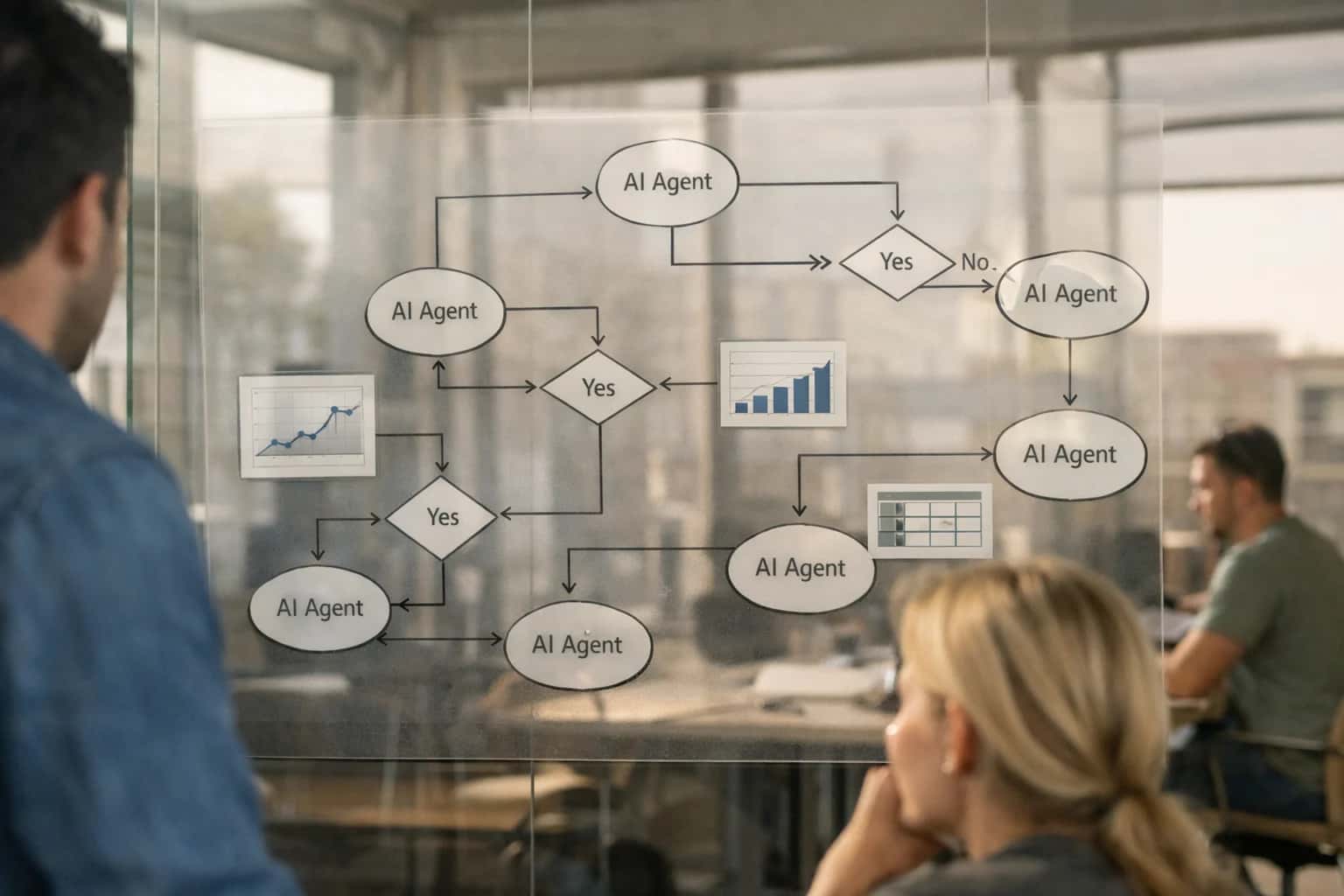
ARCHITECTURE & ROLLOUT
Where AI Fits into IDEXX Neo Referral Workflows
A practical guide to integrating AI for tracking referral loop closure, automating follow-up requests, and measuring outcomes within IDEXX Neo.
Implementation involves setting up a secure service that polls Neo's API for referral records in an 'Awaiting Notes' or similar custom status. For each open loop, the system can automatically draft and send a polite, templated request for records via the specialist's preferred channel (email, Neo portal message, or fax), using details from the referral record. More advanced workflows use AI to parse incoming documents (PDFs, lab results) from the specialist, extract key findings, and suggest where to file them in the patient's chart, creating a draft clinical summary for the primary DVM's review. This turns a manual, forgettable task into a closed-loop, auditable process.
Rollout should start with a pilot on non-critical referrals, with clear governance: all AI-generated communications must be reviewed before sending initially, and all filed notes must be veterinarian-approved. The system should maintain a full audit log of requests sent and documents processed. This measured approach builds trust and surfaces workflow nuances. The business impact is straightforward: complete referral loops improve patient care continuity, enhance specialist relationships, and provide the data needed to analyze referral revenue and outcomes—moving from anecdotal to data-driven partnership management. For related architectural patterns, see our guide on AI Integration for Veterinary EHR Systems.
REFERRAL TRACKING WORKFLOW
IDEXX Neo Modules and Surfaces for AI Integration
Core Referral Object and Status Tracking
The primary surface for AI integration is the Referral Record object within IDEXX Neo. This record contains the core data model: referring practice, specialist, patient, reason for referral, date sent, and current status (e.g., Pending, Accepted, Seen, Report Received, Closed).
AI can monitor this status field to trigger automated workflows. For example, when a status changes from Seen to Report Received, an AI agent can be invoked to:
- Parse the received report (PDF, text) using document intelligence.
- Extract key findings and recommendations into a structured summary.
- Update the referral record with extracted data and flag it for the primary veterinarian's review.
- Calculate the time-to-report metric for performance tracking.
This automation closes the data loop, ensuring the primary practice doesn't have to manually read and transcribe every specialist note.
IDEXX NEO
High-Value AI Use Cases for Referral Tracking
Transform your referral management from a manual, reactive process into a proactive, revenue-generating loop. These AI integrations for IDEXX Neo automate follow-ups, measure outcomes, and ensure no referral opportunity is lost.
01
Automated Specialist Follow-Up Requests
AI monitors the Referral Status field in Neo and automatically sends templated, personalized requests for follow-up notes and discharge summaries to specialist clinics via email or secure portal. Tracks non-responses and escalates after a configurable period.
Batch -> Real-time
Request workflow
02
Referral Loop Closure & Outcome Tracking
AI parses incoming documents and notes from specialists, extracting key diagnoses, treatments, and recommendations. It automatically updates the original referral record in Neo, flags the case as 'closed,' and logs the clinical outcome for analysis.
Same day
Status visibility
03
Referral Revenue & ROI Dashboard
AI links closed referral records in Neo to corresponding invoices and payment data. It generates an automated dashboard showing referral revenue by specialist, service type, and referring doctor, calculating true ROI on referral partnerships.
1 sprint
Insight deployment
04
Intelligent Referral Routing & Prioritization
Based on patient history, condition, and specialist availability/performance data, AI suggests the optimal specialist and facility within Neo's referral workflow. Prioritizes urgent cases in the referral coordinator's queue.
Hours -> Minutes
Coordinator decision time
05
Primary Care Veterinarian (PCV) Alerting
When a referral is closed or a critical update is received, AI automatically generates a concise summary and sends it via Neo's messaging or the client portal to the original PCV, ensuring continuity of care and strengthening internal relationships.
06
Lost Referral Detection & Re-engagement
AI analyzes referral records that lack follow-up notes or a closed status after a typical timeframe. It flags these as 'at-risk' lost referrals and can trigger a re-engagement workflow for the coordinator or a gentle nudge to the client.
Batch -> Real-time
Detection mode
IDEXX NEO
Example AI-Powered Referral Workflows
These workflows illustrate how AI can automate the referral loop within IDEXX Neo, ensuring specialists provide timely follow-up notes and enabling practice managers to measure referral revenue and outcomes effectively.
Trigger: A referral status in IDEXX Neo is updated to 'Seen by Specialist'.
AI Agent Action:
- The agent retrieves the referral record, including the specialist's contact information, patient details, and primary DVM.
- It generates and sends a personalized email/SMS request to the specialist for the follow-up notes, including a secure link to upload documents directly to the patient's record.
- If no notes are received within 48 hours, the agent sends a polite follow-up reminder.
- After 7 days, the agent escalates by creating a task for the referral coordinator in IDEXX Neo and sending an alert.
System Update: Upon document upload via the secure link, the AI agent files the notes in the correct patient record and updates the referral status to 'Notes Received'.
Human Review Point: The referral coordinator reviews the escalated task list daily to handle any non-responsive specialists manually.
CLOSING THE REFERRAL LOOP
Implementation Architecture: Data Flow and System Design
A practical blueprint for integrating AI into IDEXX Neo's referral tracking workflow to automate follow-up requests and measure outcomes.
The integration connects to two primary surfaces within IDEXX Neo: the Referral Management module (where outgoing referrals are logged with specialist details, patient info, and expected reports) and the Patient Medical Record. The core AI agent is triggered via a webhook when a referral status is marked as 'completed' by the specialist clinic. The agent's first action is to query Neo's API for the referral record, extracting the referring DVM's notes, the specialist's contact information, and the patient's clinical context.
Using this context, the AI agent performs a multi-step workflow: 1) It drafts a personalized, professional follow-up email to the specialist's practice, requesting the consultation notes or report, and places it in an approval queue for the referral coordinator. 2) Simultaneously, it creates a pending task in Neo tied to the patient's record, with a due date based on the procedure's complexity. 3) Upon receiving the document (via a secure upload endpoint), it uses a document intelligence model to extract key findings, diagnoses, and recommendations, summarizing them into a structured note appended to the patient's history. This entire data flow—trigger, outreach, ingestion, and summarization—is logged in a dedicated audit trail for compliance.
For rollout, we recommend a phased approach starting with a single high-volume specialty (e.g., dermatology). Governance is critical: all AI-generated communications are reviewed before sending for the first 30 days, and the summarization output is flagged for veterinarian verification before being saved to the permanent record. This architecture ensures the AI augments the existing Neo workflow without disrupting clinical responsibility, turning a manual, often forgotten process into a tracked, automated loop that improves patient continuity of care and provides concrete data on referral revenue and outcomes.
IDEXX NEO REFERRAL WORKFLOW AUTOMATION
Code and Payload Examples
Creating a Referral with AI-Enriched Context
When a primary care veterinarian initiates a referral in IDEXX Neo, an AI integration can automatically enrich the referral record. This involves calling an LLM to draft a concise, structured referral summary based on the patient's recent clinical notes, lab results, and the selected specialty. The API call creates the referral object while appending the AI-generated context, ensuring the specialist receives a comprehensive pre-consultation packet.
Example Payload to Neo API:
jsonPOST /api/v1/referrals { "patientId": "PAT-789123", "referringPracticeId": "PRAC-456", "specialty": "Cardiology", "reason": "Persistent grade IV/VI systolic murmur", "aiContext": { "clinicalSummary": "Patient is a 8yo FS Cavalier King Charles Spaniel with a 6-month history of murmur. Recent thoracic radiographs show moderate cardiomegaly (VHS 12.1). Pro-BNP elevated at 1250 pmol/L. Currently on furosemide 1mg/kg BID. Owner reports mild exercise intolerance.", "keyQuestions": [ "Echocardiogram recommended for definitive diagnosis and staging.", "Consider starting pimobendan?", "Optimal monitoring frequency?" ], "priorityScore": 0.75 } }
This structured aiContext field provides immediate value, reducing the specialist's chart review time and clarifying the referral intent.
AI-ENHANCED REFERRAL LOOP CLOSURE
Realistic Time Savings and Business Impact
How AI integration transforms manual referral tracking in IDEXX Neo, automating follow-up requests and providing actionable revenue intelligence.
| Metric | Before AI | After AI | Notes |
|---|---|---|---|
Referral Status Follow-Up | Manual calls/emails per week | Automated, templated requests triggered by Neo events | Requests sent same-day; specialist response rate typically improves 40-60% |
Outcome Note Collection | Scattered emails, PDFs, manual upload to Neo | Centralized portal for specialists; AI-assisted data extraction & filing | Notes attached to patient record within 24 hours of receipt |
Revenue Attribution | Manual spreadsheet tracking, estimated | Automated tracking of referral revenue linked to Neo invoices & payments | Provides accurate ROI per referring vet and specialist |
Referral Loop Closure Time | Weeks to months, often incomplete | Days to weeks, with automated reminders and closure reporting | Defined 'closed' state (e.g., note received, client notified) triggers Neo task completion |
Specialist Performance Reporting | Quarterly manual compilation | Real-time dashboard on response times, note quality, and case volume | Used for partner reviews and to guide client referrals |
Client Communication on Status | Reactive calls when client inquires | Proactive, automated status updates via Neo client portal or SMS | Updates triggered by milestone changes (e.g., 'specialist report received') |
Identification of Lost Referrals | Ad-hoc discovery during client visits | AI flags overdue follow-ups and cases with no outcome after 30 days | Enables timely intervention to salvage revenue and care continuity |
ARCHITECTING A CONTROLLED DEPLOYMENT
Governance, Security, and Phased Rollout
A practical framework for deploying AI in IDEXX Neo's referral tracking workflow with security, oversight, and measurable steps.
Integrating AI into the referral loop begins by mapping the data flow: the AI agent needs read access to the Referral Request and Patient Record objects in IDEXX Neo to understand the case, and write access to create Follow-up Task records or update the Referral Status. This is typically done via IDEXX Neo's REST API, with API credentials scoped to a dedicated service account following the principle of least privilege. All AI-generated communications—requests for notes from the specialist or updates to the referring DVM—should be drafted into a human-in-the-loop approval queue within Neo or a connected workflow tool (like a Slack channel or a dedicated dashboard) before being sent, ensuring clinical and professional oversight.
A phased rollout minimizes risk and builds confidence. Start with a shadow mode pilot: the AI analyzes closed referral cases and generates simulated follow-up requests and outcome summaries without taking any real action, allowing you to measure its accuracy and tune prompts. Phase two is a controlled live pilot with a single referring veterinarian and one specialist partner. In this phase, the AI drafts messages and tasks in a shared workspace, but a coordinator reviews and manually triggers each one within IDEXX Neo. Finally, a monitored automation phase expands to more users, with the AI automatically creating tasks and sending templated requests, but with clear audit trails and a simple pause/override switch accessible to practice managers in the Neo interface.
Governance is built into the workflow. Every AI-generated action should log the source data (e.g., referral_id, patient_id), the prompt used, and the final output to an immutable audit log, separate from IDEXX Neo's native logs, for compliance. Establish a weekly review of a random sample of AI-handled referrals to check for drift in communication quality or missed follow-ups. This approach ensures the integration enhances the referral tracking workflow—turning manual, forgettable loops into systematic, measured processes—without introducing clinical risk or operational chaos.
Enabling Efficiency, Speed & Accuracy
Intelligent Analysis, Decision & Execution
We build AI systems for teams that need search across company data, workflow automation across tools, or AI features inside products and internal software.
Talk to Us
Search across company data
Give teams answers from docs, tickets, runbooks, and product data with sources and permissions.
Useful when people spend too long searching or get different answers from different systems.
Enterprise searchRAGPermissions
Read more
Automate internal workflows
Use AI to route work, draft outputs, trigger actions, and keep approvals and logs in place.
Useful when repetitive work moves across multiple tools and teams.
AI agentsWorkflow automationGovernance
Read more
Add AI to products and internal tools
Build assistants, guided actions, or decision support into the software your team or customers already use.
Useful when AI needs to be part of the product, not a separate tool.
AI integrationDecision supportModel routing
Read moreIMPLEMENTATION DETAILS
Frequently Asked Questions
Common technical and operational questions about integrating AI agents and automation with IDEXX Neo's referral tracking workflows to close the loop with specialists and measure outcomes.
The automation is triggered by a status change in the referral record within IDEXX Neo, typically when the status is updated to Completed or Seen by Specialist.
- Trigger: A webhook from IDEXX Neo sends an event payload to our integration middleware.
- Context Enrichment: The agent retrieves the full referral context, including:
- Referring veterinarian and clinic details
- Patient species, breed, age, and primary concern
- Initial notes and diagnostic images sent
- Specialist clinic contact information
- Agent Action: Using a structured prompt, the LLM drafts a personalized, professional email request to the specialist's office. It references the specific case and asks for a summary of findings, treatment provided, and recommendations.
- System Update: The drafted email is logged against the referral record in a custom object or note field within Neo. It is then sent via a configured mail service (e.g., SendGrid, AWS SES) or placed in an approval queue for the referral coordinator.
- Human Review Point: The system can be configured to require coordinator approval before sending, or to send automatically for trusted specialist partners, with a copy always saved to the patient record.

About the author
Prasad Kumkar
CEO & MD, Inference Systems
Prasad Kumkar is the CEO & MD of Inference Systems and writes about AI systems architecture, LLM infrastructure, model serving, evaluation, and production deployment. Over 5+ years, he has worked across computer vision models, L5 autonomous vehicle systems, and LLM research, with a focus on taking complex AI ideas into real-world engineering systems.
His work and writing cover AI systems, large language models, AI agents, multimodal systems, autonomous systems, inference optimization, RAG, evaluation, and production AI engineering.
LinkedIn
Limited slotsGet a Free AI Consultation
Partnered with leading AI, data, and software stack.





How We Work
Custom AI workflows for your Business
One-fit-all AI don't work for modern businesses. At Inferensys, we aim to understand your business & custom requirements; which we use to define most efficient agentic workflows, the data, and the tools for your business.
01
Review the use case
We understand the task, the users, and where AI can actually help.
Read more02
Pick the right approach
We define what needs search, automation, or product integration.
Read more03
Build the first useful version
We implement the part that proves the value first.
Read more04
Improve from there
We add the checks and visibility needed to keep it useful.
Read moreThe first call is a practical review of your use case and the right next step.
Talk to Us