The integration connects at two primary surfaces within the IDEXX Neo ecosystem: the PACS (Picture Archiving and Communication System) interface and the patient medical record. When a new DICOM study (e.g., radiograph, ultrasound) is saved to the PACS server, an event webhook or a monitored directory trigger initiates the AI workflow. The system extracts the study's metadata—patient ID, study date, modality—and the anonymized image files, sending them to a secure inference endpoint. The AI model, trained on veterinary-specific pathology, analyzes the study and returns structured findings, such as a prioritized list of detected abnormalities (e.g., cardiomegaly, hip dysplasia, osteosarcoma suspicion) with confidence scores and relevant image slices annotated.

Integration
AI Integration for IDEXX Neo Diagnostic Imaging
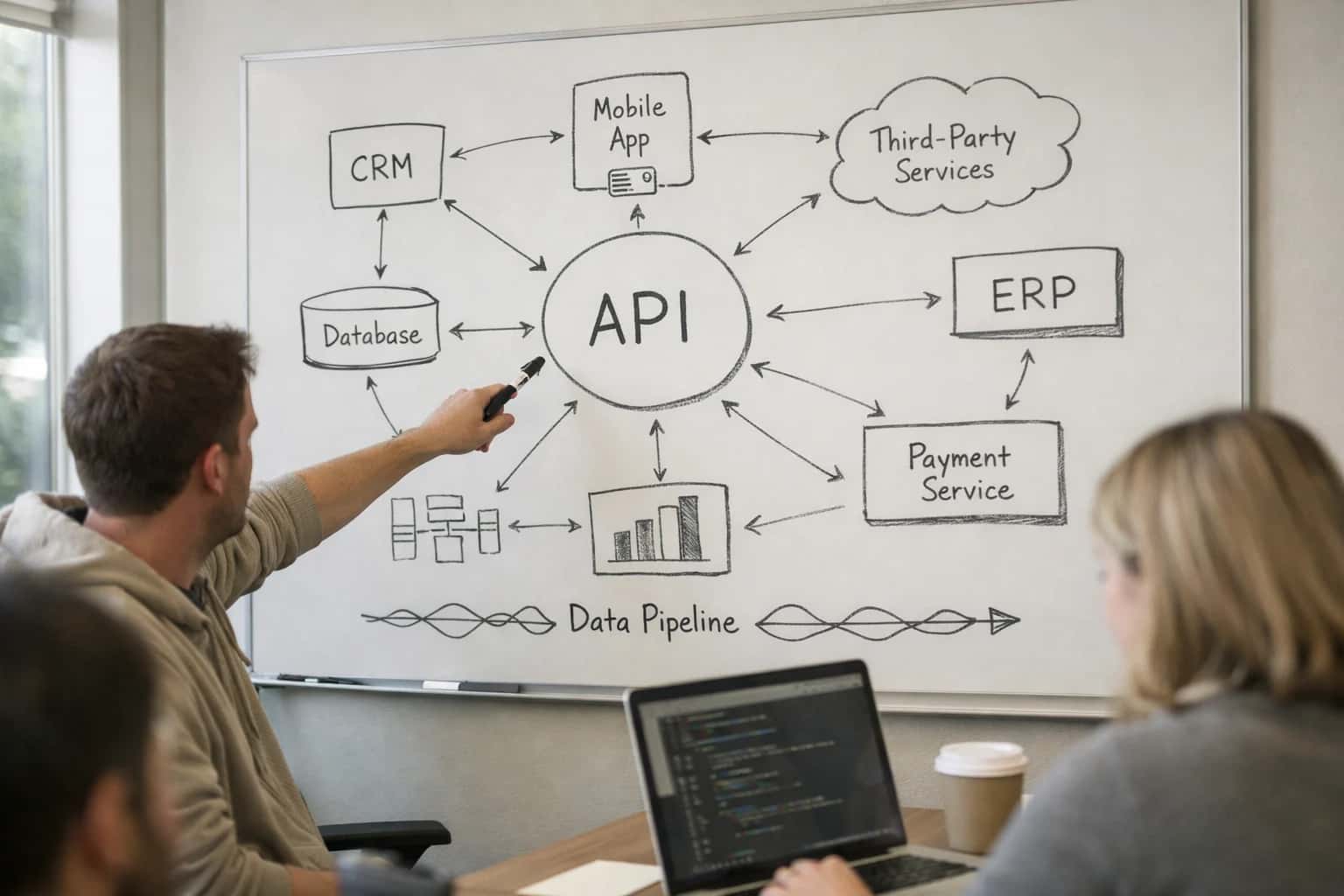
Where AI Fits into the IDEXX Neo Imaging Workflow
Integrating AI into IDEXX Neo's diagnostic imaging workflow reduces radiologist backlog and accelerates case review by prioritizing studies and generating preliminary findings.
Returning results, the integration writes a structured preliminary report into a dedicated AI Findings custom object linked to the patient record in Neo. This does not auto-populate the final radiologist report, preserving the legal record. Instead, it surfaces within the radiologist's worklist in Neo, flagging high-priority cases and providing a draft narrative. For common, high-confidence conditions, the system can auto-suggest ICD-10 codes and generate a client-friendly summary in a draft status, ready for the clinician to review, edit, and attach to the client portal. The workflow reduces manual measurement, comparison to prior studies, and initial dictation time from 15-20 minutes to 2-3 minutes of review and validation.
A staged rollout is critical. Start with a silent pilot, where AI findings are logged but not shown to clinicians, to validate accuracy and build trust in the model's performance within your specific caseload. Then, enable the worklist prioritization feature, allowing radiologists to triage their queue based on AI-detected urgency. Finally, introduce draft findings for a subset of high-prevalence, high-accuracy conditions (e.g., osteoarthritis). Governance requires clear protocols: all AI-generated content must be signed off by a licensed DVM, and an audit trail must log the original AI output alongside the clinician's final edits. This ensures clinical responsibility while capturing the efficiency gains of AI-assisted diagnosis.
Key Integration Surfaces in IDEXX Neo
Automating Radiologist Work Queues
The primary integration surface is the PACS (Picture Archiving and Communication System) workflow within IDEXX Neo. AI connects via DICOM or HL7 interfaces to prioritize incoming imaging studies based on urgency.
Key Integration Points:
- DICOM Modality Worklist (MWL): Inject priority scores into the worklist for technologists.
- Study Status Updates: Use Neo's API or database hooks to flag studies with suspected critical findings (e.g., GDV, pneumothorax) for immediate review.
- PACS Router Rules: Configure routing rules to send high-priority studies to specific workstations or radiologist groups.
Example Workflow: A thoracic radiograph is acquired. An AI model analyzes the DICOM image in near-real-time, detects a moderate pleural effusion, and updates the study status in Neo to "Priority 1 - Pending Review." The lead radiologist receives an alert, and the study appears at the top of their worklist.
High-Value AI Use Cases for Diagnostic Imaging
Integrating AI with IDEXX Neo's diagnostic imaging workflow can prioritize studies, accelerate preliminary findings, and ensure results are seamlessly linked to patient records. These use cases focus on practical automation for radiologists and clinicians.
Automated Study Triage & Prioritization
AI analyzes incoming DICOM studies in IDEXX Neo's PACS, flagging studies with potential fractures, masses, or effusions for urgent review. Workflow: Images are routed to a 'Critical' folder for the radiologist, while normal studies are batched for routine reporting. This reduces time-to-diagnosis for emergent cases.
Preliminary Findings for Common Conditions
For high-volume, routine studies (e.g., osteoarthritis screening, cardiomegaly), AI generates a structured draft report within the IDEXX Neo imaging module. Workflow: The radiologist reviews, edits, and signs off, cutting documentation time. Findings auto-populate the patient's problem list and clinical notes.
Longitudinal Comparison & Change Detection
AI automatically retrieves prior studies for the same patient and anatomical region from the IDEXX Neo archive. Workflow: It highlights interval changes (e.g., tumor progression, healing fractures) in a side-by-side viewer, providing quantitative measurements for the radiologist's final report.
Structured Data Capture for Billing & Coding
As findings are generated or confirmed, AI maps them to standardized veterinary diagnostic codes (e.g., VeNom, ICD-10). Workflow: This structured data is pushed to the IDEXX Neo billing module, ensuring accurate charge capture and reducing claim denials related to insufficient documentation.
Client-Facing Report Summarization
AI creates a plain-language summary of the radiologist's final report for the pet owner. Workflow: This summary, along with annotated key images, is automatically posted to the client's IDEXX Neo portal or appended to a discharge summary, improving client understanding and compliance.
Quality Assurance & Peer Learning
AI runs in the background on a subset of completed studies, comparing its findings to the radiologist's final report. Workflow: Discrepancies are anonymized and presented in a weekly QA dashboard within IDEXX Neo, supporting continuous education and helping identify subtle, commonly missed patterns.
Example AI-Enhanced Imaging Workflows
These workflows demonstrate how AI agents can be integrated with IDEXX Neo's diagnostic imaging module to prioritize studies, generate preliminary findings, and link results to patient records, reducing radiologist cognitive load and report turnaround time.
Trigger: A new DICOM study is uploaded to the IDEXX Neo PACS.
Context Pulled: The agent retrieves the patient's signalment (species, breed, age), clinical history from the medical record, and the reason for study from the requisition.
AI Agent Action: A vision-language model (VLM) analyzes the study's DICOM metadata and a low-resolution preview. It classifies the study by urgency based on:
- Clinical flags: Keywords like "trauma," "dyspnea," "acute collapse" from the history.
- Anatomical region: Chest studies are prioritized over elective orthopedic views.
- Study complexity: A 3-view thoracic series is flagged as higher priority than a single lateral limb view.
System Update: The study is tagged in the IDEXX Neo radiologist worklist with a priority score (e.g., High, Routine, Follow-up). High-priority studies are pushed to the top of the list.
Human Review Point: The radiologist can override the AI-assigned priority. All prioritization logic and overrides are logged to an audit trail for quality assurance.
Example Payload to IDEXX Neo API:
json{ "study_id": "DCM-2024-5678", "patient_id": "PT-12345", "priority_score": 0.87, "priority_label": "High", "reasoning": "Clinical history indicates trauma; study is a 3-view thoracic series.", "action_timestamp": "2024-05-15T14:30:00Z" }
Implementation Architecture: Data Flow & System Design
A secure, event-driven architecture to integrate AI diagnostic support directly into the IDEXX Neo imaging workflow.
The integration is triggered within IDEXX Neo when a new diagnostic imaging study (e.g., radiograph, ultrasound) is saved to a patient record. A secure webhook or API listener captures this event, extracting the study's metadata (patient ID, study type, DICOM UID) and the location of the image file in IDEXX Neo's PACS or cloud storage. This payload is queued in a secure, HIPAA-compliant message broker (e.g., AWS SQS, Azure Service Bus) to ensure reliable delivery and handle processing spikes during busy clinic hours.
A dedicated processing service retrieves the queued job, fetches the anonymized DICOM image via a secure, temporary access link, and submits it to the configured AI inference endpoint. This could be a specialized veterinary imaging model (e.g., for osteoarthritis, cardiomegaly, or pulmonary patterns) or a general vision model fine-tuned on veterinary data. The AI service returns structured findings, including detected abnormalities, confidence scores, and relevant anatomical landmarks. These results are formatted into a draft preliminary report and linked back to the original study UID.
The draft findings are not written directly into the patient's primary medical record. Instead, they are posted to a dedicated "AI Insights" sidebar or worklist within the radiologist's or veterinarian's IDEXX Neo view. This design enforces a human-in-the-loop governance model. The clinician reviews, edits, and approves the AI-generated notes. Only upon explicit approval are the finalized findings appended to the official patient record, creating a clear audit trail. This architecture minimizes disruption, maintains clinician authority, and seamlessly embeds AI as a clinical support tool within the existing Neo workflow.
Code & Payload Examples
Ingesting DICOM Study Metadata
When a new imaging study is pushed to the PACS or VNA, a webhook can trigger an AI prioritization workflow. The payload typically contains study metadata, which is sent to an orchestration service. This service calls a vision model (e.g., for modality classification or anomaly detection) and updates a priority flag in Neo via its REST API.
Example JSON Payload from PACS:
json{ "event_type": "study_created", "study_uid": "1.2.840.113619.2.404.3.2788503.452.1734123456.123456", "patient_id": "PAT-78910", "patient_name": "Bailey, Dog", "modality": "XR", "body_part": "THORAX", "accession_number": "ACC-2025-001234", "study_date": "2025-04-15T14:30:00Z", "number_of_series": 2, "pre_signed_image_urls": ["https://storage.example.com/study-xyz/images.dcm"] }
The orchestration service processes this, assigns a priority_score (e.g., based on suspected fractures in thoracic studies), and posts the result back to Neo's patient record for radiologist queue management.
Realistic Time Savings & Operational Impact
This table illustrates the operational impact of integrating AI into IDEXX Neo's diagnostic imaging workflow, focusing on realistic time savings and workflow improvements for radiologists and referring veterinarians.
| Workflow Stage | Before AI Integration | After AI Integration | Key Notes |
|---|---|---|---|
Study Triage & Prioritization | Manual review of study metadata and history | AI-assisted urgency scoring & queue ordering | Critical cases flagged for immediate review; reduces time to diagnosis for urgent cases. |
Preliminary Finding Generation | Radiologist dictates full report from scratch | AI drafts findings for common conditions (e.g., osteoarthritis, cardiomegaly) | Radiologist reviews, edits, and finalizes; cuts dictation time by 30-50% for routine studies. |
Result Linking to Patient Record | Manual search and attachment of PDF report | Automated filing to correct patient record in Neo | Eliminates misfiling risk and saves 2-3 minutes per study on administrative tasks. |
Referring DVM Notification | Passive; DVM must check Neo for finalized report | Proactive, context-aware alerts for abnormal findings | Urgent findings trigger immediate SMS/email; improves clinical response time. |
Follow-up Recommendation Drafting | Manual note based on radiologist's experience | AI suggests evidence-based follow-up (e.g., "Consider abdominal ultrasound") | Standardizes care pathways and provides a starting draft for the radiologist. |
Quality Assurance & Peer Review | Sporadic, manual case selection for review | AI identifies studies with high diagnostic uncertainty for review | Focuses expert time on the most valuable QA cases, enhancing overall report quality. |
Client Report Summarization | Radiology report sent as-is to pet owner | AI generates a layperson-friendly summary for the client portal | Improves client understanding and compliance without adding DVM or staff time. |
Governance, Security & Phased Rollout
Integrating AI into diagnostic imaging requires a controlled, auditable approach that respects clinical oversight and patient data privacy.
A production integration for IDEXX Neo Diagnostic Imaging is architected with a clear separation of duties: the AI system acts as a preliminary findings assistant, not an autonomous diagnostician. The typical implementation pattern involves a secure middleware layer that listens for new DICOM study completions via Neo's API or a monitored network folder. This layer anonymizes and routes the study to a dedicated AI inference service—hosted in your compliant cloud or on-premises environment—which returns structured observations (e.g., "potential osteoarthritis in left stifle, confidence: 85%") and draft narrative text. These findings are then attached to the patient's imaging record in Neo as a draft note, clearly flagged for veterinarian review and signature. All data exchanges are logged with study IDs and timestamps for a complete audit trail.
Security is paramount. The integration should enforce strict access controls, ensuring only authorized veterinary users can view or modify AI-generated drafts. Patient data in transit and at rest must be encrypted. If using a cloud-based AI model, a Business Associate Agreement (BAA) is required, and data residency rules must be respected. A key governance step is establishing a radiologist-in-the-loop approval workflow within Neo. The veterinarian must actively review, edit if necessary, and formally sign off on the AI's preliminary findings before they become part of the official medical record. This maintains clinical responsibility and allows for continuous feedback to improve the AI system's performance over time.
We recommend a phased rollout to manage risk and build trust. Start with a pilot on a single, high-volume study type (e.g., routine canine stifle radiographs) in one location. During this phase, run the AI in shadow mode, where it generates findings but does not populate draft notes into Neo, allowing you to compare its output against standard practice. After validating accuracy and workflow fit, enable the draft-note creation for a small group of veterinarians. Gather feedback, refine prompts, and adjust confidence thresholds before gradually expanding to additional study types, body parts, and clinic locations. This measured approach ensures the integration enhances—rather than disrupts—the critical diagnostic workflow.
Enabling Efficiency, Speed & Accuracy
Intelligent Analysis, Decision & Execution
We build AI systems for teams that need search across company data, workflow automation across tools, or AI features inside products and internal software.
Talk to Us
Search across company data
Give teams answers from docs, tickets, runbooks, and product data with sources and permissions.
Useful when people spend too long searching or get different answers from different systems.

Automate internal workflows
Use AI to route work, draft outputs, trigger actions, and keep approvals and logs in place.
Useful when repetitive work moves across multiple tools and teams.

Add AI to products and internal tools
Build assistants, guided actions, or decision support into the software your team or customers already use.
Useful when AI needs to be part of the product, not a separate tool.
FAQ: Technical & Commercial Questions
Common technical and commercial questions for integrating AI into IDEXX Neo's diagnostic imaging workflows, covering architecture, security, rollout, and ROI.
Integration is typically achieved via a secure, API-first architecture that respects the existing clinical workflow. Here’s the common pattern:
- Trigger: A new imaging study (e.g., radiograph, ultrasound) is saved and marked as
pending reviewin the IDEXX Neo PACS or media library. - Context Pull: A middleware service (or a secure webhook listener) polls or receives an event from Neo, retrieving the study's DICOM metadata and associating it with the patient record via the Neo API.
- AI Processing: The anonymized DICOM images are sent to a dedicated, HIPAA-compliant AI inference endpoint (hosted by Inference Systems or in your VPC). Models analyze the study for prioritized findings.
- System Update: Results are posted back to Neo as a structured preliminary report or as annotations linked to the study. This can be written to a custom object, a note field, or a dedicated
AI Findingssection configured in Neo. - Human Review Point: The radiologist or veterinarian is alerted within Neo to review the AI-generated preliminary findings, which they can accept, modify, or reject before finalizing the official report.
This pattern ensures AI augments—rather than disrupts—the existing sign-off process, maintaining clinician responsibility.

About the author
Prasad Kumkar
CEO & MD, Inference Systems
Prasad Kumkar is the CEO & MD of Inference Systems and writes about AI systems architecture, LLM infrastructure, model serving, evaluation, and production deployment. Over 5+ years, he has worked across computer vision models, L5 autonomous vehicle systems, and LLM research, with a focus on taking complex AI ideas into real-world engineering systems.
His work and writing cover AI systems, large language models, AI agents, multimodal systems, autonomous systems, inference optimization, RAG, evaluation, and production AI engineering.
Partnered with leading AI, data, and software stack.





How We Work
Custom AI workflows for your Business
One-fit-all AI don't work for modern businesses. At Inferensys, we aim to understand your business & custom requirements; which we use to define most efficient agentic workflows, the data, and the tools for your business.
01
Review the use case
We understand the task, the users, and where AI can actually help.
Read more02
Pick the right approach
We define what needs search, automation, or product integration.
Read more03
Build the first useful version
We implement the part that proves the value first.
Read more04
Improve from there
We add the checks and visibility needed to keep it useful.
Read moreThe first call is a practical review of your use case and the right next step.
Talk to Us