The integration connects at the Appointment API and Client/Patient Record level. A lightweight service polls the Appointments object for upcoming bookings, typically 24-72 hours out. For each appointment, it extracts a feature set from linked records: Client communication history, Patient age/breed, appointment Type (wellness vs. urgent), historical no-show rate, and even external data like local weather. This data is sent to a hosted prediction model, which returns a confirmation likelihood score and a recommended action (e.g., 'send SMS reminder', 'trigger proactive call', 'offer reschedule').

Integration
AI Integration for IDEXX Neo Appointment Confirmation
Reduce last-minute cancellations by integrating AI with IDEXX Neo to predict confirmation likelihood and trigger proactive calls or offers for patients likely to no-show.
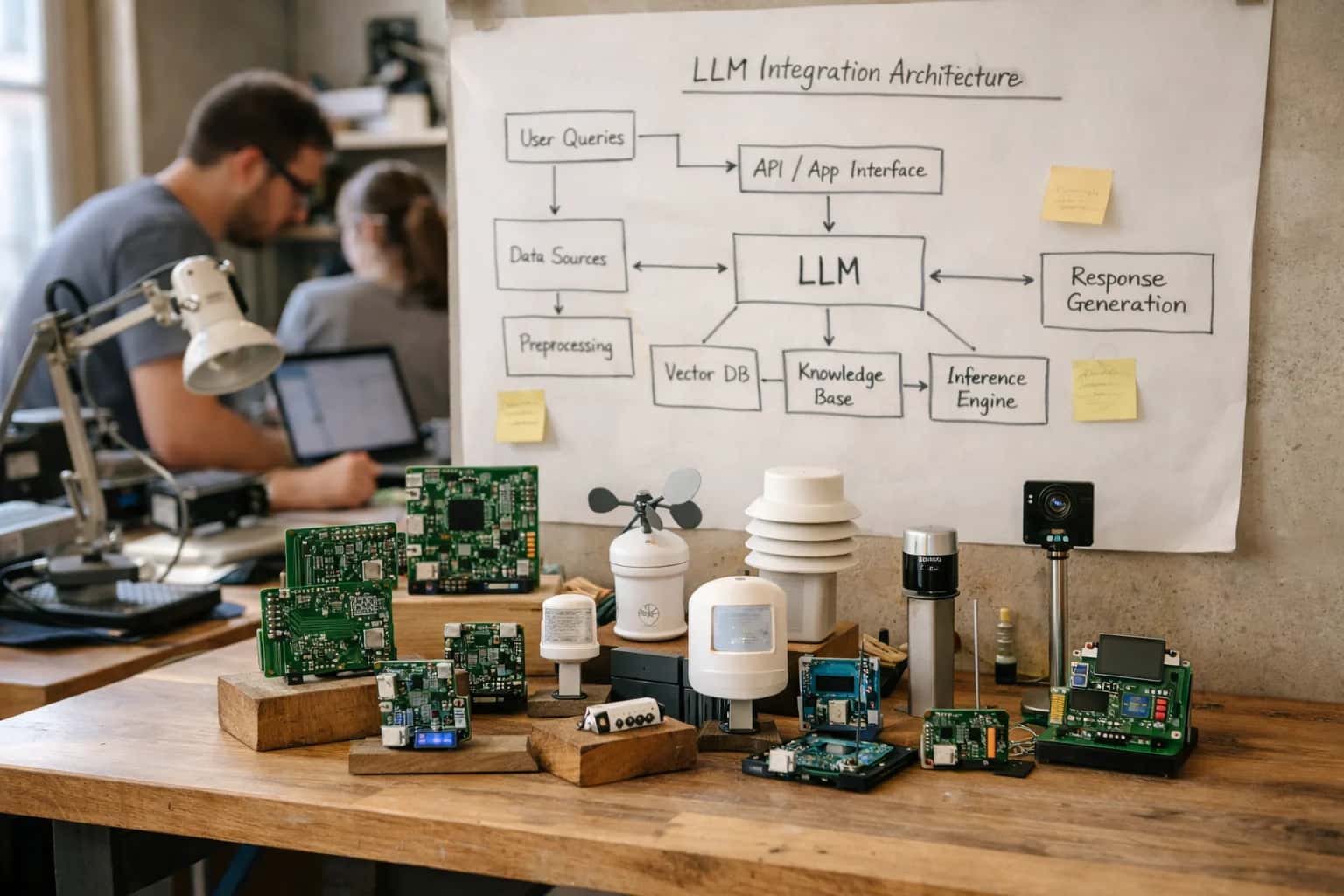
ARCHITECTURE BLUEPRINT
Where AI Fits into IDEXX Neo's Appointment Workflow
A technical overview of how AI integrates with IDEXX Neo's scheduling module to predict and prevent last-minute cancellations.
High-impact workflows are automated based on the score. For appointments flagged as high-risk, the system can:<br>- Push a task to a front-desk queue in IDEXX Neo for a personal call.<br>- Trigger a personalized SMS via IDEXX Neo's messaging gateway, offering to confirm or reschedule.<br>- Initiate a rescheduling workflow that presents alternative slots via the client portal, reducing outright cancellations.<br>The goal is operational: convert uncertain appointments into confirmed ones, or recapture them before they become a no-show, stabilizing daily schedules and revenue.
Rollout is phased, starting with a silent monitoring period to calibrate the model against your practice's specific patterns without taking action. Governance is critical: all AI-triggered communications are logged in the client's record, and a human-in-the-loop approval step can be maintained for initial launches. This approach turns a reactive scheduling problem into a proactive, data-driven workflow within the existing IDEXX Neo environment, requiring no change to core clinical processes. For related integration patterns, see our overview of AI for Veterinary Practice Management Platforms and deep-dive on AI for Patient Communications.
MODULES AND WORKFLOWS
Key IDEXX Neo Surfaces for AI Integration
The Core Scheduling Surface
The Appointments module is the primary integration point for no-show prediction and confirmation workflows. AI connects here via the Neo API to read appointment metadata (type, duration, client history, pet details) and write back confirmation statuses or flags.
Key data objects for AI analysis include:
Appointmentrecords with timestamps, provider, and room assignment.- Linked
ClientandPatientrecords for historical attendance patterns. AppointmentTypeto understand the service context (e.g., annual wellness vs. urgent care).
Integration typically involves a scheduled job that queries upcoming appointments, runs them through a prediction model, and updates a custom field like Confidence_Score or AI_Alert. This triggers native Neo reminders or external workflows via webhook.
IDEXX NEO INTEGRATION PATTERNS
High-Value AI Use Cases for Appointment Confirmation
Integrating AI with IDEXX Neo's appointment module moves beyond simple reminders. These patterns use patient and practice data to predict no-shows, personalize outreach, and automate follow-up, directly reducing revenue loss from empty slots.
01
Predictive No-Show Scoring
AI analyzes historical appointment data, patient communication history, and demographic factors within IDEXX Neo to assign a real-time no-show risk score to each upcoming appointment. High-risk slots can be flagged for proactive staff intervention.
Batch -> Real-time
Risk assessment
02
Intelligent Confirmation Outreach
Based on the no-show score and patient channel preference (SMS, email, call), AI drafts and sends personalized confirmation messages. For high-risk appointments, it can trigger an automated call with rescheduling options or offer a small incentive to confirm.
Same day
Proactive touch
03
Dynamic Waitlist Automation
When a high-risk appointment is canceled or a no-show is predicted, AI automatically pings the top-matched patient from the IDEXX Neo waitlist via their preferred channel, filling the slot faster than manual staff calls.
Minutes
Slot fill time
04
Post-Confirmation Workflow Trigger
Once an appointment is confirmed via AI, it can automatically trigger downstream workflows in IDEXX Neo: pre-populating intake forms, creating pre-visit task lists for technicians, or sending preparatory instructions (e.g., 'fasting required') to the client.
1 sprint
Implementation
05
Cancellation Reason Analysis & Retention
AI analyzes text from cancellation reasons (entered in IDEXX Neo) to categorize and surface trends (e.g., 'cost concerns', 'transportation issues'). For 'soft' cancellations, it can trigger a retention workflow, such as a follow-up call from a client service rep.
06
Capacity Optimization Feedback Loop
AI uses confirmation rates, no-show patterns, and waitlist success data to provide scheduling recommendations. This helps practice managers adjust IDEXX Neo's booking rules for specific appointment types, doctors, or times of day to maximize filled capacity.
IDEXX NEO INTEGRATION PATTERNS
Example AI-Powered Confirmation Workflows
These workflows illustrate how AI can be integrated into IDEXX Neo's appointment lifecycle to predict no-shows and automate proactive engagement. Each pattern connects to specific Neo APIs and data objects to trigger context-aware actions.
Trigger: An appointment is booked in IDEXX Neo for a date 48+ hours in the future.
Context Pulled: The AI agent queries Neo's API for:
- Patient's last 3 appointment attendance statuses (attended, canceled, no-show).
- Client's preferred communication channel (SMS, email, phone) from the client record.
- Time of day the appointment was historically confirmed.
- Any notes about confirmation difficulty in the client's record.
Agent Action: A model scores the likelihood of a no-show (e.g., High, Medium, Low). For High-risk appointments, the system automatically schedules a personalized outbound call or SMS via a telephony integration (like Twilio) 24 hours before the appointment. The message is tailored: "Hi [Client Name], this is [Clinic] confirming [Pet Name]'s appointment tomorrow at [Time]. Please reply YES to confirm or call us to reschedule."
System Update: The agent logs the outreach attempt and any client response back to a custom object in Neo linked to the appointment. If a 'YES' is received, the appointment status is updated to 'Confirmed'.
Human Review Point: The agent flags appointments where the client responds with uncertainty (e.g., "might be late") for front-desk staff follow-up.
PREDICTIVE CONFIRMATION WORKFLOW
Implementation Architecture: Data Flow and System Design
A production-ready AI integration for IDEXX Neo connects appointment data to predictive models, triggering proactive outreach to reduce last-minute cancellations.
The integration architecture is event-driven, centered on IDEXX Neo's appointment API and patient/client data objects. A lightweight middleware service, deployed in your cloud or ours, subscribes to appointment creation and update webhooks. For each new appointment, the service extracts key fields—appointment_type, client_id, patient_id, scheduled_datetime, provider_id—and enriches them with historical data from Neo's database via secure API calls. This historical data includes the client's prior cancellation/no-show rate, average lead time for booking, preferred communication channel, and the patient's age and species. This combined payload is sent to a hosted inference endpoint running a trained prediction model.
The AI model returns a confirmation likelihood score (e.g., 0-100) and a recommended action. Scores below a configurable threshold (e.g., <70%) trigger an automated workflow. For high-risk appointments, the system can execute one of two paths via IDEXX Neo's API: 1) Automated Outreach: Sending a personalized SMS or email via Neo's built-in communication tools, often offering a small incentive (e.g., "Confirm now for a $5 credit") or requesting a callback. 2) Staff Task Creation: Generating a task in the assigned staff member's Neo queue to "Call client for appointment confirmation" with a pre-populated script and patient context. All actions are logged back to the appointment record and a dedicated audit table for performance tracking.
Rollout is typically phased, starting with a single location or appointment type (e.g., new patient exams). Governance is managed through a configuration dashboard that controls the prediction threshold, allowable outreach actions, and business hours for calls. The system includes a human-in-the-loop review queue for edge cases and a daily report comparing predicted vs. actual show rates to continuously tune the model. This design ensures the AI augments—rather than disrupts—existing front-desk workflows, providing a clear ROI through reduced revenue loss from empty appointment slots.
IMPLEMENTATION PATTERNS
Code and Payload Examples
Call the AI Model for Confirmation Likelihood
This example shows a Python function that calls an Inference Systems-hosted model to score an appointment's confirmation risk. The function takes appointment data from IDEXX Neo, enriches it with client history, and returns a probability score and a reason code for proactive intervention.
pythonimport requests import json # Example payload structure sent to the AI scoring endpoint def score_appointment_confirmation(neo_appointment_data, client_history): """ neo_appointment_data: Dict from IDEXX Neo API (appointment ID, type, time, pet ID) client_history: Enriched dict (past no-shows, cancellations, reminder preferences) """ scoring_payload = { "appointment": { "id": neo_appointment_data.get('AppointmentId'), "type": neo_appointment_data.get('AppointmentType'), "datetime": neo_appointment_data.get('ScheduledTime'), "duration_minutes": neo_appointment_data.get('Duration'), "reason": neo_appointment_data.get('Reason') }, "client": { "id": client_history.get('ClientId'), "past_no_show_count": client_history.get('NoShowCount', 0), "past_cancel_short_notice_count": client_history.get('ShortNoticeCancelCount', 0), "preferred_contact_method": client_history.get('PreferredContact'), # 'SMS', 'Email', 'Voice' "last_confirmation_response": client_history.get('LastResponseType') # 'Confirmed', 'Cancelled', 'NoResponse' }, "pet": { "species": client_history.get('Species'), "age": client_history.get('PetAge') } } # Call the Inference Systems scoring endpoint response = requests.post( 'https://api.inferencesystems.com/v1/neo/confirmation-score', json=scoring_payload, headers={'Authorization': 'Bearer YOUR_API_KEY'} ) if response.status_code == 200: result = response.json() return { 'score': result.get('confirmation_probability'), # e.g., 0.23 (low likelihood) 'risk_tier': result.get('risk_tier'), # e.g., 'high', 'medium', 'low' 'primary_reason': result.get('primary_reason'), # e.g., 'history_of_short_notice_cancels' 'suggested_action': result.get('suggested_action') # e.g., 'proactive_voice_call' } else: raise Exception(f"Scoring API error: {response.status_code}")
The API returns a structured risk assessment, enabling the clinic to prioritize outreach. Scores below a configurable threshold (e.g., <0.5) trigger the proactive workflow.
IDEXX NEO APPOINTMENT CONFIRMATION
Realistic Time Savings and Operational Impact
How AI integration transforms manual, reactive confirmation calls into a proactive, predictive workflow, reducing last-minute cancellations and optimizing front-desk resources.
| Workflow Step | Before AI Integration | After AI Integration | Operational Impact |
|---|---|---|---|
No-Show Risk Identification | Manual review of patient history and notes | Automated scoring of each appointment using historical no-show patterns, client communication history, and appointment type | Front desk focuses on high-risk cases instead of reviewing every file |
Confirmation Outreach | Generic calls/SMS to all appointments 24-48 hours prior | Prioritized, personalized outreach triggered for high-risk patients; low-risk receive automated reminders | Reduces confirmation call volume by 40-60%, freeing ~2-4 hours per week per staff member |
Message Personalization | Standard script for all clients | AI-generated message suggests specific incentives (e.g., "early arrival discount") or confirms key details based on visit reason | Increases confirmation response rates by personalizing the value proposition |
Schedule Optimization | Empty slots from no-shows filled via manual waitlist calls | AI-triggered offers to waitlisted patients immediately after a high-risk cancellation prediction | Converts predicted no-shows into filled slots, increasing daily patient capacity |
Staff Workflow | Reactive: managing fallout from missed appointments | Proactive: reviewing AI-prioritized list and executing targeted retention actions | Shifts staff role from clerical calling to strategic patient retention |
Reporting & Insights | Monthly review of no-show rates by provider or service | Real-time dashboard of predicted vs. actual no-shows, with analysis of what interventions worked | Enables continuous improvement of confirmation strategies and resource allocation |
Patient Experience | Generic reminders often ignored | Perceived as more attentive and convenient due to relevant, timely communication | Improves client satisfaction and perceived care quality, supporting retention |
ARCHITECTURE FOR PRODUCTION
Governance, Security, and Phased Rollout
Deploying AI for appointment confirmation requires a secure, governed approach that integrates seamlessly with IDEXX Neo's existing workflows.
A production-ready integration is built on a secure middleware layer that sits between IDEXX Neo and the AI models. This layer handles API authentication using IDEXX Neo's OAuth or API keys, manages secure data extraction (pulling appointment details, patient history, and past attendance patterns), and orchestrates the AI prediction call. All patient data is anonymized or pseudonymized before being sent to the LLM for likelihood scoring, and the system maintains a full audit log of every prediction, data access, and subsequent action taken. This architecture ensures compliance with veterinary practice data standards and keeps the core Neo database insulated from direct external calls.
Rollout follows a phased, risk-managed approach. Phase 1 begins with a shadow mode, where the AI generates predictions for a small subset of appointments but no proactive outreach is triggered; results are compared against actual outcomes to validate accuracy. Phase 2 introduces a human-in-the-loop approval step within Neo's workflow: the system flags high-risk appointments and suggests call scripts or offer templates, requiring a staff member to review and manually trigger the communication. Phase 3 graduates to conditional automation, where low-stakes reminders for established clients are sent automatically, while high-value or complex cases still route to a queue for staff review.
Governance is maintained through Neo's native user roles and our middleware's RBAC. Practice managers can configure confidence thresholds for automation, define which communication channels (SMS, email, call) are used, and set business rules (e.g., 'never auto-offer discounts for surgical appointments'). A weekly review dashboard shows key metrics: prediction accuracy, no-show reduction impact, and staff time saved, allowing for continuous tuning of the AI prompts and logic. This controlled, measurable approach minimizes disruption, builds team trust in the AI, and allows the practice to scale the integration's scope—from basic confirmations to dynamic rescheduling offers—as confidence grows.
Enabling Efficiency, Speed & Accuracy
Intelligent Analysis, Decision & Execution
We build AI systems for teams that need search across company data, workflow automation across tools, or AI features inside products and internal software.
Talk to Us
Search across company data
Give teams answers from docs, tickets, runbooks, and product data with sources and permissions.
Useful when people spend too long searching or get different answers from different systems.
Enterprise searchRAGPermissions
Read more
Automate internal workflows
Use AI to route work, draft outputs, trigger actions, and keep approvals and logs in place.
Useful when repetitive work moves across multiple tools and teams.
AI agentsWorkflow automationGovernance
Read more
Add AI to products and internal tools
Build assistants, guided actions, or decision support into the software your team or customers already use.
Useful when AI needs to be part of the product, not a separate tool.
AI integrationDecision supportModel routing
Read moreIDEXX NEO APPOINTMENT CONFIRMATION
Frequently Asked Questions
Common questions about implementing AI to predict and prevent last-minute cancellations and no-shows in IDEXX Neo.
The system analyzes historical IDEXX Neo data through a secure, read-only API connection. Key signals include:
- Patient History: Previous no-show or late-cancellation rates for that specific client and pet.
- Appointment Context: Type of appointment (e.g., annual wellness vs. sick visit), duration, and the assigned doctor.
- Client Behavior: Time of day the appointment was booked, lead time (weeks in advance), and past responsiveness to SMS/email reminders.
- Seasonal & Local Factors: Day of the week, weather forecasts, and local event data that historically impact attendance.
The AI model scores each upcoming appointment with a "cancellation risk" probability. This score is written back to a custom field in the IDEXX Neo appointment record, triggering automated workflows.

About the author
Prasad Kumkar
CEO & MD, Inference Systems
Prasad Kumkar is the CEO & MD of Inference Systems and writes about AI systems architecture, LLM infrastructure, model serving, evaluation, and production deployment. Over 5+ years, he has worked across computer vision models, L5 autonomous vehicle systems, and LLM research, with a focus on taking complex AI ideas into real-world engineering systems.
His work and writing cover AI systems, large language models, AI agents, multimodal systems, autonomous systems, inference optimization, RAG, evaluation, and production AI engineering.
LinkedIn
Limited slotsGet a Free AI Consultation
Partnered with leading AI, data, and software stack.





How We Work
Custom AI workflows for your Business
One-fit-all AI don't work for modern businesses. At Inferensys, we aim to understand your business & custom requirements; which we use to define most efficient agentic workflows, the data, and the tools for your business.
01
Review the use case
We understand the task, the users, and where AI can actually help.
Read more02
Pick the right approach
We define what needs search, automation, or product integration.
Read more03
Build the first useful version
We implement the part that proves the value first.
Read more04
Improve from there
We add the checks and visibility needed to keep it useful.
Read moreThe first call is a practical review of your use case and the right next step.
Talk to Us