The integration connects at two primary surfaces within ezyVet: the patient medical record and the billing/invoicing module. When a clinician finalizes a visit, the AI agent is triggered via ezyVet's API or a configured automation rule. It extracts the necessary data payload, which typically includes: the patient's Pet ID, Client ID, diagnosis codes, procedure codes from the invoice, clinical notes from the SOAP record, and any attached lab results or imaging reports. This structured and unstructured data forms the basis for the automated claim draft.

Integration
AI Integration for ezyVet Insurance Claims
Automate pet insurance claim processing in ezyVet using AI to fill forms, attach required medical records, and track submission status, reducing manual work from hours to minutes.
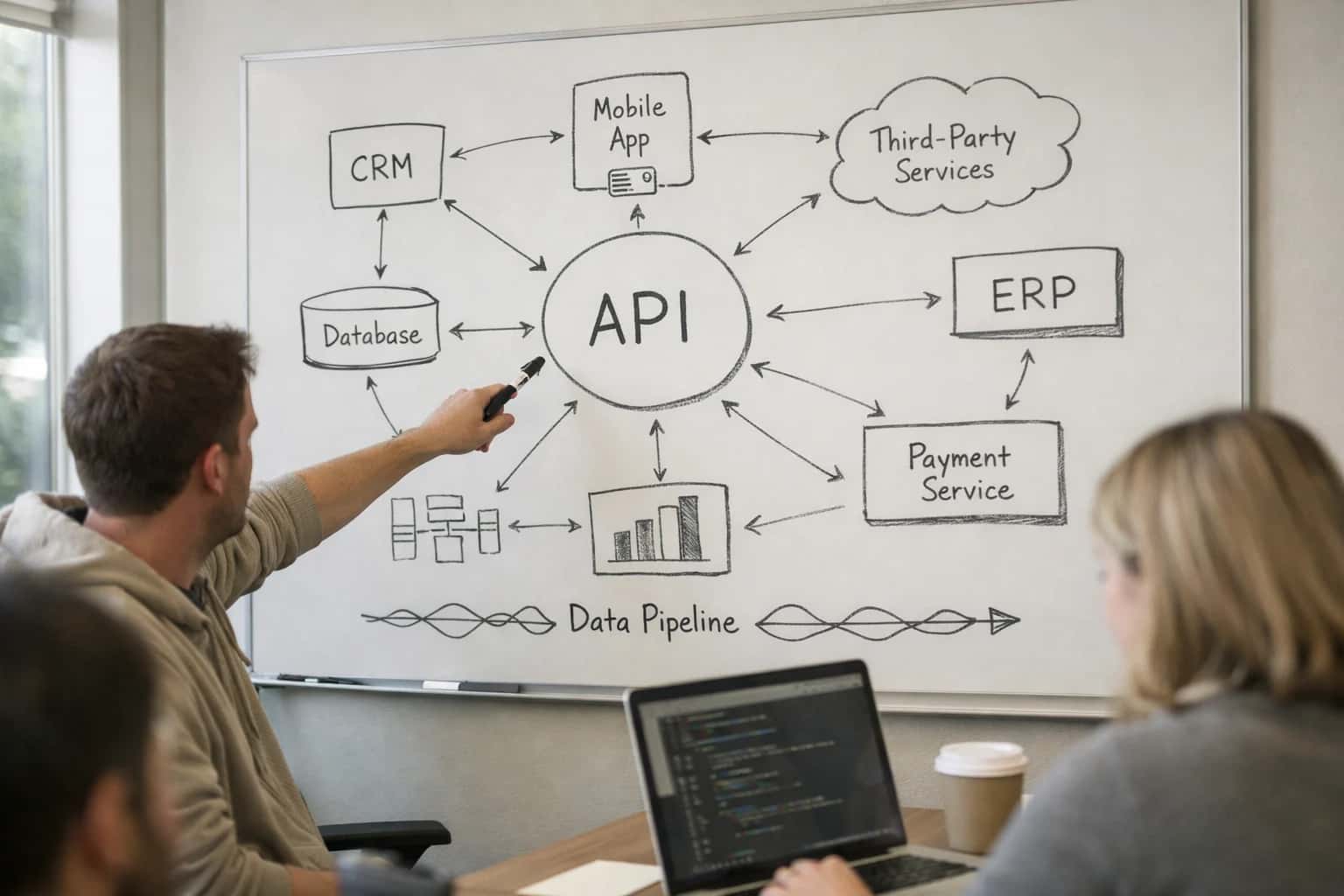
ARCHITECTURE AND ROLLOUT
Where AI Fits in ezyVet's Insurance Claim Workflow
A practical guide to automating pet insurance claim processing by integrating AI directly into ezyVet's clinical and billing workflows.
The core AI workflow performs three sequential tasks: 1) Form Population – mapping the extracted ezyVet data to the correct fields on the target insurer's claim form (e.g., Trupanion, Nationwide). 2) Document Assembly – identifying and attaching the required supporting medical records from the patient's file, which may involve fetching PDFs from the document manager. 3) Status Tracking – creating a custom object or note within ezyVet to log the submission ID, timestamp, and later, polling for adjudication status updates from the insurer's portal via API to update the record. This turns a 15-20 minute manual process into a task that completes in seconds, with a human-in-the-loop review step before final submission.
Rollout is typically phased, starting with a single high-volume insurer and a pilot group of veterinarians. Governance is critical: the AI's output should always route to a designated Insurance Claim Review queue in ezyVet for a staff member to verify accuracy and add any non-standard notes before submitting. This ensures compliance and maintains the veterinarian's final authority. The system also maintains a full audit trail, logging every data access, generation, and submission event for traceability. For practices, the impact is operational consistency and a shift in staff time from administrative data entry to higher-value client communication and follow-up on complex or denied claims.
ARCHITECTURAL SURFACES
Key ezyVet Modules and APIs for Insurance Integration
Core Financial Surface for Claims
The Claims & Invoicing module is the primary system of record for all insurance-related financial activity. AI integration here focuses on automating the flow from service rendered to claim submission.
Key API Objects & Workflows:
- Invoice API: Retrieve finalized invoices containing line-item services, diagnoses (CPT/ICD-10 codes), and patient details. This is the primary data source for claim form population.
- Claim Record: Create and update claim tracking records linked to the original invoice, storing insurer details, submission status, and reference numbers.
- Payment Posting: When a claim payment is received, the API allows for partial or full payment application against the original invoice, reconciling the account.
AI agents use this module to fetch completed invoices, transform data into insurer-specific claim forms (via PDF generation or direct EDI), and update the claim status from 'Submitted' to 'Paid' or 'Denied'.
AUTOMATION PATTERNS
High-Value AI Use Cases for ezyVet Insurance Claims
Integrating AI with ezyVet's claims module transforms a manual, error-prone process into a streamlined workflow. These patterns focus on automating data extraction, form completion, and submission tracking to accelerate reimbursement and reduce administrative burden.
01
Automated Claim Form Population
AI extracts key data from the patient's medical record (diagnosis, procedures, medications) and client policy details to auto-fill the insurance claim form (e.g., VMG, Pawlicy) within ezyVet. This reduces manual data entry and minimizes errors that cause denials.
Minutes vs. 15+ Minutes
Per claim
02
Intelligent Medical Record Attachment
For each claim line item, the AI agent reviews the SOAP notes, lab results, and invoices in ezyVet, identifies the required supporting documents, and automatically attaches them to the submission. Ensures compliance with insurer-specific requirements.
Batch -> Real-time
Document matching
03
Pre-Submission Claim Scrubbing
Before submission, AI cross-references the completed claim against common denial reasons (e.g., incorrect codes, missing authorizations, policy limits). Flags issues for review within ezyVet, allowing for correction prior to sending, improving first-pass acceptance rates.
Reduce Denials
Proactive check
04
Multi-Insurer Submission Orchestration
Handles complex scenarios where a client has multiple insurance policies (primary, secondary). AI determines the submission order, formats claims to each payer's specifications via ezyVet's API, and tracks the sequence to ensure proper coordination of benefits.
Hours -> Minutes
Coordination time
05
Real-Time Claim Status Tracking & Alerts
After submission, AI monitors insurer portals and ezyVet for status updates (received, pending, paid, denied). Automatically updates the ezyVet record and triggers alerts for denied or delayed claims, enabling faster follow-up by the billing team.
Same-day
Issue detection
06
Denial Analysis & Appeal Drafting
When a denial is received, AI analyzes the reason code and the original claim data in ezyVet. It drafts a tailored appeal letter with relevant clinical excerpts and suggests corrective actions (e.g., add a medical record), streamlining the re-submission workflow.
1-2 Days Faster
Appeal turnaround
IMPLEMENTATION PATTERNS
Example AI-Powered Claim Automation Workflows
These workflows illustrate how AI agents can be integrated with ezyVet's API and data model to automate the most time-consuming steps in pet insurance claim processing. Each flow is designed to reduce manual data entry, minimize errors, and accelerate reimbursement.
Trigger: A veterinarian finalizes a SOAP note or treatment record in ezyVet and marks a service with an insurance-related billing code.
AI Agent Action:
- The agent is triggered via ezyVet webhook or scheduled batch job.
- It retrieves the structured treatment data (procedure codes, medications, diagnoses) and the unstructured clinical notes for the visit.
- Using a configured LLM prompt, the agent extracts the required narrative for the claim form, including:
- Presenting problem and history
- Clinical findings and diagnostics performed
- Treatment rationale and procedure details
- Prescribed medications and follow-up instructions
- The agent maps the extracted data to the target insurer's specific claim form fields (e.g., Nationwide, Trupanion, ASPCA).
System Update: A draft claim form (PDF or JSON payload) is attached to the patient's record in a dedicated Insurance Claims module or custom object. The claim status is set to Draft - Awiting Review. The attending veterinarian receives an in-app notification to review and sign off.
BUILDING A PRODUCTION-READY CLAIMS AUTOMATION PIPELINE
Implementation Architecture: Data Flow and System Design
A secure, event-driven architecture that connects ezyVet's insurance module to AI services without disrupting existing workflows.
The integration is built on ezyVet's REST API and webhook system, triggered by status changes in the Insurance Claim object. When a claim is marked 'Ready for Submission' or a new claim form is created, the system captures the claim ID, patient record, and associated clinical notes. This payload is securely queued (e.g., via AWS SQS or Azure Service Bus) to ensure reliability and handle retries if the AI service is temporarily unavailable. The core AI processing—extracting data from clinical notes, populating the ClaimForm fields, and identifying required attachments like lab reports or radiographs—occurs in a dedicated, isolated service layer. This design keeps logic and API keys outside of ezyVet's database for security and maintainability.
Post-processing, the AI service calls back to ezyVet's API to attach the populated PDF form to the claim record and link the identified supporting documents from the patient's file. For governance, every AI action is logged with a trace ID in a separate audit database, recording the source data, the model's reasoning (via logprobs or a summary), the user who triggered the action, and the final output. This creates a clear lineage for compliance reviews. The system can be configured for human-in-the-loop approval; for example, all claims over a certain dollar amount or for specific insurers can be routed to a billing coordinator's queue in ezyVet for final review before the status is auto-updated to 'Submitted'.
Rollout typically follows a phased approach: starting with a single practice location and a subset of straightforward claim types (e.g., wellness plans). During this pilot, the AI's field population accuracy is monitored against manual benchmarks. The architecture supports A/B testing by routing a percentage of claims through a shadow mode where AI output is generated but not applied, allowing for performance validation without affecting live operations. This event-driven, API-first design ensures the integration is non-invasive, scalable across multi-location practices, and can be extended to other automations, such as denial prediction or follow-up tracking. For a deeper look at connecting AI to veterinary data models, see our guide on AI Integration for Veterinary EHR Systems.
AUTOMATING INSURANCE CLAIM WORKFLOWS
Code and Payload Examples
Automating Claim Form Population
This workflow uses AI to extract key data from the ezyVet patient record and consultation notes to populate a standardized insurance claim form (e.g., Trupanion, Nationwide). The AI model identifies required fields like diagnosis codes, procedure descriptions, and itemized costs, drafting the form for staff review.
Example Python Payload to AI Service:
pythonimport requests # Payload containing structured data from ezyVet API claim_data = { "patient_id": "PAT-78910", "consultation_id": "CONS-2024-5678", "diagnosis_codes": ["S07.9XXA"], # Extracted from ezyVet medical record "procedures": [ {"description": "Canine Dental Prophy", "code": "D1110", "fee": 350.00}, {"description": "Tooth Extraction - 204", "code": "D7210", "fee": 425.00} ], "patient_signalment": { "species": "Canine", "breed": "Golden Retriever", "age_years": 5 }, "attending_veterinarian": "Dr. Jane Smith, DVM" } # Call AI service to generate form fields response = requests.post( 'https://api.inferencesystems.com/v1/insurance/form-draft', json={ "template": "trupanion_standard", "source_data": claim_data } ) generated_form = response.json() # Returns structured JSON for the claim form
The AI returns a structured JSON object that can be mapped directly into ezyVet's document management system or a third-party claims submission portal, ensuring all required insurer fields are addressed.
AI-ASSISTED INSURANCE CLAIM PROCESSING
Realistic Time Savings and Operational Impact
How AI integration transforms the manual, error-prone process of filing pet insurance claims in ezyVet into a streamlined, high-accuracy workflow.
| Metric | Before AI | After AI | Notes |
|---|---|---|---|
Claim Form Completion | 10-15 minutes manual entry per claim | 2-3 minutes AI-assisted draft | AI pre-fills from SOAP notes and patient records; staff reviews and submits. |
Required Record Attachment | Manual search and upload of lab results, invoices | Automated bundling of relevant documents | AI identifies and attaches all necessary files from the patient's ezyVet record. |
Claim Scrubbing for Errors | Post-submission denials take days to resolve | Pre-submission validation flags missing codes | Real-time check against insurer rules reduces denial rate from first submission. |
Status Tracking & Follow-up | Manual log in spreadsheet or memory | Automated dashboard with insurer API updates | Team sees real-time status (submitted, pending, paid) without calling insurers. |
Client Communication on Status | Reactive calls/emails when client asks | Proactive, automated status updates via portal/SMS | Reduces front-desk call volume by providing self-service visibility. |
Monthly Claim Volume per FTE | ~40-60 claims processed manually | ~150-200 claims processed with AI assist | Enables existing staff to handle practice growth or reallocate time to complex cases. |
Revenue Cycle Impact | 30-45 day average reimbursement time | Target 20-30 day average reimbursement time | Faster, cleaner submissions accelerate cash flow and reduce accounts receivable. |
CONTROLLED AUTOMATION FOR REGULATED WORKFLOWS
Governance, Security, and Phased Rollout
A secure, phased approach to deploying AI for ezyVet insurance claims that maintains compliance and builds trust.
Insurance claim processing involves sensitive Protected Health Information (PHI) and financial data. Our integration architecture is designed to keep this data within your ezyVet environment. We use ezyVet's secure APIs to fetch only the necessary patient, visit, and invoice data for a specific claim. The AI processing—form filling, record selection, and status updates—occurs in a secure, isolated environment. All data exchanges are encrypted, and no PHI is stored in long-term external vector databases unless explicitly configured for your private instance. Audit logs track every AI-generated suggestion, form field populated, and document attached, creating a clear lineage from the original medical record to the submitted claim.
A successful rollout follows a phased, risk-managed approach:
- Phase 1: Draft Generation & Human-in-the-Loop. AI generates a complete claim draft within a dedicated ezyVet interface or queue. A claims coordinator reviews, edits, and submits it. This validates accuracy and builds team confidence.
- Phase 2: Conditional Automation. Rules are established (e.g., auto-submit for routine wellness claims under a certain dollar amount). The system flags exceptions for manual review based on diagnosis codes, invoice amounts, or missing records.
- Phase 3: Full Workflow Orchestration. AI manages the end-to-end process: triggering on invoice finalization, gathering records, populating the carrier-specific form, submitting via the payer's portal (using approved credentials), and logging the submission status back to the ezyVet patient record. Even at this stage, random audits and threshold-based alerts ensure ongoing quality control.
Governance is built into the workflow. You define which users or roles can approve AI-generated claims before submission. The system can be configured to require a veterinarian's co-signature on clinical notes used for claims. Performance is continuously monitored using key metrics like first-pass acceptance rate, time-to-submission, and manual touch rate. This data, visible in a dashboard or fed back into ezyVet reporting, allows you to measure ROI and refine the AI's logic, ensuring the integration scales safely and delivers consistent value. For related architectural patterns, see our guide on AI Integration for Veterinary EHR Systems.
Enabling Efficiency, Speed & Accuracy
Intelligent Analysis, Decision & Execution
We build AI systems for teams that need search across company data, workflow automation across tools, or AI features inside products and internal software.
Talk to Us
Search across company data
Give teams answers from docs, tickets, runbooks, and product data with sources and permissions.
Useful when people spend too long searching or get different answers from different systems.
Enterprise searchRAGPermissions
Read more
Automate internal workflows
Use AI to route work, draft outputs, trigger actions, and keep approvals and logs in place.
Useful when repetitive work moves across multiple tools and teams.
AI agentsWorkflow automationGovernance
Read more
Add AI to products and internal tools
Build assistants, guided actions, or decision support into the software your team or customers already use.
Useful when AI needs to be part of the product, not a separate tool.
AI integrationDecision supportModel routing
Read moreAI FOR INSURANCE CLAIMS WORKFLOWS
Frequently Asked Questions (Technical & Commercial)
Common technical and commercial questions about implementing AI to automate pet insurance claim processing within ezyVet. These answers cover architecture, effort, security, and rollout patterns.
The integration uses ezyVet's REST API to retrieve structured and unstructured data when a claim workflow is triggered. The AI agent is provided a context payload containing:
- Patient Record: Species, breed, age, medical history.
- Visit Details: Date, presenting complaint, diagnosis codes, procedures performed (with CPT codes).
- Clinical Notes: SOAP notes from the visit, often as unstructured text.
- Invoice Data: Line items for medications, lab work, imaging, and services.
- Client & Policy Info: Client details and stored insurance provider/policy number from ezyVet.
The agent uses a combination of Named Entity Recognition (NER) to extract key terms from notes and structured field mapping (e.g., invoice line item → claim line item) to populate the insurer's specific form fields. Missing data triggers a query back to the staff via a task in ezyVet.

About the author
Prasad Kumkar
CEO & MD, Inference Systems
Prasad Kumkar is the CEO & MD of Inference Systems and writes about AI systems architecture, LLM infrastructure, model serving, evaluation, and production deployment. Over 5+ years, he has worked across computer vision models, L5 autonomous vehicle systems, and LLM research, with a focus on taking complex AI ideas into real-world engineering systems.
His work and writing cover AI systems, large language models, AI agents, multimodal systems, autonomous systems, inference optimization, RAG, evaluation, and production AI engineering.
LinkedIn
Limited slotsGet a Free AI Consultation
Partnered with leading AI, data, and software stack.





How We Work
Custom AI workflows for your Business
One-fit-all AI don't work for modern businesses. At Inferensys, we aim to understand your business & custom requirements; which we use to define most efficient agentic workflows, the data, and the tools for your business.
01
Review the use case
We understand the task, the users, and where AI can actually help.
Read more02
Pick the right approach
We define what needs search, automation, or product integration.
Read more03
Build the first useful version
We implement the part that proves the value first.
Read more04
Improve from there
We add the checks and visibility needed to keep it useful.
Read moreThe first call is a practical review of your use case and the right next step.
Talk to Us