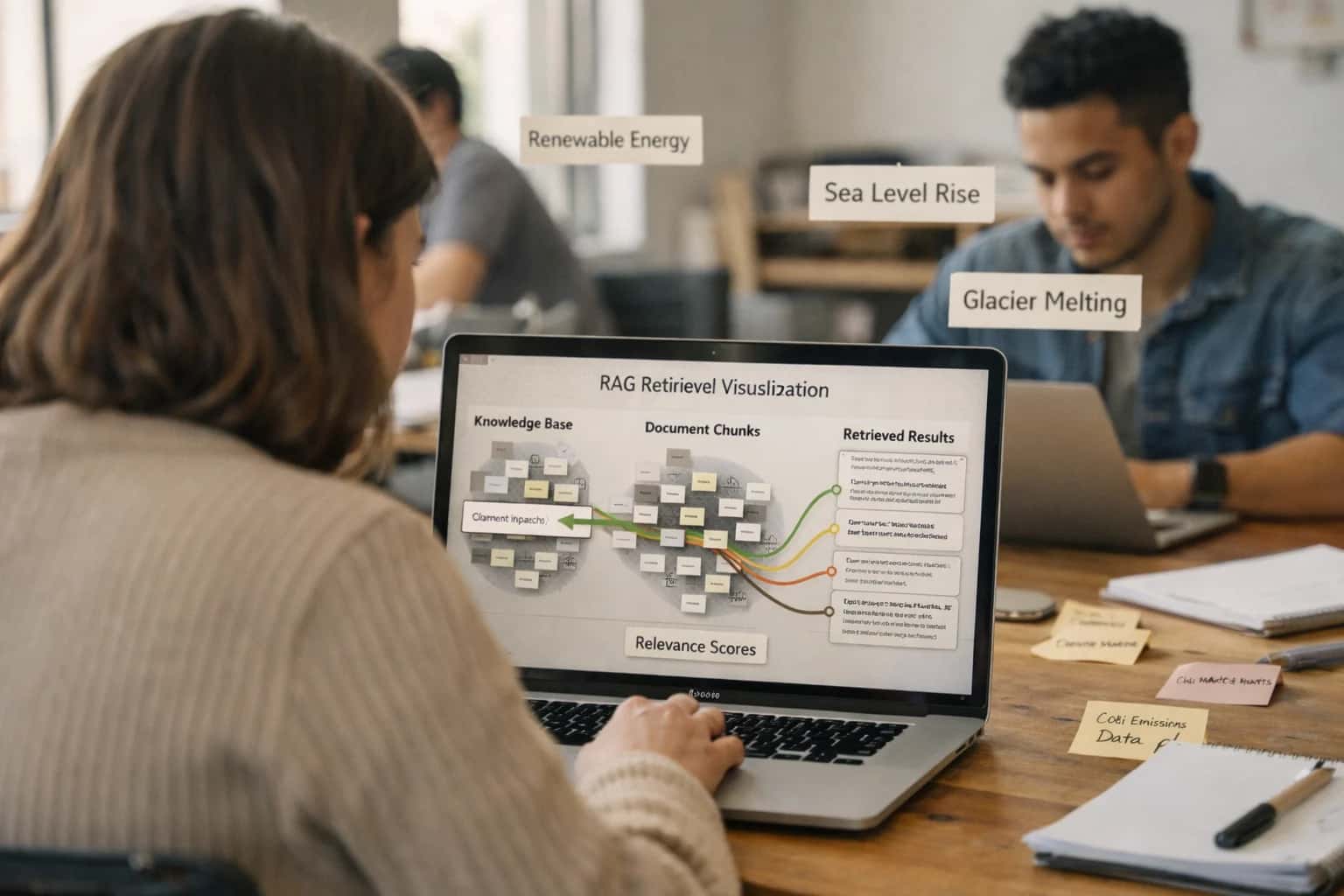
A RAG platform connects to the practice management system (PMS)—the operational core containing patient charts, appointment schedules, insurance details, and treatment plans. The primary integration points are the PMS database via API or a secure data pipeline, and often a separate imaging server for X-rays and intraoral scans. The RAG system ingests and chunks unstructured text from clinical notes, medical histories, and insurance correspondence, creating vector embeddings stored in a database like Pinecone or Weaviate. This creates a semantic search layer over the practice's entire records, separate from the PMS's native keyword search.

Integration
RAG Platform for Dental Practice Records
Build a Retrieval-Augmented Generation (RAG) system that grounds AI in your dental practice management software. Enable semantic search across clinical notes, treatment plans, and insurance documents for chairside support and administrative automation.
ARCHITECTURE AND ROLLOUT
Where RAG Fits in the Dental Practice Stack
A practical guide to integrating Retrieval-Augmented Generation (RAG) with platforms like Dentrix and Open Dental to ground AI in clinical and administrative workflows.
In daily workflows, this powers two key surfaces: chairside clinical support and front-desk administrative automation. For a dentist during a consult, an AI assistant can use RAG to instantly retrieve similar past cases, relevant CDT codes for a proposed procedure, or a patient's historical reactions to anesthetics—surfacing this context in a sidebar or voice interface. For the office manager, RAG can ground an agent that answers patient billing questions by pulling exact details from past statements and insurance EOBs, or draft pre-authorization letters by retrieving the required clinical rationale from the patient's chart. This reduces time spent manually searching records from minutes to seconds.
Rollout requires a phased, audit-first approach. Start with a read-only, single-module pilot, such as semantic search across treatment plan notes, using a mirrored subset of de-identified data. Implement strict role-based access control (RBAC) tied to the PMS user permissions, ensuring hygienists cannot retrieve billing data. All AI-generated outputs should be logged with citations to the source patient records and treatment IDs for audit trails. Governance must address HIPAA compliance—vectors should be generated on-premises or in a HIPAA-compliant cloud, and the system should never generate new clinical advice, only retrieve and synthesize existing recorded information. A successful integration acts as a context layer, making the practice's institutional knowledge instantly accessible without altering the trusted PMS workflow.
RAG PLATFORM INTEGRATION
Key Integration Surfaces in Dental Practice Software
Patient Chart & Clinical Notes
This is the primary source of clinical context for a RAG system. Integration focuses on the structured and unstructured data within a patient's electronic health record (EHR).
Key Data Objects:
- SOAP Notes: Subjective, Objective, Assessment, and Plan notes from each visit.
- Treatment Plans: Proposed procedures, planned stages, and associated ADA codes.
- Medical & Dental History: Medications, allergies, past procedures, and systemic conditions.
- Periodontal Charting: Probing depths, bleeding points, and mobility readings.
- Radiograph Annotations: Notes linked to specific x-rays (bitewings, PAs, panoramics).
Integration Pattern: A background process ingests updated chart entries, chunks the text (e.g., by visit or note type), generates embeddings, and indexes them in the vector database. This enables AI to answer questions like "What was the patient's prognosis for tooth #19 last year?" or "List all past periodontal treatments."
DENTAL PRACTICE MANAGEMENT
High-Value Use Cases for Dental RAG
Integrating Retrieval-Augmented Generation (RAG) with platforms like Dentrix, Eaglesoft, or Open Dental grounds AI in your specific clinical data, insurance workflows, and patient history. These cards outline practical, high-impact workflows where a vector database can drive operational efficiency and clinical support.
01
Chairside Clinical Decision Support
During a patient exam, the assistant or dentist queries the RAG system using natural language (e.g., 'best treatment options for a fractured molar #30 with a history of bruxism'). The system retrieves similar past cases from the practice's clinical notes, x-ray findings, and treatment plans, along with relevant ADA CDT codes and insurance pre-authorization patterns, presenting a concise summary for informed decision-making.
Minutes
Access to practice history
02
Automated Insurance Verification & Pre-Auth Drafting
When a complex treatment plan is created, the RAG system retrieves the patient's insurance history, similar past claims (including denial reasons and successful appeals), and the specific payer's policy documents. It generates a draft pre-authorization letter with the required clinical justification and correctly sequenced procedure codes, ready for hygienist or office manager review.
Batch -> Real-time
Claim support
03
Intelligent Patient Communication & Recall
For patient outreach (recall, post-op follow-up, or treatment plan follow-up), the RAG system grounds responses in that specific patient's history. It retrieves past appointment notes, discussed treatment options, and payment history to generate personalized, context-aware SMS or email drafts that address likely patient questions, reducing front-desk call volume.
Same day
Personalized outreach
04
New Patient Onboarding & Treatment Presentation
When a new patient's records and radiographs are imported, the RAG system semantically indexes them. During the consultation, it can instantly retrieve similar patient profiles and their successful treatment journeys (with anonymized outcomes) to help build trust and visually present potential care paths, pulling from before/after photo libraries and educational content tagged with relevant conditions.
1 visit
Context for consult
05
Operational Knowledge Retrieval for Staff
Front office and clinical staff query a unified knowledge base powered by RAG. It retrieves answers from the employee handbook, equipment manuals, OSHA compliance docs, and internal process guides (e.g., 'how to process a Delta Dental PPO claim for an implant'). This reduces training time and ensures consistent, audit-ready answers to operational questions.
Hours -> Minutes
Policy lookup
06
Supply & Inventory Intelligence
By indexing purchase orders, supplier catalogs, and usage logs from the practice management software, the RAG system enables semantic search for materials. Staff can ask, 'What biocompatible bonding agent did we use for Mrs. Smith's crown last year?' or 'Find similar restorative materials to Brand X that are in stock,' streamlining ordering and clinical preparation.
Real-time
Material search
CLINICAL AND ADMINISTRATIVE AUTOMATION
Example RAG-Powered Workflows
These workflows illustrate how a Retrieval-Augmented Generation (RAG) platform, integrated with Dentrix or similar practice management software, can ground AI in patient records, insurance data, and clinical guidelines to support daily operations.
Trigger: A dentist reviews a patient's chart during an exam and has a clinical question (e.g., "What's the typical prognosis for a cracked tooth #19 with a deep distal margin?").
Context/Data Pulled:
- The RAG system retrieves the patient's full clinical history, including past treatment notes, radiograph reports, and periodontal charting for tooth #19.
- It simultaneously performs a semantic search across indexed clinical guidelines (e.g., from the ADA), internal practice protocols, and anonymized, similar case notes from the practice's historical data.
Model or Agent Action:
- An LLM synthesizes the retrieved patient-specific data with the relevant clinical literature.
- It generates a concise, evidence-based summary for the dentist, highlighting key considerations like recommended treatment options (crown vs. extraction), success rates based on similar cases in the practice's history, and any relevant insurance code implications.
System Update or Next Step:
- The summary is displayed in a side panel within the Dentrix interface.
- The dentist can use this information to inform patient consultation and finalize the treatment plan, which is then documented directly in the patient's chart.
Human Review Point: The AI-generated summary is for informational support only. The dentist makes the final clinical decision and is responsible for all documentation.
BUILDING A SECURE, CONTEXT-AWARE KNOWLEDGE LAYER
Implementation Architecture: Data Flow & Components
A production RAG system for dental practices integrates with practice management software to create a secure, searchable index of patient records, clinical notes, and operational documents.
The architecture begins by connecting to the Dentrix Ascend API or the database of your on-premise Dentrix, Eaglesoft, or Open Dental system. A secure, incremental ingestion pipeline extracts and chunks key data objects: PatientChart notes, TreatmentPlan items with ADA codes, Radiograph metadata and reports, InsuranceClaim histories, and Appointment summaries. Sensitive data like Social Security Numbers is redacted at ingestion. These text chunks are converted into vector embeddings using a clinical or general-purpose model and indexed in a vector database like Pinecone or Milvus, with metadata filters for patient_id, date, document_type, and provider. A separate relational index maintains the mapping between vector IDs and the original record URLs in the PMS for auditability and data provenance.
At query time, a clinical assistant interface (e.g., a copilot sidebar in the PMS or a separate web app) sends a natural language question—like “What was the outcome of the crown prep on tooth #3 for this patient last year?”—along with the active patient_id as a metadata filter. The retrieval system queries the vector database for the top-k most semantically relevant chunks scoped to that patient. The retrieved text, along with the original query, is sent to a hosted LLM (e.g., GPT-4, Claude) via a secure, HIPAA-compliant gateway. The LLM synthesizes a concise, grounded answer, citing source chart entries and dates. For administrative queries (e.g., “Show me patients with pending periodontal maintenance in the next 30 days”), the system can also trigger direct database queries via the PMS API, blending structured and unstructured retrieval.
Governance is critical. All queries and generated responses are logged in an audit trail with user_id, timestamp, patient_id, and retrieved_source_ids. For clinical use cases, responses should be clearly marked as AI-generated support information and require review before being added to the official patient record. The system should be rolled out in phases: start with administrative and insurance coding support for hygienists and front desk staff, then progress to clinical note summarization and historical review for dentists, with strict access controls (RBAC) ensuring staff only retrieve data for patients under their care. Regular evaluations check for retrieval accuracy and hallucination rates, with a human-in-the-loop feedback mechanism to improve the embedding and ranking models over time.
RAG INTEGRATION PATTERNS
Code & Payload Examples
Patient Record Chunking & Indexing
Before retrieval, dental records must be chunked and embedded. This example shows a Python function that processes a JSON export from Dentrix or Open Dental, creating semantically meaningful chunks from clinical notes, treatment plans, and insurance data. The function uses a clinical sentence splitter to respect medical context boundaries before generating embeddings via an API and upserting them to a vector database.
pythonimport json from sentence_transformers import SentenceTransformer import pinecone def index_dental_records(patient_data_json, index_name="dental-records"): """Chunks and indexes patient records for semantic retrieval.""" with open(patient_data_json, 'r') as f: records = json.load(f) # Initialize embedding model & vector DB client model = SentenceTransformer('all-MiniLM-L6-v2') pc = pinecone.Pinecone(api_key="YOUR_API_KEY") index = pc.Index(index_name) chunks_to_upsert = [] for record in records: # Create chunks from key clinical sections note_chunks = chunk_by_sentence(record["clinical_notes"], max_length=500) plan_chunks = chunk_by_sentence(record["treatment_plan"], max_length=300) for i, chunk in enumerate(note_chunks + plan_chunks): embedding = model.encode(chunk).tolist() metadata = { "patient_id": record["id"], "source": "clinical_note" if i < len(note_chunks) else "treatment_plan", "date": record["date"], "dentist": record["provider"] } chunk_id = f"{record['id']}_{i}" chunks_to_upsert.append((chunk_id, embedding, metadata)) # Batch upsert to vector DB index.upsert(vectors=chunks_to_upsert) return len(chunks_to_upsert)
RAG INTEGRATION FOR DENTAL PRACTICE MANAGEMENT
Realistic Time Savings & Operational Impact
How a Retrieval-Augmented Generation (RAG) platform, integrated with systems like Dentrix or Open Dental, changes daily workflows for clinical and administrative staff.
| Workflow | Before AI | After AI | Notes |
|---|---|---|---|
Finding similar treatment plans | Manual chart review (15-30 mins) | Semantic search results in <1 min | Uses embeddings of past procedure notes and radiograph notes |
Answering patient billing questions | Searching ledgers, calling insurance (10-20 mins) | AI assistant provides grounded answer in <2 mins | RAG retrieves from integrated insurance EOBs and payment history |
Clinical note summarization for referrals | Manual extraction and typing (10-15 mins) | AI drafts structured summary in 2 mins | Human dentist reviews and finalizes; uses progress notes and periodontal charting |
Prior authorization document prep | Gathering data from multiple screens (20-30 mins) | AI composes first draft in 5 mins | Pulls from patient record, treatment plan, and past auth templates |
Staff training on new procedures | Searching manuals, asking colleagues (Variable) | AI Q&A provides instant, sourced answers | Grounded in practice SOPs, equipment manuals, and ADA guidelines |
Post-op follow-up message drafting | Typing standard templates (5 mins per patient) | AI personalizes 10+ messages in 2 mins | Retrieves context from appointment notes and patient preferences |
Coding verification for procedures | Cross-referencing code books (5-10 mins) | AI suggests likely codes with source in 1 min | Matches procedure descriptions to CDT code database and past claims |
HIPAA-COMPLIANT DEPLOYMENT
Governance, Security & Phased Rollout
A secure, phased implementation ensures AI augments clinical workflows without disrupting patient care or compliance.
A production RAG system for dental records requires strict data governance from day one. This means implementing role-based access control (RBAC) that mirrors your practice management software's permissions (e.g., Dentrix user groups for dentists, hygienists, and front desk). All data flows—from the PMS to the vector index—must be encrypted in transit and at rest, with audit logs tracking every query and document retrieval. The system should only index and retrieve de-identified patient data or operate within a secure, private cloud environment where the data never leaves your controlled infrastructure, ensuring compliance with HIPAA and state dental board regulations.
We recommend a three-phase rollout to manage risk and validate value:
- Phase 1: Internal Knowledge Base. Start by indexing non-PHI documents like insurance policy manuals, equipment maintenance guides, and staff training materials. This allows the team to practice semantic search for operational questions without touching patient data.
- Phase 2: Chart Summarization & Administrative Support. With proper safeguards, begin ingesting completed treatment plans and past clinical notes to power AI-assisted chart summaries and prior authorization draft generation. Implement a mandatory human-in-the-loop review for all AI-generated administrative outputs before submission.
- Phase 3: Clinical Decision Support. Finally, integrate with active patient records to enable real-time retrieval of similar historical cases during consultations. This phase requires the highest level of governance, including clear disclaimers that AI suggestions are informational only and must be validated by the treating dentist.
Ongoing governance is critical. Establish a review committee (e.g., lead dentist, office manager, IT) to regularly audit AI usage logs, update the retrieval corpus with new CDT codes and clinical guidelines, and refine guardrail prompts to prevent hallucinations. This controlled, incremental approach de-risks the integration, builds trust with clinical staff, and delivers measurable time savings—like reducing chart review from minutes to seconds—while keeping patient safety and data sovereignty paramount.
Enabling Efficiency, Speed & Accuracy
Intelligent Analysis, Decision & Execution
We build AI systems for teams that need search across company data, workflow automation across tools, or AI features inside products and internal software.
Talk to Us
Search across company data
Give teams answers from docs, tickets, runbooks, and product data with sources and permissions.
Useful when people spend too long searching or get different answers from different systems.
Enterprise searchRAGPermissions
Read more
Automate internal workflows
Use AI to route work, draft outputs, trigger actions, and keep approvals and logs in place.
Useful when repetitive work moves across multiple tools and teams.
AI agentsWorkflow automationGovernance
Read more
Add AI to products and internal tools
Build assistants, guided actions, or decision support into the software your team or customers already use.
Useful when AI needs to be part of the product, not a separate tool.
AI integrationDecision supportModel routing
Read moreIMPLEMENTATION GUIDE
Frequently Asked Questions
Practical questions for dental practices evaluating a RAG platform to ground AI in Dentrix, Eaglesoft, or Open Dental data for clinical and administrative support.
Data ingestion follows a secure, incremental pattern to avoid disrupting practice operations.
- Initial Connector Setup: We deploy a read-only connector using the PMS's official API (e.g., Dentrix Developer API) or a secure, audited database connection with minimal required permissions.
- Data Scope & PII Handling: You define the scope—typically Treatment Plans, Clinical Notes, Perio Charts, and Patient History. All Personally Identifiable Information (PII) is identified. We can:
- Pseudonymize patient names and IDs in the vector index, linking back via a secure token.
- Use a dedicated, isolated environment (e.g., private cloud VPC) for processing, ensuring data never leaves your controlled infrastructure.
- Chunking Strategy: Clinical notes and histories are split into logical chunks (e.g., by procedure date or note section) to preserve context. Structured data like procedure codes is embedded alongside related text.
- Incremental Updates: The system listens for update events via webhook or polls for changes nightly, incrementally updating the vector index to reflect new notes, planned treatments, or updated medical alerts.

About the author
Prasad Kumkar
CEO & MD, Inference Systems
Prasad Kumkar is the CEO & MD of Inference Systems and writes about AI systems architecture, LLM infrastructure, model serving, evaluation, and production deployment. Over 5+ years, he has worked across computer vision models, L5 autonomous vehicle systems, and LLM research, with a focus on taking complex AI ideas into real-world engineering systems.
His work and writing cover AI systems, large language models, AI agents, multimodal systems, autonomous systems, inference optimization, RAG, evaluation, and production AI engineering.
LinkedIn
Limited slotsGet a Free AI Consultation
Partnered with leading AI, data, and software stack.





How We Work
Custom AI workflows for your Business
One-fit-all AI don't work for modern businesses. At Inferensys, we aim to understand your business & custom requirements; which we use to define most efficient agentic workflows, the data, and the tools for your business.
01
Review the use case
We understand the task, the users, and where AI can actually help.
Read more02
Pick the right approach
We define what needs search, automation, or product integration.
Read more03
Build the first useful version
We implement the part that proves the value first.
Read more04
Improve from there
We add the checks and visibility needed to keep it useful.
Read moreThe first call is a practical review of your use case and the right next step.
Talk to Us