
Inferensys

Integration

Milvus Integration for Supply Chain Analytics

Architecture and implementation patterns for using Milvus, a high-performance vector database, to analyze and retrieve similar supply chain events, disruptions, and supplier profiles from ERP and SCM data, aiding in risk prediction and operational decision-making.
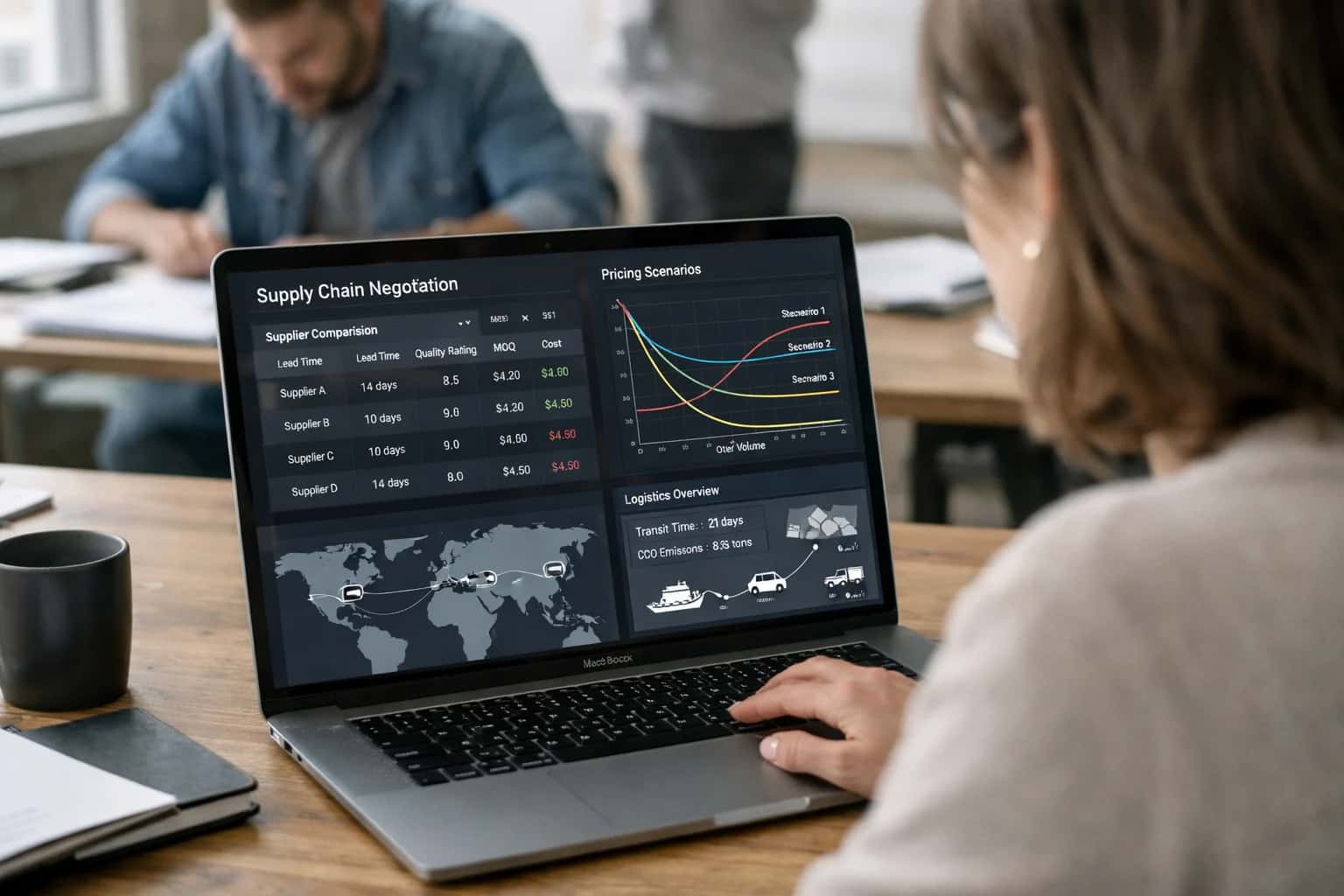
Supply chain manager using AI negotiator on laptop, supplier data visible, casual office afternoon setup.
ARCHITECTURE FOR SIMILARITY-BASED ANALYTICS

Where Milvus Fits in the Supply Chain Tech Stack

Milvus acts as a high-performance semantic search layer between your transactional systems and AI applications, enabling pattern discovery across supply chain events.

In a typical supply chain stack, Milvus sits downstream of your ERP (e.g., SAP S/4HANA, Oracle Cloud SCM) and Warehouse Management System (WMS), ingesting vector embeddings of key operational data. This includes:

  • Supplier profiles from vendor master data and performance scorecards.
  • Disruption events described in shipment delay notes, quality hold reports, or carrier communications.
  • Material attributes and part descriptions from item masters and bills of material (BOMs).
  • Transactional histories of purchase orders, goods receipts, and inventory movements, transformed into event sequences.


The integration is built on a pipeline that chunks and embeds unstructured or semi-structured text from these systems, then indexes the vectors in Milvus. In production, this enables use cases like:

  • Anomaly Triage: When a shipment is delayed, an AI agent queries Milvus for the k most similar past delays by embedding the incident description. The system retrieves the root causes and resolutions from those historical records, cutting investigation time from hours to minutes.
  • Supplier Discovery: A procurement team can semantically search for "suppliers with experience in high-precision, low-volume machining" instead of relying solely on rigid category codes, uncovering qualified vendors missed by keyword filters.
  • Risk Prediction: By comparing current order patterns and geopolitical news feeds against embeddings of past disruptive events, the system can surface similar risk profiles for proactive mitigation.

Rollout focuses on a phased ingestion strategy, starting with a single high-value data domain like supplier quality incidents or freight claim narratives. Governance requires mapping vector similarity scores back to source system record IDs (e.g., SAP LIFNR vendor number, Oracle PO_HEADER_ID) to maintain auditability. Because Milvus supports distributed, GPU-accelerated search, it scales to handle millions of supply chain event embeddings with sub-second latency, making it suitable for real-time agent applications and interactive analyst dashboards alike.

MILVUS FOR SUPPLY CHAIN ANALYTICS

Key Data Sources and Integration Surfaces

Embedding Transactional History

Supply chain analytics begins with embedding high-dimensional data from your ERP (e.g., SAP S/4HANA, Oracle Cloud ERP) and SCM systems. Key data objects include purchase orders, goods receipts, invoices, and production orders. Each record is transformed into a vector embedding that captures latent patterns in:

  • Supplier Performance: Lead times, quality acceptance rates, and pricing volatility.
  • Material Flow: Transit times, warehouse dwell periods, and batch yields.
  • Financial Signals: Payment term adherence, early payment discounts, and invoice discrepancies.

By indexing these embeddings in Milvus, you can perform similarity searches to find historical transactions that mirror current events, enabling predictive alerts for potential delays or cost overruns. This moves analytics from reactive reporting to proactive pattern matching.

OPERATIONAL PATTERNS

High-Value Use Cases for Milvus in Supply Chain

Milvus enables high-performance similarity search across complex, multi-modal supply chain data. These patterns show how to connect it to ERP, WMS, and TMS platforms for real-time risk prediction and operational decision-making.

01

Supplier Risk & Alternative Sourcing

Index supplier profiles, audit reports, and performance data (lead times, defect rates) from SAP Ariba or Coupa. Use vector similarity to find alternative suppliers with comparable capabilities, certifications, and geographic footprints during disruptions.

Days -> Hours
Sourcing pivot time
02

Anomaly Detection in Logistics Events

Embed shipment events, exception codes, and carrier notes from Oracle TMS or SAP TM. Retrieve similar historical disruptions (weather, port delays) to predict transit delays and automatically trigger rerouting workflows or customer notifications.

Batch -> Real-time
Alerting cadence
03

Intelligent Part & SKU Search

Move beyond SKU codes. Create embeddings for part descriptions, technical specs, and images from SAP S/4HANA Material Master or Oracle Cloud SCM. Technicians and planners can semantically search for interchangeable or substitute parts across global inventories.

80%+
Search recall improvement
04

Warehouse Slotting & Picking Optimization

Index product attributes (dimensions, weight, velocity, compatibility) from Manhattan WMS or Blue Yonder. Use vector similarity to cluster products for optimal warehouse slotting and generate intelligent batch-picking lists that minimize travel time.

3-5%
Potential travel reduction
05

Root Cause Analysis for Quality Issues

Embed quality failure reports, sensor data snapshots, and supplier batch info from SAP Digital Manufacturing or Plex MES. Quickly find similar past defects to identify common root causes (machine, material, process) and accelerate corrective actions.

Hours -> Minutes
Analysis time
06

Demand Sensing & Forecast Enrichment

Create embeddings for demand signals: POS data, promotional calendars, weather events, and social sentiment. Retrieve similar historical periods from SAP IBP or Oracle Demand Planning to enrich statistical forecasts with contextual, non-linear patterns.

1-2% MAPE
Forecast accuracy lift
MILVUS FOR SUPPLY CHAIN ANALYTICS

Example Workflows: From Trigger to Action

These workflows demonstrate how Milvus, integrated with ERP and SCM data, moves from real-time event detection to actionable insights for supply chain teams. Each flow uses vector similarity to find relevant historical patterns, disruptions, and supplier profiles.

Trigger: A new disruption alert is created in the SCM platform (e.g., SAP IBP, Blue Yonder) for a delayed shipment from Supplier A at Port X.

Context/Data Pulled:

  • The alert's structured data (supplier ID, port, SKU, delay reason code) and unstructured notes are embedded into a vector.
  • This vector is used to query the Milvus collection supply_chain_disruptions.

Model/Agent Action:

  1. Milvus performs a similarity search to retrieve the top 5 most similar past disruptions based on vector embeddings of past alert descriptions, root causes, and impacted parts.
  2. An LLM (e.g., via Inference Systems' orchestration layer) is prompted with the current alert context and the retrieved similar disruptions. Its task is to:
    • Summarize the common root causes from past similar events.
    • Propose immediate mitigation steps (e.g., "Activate alternate supplier B, used successfully in 3 of the 5 similar past events").
    • Generate a draft RCA summary for the operations team.

System Update/Next Step:

  • The LLM's output is posted as a comment on the original alert ticket.
  • A notification is sent to the responsible planner with the summary and proposed actions.
  • The new alert and its eventual resolution are added to the Milvus collection for future retrieval, completing the learning loop.

Human Review Point: The planner reviews and approves the proposed mitigation steps before execution, ensuring human-in-the-loop governance.

FROM ERP DATA TO ACTIONABLE INSIGHTS

Implementation Architecture: Data Flow and Components

A production-ready blueprint for integrating Milvus with your ERP and SCM systems to power predictive supply chain analytics.

The integration ingests structured and unstructured data from core systems like SAP S/4HANA, Oracle Cloud SCM, or Blue Yonder. Key data objects include purchase orders, shipment logs, supplier performance reports, and unstructured disruption notes from emails or IoT alerts. An embedding pipeline processes this data, converting text fields (e.g., delay_reason, supplier_name, part_description) and numerical time-series data into unified vector embeddings using models fine-tuned for supply chain semantics. These vectors, along with critical metadata like SKU, location_id, and timestamp, are indexed in a Milvus collection partitioned by data source or business unit for efficient isolation and querying.

At query time, an analytics dashboard or an AI agent submits a natural language question (e.g., "find suppliers with delivery patterns similar to vendor X in Q3"). The query is embedded, and Milvus performs a high-speed similarity search across millions of vectors, returning the top-k most similar historical events, POs, or supplier profiles. Results are enriched with original system metadata and passed to a downstream LLM for summarization or a rules engine for risk scoring. This enables use cases like predicting a delay's impact by finding analogous past disruptions, or identifying alternative suppliers by semantic similarity of capabilities and past performance.

For governance and rollout, the architecture is deployed as a containerized service alongside your data warehouse, with strict RBAC controls synced from your IAM platform to limit data access by team. All retrieval queries are logged with user, query embedding, and retrieved IDs for a full audit trail. A phased rollout typically starts with a single data domain—like procurement or logistics—using a dedicated Milvus partition, allowing teams to validate recall accuracy and business impact before scaling to the full supply chain data model. This approach ensures the AI layer is a governed, scalable extension of your existing operational systems.

MILVUS FOR SUPPLY CHAIN ANALYTICS

Code and Payload Examples

Generating Supplier Embeddings from ERP Data

To find similar suppliers for risk pooling or alternative sourcing, you first need to create vector embeddings from structured and unstructured supplier data. This Python example uses OpenAI's text-embedding-3-small model to generate embeddings from a combined text field of supplier attributes, which are then inserted into a Milvus collection.

python
import openai
from pymilvus import connections, Collection
import json

# Connect to Milvus
connections.connect(alias="default", host='localhost', port='19530')
collection = Collection("supplier_profiles")

# Example supplier record from SAP Ariba or Coupa
def create_supplier_embedding(supplier_data):
    # Combine key fields into a descriptive text
    text_to_embed = f"""
    Supplier: {supplier_data['name']}
    Category: {supplier_data['category']}
    Country: {supplier_data['country']}
    Risk Rating: {supplier_data['risk_rating']}
    Past Performance: {supplier_data['performance_score']}
    """
    
    # Generate embedding
    response = openai.embeddings.create(
        model="text-embedding-3-small",
        input=text_to_embed
    )
    
    # Prepare for Milvus insertion
    entity = [
        [supplier_data['id']],  # primary key
        [response.data[0].embedding],  # vector
        [supplier_data['name']],  # name
        [supplier_data['category']],  # category
        [supplier_data['risk_rating']]  # scalar field for filtering
    ]
    
    collection.insert(entity)
    collection.flush()
MILVUS FOR SUPPLY CHAIN ANALYTICS

Realistic Time Savings and Operational Impact

How integrating Milvus for semantic search and similarity retrieval impacts key supply chain workflows, based on typical enterprise implementations.

MetricBefore AIAfter AINotes

Supplier risk assessment

Manual report review (2-4 hours)

Similar event retrieval in minutes

Queries past disruptions, audits, and news for similar profiles

Root cause analysis for disruptions

Cross-referencing spreadsheets (1-2 days)

Semantic search across incident logs (<1 hour)

Finds similar past quality issues, delays, or logistics failures

Part or material substitution search

Keyword search in ERP, limited recall

Semantic similarity across 10K+ SKUs (seconds)

Uses embeddings of specs, drawings, and compliance docs

Forecast anomaly investigation

Manual cohort comparison (3-5 hours)

Retrieval of similar demand patterns (30 minutes)

Surfaces past periods with comparable market signals or errors

New supplier onboarding due diligence

Manual background checks (1 week)

Automated profile matching to existing vendors (1 day)

Flags similarities to past problematic or high-performing suppliers

Carrier or logistics partner selection

Rate table and performance report review

Similar lane and service history retrieval

Matches based on past on-time performance, cost, and exception handling

Inventory optimization recommendation

Rule-based min/max calculations

Scenario analysis using similar product lifecycle data

Leverages embeddings of sales velocity, seasonality, and lead times

ARCHITECTING FOR PRODUCTION

Governance, Security, and Phased Rollout

A production Milvus integration for supply chain analytics requires deliberate planning around data governance, security, and a phased rollout to manage risk and demonstrate value.

Data Governance and Access Controls must be established at the outset. This involves defining which ERP and SCM data objects—such as Purchase Orders, ASNs (Advanced Shipping Notices), Supplier Profiles, and Disruption Event Logs—are eligible for embedding and indexing. Access to the Milvus cluster should be gated by role-based permissions, ensuring that, for example, a procurement analyst can semantically search for similar supplier risk events, while a warehouse operator's queries are scoped to inventory and shipping data. All retrieval queries and similarity results should be logged to an audit trail, linking back to the original transactional records in systems like SAP or Oracle for full traceability.

A phased rollout mitigates risk and builds confidence. Start with a read-only pilot focused on a single, high-value workflow, such as Supplier Risk Discovery. In this phase, historical supplier performance data and disruption reports are embedded and indexed in Milvus. Procurement teams use a simple interface to find "suppliers similar to X who had delivery delays during port strikes," validating the quality of results without impacting live transactions. Success metrics for this phase are qualitative (e.g., analyst time saved in research) and quantitative (e.g., recall accuracy of retrieved similar events). Subsequent phases can expand to real-time use cases like Inbound Shipment Exception Matching, where live carrier updates are vectorized and matched against historical patterns to predict delays, requiring tighter integration with TMS and logistics event streams.

Security and Compliance are non-negotiable, especially when embedding sensitive supply chain data. The integration architecture should ensure that PII and confidential commercial terms within source documents are masked or excluded prior to chunking and embedding. Vector embeddings themselves should be treated as sensitive data. In regulated industries, the Milvus deployment may need to reside in a private cloud or on-premises environment, with encryption for data at rest and in transit. For global operations, data residency rules may require separate Milvus collections per region, synced only with local instances of the ERP or SCM system.

MILVUS FOR SUPPLY CHAIN

Frequently Asked Questions (FAQ)

Practical questions for architects and operations leaders planning to integrate Milvus for AI-powered supply chain analytics.

Milvus excels at finding similarities in complex, multi-dimensional data. For supply chain analytics, focus on indexing these key data types as vector embeddings:

  • Supplier Profiles: Embeddings generated from supplier performance metrics (on-time delivery %, quality score, cost variance), geographic data, and product categories.
  • Disruption Events: Vector representations of past disruptions, combining attributes like root cause (weather, port closure, labor strike), impacted nodes (supplier, port, warehouse), duration, and financial impact.
  • Purchase Orders & Invoices: Embeddings of line-item descriptions, material codes, and quantities to find similar past orders for spend analysis and forecasting.
  • Logistics Documents: Bill of lading details, shipping manifests, and customs documentation can be embedded to quickly retrieve similar shipments for exception handling.
  • Sensor & IoT Data: Time-series data from warehouse sensors or in-transit trackers can be transformed into embeddings for anomaly detection (e.g., find similar temperature spikes that led to spoilage).

The goal is to move beyond simple SKU or ID matching to a semantic understanding of supply chain entities and events.

Prasad Kumkar

About the author

Prasad Kumkar

CEO & MD, Inference Systems

Prasad Kumkar is the CEO & MD of Inference Systems and writes about AI systems architecture, LLM infrastructure, model serving, evaluation, and production deployment. Over 5+ years, he has worked across computer vision models, L5 autonomous vehicle systems, and LLM research, with a focus on taking complex AI ideas into real-world engineering systems.

His work and writing cover AI systems, large language models, AI agents, multimodal systems, autonomous systems, inference optimization, RAG, evaluation, and production AI engineering.


