AI connects to financial services UC platforms at three key surfaces: meeting recordings and transcripts (via APIs like Zoom's Recordings or Microsoft Graph's Online Meeting Transcripts), real-time audio/video streams (for live agent assistance or compliance monitoring), and chat/channel data (for post-trade analysis or internal Q&A). The integration architecture typically involves a secure middleware layer that ingests this data, applies role-based access controls (RBAC), and routes it to AI services for processing—such as a vector database for RAG on past meetings or a real-time inference endpoint for sentiment analysis on trader calls.

Integration
AI Integration for Unified Communications in Financial Services
Architecting AI for trader communications, client meetings, and compliance recording analysis on UC platforms like Zoom and Teams, with strict data governance and audit trails.
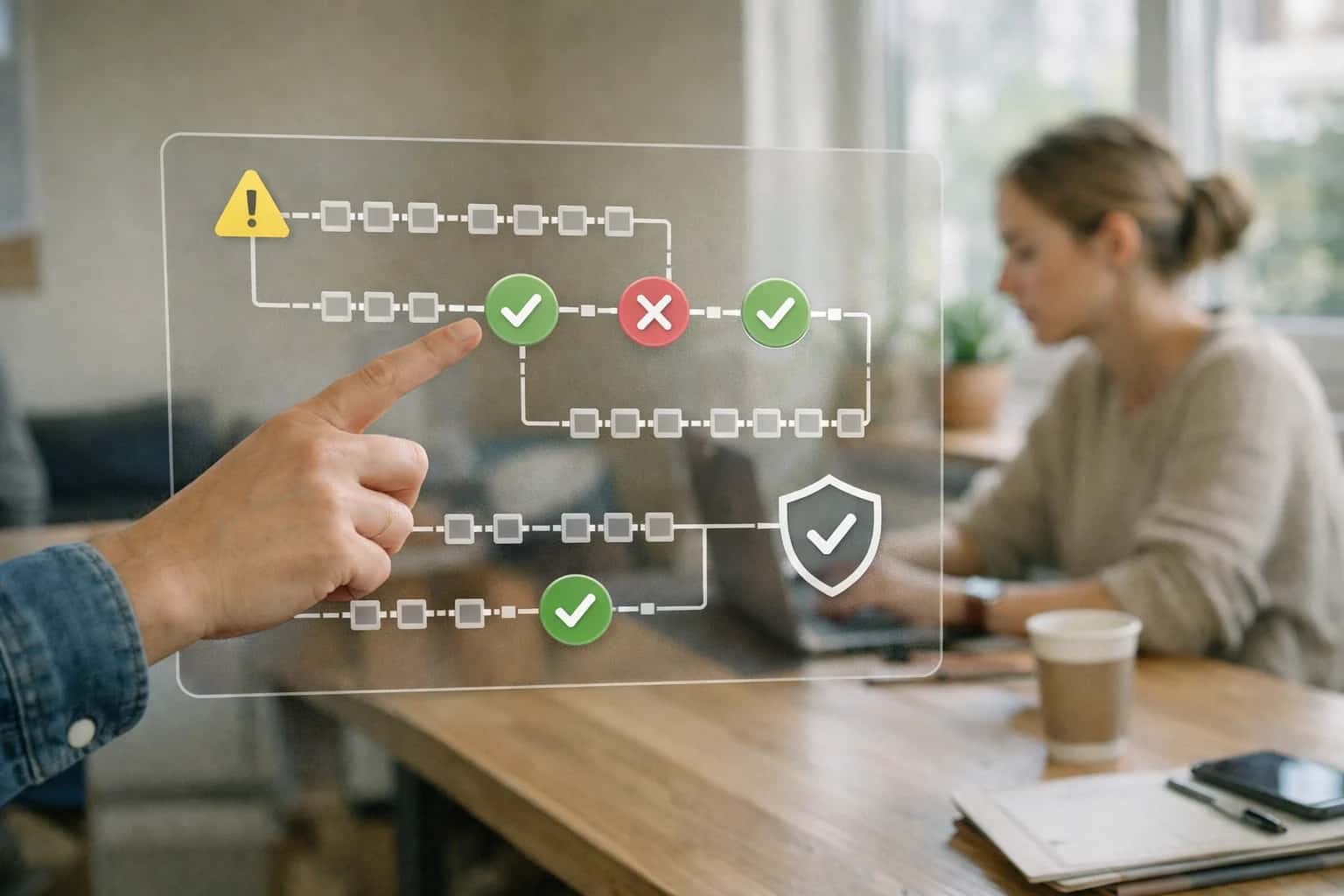
ARCHITECTURE & GOVERNANCE
Where AI Fits into Financial Services Communications
Integrating AI into UC platforms like Zoom and Microsoft Teams for financial services requires a precise, governed approach to data, workflows, and compliance.
High-value workflows are tightly scoped to regulated activities. For trader communications, AI can monitor for potential market abuse keywords or unusual sentiment shifts, triggering alerts and creating immutable audit logs. For client meetings, an AI agent can join a Zoom call to provide real-time regulatory disclosure reminders or automatically generate post-meeting summaries and action items, pushing them to the CRM (e.g., Salesforce) and document management system (e.g., iManage). Compliance recording analysis shifts from manual sampling to continuous AI review, flagging anomalies in call patterns or content against policies like FINRA 3110 or MiFID II.
Rollout is phased, starting with non-critical internal meetings to validate accuracy and user trust, then expanding to client-facing and regulated communications. Governance is paramount: all AI outputs should be tagged with source data lineage, model version, and a confidence score, and be subject to a human-in-the-loop review step before any automated action (like filing a SAR) is taken. Data residency must align with platform configuration—ensuring EU meeting data processed by AI stays within EU boundaries, for instance. The final architecture is less about replacing UC platforms and more about embedding a secure, auditable intelligence layer that makes existing compliance and client service workflows faster and more reliable.
ARCHITECTING FOR COMPLIANCE AND IMPACT
AI Touchpoints Across Financial UC Platforms
Voice and Chat Surveillance
AI integrates with UC platforms like Zoom and Microsoft Teams to monitor trader communications for compliance with FINRA, MiFID II, and internal risk policies. This involves:
- Real-time keyword detection for restricted terms, market abuse, or insider information across voice calls and chat channels.
- Post-trade analysis of meeting recordings to reconstruct decision rationale and ensure adherence to trade approval workflows.
- Automated audit trail generation, linking flagged communications to specific trades, counterparties, and timestamps for regulatory reporting.
Implementation typically uses the platform's APIs (e.g., Zoom's Recording API, Microsoft Graph API for Teams) to stream audio and chat logs to a secure processing pipeline. AI models classify and redact sensitive content before archiving to compliant storage like a WORM (Write-Once-Read-Many) data lake.
ARCHITECTED FOR COMPLIANCE AND AUDIT
High-Value AI Use Cases for Financial UC
Integrating AI with Zoom, Microsoft Teams, and Cisco Webex in financial services requires a focus on workflow automation, data governance, and audit trails. These use cases target trader communications, client meetings, and compliance workflows.
01
Trader Call Compliance & Surveillance
AI monitors real-time audio streams and transcripts from trading desk calls on UC platforms. It flags potential market abuse keywords, confidential information leaks, or unapproved counterparty discussions. Flagged segments are logged with timestamps and speaker IDs to a compliance case management system for review.
Batch -> Real-time
Surveillance mode
02
Client Meeting Intelligence & CRM Sync
Post-meeting, AI analyzes the transcript of a Zoom or Teams call with a client. It extracts discussed products, risk appetite mentions, next steps, and sentiment. A structured summary and actionable items are automatically pushed to the relationship manager's dashboard and logged as an activity in the CRM (e.g., Salesforce Financial Services Cloud).
Hours -> Minutes
Note generation
03
Regulatory Inquiry & e-Discovery Support
During a regulatory request, AI performs semantic search across years of archived meeting recordings and chat logs from UC platforms. It identifies conversations related to specific transactions, product codes, or individuals, drastically reducing manual review time. Results are exported with a verifiable chain of custody for legal teams.
Weeks -> Days
Document review
04
Multi-Lingual Deal Team Coordination
For global M&A or capital markets deals, AI provides real-time transcription and translation for Cisco Webex or Teams calls between geographically dispersed teams. Key deal terms and action items are identified in the source language, translated, and summarized for distribution, ensuring alignment across legal and banking teams.
Same day
Alignment
05
Board & Committee Meeting Minute Automation
AI processes recordings of secure Zoom or Teams meetings used for board, audit, or risk committee sessions. It generates a structured, confidential draft of the minutes, highlighting resolutions, dissenting opinions, and action items with assigned owners. The draft is routed through a secure approval workflow before final archiving.
1 sprint
Implementation
06
Voice-Driven Trade Idea Capture
Traders and analysts use a voice command within a Teams or Zoom session to verbally capture a trade idea. AI transcribes the idea, extracts key parameters (instrument, tenor, size), and creates a structured ticket in the idea management or order management system, reducing manual data entry and latency.
Manual -> Automated
Capture workflow
UNIFIED COMMUNICATIONS INTEGRATION PATTERNS
Example AI-Powered Workflows for Financial Teams
These workflows illustrate how AI can be integrated into UC platforms like Zoom and Microsoft Teams to automate compliance-sensitive, high-value communications for trading desks, client services, and risk management teams. Each pattern connects meeting intelligence to downstream systems of record.
Trigger: A Zoom meeting ends in a designated 'Trading Floor' virtual room or a Microsoft Teams channel tagged for compliance.
Context/Data Pulled:
- Meeting audio/video recording and transcript via platform API (e.g., Zoom Cloud Recording, Microsoft Graph API for Stream).
- Participant list cross-referenced with Active Directory for role mapping.
- Pre-defined lexicon of regulated terms (e.g., 'material non-public', specific ticker symbols).
Model or Agent Action:
- Transcript is processed by a compliance-focused NLP model to:
- Flag utterances containing lexicon terms.
- Perform speaker diarization to attribute statements to specific traders.
- Analyze sentiment for potential market manipulation indicators (e.g., urgency, pressure).
- A summary is generated highlighting flagged sections, participant attendance, and key discussion topics.
System Update or Next Step:
- The full recording, flagged transcript, and AI-generated summary are packaged and pushed to a compliant archival system (e.g., Global Relay, Smarsh) via secure API.
- A low-severity alert is created in the compliance team's dashboard for review.
- Meeting metadata (date, participants, flag count) is logged to a
compliance_eventstable in the data warehouse.
Human Review Point: A compliance officer reviews all AI-flagged segments within 24 hours via a dedicated dashboard that plays the audio clip synchronized with the transcript.
FINANCIAL SERVICES COMPLIANCE
Implementation Architecture: Data Flow, APIs, and Guardrails
A secure, auditable architecture for integrating AI into UC platforms like Zoom and Microsoft Teams for trader communications, client meetings, and compliance workflows.
The integration architecture is built on a zero-trust, data-in-transit principle. Audio/video streams from Zoom or Microsoft Teams meetings are never stored raw on third-party infrastructure. Instead, encrypted streams are processed via secure APIs (e.g., Zoom's Media Streams API or Microsoft's Graph API with CallRecords and OnlineMeeting permissions) and routed directly to a private, VPC-hosted processing pipeline. This pipeline performs real-time transcription (using a compliant ASR model), strips all PII/PHI as a first step, and creates a de-identified transcript for AI analysis. The original recording and raw transcript are immediately archived to a WORM-compliant storage like Amazon S3 Glacier Vault Lock or Azure Immutable Blob Storage, with metadata logged to a tamper-evident audit ledger.
AI models operate on the de-identified data within the private cloud. Use cases are executed as isolated microservices: trader communication surveillance scans for prohibited topics or market abuse language; client meeting intelligence extracts discussed action items and risk disclosures; compliance recording analysis tags conversations by regulation (e.g., FINRA 4511, MiFID II). Findings are re-identified via a secure token service only for authorized compliance officers, generating alerts in systems like Actimize or creating case summaries in ServiceNow. All AI inferences, including the prompts and model versions used, are logged with the original call ID for a complete audit trail.
Rollout follows a phased, role-based access control (RBAC) model. Phase 1 targets recorded meetings only for post-trade compliance teams, with human-in-the-loop review of all AI-generated flags. Phase 2 introduces real-time alerts for live trading desk communications, delivered as secure, ephemeral notifications within the UC client. Governance is enforced via a centralized policy engine that defines which AI models can access which data classifications (e.g., public vs. material non-public information). Regular model drift and bias audits are conducted, with outputs compared against a human-reviewed gold set to ensure consistent, explainable performance. For a deeper look at building secure AI agents for regulated workflows, see our guide on AI Governance and LLMOps Platforms.
ARCHITECTING AI FOR TRADER AND CLIENT COMMUNICATIONS
Code and Payload Examples
Post-Call Summary & Logging
After a client portfolio review on Zoom or Teams, AI processes the transcript to extract key decisions, risk tolerances, and action items. This structured summary is then posted to the client's record in Salesforce Financial Services Cloud or a similar wealth management CRM.
Example JSON Payload to CRM API:
json{ "meeting_id": "zoom_987654321", "client_id": "CUST-2024-789", "summary": "Client affirmed moderate risk appetite. Approved rebalancing of tech holdings by 5%. Action: Send updated IPS by EOD Friday.", "action_items": [ { "description": "Send updated Investment Policy Statement", "owner": "advisor_jdoe", "due_date": "2024-06-07" } ], "compliance_flags": ["discussed_forward_looking_statements"], "sentiment_score": 0.85 }
This automates the manual note-taking and logging process, ensuring the CRM system of record is updated with auditable, structured data immediately after the call.
AI FOR TRADER AND CLIENT COMMUNICATIONS
Plausible Time Savings and Business Impact
How AI integration for Zoom, Microsoft Teams, and Cisco Webex can reduce manual effort and improve compliance in financial services workflows.
| Workflow | Before AI | After AI | Implementation Notes |
|---|---|---|---|
Trader call compliance review | Manual sampling by compliance team | Automated keyword and pattern detection | Alerts flagged for human review; full audit trail maintained |
Client meeting summarization | Analyst manually transcribes and drafts notes | AI generates structured summary with action items | Analyst reviews and approves; notes sync to CRM/portfolio systems |
Regulatory disclosure extraction | Legal team reviews hours of recordings | AI identifies and timestamps relevant sections | Extracted clips and transcripts prepared for legal review |
Internal strategy meeting follow-up | Manual distribution of notes and tasks | Auto-distribution of summaries and creation of Jira/Asana tasks | Integrated with Microsoft Planner or similar; owner assignments suggested |
Voice-based trade inquiry handling | Trader calls desk, waits on hold | AI voice agent screens and routes simple inquiries | Handles FX rates, simple position checks; complex issues escalated live |
New hire onboarding session documentation | HR manually compiles materials post-session | AI creates searchable knowledge base from session recordings | Content tagged by topic and department; stored in secure SharePoint |
Quarterly earnings call analysis | Days to compile competitor call insights | Hours to generate comparative sentiment and theme analysis | AI analyzes internal and public calls; insights feed into research reports |
ARCHITECTING FOR REGULATED ENVIRONMENTS
Governance, Security, and Phased Rollout
Deploying AI on UC platforms in financial services requires a security-first architecture, clear data governance, and a controlled rollout to manage risk and ensure compliance.
Financial services AI integrations must be built on a zero-trust data architecture. This means meeting audio and chat data from Zoom or Microsoft Teams is never sent directly to a public LLM API. Instead, data is routed through a secure, VPC-hosted inference layer where it is de-identified, encrypted in transit, and processed using models deployed in a private cloud or via a compliant Azure OpenAI or AWS Bedrock instance. All data access is logged for audit trails, and integrations with platforms like ServiceNow for incident management or Splunk for SIEM are used to monitor for anomalous data egress or policy violations.
A phased rollout is critical for adoption and risk management. Phase 1 typically starts with a pilot for trader communications on a single desk, using AI for post-trade call summarization and action item extraction into a Compliance workflow. Success metrics focus on accuracy and time saved. Phase 2 expands to client meeting intelligence, where AI generates structured notes and identifies discussed products or services for logging in the CRM. Phase 3 introduces real-time capabilities, such as compliance keyword spotting during live calls on Cisco Webex, triggering immediate alerts to supervisors. Each phase includes a human-in-the-loop review stage before full automation.
Governance is enforced through role-based access controls (RBAC) within the AI platform, ensuring only authorized compliance officers can access raw transcripts or configure monitoring rules. A formal model risk management (MRM) process is applied to any AI model used, with regular validation of output accuracy and bias testing. Finally, all AI-generated summaries or alerts are stamped with provenance metadata—source meeting ID, processing timestamp, model version—creating an immutable chain of custody for regulators.
Enabling Efficiency, Speed & Accuracy
Intelligent Analysis, Decision & Execution
We build AI systems for teams that need search across company data, workflow automation across tools, or AI features inside products and internal software.
Talk to Us
Search across company data
Give teams answers from docs, tickets, runbooks, and product data with sources and permissions.
Useful when people spend too long searching or get different answers from different systems.
Enterprise searchRAGPermissions
Read more
Automate internal workflows
Use AI to route work, draft outputs, trigger actions, and keep approvals and logs in place.
Useful when repetitive work moves across multiple tools and teams.
AI agentsWorkflow automationGovernance
Read more
Add AI to products and internal tools
Build assistants, guided actions, or decision support into the software your team or customers already use.
Useful when AI needs to be part of the product, not a separate tool.
AI integrationDecision supportModel routing
Read moreAI INTEGRATION FOR FINANCIAL SERVICES
Frequently Asked Questions
Practical questions for architects and compliance leaders deploying AI on Zoom, Microsoft Teams, and Cisco Webex in regulated financial environments.
We architect integrations with strict data boundary controls:
- Infrastructure Isolation: AI inference workloads are deployed in your designated cloud region (e.g., Azure East US 2, AWS London) or within your private VPC. Transcripts and embeddings never leave your approved geography.
- Ephemeral Processing: Audio/video streams are processed in-memory for real-time features (e.g., translation). For post-call analysis, recordings are pulled transiently, processed, and then the source data is deleted from our inference pipeline after summary generation. Only derived metadata (e.g., action items, sentiment scores) is persisted to your systems.
- Vendor-Agnostic Models: We can deploy open-source or privately fine-tuned models (like Llama 3) on your infrastructure, avoiding data transfer to external LLM providers unless explicitly approved and governed by your vendor risk management team.

About the author
Prasad Kumkar
CEO & MD, Inference Systems
Prasad Kumkar is the CEO & MD of Inference Systems and writes about AI systems architecture, LLM infrastructure, model serving, evaluation, and production deployment. Over 5+ years, he has worked across computer vision models, L5 autonomous vehicle systems, and LLM research, with a focus on taking complex AI ideas into real-world engineering systems.
His work and writing cover AI systems, large language models, AI agents, multimodal systems, autonomous systems, inference optimization, RAG, evaluation, and production AI engineering.
LinkedIn
Limited slotsGet a Free AI Consultation
Partnered with leading AI, data, and software stack.





How We Work
Custom AI workflows for your Business
One-fit-all AI don't work for modern businesses. At Inferensys, we aim to understand your business & custom requirements; which we use to define most efficient agentic workflows, the data, and the tools for your business.
01
Review the use case
We understand the task, the users, and where AI can actually help.
Read more02
Pick the right approach
We define what needs search, automation, or product integration.
Read more03
Build the first useful version
We implement the part that proves the value first.
Read more04
Improve from there
We add the checks and visibility needed to keep it useful.
Read moreThe first call is a practical review of your use case and the right next step.
Talk to Us