Integrating AI with Tive's sensor data streams moves you from monitoring to prediction. Instead of reacting to a temperature excursion after it happens, AI models analyze historical trip data, real-time sensor readings (temperature, humidity, shock, light), and external factors like weather forecasts to predict a high-risk window for a breach. This allows logistics teams to intervene proactively—contacting the driver for a trailer check, adjusting reefer settings remotely via integrated telematics, or rerouting to a closer facility—turning potential losses into managed exceptions. The integration typically connects to Tive's APIs or webhook events, ingesting sensor payloads into a processing pipeline where time-series forecasting models and anomaly detection algorithms run continuously.

Integration
AI Integration for Tive for Shipment Tracking
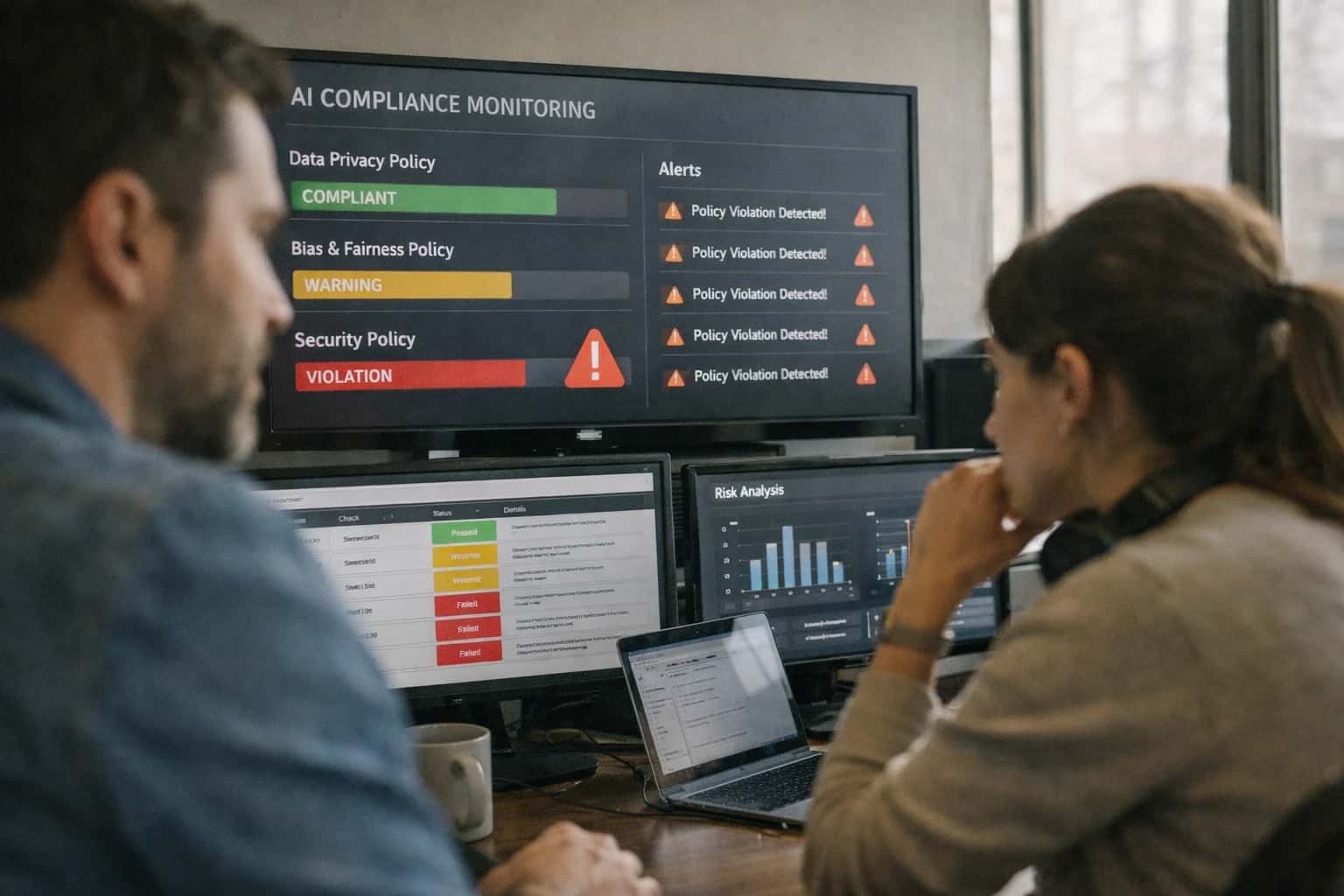
From Reactive Alerts to Predictive Intelligence
Transform Tive's real-time sensor data into predictive condition intelligence, automated compliance reporting, and root-cause analysis for high-value logistics.
Beyond prediction, AI automates the entire condition assurance workflow. Upon trip completion, the system can automatically generate a condition summary report, extracting key events (e.g., '3-minute door open event at 10:15 AM', 'ambient temperature approached upper threshold for 45 minutes'). For regulated shipments (pharma, food), AI can draft the required compliance documentation, populating templates with extracted sensor data and anomaly logs. In the event of damage, a root-cause analysis agent can correlate shock sensor spikes with GPS location, road data, and carrier history to suggest the most likely cause (e.g., 'pothole on I-90 near mile marker 132', 'rough yard handling at DC B'), accelerating insurance claims and carrier disputes. This transforms Tive from a tracking tool into an automated quality and compliance engine.
Rollout focuses on high-value lanes first, where the cost of loss justifies the AI investment. Governance is critical: define thresholds for AI-generated alerts to avoid alarm fatigue, and maintain a human-in-the-loop for major interventions or insurance submissions. The system should log all AI-suggested actions and user overrides in an audit trail. By layering intelligence on Tive's hardware, you shift from simply knowing what happened to understanding why it happened and preventing it next time—turning sensor data into a strategic asset for service differentiation and risk reduction. For architecture patterns, see our guide on IoT and AI data pipelines.
Where AI Connects to the Tive Platform
Ingesting and Analyzing Real-Time Condition Data
AI connects directly to Tive's API to consume high-frequency sensor data streams for temperature, humidity, shock, light, and pressure. This raw telemetry is the foundation for predictive analytics.
Key integration points include:
- Event Webhooks: Configure Tive to push alert events (e.g., temperature breach) to your AI service for immediate triage.
- Historical Data API: Pull bulk historical sensor readings to train models for lane-specific baseline behavior and anomaly detection.
- Device Metadata: Correlate sensor readings with shipment metadata (SKU, origin/destination, carrier) to assess risk profiles.
AI models process this data to move from reactive alerts to predictive condition management, identifying patterns that precede a failure.
High-Value AI Use Cases for Tive Data
Transform Tive's real-time sensor streams into proactive intelligence. These AI integration patterns automate condition monitoring, accelerate incident response, and provide root-cause analysis for high-value shipments in pharmaceutical, food, and electronics logistics.
Predictive Temperature Excursion Alerts
Analyze Tive's temperature and humidity streams against product-specific thresholds and external weather forecasts to predict excursions hours before they occur. AI triggers automated corrective workflows—like adjusting reefer settings via carrier APIs or rerouting—to protect sensitive cargo.
Automated Insurance & Compliance Reporting
Use AI to extract, correlate, and summarize Tive's shock, light, and tilt data with shipment milestones. Automatically generate condition audit trails and pre-populate insurance claim forms or regulatory compliance reports (e.g., FDA CFR Part 11, EU GDP), reducing manual evidence compilation from days to minutes.
Root-Cause Analysis for In-Transit Damage
When a damage claim is filed, AI correlates Tive's shock/tilt event logs with carrier GPS data, road conditions, and handling reports. It generates a probable cause narrative (e.g., 'severe shock at dock B correlated with forklift unloading'), accelerating dispute resolution and informing carrier performance scoring.
Dynamic Rerouting for Cold Chain Assurance
Integrate AI with your Transportation Management System (TMS). When Tive data indicates rising internal temperature on a delayed route, AI evaluates alternative carriers, routes, and facilities in real-time. It recommends and can execute dynamic rerouting to the nearest qualified cross-dock or swap trailer.
Proactive Carrier Performance & Coaching
Continuously analyze Tive sensor data aggregated by carrier, lane, and driver. AI identifies patterns of excessive shock or temperature variance, generating targeted carrier scorecard insights and automated coaching alerts. This shifts performance management from periodic reviews to continuous improvement.
Automated Proof of Condition Delivery
At delivery, AI instantly analyzes the final Tive data stream against the agreed-upon condition parameters. It automatically generates a digitally signed Proof of Condition (POC) report, attaching it to the POD in your TMS or ERP. This eliminates manual verification and accelerates invoice approval.
Example AI Agent Workflows
These workflows demonstrate how AI agents can transform Tive's real-time sensor data into proactive intelligence, automating critical logistics operations for high-value, condition-sensitive shipments.
Trigger: A Tive sensor reading (temperature, humidity, shock, light) breaches a pre-defined threshold or shows a concerning trend.
Context/Data Pulled:
- Real-time and historical sensor data stream from the specific Tive tracker.
- Shipment details from the TMS (e.g., Oracle TMS, SAP TM): product SKU, value, destination, required conditions.
- Contact information for stakeholders: carrier dispatcher, warehouse receiving manager, quality assurance lead.
Model/Agent Action:
- The AI agent evaluates the severity and rate of change. A gradual temperature drift may trigger a different action than a sudden shock event.
- It correlates the event with shipment stage (e.g., in transit vs. at a cross-dock).
- Using a pre-configured escalation matrix, it determines the first action: send an alert, request a manual check, or initiate a corrective workflow.
System Update/Next Step:
- An alert is posted to the transportation visibility dashboard with AI-generated context: "Temperature rising 2°C/hr for Pharma Lot #XYZ. At current rate, will breach max threshold in 3 hours. Shipment is 2 hours from final DC."
- An automated message is sent via Tive's API or integrated comms (Teams, email) to the carrier dispatcher with the tracker ID and location.
- The event is logged in the audit trail with a unique case ID for future root-cause analysis.
Human Review Point: For critical high-value shipments (e.g., clinical trials), the agent can flag the event for immediate human review by a logistics manager, providing a summary and recommended actions.
Implementation Architecture: Data Flow & System Integration
A practical blueprint for integrating AI with Tive's real-time sensor data to automate condition monitoring, predictive alerts, and damage analysis.
The integration architecture connects to Tive's Sensor Data API and Webhook Event Stream to ingest real-time telemetry—temperature, humidity, shock, light, and GPS—for each active shipment. This raw stream is processed through an event queue (e.g., Apache Kafka or AWS Kinesis) where an AI service layer applies predictive models trained on historical lane performance and product-specific thresholds. The system evaluates not just static breaches but rate-of-change anomalies (e.g., a gradual temperature drift versus a spike) and correlated multi-sensor events (shock during a temperature excursion) to generate prioritized, context-rich alerts.
High-value workflows are automated by routing these AI-enriched alerts to downstream systems. For insurance reporting, the integration extracts key evidence—timestamped sensor graphs, predicted impact severity, and correlated location data—and auto-populates claims forms in platforms like Guidewire or Snapsheet. For root-cause analysis, the system correlates Tive data with carrier performance records from your Transportation Management System (TMS) and dock scheduling logs from a Yard Management System (YMS) to suggest whether damage likely occurred in transit, during loading, or from equipment failure, outputting findings to a case in ServiceNow or Jira.
Governance is built into the data flow. All AI inferences are logged with the source sensor payload, model version, and confidence score for auditability. A human-in-the-loop review step can be configured for high-value shipments or low-confidence predictions before automated actions are taken. Rollout typically starts with a monitoring-only phase for a specific high-risk lane (e.g., pharmaceuticals requiring 2-8°C), comparing AI predictions against manual checks, before progressing to automated alerting and then full workflow integration with finance and carrier systems.
Code & Payload Examples
Ingesting Tive Webhooks for AI Analysis
Tive's platform can push real-time sensor alerts (e.g., temperature excursions, shock events) to your AI system via webhooks. The AI service receives the payload, enriches it with contextual data (shipment details, product specs), and triggers automated workflows.
Example Webhook Payload from Tive:
json{ "event_id": "evt_abc123", "event_type": "TEMPERATURE_EXCURSION", "timestamp": "2024-05-15T14:30:00Z", "tracker_id": "tive_5x_789", "shipment_id": "SHIP-2024-001234", "data": { "current_temp_c": 8.5, "threshold_min_c": 2.0, "threshold_max_c": 5.0, "duration_minutes": 25, "location": { "lat": 40.7128, "lon": -74.0060 } } }
Your AI endpoint can process this, classify the severity, and decide on an action—like notifying a logistics manager or initiating a corrective workflow in your TMS.
Realistic Time Savings & Operational Impact
How AI integration with Tive's real-time sensor data transforms manual monitoring and reporting workflows for high-value shipments.
| Workflow / Metric | Before AI Integration | After AI Integration | Implementation Notes |
|---|---|---|---|
Condition Alert Triage | Manual review of sensor dashboards for threshold breaches | AI-driven anomaly detection & prioritized alerting | Focuses human attention on high-risk, high-value shipments only |
Insurance / Claim Documentation | Hours spent compiling sensor logs, photos, and reports post-incident | Automated incident dossier generation with timeline & data excerpts | Accelerates claim submission from days to hours; improves evidence quality |
Root-Cause Analysis for Damage | Manual correlation of shock/temperature events with carrier milestones | AI suggests probable cause (e.g., specific handling event, carrier leg) | Reduces investigation time from 4-8 hours to 30-60 minutes per case |
Carrier Performance Scoring | Quarterly manual review of sensor data against KPIs | Continuous, automated scoring based on condition compliance | Enables dynamic carrier selection and proactive contract discussions |
Proactive Intervention | Reactive response after a threshold is breached | Predictive alerts based on trend analysis (e.g., gradual temperature drift) | Allows corrective action (e.g., repacking, rerouting) before product loss |
Compliance Reporting | Manual extraction and formatting of data for audits (FDA, EU GDP, etc.) | Automated report generation for specific lanes, time periods, or products | Cuts reporting preparation from days to same-day |
Customer Communication | Manual updates when an exception occurs | Automated, templated status updates with condition summaries | Improves customer trust and reduces CS inquiry volume by ~40% |
Governance, Security & Phased Rollout
Deploying AI on Tive's real-time sensor streams requires a controlled, secure architecture that respects data sovereignty and operational risk.
An AI integration for Tive is built on a secure data pipeline that ingests sensor event streams (temperature, humidity, shock, light) via Tive's APIs or webhooks. This data is enriched with shipment metadata (PO numbers, SKUs, lane details, carrier info) from your TMS or ERP before being processed by AI models. Critical governance steps include establishing data residency rules for sensor payloads, implementing role-based access controls (RBAC) to ensure only authorized logistics, quality, and claims teams can view AI-generated alerts, and maintaining a full audit trail of all AI inferences linked back to the original Tive tracker ID and timestamp for compliance and dispute resolution.
A phased rollout is essential for managing risk and proving value. Phase 1 (Pilot): Focus on a single high-value lane (e.g., pharmaceutical cold chain) and implement predictive condition alerts. AI models analyze temperature trends to forecast excursions hours in advance, triggering automated notifications in Slack or Microsoft Teams for logistics operators. Phase 2 (Expansion): Automate insurance and compliance reporting. AI extracts relevant sensor data and shipment context to draft preliminary incident reports for claims or generate audit-ready summaries for FDA/EU GDP compliance, reducing manual compilation from days to hours. Phase 3 (Optimization): Enable root-cause analysis. Correlate sensor anomalies (e.g., shock events) across multiple shipments and carriers to identify systemic packaging, handling, or carrier performance issues, providing data for carrier scorecarding and process improvements.
Security is paramount when handling sensitive shipment data. The integration architecture should employ encryption-in-transit and at-rest for all sensor and business data, use private API endpoints for model inference to prevent data leakage, and implement prompt grounding to ensure AI-generated summaries and recommendations are strictly based on the provided sensor and shipment context, avoiding hallucinations. A human-in-the-loop review step should be mandated for high-stakes outputs, like insurance claim drafts or carrier performance penalties, before they are finalized or acted upon. This controlled approach allows teams to move from reactive monitoring to predictive, automated operations while maintaining strict oversight.
Enabling Efficiency, Speed & Accuracy
Intelligent Analysis, Decision & Execution
We build AI systems for teams that need search across company data, workflow automation across tools, or AI features inside products and internal software.
Talk to Us
Search across company data
Give teams answers from docs, tickets, runbooks, and product data with sources and permissions.
Useful when people spend too long searching or get different answers from different systems.

Automate internal workflows
Use AI to route work, draft outputs, trigger actions, and keep approvals and logs in place.
Useful when repetitive work moves across multiple tools and teams.

Add AI to products and internal tools
Build assistants, guided actions, or decision support into the software your team or customers already use.
Useful when AI needs to be part of the product, not a separate tool.
Frequently Asked Questions
Explore common workflows for integrating AI with Tive's real-time sensor data to automate high-value logistics operations. Each example outlines a concrete automation path from trigger to action.
This workflow proactively identifies and routes potential cold chain breaches before they become claims.
- Trigger: Tive API webhook sends a sensor reading indicating a temperature trend approaching a predefined threshold (e.g., 3°C and rising towards a 5°C limit).
- Context Pulled: The AI agent retrieves the full shipment context: product SKU (e.g., pharmaceutical lot number), destination, remaining transit time, historical carrier performance on this lane, and the specific contractual SLA.
- Agent Action: A lightweight LLM classifies the severity and potential root cause (e.g., "door left open at last stop" vs. "reefer unit failure"). It then determines the appropriate action tier.
- System Update: Based on the tier:
- Tier 1 (High Risk): Automatically creates a high-priority alert in the TMS (e.g., Oracle TMS, SAP TM) and dispatches a notification via SMS/email to the carrier dispatcher and logistics manager with recommended corrective actions.
- Tier 2 (Watch): Logs a note in the shipment's timeline and schedules a follow-up check for the next sensor reading.
- Human Review Point: All Tier 1 alerts are summarized in a daily digest for the quality assurance team to review patterns and update classification rules.

About the author
Prasad Kumkar
CEO & MD, Inference Systems
Prasad Kumkar is the CEO & MD of Inference Systems and writes about AI systems architecture, LLM infrastructure, model serving, evaluation, and production deployment. Over 5+ years, he has worked across computer vision models, L5 autonomous vehicle systems, and LLM research, with a focus on taking complex AI ideas into real-world engineering systems.
His work and writing cover AI systems, large language models, AI agents, multimodal systems, autonomous systems, inference optimization, RAG, evaluation, and production AI engineering.
Partnered with leading AI, data, and software stack.





How We Work
Custom AI workflows for your Business
One-fit-all AI don't work for modern businesses. At Inferensys, we aim to understand your business & custom requirements; which we use to define most efficient agentic workflows, the data, and the tools for your business.
01
Review the use case
We understand the task, the users, and where AI can actually help.
Read more02
Pick the right approach
We define what needs search, automation, or product integration.
Read more03
Build the first useful version
We implement the part that proves the value first.
Read more04
Improve from there
We add the checks and visibility needed to keep it useful.
Read moreThe first call is a practical review of your use case and the right next step.
Talk to Us