AI in OTM typically integrates at three key layers: the Order Management Base (OMB) for predictive planning, the Shipment Management module for real-time execution, and the Freight Settlement engine for financial automation. This involves connecting to OTM's APIs (GLogXML, REST Web Services) to read and write key objects like Shipments, Freight Costs, Itineraries, and Rate Records. AI agents can be triggered by OTM's Agent Framework or external event queues to process exceptions, analyze capacity, or generate recommendations, grounding their decisions in OTM's master data for carriers, locations, and service providers.

Integration
AI Integration for Oracle Transportation Management (OTM)
A practical guide for logistics managers and planners on embedding AI into OTM's order, shipment, and freight management modules to automate exception handling, predict capacity, and optimize carrier selection.
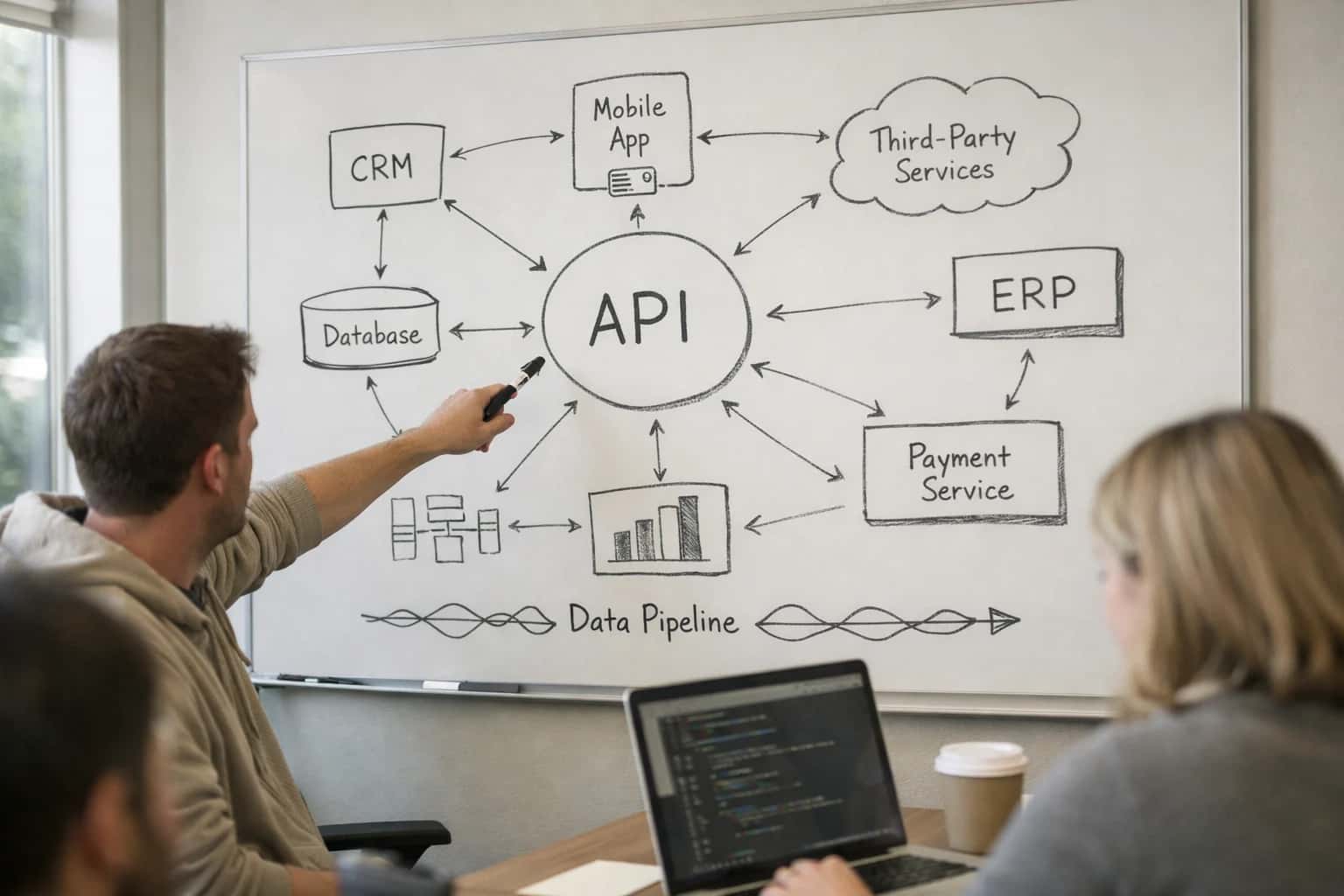
ARCHITECTURE & ROLLOUT
Where AI Fits into Oracle TMS
AI integration for Oracle Transportation Management (OTM) connects to its core data model and automation layer to enhance planning, execution, and settlement workflows.
A practical implementation wires an AI orchestration layer—using tools like a vector database for historical lane data and a prompt management system for carrier communications—as a sidecar to OTM. For example, an AI agent monitoring the SHIPMENT_STATUS table can detect a delay, retrieve the shipment's itinerary and involved carriers, analyze real-time weather and port data, and then either update the Expected Delivery field, create a Shipment Exception with a root-cause suggestion, or trigger a predefined Action/Event in OTM to re-route. This moves exception handling from manual monitoring in the Planning Manager to automated triage, reducing planner intervention to only the most complex cases.
Rollout should be phased, starting with read-only analytics on a single workflow—like predictive capacity for key lanes—before progressing to write-back actions such as automated carrier selection or dynamic rate application. Governance is critical: all AI-generated actions should be logged in OTM's Audit Trail and, for high-impact decisions like cost changes, routed through OTM's existing Approval Rules Engine. This ensures the integration augments, rather than bypasses, OTM's built-in controls. For teams managing this, see our guide on [/integrations/transportation-management-platforms/ai-governance-for-tms](AI Governance for TMS).
WHERE TO CONNECT AI WORKFLOWS
Key OTM Modules and Surfaces for AI Integration
Order Management and Shipment Planning
AI integration surfaces primarily within the Order Release, Shipment, and Shipment Leg business objects. This is where AI can automate and enhance core planning workflows.
Key Integration Points:
- Order Release Creation/Update: Inject AI logic to automatically assign routing guides, apply service level rules, or suggest consolidation opportunities as orders are created or modified.
- Shipment Building: Use AI models for multi-constraint load optimization (weight, cube, stackability, hazmat) to build more efficient shipments from a pool of orders.
- Shipment Leg Planning: Connect AI to the planning engine to recommend optimal modes, carriers, and routes based on predictive cost, service, and carbon data.
Example Workflow: An AI agent monitors incoming Order Releases, evaluates them against real-time capacity and rate data, and automatically creates a pre-tendered Shipment with the highest-scoring carrier from the routing guide, logging its decision rationale for audit.
ORACLE TRANSPORTATION MANAGEMENT
High-Value AI Use Cases for OTM
Integrating AI into Oracle Transportation Management (OTM) transforms static planning into dynamic, predictive operations. These use cases target the core modules where AI can automate decisions, predict exceptions, and optimize costs, directly serving logistics managers, planners, and transportation buyers.
01
Intelligent Load & Order Consolidation
Automates the complex task of building multi-stop loads within OTM's Order Management and Shipment Management modules. AI models evaluate weight, cube, delivery windows, and service constraints to create optimal consolidation plans, adjusting in real-time as new orders arrive.
Hours -> Minutes
Planning cycle
02
Predictive Carrier Selection & Tender Automation
Enhances OTM's Rate Management and Shipment Execution workflows. AI analyzes historical carrier performance, real-time market rates, and lane-specific service data to recommend the optimal carrier for each tender, then automates the acceptance/rejection workflow with reasoning.
Batch -> Real-time
Decision speed
03
Automated Shipment Exception Management
Connects to OTM's Event Management and Tracking feeds. An AI agent monitors for delays, geo-fence breaches, or temperature excursions, prioritizes alerts by business impact, suggests root causes, and triggers predefined corrective workflows in OTM or via email/Slack.
Same day
Issue resolution
04
Dynamic ETA & Customer Communication
Layers predictive AI on top of OTM's Visibility data. By ingesting weather, traffic, and carrier telematics, the system provides continuously updated ETAs. It can then auto-generate status updates for customer service portals or trigger proactive delay notifications via OTM's communication framework.
95%+
ETA accuracy
05
AI-Powered Freight Audit & Payment
Integrates with OTM's Financials and Settlement engine. AI reviews incoming carrier invoices against rate contracts, shipment details, and accessorial logs to flag discrepancies (duplicates, overcharges, incorrect accessorials) before payment approval, routing exceptions for human review.
>99%
Invoice review coverage
06
Predictive Capacity & Rate Forecasting
Feeds strategic intelligence into OTM's Planning and Procurement cycles. AI models analyze internal shipment history and external market data to forecast lane-specific capacity tightness and spot rate trends 4-8 weeks out, guiding contract negotiations and spot buying strategies.
1 sprint
For procurement prep
PRACTICAL AUTOMATION PATTERNS
Example AI-Powered Workflows in OTM
These workflows illustrate how AI agents and models connect to specific OTM modules, data objects, and user roles to automate high-volume tasks and enhance decision-making for logistics planners, operations managers, and customer service teams.
Trigger: A new Shipment (GID) is created and reaches a 'Ready to Tender' status in the Order Release or Shipment lifecycle.
Context/Data Pulled: The agent retrieves the Shipment's:
- Origin/Destination, Service Level, Equipment Type
- Historical lane performance data from OTM's Business Intelligence Publisher (BIP) reports
- Current contracted carrier rates and capacity from the Rate Offering and Rate Record objects
- Real-time spot market rates via integrated API (e.g., DAT, Truckstop)
- Carrier performance scores (on-time pickup, claims ratio) from the Trading Partner module
Model/Agent Action: An LLM-powered agent evaluates all constraints and objectives (cost, service, reliability, carbon). It generates a ranked list of carrier recommendations with a justification for each, simulating a planner's decision logic.
System Update/Next Step: The agent automatically creates and sends a Tender in OTM to the top-ranked carrier via EDI 204 or API. If the tender is rejected, it triggers a re-evaluation loop with the next carrier.
Human Review Point: The planner receives a notification in their OTM workbench with the agent's recommendation and the action taken. They can override before tender send or monitor the automated process.
A PRODUCTION BLUEPRINT
Implementation Architecture: Wiring AI into OTM
A practical guide to embedding AI agents and workflows into Oracle Transportation Management's core data model and automation layer.
Integrating AI into OTM requires a clear map of its key surfaces: the Order Management Base, Shipment, and Freight Cost Management modules. AI agents typically connect via OTM's REST/SOAP APIs or by extending its Business Process Automation (BPA) framework. High-impact workflows include: automated tender management by analyzing carrier performance history and spot market rates; predictive exception handling by monitoring milestone feeds from project44 or FourKites; and intelligent load building by optimizing for cube, weight, and service constraints using real-time order data. The goal is to augment, not replace, the planner's decision-making within the existing OTM console.
A production implementation follows a layered pattern. An AI Orchestration Layer (often built with tools like n8n or CrewAI) sits outside OTM, calling its APIs and external data sources (e.g., weather, traffic, rate benchmarks). This layer processes events—like a new Shipment creation or a missed Transit Stop—and uses LLMs for tasks such as drafting carrier communications or summarizing root-cause analysis. Results are written back to OTM as Notes, Actions, or by updating custom flex fields. Critical governance is managed through OTM's native Role-Based Access Control (RBAC) and by implementing a human-in-the-loop approval step within the BPA for high-stakes actions like automatic tender rejection.
Rollout focuses on iterative workflow automation. Start with a single lane or exception type, such as using AI to auto-classify and route detention requests based on appointment logs and geofence data. Use OTM's Agent Diagnostics and Integration History to monitor performance. A successful integration reduces manual triage from hours to minutes and shifts planner focus from firefighting to strategic capacity management. For a deeper dive into specific AI-enhanced workflows like predictive capacity sourcing, see our guide on AI-Powered Carrier Selection in TMS.
INTEGRATING AI INTO OTM'S CORE MODULES
Code and Payload Examples
Automating Exception Handling and Triage
Integrate AI directly into OTM's Shipment and ShipmentStatus APIs to analyze status updates, carrier communications, and IoT sensor data. An AI agent can prioritize exceptions (e.g., delays, temperature breaches) and trigger predefined OTM actions or create service requests.
Example Workflow:
- Webhook from OTM sends a
SHIPMENT_STATUSevent with a delayed milestone. - AI service enriches the event with weather, traffic, and carrier on-time performance data.
- Agent classifies the exception severity and determines the next best action.
- Python service calls OTM's REST API to update the shipment with a new status and, if critical, automatically creates a
ServiceRequestfor the planner.
python# Example: AI-driven status evaluation and OTM update import requests def evaluate_and_update_shipment(otm_shipment_event): # Enrich with external data & AI analysis ai_analysis = ai_agent.analyze_exception( event=otm_shipment_event, context=['weather', 'carrier_history', 'lane_risk'] ) if ai_analysis['action'] == 'CREATE_SERVICE_REQUEST': payload = { "serviceRequest": { "shipmentGid": otm_shipment_event['shipmentGid'], "problem": ai_analysis['predicted_root_cause'], "assignedTo": "LOGISTICS_PLANNER", "priority": ai_analysis['severity'] } } # Post to OTM's ServiceRequest API response = requests.post( f"{OTM_BASE_URL}/serviceRequests", json=payload, auth=(API_USER, API_KEY) ) return response
AI-ENHANCED OTM WORKFLOWS
Realistic Time Savings and Operational Impact
How AI integration reduces manual effort and improves decision quality in Oracle Transportation Management core modules.
| Workflow / Module | Before AI Integration | After AI Integration | Implementation Notes |
|---|---|---|---|
Carrier Selection & Tender Management | Manual rate shopping & historical performance review | AI-assisted scoring & automated tender routing | Considers real-time capacity, predictive on-time performance, and cost; planner approves final decision |
Shipment Exception Handling | Reactive monitoring & manual carrier calls for updates | Proactive alert prioritization & suggested resolution workflows | AI triages exceptions, suggests corrective actions (e.g., reroute, expedite), and auto-notifies stakeholders |
Load Planning & Consolidation | Planner-driven manual load building, 2-4 hours per day | AI-generated multi-stop load suggestions with constraints | AI optimizes for cube/weight, stop sequence, and service windows; planner reviews and adjusts |
Freight Invoice Auditing | Manual line-by-line verification against rate contracts | AI-powered anomaly detection & automated GL coding | Flags discrepancies (accessorials, mileage) for human review; reduces audit cycle by 60-70% |
Capacity Forecasting | Monthly spreadsheet analysis based on historical averages | Weekly predictive lane-level capacity tightness scores | AI models market signals & tender acceptance rates to guide spot vs. contract strategy |
Customer Service ETA Requests | Manual lookup and carrier calls for status updates | Dynamic, predictive ETAs surfaced in customer portal | AI synthesizes tracking feeds, weather, and carrier history; updates automatically |
Carrier Performance Reporting | Monthly manual scorecard compilation from disparate data | Automated, continuous scoring with trend analysis | AI calculates on-time, compliance, and cost performance; generates insights for quarterly reviews |
Document Processing (BOL, POD) | Manual data entry and filing for proof of delivery | AI extraction & auto-population into OTM shipment records | OCR and LLMs extract key fields; human verification required for low-confidence matches |
ARCHITECTING FOR ENTERPRISE CONTROL
Governance, Security, and Phased Rollout
A practical approach to implementing AI in Oracle Transportation Management with built-in oversight and incremental value delivery.
Integrating AI into OTM requires a security-first architecture that respects the platform's data model and existing governance. Key considerations include:
- API-Layer Integration: AI services should connect via OTM's REST APIs (e.g.,
OrderRelease,Shipment,FreightDetail) or SOA services, never directly to the database. This ensures all business logic, validations, and audit trails remain intact. - Data Privacy & Residency: For AI models processing shipment data (rates, lanes, carrier performance), data must be processed in compliant environments. We recommend using OTM's Integration Manager or a secure middleware layer to filter and anonymize sensitive fields (e.g., customer names, specific contract rates) before AI processing.
- Role-Based Access Control (RBAC): AI-generated recommendations (e.g., carrier selection, exception resolutions) must inherit OTM's existing user and role permissions. A planner should only see AI suggestions for shipments within their assigned geographic or business unit scope.
A phased rollout minimizes risk and builds organizational trust. A typical sequence is:
- Phase 1: Read-Only Insights (Weeks 1-4): Deploy AI agents that analyze historical OTM data (e.g.,
ShipmentandServiceProviderperformance) to generate predictive reports. Examples: capacity tightness forecasts for key lanes, carrier on-time probability scores. These insights appear in a separate dashboard or via OTM's Business Intelligence Publisher, requiring no system changes to live workflows. - Phase 2: Assisted Decision-Making (Months 2-3): Integrate AI suggestions directly into planner workflows. For instance, within the Shipment Management screen, surface a "Recommended Carrier" panel based on cost, service history, and real-time market data. Actions remain manual—the planner reviews and manually accepts the tender.
- Phase 3: Conditional Automation (Months 4-6): Automate low-risk, high-volume decisions with human-in-the-loop oversight. Example: Automatically tender shipments to a pre-approved carrier for lane
A->Bwhen the AI's confidence score is >95% and the rate is within a configured guardrail. All automated actions are logged in OTM's Transaction History and trigger an alert for any deviation from policy.
Governance is maintained through continuous monitoring and feedback loops. Implement:
- Anomaly Detection & Rollback: Monitor AI-driven decisions (e.g., accepted tenders) against KPIs like cost per mile or service failure rate. If metrics drift beyond thresholds, the system can alert administrators and revert to a manual approval queue.
- Prompt & Model Management: For generative tasks (e.g., drafting customer delay communications), manage and version-control prompts within a secure LLMOps platform to ensure consistency and compliance. All AI-generated content should be flagged before being sent externally.
- Change Management Integration: Treat AI model updates like any other OTM configuration change—routed through standard IT change control procedures, tested in a Sandbox environment, and documented in the system's change log.
This structured approach ensures AI augments OTM's robust capabilities without introducing unmanaged risk, allowing logistics teams to scale intelligence while maintaining control over their transportation network. For related architectural patterns, see our guide on AI Integration for SAP Transportation Management (SAP TM).
Enabling Efficiency, Speed & Accuracy
Intelligent Analysis, Decision & Execution
We build AI systems for teams that need search across company data, workflow automation across tools, or AI features inside products and internal software.
Talk to Us
Search across company data
Give teams answers from docs, tickets, runbooks, and product data with sources and permissions.
Useful when people spend too long searching or get different answers from different systems.
Enterprise searchRAGPermissions
Read more
Automate internal workflows
Use AI to route work, draft outputs, trigger actions, and keep approvals and logs in place.
Useful when repetitive work moves across multiple tools and teams.
AI agentsWorkflow automationGovernance
Read more
Add AI to products and internal tools
Build assistants, guided actions, or decision support into the software your team or customers already use.
Useful when AI needs to be part of the product, not a separate tool.
AI integrationDecision supportModel routing
Read moreIMPLEMENTATION
Frequently Asked Questions
Practical questions for logistics and IT leaders planning to integrate AI into Oracle Transportation Management (OTM).
AI typically integrates at three key layers within OTM:
- Order & Shipment Creation: Injects predictive capacity and rate intelligence into the
ShipmentandOrder Releaseplanning process via custom algorithms or external API calls before finalizing the plan. - Exception Management Workflow: Connects to OTM's
Event ManagementandActionframework. AI agents analyze exception events (e.g.,DELAYED,DWELL), suggest root causes, and can trigger automated corrective actions or notifications. - Carrier Selection & Procurement: Enhances the
Rate OfferingandBuy Shipmentprocesses. AI models evaluate historical performance, real-time market data, and service requirements to recommend or automatically execute the optimal carrier and service level.
Integration points are primarily OTM's REST/SOAP APIs and Business Process Automation (BPA) rules, allowing AI agents to query data, execute actions, and post results back to OTM records.

About the author
Prasad Kumkar
CEO & MD, Inference Systems
Prasad Kumkar is the CEO & MD of Inference Systems and writes about AI systems architecture, LLM infrastructure, model serving, evaluation, and production deployment. Over 5+ years, he has worked across computer vision models, L5 autonomous vehicle systems, and LLM research, with a focus on taking complex AI ideas into real-world engineering systems.
His work and writing cover AI systems, large language models, AI agents, multimodal systems, autonomous systems, inference optimization, RAG, evaluation, and production AI engineering.
LinkedIn
Limited slotsGet a Free AI Consultation
Partnered with leading AI, data, and software stack.





How We Work
Custom AI workflows for your Business
One-fit-all AI don't work for modern businesses. At Inferensys, we aim to understand your business & custom requirements; which we use to define most efficient agentic workflows, the data, and the tools for your business.
01
Review the use case
We understand the task, the users, and where AI can actually help.
Read more02
Pick the right approach
We define what needs search, automation, or product integration.
Read more03
Build the first useful version
We implement the part that proves the value first.
Read more04
Improve from there
We add the checks and visibility needed to keep it useful.
Read moreThe first call is a practical review of your use case and the right next step.
Talk to Us