AI integration connects to AMPLY's core data streams and control surfaces: the charging session API for real-time energy draw, the utility rate schedule and tariff data for cost forecasting, the vehicle telematics feed for state-of-charge and route data, and the charger health monitoring system. The goal is to layer predictive orchestration atop AMPLY's existing hardware management and billing automation.

Integration
AI Integration for AMPLY Power for Fleet Electrification
A practical guide to embedding AI into AMPLY's charging-as-a-service platform for predictive energy cost management, automated charge session planning, and proactive charger health monitoring.
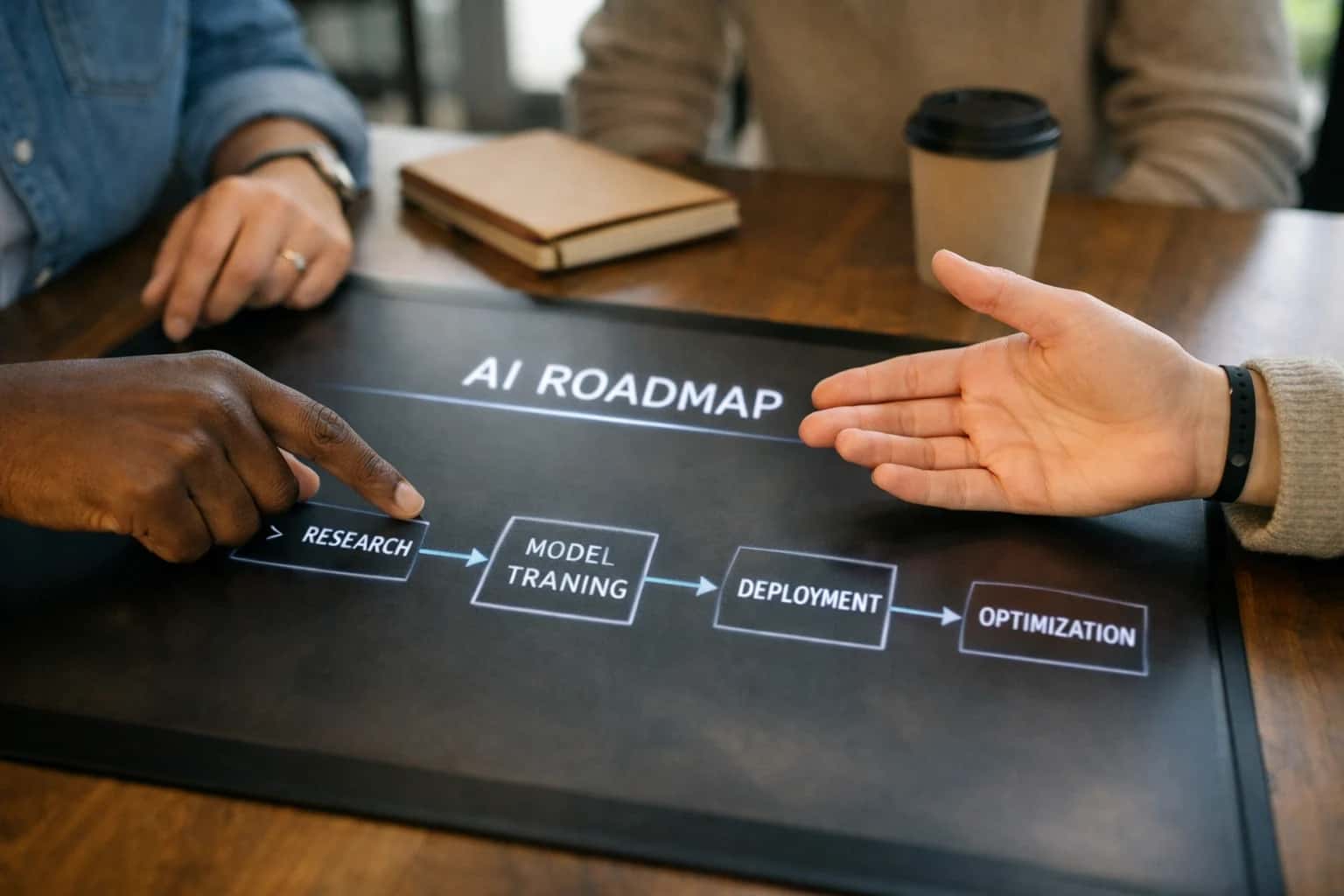
ARCHITECTURE AND ROLLOUT
Where AI Fits in AMPLY's Charging-as-a-Service Platform
Integrating AI into AMPLY's platform transforms fleet charging from a reactive utility into a predictive, cost-optimized operational asset.
Implementation focuses on three high-value workflows:
- Predictive Energy Cost Management: An AI agent ingests utility forecasts, real-time energy prices (where applicable), and fleet schedules to recommend or automatically execute charge sessions during the lowest-cost periods, shifting load to avoid demand charges.
- Automated Charge Session Planning: Using planned routes from a Transportation Management System (TMS) or telematics, the system calculates the minimum required charge for each vehicle's next shift, maximizing vehicle readiness while minimizing grid strain and battery wear. It dynamically adjusts schedules based on real-time charger availability or faults.
- Predictive Charger Health Monitoring: Analyzing power quality, connector cycle data, and error logs from AMPLY's monitoring platform, AI models flag at-risk chargers for preemptive maintenance, reducing downtime and preventing vehicle strandings.
Rollout is typically phased, starting with a pilot fleet and a subset of chargers. The AI layer is deployed as a cloud service that calls AMPLY's APIs and writes back optimized charge plans or alerts. Governance is critical: charge overrides remain with fleet managers, and all AI recommendations include an audit trail showing the data inputs (e.g., "rate forecast: $0.18/kWh, vehicle SOC: 45%, required for route: 60%, recommended start: 02:00"). This approach allows AMPLY customers to maintain operational control while automating complex, multi-variable optimization that is impractical to manage manually.
AI INTEGRATION FOR FLEET ELECTRIFICATION
Key Integration Surfaces in the AMPLY Platform
Intelligent Charging Schedules
This module is the core of AMPLY's operational intelligence, managing when and where fleet vehicles charge. AI integration here focuses on dynamic schedule optimization based on real-time inputs.
Key integration points include:
- Vehicle Telematics API: Pulling state-of-charge (SoC), location, and planned route data to calculate energy needs.
- Utility Rate Schedules & Grid APIs: Ingesting real-time electricity pricing, demand charges, and carbon intensity data to minimize cost and grid impact.
- Frost Operations Calendar: Accessing vehicle duty cycles and required ready-by times to ensure mission readiness.
An integrated AI agent can process these streams to generate and continuously adjust an optimal charging plan, shifting loads to off-peak hours while guaranteeing vehicles are fully charged for their routes. This directly reduces energy costs by 15-30% and supports grid stability.
AMPLY POWER INTEGRATION
High-Value AI Use Cases for Fleet Electrification
Integrate AI directly into AMPLY Power's charging-as-a-service platform to automate energy cost optimization, maximize vehicle readiness, and proactively manage charger health for electric fleets.
01
Predictive Energy Cost Management
Integrate AI models with AMPLY's utility rate schedules and fleet telematics to predict daily energy demand and automatically schedule charging during the lowest-cost periods. This moves energy procurement from a fixed monthly budget to a dynamic, AI-optimized cost center.
10-25%
Potential energy cost reduction
02
Automated Charge Session Planning
Connect AI to AMPLY's charge management APIs and dispatch systems (like Samsara or Geotab) to dynamically plan charging sessions based on next-day routes, vehicle state-of-charge, and charger availability. Ensures vehicles are mission-ready without overcharging or grid strain.
Batch -> Real-time
Planning cadence
03
Charger Health & Uptime Monitoring
Embed AI agents to analyze AMPLY's charger diagnostic streams and historical failure data. Predict maintenance needs before failures occur, generate automated work orders in your CMMS (like Fiix or UpKeep), and trigger service dispatches to minimize fleet downtime.
Hours -> Minutes
Alert-to-repair time
04
Grid Demand Response Orchestration
Use AI to act as an intelligent intermediary between AMPLY's platform and utility demand response programs. Automatically enroll eligible charging assets, adjust charging loads in real-time based on grid signals, and track financial incentives without manual operator intervention.
Same day
Incentive capture
05
Fleet Electrification ROI Forecasting
Integrate AI with AMPLY's usage data, telematics, and procurement systems to build dynamic TCO models for fleet electrification. Simulate the impact of new vehicle purchases, rate changes, or facility upgrades on operational costs and carbon footprint for capital planning.
06
Driver & Operator Support Agent
Deploy a conversational AI agent connected to AMPLY's API and your fleet management platform. It allows drivers to ask natural language questions about charger status, locate available ports, or report issues, reducing calls to the operations center and speeding resolution.
1 sprint
Typical deployment
CHARGING-AS-A-SERVICE AUTOMATION
Example AI-Driven Workflows for AMPLY
These workflows demonstrate how AI agents and predictive models connect to AMPLY's core modules—energy procurement, charge session management, and charger health—to automate fleet electrification operations, reduce energy costs, and maximize vehicle readiness.
Trigger: Daily energy market price forecasts are published by the local utility or ISO (e.g., CAISO).
Context/Data Pulled:
- AMPLY's planned charge sessions for the next 24-48 hours (vehicle IDs, required kWh, charge windows).
- Real-time and forecasted electricity rates (time-of-use, real-time pricing).
- Fleet telematics data indicating current vehicle state-of-charge (SoC) and next scheduled departure times.
Model or Agent Action: An AI model runs a constrained optimization, weighing:
- Cost Minimization: Shifting non-urgent charging to the lowest-cost periods.
- Readiness Assurance: Ensuring each vehicle meets its minimum required SoC by its next departure.
- Grid Constraints: Respecting site-level power capacity limits.
The agent outputs an adjusted, cost-optimized charging schedule.
System Update or Next Step:
The optimized schedule is pushed via AMPLY's API to its Charge Session Management module, overriding the default plan. Dispatchers and fleet managers receive a daily summary report via email or dashboard showing projected cost savings versus the baseline schedule.
Human Review Point: Major schedule deviations (e.g., delaying a vehicle with a tight turnaround) are flagged for manager approval before implementation.
FROM DATA INGESTION TO ACTIONABLE ORDERS
Implementation Architecture: Data Flow & System Design
A production AI integration for AMPLY Power connects your fleet's operational data to predictive models, generating optimized charging schedules and cost forecasts.
The integration architecture is built around AMPLY's core data objects and APIs. Key data flows include:
- Vehicle Telematics & State: Ingesting real-time state of charge (SoC), location, and planned routes from your fleet management system (e.g., Samsara, Geotab) or via AMPLY's own telematics gateway.
- Charger Status & Grid Data: Pulling live charger availability, health metrics, and real-time energy pricing/carbon intensity data from AMPLY's platform and utility APIs.
- Fleet Schedule & Constraints: Receiving vehicle duty cycles, required ready-times, and depot operational windows from your transportation management system (TMS) or dispatch software.
- Historical Patterns: Feeding historical charging session data, energy consumption, and cost records for model training and baseline establishment.
The AI layer processes this data through several orchestrated services:
- Predictive Cost & Demand Engine: Models future energy prices and grid demand to identify the most economical charging windows.
- Readiness Optimization Scheduler: A constraint-satisfaction engine that creates per-vehicle charging plans, maximizing the number of vehicles ready for their next shift while minimizing total energy cost and peak demand charges.
- Anomaly Detection Service: Continuously monitors charger performance and session data, flagging deviations (e.g., slow charge rates, unexpected consumption) for maintenance review.
The output is a set of executable orders pushed back into AMPLY's platform via its Charging Session Management API to automatically initiate, pause, or adjust charging sessions. Critical alerts and schedule summaries are also pushed to your operational dashboards or TMS via webhooks.
Rollout is typically phased, starting with a pilot depot. Governance is managed through a dedicated configuration layer that allows fleet managers to set optimization rules (cost vs. readiness priority), approve AI-generated schedules before execution, and maintain an audit log of all automated decisions. The system is designed to fail gracefully; if the AI service is unavailable, AMPLY reverts to rule-based charging schedules, ensuring fleet operations are never interrupted. For a deeper look at the orchestration layer that manages these multi-step workflows, see our guide on AI Agent Builder and Workflow Platforms.
AMPLY POWER INTEGRATION PATTERNS
Code & Payload Examples
Optimizing Schedules with Fleet Telematics
Integrate AI to analyze vehicle telematics (state of charge, location, duty cycles) and utility rate schedules to generate optimal, cost-minimizing charge plans. The system calls AMPLY's APIs to set charging windows, while respecting vehicle readiness times.
Example Payload for Schedule Optimization Request:
json{ "fleet_id": "FLT-78910", "optimization_horizon_hours": 48, "vehicles": [ { "vehicle_id": "EV-101", "current_soc_percent": 32, "required_soc_percent": 90, "next_planned_departure": "2024-06-15T07:00:00Z", "current_location": { "site_id": "SITE-ALPHA", "charger_id": "CHG-ALPHA-01" } } ], "rate_schedule": { "utility_provider": "PG&E", "tariff_code": "EV-TOU-5", "demand_charge_threshold_kw": 100 }, "objective": "minimize_cost" }
The AI service processes this, returning a charging_schedule array with recommended start times and power levels for each vehicle and charger.
AMPLY POWER CHARGING-AS-A-SERVICE
Realistic Operational Impact & Time Savings
How AI integration transforms fleet electrification operations from reactive to predictive, reducing manual oversight and maximizing vehicle uptime.
| Operational Metric | Before AI Integration | After AI Integration | Implementation Notes |
|---|---|---|---|
Charge Session Planning | Manual schedule based on static departure times | Dynamic optimization based on real-time rates, grid load, and vehicle readiness | AI model ingests utility tariffs, vehicle telematics, and depot constraints |
Energy Cost Forecasting | Monthly invoice review, reactive budget adjustments | Weekly predictive spend reports with anomaly alerts | Forecasts integrate weather, market pricing, and planned fleet activity |
Charger Health Monitoring | Reactive maintenance after failure or driver report | Predictive alerts for degrading charger performance | Analyzes session success rates, voltage curves, and component telemetry |
Fleet Readiness Reporting | Morning manual check of vehicle state-of-charge | Automated overnight readiness dashboard with exception flags | Prioritizes vehicles for intervention based on next-day routes |
Utility Demand Response Participation | Manual, infrequent enrollment based on seasonal estimates | Automated, real-time bid calculation and load shifting | AI evaluates revenue potential vs. operational risk for each event |
Driver Communication for Delays | Manual calls or texts from fleet manager | Automated, proactive notifications with revised ETAs | Triggered by charging delays or grid constraints, includes new ready time |
EV Fleet Expansion Planning | Spreadsheet analysis of historical peak demand | Simulation of new vehicle impact on existing infrastructure | Models electrical capacity, charger utilization, and total cost of ownership |
IMPLEMENTING AI WITH OPERATIONAL RIGOR
Governance, Security, and Phased Rollout
Deploying AI within AMPLY Power's charging-as-a-service platform requires a structured approach to data governance, system security, and controlled rollout to ensure reliability and trust.
Governance starts with defining clear data access boundaries. AI models for predictive energy cost management need read-only access to charge session logs, utility rate schedules, and fleet telematics (state-of-charge, vehicle schedules). Models for automated charge planning require write permissions to the charging schedule queue, but all automated actions should be logged in an immutable audit trail and be subject to configurable approval rules for high-stakes deviations, such as overriding a fleet manager's preset schedule. A key governance layer is establishing a human-in-the-loop review for charger health anomaly alerts before dispatching field service tickets, preventing false positives from triggering unnecessary truck rolls.
Security is architected around AMPLY's existing cloud infrastructure. AI service calls should use dedicated service accounts with principle-of-least-privilege access via AMPLY's APIs, never storing raw customer data. All prompts, context, and model outputs should be processed within your VPC, with vector embeddings for historical fault analysis stored in a segregated, encrypted index. This ensures that AI-enhanced operations like predictive maintenance or session optimization do not create new attack surfaces or data exfiltration risks for sensitive fleet location and energy consumption data.
A phased rollout mitigates risk and builds organizational trust. Phase 1 (Pilot): Deploy a single AI agent for non-critical predictive analytics, such as generating weekly reports on potential energy cost savings from time-of-use shifting for a controlled subset of chargers. Phase 2 (Limited Automation): Introduce automated charge session planning for a pilot depot, where the AI suggests schedules but a fleet manager approves them. Phase 3 (Scale): Roll out autonomous schedule optimization and charger health monitoring with automated alerts, starting with the most predictable routes and vehicle types. Each phase includes defined success metrics (e.g., energy cost reduction %, reduction in manual planner hours, mean time to detect charger faults) and a rollback plan.
This structured approach ensures the AI integration augments AMPLY's core reliability. By focusing on secure data pipelines, governed automation, and measurable phased outcomes, fleets can adopt AI-driven electrification with confidence, scaling from assisted intelligence to autonomous operations without compromising safety or control. For related architectural patterns, see our guides on AI Integration for Fleet Management Platforms and AI-Powered Predictive Maintenance.
Enabling Efficiency, Speed & Accuracy
Intelligent Analysis, Decision & Execution
We build AI systems for teams that need search across company data, workflow automation across tools, or AI features inside products and internal software.
Talk to Us
Search across company data
Give teams answers from docs, tickets, runbooks, and product data with sources and permissions.
Useful when people spend too long searching or get different answers from different systems.
Enterprise searchRAGPermissions
Read more
Automate internal workflows
Use AI to route work, draft outputs, trigger actions, and keep approvals and logs in place.
Useful when repetitive work moves across multiple tools and teams.
AI agentsWorkflow automationGovernance
Read more
Add AI to products and internal tools
Build assistants, guided actions, or decision support into the software your team or customers already use.
Useful when AI needs to be part of the product, not a separate tool.
AI integrationDecision supportModel routing
Read moreAI INTEGRATION FOR AMPLY POWER
Frequently Asked Questions
Common technical and operational questions about embedding AI into AMPLY Power's charging-as-a-service platform for fleet electrification.
AI integrates primarily through AMPLY's API layer and event webhooks to enhance core operational workflows:
- Trigger & Data Pull: AI agents subscribe to events like
charge_session_scheduled,vehicle_status_updated, orenergy_price_forecast_received. They pull relevant context via API: vehicle state-of-charge, depot tariff schedules, grid demand forecasts, and charger health status. - Model Action: A predictive model analyzes this data against objectives (e.g., minimize cost, ensure vehicle readiness). It might reschedule a charging session to avoid peak rates or prioritize a vehicle with an earlier dispatch time.
- System Update: The agent calls AMPLY's
update_charge_planAPI with the optimized schedule or sends an alert to the operations dashboard. - Human Review: Major deviations from standard plans or alerts about charger degradation can be routed to a fleet manager for approval via a Slack or Teams webhook before execution.

About the author
Prasad Kumkar
CEO & MD, Inference Systems
Prasad Kumkar is the CEO & MD of Inference Systems and writes about AI systems architecture, LLM infrastructure, model serving, evaluation, and production deployment. Over 5+ years, he has worked across computer vision models, L5 autonomous vehicle systems, and LLM research, with a focus on taking complex AI ideas into real-world engineering systems.
His work and writing cover AI systems, large language models, AI agents, multimodal systems, autonomous systems, inference optimization, RAG, evaluation, and production AI engineering.
LinkedIn
Limited slotsGet a Free AI Consultation
Partnered with leading AI, data, and software stack.





How We Work
Custom AI workflows for your Business
One-fit-all AI don't work for modern businesses. At Inferensys, we aim to understand your business & custom requirements; which we use to define most efficient agentic workflows, the data, and the tools for your business.
01
Review the use case
We understand the task, the users, and where AI can actually help.
Read more02
Pick the right approach
We define what needs search, automation, or product integration.
Read more03
Build the first useful version
We implement the part that proves the value first.
Read more04
Improve from there
We add the checks and visibility needed to keep it useful.
Read moreThe first call is a practical review of your use case and the right next step.
Talk to Us