AI integration targets the manual, repetitive tasks that slow down localization managers and create project bottlenecks. In Phrase, this means connecting LLMs and automation agents to key surfaces like the Project API for auto-filling metadata (client, domain, due date), the Job API for predicting job durations based on word count and language pair complexity, and the Workflow API to intelligently assign reviewers based on subject matter expertise and current workload. The goal is to shift effort from administrative overhead to strategic oversight.

Integration
AI Integration with Phrase AI Efficiency
Targeted technical guide for improving operational efficiency in Phrase using AI, with use cases like auto-filling project metadata, predicting job durations, and streamlining reviewer assignment.
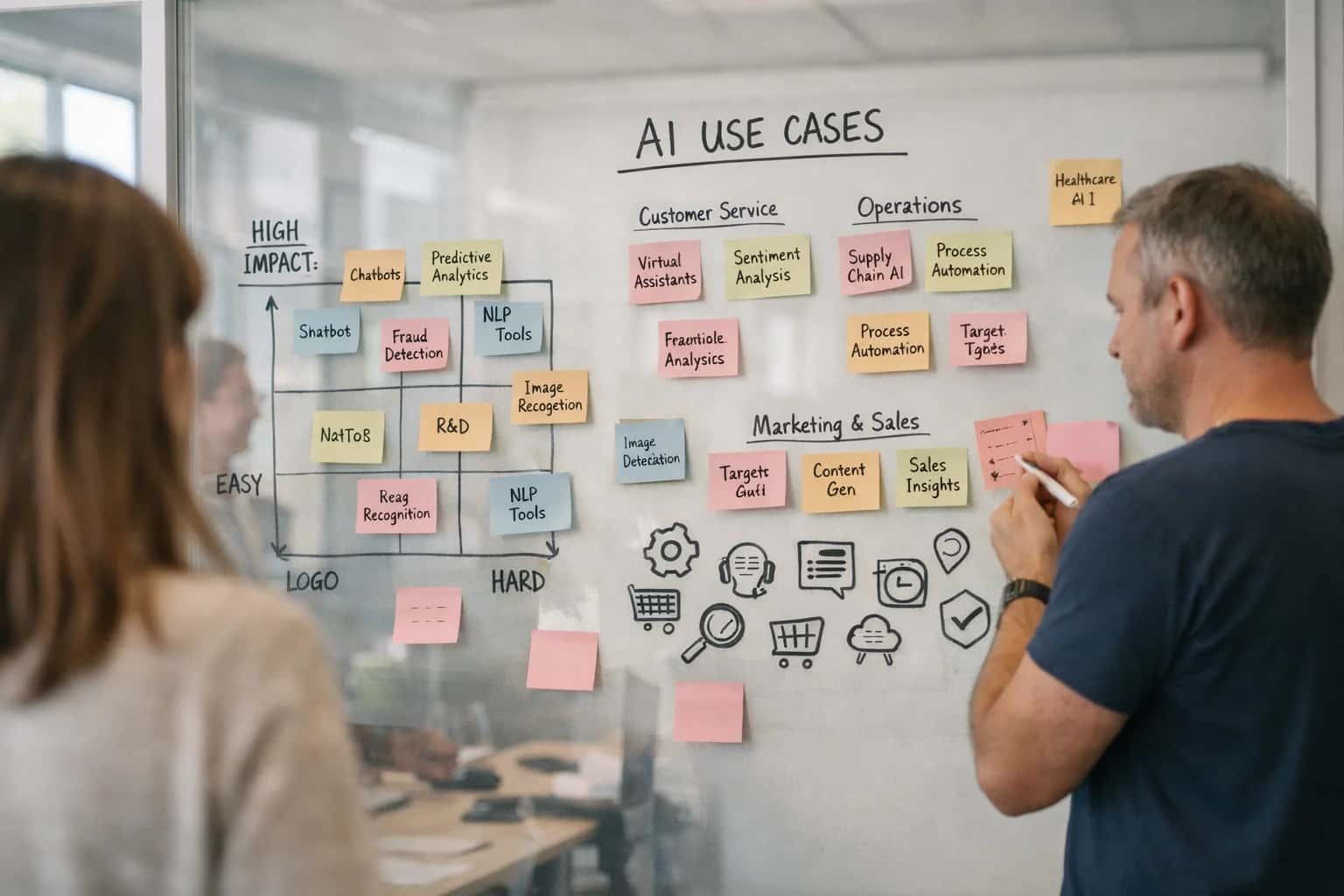
ARCHITECTURE FOR OPERATIONAL EFFICIENCY
Where AI Fits into Phrase Operations
A practical blueprint for integrating AI to automate manual tasks and accelerate project delivery within the Phrase (Memsource) platform.
Implementation typically involves a middleware layer—often a lightweight service or serverless function—that listens to Phrase webhooks (e.g., project.created, job.status.changed). This service calls AI models to analyze the incoming payload, then uses Phrase's REST API to take action. For example, on a project.created event, an AI agent can analyze the project name and source file content to suggest and apply relevant tags, set a priority score, and even pre-assign the optimal vendor from a configured pool, turning a 15-minute setup task into an automated, sub-minute process.
Rollout should be phased, starting with non-critical metadata automation before moving to predictive scheduling and assignment. Governance is crucial: all AI-suggested actions, especially reviewer assignments or due date changes, should be logged in an audit trail and optionally require manager approval for a pilot period. This approach reduces manual project setup from hours to minutes, improves deadline predictability, and lets your team focus on high-value tasks like quality strategy and stakeholder communication.
OPERATIONAL AUTOMATION SURFACES
Key Phrase Surfaces for AI Efficiency
Automating Project Metadata and Configuration
AI can dramatically reduce manual setup time by auto-filling project details based on content analysis. Use Phrase's projects and jobs APIs to create and configure translation work.
Key Automation Points:
- Project Creation: Trigger new projects via webhook when source files are uploaded to a connected repository or CMS. AI can analyze file content to suggest a project name, assign a workflow, and set a priority based on detected urgency (e.g., marketing launch vs. internal doc).
- Job Batching & Routing: Automatically segment content into logical jobs. An AI model can analyze string context and complexity to batch simple UI strings separately from complex legal copy, routing each to appropriate translator pools or machine translation engines.
- Duration Prediction: Use historical Phrase project data to train a model that predicts job duration based on word count, language pair, and content domain. This allows for automated deadline setting and realistic capacity planning alerts.
python# Example: AI-driven project creation via Phrase API import requests def create_ai_informed_project(source_file_path): # 1. AI analyzes file to extract metadata analysis = ai_analyzer.analyze(source_file_path) # 2. Build project payload with AI-suggested values project_payload = { "name": f"{analysis['content_type']} - {analysis['target_market']}", "main_format": analysis['detected_format'], "share_to_all_linguists": analysis['priority'] == "high", "due_date": calculate_due_date(analysis['word_count']) } # 3. Create project via Phrase API response = requests.post( 'https://api.phrase.com/v2/projects', json=project_payload, headers={'Authorization': 'token YOUR_API_TOKEN'} ) return response.json()
OPERATIONAL AUTOMATION
High-Value AI Efficiency Use Cases for Phrase
Integrating AI into Phrase (formerly Memsource) moves beyond basic machine translation to automate high-friction, manual tasks across the localization workflow. These patterns target project managers, linguists, and operations teams to reduce overhead and accelerate delivery.
01
Automated Project Setup & Metadata
Use AI to analyze incoming source files (e.g., design specs, PRDs) and auto-populate Phrase project fields: client, domain, due date, and linguist assignment rules. This eliminates manual data entry and configuration errors for new jobs.
Minutes vs. Manual Setup
Project creation
02
Intelligent Job Duration Prediction
Build an AI model that consumes Phrase API data—word count, language pair, translator availability, historical velocity—to predict accurate job completion times. This helps managers set realistic deadlines and proactively flag risks.
Reduce Schedule Slippage
Forecast accuracy
03
Smart Reviewer & Linguist Assignment
Implement an AI agent that matches translation jobs to the optimal linguist or reviewer based on their Phrase performance history, subject matter expertise, and current workload. Automates a manual, time-consuming matching process.
Improve Match Quality
Reduced rework
04
Context-Aware Pre-Translation Analysis
Before sending content to translators, use AI to scan source strings against connected systems (e.g., product docs, Jira tickets). Flag ambiguous terms, provide visual context from Figma, and pre-fill Phrase's context fields automatically.
Cut Clarification Loops
Translator queries
05
Automated Translation Memory (TM) Maintenance
Deploy an AI workflow that periodically audits your Phrase TM via API, identifying and merging duplicate entries, deprecating outdated translations, and suggesting new term candidates—turning a reactive glossary into a proactive asset.
Sprint vs. Quarterly
Maintenance cycle
06
Dynamic QA Check Configuration
Instead of static QA rules, use AI to dynamically configure Phrase's QA checks per project. For a marketing campaign, emphasize brand terminology; for a legal document, enforce strict number/date formatting. Rules adapt to content type automatically.
Context-Specific
QA precision
OPERATIONAL AUTOMATION
Example AI-Driven Efficiency Workflows
These workflows demonstrate how AI agents can automate high-volume, repetitive tasks within Phrase, reducing manual overhead for project managers and linguists while improving data consistency and project velocity.
Trigger: A new project is created in Phrase via its API or UI.
AI Agent Action:
- Context Retrieval: The agent analyzes the project name, source file names, and any attached brief or description.
- Intelligent Tagging: Using NLP, it automatically suggests and applies relevant tags (e.g.,
product:mobile-app,content-type:ui,campaign:Q4-launch). - Field Population: It predicts and fills key project fields:
- Due Date: Based on historical data for similar project scope and language count.
- Workflow Assignment: Routes to pre-configured vendor or team workflows based on language pair and content domain.
- Quality Assurance Profile: Applies the appropriate QA checklist (e.g.,
strict-brandfor marketing,basic-functionalfor UI).
System Update: The project is created in Phrase with enriched, consistent metadata, ready for immediate assignment without manager review.
Human Review Point: Optional. Managers can review the auto-set project in a dashboard for high-stakes launches before it proceeds.
AUTOMATING PROJECT SETUP AND RESOURCE PLANNING
Implementation Architecture: Connecting AI to Phrase
A practical blueprint for integrating AI agents with Phrase's API to automate administrative overhead and improve project velocity.
The core of this integration connects custom AI agents to Phrase's REST API, focusing on the projects, jobs, and users endpoints. The architecture is event-driven: a webhook from your source system (like a CMS or code repository) triggers an AI agent to analyze the incoming content payload. The agent then uses the Phrase API to execute a sequence of administrative tasks: creating a new project with metadata auto-filled from the content analysis (e.g., domain, estimated word count), predicting job duration based on historical data for similar content and language pairs, and suggesting reviewer assignments by matching content complexity and subject matter with linguist tags and past performance metrics stored in Phrase.
This moves repetitive, manual configuration from hours to minutes. For example, an agent can ingest a batch of new help articles, use a lightweight classifier to tag them as 'technical support,' and automatically create a Phrase project with the correct workflow, priority, and assigned technical translation team. The AI doesn't replace human project managers but handles the predictable first mile, allowing them to focus on exceptions and stakeholder coordination. Implementation requires setting up a secure orchestration layer (often using tools like n8n or a custom service) that manages API calls, maintains audit logs, and includes human-in-the-loop approval gates for high-risk or high-cost projects before creation.
Rollout should start with a single, high-volume content stream—like product update blogs or UI string batches—to refine the agent's decision logic. Governance is critical: establish clear rules for what the AI can auto-configure (e.g., standard 15-language bundles) versus what requires manual review (e.g., net-new markets or legal content). Monitor key metrics like project setup time reduction and the accuracy of the agent's predictions to demonstrate ROI and guide further automation into other Phrase surfaces, such as automated quality assurance checks or dynamic budget alerts. For a deeper look at orchestrating these multi-step automations, see our guide on AI Agent Builder and Workflow Platforms.
AI-PHASE OPERATIONAL EFFICIENCY
Code and Payload Examples
Automating Project Creation and Metadata
Use Phrase's Projects API to create new translation jobs programmatically, enriched with AI-generated metadata. This script fetches source files, uses an LLM to analyze content for domain (e.g., legal, marketing, ui), estimates word count complexity, and auto-fills the project brief and due date based on historical velocity.
pythonimport requests from openai import OpenAI # Analyze source content with AI def analyze_content_for_metadata(file_path): with open(file_path, 'r') as f: content = f.read() client = OpenAI() response = client.chat.completions.create( model="gpt-4o-mini", messages=[ {"role": "system", "content": "Analyze this text for translation. Return JSON with: domain, estimated_word_count, complexity_score (1-5), suggested_priority (high/medium/low)."}, {"role": "user", "content": content[:5000]} ] ) return response.choices[0].message.content # Create Phrase project with AI-derived metadata metadata = analyze_content_for_metadata("release_notes.md") project_payload = { "name": "Q4 Release Notes - AI Enriched", "main_format": "markdown", "share_to_all_teams": True, "briefing": f"Auto-classified as {metadata['domain']}. Complexity: {metadata['complexity_score']}.", "due_date": calculate_due_date(metadata['priority']) # Custom logic } response = requests.post( "https://api.phrase.com/v2/projects", headers={"Authorization": "token YOUR_PHRASE_TOKEN"}, json=project_payload )
AI-ENHANCED PHRASE WORKFLOWS
Realistic Time Savings and Operational Impact
This table illustrates the tangible efficiency gains and process improvements achievable by integrating AI into core Phrase workflows, moving from manual, reactive operations to assisted, proactive management.
| Metric | Before AI | After AI | Notes |
|---|---|---|---|
Project Setup & Metadata | Manual entry per job | Auto-filled from source analysis | AI parses source files to suggest project type, due dates, and linguist tags |
Translation Memory (TM) Leverage | Basic fuzzy match lookup | Context-aware semantic TM retrieval | AI finds conceptually similar past translations, not just string matches, boosting leverage |
Terminology Validation | Manual glossary checks during review | Real-time term flagging in the editor | AI highlights non-compliant terms as translators work, reducing post-edits |
Job Duration & Resource Forecasting | Guesstimates based on past projects | Predictive modeling using content complexity | AI estimates effort based on word count, domain, and translator availability for better planning |
Reviewer Assignment | Manual routing based on availability | Skill & workload-optimized routing | AI matches review tasks to linguists with relevant domain expertise and current capacity |
QA Check Execution | Batch runs of standard checks | Prioritized, intelligent anomaly detection | AI focuses QA cycles on high-risk segments (e.g., regulatory, branded terms) first |
Bottleneck Identification | Weekly report analysis | Real-time dashboard alerts | AI monitors workflow stages and flags delays (e.g., a stuck review) for immediate intervention |
CONTROLLED DEPLOYMENT FOR TRANSLATION OPERATIONS
Governance and Phased Rollout Strategy
A practical approach to deploying AI in Phrase with clear guardrails, measurable pilots, and staged expansion.
Start with a controlled pilot on a single, high-volume project type—such as marketing blog posts or product update notifications—where AI can auto-fill project metadata (e.g., domain, priority, estimated word count) and predict job durations. Use Phrase's webhook triggers on job creation to invoke your AI service, and log all AI-suggested metadata changes in a separate audit table. This isolates risk, establishes a baseline for AI accuracy, and lets your localization team validate outputs before any automated actions are taken.
For the second phase, integrate AI-driven reviewer assignment and terminology suggestion workflows. Build an agent that analyzes source content complexity and historical reviewer performance (via Phrase's Analytics API) to recommend the best linguist for the job. Simultaneously, deploy a RAG system connected to your approved term bases and style guides to provide in-context terminology prompts within the Phrase TMS editor. Implement a human-in-the-loop approval step for all AI-generated assignments and term suggestions, ensuring project managers retain final control while benefiting from AI augmentation.
Govern the full rollout with a centralized prompt registry and output evaluation dashboard. Since Phrase lacks native AI governance features, you'll need to instrument your integration to track: which prompts were used for metadata generation, the acceptance rate of AI-suggested terms, and any manual overrides by project managers. Set up weekly review cycles with your localization leads to analyze drift and refine prompts. Finally, establish clear rollback procedures—such as disabling AI metadata filling via a feature flag—to maintain operational stability during the transition to AI-assisted workflows.
Enabling Efficiency, Speed & Accuracy
Intelligent Analysis, Decision & Execution
We build AI systems for teams that need search across company data, workflow automation across tools, or AI features inside products and internal software.
Talk to Us
Search across company data
Give teams answers from docs, tickets, runbooks, and product data with sources and permissions.
Useful when people spend too long searching or get different answers from different systems.
Enterprise searchRAGPermissions
Read more
Automate internal workflows
Use AI to route work, draft outputs, trigger actions, and keep approvals and logs in place.
Useful when repetitive work moves across multiple tools and teams.
AI agentsWorkflow automationGovernance
Read more
Add AI to products and internal tools
Build assistants, guided actions, or decision support into the software your team or customers already use.
Useful when AI needs to be part of the product, not a separate tool.
AI integrationDecision supportModel routing
Read moreIMPLEMENTATION PATTERNS
FAQ: AI Efficiency for Phrase
Practical answers for teams integrating AI to automate Phrase project setup, resource planning, and operational workflows.
AI can analyze source files and historical project data to automatically configure new Phrase projects, reducing manual setup from 15-20 minutes to seconds.
Typical Workflow:
- Trigger: A new translation job is created via Phrase API or a file is uploaded to a designated folder.
- Context Pulled: AI agent fetches the source file, analyzes its content (file type, word count, subject matter), and queries historical Phrase project data for similar jobs.
- AI Action: A model classifies the content and predicts optimal settings:
- Target Languages: Based on product launch regions or content type (e.g., marketing vs. legal).
- Workflow Assignment: Routes to appropriate vendor or internal team based on domain expertise and capacity.
- Due Date: Calculates a realistic deadline using historical job duration data for the predicted word count and language pairs.
- Custom Fields: Auto-populates fields like
product_version,campaign_name, orpriority.
- System Update: Agent calls the Phrase Projects API (
POST /api/v2/projects) to create the project with the AI-generated configuration. - Human Review Point: Project manager receives a notification for a final review/approval before strings are pushed to the translation stage.

About the author
Prasad Kumkar
CEO & MD, Inference Systems
Prasad Kumkar is the CEO & MD of Inference Systems and writes about AI systems architecture, LLM infrastructure, model serving, evaluation, and production deployment. Over 5+ years, he has worked across computer vision models, L5 autonomous vehicle systems, and LLM research, with a focus on taking complex AI ideas into real-world engineering systems.
His work and writing cover AI systems, large language models, AI agents, multimodal systems, autonomous systems, inference optimization, RAG, evaluation, and production AI engineering.
LinkedIn
Limited slotsGet a Free AI Consultation
Partnered with leading AI, data, and software stack.





How We Work
Custom AI workflows for your Business
One-fit-all AI don't work for modern businesses. At Inferensys, we aim to understand your business & custom requirements; which we use to define most efficient agentic workflows, the data, and the tools for your business.
01
Review the use case
We understand the task, the users, and where AI can actually help.
Read more02
Pick the right approach
We define what needs search, automation, or product integration.
Read more03
Build the first useful version
We implement the part that proves the value first.
Read more04
Improve from there
We add the checks and visibility needed to keep it useful.
Read moreThe first call is a practical review of your use case and the right next step.
Talk to Us