AI connects to Crowdin's workflow at three key surfaces: the string management API, the translation memory (TM), and the automation triggers. The most impactful integrations use Crowdin's webhooks and REST API to inject AI suggestions during the translation and review stages, or to pre-process content before it enters a project. For example, an AI agent can listen for the stringAdded webhook, generate a first-pass translation for new English strings into target languages using a configured LLM, and post the suggestion back via the translations endpoint. This creates a 'human-in-the-loop' model where translators start with a high-quality draft, reducing initial effort from hours to minutes for common UI copy.

Integration
AI Integration with Crowdin Generative AI Workflows
Technical blueprint for engineering teams to build generative AI agents that plug into Crowdin's translation management platform, automating workflows from string ingestion to deployment.
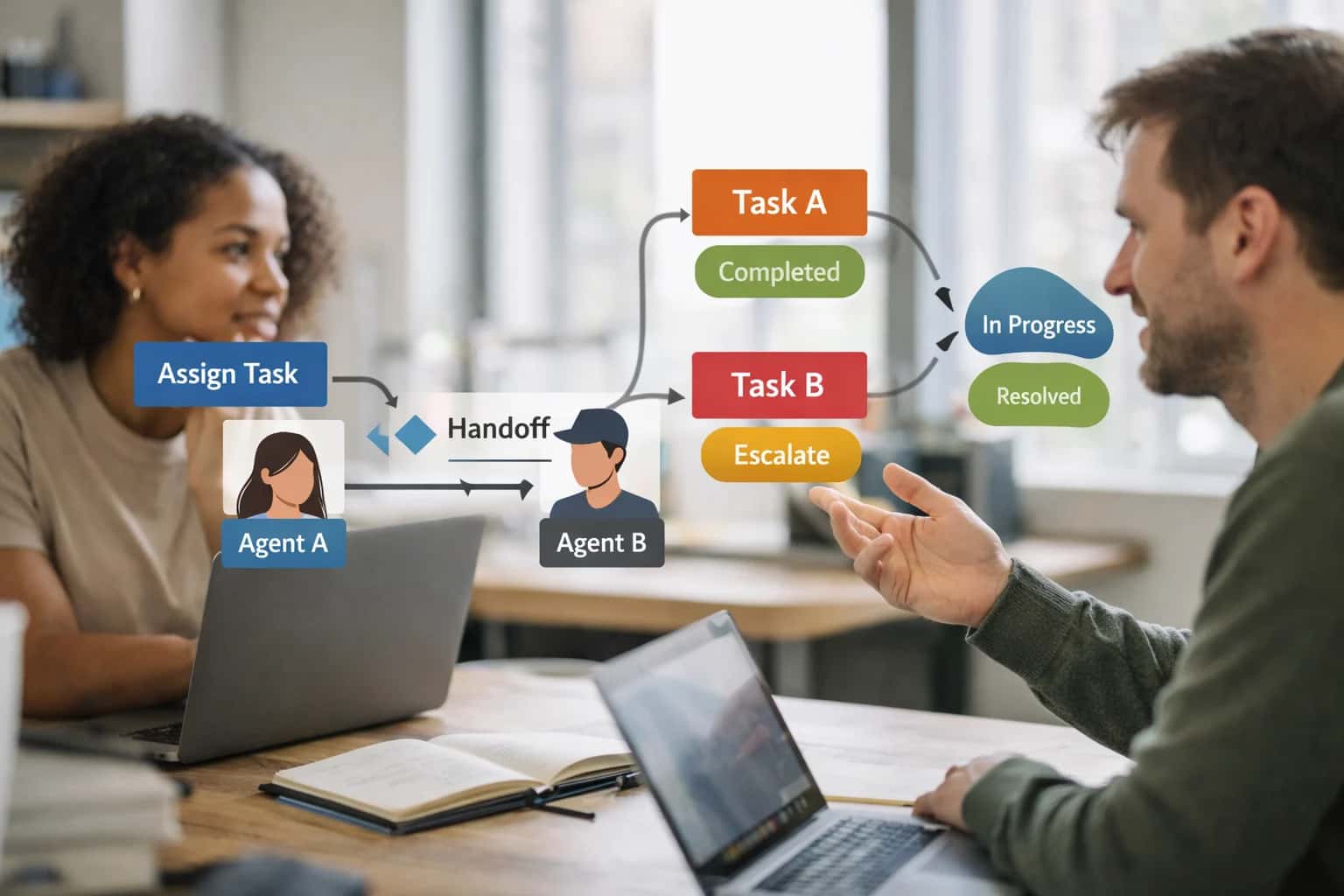
ARCHITECTURE FOR AI-AUGMENTED LOCALIZATION
Where AI Fits into Crowdin's Localization Workflow
A practical blueprint for integrating generative AI into Crowdin's collaborative translation platform to accelerate workflows and improve quality.
The implementation centers on augmenting, not replacing, Crowdin's core functions. A production setup typically involves a middleware service (often serverless) that acts as a broker between Crowdin's API and your chosen AI models (e.g., OpenAI GPT-4, Claude, or a custom fine-tuned model). This service handles context retrieval—pulling relevant TM matches, glossary terms, and even linked source files (like Figma screenshots via Crowdin's in-context previews) to build a rich prompt for the LLM. Governance is critical: you implement rules to decide which content is auto-translated (e.g., low-risk UI labels) versus which requires human translation first (e.g., legal or marketing copy), and you log all AI-suggested translations for audit. This ensures quality control and allows for continuous model tuning based on translator acceptance rates.
Rollout should be phased, starting with a pilot project for a single, non-critical language pair. The goal is to measure tangible impact: reduction in average translation time per string, increase in translator throughput, and consistency scores across projects. A successful integration turns Crowdin from a passive repository into an active, intelligent partner in your localization ops. For teams managing high-velocity product releases, this architecture is essential for keeping multilingual content in sync without creating bottlenecks. Explore related patterns for AI Integration with Phrase for Terminology Support or building RAG systems for translation management.
ARCHITECTURE FOR GENERATIVE AI WORKFLOWS
Key Integration Surfaces in the Crowdin Platform
The Core Data Model for AI
Crowdin's translation workflow is built around strings and keys. This is the primary surface for AI integration. Each key represents a discrete piece of source content (e.g., a UI button label, a help article paragraph). AI models can be triggered to act on these keys at various lifecycle stages.
Key AI Integration Points:
- On String Creation: Use webhooks from the
stringsAPI endpoint (POST /api/v2/projects/{projectId}/strings) to trigger AI for initial translation suggestions or complexity scoring when a new key is added. - Batch Processing: The
stringsAPI supports bulk operations. AI agents can process entire batches of new or untranslated strings, applying custom models for domain-specific translation or tagging strings for priority routing. - Context Enrichment: AI can analyze the source string and its associated context (from
contextfield or file metadata) to generate richer translation memories or flag strings needing special handling (e.g., legal disclaimers, marketing copy).
Example Workflow: An AI service listens for new strings in the feature-requests file. It uses an LLM to generate French, German, and Japanese translations, then posts them back to Crowdin via the translations API as pre-approved suggestions, accelerating the initial translation phase.
INTEGRATION BLUEPRINTS
High-Value Generative AI Use Cases for Crowdin
Practical AI workflows that connect directly to Crowdin's API, webhooks, and collaborative editor to automate multilingual content operations, reduce manual overhead, and accelerate time-to-market for global releases.
01
AI-Powered Translation Suggestion Engine
Integrate LLMs (OpenAI, Claude) via Crowdin's Translation Memory API to provide real-time, context-aware suggestions in the editor. Grounds outputs in project-specific terminology and past translations to reduce translator cognitive load and improve first-pass quality.
Batch -> Real-time
Suggestion delivery
02
Automated String Classification & Routing
Use NLP models to analyze new source strings as they enter Crowdin via webhooks. Auto-classify content by type (UI, legal, marketing), complexity, and target market, then automatically assign to appropriate translator groups or flag for specialist review.
Same day
Assignment lag eliminated
03
Context-Aware Quality Assurance Gates
Deploy custom AI models as post-translation webhook listeners to perform advanced QA checks. Validate tone, brand voice consistency, and regulatory compliance against style guides, beyond Crowdin's built-in placeholder and glossary checks.
1 sprint
Setup to production
04
Dynamic Glossary & Terminology Management
Build an AI agent that monitors source repositories and product documentation, using entity recognition to propose new terms for the Crowdin glossary. Automates the extraction-approval-workflow lifecycle, ensuring terminology is current before translation begins.
Hours -> Minutes
Term discovery
05
Intelligent Project Health & Bottleneck Detection
Implement an analytics layer that consumes Crowdin's Reports API and uses predictive models to flag at-risk projects. Identifies patterns leading to delays (e.g., specific linguist overload, complex key clusters) and suggests corrective actions to managers.
06
Automated In-Context Preview Generation
Connect AI image generation or screenshot automation tools to Crowdin's in-context preview system. When translators work on UI strings, the system auto-generates updated mockups showing the translation in a realistic interface, reducing context-switching and review cycles.
Batch -> Real-time
Preview updates
IMPLEMENTATION PATTERNS
Example AI Agent Workflows for Crowdin
These workflows illustrate how to connect AI agents to Crowdin's API and webhook system to automate repetitive tasks, enhance translator context, and accelerate multilingual content operations. Each pattern is designed for production, with clear triggers, data flows, and governance checkpoints.
Trigger: A new string is added to a Crowdin project via the API, CLI, or UI.
Context Pulled: The agent receives the webhook payload containing the string_id, source text, and project metadata. It then queries Crowdin's API for:
- The string's
contextfield (e.g., screenshot URL, developer note). - Project's translation memory (TM) for exact/95%+ fuzzy matches.
- The project's glossary for mandatory terminology.
Agent Action: A decision model evaluates the string's risk/complexity:
- Low-Risk: Simple UI labels (
Save,Cancel), previously translated terms with high TM match. The agent calls a configured LLM (e.g., GPT-4, Claude) with a prompt grounded in the TM match and glossary, requesting a translation for all target languages in the project. - High-Risk: Marketing copy, legal text, strings with no context. The agent flags the string in Crowdin with a custom label (
needs_human_review) and notifies the assigned translator via Crowdin's task system.
System Update: For low-risk strings, the agent posts the AI-generated translation as a suggestion (not an approved translation) via Crowdin's addTranslation API endpoint. The suggestion is tagged with source: ai_agent for auditability.
Human Review Point: All AI suggestions remain in the suggestions panel. Translators can approve, edit, or reject them. The workflow reduces initial blank-slate work but keeps final approval human-governed.
BUILDING AI-READY LOCALIZATION PIPELINES
Implementation Architecture: Data Flow & System Design
A practical blueprint for connecting generative AI models to Crowdin's automation layer to power translation suggestions, content operations, and quality workflows.
A production-ready AI integration for Crowdin typically involves a middleware orchestration layer that sits between your content sources, the Crowdin API, and your chosen AI models. This layer uses webhooks to listen for events like string.added or translation.updated from Crowdin projects. Upon receiving an event, it extracts the relevant source string and its context—including file path, screenshots, and any existing translation memory matches via Crowdin's API—and constructs a prompt for an LLM. The AI-generated suggestion is then posted back to Crowdin as a translation suggestion or used to trigger automated QA checks. This architecture keeps Crowdin as the system of record for all translation assets and workflow states, while the AI acts as an intelligent, automated contributor.
For generative workflows like auto-creating variant copies for A/B testing, the design extends further. An AI agent monitors your source content repository (e.g., GitHub) for new commits to designated files. It parses the new English copy, uses an LLM to generate multiple creative variants, and then uses Crowdin's API to create new translation keys for each variant, initiating parallel translation jobs. This turns a manual copywriting and localization process into a single, automated pipeline. Key technical considerations include managing API rate limits, implementing idempotency for webhook retries, and using a vector database to store and retrieve brand guidelines or past high-performing copy to ground the AI's outputs.
Rollout and governance are critical. Start with a pilot project on non-critical marketing or UI content. Implement a human-in-the-loop review step where all AI-generated translations are flagged in Crowdin for editor approval before being approved. Use Crowdin's custom fields or tags to mark AI-sourced strings, enabling you to track acceptance rates and quality over time. For compliance, ensure your middleware layer logs all prompts, AI responses, and user actions for audit trails. This controlled, data-driven approach allows you to scale AI's role in your localization workflow while maintaining quality and brand integrity.
PRACTICAL IMPLEMENTATION PATTERNS
Code & Payload Examples for Crowdin API Integration
Automating Translation Suggestions via API
Integrate an LLM to generate initial translation suggestions for new or updated strings in Crowdin. This pattern listens for webhook events on string updates, calls your AI model with context (e.g., file path, glossary terms), and posts the suggestion back via the Crowdin API for translator review.
Key API Endpoints:
GET /projects/{projectId}/stringsto retrieve source strings and metadata.POST /projects/{projectId}/translationsto submit AI-generated suggestions as draft translations.
Example Webhook Payload (Crowdin → Your AI Service):
json{ "event": "string.added", "project": { "id": 12345, "identifier": "mobile-app-strings" }, "string": { "id": 98765, "text": "Tap here to save your preferences.", "fileId": 555, "context": "mobile/settings_screen" } }
Your service processes this, enriches it with project glossary terms, calls an LLM, and posts a suggestion back.
CROWDIN GENERATIVE AI INTEGRATION
Realistic Time Savings & Operational Impact
How integrating generative AI into Crowdin workflows reduces manual effort, accelerates time-to-market, and improves translation consistency.
| Workflow Stage | Before AI | After AI | Key Impact |
|---|---|---|---|
New Language Setup | Manual research & vendor sourcing for each language | AI suggests target languages & drafts initial translations | Pilot launch reduced from 2-4 weeks to 2-3 days |
String Translation (Low-Risk) | Human translator processes each string | AI generates first-draft translations for human review | Translation throughput increased 40-60% for UI & help text |
Terminology Consistency | Manual glossary updates & periodic QA sweeps | AI monitors new strings, flags term deviations in real-time | Glossary compliance improved from ~70% to 95%+ |
Context Provision for Translators | Translators search TM, ask project managers for context | AI fetches relevant screenshots, product docs, & past decisions | Context queries reduced by ~80%, translator focus time increased |
A/B Test Copy Generation | Marketing writes English variants, then translates each | AI generates culturally-adapted variants directly in target languages | Multivariate test launch accelerated from 3 weeks to 1 week |
QA Check Execution | Manual review for style, placeholders, brand voice | AI pre-flags potential issues (tone, placeholder errors) | QA review time cut by 50%, human focus on high-value edits |
Project Reporting & Insights | Manual spreadsheet compilation from Crowdin exports | AI auto-generates stakeholder reports on velocity, quality, cost | Weekly reporting effort reduced from 4-6 hours to 30 minutes |
ARCHITECTING CONTROLLED AI DEPLOYMENT
Governance, Security, and Phased Rollout
A practical framework for implementing AI in Crowdin with proper controls, security, and a low-risk rollout strategy.
Integrating generative AI into Crowdin requires a governance layer that sits between the platform's automation triggers and the AI models. This typically involves a middleware service that intercepts webhooks from Crowdin events—like new string creation or project completion—and applies policy rules before calling an LLM API. Key governance controls include: content classification to route only appropriate strings (e.g., UI text, marketing copy) for AI translation, avoiding sensitive or legal content; cost ceilings per project or language to prevent runaway API usage; and audit logging of every AI suggestion, including the prompt, model used, and final human action (accept, edit, reject). This audit trail is essential for compliance, model evaluation, and demonstrating ROI.
For security, the integration architecture must protect both Crowdin's API keys and the data sent to AI providers. Implement a secure proxy that handles authentication with Crowdin, strips any PII or sensitive data from source strings before sending them to external LLMs, and encrypts payloads in transit. Use Crowdin's project-level and string-level custom fields or tags to store metadata like AI_Review_Status or AI_Confidence_Score, enabling fine-grained filtering and reporting without modifying core translation data. Consider a phased rollout starting with a pilot project: select a low-risk content type (e.g., internal tool UI), a single target language, and a small group of trusted linguists. Use this phase to calibrate AI suggestions, refine prompts with Crowdin's in-context screenshots, and establish a human-in-the-loop review workflow where all AI outputs are post-edited.
Scale the integration by gradually expanding to more languages and content types, using the data from the pilot to set quality thresholds. For instance, you might configure the system to auto-approve AI translations for strings where the model's confidence score exceeds 95% and the string has a perfect match in Crowdin's Translation Memory, routing only lower-confidence outputs for human review. Continuously monitor key metrics like post-editing effort, suggestion acceptance rate, and time-to-complete per project via Crowdin's reports API. This phased, data-driven approach de-risks the implementation, builds team trust in the AI, and allows for the refinement of governance policies before company-wide deployment.
Enabling Efficiency, Speed & Accuracy
Intelligent Analysis, Decision & Execution
We build AI systems for teams that need search across company data, workflow automation across tools, or AI features inside products and internal software.
Talk to Us
Search across company data
Give teams answers from docs, tickets, runbooks, and product data with sources and permissions.
Useful when people spend too long searching or get different answers from different systems.
Enterprise searchRAGPermissions
Read more
Automate internal workflows
Use AI to route work, draft outputs, trigger actions, and keep approvals and logs in place.
Useful when repetitive work moves across multiple tools and teams.
AI agentsWorkflow automationGovernance
Read more
Add AI to products and internal tools
Build assistants, guided actions, or decision support into the software your team or customers already use.
Useful when AI needs to be part of the product, not a separate tool.
AI integrationDecision supportModel routing
Read moreIMPLEMENTATION AND OPERATIONS
Frequently Asked Questions for Crowdin AI Integration
Practical answers to common technical and operational questions about building generative AI workflows with Crowdin's API and automation features.
Crowdin provides webhooks for key project events, which serve as the primary trigger for AI agents. The most common pattern is:
- Configure a webhook in your Crowdin project for events like
file.added,string.added, ortranslation.updated. - Set up an endpoint (e.g., a serverless function) to receive the webhook payload, which includes the
project_id,file_id, andstring_id. - Use the Crowdin API to fetch the specific string content and its context (e.g.,
GET /api/v2/projects/{projectId}/strings/{stringId}). - Process with AI: Send the string and context to an LLM for tasks like translation suggestion, terminology validation, or complexity scoring.
- Post back to Crowdin: Use the API to add an AI-generated suggestion as a translation or a comment (e.g.,
POST /api/v2/projects/{projectId}/translations).
Example Payload for a string.added webhook:
json{ "event": "string.added", "project": { "id": 12345, "identifier": "mobile-app" }, "string": { "id": 98765, "text": "Tap here to save your preferences." } }

About the author
Prasad Kumkar
CEO & MD, Inference Systems
Prasad Kumkar is the CEO & MD of Inference Systems and writes about AI systems architecture, LLM infrastructure, model serving, evaluation, and production deployment. Over 5+ years, he has worked across computer vision models, L5 autonomous vehicle systems, and LLM research, with a focus on taking complex AI ideas into real-world engineering systems.
His work and writing cover AI systems, large language models, AI agents, multimodal systems, autonomous systems, inference optimization, RAG, evaluation, and production AI engineering.
LinkedIn
Limited slotsGet a Free AI Consultation
Partnered with leading AI, data, and software stack.





How We Work
Custom AI workflows for your Business
One-fit-all AI don't work for modern businesses. At Inferensys, we aim to understand your business & custom requirements; which we use to define most efficient agentic workflows, the data, and the tools for your business.
01
Review the use case
We understand the task, the users, and where AI can actually help.
Read more02
Pick the right approach
We define what needs search, automation, or product integration.
Read more03
Build the first useful version
We implement the part that proves the value first.
Read more04
Improve from there
We add the checks and visibility needed to keep it useful.
Read moreThe first call is a practical review of your use case and the right next step.
Talk to Us