Large enterprises often operate multiple Smartling accounts or projects—one for marketing, another for product UI, a third for support content—each managed by different teams with separate budgets and workflows. A centralized AI integration creates a shared services layer that sits between these decentralized Smartling instances and your AI models (e.g., OpenAI, Anthropic, fine-tuned LLMs). This layer provides a single point for API key management, usage tracking, prompt governance, and cost allocation across all translation operations, preventing model sprawl and inconsistent AI behavior.

Integration
AI Integration for Smartling Enterprise AI
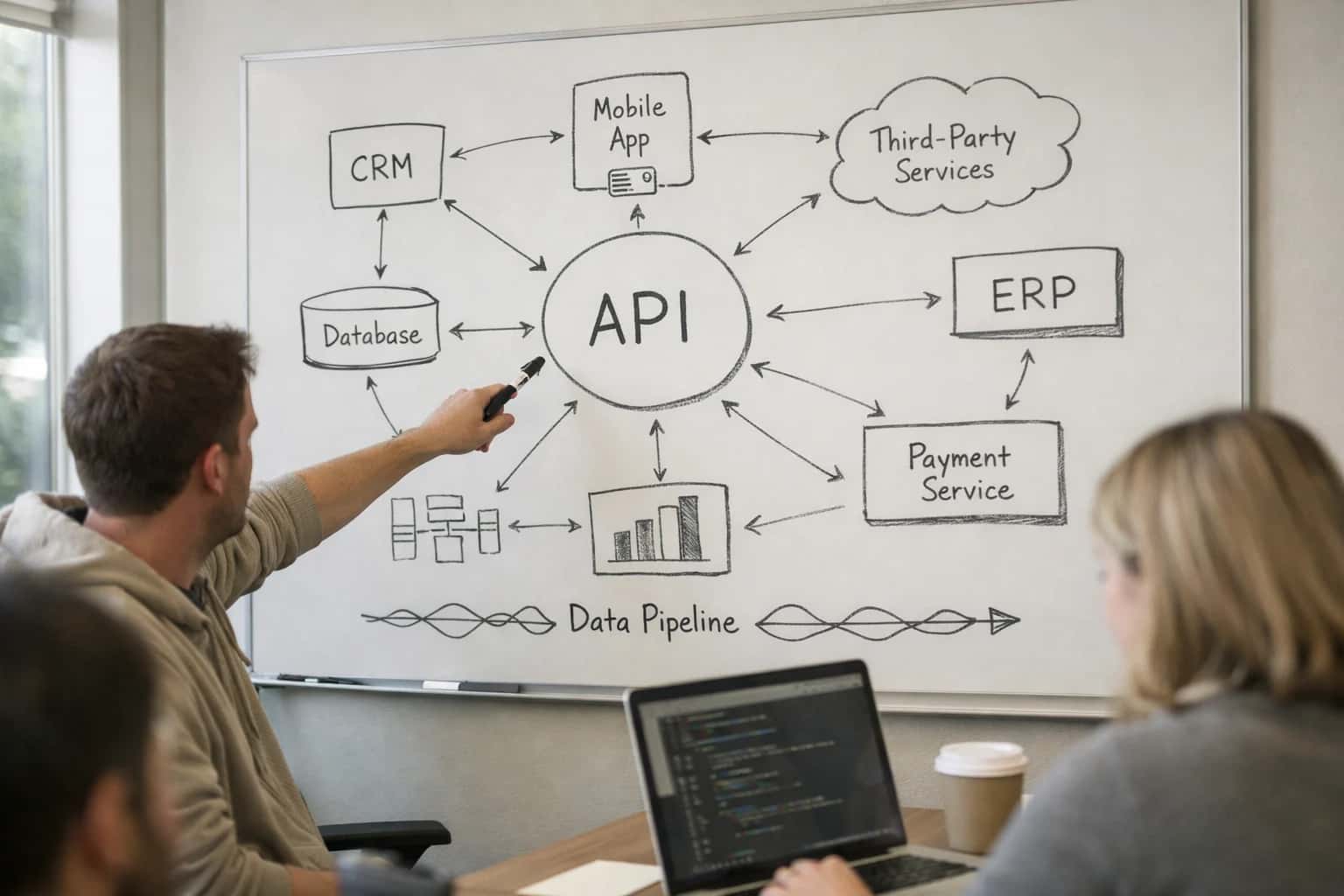
Enterprise architecture for deploying a centralized AI capability that serves multiple Smartling instances across business units, with shared models, governance, and cost tracking.
ENTERPRISE ARCHITECTURE
Centralized AI for Decentralized Smartling Operations
Deploy a unified AI orchestration layer to serve multiple, autonomous Smartling instances across business units, enabling shared governance, cost control, and model consistency.
Architecturally, this involves deploying a central API gateway or agent orchestration platform (like a custom service or using tools such as n8n or CrewAI) that all Smartling instances call via webhook. When a translation job is created in any Smartling project, the workflow can be configured to call this central service for AI-powered pre-translation, complexity scoring, or terminology validation. The service routes the request, applies the correct brand-specific prompts and context from a vector database, calls the appropriate LLM, logs the activity for audit, and returns the enriched data back to the originating Smartling instance. This ensures a marketing slogan in the EMEA instance and a product error message in the APAC instance receive AI assistance governed by the same core rules and style guides.
Rollout requires a phased approach: start with a single high-volume Smartling project as a pilot, connecting it to the central AI service for one use case, such as auto-generating translation suggestions for low-risk marketing copy. Establish the RBAC, audit logs, and cost-tracking dashboards during this phase. Then, onboard additional Smartling instances by configuring their Automation and Webhook settings to point to the centralized service, often requiring coordination with each team's localization manager to map their specific workflow stages, custom fields, and approval gates. Governance is maintained through the central layer's ability to enforce policies—like requiring human review for all AI-translated legal content—regardless of which business unit's Smartling project originates the request.
ENTERPRISE ARCHITECTURE
Where Centralized AI Connects to Smartling Instances
Centralized Job Routing & Cost Control
A centralized AI layer acts as the intelligent dispatcher for translation requests across multiple Smartling business unit instances. It analyzes incoming content—source strings, files, or API payloads—to determine the optimal routing path.
Key Integration Points:
- Smartling Jobs API: AI agents create jobs, assign workflows, and select vendors (machine translation, LSP, internal team) based on content domain, urgency, and historical quality scores.
- Cost Tracking: The central system maintains a unified ledger, tagging all API calls and translation costs to specific projects, departments, or cost centers, enabling showback/chargeback across the enterprise.
- Workflow Triggers: Based on AI analysis of content complexity and risk, the system dynamically adjusts Smartling workflow steps—for example, adding a mandatory legal review step for compliance-sensitive strings or bypassing review for low-risk, high-volume UI text.
This pattern prevents vendor sprawl, enforces consistent quality gates, and provides granular visibility into translation spend.
SMARTLING ENTERPRISE ARCHITECTURE
High-Value Use Cases for Enterprise AI
For global organizations managing multiple Smartling instances, a centralized AI capability can standardize quality, govern costs, and accelerate localization workflows across business units. These patterns show where AI connects to Smartling's data model and APIs.
01
Centralized Translation Memory & Terminology Enrichment
Deploy a shared AI layer that continuously analyzes translations across all Smartling instances to identify and propose new terminology entries, resolve TM conflicts, and enrich context for linguists. This creates a single source of truth for brand voice and technical terms, reducing inconsistency across teams.
1 sprint
Glossary sync cycle
02
Multi-Instance Cost Governance & Routing
Build an AI orchestration engine that sits above your Smartling instances, analyzing job complexity, content domain, and budget pools to intelligently route translation requests. It can direct work to the optimal vendor, machine translation engine, or internal team per business unit, enforcing spend policies and maximizing leverage.
Batch -> Real-time
Spend decisions
03
Enterprise-Wide Quality & Compliance Gate
Implement a pre-submission AI review agent that scans all translation jobs—regardless of originating instance—against a centralized rule set for regulatory compliance, brand guidelines, and security. Flags high-risk segments for human review before they enter the Smartling workflow, standardizing risk management.
Same day
Compliance review
04
Cross-BU Workload Forecasting & Capacity Planning
Use AI to aggregate and analyze pipeline data from all Smartling instances, predicting localization demand by language, content type, and business unit. Provides a unified forecast to optimize translator allocations, prevent bottlenecks, and align with product launch schedules across the organization.
Hours -> Minutes
Capacity reports
05
Unified Analytics & ROI Dashboard
Create a consolidated reporting layer that pulls metrics from each Smartling instance via API, using AI to generate narrative insights on cost-per-word trends, quality scores, and time-to-market. Delivers role-specific dashboards for finance, localization leads, and product teams to demonstrate centralized AI value.
Batch -> Real-time
Stakeholder reporting
06
Shared AI Model Registry & Prompt Governance
Operate a central registry for approved LLMs, fine-tuned models, and vetted prompts that all Smartling instances can call via a governed API. Ensures consistent AI behavior, controls costs through centralized API key management, and maintains an audit trail of all AI-assisted translations for compliance.
1 sprint
Model update cycle
ENTERPRISE ARCHITECTURE PATTERNS
Example Centralized AI Workflows
For global organizations managing multiple Smartling instances, a centralized AI layer enables shared models, consistent governance, and unified cost tracking. These workflows illustrate how AI agents interact with Smartling's API to orchestrate translation operations across business units.
Trigger: A new source file is uploaded to a designated Smartling project folder via API or connector.
Context/Data Pulled: The AI agent retrieves the file metadata (project ID, target languages, due date) and uses a classification model to analyze the content type (e.g., marketing, legal, UI), complexity, and target market priority.
Model or Agent Action: Based on the classification, the agent executes a decision workflow:
- Routing: Selects the optimal translation vendor or internal team from a centralized pool, considering cost, quality tier, and availability.
- Job Creation: Automatically creates the translation job in Smartling via the
/jobsAPI, applying the correct workflow (e.g.,translation>review>published). - Context Injection: Attaches relevant context from a centralized vector database—such as brand style guides, product glossaries, and past similar translations—to the job as instructions.
System Update or Next Step: The agent logs the job creation, estimated cost, and routing logic to a central audit table. It then triggers a notification to the assigned translation team within their collaboration tool (Slack, Teams).
Human Review Point: For content classified as high-risk (e.g., legal, compliance), the workflow is configured to require mandatory human review before the published stage. The agent can flag specific segments for reviewer attention based on model confidence scores.
CENTRALIZED AI GOVERNANCE FOR MULTI-INSTANCE DEPLOYMENTS
Implementation Architecture: Hub-and-Spoke Model
A hub-and-spoke architecture centralizes AI model management, cost tracking, and governance while serving multiple, distinct Smartling instances across business units or product lines.
In this model, a central AI hub acts as the single point of integration for all LLM providers (OpenAI, Anthropic, open-source), vector databases, and custom models. Each spoke is a dedicated Smartling instance—for example, one for Product Marketing, another for Legal, and a third for Support Documentation. The hub orchestrates all AI requests, routing translation suggestions, terminology lookups, and QA checks to the appropriate Smartling project via its API. This ensures consistent AI behavior, shared translation memory context, and unified cost allocation across the entire organization, while allowing each business unit to maintain operational autonomy within their own Smartling workspace.
The implementation connects via Smartling's Projects API and Translation Jobs API. The AI hub listens for webhook events from each Smartling spoke (e.g., job.created, string.added). It then processes the content, retrieves relevant context from a centralized vector store of approved terminology and style guides, and calls the appropriate LLM. The enriched suggestion or automated action is posted back to the specific Smartling job or string via API. Key technical components include a message queue for handling batch translation jobs, an RBAC layer to enforce which AI capabilities each Smartling instance can access, and a unified audit log tracking all AI interactions across spokes.
Rollout is phased, starting with a single, non-critical Smartling project as a pilot spoke. Governance is enforced at the hub level: all prompts are version-controlled, model outputs for high-risk content (legal, compliance) are flagged for mandatory human-in-the-loop review, and spend is tracked per Smartling instance, department, and AI model. This architecture prevents AI model sprawl, ensures compliance and brand voice consistency across all localized content, and provides the financial visibility needed to scale AI across the enterprise's localization footprint.
ENTERPRISE AI INTEGRATION PATTERNS
Code & Payload Examples
Orchestrating Multiple Smartling Instances
A centralized AI service acts as a single point of control, routing requests from various business unit Smartling instances. This pattern uses a service registry to map requests to the appropriate AI model and cost center.
Key Components:
- Service Gateway: Authenticates and routes requests from
smartling-tenant-eu,smartling-tenant-apac, etc. - Model Registry: Maintains a catalog of approved models (e.g.,
gpt-4-turbo-eu-compliance,claude-3-sonnet-marketing). - Usage Metering: Tags each API call with
project_id,business_unit, andcost_centerfor centralized chargeback.
This architecture prevents model sprawl, ensures consistent governance, and provides unified visibility into AI spend across all localization activities.
ENTERPRISE AI IMPACT
Plausible Time Savings & Operational Impact
Estimated impact of deploying a centralized AI capability across multiple Smartling instances, based on typical enterprise localization workflows.
| Workflow / Metric | Before Centralized AI | After Centralized AI | Implementation Notes |
|---|---|---|---|
Terminology consistency review | Manual sampling across projects | Automated scan of 100% of new content | AI flags deviations; human linguists approve final changes |
Translation Memory (TM) deduplication & cleanup | Quarterly project-by-project effort | Continuous, automated suggestions | AI identifies near-duplicate strings and suggests TM consolidation |
Project setup & configuration | Manual entry per project/BU | Templated setup with AI-assisted field mapping | Reduces human error and accelerates launch of new market initiatives |
Quality Assurance (QA) check execution | Rule-based checks only | AI-powered contextual & brand voice checks | Augments standard QA with semantic analysis, freeing linguists for high-value review |
Stakeholder reporting & insights | Manual compilation from multiple instances | Automated, unified dashboard with AI-generated summaries | AI highlights trends, bottlenecks, and cost drivers across all business units |
Low-complexity string routing | Manual assignment or broad MT | AI-prioritized routing to appropriate MT engine or vendor pool | Optimizes for cost and speed based on content type, history, and required quality tier |
New language launch analysis | Manual market & content analysis | AI-driven content prioritization & effort forecasting | Recommends which existing content to translate first based on predicted user impact |
CENTRALIZED AI FOR DECENTRALIZED LOCALIZATION
Governance, Security & Phased Rollout
Deploying a shared AI capability across multiple Smartling instances requires a deliberate architecture for control, cost, and compliance.
A centralized AI layer for Smartling acts as a shared service for multiple business units or product teams, each with their own Smartling projects. This architecture consolidates model management, prompt governance, and API key orchestration into a single control plane. Instead of each team integrating directly with OpenAI or Anthropic, they call your internal AI gateway, which enforces usage policies, routes requests to the appropriate model (e.g., GPT-4 for marketing, Claude for legal), and logs all activity back to a central audit trail. This prevents shadow AI spend, ensures consistent brand voice application, and simplifies security reviews.
Security is implemented at three layers: data in transit, data at rest, and access control. All calls between your AI gateway and Smartling's API use mutual TLS. Source content and translation memories are never sent to a third-party LLM without first passing through a content sanitization service that redacts PII, confidential product codes, or financial terms based on your policies. Access to the AI gateway itself is gated by your corporate IdP (e.g., Okta), with RBAC scoping permissions—a marketing manager can trigger AI suggestions for their project, but cannot modify the core prompt templates or billing settings.
Rollout follows a phased, risk-based approach. Phase 1 targets low-risk, high-volume content like UI string translations and internal knowledge base articles, using AI for first-draft generation with human post-editing. Phase 2 introduces AI-powered QA checks for terminology and style compliance, acting as a pre-review assistant. Phase 3 enables more autonomous workflows, such as auto-translation of low-priority blog posts or dynamic content, with clear escalation paths to human linguists. Each phase includes A/B testing against control groups to measure impact on velocity, cost, and quality, with results feeding a centralized dashboard for stakeholder reporting.
Governance is maintained through a cross-functional localization council that approves new AI use cases, reviews model performance metrics, and updates the central terminology and style guides that ground the RAG system. All AI-generated suggestions in Smartling are tagged with metadata (model version, prompt hash, confidence score) for traceability. This structured approach ensures the AI integration scales responsibly, delivering efficiency gains without introducing unmanaged risk or inconsistent output quality across the enterprise.
Enabling Efficiency, Speed & Accuracy
Intelligent Analysis, Decision & Execution
We build AI systems for teams that need search across company data, workflow automation across tools, or AI features inside products and internal software.
Talk to Us
Search across company data
Give teams answers from docs, tickets, runbooks, and product data with sources and permissions.
Useful when people spend too long searching or get different answers from different systems.
Enterprise searchRAGPermissions
Read more
Automate internal workflows
Use AI to route work, draft outputs, trigger actions, and keep approvals and logs in place.
Useful when repetitive work moves across multiple tools and teams.
AI agentsWorkflow automationGovernance
Read more
Add AI to products and internal tools
Build assistants, guided actions, or decision support into the software your team or customers already use.
Useful when AI needs to be part of the product, not a separate tool.
AI integrationDecision supportModel routing
Read moreENTERPRISE AI ARCHITECTURE
Frequently Asked Questions
Common technical and strategic questions for deploying a centralized AI capability across multiple Smartling instances, business units, and global teams.
A centralized AI layer acts as a shared service, with a unified API gateway routing requests from all Smartling instances. Implementation includes:
- Centralized API Gateway & Orchestrator: A single entry point (e.g., Kong, Apigee) handles authentication, routes requests to appropriate AI models, and enforces usage policies.
- Unified Cost Tracking & Attribution: Every API call is tagged with metadata (
business_unit,project_id,language_pair,model_used). This data feeds into a centralized dashboard (e.g., CloudHealth, custom) for showback/chargeback. - Shared Model Registry: Approved AI models (e.g., GPT-4, Claude 3, custom fine-tuned NMT) are registered in a central catalog (e.g., Weights & Biases, MLflow). Business units can request access via a governance workflow.
- Rate Limiting & Quotas: The gateway enforces per-business-unit rate limits and monthly token/quota ceilings to prevent budget overruns and ensure fair access.
This architecture prevents shadow AI spend and ensures consistent model quality and security policies enterprise-wide.

About the author
Prasad Kumkar
CEO & MD, Inference Systems
Prasad Kumkar is the CEO & MD of Inference Systems and writes about AI systems architecture, LLM infrastructure, model serving, evaluation, and production deployment. Over 5+ years, he has worked across computer vision models, L5 autonomous vehicle systems, and LLM research, with a focus on taking complex AI ideas into real-world engineering systems.
His work and writing cover AI systems, large language models, AI agents, multimodal systems, autonomous systems, inference optimization, RAG, evaluation, and production AI engineering.
LinkedIn
Limited slotsGet a Free AI Consultation
Partnered with leading AI, data, and software stack.





How We Work
Custom AI workflows for your Business
One-fit-all AI don't work for modern businesses. At Inferensys, we aim to understand your business & custom requirements; which we use to define most efficient agentic workflows, the data, and the tools for your business.
01
Review the use case
We understand the task, the users, and where AI can actually help.
Read more02
Pick the right approach
We define what needs search, automation, or product integration.
Read more03
Build the first useful version
We implement the part that proves the value first.
Read more04
Improve from there
We add the checks and visibility needed to keep it useful.
Read moreThe first call is a practical review of your use case and the right next step.
Talk to Us