The integration sits at the intersection of your CRM's opportunity objects and Smartling's project API. AI agents monitor CRM fields—such as Deal Stage, Amount, Target Country, and Expected Close Date—to identify high-value, customer-facing content that requires translation. This includes Salesforce Knowledge Articles attached to an opportunity, product description fields in a CPQ quote, marketing collateral linked in Campaigns, or support case comments from strategic accounts. Instead of a blanket translation policy, the AI scores and routes content to Smartling based on a configurable rule set, ensuring translation resources align with revenue priorities.

Integration
AI Integration for Smartling and CRM Integration
Connect your CRM (Salesforce, HubSpot) to Smartling using AI to automatically identify, prioritize, and route customer-facing content for translation based on deal value, region, and business urgency.
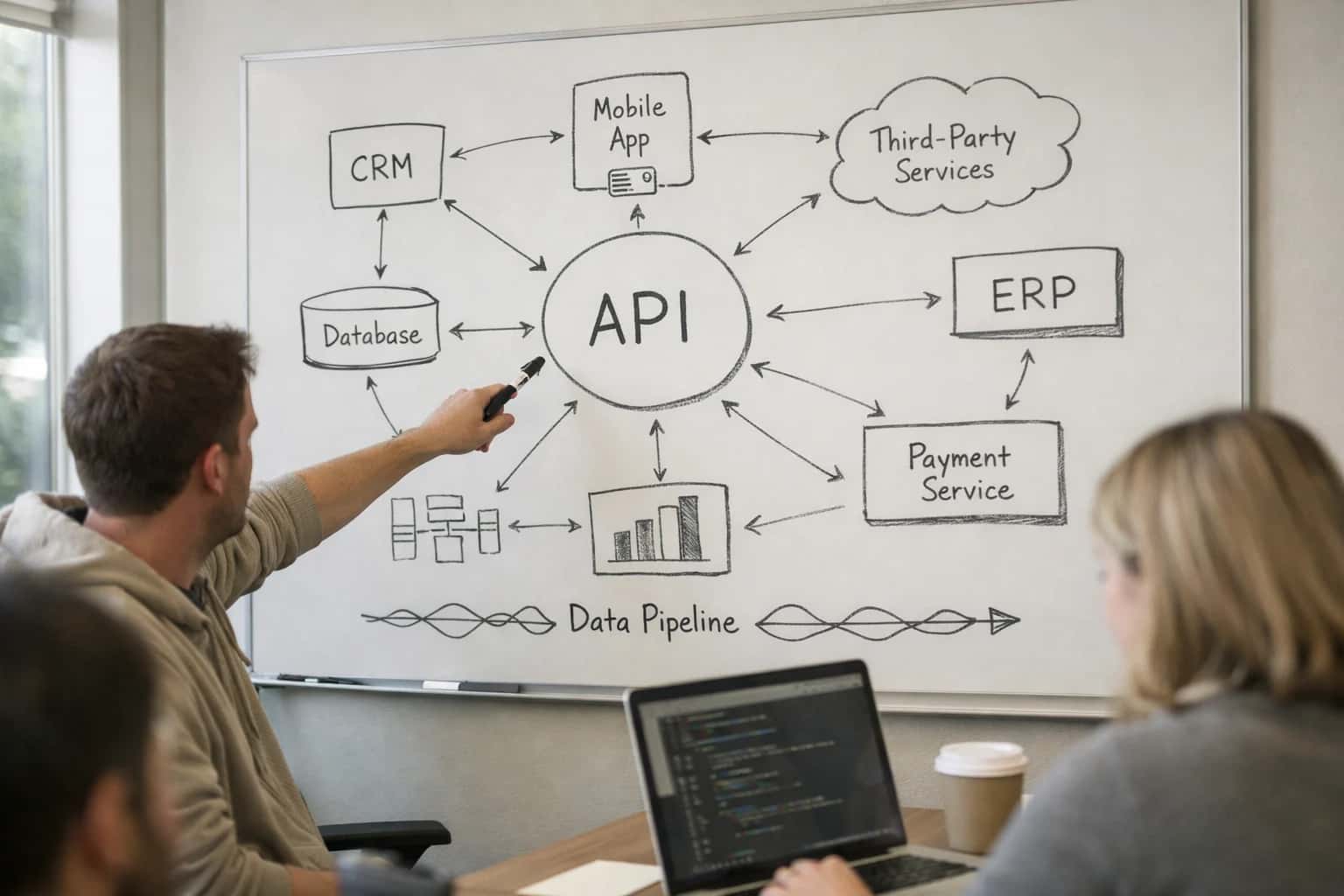
ARCHITECTURE FOR GLOBAL REVENUE OPERATIONS
Where AI Fits Between Your CRM and Translation Pipeline
A technical blueprint for using AI to intelligently connect CRM platforms like Salesforce with translation management systems like Smartling, prioritizing content based on deal velocity, region, and customer impact.
Implementation typically involves a middleware service (often built on n8n or a custom Node.js/Python service) that subscribes to CRM webhooks (e.g., Salesforce Change Data Capture) and calls Smartling's /jobs and /files APIs. The AI layer performs two key functions: 1) Content Triage, using an LLM to classify content type, urgency, and required locale from CRM metadata; and 2) Context Enrichment, automatically attaching relevant CRM context (like product specs or competitor names from the account record) to the Smartling job as translator instructions. This reduces back-and-forth and improves translation accuracy for deal-specific materials.
Rollout requires careful governance. Start with a pilot object, such as proposal documents from Salesforce Files, where AI determines if translation is needed based on the opportunity's Country__c field. Implement a human-in-the-loop approval step in the workflow, perhaps via a Slack alert to the sales ops manager, before the job is created in Smartling. Audit trails are critical; log the AI's decision rationale, the source CRM record ID, and the resulting Smartling job ID to a central logging system. This controlled approach allows you to measure impact—like reduced time-to-localized-proposal—and scale to more complex workflows, such as translating service contract clauses or partner portal announcements, with confidence.
ARCHITECTURE BLUEPRINT
CRM Objects and Smartling Touchpoints for AI Integration
Identifying Translation-Ready Content in Your CRM
The integration begins by monitoring key CRM objects for customer-facing content that requires localization. AI agents analyze records to determine priority based on deal stage, target region, and content type.
Primary CRM Objects to Monitor:
- Knowledge Articles & Case Comments: Automatically flag new or updated support content for translation when associated with target markets.
- Product Descriptions & Field Labels: Detect changes in core product objects that impact global user interfaces.
- Marketing Email & Campaign Assets: Analyze campaign member status and geographic segments to trigger translation workflows for active nurtures.
- Sales Documents & Proposals: Use opportunity stage (e.g.,
Proposal/Quote) andAccount.ShippingCountryto prioritize quote and contract translation.
AI evaluates content complexity, sensitivity, and potential business impact to route strings to the appropriate Smartling workflow, bypassing manual triage.
SMARTLING + CRM INTEGRATION
High-Value Use Cases for AI-Prioritized Translation
Connecting Smartling to your CRM (like Salesforce) with AI creates a feedback loop where customer and deal data directly informs translation priorities. This ensures critical customer-facing content is localized first, based on real-time business signals like deal stage, region, or customer segment.
01
Deal-Stage Triggered Localization
Automatically prioritize translation of sales collateral, contracts, or product documentation when a deal in the CRM reaches a specific stage (e.g., 'Proposal' or 'Negotiation'). AI evaluates the deal's value, region, and content type to queue the right assets in Smartling, ensuring translated materials are ready before they're needed for closing.
Same day
Translation readiness
02
Region-Specific Content Activation
Use CRM account and contact data to identify high-growth or target geographic regions. AI analyzes this data to recommend which help articles, marketing pages, or UI strings in Smartling should be prioritized for those locales. This moves translation planning from a static schedule to a dynamic, data-driven workflow.
Batch -> Real-time
Priority updates
03
Customer Support Escalation Routing
When a high-priority support case is logged in the CRM (e.g., from a strategic account), AI can instantly identify and push related knowledge base articles or in-app messaging for translation in Smartling. This reduces resolution time for global customers by ensuring support content is available in their language.
Hours -> Minutes
Content availability
04
AI-Powered Translation Scope Analysis
For CRM-triggered content updates (e.g., a new product feature field), AI analyzes the metadata, field relationships, and historical translation impact to recommend a precise translation scope to Smartling. This prevents over-translation of internal fields and under-translation of customer-impacting elements.
1 sprint
Scope definition
05
Localized Campaign Orchestration
Sync CRM campaign launches with Smartling translation jobs. AI uses campaign member data (region, persona) to determine which email variants, landing pages, and assets need translation and at what fidelity. This synchronizes global marketing execution, eliminating the lag between campaign creation and localized launch.
06
Terminology Governance & Enforcement
Maintain brand and product term consistency across all customer touchpoints. AI monitors new terms entering the CRM (e.g., new product names in opportunity records) and automatically proposes them for addition to Smartling's terminology base. It then enforces these terms in subsequent translations, ensuring a unified customer experience.
AUTOMATED LOCALIZATION PIPELINES
Example AI Agent Workflows: From CRM Trigger to Smartling Job
These workflows illustrate how AI agents can connect CRM deal signals to Smartling translation jobs, automating the prioritization and routing of customer-facing content based on business impact. Each flow is triggered by a specific CRM event and results in a structured action within Smartling.
Trigger: A new Opportunity in Salesforce reaches the 'Contract Sent' stage with an Annual Contract Value (ACV) over $100k.
Agent Actions:
- Context Pull: The agent queries the Salesforce API for the Opportunity's
Account.CountryandProduct_Family__cfields. - Content Identification: Using the product family, it queries the connected Knowledge base (e.g., Salesforce Knowledge, Zendesk Guide) for all documentation articles tagged with that product and a status of
Ready_For_Translation. - Smartling Job Creation: The agent calls the Smartling API to create a new translation job:
- Job Name:
High-Priority - {Product Family} Docs - {Account Name} - {Date} - Target Locales: Mapped from
Account.Country(e.g.,fr-FR,de-DE). - Priority: Set to
HIGH. - Files: Attaches the identified documentation files via URI.
- Instructions: Auto-generates job instructions referencing the deal context and target customer.
- Job Name:
- CRM Update: The agent posts a note to the Salesforce Opportunity Chatter feed: "High-priority translation job created in Smartling for {locale} documentation to support this deal. Job ID: {job_uid}."
Human Review Point: The translation job is routed to a senior linguist pool. The project manager receives a Slack alert for visibility.
CONNECTING SMARTLING TO SALESFORCE
Implementation Architecture: Data Flow, APIs, and Guardrails
A practical blueprint for integrating AI to prioritize CRM content for translation based on real-time business signals.
The integration architecture connects Smartling's Translation API and Salesforce's REST API via a middleware orchestration layer. This layer monitors key Salesforce objects—like Opportunity, Account, and Knowledge__kav—for changes in fields such as StageName, BillingCountry, or IsPublished. When a qualifying change is detected (e.g., a deal moving to 'Closed Won' in the EMEA region), the middleware uses a rules engine, often powered by a lightweight classifier, to identify related customer-facing content (e.g., contract templates, product spec sheets, support articles) and automatically creates a translation job in Smartling via its Jobs API. The payload includes contextual metadata from Salesforce, such as the target locale, deal value, and product line, which Smartling stores for translator reference.
Critical to this workflow is the bidirectional sync of translation status. The middleware subscribes to Smartling webhooks (e.g., job.completed) to update a custom Translation_Status__c object in Salesforce, providing visibility into localization progress for sales and support teams. For governance, all automated job creation passes through an approval queue configurable in the middleware, allowing managers to review high-value or sensitive content before translation begins. The system also logs all actions—API calls, job IDs, user approvals—to a centralized audit trail for compliance, essential when handling regulated industries.
Rollout typically follows a phased approach: start with a single content type (e.g., Salesforce Knowledge articles) and a pilot sales region. Use the middleware's configuration to gradually expand rules, such as adding more complex triggers based on Account.Industry or Opportunity.Amount. The final architecture ensures AI augments the process—prioritizing what to translate—while humans remain in the loop for final review within Smartling's workflow, maintaining quality control and brand integrity across global customer touchpoints.
AI-DRIVEN CRM TRANSLATION PIPELINE
Code and Payload Examples
Ingesting CRM Content for Translation
When a new Salesforce Knowledge article is published or a high-value deal moves to a new stage, your CRM can trigger a webhook to your orchestration layer. This Python FastAPI endpoint receives the payload, extracts the content, and initiates a Smartling job.
pythonfrom fastapi import FastAPI, HTTPException from pydantic import BaseModel import requests app = FastAPI() class CRMWebhookPayload(BaseModel): object_type: str # e.g., 'Knowledge__kav', 'Opportunity' record_id: str content_fields: dict # e.g., {'title': '...', 'body': '...'} priority_markets: list[str] deal_stage: str | None = None @app.post("/webhook/crm-to-translate") async def create_translation_job(payload: CRMWebhookPayload): """Create a Smartling job for high-priority CRM content.""" # 1. Enrich with AI: Determine translation urgency & style ai_context = analyze_crm_content(payload.content_fields, payload.deal_stage) # 2. Prepare Smartling job payload job_payload = { "jobName": f"CRM-{payload.object_type}-{payload.record_id}", "targetLocaleIds": payload.priority_markets, "description": ai_context.get("translation_instructions"), "dueDate": ai_context.get("due_date_iso"), # AI-suggested deadline "referenceNumber": payload.record_id } # 3. Call Smartling Jobs API response = requests.post( "https://api.smartling.com/jobs-api/v3/projects/{projectId}/jobs", json=job_payload, headers={"Authorization": f"Bearer {SMARTLING_TOKEN}"} ) return {"smartling_job_uid": response.json().get("jobUid"), "ai_context": ai_context} def analyze_crm_content(content_fields: dict, deal_stage: str) -> dict: """Call an LLM to assess content type, urgency, and tone.""" # Pseudocode: LLM call to classify content (marketing, legal, support) # and infer deadline based on deal stage (e.g., 'Proposal' -> 2 days) return { "content_type": "product_marketing", "urgency_score": 0.8, "due_date_iso": "2024-12-15T18:00:00Z", "translation_instructions": "Tone: confident and solution-oriented. Key term: 'platform integration' must match glossary ID: GLOSS-123." }
AI-ENHANCED LOCALIZATION PIPELINE
Realistic Time Savings and Business Impact
How AI integration between Smartling and your CRM accelerates customer-facing content translation by prioritizing based on deal stage, region, and content type.
| Workflow Stage | Before AI Integration | After AI Integration | Implementation Notes |
|---|---|---|---|
Content Identification for Translation | Manual export from CRM, spreadsheet review by marketing ops | AI agent monitors CRM objects (Leads, Accounts, Opportunities) and flags high-priority content | AI uses deal stage, target region, and content type (e.g., proposal, case study) as prioritization signals |
Translation Job Creation in Smartling | Manual file upload and project setup per content batch | Automated job creation via Smartling API for AI-identified content, with pre-filled metadata | Jobs are tagged with CRM source ID (e.g., Opportunity #) for traceability |
Translator Context & Briefing | Email threads or separate briefs with limited background | AI auto-generates context briefs from CRM data (deal size, industry, persona) appended to Smartling job | Briefs are added to the Smartling job 'Instructions' field via API |
Translation Memory (TM) & Glossary Application | Translators manually search TM; glossary consistency is hit-or-miss | AI pre-seeds job with relevant TM matches and enforces glossary terms extracted from CRM product data | Reduces translator cognitive load and improves brand/term consistency from first draft |
Post-Translation Review & Sync-Back | Completed translations manually downloaded and re-uploaded to CRM or CMS | Approved translations automatically delivered to target system (e.g., Salesforce Content, CMS library) | Webhook from Smartling triggers sync; AI validates field mapping before update |
Pipeline Velocity for Regional Launch | Critical content for a new market launch takes 2-3 weeks | Priority deal-support content can be translated and ready in 2-4 business days | Biggest impact is on sales cycles where localized materials are a gating item |
Localization Ops Overhead | Marketing or sales ops spends 5-10 hours/week managing the process | Ops overhead reduced to 1-2 hours/week for exception handling and governance | Team shifts from administrative coordination to strategic oversight and quality assurance |
ARCHITECTING FOR ENTERPRISE CONTROL
Governance, Security, and Phased Rollout
A secure, governed approach to integrating AI between Smartling and your CRM, ensuring data integrity and measurable ROI.
This integration operates at the intersection of sensitive customer data (CRM) and regulated content (Smartling). A production architecture typically uses a middleware layer or dedicated integration platform to broker communication. This layer handles authentication via OAuth for both systems, manages webhook subscriptions for events like a new Opportunity stage change in Salesforce or a new Job creation in Smartling, and enforces data mapping rules—ensuring only approved CRM fields (e.g., Case.Description, Knowledge__kav.Title) are sent for translation analysis. All AI model calls are routed through this controlled layer, where prompts are enriched with context from approved terminology databases and translation memory before being sent to the LLM provider, and all outputs are logged with a full audit trail linking back to the source CRM record and Smartling job ID.
A phased rollout is critical for managing risk and proving value. Phase 1 (Pilot) focuses on a single, high-impact workflow, such as auto-prioritizing the translation of KnowledgeArticle titles and summaries for a specific product line based on Opportunity pipeline value in a target region. This phase validates the AI's accuracy in content scoring, establishes baseline metrics for manual vs. automated triage time, and tests the governance controls. Phase 2 (Expansion) extends the integration to more content types (e.g., Campaign descriptions, Case comment summaries) and adds more sophisticated routing logic, using AI to recommend translation vendors within Smartling based on content domain and historical quality scores. Phase 3 (Scale) integrates the system into continuous localization pipelines, where AI agents monitor CRM and development repositories to proactively create and scope Smartling translation jobs.
Governance is enforced through role-based access controls (RBAC) on the integration platform, ensuring only authorized users can modify data mappings or AI prompting logic. A human-in-the-loop approval step is maintained for the initial phase, where AI-generated translation priority scores are presented in a dashboard for a localization manager to review before jobs are created in Smartling. All AI-suggested content is tagged as such within Smartling for traceability, and a feedback loop is established where translator post-editing data is used to continuously fine-tune the AI's scoring model. This structured approach minimizes disruption, provides clear checkpoints for stakeholder sign-off, and builds a measurable business case for full automation. For related architectural patterns, see our guide on /integrations/translation-management-platforms/ai-integration-for-translation-management-rag.
Enabling Efficiency, Speed & Accuracy
Intelligent Analysis, Decision & Execution
We build AI systems for teams that need search across company data, workflow automation across tools, or AI features inside products and internal software.
Talk to Us
Search across company data
Give teams answers from docs, tickets, runbooks, and product data with sources and permissions.
Useful when people spend too long searching or get different answers from different systems.
Enterprise searchRAGPermissions
Read more
Automate internal workflows
Use AI to route work, draft outputs, trigger actions, and keep approvals and logs in place.
Useful when repetitive work moves across multiple tools and teams.
AI agentsWorkflow automationGovernance
Read more
Add AI to products and internal tools
Build assistants, guided actions, or decision support into the software your team or customers already use.
Useful when AI needs to be part of the product, not a separate tool.
AI integrationDecision supportModel routing
Read moreAI INTEGRATION FOR SMARTLING AND CRM
Frequently Asked Questions
Common technical and operational questions about connecting AI to Smartling and CRM platforms like Salesforce to automate the identification and prioritization of customer-facing content for translation.
The AI agent analyzes CRM records and metadata to score and prioritize content based on configurable business rules. A typical integration uses the following logic:
- Trigger: A change in a CRM record (e.g., a deal stage update, a new product launch in a region, or a support case creation).
- Context Pull: The agent fetches related content objects (e.g., Knowledge Articles, Case Comments, Product Description fields, Campaign copy) and enriches them with deal/account metadata (e.g.,
deal_size,target_region,priority_account). - Scoring & Routing: A lightweight classification model or rule engine scores the content based on factors like:
- Impact: Content linked to high-value deals or strategic accounts.
- Audience: Content destined for a new geographic market.
- Urgency: Content for an active marketing campaign with a launch date.
- System Update: High-priority content is automatically packaged and pushed to Smartling via its Jobs API, with the priority flag and relevant context (like the source CRM record ID) included in the custom fields. Lower-priority content can be batched or require manager approval.
This moves translation from a reactive, manual process to a proactive, data-driven workflow.

About the author
Prasad Kumkar
CEO & MD, Inference Systems
Prasad Kumkar is the CEO & MD of Inference Systems and writes about AI systems architecture, LLM infrastructure, model serving, evaluation, and production deployment. Over 5+ years, he has worked across computer vision models, L5 autonomous vehicle systems, and LLM research, with a focus on taking complex AI ideas into real-world engineering systems.
His work and writing cover AI systems, large language models, AI agents, multimodal systems, autonomous systems, inference optimization, RAG, evaluation, and production AI engineering.
LinkedIn
Limited slotsGet a Free AI Consultation
Partnered with leading AI, data, and software stack.





How We Work
Custom AI workflows for your Business
One-fit-all AI don't work for modern businesses. At Inferensys, we aim to understand your business & custom requirements; which we use to define most efficient agentic workflows, the data, and the tools for your business.
01
Review the use case
We understand the task, the users, and where AI can actually help.
Read more02
Pick the right approach
We define what needs search, automation, or product integration.
Read more03
Build the first useful version
We implement the part that proves the value first.
Read more04
Improve from there
We add the checks and visibility needed to keep it useful.
Read moreThe first call is a practical review of your use case and the right next step.
Talk to Us