AI integration for Lokalise connects at three primary surfaces: the key/string management API, the translation workflow automation layer, and the quality assurance (QA) webhook system. For engineering teams, this means injecting AI logic into the standard localization pipeline—using Lokalise's projects/{project_id}/keys endpoint to pre-process source strings with AI for context or complexity scoring, triggering custom translation jobs via the jobs endpoint based on AI-determined priority, and deploying AI-powered checks as custom QA steps that flag potential brand voice or regulatory compliance issues before human review. The goal is not to replace Lokalise but to augment its developer-centric workflows with intelligent automation, reducing manual triage and context-switching for translators.

Integration
AI Integration for Multilingual Platforms with Lokalise
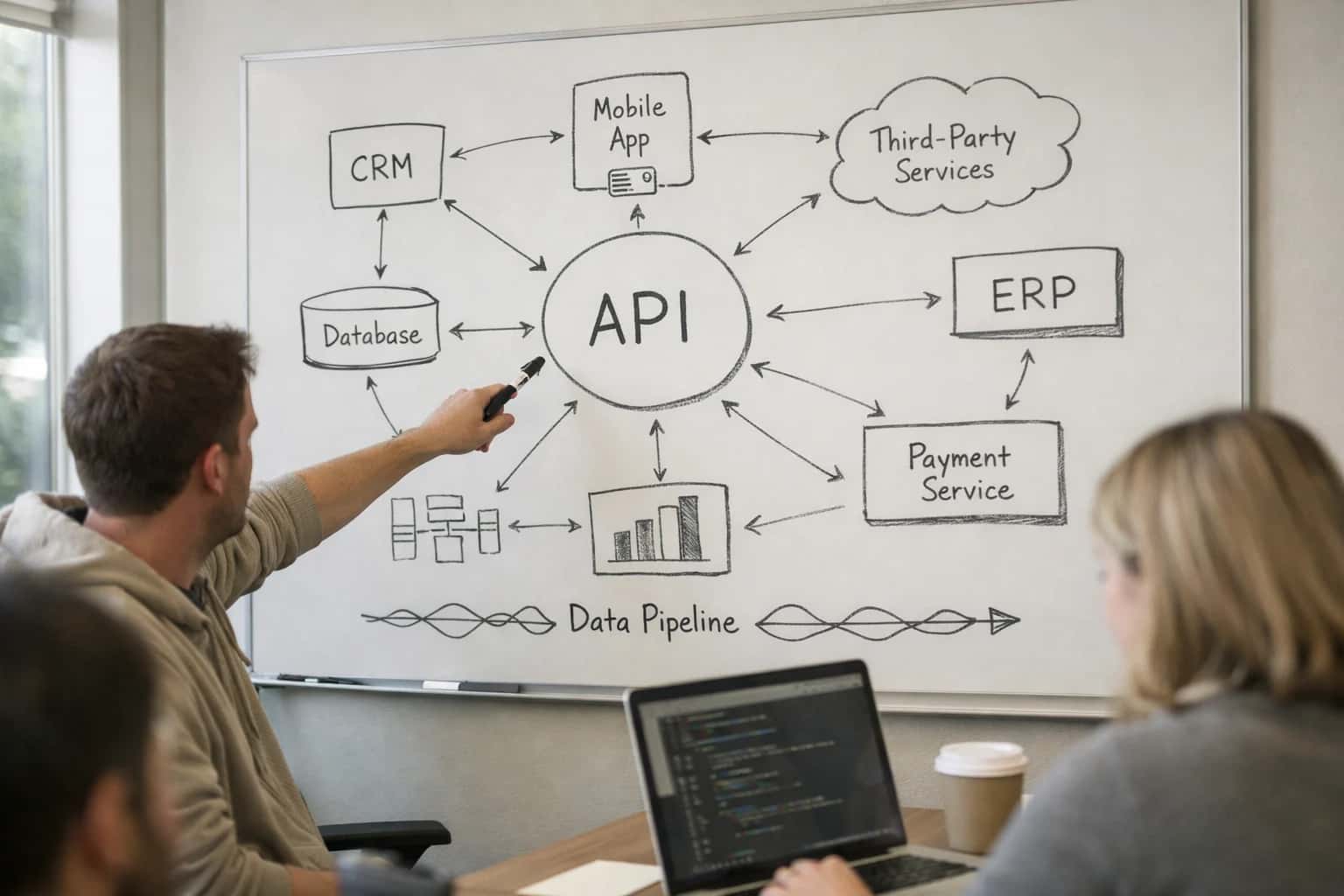
Where AI Fits into Lokalise-Driven Localization
A practical blueprint for integrating AI into Lokalise to accelerate translation velocity, improve quality, and automate multilingual content operations.
High-impact use cases include dynamic content personalization, where AI models generate locale-specific variants for marketing copy stored in Lokalise keys, and automated translation memory enrichment, where an AI agent analyzes approved translations to suggest new tm entries or terminology (terms) updates. For product-led teams, a common pattern is building an AI orchestration layer that listens to webhooks from your GitHub repository (for new UI strings) and your CMS (for updated help articles), uses AI to classify content type and urgency, and then automatically creates and configures the corresponding Lokalise translation job via API—turning a multi-day manual process into a same-day automated workflow.
Rollout requires a phased approach, starting with a single project or language pair to validate AI suggestion accuracy and integration stability. Governance is critical: implement approval gates for AI-generated translations, maintain audit logs of all AI-triggered actions via Lokalise's activity feed, and use feature flags to control AI access per project or user role. For teams managing compliance-sensitive content, a human-in-the-loop design is essential, where AI acts as a copilot within the Lokalise editor—providing real-time suggestions and context—but final publish authority remains with a linguist. This controlled integration ensures velocity gains without sacrificing quality or control.
Inference Systems delivers this integration by treating Lokalise as the system of record and building stateless AI agents that operate through its well-documented REST API and webhooks. We architect for resilience, implementing fallback strategies, cost-aware routing between AI translation models, and semantic search via a connected vector database to ground LLM outputs in your approved style guides and past translations. The result is a production-ready, observable AI layer that makes your existing Lokalise investment more intelligent, helping you ship global software faster. For related patterns, see our guides on AI Integration for Smartling and Translation Management RAG.
Key Integration Points in the Lokalise Platform
Inject AI into the Translator Workflow
The Lokalise translation editor is the primary surface for linguists. Integrate AI here via the QA API and webhook triggers to augment human effort.
Key Integration Patterns:
- Real-time Suggestions: Use the
translationsendpoint to submit AI-generated translation suggestions as linguists work, appearing alongside traditional Translation Memory matches. - Automated QA Checks: Deploy custom AI models as QA steps via the
qa_checksendpoint. Go beyond basic checks to validate brand voice, regulatory compliance, or contextual accuracy against connected design files. - Context Provision: Build a RAG-powered sidebar assistant. On editor open, an AI agent can fetch relevant context—product documentation, past decisions on similar keys, or glossary terms—and present it to the translator via a custom UI extension.
Example Webhook Payload for AI QA:
json{ "project_id": "your.project", "key_id": 12345, "language_iso": "de_DE", "translation": "Klicken Sie hier, um zu beginnen.", "trigger": "translation_updated" }
This payload can be sent to your AI service for analysis, and results posted back via the QA API to flag issues.
High-Value AI Use Cases for Lokalise
Practical AI integration patterns for Lokalise, focusing on augmenting developer-centric workflows, enhancing translation quality, and automating operational tasks to accelerate global product launches.
AI-Powered Translation Suggestions
Integrate LLMs via Lokalise's Translation Memory API to provide context-aware, in-editor suggestions. This goes beyond basic machine translation by grounding suggestions in your project's existing strings, glossary, and connected design files (e.g., Figma screenshots). Reduces translator cognitive load and improves first-draft quality.
Automated Quality Assurance & Compliance
Deploy custom AI models as automated QA steps using Lokalise webhooks and the QA API. Models can check for brand voice consistency, regulatory term compliance (e.g., GDPR, financial disclosures), and contextual accuracy against source UI mocks. Flags high-risk strings for human review before they reach staging.
Developer Workflow Automation
Build AI agents that monitor your source code repositories (GitHub/GitLab) and Lokalise projects in sync. Automatically detect new or modified source strings, create corresponding keys in Lokalise, and tag them based on code context (e.g., checkout-flow, error-message). Post-merge, agents can trigger pull requests with updated translation files.
Intelligent Key Management & Cleanup
Use NLP to analyze key names, usage stats, and translation history. AI identifies unused keys, suggests semantic renaming for clarity (btn_submit vs button_submit_action), and recommends merging duplicate keys. This optimizes translation memory, reduces project bloat, and improves developer experience when working with the i18n layer.
Dynamic Content & Personalization Orchestration
For e-commerce or SaaS platforms, integrate Lokalise with your CMS or product backend via AI. The system analyzes user location, behavior, or A/B test cohorts to dynamically serve the most relevant translated variant from Lokalise. Enables personalized marketing copy, geo-specific promotions, and localized UX flows without manual campaign setup.
Translation Context & Knowledge Retrieval
Implement a RAG (Retrieval-Augmented Generation) system that connects Lokalise to your internal knowledge bases (Confluence, product specs). When translators work on a complex string, an AI sidebar fetches relevant context: Jira ticket descriptions, related documentation, or previous discussion threads. Grounds decisions in full product context, not just isolated strings.
Example AI-Augmented Workflows
These concrete workflows illustrate how to connect AI models and agents to Lokalise's key-based translation management system, automating high-value tasks for developers, translators, and product managers.
Trigger: A developer pushes new code with untranslated source strings, which are automatically imported into a Lokalise project via the CLI or GitHub integration.
AI Action: An agent monitors the project's webhook for key.added events. For each new key, it:
- Queries the connected source code repository to retrieve the surrounding code context.
- If the key is from a UI component (e.g., React), it fetches the related Figma design file URL or screenshot from a linked project management ticket.
- Calls an LLM (like GPT-4) with a prompt: "Given this code context and UI purpose, generate a concise, technical note for a translator explaining where this string appears and its functional intent."
System Update: The agent uses the Lokalise API to attach the generated context note as a key comment. It also auto-tags the key (e.g., ui-button, error-message) based on the analysis.
Impact: Translators receive immediate, accurate context, reducing back-and-forth queries and improving translation accuracy from the first draft.
Implementation Architecture: Data Flow and Guardrails
A production-ready blueprint for connecting AI to Lokalise, ensuring data integrity, cost control, and human oversight.
A robust integration connects your AI models to Lokalise's Projects API and Webhooks via a middleware orchestration layer. This layer acts as a secure broker, handling key workflows: 1) Ingestion – listening for new or updated keys via webhooks, 2) Processing – routing strings to the appropriate AI service (e.g., translation LLM, style checker, terminology enricher) based on key tags, project metadata, or content complexity, and 3) Submission – posting AI-generated suggestions back to Lokalise as translation candidates or comments using the Translations API. This pattern keeps your core application logic separate from Lokalise, enabling A/B testing of AI models, implementing fallback logic, and maintaining a clear audit trail of all AI interactions.
Critical guardrails are implemented at the orchestration layer. Cost and Usage Limits are enforced per project or key batch to prevent runaway LLM spending. A Human-in-the-Loop (HITL) Gateway can be configured to require manual approval for AI suggestions on high-risk content (e.g., legal disclaimers, pricing) before they are applied, using Lokalise's Tasks or Workflow Steps API to assign reviews. All AI inputs and outputs are logged with the source key ID, model version, and timestamp to a dedicated audit database, enabling traceability for compliance and model performance evaluation. For Retrieval-Augmented Generation (RAG) flows, the middleware queries a vector database populated with your approved style guides, brand glossaries, and past high-quality translations to ground the AI's output in your specific context before submission.
Rollout follows a phased approach. Start with a pilot project, using Lokalise's key tags to mark a subset of non-critical strings (e.g., internal tool UI) for AI processing. Monitor the suggestion acceptance rate and reviewer feedback via the orchestration layer's logs. Gradually expand to more projects and content types, refining prompts and routing rules based on performance data. This controlled, observable architecture ensures the integration delivers consistent value—reducing manual translation effort on repetitive content—while maintaining the quality and brand integrity managed within your central Lokalise system of record.
Code and Payload Examples
Inject AI Suggestions into the Lokalise Editor
Use Lokalise's keys/{id}/comments or webhook endpoints to push AI-generated translation suggestions directly into a translator's workflow. This pattern is ideal for providing context-aware alternatives beyond basic machine translation.
Example: Python script to post an AI suggestion for a key
pythonimport requests # Lokalise API details LOKALISE_TOKEN = 'your_project_token' PROJECT_ID = 'your_project_id' KEY_ID = 'target_key_id' # Call your AI service (e.g., OpenAI, Anthropic, or a custom model) def get_ai_suggestion(source_text, context_notes): # Your AI orchestration logic here # Use RAG with style guides & past translations for grounding return "AI-generated translation suggestion based on context." # Prepare the suggestion payload comment_payload = { "comment": get_ai_suggestion("Welcome back!", "Used in app login screen."), "added_by": "ai-assistant", "type": "comment" # Can also use "task" to assign a review } # Post to Lokalise headers = { 'X-Api-Token': LOKALISE_TOKEN, 'Content-Type': 'application/json' } response = requests.post( f'https://api.lokalise.com/api2/projects/{PROJECT_ID}/keys/{KEY_ID}/comments', json=comment_payload, headers=headers ) print(f'Suggestion posted: {response.status_code}')
This creates a non-intrusive aid, allowing translators to accept, modify, or ignore AI input while maintaining full control.
Realistic Time Savings and Operational Impact
This table shows how AI integration shifts effort from manual, repetitive tasks to strategic oversight, accelerating multilingual content velocity and improving quality.
| Metric | Before AI | After AI | Notes |
|---|---|---|---|
New string ingestion & triage | Manual tagging and routing by PM | AI auto-classifies by content type and priority | Project manager reviews and adjusts AI suggestions |
Translation suggestion generation | Reliance on basic MT or blank slate | LLM provides context-aware, in-style suggestions | Translator post-edits vs. translates from scratch |
Terminology consistency checks | Manual glossary lookups and spot-checks | Real-time AI validation against active glossary | Flags deviations in-editor; reduces final QA load |
Dynamic content & variable handling | Developer or PM manually reviews placeholders | AI validates variable integrity and suggests fixes | Prevents broken builds from malformed strings |
Quality Assurance (QA) pass | Full human review of all translated strings | AI pre-flags high-risk segments for human review | Reviewers focus on 20-30% of content, not 100% |
Key management & cleanup | Quarterly manual audit for unused keys | AI suggests deprecated keys for archival | Reduces clutter and translation waste over time |
Stakeholder reporting | Manual compilation of project metrics | AI generates narrative-driven status reports | Localization manager edits vs. creates from zero |
Governance, Security, and Phased Rollout
A secure, phased implementation ensures AI augments your Lokalise workflow without disrupting critical localization pipelines.
Governance starts with defining which Lokalise projects, keys, and languages are eligible for AI assistance. We recommend tagging content by risk level—marketing copy, UI strings, and legal/regulatory text—and configuring AI agents to act only on approved content types. This is enforced via Lokalise webhooks and custom metadata, ensuring AI only processes strings from designated projects or with specific tags like ai-ok. All AI-generated suggestions are logged as a distinct ai_suggestion entry in the translation history, creating a full audit trail of what was proposed, by which model, and when.
For security, the integration architecture treats Lokalise as the system of record. AI models never store your source strings or translations permanently; they process them in-memory via secure API calls. Sensitive keys can be excluded via blocklists. A common pattern is to host the AI orchestration layer (handling prompts, context retrieval, and calls to models like GPT-4 or Claude) within your own cloud environment (AWS, GCP). This layer then makes authenticated calls to the Lokalise API to fetch strings and post suggestions, keeping your translation memory and glossary data within Lokalise's security perimeter. All data in transit is encrypted, and access follows the principle of least privilege using Lokalise API tokens with scoped permissions.
A phased rollout minimizes risk and builds team trust. Phase 1 (Pilot): Connect AI to a single, non-critical Lokalise project (e.g., internal tooling). Use it to generate first-pass translation suggestions for low-risk languages, with 100% human review. Measure acceptance rates and editor feedback. Phase 2 (Controlled Expansion): Enable AI for high-volume, repetitive content like button labels or error messages in product UI projects. Implement automated style checks via custom QA steps in Lokalise workflows to flag AI suggestions that deviate from your brand voice guide. Phase 3 (Optimization): Integrate a Retrieval-Augmented Generation (RAG) system, connecting a vector database of your approved style guides and past high-quality translations to ground AI outputs. Deploy AI agents to automate tasks like cleaning up unused keys or suggesting key renaming for clarity. At each phase, review gates and quality metrics ensure the integration delivers consistent value before scaling further.
Enabling Efficiency, Speed & Accuracy
Intelligent Analysis, Decision & Execution
We build AI systems for teams that need search across company data, workflow automation across tools, or AI features inside products and internal software.
Talk to Us
Search across company data
Give teams answers from docs, tickets, runbooks, and product data with sources and permissions.
Useful when people spend too long searching or get different answers from different systems.

Automate internal workflows
Use AI to route work, draft outputs, trigger actions, and keep approvals and logs in place.
Useful when repetitive work moves across multiple tools and teams.

Add AI to products and internal tools
Build assistants, guided actions, or decision support into the software your team or customers already use.
Useful when AI needs to be part of the product, not a separate tool.
Frequently Asked Questions
Common technical and strategic questions about integrating AI with Lokalise to automate multilingual content workflows, enhance translation quality, and personalize global user experiences.
A secure integration typically uses Lokalise webhooks and a middleware layer. Here’s the common pattern:
- Trigger: A
key_addedorkey_updatedwebhook from Lokalise fires when a new string is added or an existing one is modified in a project. - Middleware Processing: Your secure API endpoint (e.g., hosted on your infrastructure or a secure cloud function) receives the webhook payload containing the
key_id,key_name, source string, and project context. - Context Enrichment: The middleware can fetch additional context from connected systems (e.g., Jira ticket for the feature, Figma design file link from the key description) using Lokalise's
keyAPI endpoint. - Secure LLM Call: The enriched context is sent to your chosen LLM (e.g., OpenAI, Anthropic, or a private model) via a secure, authenticated API call. Prompts are engineered to request translation suggestions, terminology validation, or style checks.
- System Update: The AI-generated suggestion is posted back to Lokalise as a translation or a comment on the specific key using the Lokalise API, tagged with
"ai_suggestion": truein custom metadata for tracking.
Key Security Considerations:
- Never expose Lokalise API tokens client-side.
- Use a middleware layer to sanitize data sent to external LLM APIs, stripping any PII or sensitive info.
- Implement rate limiting and cost tracking on LLM calls to prevent runaway expenses from automated webhooks.

About the author
Prasad Kumkar
CEO & MD, Inference Systems
Prasad Kumkar is the CEO & MD of Inference Systems and writes about AI systems architecture, LLM infrastructure, model serving, evaluation, and production deployment. Over 5+ years, he has worked across computer vision models, L5 autonomous vehicle systems, and LLM research, with a focus on taking complex AI ideas into real-world engineering systems.
His work and writing cover AI systems, large language models, AI agents, multimodal systems, autonomous systems, inference optimization, RAG, evaluation, and production AI engineering.
Partnered with leading AI, data, and software stack.





How We Work
Custom AI workflows for your Business
One-fit-all AI don't work for modern businesses. At Inferensys, we aim to understand your business & custom requirements; which we use to define most efficient agentic workflows, the data, and the tools for your business.
01
Review the use case
We understand the task, the users, and where AI can actually help.
Read more02
Pick the right approach
We define what needs search, automation, or product integration.
Read more03
Build the first useful version
We implement the part that proves the value first.
Read more04
Improve from there
We add the checks and visibility needed to keep it useful.
Read moreThe first call is a practical review of your use case and the right next step.
Talk to Us