Effective AI integration for Lokalise focuses on three key connection points: the content ingestion layer, the translation workflow engine, and the deployment/sync layer. At ingestion, AI agents can monitor your source systems—be it a headless CMS like Contentful, a GitHub repository, or a Figma file—to intelligently decide what needs translation. Instead of pushing every string change, AI can analyze commit messages, content type, and target market priorities to create filtered Lokalise jobs, reducing noise and cost. Within the workflow engine, AI acts on Lokalise's webhooks and API to route strings: simple UI updates might go straight to a cost-effective MT provider, while high-stakes marketing copy is queued for human review with enriched context pulled from your product documentation.

Integration
AI Integration for Lokalise System Integration
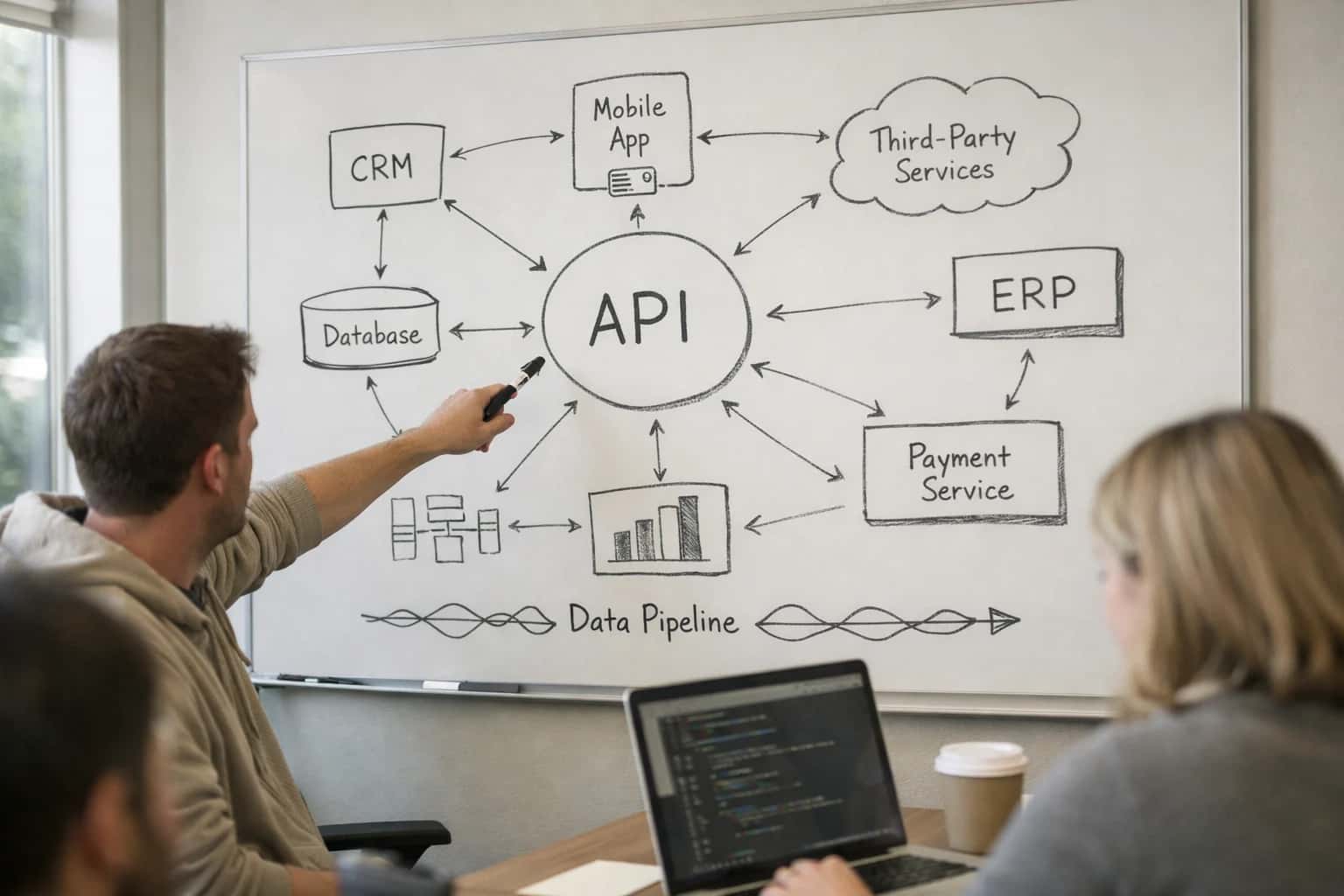
Where AI Fits in Lokalise System Integration
A technical blueprint for using AI to intelligently orchestrate content flow between Lokalise and connected systems like CMS, code repositories, and design tools.
The real orchestration happens in the data transformation and routing logic. A typical implementation uses a middleware service (often built with Node.js or Python) that sits between your systems and Lokalise. This service listens for events, calls AI models for classification and prioritization, and then uses the Lokalise API to perform actions like:
POST /projects/{projectId}/keysto create new translation keys with AI-generated context notes.POST /projects/{projectId}/tasksto create tasks, automatically assigning them based on AI-calculated string complexity and translator domain expertise.- Setting custom
keymetadata (likeai_priority_scoreorcontent_domain) to drive later automation. This middleware also handles the reverse flow, using AI to validate and transform translated content before it's synced back to your live environment, ensuring format and functional integrity.
Rollout and governance require a phased approach. Start by integrating AI into a single, high-volume content stream (e.g., your help center CMS) as a pilot. Implement clear audit trails by logging all AI-driven decisions—why a string was prioritized, which model made a suggestion—alongside Lokalise's native activity logs. Use feature flags to control AI automation, allowing fallback to manual processes. For teams managing this, the goal isn't full autonomy but augmented decision-making: AI handles the repetitive classification and routing, while your localization managers oversee strategy and handle exceptions. This architecture turns Lokalise from a translation database into an intelligent hub for your global content operations.
Key Integration Surfaces for AI in the Lokalise Stack
Connecting AI to Your Content Pipeline
Integrating AI with Lokalise's CMS connectors (e.g., Contentful, Sanity, WordPress) creates an intelligent routing layer for source content. AI can analyze newly published articles, product descriptions, or marketing copy to determine translation priority, target languages, and required terminology based on business rules (e.g., target market, campaign launch).
Example Workflow:
- A new blog post is published in your headless CMS.
- An AI agent, triggered by a webhook, evaluates the content's subject, sentiment, and intended audience.
- Based on pre-defined rules, the agent automatically creates a corresponding translation job in Lokalise, tags it with relevant project metadata, and applies the correct style guide.
- This eliminates manual triage and ensures high-impact content moves to the front of the localization queue.
High-Value AI Use Cases for Lokalise Integrations
Integrating Lokalise with other core systems (CMS, CRM, code repos) creates a powerful multilingual content hub. AI can intelligently route, transform, and prioritize content for translation, turning a static localization platform into a dynamic, automated content pipeline.
AI-Powered Content Routing from CMS
Automatically analyze new or updated content in your CMS (e.g., Contentful, Sanity, WordPress) to determine translation priority. AI classifies content by type (marketing page vs. blog post), target audience, and launch timeline, then creates and configures the corresponding Lokalise project via API. Workflow: CMS webhook → AI classifier → Lokalise API call for project creation, key import, and workflow assignment.
Intelligent Key Synchronization with Code Repos
Go beyond basic file sync. Use AI to analyze pull requests and code commits in GitHub/GitLab, identifying new or modified UI strings. The AI determines if changes are major (requiring immediate translation) or minor (can be batched), intelligently updates Lokalise keys via its API, and can even suggest key naming conventions for better organization. Workflow: Git webhook → AI diff analyzer → Conditional Lokalise key update.
CRM-Driven Translation Prioritization
Connect Lokalise to your CRM (Salesforce, HubSpot). AI analyzes deal stages, target regions, and customer segments to prioritize which product documentation, support articles, or marketing assets should be translated first. For example, automatically expedite translation of materials for a strategic deal in the EMEA pipeline. Workflow: CRM deal update → AI priority engine → Lokalise project priority & deadline adjustment via API.
Automated Context Enrichment for Translators
When strings are pushed to Lokalise from integrated systems (like a product spec in a PIM or a feature ticket in Jira), an AI agent automatically retrieves relevant context. It fetches related screenshots from Figma, technical descriptions from the PIM, or user story details, and attaches them as context to the Lokalise key, reducing translator back-and-forth. Workflow: Lokalise key creation webhook → AI context aggregator → Attach context via Lokalise API.
Cross-System Terminology Governance
Maintain a single source of truth for approved terms across your CMS, help desk, product, and Lokalise. An AI agent monitors new content across systems, flags potential term violations or inconsistencies against a master glossary, and automatically suggests corrections or creates enforcement tasks within Lokalise's workflow. Workflow: Multi-system content scan → AI term checker → Lokalise QA issue or comment creation.
Smart Sync-Back & Deployment Orchestration
When translations are approved in Lokalise, AI orchestrates their deployment back to the correct integrated systems. It determines the destination (CMS page, code repo branch, marketing email template) based on the key's metadata and the target environment (staging vs. production), triggering the appropriate deployment pipeline via webhooks. Workflow: Lokalise translation approved → AI deployment router → Target system webhook/API call.
Example AI-Augmented Integration Workflows
These workflows illustrate how AI agents can orchestrate content flow between Lokalise and connected systems like CMS, CRM, and code repositories. Each pattern automates a high-friction, manual process by using AI to intelligently route, transform, and validate content for translation.
Trigger: A content author publishes or updates a page in a headless CMS (e.g., Contentful, Sanity).
Context/Data Pulled: An AI agent monitors the CMS webhook. It fetches the new/updated content block, including its metadata (content type, page URL, target audience).
Model/Agent Action: The agent analyzes the content to determine:
- Priority: Is this a high-traffic landing page (urgent) or a low-visibility footer update (low)?
- Translation Scope: Should the entire block be sent, or only specific fields (e.g., exclude code snippets)?
- Context Enrichment: It automatically retrieves related pages or previous translations of similar components to provide context for translators.
System Update: Based on its analysis, the agent:
- Creates a new project or adds keys to an existing one in Lokalise via the API.
- Tags keys with metadata (e.g.,
priority:high,cms_id:abc123). - Attaches the retrieved context as a file or note to the Lokalise task.
- Routes the task to the appropriate translator team based on content domain.
Human Review Point: The agent flags any content it identifies as containing brand-new product terminology or potential regulatory language for mandatory pre-translation review by a subject matter expert.
Implementation Architecture: Data Flow & AI Layer
A practical blueprint for connecting Lokalise to your CMS, CRM, and code repositories with an intelligent AI orchestration layer.
The core architecture involves establishing Lokalise as the central translation system of record, with AI agents acting as intelligent routers and transformers between it and your connected platforms. Key integration points include:
- CMS Webhooks & APIs: AI monitors content updates in platforms like Contentful, Sanity, or WordPress. It analyzes new or modified content to determine translation priority, extracts relevant context (like surrounding components or metadata), and creates corresponding translation jobs in Lokalise via its
projects/{projectId}/jobsAPI. - Code Repository Hooks: AI agents listen for commits in GitHub, GitLab, or Bitbucket. They parse pull requests and source code to identify new or modified i18n keys (e.g.,
en.jsonfiles), validate key structure, and push these strings to the correct Lokalise project using thefiles/uploadendpoint, enriching the payload with context from related code comments or Jira issue IDs. - CRM & Product Data Sync: For e-commerce or SaaS products, AI connects Lokalise to systems like Salesforce or Shopify. It identifies customer-facing fields (product descriptions, support article titles) that require localization, batches updates, and ensures translated content is synced back with the correct record IDs and field mappings, maintaining data relationships.
The AI layer sits between these systems, performing context-aware transformations that a simple webhook cannot. For example, when a new marketing campaign page is published in the CMS, the AI doesn't just send all text to Lokalise. It first classifies content blocks—identifying that a "hero headline" requires transcreation for cultural impact, while "legal disclaimer" text needs precise, compliance-focused translation. It then structures the Lokalise job accordingly, attaching relevant brand guidelines and past approved translations as context via custom key metadata. This intelligent routing ensures the right translation resources and workflows are engaged from the start, reducing rework. The AI also handles the return flow: when translations are completed in Lokalise, it doesn't just push raw strings back. It validates that all placeholders ({variable}) are intact, checks for consistency with previously translated similar modules, and orchestrates the deployment to the correct environment (e.g., staging CMS, specific git branch).
Rollout should follow a phased, content-type-first approach. Start by integrating AI for a single, high-volume workflow—such as syncing UI strings from your main application repository. Implement governance from day one: all AI-suggested translations or routing decisions should generate an audit log in a separate system, and critical content types (legal, pricing) should have mandatory human-in-the-loop review steps configured in Lokalise workflows before sync-back. Use Lokalise's webhook status and the AI layer's own monitoring to track sync health, detecting failures like schema mismatches or API rate limits. This architecture turns Lokalise from a passive translation database into an active, intelligent hub for your global content operations, with AI managing the complex data flow logic between your product, marketing, and support ecosystems.
Code & Payload Examples
AI-Powered Content Routing from CMS
When a new article is published in your Content Management System (e.g., Contentful, Sanity), a webhook can trigger an AI agent to analyze the content and determine its translation priority for Lokalise. This Python handler uses an LLM to classify content and automatically create a translation job.
pythonimport requests import json from openai import OpenAI # Webhook endpoint triggered by CMS @app.route('/cms/webhook', methods=['POST']) def handle_cms_webhook(): payload = request.json content = payload.get('content') metadata = payload.get('metadata', {}) # AI Analysis: Determine translation priority & target locales client = OpenAI() response = client.chat.completions.create( model="gpt-4", messages=[ {"role": "system", "content": "Classify content for translation. Return JSON with keys: 'priority' (high/medium/low), 'target_locales' (array), 'estimated_effort' (string)."}, {"role": "user", "content": f"Content: {content[:1000]}. Metadata: {metadata}"} ], response_format={ "type": "json_object" } ) ai_decision = json.loads(response.choices[0].message.content) # Create Lokalise project/files via API lokalise_payload = { "project_id": "your_project_id", "keys": [ { "key_name": f"cms_article_{payload['id']}", "platforms": ["web"], "translations": [ { "language_iso": "en", "translation": content } ], "tags": [ai_decision.get('priority', 'medium')] } ] } # Post to Lokalise requests.post( "https://api.lokalise.com/api2/projects/{project_id}/keys", headers={"X-Api-Token": os.environ['LOKALISE_TOKEN']}, json=lokalise_payload ) return jsonify({"status": "routed", "ai_decision": ai_decision}), 200
Realistic Time Savings and Operational Impact
How adding AI to Lokalise integrations reduces manual overhead and accelerates content flow between core systems.
| Workflow | Before AI Integration | After AI Integration | Key Notes |
|---|---|---|---|
Content sync from source CMS | Manual file export/import or scripted batch jobs | Event-driven, intelligent routing based on content type and priority | AI classifies content (e.g., marketing vs. legal) for appropriate Lokalise project routing |
Translation job creation & scoping | Project manager reviews new strings, defines scope manually | AI auto-creates jobs, suggests linguist teams based on content domain | Human manager reviews and approves AI-generated project setup |
Terminology consistency across systems | Manual glossary updates in Lokalise; inconsistent field mapping | AI detects and suggests term mappings, auto-syncs glossaries with CRM/PIM | Ensures 'product name' in CMS equals 'product_name' in Lokalise, etc. |
Post-translation delivery to target systems | Manual download and deployment of translation files | Automated push to staging environments with AI-driven QA pre-check | Reduces deployment errors; AI flags potential integration issues before go-live |
Integration error handling & conflict resolution | Reactive support tickets, manual log analysis | Proactive AI monitoring detects sync failures, suggests fixes | Downtime for translation pipelines reduced from hours to minutes |
Reporting on cross-system translation status | Manual spreadsheet consolidation from Lokalise, CMS, and repo dashboards | Unified AI-generated report with insights on bottlenecks and ROI | Weekly reporting time cut from 4-6 hours to automated delivery |
Governance, Security, and Phased Rollout
A practical framework for deploying AI within Lokalise system integrations, ensuring controlled, secure, and measurable adoption.
When integrating AI into Lokalise's system connections—such as its webhooks, REST API, and sync adapters for CMS, CRM, or code repositories—governance starts with data classification and flow mapping. Define which content types (e.g., UI strings, marketing copy, legal disclaimers) can be processed by AI agents for tasks like intelligent routing, transformation, or pre-translation. Implement API-level controls using service accounts with scoped permissions, ensuring AI services only access the necessary Lokalise projects, keys, and translation memories. Audit trails should log all AI-triggered actions—like auto-creating translation jobs or modifying key metadata—back to the initiating system event and user context.
A phased rollout mitigates risk and proves value. Phase 1 (Pilot): Connect AI to a single, non-critical integration path, such as auto-tagging new strings imported from a staging CMS environment based on content analysis. Use this to validate data flow, cost, and quality. Phase 2 (Orchestration): Expand to multi-system workflows, where an AI agent decides, based on project metadata and content urgency, whether to route a batch of strings for immediate machine translation + human review or queue it for the next scheduled cycle. Implement human-in-the-loop approval gates for high-stakes content before Lokalise webhooks trigger downstream deployment.
Security extends to the AI models themselves. For integrations handling sensitive data, use privately hosted LLMs or ensure third-party AI API calls are proxied through a secure gateway with data anonymization where possible. Align with Lokalise's existing SSO and project-level roles to control which teams can enable AI features. Finally, establish a feedback loop: monitor AI suggestion acceptance rates within Lokalise and the impact on translation velocity. This data informs model tuning and justifies broader rollout, turning a tactical integration into a strategic system intelligence layer.
Enabling Efficiency, Speed & Accuracy
Intelligent Analysis, Decision & Execution
We build AI systems for teams that need search across company data, workflow automation across tools, or AI features inside products and internal software.
Talk to Us
Search across company data
Give teams answers from docs, tickets, runbooks, and product data with sources and permissions.
Useful when people spend too long searching or get different answers from different systems.

Automate internal workflows
Use AI to route work, draft outputs, trigger actions, and keep approvals and logs in place.
Useful when repetitive work moves across multiple tools and teams.

Add AI to products and internal tools
Build assistants, guided actions, or decision support into the software your team or customers already use.
Useful when AI needs to be part of the product, not a separate tool.
Frequently Asked Questions
Common technical and strategic questions about integrating AI agents and workflows with Lokalise to automate system-to-system content flows.
This is typically handled via Lokalise webhooks and its API. A common production pattern is:
- Trigger: A webhook from Lokalise fires on
key.addedorkey.modifiedevents. - Context Enrichment: Your AI agent receives the webhook payload (containing project ID, key IDs). It then calls the Lokalise API to fetch the full key data, including tags, filenames, and screenshots.
- System Query: The agent queries the connected source system (e.g., your headless CMS via its API) using the key name or a custom metadata field to retrieve the full source context, content model, and author information.
- AI Action: Based on enriched context, the agent decides on a workflow:
- Route: Tag the key for a specific translation vendor based on content domain (e.g.,
legal,marketing). - Transform: Pre-populate translation suggestions by extracting and reformatting data from the CMS (e.g., turning a product SKU from the CMS into a properly formatted translation key).
- Validate: Run an initial compliance check against a brand style guide stored in a vector database.
- Route: Tag the key for a specific translation vendor based on content domain (e.g.,
- System Update: The agent uses the Lokalise API to apply tags, add comments for translators, or update custom metadata fields on the key.
Example Payload for Context Enrichment:
json{ "event": "key.added", "project": { "id": "your-project-id", "name": "Web App" }, "key": { "id": 1234567, "name": "homepage.hero.title", "tags": ["web", "homepage"] } }

About the author
Prasad Kumkar
CEO & MD, Inference Systems
Prasad Kumkar is the CEO & MD of Inference Systems and writes about AI systems architecture, LLM infrastructure, model serving, evaluation, and production deployment. Over 5+ years, he has worked across computer vision models, L5 autonomous vehicle systems, and LLM research, with a focus on taking complex AI ideas into real-world engineering systems.
His work and writing cover AI systems, large language models, AI agents, multimodal systems, autonomous systems, inference optimization, RAG, evaluation, and production AI engineering.
Partnered with leading AI, data, and software stack.





How We Work
Custom AI workflows for your Business
One-fit-all AI don't work for modern businesses. At Inferensys, we aim to understand your business & custom requirements; which we use to define most efficient agentic workflows, the data, and the tools for your business.
01
Review the use case
We understand the task, the users, and where AI can actually help.
Read more02
Pick the right approach
We define what needs search, automation, or product integration.
Read more03
Build the first useful version
We implement the part that proves the value first.
Read more04
Improve from there
We add the checks and visibility needed to keep it useful.
Read moreThe first call is a practical review of your use case and the right next step.
Talk to Us