AI integration for Peek Pro itinerary drafting operates across three primary surfaces: the Product/Activity Database, the Booking/Reservation object, and the Customer/Contact record. The core workflow is triggered upon booking confirmation, where an AI agent ingests the booked activity IDs, participant details (from custom fields), and any prior customer history. It then queries Peek Pro's API for structured data on each activity—including duration, location, description, required gear, and linked guide bios—to construct a coherent, time-sequenced draft. This automation replaces manual copy-pasting between spreadsheets, calendars, and document templates, turning a 30-45 minute manual task into a sub-minute generated draft.

Integration
AI Integration with Peek Pro Itinerary Drafting
A practical guide to automating personalized, multi-day tour itinerary creation within Peek Pro using LLMs. Reduce manual drafting from hours to minutes by integrating activity databases, guide bios, and customer preferences.
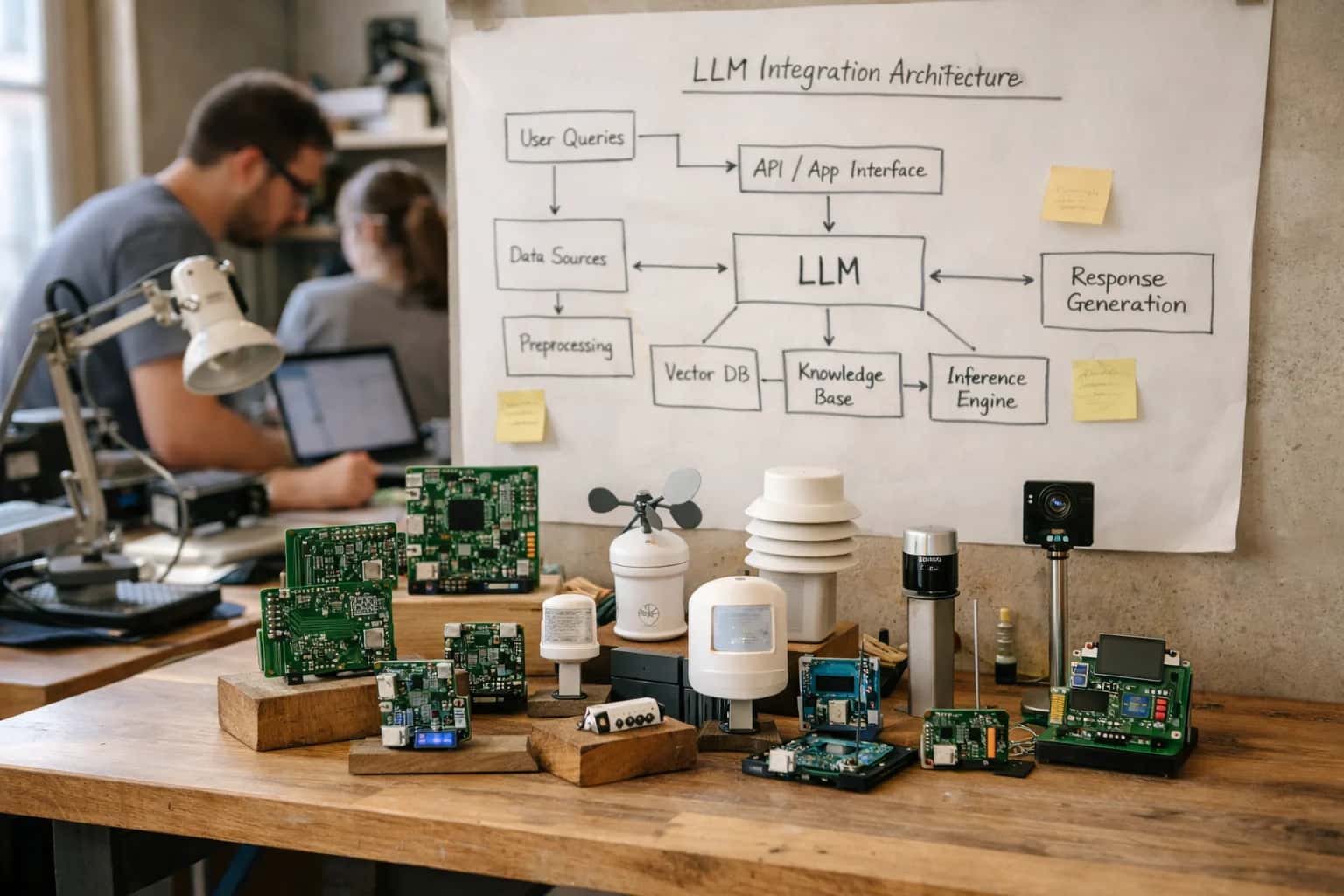
ARCHITECTURE & ROLLOUT
Where AI Fits into Peek Pro Itinerary Workflows
A technical blueprint for automating multi-day tour itinerary creation by connecting LLMs to Peek Pro's activity database, customer records, and booking engine.
Implementation requires building a middleware service that listens to Peek Pro's booking.created or booking.updated webhooks. This service calls the Peek Pro REST API to fetch all relevant data, then structures a prompt for an LLM (like GPT-4 or Claude) with clear instructions on format, tone, and inclusion of key logistical details. The generated itinerary is typically stored as a rich-text note on the booking record via API and simultaneously emailed as a PDF attachment. For personalization, the system can incorporate data from a synced CRM (like HubSpot) for known customer preferences or past feedback. Critical governance points include a human-in-the-loop review step before customer sending, configurable approval rules based on trip complexity or value, and full audit logging of all generated content linked to the booking ID.
Rollout should be phased, starting with a single tour product or destination to refine prompts and data mappings. Success is measured by time saved per itinerary, reduction in customer queries for missing information, and guide satisfaction with the clarity and accuracy of pre-loaded schedules. The final architecture is lightweight: a secure cloud function, a vector cache for fast activity data retrieval, and a simple dashboard for ops managers to monitor generation volume, review queue status, and tweak prompt templates without developer intervention.
ARCHITECTURE FOR AI-DRIVEN ITINERARY DRAFTING
Key Integration Surfaces in Peek Pro
The Foundation for AI-Generated Itineraries
The Peek Pro product catalog—containing tours, activities, add-ons, and their metadata—is the primary data source for AI-driven itinerary drafting. Integration focuses on enriching this catalog to enable intelligent, personalized assembly.
Key Data Points for AI:
- Activity Attributes: Duration, difficulty, location, required equipment, seasonality, capacity, and pricing tiers.
- Temporal Constraints: Start times, operating days, blackout dates, and lead time requirements.
- Relational Data: Prerequisite activities, incompatible pairings (e.g., two water-based tours same day), and logical sequences (transport before activity).
An AI model consumes this structured catalog via the Peek Pro API, along with customer preferences (group size, interests, fitness level), to generate a coherent, feasible multi-day draft. The integration must also write back AI-generated activity descriptions and tags to the catalog for improved future recommendations.
PEAK PRO INTEGRATION PATTERNS
High-Value AI Itinerary Use Cases
Integrating LLMs directly into Peek Pro's itinerary drafting workflow automates the creation of personalized, multi-day tour plans. These patterns connect to your activity database, guide bios, and customer preferences to generate production-ready drafts in minutes, not hours.
01
Automated Multi-Day Itinerary Drafting
An AI agent consumes a booking's details—guest count, dates, preferences, and selected activities—to generate a structured, day-by-day itinerary draft within Peek Pro. It pulls descriptions from your activity database, inserts guide bios, and formats for immediate guide or sales review.
Hours -> Minutes
Draft creation
02
Personalized Upsell & Add-On Insertion
Based on the drafted itinerary and customer profile (e.g., family with kids, adventure seekers), the AI suggests relevant add-ons and optional extras from your Peek Pro product catalog. It inserts these as pre-checked options or highlighted recommendations directly into the itinerary document sent to the customer.
Context-Aware
Recommendations
03
Dynamic Content for Weather & Conditions
The integration calls a weather API at the time of itinerary generation or customer send-out. The LLM dynamically adjusts activity descriptions, packing suggestions, and alternative indoor options within the Peek Pro itinerary based on the forecast, ensuring relevance and reducing last-minute changes.
Real-time
Content adaptation
04
Automated Guide & Resource Assignment
For complex tours requiring specific guide certifications or equipment, the AI reviews the drafted itinerary, checks guide availability and skills in Peek Pro, and suggests optimal assignments. It can also flag resource conflicts (e.g., vehicle double-booking) before the itinerary is finalized.
Proactive
Conflict detection
05
Localized Itinerary for International Guests
The AI detects the customer's country of origin from the booking and localizes the itinerary. This includes translating key phrases, converting currencies for add-on prices, adding relevant travel tips, and adjusting meeting times to the customer's local timezone—all within the Peek Pro document.
Batch -> Personalized
Document generation
06
Compliance & Safety Checklist Integration
The LLM cross-references the itinerary's activities against a centralized compliance rulebook. It automatically appends required safety briefings, liability waiver reminders, and mandatory gear lists to the Peek Pro itinerary, ensuring every customer document meets operational and legal standards.
Audit-Ready
Every itinerary
IMPLEMENTATION PATTERNS
Example AI-Powered Itinerary Workflows
These workflows illustrate how LLMs can be integrated into Peek Pro to automate the creation, personalization, and management of multi-day tour itineraries. Each pattern connects to specific Peek Pro APIs and data objects.
Trigger: A new multi-day tour booking is confirmed in Peek Pro.
Context/Data Pulled:
- The booking record, including customer contact details, selected tour product ID, and participant count.
- The associated tour product details from Peek Pro's Activity/Product API, including a master itinerary outline, included activities, and available add-ons.
- Guide bios and vehicle assignments from the schedule for the booked dates.
Model or Agent Action: An LLM is prompted with the structured data to generate a cohesive, narrative-style day-by-day itinerary. The prompt instructs the model to:
- Use the master outline as a skeleton.
- Insert specific guide names and vehicle details.
- Personalize greeting text with the customer's name.
- Recommend relevant add-ons (e.g., "Based on your group size, consider adding a private photography workshop").
System Update or Next Step: The generated draft is saved as a rich-text note attached to the Peek Pro booking record via the API. A task is created in Peek Pro's task manager or sent via webhook to Slack/Teams for the operations manager to review.
Human Review Point: The operations manager reviews the draft for accuracy, tone, and safety information before it is approved for sending to the customer.
PRODUCTION-READY INTEGRATION PATTERN
Implementation Architecture: Data Flow & Guardrails
A secure, governed architecture for generating personalized itineraries by connecting LLMs to Peek Pro's activity database and customer records.
The core integration connects via Peek Pro's REST API to two primary data sources: the Activities/Products module (for descriptions, durations, locations, and pricing) and the Bookings/Reservations module (for customer details, party size, and special requests). An orchestration layer, often built with a framework like CrewAI or n8n, queries these APIs, structures the data into a prompt context, and calls a configured LLM (e.g., GPT-4, Claude 3) via a secure gateway. The generated draft itinerary—formatted as structured JSON or markdown—is then posted back to a custom field in the booking record or attached as a note, triggering an internal review workflow.
Critical guardrails are implemented at multiple layers: Input validation ensures customer PII is masked before prompt assembly. Output validation uses a secondary, smaller LLM or rule-based checks to verify that the draft includes all booked activities, respects time constraints, and adheres to company tone guidelines. A human-in-the-loop approval step is configured in Peek Pro's task system or a connected tool like Slack, requiring a manager or coordinator to review and publish the final itinerary before it's sent to the customer via Peek Pro's native email or SMS tools.
Rollout follows a phased approach: start with a pilot for a single tour product, using the integration to generate drafts that staff then manually refine. This creates a gold-standard dataset for fine-tuning and validation. Log all prompts, contexts, and outputs to a vector database like Pinecone for performance auditing and to enable a RAG-based copilot that lets staff search past successful itineraries. Governance is maintained through API rate limiting, comprehensive audit logs of all AI-generated content edits, and scheduled evaluations against key metrics like draft acceptance rate and time saved per booking.
IMPLEMENTATION PATTERNS
Code & Payload Examples
Calling the LLM with Tour Context
This example shows a Python service that calls an LLM (like GPT-4) to generate a personalized itinerary draft. It fetches structured activity data from Peek Pro's API and customer preferences from a CRM sync to create a context-rich prompt.
pythonimport requests import json # 1. Fetch tour product details from Peek Pro API def get_tour_details(tour_id, api_key): url = f"https://api.peek.com/v1/tours/{tour_id}" headers = {"Authorization": f"Bearer {api_key}"} response = requests.get(url, headers=headers) return response.json() # Returns name, description, duration, inclusions # 2. Construct LLM prompt with structured data def build_itinerary_prompt(tour_details, customer_name, preferences): prompt = f""" You are a professional tour itinerary writer. Draft a personalized, day-by-day itinerary. TOUR: {tour_details['name']} - {tour_details['description']} DURATION: {tour_details['duration_days']} days CUSTOMER: {customer_name} PREFERENCES: {preferences} INCLUSIONS: {', '.join(tour_details['inclusions'])} Generate a welcoming, detailed itinerary that: - Starts with a greeting using the customer's name. - Lists each day with a suggested schedule, including meal times. - Highlights key activities from the tour inclusions. - Incorporates the customer's preferences (e.g., 'likes hiking', 'dietary restrictions'). - Ends with practical reminders (what to bring, meeting point). """ return prompt # 3. Call LLM API (e.g., OpenAI) def generate_itinerary_draft(prompt, llm_api_key): headers = { "Authorization": f"Bearer {llm_api_key}", "Content-Type": "application/json" } payload = { "model": "gpt-4", "messages": [{"role": "user", "content": prompt}], "temperature": 0.7 } response = requests.post("https://api.openai.com/v1/chat/completions", headers=headers, json=payload) return response.json()['choices'][0]['message']['content']
This service can be triggered by a Peek Pro webhook for new bookings or run as a batch job for upcoming trips.
AI-ASSISTED ITINERARY DRAFTING
Realistic Time Savings & Operational Impact
How AI integration transforms manual, repetitive itinerary creation into a guided, personalized drafting process within Peek Pro.
| Workflow Stage | Before AI | After AI | Operational Impact |
|---|---|---|---|
Initial Draft Creation | 2-4 hours of manual copy-paste from templates | 15-20 minutes for AI-generated first draft | Ops team can handle 4-5x more custom itinerary requests |
Personalization & Detail Insertion | Manual review of customer notes to insert names, preferences, dietary needs | AI auto-populates known details; human reviews for accuracy | Reduces personalization errors and ensures consistent branding |
Activity & Guide Matching | Cross-reference spreadsheets and calendars to assign guides to activities | AI suggests optimal guide matches based on skills, location, and ratings | Improves guide utilization and customer satisfaction scores |
Pricing & Upsell Inclusion | Manual calculation of add-ons and package pricing | AI applies dynamic pricing rules and suggests relevant upsells | Increases average booking value through consistent, personalized offers |
Formatting & Brand Compliance | Manual adjustment of fonts, logos, and layout for each draft | AI outputs drafts in pre-approved brand templates | Ensures professional, on-brand client communications every time |
Client Review & Revision Cycle | 3-5 email exchanges over 2-3 days for minor changes | AI enables quick re-generation; final human review before sending | Shortens sales cycle and improves client perception of responsiveness |
Data Entry into Peek Pro | Manual creation of itinerary as a 'Product' or 'Note' in Peek Pro | Automated creation via API using the finalized AI draft | Eliminates double-entry, ensuring system of record is always current |
ARCHITECTING FOR PRODUCTION
Governance, Security & Phased Rollout
A practical guide to deploying AI itinerary drafting in Peek Pro with controlled risk and measurable impact.
A production-grade integration connects to Peek Pro's Activities API and Customer/Booking objects to source data for itinerary generation. The AI model operates as a separate microservice, triggered via webhook from a booking confirmation or a manual request in the Peek Pro operator dashboard. All generated drafts are stored as draft itinerary records linked to the booking, not published directly, ensuring a human-in-the-loop review step. API calls are authenticated via OAuth 2.0, and customer PII (like names and contact details) is masked or tokenized before being sent to the LLM for processing, maintaining data residency and privacy compliance.
Rollout follows a phased, risk-managed approach:
- Phase 1 (Pilot): Enable AI drafting for a single, low-risk product category (e.g., half-day city tours). Itineraries are generated for internal review only, allowing ops teams to refine prompts and evaluate output quality against a checklist of accuracy, tone, and personalization.
- Phase 2 (Controlled Release): Activate the workflow for trusted, repeat customers. Drafts are automatically appended to the booking record in Peek Pro, triggering a Slack notification to a designated itinerary manager for approval and final edits before being emailed to the customer.
- Phase 3 (Scale): Expand to all products and customer segments. Implement automated quality scoring based on guide feedback and customer engagement metrics (e.g., email open rates on itineraries). Introduce A/B testing to compare AI-generated drafts against manual ones for key conversion and satisfaction metrics.
Governance is maintained through an audit log tracking every draft generation—recording the source data, model version, prompt used, and the reviewing agent. A fallback protocol reverts to manual template-based drafting if the AI service is unavailable or generates low-confidence output. Regular reviews of cost (per itinerary) and operational time saved (measured in hours per week for itinerary planners) provide the business case for scaling the integration. This structured approach ensures the AI augments the team's workflow without introducing unmanaged risk into the customer experience.
Enabling Efficiency, Speed & Accuracy
Intelligent Analysis, Decision & Execution
We build AI systems for teams that need search across company data, workflow automation across tools, or AI features inside products and internal software.
Talk to Us
Search across company data
Give teams answers from docs, tickets, runbooks, and product data with sources and permissions.
Useful when people spend too long searching or get different answers from different systems.
Enterprise searchRAGPermissions
Read more
Automate internal workflows
Use AI to route work, draft outputs, trigger actions, and keep approvals and logs in place.
Useful when repetitive work moves across multiple tools and teams.
AI agentsWorkflow automationGovernance
Read more
Add AI to products and internal tools
Build assistants, guided actions, or decision support into the software your team or customers already use.
Useful when AI needs to be part of the product, not a separate tool.
AI integrationDecision supportModel routing
Read moreIMPLEMENTATION BLUEPRINT
Frequently Asked Questions
Common technical and operational questions for integrating generative AI into Peek Pro's itinerary drafting workflows.
The integration uses Peek Pro's REST API and webhooks to pull structured data in real-time.
Typical data flow:
- Trigger: A new booking is confirmed or a "Draft Itinerary" action is initiated in Peek Pro.
- Context Pull: The system fetches:
- Booking details (customer names, dates, participant count)
- Selected activities from the Peek Pro product catalog (names, descriptions, durations, locations)
- Guide bios and certifications from the guide management module
- Customer notes or preferences from custom booking fields
- Orchestration: This structured data is formatted into a prompt context and sent to the LLM (e.g., GPT-4, Claude 3) via a secure, governed inference endpoint.
- Generation: The model generates a narrative, day-by-day itinerary, incorporating activity sequences, logistical notes, and personalized welcome messages.
- System Update: The draft is posted back to Peek Pro as a rich-text note on the booking record or attached as a PDF, ready for guide or operator review and editing.

About the author
Prasad Kumkar
CEO & MD, Inference Systems
Prasad Kumkar is the CEO & MD of Inference Systems and writes about AI systems architecture, LLM infrastructure, model serving, evaluation, and production deployment. Over 5+ years, he has worked across computer vision models, L5 autonomous vehicle systems, and LLM research, with a focus on taking complex AI ideas into real-world engineering systems.
His work and writing cover AI systems, large language models, AI agents, multimodal systems, autonomous systems, inference optimization, RAG, evaluation, and production AI engineering.
LinkedIn
Limited slotsGet a Free AI Consultation
Partnered with leading AI, data, and software stack.





How We Work
Custom AI workflows for your Business
One-fit-all AI don't work for modern businesses. At Inferensys, we aim to understand your business & custom requirements; which we use to define most efficient agentic workflows, the data, and the tools for your business.
01
Review the use case
We understand the task, the users, and where AI can actually help.
Read more02
Pick the right approach
We define what needs search, automation, or product integration.
Read more03
Build the first useful version
We implement the part that proves the value first.
Read more04
Improve from there
We add the checks and visibility needed to keep it useful.
Read moreThe first call is a practical review of your use case and the right next step.
Talk to Us