AI-driven lead scoring connects directly to the FareHarbor API and its webhook system, analyzing the rich context of each inbound inquiry or booking request. Key data points for the model include the tour product selected, requested date/time, group size, lead source (e.g., website widget, OTA, email), custom form fields, and any customer history from past bookings. This analysis happens in real-time, assigning a predictive score for conversion likelihood before the lead is even assigned to a sales rep in FareHarbor's dashboard.

Integration
AI Integration for FareHarbor Lead Scoring
A practical guide to implementing AI-driven lead scoring for FareHarbor. Learn how to predict conversion likelihood from inbound inquiries, prioritize sales follow-up, and optimize marketing spend using FareHarbor's API and webhooks.
ARCHITECTURE AND IMPLEMENTATION
Where AI Fits into FareHarbor Lead Management
A technical blueprint for applying AI models to inbound inquiries captured in FareHarbor to prioritize sales follow-up and optimize marketing spend.
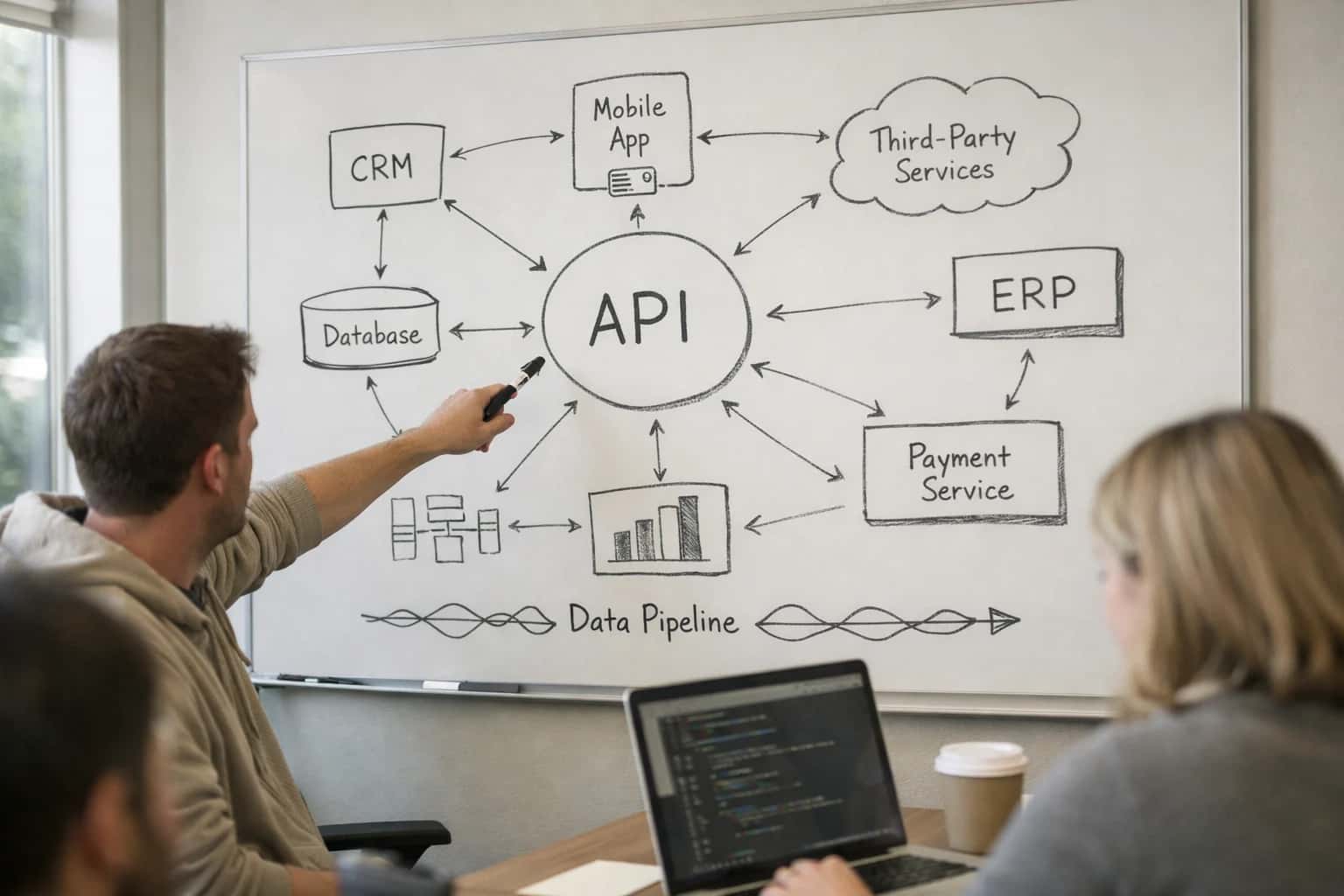
The implementation typically involves a lightweight service that subscribes to FareHarbor's inquiry.created webhook. This service calls an AI model (e.g., a fine-tuned classifier or a model using retrieval-augmented generation for context) to evaluate the lead against historical conversion patterns. The score and reasoning are then written back to a custom field in FareHarbor via the API, or used to trigger immediate actions like priority tagging, automated SMS follow-up, or routing to a specific sales team based on predicted value or urgency. This turns FareHarbor from a passive booking ledger into an intelligent lead triage engine.
Rollout focuses on a feedback loop: initial scores are used to prioritize manual outreach, and subsequent booking conversion events are fed back into the model for continuous retraining. Governance is critical—scores should be explainable, and a human-in-the-loop review period is recommended to audit AI recommendations before fully automating lead routing. This integration, detailed further in our guide on FareHarbor API Workflows, allows operators to shift resources from manual lead sorting to high-touch sales on the most promising opportunities, often improving same-day contact rates for hot leads from hours to minutes.
ARCHITECTURE BLUEPRINT
FareHarbor Touchpoints for AI Lead Scoring
Core Data Models for Scoring
AI lead scoring in FareHarbor begins with the platform's native data objects. The primary surfaces are the Inquiry and Contact records, which capture the initial customer intent and profile.
Key fields for model input include:
inquiry_source(e.g., website widget, phone, email)activity_idandtour_type(indicating product interest)group_sizeandrequested_date(signal of intent and urgency)contact_created_atand past booking history for recency/frequency analysis.
An AI model consumes this structured data, plus any unstructured notes from the inquiry_message field, to generate a conversion probability score (e.g., 0-100). This score should be written back to a custom field like lead_score_ai on the Contact record, enabling segmentation and workflow triggers within FareHarbor's own rule engine.
FAREHARBOR INTEGRATION PATTERNS
High-Value AI Lead Scoring Use Cases for Tour Operators
Transform inbound inquiries captured in FareHarbor into prioritized, actionable sales opportunities. These AI-powered workflows analyze lead intent, customer fit, and booking signals to focus your team on the highest-value prospects.
01
Website Form Inquiry Triage
Analyze free-text notes and custom fields from FareHarbor's contact forms. An AI model classifies inquiries by intent (e.g., 'corporate retreat', 'family reunion', 'last-minute booking') and urgency, then assigns a score and routes to the appropriate sales queue.
Batch -> Real-time
Lead routing
02
Multi-Tour Quote Comparison Scoring
When a lead requests quotes for multiple activities or dates, AI evaluates the complexity, group size, and potential revenue of each option. It scores the overall opportunity based on the combined value and likelihood of closing a multi-booking package.
1 sprint
To implement
03
Historical Look-Alike Matching
Enrich new leads by comparing them to past successful bookings in FareHarbor. The AI identifies patterns in customer origin, booking channel, activity type, and communication preference to predict conversion likelihood and suggest proven follow-up strategies.
Hours -> Minutes
Profile analysis
04
Abandoned Cart & Partial Booking Scoring
Monitor FareHarbor for carts where payment wasn't completed. AI scores the recovery potential based on how far the user got (contact info entered vs. payment details), time of day, and activity popularity, triggering prioritized re-engagement sequences.
Same day
Recovery window
05
Channel-Specific Lead Quality
Integrate lead source data from FareHarbor's UTM parameters or channel fields. AI models learn which referral websites, social campaigns, or OTA partners historically produce high-value, low-maintenance bookings, adjusting lead scores to reflect true channel quality.
Batch -> Real-time
Channel attribution
06
Dynamic Score Decay & Reactivation
Implement a scoring model where lead scores automatically decay over time if no engagement occurs. AI monitors for re-engagement signals (e.g., revisiting the website, opening a follow-up email) to reactivate and re-prioritize the lead in the sales queue.
Hours -> Minutes
Priority refresh
FAREHARBOR IMPLEMENTATION PATTERNS
Example AI-Enhanced Lead Scoring Workflows
These workflows demonstrate how to apply AI models to inbound website leads and inquiries captured in FareHarbor to predict conversion likelihood, prioritize sales follow-up, and allocate marketing resources effectively. Each pattern is triggered by FareHarbor webhooks and updates lead scores via API.
Trigger: A new lead submits a contact or custom quote request form on your website, which creates a record in FareHarbor.
Context/Data Pulled:
- The raw inquiry text from the form.
- Lead source (e.g., Google Ads, organic search, referral).
- Requested tour/product and party size.
- Associated customer record data (if returning).
Model or Agent Action: An AI model analyzes the inquiry text and metadata to generate a score (0-100) and a reason code.
json{ "score": 78, "confidence": 0.92, "primary_signals": [ "specific_date_requested", "large_group_size", "urgent_language_tone" ], "recommended_action": "call_within_1_hour", "predicted_product": "private_sunset_cruise" }
System Update or Next Step: The score and metadata are written back to a custom field on the FareHarbor lead/booking record. A high-priority lead automatically triggers:
- An immediate notification in your team's Slack channel.
- Creation of a high-priority task in your connected CRM (e.g., Salesforce).
- An automated, personalized acknowledgment email with a tentative hold on the requested date.
Human Review Point: Scores below a confidence threshold (e.g., < 0.8) are flagged for manual review in a dedicated queue before any automated outreach is sent.
FROM INQUIRY TO ACTIONABLE SCORE
Implementation Architecture: Data Flow & System Design
A production-ready architecture for embedding AI-driven lead scoring directly into FareHarbor's inquiry and booking workflows.
The integration connects at two primary surfaces within FareHarbor: the Inquiry/Contact Form API for real-time scoring of new leads, and the Bookings & Customers API for batch scoring of existing contacts. A lightweight middleware service, deployed as a serverless function (e.g., AWS Lambda, Google Cloud Run), listens for FareHarbor webhooks on new form submissions or scheduled batch jobs. This service extracts key fields—inquiry_source, activity_interest, group_size, requested_date, customer_email, and any custom form fields—and enriches the data with first-party signals from your CRM (e.g., past booking history via a Salesforce sync) and third-party data (e.g., company domain from Clearbit). This enriched payload is sent to a hosted AI model endpoint.
The scoring model, typically a fine-tuned classifier (e.g., XGBoost or a small transformer), evaluates the lead against historical conversion patterns. It returns a score (0-100), a priority tier (Hot/Warm/Cold), and key reasons (e.g., 'High intent due to near-term date request and large group size'). The middleware then performs two actions: 1) It writes the score and metadata back to FareHarbor using custom fields in the Contact or Booking record, and 2) It triggers downstream workflows via webhooks to your sales stack—such as creating a high-priority task in your team's Slack channel, adding a 'Hot Lead' tag in HubSpot, or assigning the lead to a specific sales rep in your round-robin queue.
Governance is built into the flow. All scores and the data used to generate them are logged to an audit table for periodic model review and calibration. A human-in-the-loop override is essential; sales reps can flag incorrect scores in FareHarbor, which feeds back as correction data to retrain the model. Rollout follows a phased approach: start with a shadow mode that scores leads but doesn't trigger automation, validate accuracy against actual conversion data for 2-4 weeks, then gradually activate priority routing for only the highest-confidence tiers. This architecture ensures the system augments—rather than replaces—sales judgment, turning FareHarbor from a passive booking system into an intelligent lead routing engine.
FAREHARBOR LEAD SCORING
Code & Payload Examples
Ingesting New Leads from FareHarbor
When a new inquiry is submitted via a FareHarbor widget or contact form, FareHarbor can send a webhook to your AI service. This payload contains the initial lead data. The first step is to enrich this data by fetching the full contact record and any associated booking history via the FareHarbor API to build a complete profile for scoring.
python# Example: Webhook endpoint to receive and enrich a new lead from fastapi import FastAPI, Request import httpx app = FastAPI() FA_REHARBOR_API_KEY = "your_api_key" FA_REHARBOR_API_BASE = "https://fareharbor.com/api/external/v1/" @app.post("/webhooks/fareharbor-lead") async def handle_new_lead(request: Request): payload = await request.json() lead_id = payload.get("lead", {}).get("pk") # Fetch enriched lead details from FareHarbor API async with httpx.AsyncClient() as client: headers = {"X-FareHarbor-API-Key": FA_REHARBOR_API_KEY} resp = await client.get( f"{FA_REHARBOR_API_BASE}companies/yourcompany/leads/{lead_id}/", headers=headers ) full_lead_data = resp.json() # Pass enriched data to scoring queue await queue_scoring_job(full_lead_data) return {"status": "enqueued"}
LEAD SCORING WORKFLOW
Realistic Time Savings & Operational Impact
How AI-assisted lead scoring changes daily operations for a FareHarbor-powered tour operator.
| Metric | Before AI | After AI | Notes |
|---|---|---|---|
Lead qualification time per inquiry | 15-30 minutes manual review | 2-5 minutes assisted review | AI pre-scores based on intent, booking history, and inquiry text |
Sales team prioritization | Manual sorting by date received | Queue sorted by predicted conversion score | Focuses effort on high-intent leads likely to book this season |
Marketing follow-up timing | Batch sends next business day | Automated, personalized sequences within 1 hour | Triggers based on lead score and captured data points |
Lead-to-opportunity conversion rate | Baseline (e.g., 15%) | ++ 5-10 percentage points | Improvement from faster, more relevant engagement with hot leads |
Lead routing accuracy | Based on simple rules or round-robin | Skill-based + intent-based assignment | Routes complex group inquiries to specialized sales, simple bookings to general team |
Resource allocation for follow-up | Static budget spread across all leads | Dynamic spend focused on high-score segments | Reduces wasted ad spend on low-intent audiences, increases ROI |
Reporting on lead source quality | Monthly manual report compilation | Real-time dashboard with AI insights | Automatically attributes value and ranks channels (e.g., website form vs. OTA inquiry) |
PRACTICAL IMPLEMENTATION
Governance, Security & Phased Rollout
A responsible AI integration for FareHarbor lead scoring requires careful planning around data access, model governance, and incremental deployment.
The integration architecture typically connects to FareHarbor's REST API and webhook events for real-time lead capture. A secure middleware layer ingests lead data—including inquiry source, product interest, custom form fields, and historical booking patterns—and passes it to a hosted AI model for scoring. All data flows should be encrypted in transit, and API keys must be scoped with the principle of least privilege, accessing only the necessary bookings, customers, and inquiries objects. Scores and reasoning are written back to custom fields in FareHarbor or to a separate operational database to trigger downstream actions in your CRM or marketing automation tools.
Governance is centered on model monitoring and human review. Initial models are trained on historical conversion data, but performance must be tracked against actual sales outcomes. We recommend implementing a feedback loop where sales reps can flag incorrect scores via a simple interface, which is then used for model retraining. An audit log should track every score generated, the key factors influencing it, and any subsequent manual overrides to ensure transparency and facilitate compliance reviews.
A phased rollout minimizes risk and builds organizational trust. Phase 1 involves a shadow mode where the model scores leads but does not influence workflow; scores are compared to human intuition in a dashboard. Phase 2 introduces automation for low-stakes actions, such as tagging high-intent leads in FareHarbor or adding them to a "warm" marketing segment. Phase 3, after validation, enables the core use case: automatically prioritizing the sales team's follow-up queue in a connected tool like Salesforce or HubSpot based on the AI-predicted conversion likelihood, turning hours of manual triage into a prioritized, actionable list.
Enabling Efficiency, Speed & Accuracy
Intelligent Analysis, Decision & Execution
We build AI systems for teams that need search across company data, workflow automation across tools, or AI features inside products and internal software.
Talk to Us
Search across company data
Give teams answers from docs, tickets, runbooks, and product data with sources and permissions.
Useful when people spend too long searching or get different answers from different systems.
Enterprise searchRAGPermissions
Read more
Automate internal workflows
Use AI to route work, draft outputs, trigger actions, and keep approvals and logs in place.
Useful when repetitive work moves across multiple tools and teams.
AI agentsWorkflow automationGovernance
Read more
Add AI to products and internal tools
Build assistants, guided actions, or decision support into the software your team or customers already use.
Useful when AI needs to be part of the product, not a separate tool.
AI integrationDecision supportModel routing
Read moreIMPLEMENTATION DETAILS
Frequently Asked Questions
Common technical and strategic questions about implementing AI-driven lead scoring for inbound inquiries captured in FareHarbor.
The AI model's accuracy depends on the quality and relevance of the data you feed it. The most valuable data points typically come from FareHarbor's API and webhook payloads:
- Inquiry Form Data:
customer_name,email,phone,group_size,requested_date,tour_product,custom_fields(e.g., "How did you hear about us?"). - Customer & Booking History: Previous booking count, total spend, cancellation history, and any saved notes from past interactions.
- Inquiry Metadata: Time of day, day of week, referral source (direct, OTA, partner site), and device type.
- Product Context: The specific tour or activity's price point, seasonality, and typical booking lead time.
We architect a pipeline that extracts and unifies this data, often enriching it with external signals (like company domain from the email) before vectorizing it for the model. The goal is to create a composite profile that predicts not just interest, but purchasing intent and customer lifetime value.

About the author
Prasad Kumkar
CEO & MD, Inference Systems
Prasad Kumkar is the CEO & MD of Inference Systems and writes about AI systems architecture, LLM infrastructure, model serving, evaluation, and production deployment. Over 5+ years, he has worked across computer vision models, L5 autonomous vehicle systems, and LLM research, with a focus on taking complex AI ideas into real-world engineering systems.
His work and writing cover AI systems, large language models, AI agents, multimodal systems, autonomous systems, inference optimization, RAG, evaluation, and production AI engineering.
LinkedIn
Limited slotsGet a Free AI Consultation
Partnered with leading AI, data, and software stack.





How We Work
Custom AI workflows for your Business
One-fit-all AI don't work for modern businesses. At Inferensys, we aim to understand your business & custom requirements; which we use to define most efficient agentic workflows, the data, and the tools for your business.
01
Review the use case
We understand the task, the users, and where AI can actually help.
Read more02
Pick the right approach
We define what needs search, automation, or product integration.
Read more03
Build the first useful version
We implement the part that proves the value first.
Read more04
Improve from there
We add the checks and visibility needed to keep it useful.
Read moreThe first call is a practical review of your use case and the right next step.
Talk to Us