
Inferensys

Integration

AI Patient Portal Chatbots for Telehealth

Deploy secure, HIPAA-compliant AI chatbots within telemedicine patient portals (e.g., Mend, Teladoc Health) for 24/7 symptom guidance, appointment management, and billing questions.
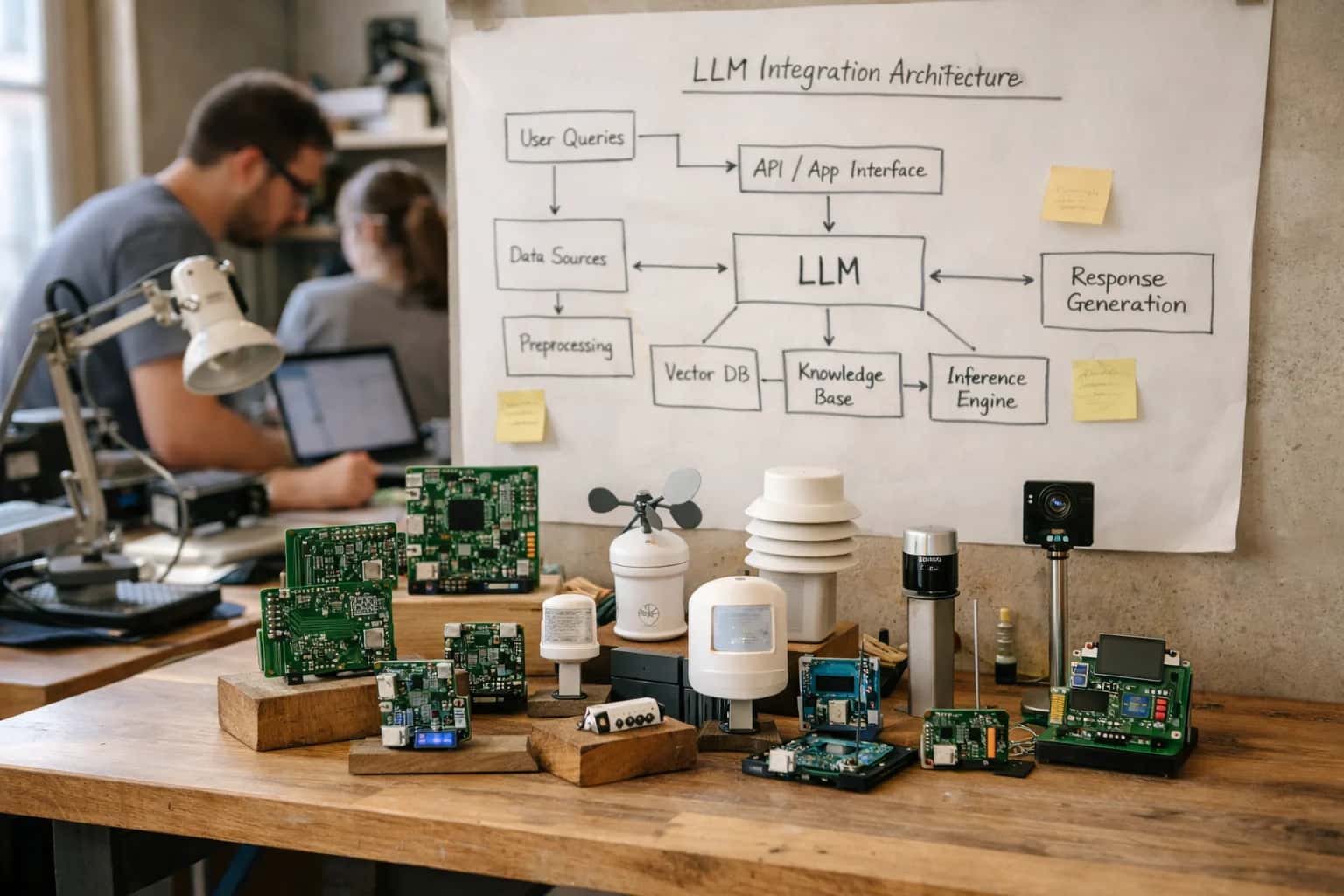
Hardware engineer integrating LLM with IoT sensors, circuit boards on desk, soldering iron nearby, maker lab aesthetic.
ARCHITECTURE AND IMPLEMENTATION PATTERNS

Where AI Chatbots Fit in the Telehealth Patient Portal

A practical guide to integrating secure, conversational AI into the core surfaces of platforms like Mend, Teladoc Health, and Amwell.

An effective AI chatbot is not a standalone widget; it's a workflow engine that connects to the patient portal's user interface layer, data model, and automation APIs. Key integration points include:

  • Pre-Visit Intake Surfaces: Replacing static forms with conversational data collection that writes to custom fields or patient record objects via platform APIs (e.g., POST /api/v1/patients/{id}/intake).
  • Post-Visit Follow-Up Modules: Triggering AI-driven check-in conversations based on visit completion webhooks, with responses logged as clinical notes or task items.
  • Secure Messaging Interfaces: Augmenting provider-patient messaging threads with AI draft responses for common FAQs (e.g., medication questions, billing), requiring RBAC to enforce clinician review before sending.
  • Resource and Education Libraries: Powering a natural-language search layer over platform-hosted care plans, consent forms, and educational PDFs using a RAG pipeline with a vector store like Pinecone.


Implementation follows a phased, event-driven pattern. A typical workflow for symptom guidance begins when a patient initiates a chat session. The AI agent, built with a framework like CrewAI or Microsoft Copilot Studio, first authenticates the session against the portal's identity provider (e.g., Okta). It then retrieves the patient's recent visit history and active conditions via the platform's FHIR or REST API. Using this context, the agent conducts a structured interview, mapping symptoms to a triage protocol. High-risk responses immediately create a high-priority support ticket in the platform's task queue and can trigger an automated callback request via Twilio integration. All interactions are logged as audit trail entries with a unique session ID for compliance.

Rollout requires careful governance. Start with a single, high-volume use case like prescription refill requests or appointment rescheduling, where the workflow is deterministic and low-risk. Implement a human-in-the-loop review queue in the platform's admin console for all AI-generated actions (e.g., scheduling changes) for the first 30-90 days. Use this phase to refine prompts and tune confidence thresholds. Performance is measured not by chat volume, but by deflection rate (tickets not created) and escalation accuracy. A successful integration reduces manual triage for support staff by 20-40%, turning hours of administrative work into minutes of exception handling. The final architecture should treat the AI chatbot as a secure, governed service that extends the portal's native capabilities, not a black-box replacement for human care.

AI PATIENT PORTAL CHATBOTS FOR TELEHEALTH

Integration Touchpoints in Telemedicine Platforms

Core Chatbot Integration Points

AI chatbots connect to patient portals through several key surfaces, each requiring specific API or webhook integration patterns.

Secure Messaging Layer: The primary integration point. Chatbots are embedded within the platform's existing secure messaging interface (e.g., Mend's conversation module, Teladoc's messaging hub). This requires handling inbound/outbound message webhooks to maintain a continuous, stateful conversation thread tied to the patient's chart.

Appointment & Scheduling Module: Chatbots need read/write access to appointment objects. This allows the agent to check availability, book/cancel/reschedule visits, and send pre-visit instructions by pulling data from the platform's scheduling engine and writing back confirmations.

Patient Profile & Medical Record: For personalized guidance, the chatbot must have secure, HIPAA-compliant read access to relevant patient data fields—allergies, medications, recent visit summaries—typically via FHIR or REST APIs exposed by the platform. Responses are then grounded in this context.

TELEHEALTH INTEGRATION PATTERNS

High-Value Use Cases for Patient Portal AI

Deploying AI chatbots within patient portals like Mend or Teladoc Health requires precise integration points to deliver secure, compliant value. These cards detail specific workflows where AI reduces manual burden and improves patient access.

01

24/7 Symptom Triage & Routing

An AI agent embedded in the portal's messaging interface conducts structured symptom interviews using clinical guidelines. It then creates a structured triage ticket—classifying urgency and recommending video visit, in-person care, or self-care—and pushes it via webhook to the platform's scheduling module or nurse queue for review.

Batch -> Real-time
Triage automation
02

Automated Appointment Management

AI handles common scheduling requests (reschedule, cancel, confirm) by connecting to the platform's calendar API. It verifies policy rules (e.g., cancellation windows), updates the EHR visit record, and triggers SMS/email confirmations via the portal's native comms system, reducing front-desk call volume.

Hours -> Minutes
Admin task reduction
03

Pre-Visit Intake & Form Processing

At the point of scheduling, an AI chatbot proactively collects patient-reported outcomes (PROs), medication lists, and consent forms. It uses OCR and NLP to parse uploaded documents, populates structured data into the platform's custom intake fields via API, and flags discrepancies for staff review before the clinician joins the visit.

1 sprint
Implementation timeline
04

Billing & Insurance FAQ Resolution

A grounded AI copilot answers patient questions about copays, statements, and coverage by querying a vector store of plan documents and the platform's billing system via a read-only API. For complex issues, it generates a summary and opens a secure support ticket in the portal's help desk module, assigning it to the revenue cycle team.

Same day
Query resolution
05

Medication Adherence & Refill Workflows

Post-visit, an AI agent monitors the portal's e-prescription feed and sends personalized, literacy-adapted reminders. For refill requests, it checks eligibility via an integrated pharmacy management API, drafts a prior authorization note for clinician sign-off, and updates the patient's medication list in the chart.

Batch -> Real-time
Patient follow-up
06

Chronic Condition Coaching & Monitoring

For patients enrolled in digital care plans (e.g., in Mend), an AI coach conducts daily/weekly check-ins via portal chat, analyzing patient-reported data against care protocols. It surfaces trends to clinicians via a dedicated dashboard widget and can trigger automated educational content or alert a care manager if thresholds are breached.

Hours -> Minutes
Care team visibility
HIPAA-COMPLIANT PATIENT PORTAL INTEGRATIONS

Example AI Chatbot Workflows and Automations

These are concrete, production-ready workflows for deploying AI chatbots within telemedicine patient portals like Mend, Teladoc Health, or Amwell. Each example details the trigger, data flow, AI action, and system update, providing a blueprint for secure, compliant implementation.

Trigger: A patient initiates a chat via the portal's messaging widget outside of business hours.

Context/Data Pulled: The chatbot authenticates the user via the portal's SSO and retrieves the patient's basic profile (age, sex, known conditions, allergies) from the platform's user API.

Model or Agent Action: A multi-turn, structured conversation guides the patient through symptoms using a clinical decision tree (e.g., based on CDC or Mayo Clinic guidelines). The LLM is grounded with platform-specific instructions (e.g., "For Teladoc Health, urgent care visits can be scheduled via the 'Visit Now' button").

System Update or Next Step: Based on risk score and protocol, the agent:

  • Low Risk: Provides self-care instructions and schedules a non-urgent message to the patient's primary care provider in the platform.
  • Moderate Risk: Creates a draft "Visit Request" ticket in the platform's scheduling module with the collected symptom summary and recommends an available telehealth slot.
  • High Risk: Immediately triggers an alert to the on-call nursing team via the platform's emergency notification webhook and provides the patient with instructions to call 911 or go to the nearest ER.

Human Review Point: All high-risk interactions and a 5% random sample of moderate/low-risk conversations are flagged for retrospective clinical review by a nurse within the platform's quality dashboard.

HIPAA-ALIGNED AI CHATBOT INTEGRATION

Implementation Architecture: Data Flow and Guardrails

A secure, governed architecture for deploying AI chatbots within patient portals like Mend and Teladoc Health.

The chatbot is deployed as a secure middleware layer between the patient portal and the LLM provider (e.g., Azure OpenAI, Anthropic). It never stores Protected Health Information (PHI) in vector databases or logs without encryption. The core data flow is: 1) A patient query is sent from the portal (via a secure API call or webhook) to our inference engine. 2) The engine enriches the query with relevant, anonymized context—such as appointment types or general billing FAQs—fetched from the platform's APIs. 3) This grounded prompt is sent to the LLM via a Business Associate Agreement (BAA)-covered endpoint. 4) The response is filtered for safety and clinical appropriateness before being returned to the portal interface, with a full audit trail logged back to the platform.

Critical guardrails are implemented at multiple levels. A pre-flight intent classifier determines if a query is appropriate for AI handling (e.g., 'reschedule my visit') or must be escalated to human support (e.g., 'I'm having chest pain'). All outputs are checked against a deny-list of medical advice and must cite only pre-approved, non-diagnostic sources. For appointment-related actions, the chatbot generates a structured payload but never executes the write operation directly; it triggers a human-in-the-loop approval workflow in the portal's task queue, where a staff member reviews and confirms the change in the system of record like Epic or Cerner.

Rollout follows a phased, role-based access control (RBAC) model. Initially, the chatbot is activated only for low-risk, high-volume workflows like answering FAQs about clinic hours or collecting pre-visit intake data. Access is controlled via the portal's existing user permissions. Performance is continuously monitored for drift in response quality and user satisfaction, with a clear rollback procedure to disable the AI agent instantly via the platform's admin console if needed. This architecture ensures the AI augments the care team without introducing clinical risk or compliance gaps.

IMPLEMENTATION PATTERNS

Code and Payload Examples

Handling Pre-Visit Questionnaires

This pattern uses AI to analyze structured intake forms and unstructured patient messages to prioritize and route cases. A common integration point is the platform's custom field API or webhook for new patient submissions.

Example Workflow:

  1. Webhook from Mend/Teladoc triggers on new patient_message or submitted intake_form.
  2. AI agent analyzes content for urgency keywords, symptom severity, and required clinical context.
  3. Agent enriches the platform record with a triage_priority (e.g., urgent, routine) and suggests a recommended_provider_type.
  4. Logic updates the platform's scheduling module or creates a task for the care coordination team.
python
# Example: Webhook handler for triage analysis
from inference_agent import ClinicalTriageAgent
import requests

def handle_intake_webhook(payload):
    """Process a new patient intake from telemedicine platform."""
    patient_id = payload['patient_id']
    form_data = payload['form_responses']
    message_text = payload.get('message', '')
    
    # Initialize HIPAA-compliant agent
    agent = ClinicalTriageAgent()
    
    # Analyze intake data
    triage_result = agent.analyze(
        structured_data=form_data,
        unstructured_text=message_text
    )
    
    # Prepare update for platform API
    update_payload = {
        'record_id': patient_id,
        'fields': {
            'ai_triage_score': triage_result.score,
            'ai_priority_flag': triage_result.priority,
            'ai_suggested_action': triage_result.recommended_action
        }
    }
    
    # Write back to telemedicine platform
    platform_api_url = f"https://api.telemedplatform.com/v1/patients/{patient_id}"
    headers = {'Authorization': f'Bearer {API_KEY}'}
    response = requests.patch(platform_api_url, json=update_payload, headers=headers)
    
    return response.status_code
AI PATIENT PORTAL CHATBOT INTEGRATION

Realistic Operational Impact and Time Savings

How deploying a secure, HIPAA-compliant AI chatbot within telemedicine patient portals (e.g., Mend, Teladoc Health) transforms patient support and clinic operations.

MetricBefore AIAfter AINotes

Symptom & FAQ Resolution

Manual agent or call center: 10-15 min avg

AI chatbot: <1 min for common inquiries

Handles 60-70% of routine questions, escalating complex cases to live staff

Appointment Scheduling & Changes

Phone call or portal form: 5-10 min per request

AI-guided self-service: 1-2 min

Direct API integration with platform scheduling module; reduces front-desk calls

Billing & Insurance Inquiry Triage

Manual review and routing by staff: Next business day

AI classification & initial response: Same day

Extracts key details (member ID, service date) for faster manual follow-up

After-Hours Patient Support Volume

Voicemail backlog, handled next morning

24/7 AI support for tier-1 questions

Reduces morning call spikes by ~40%; improves patient satisfaction

Medication Refill Request Intake

Portal form submission, manual validation

AI validates patient & prescription data at submission

Flags incomplete requests instantly; cuts pharmacy callback time by half

Pre-Visit Intake Form Completion

Email reminders, 30-40% incomplete rate at visit time

AI conversational nudge & in-chat completion

Increases completed forms to 75%+ before visit; reduces clinician prep time

Clinical Triage for Urgent Concerns

Callback from nurse line within 2-4 hours

AI symptom checker prioritizes & routes to on-call in <15 min

Maintains safety gate; ensures high-acuity cases skip the queue

HIPAA-ALIGNED IMPLEMENTATION

Governance, Compliance, and Phased Rollout

Deploying an AI chatbot within a patient portal requires a security-first architecture and a controlled rollout to manage clinical risk.

The chatbot must operate as a zero-retention, stateless service integrated via the portal's secure APIs (e.g., Mend's Engagement API, Teladoc's Virtual Care API). All patient data exchanged is encrypted in transit, and prompts are dynamically constructed to avoid storing Protected Health Information (PHI) in the AI provider's context window. A key architectural pattern is implementing a HIPAA-compliant proxy layer that strips identifiers before calling the LLM and re-associates responses, ensuring the core AI service never persists PHI. All interactions are logged to a dedicated audit trail within the telemedicine platform's existing logging framework for compliance reviews.

Rollout follows a phased, permission-based model. Start in a non-clinical, informational scope—handling FAQs about office hours, billing policies, or appointment logistics—with clear disclaimers and a human escalation path to live agents. After validating performance and user acceptance, introduce symptom checking and triage guidance in a supervised mode, where all AI-generated care recommendations are reviewed by a nurse or clinician before being presented to the patient. The final phase involves condition-specific support agents (e.g., for diabetes or hypertension management), which are enabled only for patients enrolled in specific digital care programs and whose providers have explicitly opted them in.

Governance is managed through the platform's existing Role-Based Access Control (RBAC). For instance, in Amwell or Doxy.me, system administrators control which chatbot modules are active, while practice managers can view interaction analytics. A weekly review workflow should be established where clinical leads audit a sample of conversations for accuracy and safety, with the ability to instantly deactivate specific intents or the entire agent via an admin console. This ensures the AI remains a supportive tool under continuous human oversight, aligning with both HIPAA requirements and clinical best practices for digital care.

IMPLEMENTATION AND WORKFLOW DETAILS

Frequently Asked Questions

Practical questions about deploying secure, HIPAA-compliant AI chatbots within telemedicine patient portals like Mend or Teladoc Health.

The AI chatbot operates as a middleware layer, never storing PHI. It uses the telemedicine platform's secure APIs (e.g., Mend API, Teladoc Health API) with OAuth 2.0 and strict scopes to perform real-time, session-bound queries.

Typical Data Flow:

  1. User Authentication: Patient logs into the portal via standard SSO.
  2. Session Token Pass-Through: A secure, short-lived token is passed to the chatbot service, scoped to the current user's permissions.
  3. Contextual Query: When a patient asks, "When is my next appointment?", the chatbot calls the platform's GET /api/appointments endpoint using the token.
  4. Grounded Response: The LLM formulates a response using only the returned data (e.g., "Your next visit with Dr. Smith is Tuesday at 2 PM.").
  5. Audit Logging: All API calls are logged with user ID, timestamp, and endpoint for compliance. Data is not retained in the AI model's context beyond the session.
Prasad Kumkar

About the author

Prasad Kumkar

CEO & MD, Inference Systems

Prasad Kumkar is the CEO & MD of Inference Systems and writes about AI systems architecture, LLM infrastructure, model serving, evaluation, and production deployment. Over 5+ years, he has worked across computer vision models, L5 autonomous vehicle systems, and LLM research, with a focus on taking complex AI ideas into real-world engineering systems.

His work and writing cover AI systems, large language models, AI agents, multimodal systems, autonomous systems, inference optimization, RAG, evaluation, and production AI engineering.


