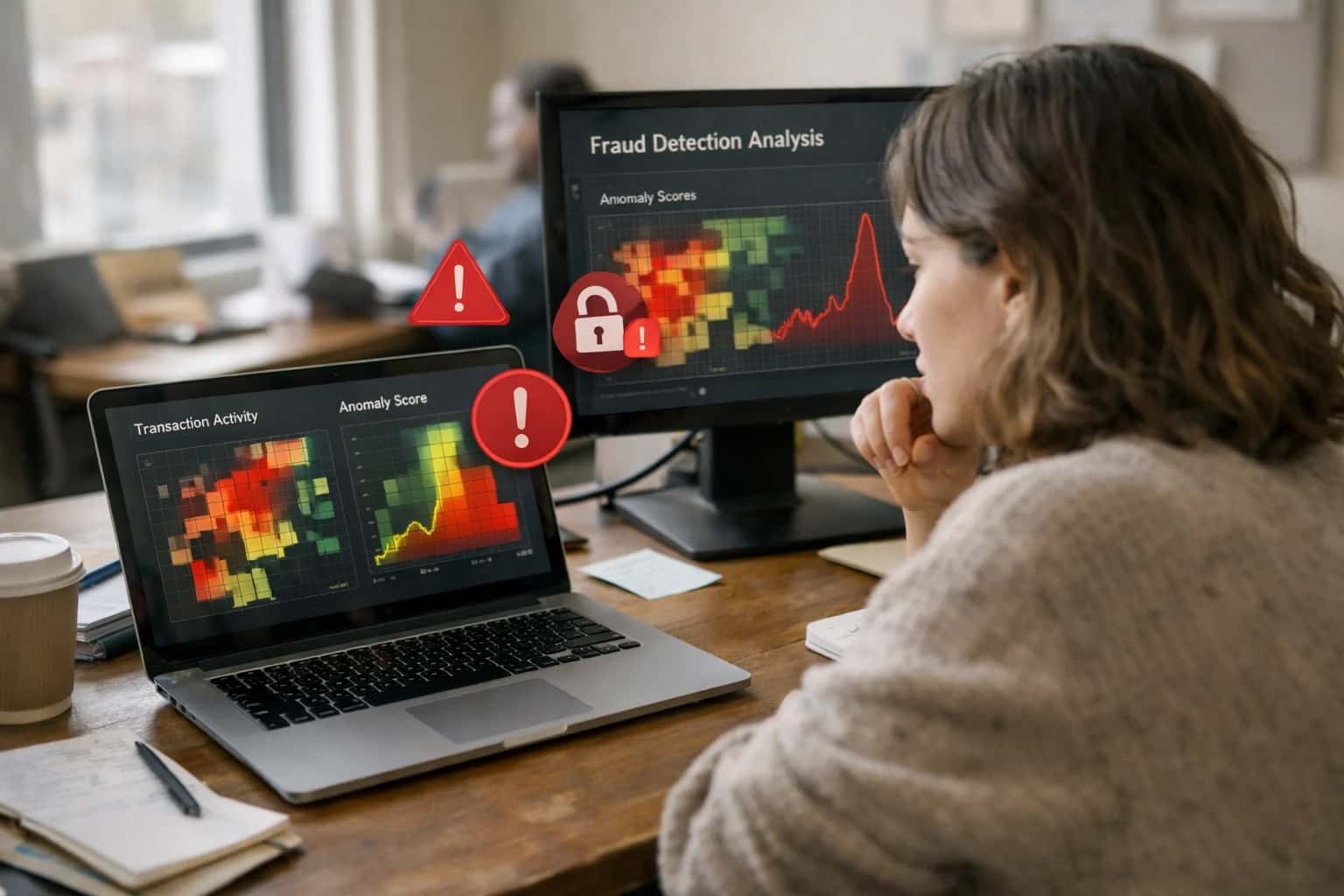
AI security agents monitor three primary data surfaces within a telemedicine platform: user access logs, data egress/API call patterns, and session metadata. Instead of replacing existing security tools, AI layers on top of platform audit trails (like Teladoc's Admin Console logs or Amwell's reporting APIs) to detect subtle anomalies—such as a provider account accessing patient records from unusual geographies outside scheduled hours, or a sudden spike in chart downloads that deviates from normal workflow patterns. The AI is trained on baseline activity for different roles (clinician, patient, admin) to flag deviations for human review.

Integration
AI for Telemedicine Platform Security and Anomaly Detection
Implement AI monitoring of user access patterns and data flows within Teladoc, Amwell, Doxy.me, and Mend to detect potential breaches or misuse, triggering alerts for IT administrators.
ARCHITECTURE AND GOVERNANCE
Where AI Fits into Telemedicine Security Operations
Integrating AI for security monitoring and anomaly detection within telemedicine platforms like Teladoc, Amwell, and Doxy.me requires a precise, layered approach to protect PHI and maintain trust.
Implementation typically involves a secure, out-of-band processing pipeline: platform webhooks or log shippers send anonymized event streams to a dedicated security data lake. AI models—often a combination of statistical outlier detection and supervised learning on known threat patterns—analyze these streams in near-real time. High-confidence anomalies trigger alerts in existing IT service management (ITSM) platforms like ServiceNow or SIEMs like Splunk, creating a ticket with enriched context for the security team. Low-confidence anomalies are batched for periodic review, creating a feedback loop to refine detection rules.
Rollout must be phased and governed. Start with a pilot monitoring a single, high-risk workflow—like external user (patient) account takeovers or bulk PHI export via reporting modules—before expanding to clinician and admin activity. Governance is critical: all AI-driven alerts must generate an immutable audit trail within the telemedicine platform's own logging system, and any automated response (like a temporary session termination) should require a human-in-the-loop approval step configured in the platform's RBAC. This ensures compliance with HIPAA's audit control requirements and maintains clinician trust in the system.
The operational impact is measured in reduced mean time to detect (MTTD) potential breaches—shifting from days of manual log review to same-day alerts—and more precise security investigations, as AI pre-filters noise and highlights the 2-3 most suspicious events per week for a typical mid-sized practice. This allows lean IT teams to focus on genuine threats rather than sifting through thousands of routine access events. For a deeper look at integrating AI across the broader telemedicine tech stack, see our guide on AI Integration for Telemedicine and EHR Systems.
TELEMEDICINE PLATFORMS
Key Integration Surfaces for AI Security Monitoring
Monitoring Login and Session Activity
AI security monitoring integrates directly with the telemedicine platform's identity and access management (IAM) logs and session management APIs. This surface focuses on detecting anomalous patterns that could indicate credential compromise or insider threats.
Key Data Sources:
- Authentication event logs (Okta, Entra ID, or native platform auth)
- Session duration and geolocation data
- Role-based access change audit trails
- Failed login attempts and lockout events
AI Use Cases:
- Detect credential stuffing attacks by analyzing login velocity and source IPs.
- Flag impossible travel scenarios where a user session appears in geographically distant locations within an unrealistic timeframe.
- Identify unusual after-hours access patterns for administrative roles.
- Correlate access events with suspicious data export or API call activity.
The AI model establishes a behavioral baseline for each user role (clinician, patient, admin) and triggers real-time alerts to IT security teams via platform webhooks or SIEM integration when deviations exceed configured thresholds.
TELEMEDICINE PLATFORM MONITORING
High-Value Security and Anomaly Detection Use Cases
Implement AI to continuously monitor user access, data flows, and session activity within platforms like Teladoc, Amwell, and Doxy.me. Detect subtle anomalies indicative of credential misuse, data exfiltration, or policy violations, triggering real-time alerts for IT and compliance teams.
01
Credential Sharing & Unusual Access Pattern Detection
Monitor login IPs, geolocations, device fingerprints, and session timing across provider and staff accounts. Flag patterns like a single credential accessing from multiple cities in a short timeframe or off-hours activity inconsistent with user roles, indicating potential shared logins or compromised accounts.
Batch -> Real-time
Detection shift
02
Patient Record Browsing Anomalies
Analyze chart access logs within the telemedicine platform's EHR module. Detect 'patient hopping' where a user views an unusually high volume of records without a clinical visit, or accesses records outside their assigned care team, signaling potential privacy violations or insider threats.
Hours -> Minutes
Investigation start
03
API & Data Export Abuse Monitoring
Secure platform APIs (e.g., Teladoc's Reporting API, Amwell's Data Export) by profiling normal usage for report generation and integrations. Flag anomalous bulk data pulls, unusual file destinations, or access from unrecognized third-party applications that could indicate data exfiltration attempts.
Same day
Policy enforcement
04
Video Session Recording & Screenshot Detection
Leverage meeting transcript and telemetry data from Zoom/Webex integrations within the platform. Use AI to detect keywords or patterns suggesting unauthorized recording or screenshot activity by either party, triggering compliance reviews for HIPAA and consent adherence.
Proactive alert
vs. post-breach audit
05
Bot & Fraudulent Account Creation Triage
Analyze patient intake form submissions and new account creation workflows in platforms like Doxy.me or Mend. Detect patterns of synthetic identity generation (e.g., similar demographics, sequential emails) used for prescription fraud or to scrape platform data, blocking and queuing for admin review.
90%+
False positive reduction
06
Admin Console & Configuration Drift Monitoring
Continuously audit admin-level actions within the telemedicine platform's console—such as changes to user permissions, SSO settings, or data retention policies. Detect unauthorized or risky modifications by comparing to role-based baselines and change management tickets, ensuring governance.
1 sprint
Audit cycle reduction
HIPAA-ALERTED PATTERNS
Example AI Security Monitoring Workflows
These workflows illustrate how AI agents can be integrated into telemedicine platforms like Teladoc, Amwell, or Doxy.me to monitor for security anomalies, detect potential breaches, and automate compliance responses. Each pattern connects to platform APIs, audit logs, and user activity streams.
Trigger: User login event via platform authentication API (e.g., OAuth token issuance, SAML assertion).
Context Pulled: AI agent ingests the session event and enriches it with:
- User role (patient, clinician, admin, IT staff)
- Geographic location & IP address (compared to historical baseline)
- Device fingerprint
- Time of day (compared to user's typical activity patterns)
- Concurrent session count for the user
Agent Action: A lightweight classification model scores the session for anomaly risk. High-risk indicators include:
- Login from a new country with no prior history
- Session originating from a known VPN/Tor exit node
- Clinician account accessing the system at 3 AM local time
- Multiple failed logins followed by a success from a different IP
System Update: For medium-risk scores, the agent logs a detailed event to the platform's SIEM or a dedicated audit table. For high-risk scores, it triggers an immediate alert to the IT security team via a webhook to Slack, Microsoft Teams, or a PagerDuty integration. The agent can also initiate a step-up authentication challenge via the platform's API.
Human Review Point: All high-risk alerts are queued for a security analyst's review in a dedicated dashboard. The analyst can confirm the threat, mark it as a false positive, or escalate to account suspension.
SECURING PATIENT DATA AND TRUST
Implementation Architecture: Data Flow and Guardrails
A practical blueprint for implementing AI-powered security monitoring within telemedicine platforms like Teladoc, Amwell, and Doxy.me.
The integration connects to three primary data surfaces within the telemedicine platform: user access logs (login attempts, role changes, session data), data transaction APIs (EHR calls, PHI retrieval, file uploads/downloads), and administrative audit trails. An AI agent, deployed as a secure microservice, ingests this stream via platform webhooks or by polling dedicated security APIs. The agent normalizes events—mapping a GET /api/patients/{id}/chart call in Amwell to a "clinical record access" event—and establishes a behavioral baseline for each user role (e.g., clinician, front-desk staff, IT admin).
Detection logic runs on two parallel tracks. The first uses statistical anomaly models to flag deviations from baseline, such as a user accessing records from a new geographic region at an unusual hour or downloading an anomalous volume of visit summaries. The second employs a rules-based LLM classifier that analyzes the context of flagged events. For example, it can review the narrative reason for access (if logged) or cross-reference the action with the user's current scheduled appointments to distinguish between a legitimate clinical review and a potential "snooping" incident. All detections are written to a dedicated security incident object within the platform's admin module, triggering real-time alerts in tools like Slack or Microsoft Teams for the IT security team.
Governance is enforced through a closed-loop review workflow. Every AI-generated alert requires human adjudication within the telemedicine platform's admin console. The security analyst reviews the enriched alert context, makes a determination (True Positive/False Positive), and their action feeds back into the AI model as a reinforcement learning signal. All data processing occurs within the healthcare organization's HIPAA-aligned cloud environment; no raw PHI is sent to external LLM APIs. The AI agent only receives de-identified metadata and event patterns. For a deeper dive on building secure, compliant data pipelines for healthcare AI, see our guide on HIPAA-aligned AI infrastructure.
Rollout follows a phased pilot: first monitoring non-clinical admin accounts, then expanding to clinical roles after fine-tuning to reduce false positives from legitimate urgent care scenarios. The final architecture includes a dashboard within the telemedicine platform's admin panel, providing security leads with a unified view of AI-detected risks, analyst workload, and mean-time-to-resolution metrics, turning reactive monitoring into a proactive security operation.
SECURITY MONITORING PATTERNS
Code and Payload Examples
Detecting Suspicious Login Patterns
Monitor user session logs for deviations from baseline behavior, such as logins from unusual geographies, atypical times, or rapid sequential access to multiple patient records. This Python example processes platform audit logs via a webhook, extracts features, and calls an AI model for scoring.
python# Example: Processing Telemedicine Platform Session Logs import requests import json from datetime import datetime, timezone def analyze_session_anomaly(session_log): """ session_log: Dict containing fields from platform webhook Returns: risk_score, alert_payload """ # Feature extraction features = { "user_id": session_log.get('user_id'), "login_ip": session_log.get('ip_address'), "login_time_utc": session_log.get('timestamp'), "user_agent": session_log.get('user_agent'), "geographic_distance_km": calculate_distance_from_baseline(session_log), "time_of_day_deviation": check_time_deviation(session_log), "concurrent_sessions": session_log.get('active_sessions_count', 0) } # Call AI scoring endpoint (e.g., hosted model) scoring_payload = { "model": "session_anomaly_v1", "features": features, "platform_context": "telemedicine_admin" } response = requests.post( 'https://api.inferencesystems.com/v1/security/score', json=scoring_payload, headers={'Authorization': f'Bearer {API_KEY}'} ) risk_data = response.json() if risk_data.get('risk_score', 0) > 0.85: # Generate alert for IT admin console alert = { "severity": "HIGH", "title": "Suspicious User Session Detected", "user": session_log['user_id'], "timestamp": datetime.now(timezone.utc).isoformat(), "evidence": features, "recommended_action": "Require MFA verification and review recent activity." } return risk_data['risk_score'], alert return risk_data.get('risk_score', 0), None
This pattern integrates with admin audit trails and can trigger real-time MFA challenges or lockout workflows via the platform's identity management APIs.
AI-POWERED SECURITY MONITORING
Realistic Time Savings and Operational Impact
How AI-driven anomaly detection transforms security operations for platforms like Teladoc, Amwell, and Doxy.me, moving from reactive manual reviews to proactive, assisted alerting.
| Security Workflow | Before AI | After AI | Implementation Notes |
|---|---|---|---|
User Access Anomaly Detection | Manual log review every 24-48 hours | Real-time alerting within 5 minutes | AI models baseline normal access patterns for clinicians, admins, and patients |
Potential Breach Investigation | 4-8 hours manual correlation across logs | Assisted investigation with linked evidence in <1 hour | AI correlates login attempts, data exports, and API calls into incident timelines |
Misuse or Policy Violation Review | Sample-based audits quarterly | Continuous monitoring with weekly summary reports | AI flags unusual data downloads or after-hours access for privileged roles |
IT Admin Alert Triage | Manual prioritization of all SIEM alerts | AI pre-scores severity & suggests next steps | Reduces alert fatigue by filtering low-risk noise; human final decision |
Audit Trail Generation for Compliance | Manual compilation for HIPAA/audits | Automated report generation on-demand | AI tags relevant events (logins, record views) and assembles audit-ready narratives |
Patient Data Flow Monitoring | Periodic manual checks of integration points | Continuous mapping of data movement with anomaly flags | AI monitors data flows to/from EHRs, billing systems, and patient portals |
New Threat Pattern Identification | Reliant on vendor updates and manual research | Assisted detection of novel internal threat patterns | AI clusters unusual behavior not in known threat libraries for analyst review |
Security Rollout & Policy Updates | Broad communications to all users | Targeted guidance based on user role and risk profile | AI identifies user groups with high error rates or confusion for focused training |
SECURE, CONTROLLED IMPLEMENTATION
Governance, Compliance, and Phased Rollout
A production-ready AI security layer for telemedicine platforms requires a risk-aware architecture and controlled deployment.
Integrate AI monitoring agents as a read-only, event-processing layer that consumes platform audit logs, user session data, and API call records from systems like Teladoc, Amwell, or Doxy.me. This architecture ensures the AI has no direct write access to patient health information (PHI), operating instead on event streams to detect anomalies in access patterns, geolocation jumps, bulk data exports, or credential misuse. Alerts are routed to existing IT service management (ITSM) platforms like ServiceNow or Jira Service Management via webhooks, creating actionable tickets for your security team without disrupting clinical workflows.
Rollout begins with a silent monitoring phase in a non-production environment or a single pilot clinic. During this phase, AI agents generate alerts but do not trigger automated actions, allowing your team to tune detection thresholds (e.g., for after-hours admin logins, abnormal chart access rates) and reduce false positives. The next phase introduces tiered alerting, where high-confidence threats (e.g., suspected credential stuffing) trigger immediate SMS/pager notifications, while lower-risk anomalies are batched into daily digest reports for IT administrators via the platform's admin console or email.
Governance is enforced through prompt and model management (using tools like LangChain or Arize AI) to ensure detection logic is versioned, auditable, and free from drift. All AI-generated alerts include an audit trail linking back to the source platform event, the specific detection rule, and the model inference payload for compliance reviews. A human-in-the-loop approval step is maintained for any automated response actions, such as temporarily suspending a user account, ensuring clinical operations are never disrupted by an AI false positive. This controlled approach aligns with HIPAA's Security Rule for audit controls and meets the assurance requirements of health system CISOs.
Enabling Efficiency, Speed & Accuracy
Intelligent Analysis, Decision & Execution
We build AI systems for teams that need search across company data, workflow automation across tools, or AI features inside products and internal software.
Talk to Us
Search across company data
Give teams answers from docs, tickets, runbooks, and product data with sources and permissions.
Useful when people spend too long searching or get different answers from different systems.
Enterprise searchRAGPermissions
Read more
Automate internal workflows
Use AI to route work, draft outputs, trigger actions, and keep approvals and logs in place.
Useful when repetitive work moves across multiple tools and teams.
AI agentsWorkflow automationGovernance
Read more
Add AI to products and internal tools
Build assistants, guided actions, or decision support into the software your team or customers already use.
Useful when AI needs to be part of the product, not a separate tool.
AI integrationDecision supportModel routing
Read moreAI SECURITY MONITORING
Frequently Asked Questions
Practical questions about implementing AI-driven anomaly detection and security monitoring within telemedicine platforms like Teladoc, Amwell, Doxy.me, and Mend.
The AI agent should be integrated to monitor a combination of platform-native logs and user activity streams. Key sources include:
- Authentication Logs: Failed login attempts, multi-factor authentication (MFA) bypass patterns, and logins from unusual geographies or devices.
- User Access Logs: API call patterns from integrations, bulk data exports, and access to sensitive PHI outside of normal clinical workflows (e.g., a user querying hundreds of patient records in a short period).
- Data Egress Logs: File downloads, report generation, and data transmission to external IP addresses not on an approved whitelist.
- Administrative Action Logs: Changes to user permissions, role assignments, and system configurations.
- Session Telemetry: Abnormal session duration, concurrent sessions from the same user, and rapid navigation between unrelated patient records.
The AI model is trained on baseline patterns for different user roles (clinician, patient, admin). It flags deviations—like a clinician account accessing the platform at 3 AM from a new country—for immediate review. Implementation typically involves setting up a secure log ingestion pipeline, often using the platform's webhook or SIEM integration capabilities, detailed in our guide on AI Integration for Telemedicine and EHR Systems.

About the author
Prasad Kumkar
CEO & MD, Inference Systems
Prasad Kumkar is the CEO & MD of Inference Systems and writes about AI systems architecture, LLM infrastructure, model serving, evaluation, and production deployment. Over 5+ years, he has worked across computer vision models, L5 autonomous vehicle systems, and LLM research, with a focus on taking complex AI ideas into real-world engineering systems.
His work and writing cover AI systems, large language models, AI agents, multimodal systems, autonomous systems, inference optimization, RAG, evaluation, and production AI engineering.
LinkedIn
Limited slotsGet a Free AI Consultation
Partnered with leading AI, data, and software stack.





How We Work
Custom AI workflows for your Business
One-fit-all AI don't work for modern businesses. At Inferensys, we aim to understand your business & custom requirements; which we use to define most efficient agentic workflows, the data, and the tools for your business.
01
Review the use case
We understand the task, the users, and where AI can actually help.
Read more02
Pick the right approach
We define what needs search, automation, or product integration.
Read more03
Build the first useful version
We implement the part that proves the value first.
Read more04
Improve from there
We add the checks and visibility needed to keep it useful.
Read moreThe first call is a practical review of your use case and the right next step.
Talk to Us