In rural and underserved areas, the primary barriers to telemedicine adoption are often unreliable internet connectivity and limited digital literacy. A resilient AI integration for platforms like Doxy.me must be designed for intermittent operation, using local-first processing and graceful fallbacks. This means architecting AI agents that can perform initial patient intake, symptom triage, and resource navigation without a persistent cloud connection, syncing data to the central platform when connectivity is restored via a secure, queued background process.

Integration
AI for Telemedicine in Rural Health and Underserved Areas
Designing low-bandwidth, offline-capable AI agents and workflows that extend the reach of platforms like Doxy.me, focusing on diagnostic support and resource navigation for communities with limited connectivity.
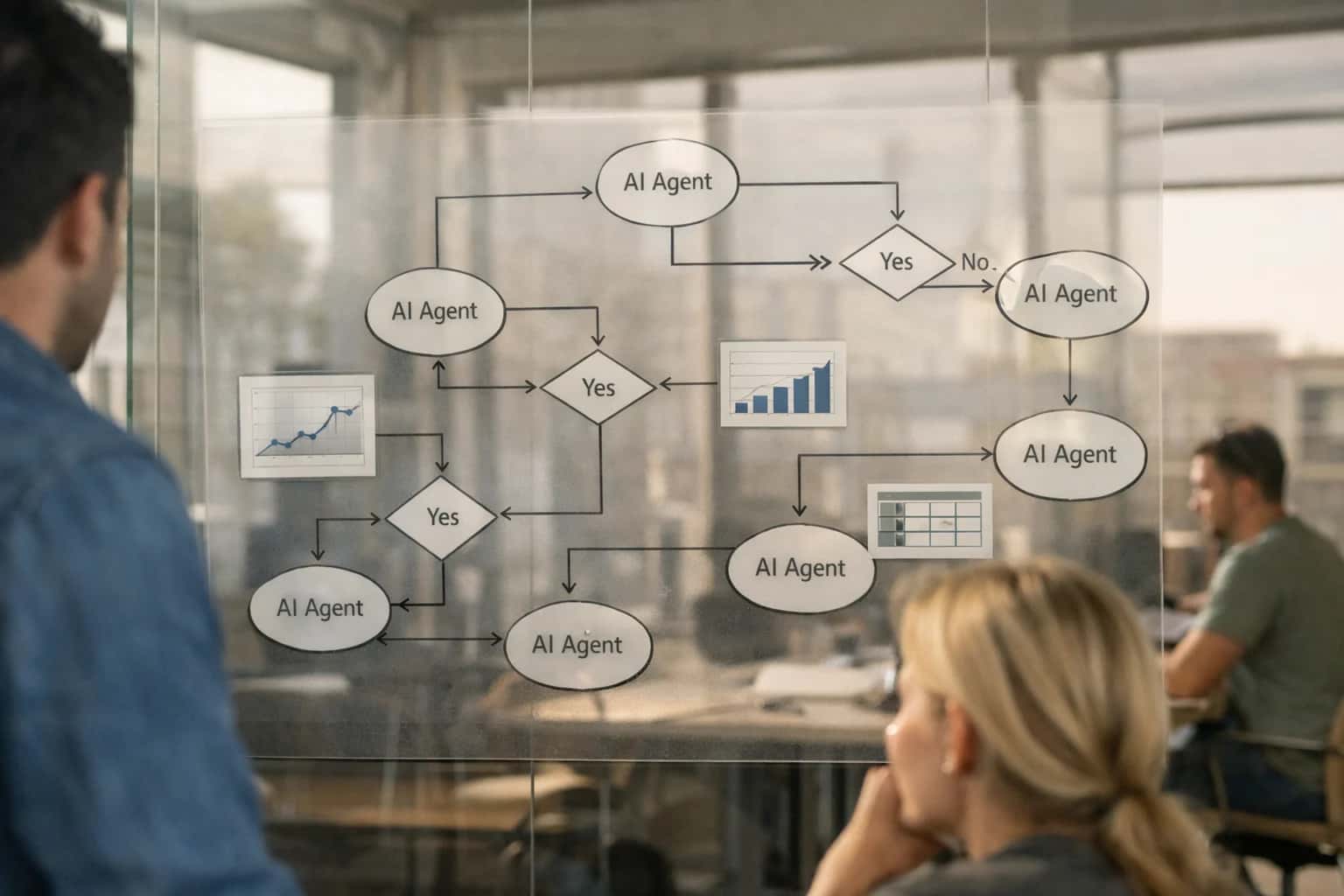
LOW-BANDWIDTH AND OFFLINE-CAPABLE WORKFLOWS
Extending Telemedicine Reach with Resilient AI
Engineering AI agents that function in low-connectivity environments to extend the reach of platforms like Doxy.me into rural and underserved communities.
Key implementation surfaces include offline-capable web forms and local SMS/IVR gateways. For example, an AI-driven symptom checker can be packaged as a lightweight Progressive Web App (PWA) that caches logic and processes basic queries locally. For patients without smartphones, an IVR system using speech-to-text and text-to-speech models can conduct pre-visit screenings, with transcripts queued for upload. The AI agent's core functions—such as routing to the appropriate care pathway or retrieving local clinic information—must rely on periodically updated, locally stored knowledge bases rather than real-time API calls to ensure functionality.
Rollout requires a phased, community-centric approach. Start with pilot workflows like automated pre-visit questionnaires and post-appointment follow-ups, which have high impact but lower clinical risk. Governance is critical: all patient data processed offline must be encrypted at rest and include clear audit trails for the sync process. Furthermore, AI outputs, especially diagnostic suggestions, must be framed as supportive guidance for local health workers or community aides, not as autonomous diagnoses, with clear escalation paths to human providers within the Doxy.me platform. This architecture doesn't just add AI features; it re-engineers the access model of the telemedicine platform itself to be connectivity-agnostic.
AI FOR TELEMEDICINE IN RURAL HEALTH AND UNDERSERVED AREAS
Integration Surfaces for Low-Connectivity Workflows
Asynchronous Data Collection for Low-Bandwidth Scenarios
AI agents can be embedded into lightweight mobile forms or SMS-based workflows to conduct structured patient intakes before a synchronous visit. This surface uses the platform's custom field API (e.g., Doxy.me's custom_data endpoints) to pre-populate patient records with symptom details, medical history, and social determinants of health—all collected offline.
Key Integration Points:
- Platform-specific webhook for
patient.createdorappointment.scheduledto trigger an AI-powered SMS or email intake sequence. - Write-back to the patient's profile via
PATCH /patients/{id}with structured JSON payloads containing AI-extracted intake data. - Local storage and sync logic on the patient's device to handle connectivity drops, with conflict resolution upon reconnection.
This reduces visit time and ensures clinicians have critical information even when live video is unstable.
LOW-BANDWIDTH & OFFLINE-FIRST AI
High-Value Use Cases for Rural & Underserved Settings
AI integrations for platforms like Doxy.me must prioritize accessibility, intermittent connectivity, and resource constraints. These workflows extend reach without requiring constant high-speed internet or extensive local IT support.
01
Offline-Capable Symptom Triage & Routing
An AI agent embedded in the patient intake module performs initial symptom assessment using a lightweight, locally-cached model. It prioritizes cases (urgent, routine, self-care) and suggests the appropriate care modality (video, phone, community health worker visit). Data syncs to the platform when connectivity is restored.
Operational Value: Reduces burden on scarce clinicians by filtering non-urgent cases and ensures the most critical patients are seen first, even with spotty internet.
Batch -> Real-time
Triage logic
02
Low-Bandwidth Visit Summarization
AI generates structured clinical notes from audio transcripts of telehealth visits, optimized for minimal data transfer. The agent extracts key SOAP elements, creates a draft in the platform, and flags missing data for clinician review. Works with compressed audio files common in low-bandwidth settings.
Operational Value: Cuts documentation time for providers, allowing them to see more patients. Ensures accurate records are created even when video quality is poor.
Hours -> Minutes
Note drafting
03
SMS-Based Patient Engagement & Follow-up
An AI orchestrator uses the platform's patient registry to trigger personalized, plain-language SMS check-ins for medication adherence, symptom tracking, and appointment reminders. It parses patient replies (e.g., "feeling worse") and escalates to a human via the platform's task queue.
Operational Value: Maintains continuity of care between visits without requiring a smartphone app or stable data plan. Drives better outcomes for chronic conditions in remote populations.
04
Resource Navigation Agent
An AI copilot integrated into the provider's interface during a Doxy.me visit. It references a locally-stored database of community resources (food pantries, transportation services, sliding-scale clinics) based on patient ZIP code and needs discussed. Generates a printable resource list for the patient.
Operational Value: Addresses social determinants of health that are critical in underserved areas. Empowers providers to offer concrete support beyond clinical advice, improving holistic care.
05
Diagnostic Support for Generalists
A grounded AI assistant provides diagnostic guidance and differentials to primary care providers in rural settings who may lack immediate specialist consults. It references offline medical guidelines and, when connectivity permits, can retrieve the latest protocols. Integrates with the platform's patient chart for context.
Operational Value: Improves diagnostic accuracy and confidence for isolated clinicians, reducing unnecessary referrals and delays in treatment. Functions as a "second opinion" in the exam room.
06
Automated Public Health Reporting
AI monitors de-identified visit data within the telemedicine platform for notifiable condition symptoms (e.g., flu-like illness clusters). It generates and submits required reports to local/state health departments via secure, asynchronous APIs when bandwidth is available, automating a manual, time-consuming workflow.
Operational Value: Ensures compliance with reporting mandates and provides early warning signals for outbreaks in underserved regions, where public health infrastructure may be thin.
Same day
Report latency
LOW-BANDWIDTH AI AGENTS FOR RURAL HEALTH
Example AI Workflows for Intermittent Connectivity
These workflows are designed for platforms like Doxy.me, focusing on asynchronous, offline-capable operations that maximize utility during connectivity windows and minimize data transfer. Each pattern prioritizes patient safety, clinical utility, and resilience.
Trigger: Patient submits an intake form via a Doxy.me landing page while offline (data saved locally).
Context Pulled: Upon next connectivity window, the local app syncs the encrypted form data. The AI agent pulls the patient's historical summary (if cached) and relevant clinical guidelines (pre-downloaded knowledge base).
Agent Action: A lightweight LLM (e.g., a distilled model) analyzes symptoms against the local guideline database. It generates:
- A triage level (e.g.,
urgent-care,primary-care,self-care). - A structured summary for the clinician.
- A list of clarifying questions for the patient to answer offline.
System Update: The triage level and summary are queued for sync to the platform's backend. The patient's app receives the clarifying questions to be answered offline. The platform's scheduling module is updated with a priority flag for when the clinician next logs in.
Human Review Point: The clinician reviews the AI-generated summary and triage recommendation during their next scheduled session before initiating contact. The AI never makes a final disposition without clinician sign-off.
AI FOR TELEMEDICINE IN RURAL HEALTH AND UNDERSERVED AREAS
Architecture for Offline-First AI Agents
Engineering resilient AI workflows that function with intermittent connectivity, extending the reach of platforms like Doxy.me into low-bandwidth environments.
An offline-first architecture for rural telemedicine centers on a local agent runtime deployed on clinic hardware (e.g., a ruggedized tablet or mini-PC). This runtime hosts a small, fine-tuned language model capable of core tasks—patient intake questioning, symptom triage logic, and basic health education—without a live API call. Data is captured via the telemedicine platform's offline-capable mobile app or a lightweight local web form, with records stored in a local queue (using tools like SQLite or PouchDB) for sync when connectivity is restored. The AI agent's knowledge base for local conditions, medication formularies, and referral pathways is embedded as a vector index, updated periodically via scheduled syncs.
Implementation focuses on graceful degradation. When online, the agent can call cloud APIs for richer diagnostic support or to fetch the latest clinical guidelines. When offline, it operates within its cached knowledge, flagging cases that exceed its confidence threshold for later human review. Key integration points are the telemedicine platform's custom field API (e.g., Doxy.me's) and webhook system. Collected data is structured to match the platform's patient record schema, and upon sync, the local agent posts completed intakes, triggering the platform's normal workflow for provider assignment and visit scheduling. This design turns a connectivity constraint into a structured data capture advantage.
Rollout requires careful change management with clinic staff, training them to use the AI-assisted intake as a digital scribe, not a replacement for clinical judgment. Governance is critical: all AI interactions must generate an audit trail stored locally and synced to the platform's logs. Patient consent for data collection and AI use must be captured offline and validated upon sync. Start with a pilot of 2-3 high-volume use cases—like pre-visit screening for hypertension or diabetes follow-up—where the AI agent's structured data gathering demonstrably reduces a provider's prep time from 15 minutes to under 5, making scarce clinician hours more effective.
LOW-BANDWIDTH AI WORKFLOWS
Code Patterns & Payload Examples
Asynchronous Patient Intake via Webhook
For rural clinics with intermittent connectivity, design an offline-first intake system. The telemedicine platform (e.g., Doxy.me) captures basic patient data locally. Once a connection is available, a webhook sends a minimal JSON payload to a queue. An AI agent processes this payload to perform initial triage, flagging urgent cases and pre-populating a structured clinical note for the provider's review upon their next sync.
Key Pattern: Queue-based, fault-tolerant ingestion. The AI returns a triage score and suggested next steps (e.g., schedule_video, send_educational_content, escalate_to_nurse_line). This defers heavy LLM calls until connectivity is assured, using lightweight local logic for patient data collection.
LOW-BANDWIDTH AI FOR UNDERSERVED COMMUNITIES
Operational Impact & Time Savings
How AI agents and offline-capable workflows extend the reach of platforms like Doxy.me, reducing administrative burden and improving access to care in resource-constrained settings.
| Workflow | Traditional Process | With AI Integration | Key Impact & Notes |
|---|---|---|---|
Patient Intake & Pre-Visit Data Collection | Paper forms or multiple manual data entry steps by clinic staff | AI-assisted digital forms with offline sync; smart pre-population from local records | Reduces clinic staff data entry by 60-80%. Offline capability ensures continuity during connectivity drops. |
Symptom Triage & Routing | Phone-based screening by a nurse or community health worker (CHW) | AI symptom checker on basic mobile devices; routes to appropriate level of care (CHW, NP, MD) | CHWs can manage 3-5x more initial screenings. Reduces unnecessary specialist consults by 30%. |
Visit Documentation & Summarization | Clinician manually types notes post-visit, often after hours | AI generates draft SOAP note from visit audio/text; clinician reviews and edits | Cuts clinician documentation time by 50%. Enables same-day chart closure instead of next-day. |
Post-Visit Follow-up & Care Plan Adherence | Manual phone calls or no systematic follow-up due to staff constraints | AI-driven SMS/voice check-ins (offline-queued); flags non-adherence for CHW follow-up | Increases patient follow-up contact rates from <20% to >70%. Frees CHW time for high-risk cases. |
Diagnostic Support & Resource Navigation | Clinician relies on memory or offline medical references; patient given paper resource lists | AI copilot provides local, offline-accessible clinical guidelines & maps to nearest pharmacy/specialist | Improves diagnostic accuracy in complex cases. Connects patients to tangible local resources. |
Administrative Reporting for Grant Compliance | Manual aggregation of service data from paper logs and spreadsheets | AI automates report generation from platform data, highlighting key metrics for funders | Turns a weekly 8-hour manual task into a 1-hour review. Ensures timely, accurate reporting. |
Medication Reconciliation & Refill Management | Patient brings pill bottles; clinician manually reconciles. Refills require clinic visit. | AI analyzes last known med list via SMS; generates reconciliation report. Initiates refill workflows. | Reduces medication errors. Cuts unnecessary visits for refills by 40%, saving patient travel time/cost. |
IMPLEMENTING AI IN LOW-BANDWIDTH, HIGH-STAKE ENVIRONMENTS
Governance, Safety & Phased Rollout
Deploying AI in rural and underserved telemedicine requires a deliberate, safety-first architecture that respects connectivity constraints and clinician oversight.
Start with a read-only, assistive phase where AI agents analyze data but do not execute actions. For platforms like Doxy.me or Mend, this means integrating AI to process patient intake forms, RPM device feeds, or visit transcripts to generate draft summaries and suggested next steps—presented as recommendations within the clinician's existing dashboard. All outputs are clearly labeled as AI-generated and require a provider's review and sign-off before any data is written back to the patient chart or used to trigger workflows. This phase builds trust and establishes a baseline for AI performance and utility without altering core clinical operations.
Governance is built around offline-capable workflows and explicit human-in-the-loop checkpoints. For low-bandwidth scenarios, design agents to operate with lightweight models that can run locally on a clinic tablet or sync when connectivity is restored. Critical actions—such as escalating a patient based on symptom severity, sending a prescription for cosign, or updating a care plan—must route through a defined approval queue within the telemedicine platform's interface. Implement detailed audit trails that log the AI's input, the generated recommendation, the reviewing clinician's identity, and the final action taken, ensuring full traceability for compliance and quality reviews.
A phased rollout prioritizes high-impact, low-risk workflows first. Begin with administrative automation, such as AI-driven appointment reminders and post-visit follow-up messages, which directly address no-shows and care plan adherence—common challenges in underserved areas. Next, introduce clinical support tools like visit summarization and intake triage, initially in a pilot with a small group of providers. Finally, after validating accuracy and gathering clinician feedback, consider more advanced capabilities like diagnostic support for specific high-volume conditions (e.g., UTI, hypertension), always maintaining the clinician as the final decision-maker. Each phase includes continuous monitoring of key metrics—like time-to-visit, provider satisfaction, and recommendation acceptance rate—to guide scaling decisions.
Enabling Efficiency, Speed & Accuracy
Intelligent Analysis, Decision & Execution
We build AI systems for teams that need search across company data, workflow automation across tools, or AI features inside products and internal software.
Talk to Us
Search across company data
Give teams answers from docs, tickets, runbooks, and product data with sources and permissions.
Useful when people spend too long searching or get different answers from different systems.
Enterprise searchRAGPermissions
Read more
Automate internal workflows
Use AI to route work, draft outputs, trigger actions, and keep approvals and logs in place.
Useful when repetitive work moves across multiple tools and teams.
AI agentsWorkflow automationGovernance
Read more
Add AI to products and internal tools
Build assistants, guided actions, or decision support into the software your team or customers already use.
Useful when AI needs to be part of the product, not a separate tool.
AI integrationDecision supportModel routing
Read moreIMPLEMENTATION AND WORKFLOW DETAILS
FAQ: AI for Rural Telemedicine
Practical answers for integrating AI into telemedicine platforms serving rural and underserved communities, focusing on low-bandwidth, offline-capable, and high-impact workflows.
We architect for intermittent connectivity using a hybrid on-device/cloud pattern.
Core Pattern:
- Local Processing: Deploy a small, optimized model (e.g., for symptom triage logic or form validation) directly within the provider's or community health worker's mobile application using frameworks like TensorFlow Lite or ONNX Runtime. This handles core interactions offline.
- Queue & Sync: Actions requiring heavier AI (e.g., clinical note summarization, diagnostic support analysis) are queued locally with patient context. The app syncs these jobs in batches when connectivity is restored, using a resilient messaging queue (like RabbitMQ or AWS SQS).
- Fallback Logic: Workflows are designed with clear fallbacks. If a generative AI summary fails to sync, the system can default to sending structured key findings (chief complaint, assessment, plan) via SMS or stored for later review.
Technical Example - Offline Intake:
json// Payload queued locally during intake { "workflow_id": "offline_intake_v1", "patient_id": "P12345", "platform": "Doxy.me", "data": { "responses": {"fever": "yes", "cough_duration": "3 days"}, "form_version": "v2.1" }, "required_actions": ["triage_scoring", "generate_clinical_summary"], "metadata": {"timestamp": "2024-05-15T10:30:00Z", "connection_status": "offline"} }
This payload is processed once synced to a cloud endpoint, with results written back to the platform's API.

About the author
Prasad Kumkar
CEO & MD, Inference Systems
Prasad Kumkar is the CEO & MD of Inference Systems and writes about AI systems architecture, LLM infrastructure, model serving, evaluation, and production deployment. Over 5+ years, he has worked across computer vision models, L5 autonomous vehicle systems, and LLM research, with a focus on taking complex AI ideas into real-world engineering systems.
His work and writing cover AI systems, large language models, AI agents, multimodal systems, autonomous systems, inference optimization, RAG, evaluation, and production AI engineering.
LinkedIn
Limited slotsGet a Free AI Consultation
Partnered with leading AI, data, and software stack.





How We Work
Custom AI workflows for your Business
One-fit-all AI don't work for modern businesses. At Inferensys, we aim to understand your business & custom requirements; which we use to define most efficient agentic workflows, the data, and the tools for your business.
01
Review the use case
We understand the task, the users, and where AI can actually help.
Read more02
Pick the right approach
We define what needs search, automation, or product integration.
Read more03
Build the first useful version
We implement the part that proves the value first.
Read more04
Improve from there
We add the checks and visibility needed to keep it useful.
Read moreThe first call is a practical review of your use case and the right next step.
Talk to Us