AI compliance agents connect to the administrative APIs and audit logs of platforms like Teladoc, Amwell, and Doxy.me. They monitor key surfaces: user access logs, patient data modifications, consent form submissions, and session recordings. By processing these structured and unstructured data streams in real-time, AI can automatically flag anomalies—such as a clinician accessing records outside their panel or a missing consent signature on an intake form—and route them to a compliance officer's dashboard for review.

Integration
AI Compliance Workflows for Telemedicine Platforms
Automate HIPAA audit trail generation, consent management, and regulatory documentation checks using AI agents integrated directly with telemedicine platform admin consoles, logs, and APIs.
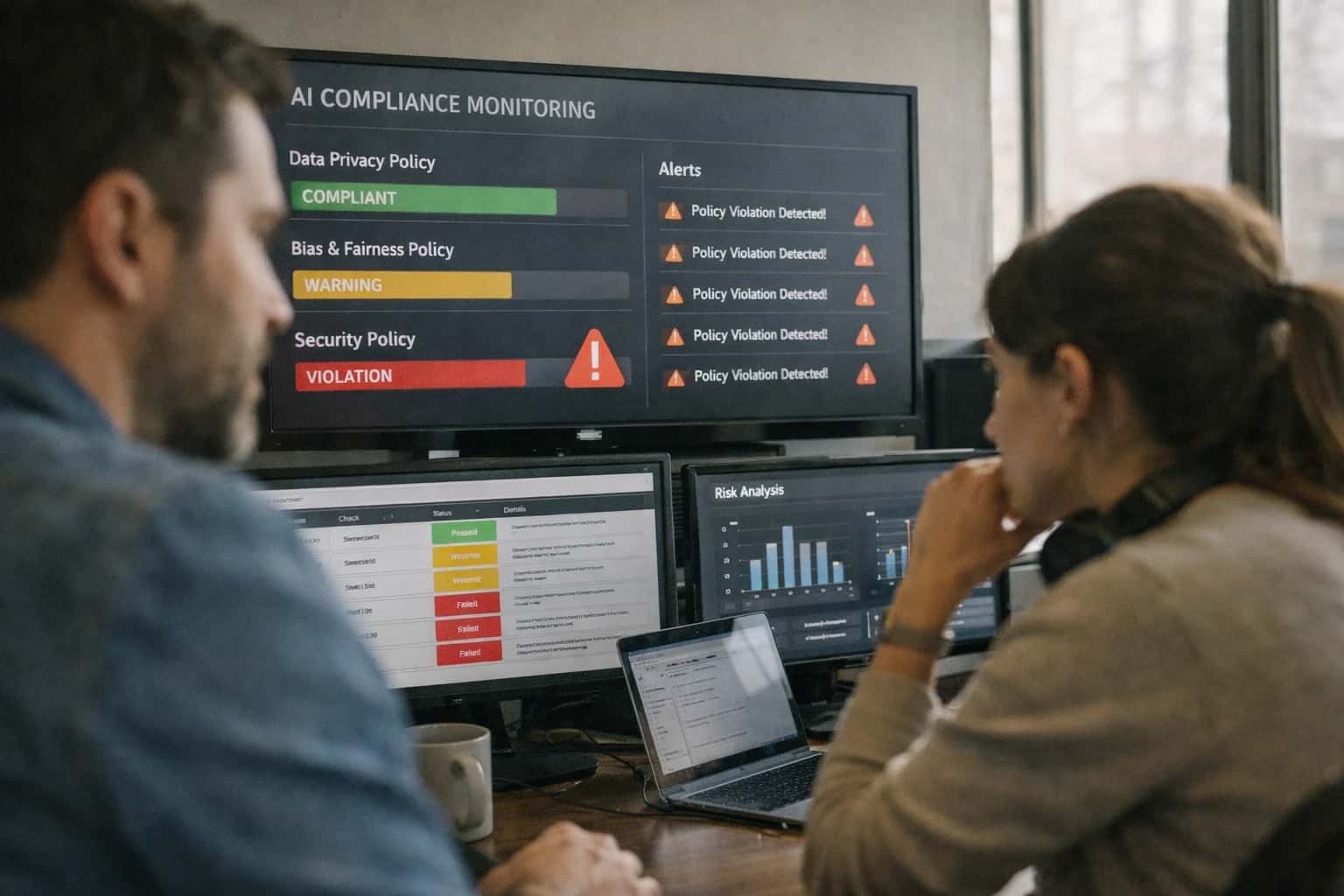
AUTOMATING HIPAA AND OPERATIONAL AUDITS
Where AI Fits into Telemedicine Compliance
Integrating AI agents directly into telemedicine platform admin consoles and audit logs to automate compliance workflows, reducing manual review from days to hours.
The core implementation involves deploying lightweight AI microservices that subscribe to platform webhooks (e.g., user.login, chart.accessed, consent.signed). These services use a combination of rule-based logic and LLM-powered analysis to assess events against your compliance policy. For example, an agent can review a visit transcript for potential PHI disclosure, generate a summary for the audit trail, and log the finding directly back to the platform's compliance module. This turns a manual, post-hoc review process into a continuous, automated workflow.
Rollout requires a phased approach: start with read-only monitoring of high-risk areas like user access, then progress to automated documentation for consent management and breach reporting. Governance is critical; all AI-generated findings should be tagged, include source evidence, and require human-in-the-loop approval before any corrective action is taken. This creates a defensible, auditable chain of custody, essential for HIPAA and state telehealth regulations. For a deeper look at secure implementation patterns, see our guide on HIPAA-aligned AI architecture.
TELEMEDICINE PLATFORMS
Integration Surfaces for AI Compliance Agents
Platform Audit Trails and Log Management
AI compliance agents integrate directly with telemedicine platform admin consoles and system logs (e.g., Teladoc's Admin Portal, Amwell's Provider Dashboard) to automate HIPAA audit trail generation. Agents process raw event logs—user logins, record accesses, PHI disclosures—to produce structured, narrative summaries for compliance officers. This surfaces anomalies like after-hours access from unusual locations or bulk record exports, triggering real-time alerts.
Implementation involves subscribing to platform webhooks for audit events or scheduled polling of log APIs. The agent enriches raw data with context (e.g., mapping a user ID to a role) and writes compliant summaries back to a dedicated audit module or a secure document store like SharePoint, tagged for easy retrieval during inspections.
HIPAA & REGULATORY AUTOMATION
High-Value AI Compliance Use Cases
AI agents integrated with telemedicine platform logs, admin consoles, and patient records can automate high-volume, manual compliance tasks, reducing audit risk and operational overhead for clinical and administrative teams.
01
Automated HIPAA Audit Trail Generation
AI agents continuously monitor platform access logs (login events, record views, data exports) to generate structured, chronological audit reports. Automatically flags anomalous access patterns (e.g., after-hours chart access from unusual IP) for administrator review, replacing manual log sifting.
Batch -> Real-time
Compliance monitoring
02
Dynamic Consent Form Management & Validation
AI reviews patient-submitted intake forms and visit recordings to verify that proper verbal/written consent was obtained for treatment, recording, or data sharing. Automatically tags records with consent status and triggers follow-up workflows in platforms like Mend or Amwell if gaps are detected.
1 sprint
Manual review reduction
03
Regulatory Document Gap Analysis
Agent scans patient charts and encounter documentation against payer (Medicare, commercial) and state telehealth requirements. Identifies missing elements (e.g., location of patient, supervising physician name for NP visits) before claim submission, reducing denials and audit exposure.
Hours -> Minutes
Pre-submission check
04
Automated Minimum Necessary Principle Enforcement
AI reviews data access and sharing requests (e.g., for referrals, continuity of care) against the patient's active treatment context. Provides justification analysis and recommends data redaction before sharing via platform APIs, creating an enforceable policy layer.
05
Breach Notification & Risk Assessment Workflow
Upon detection of a potential PHI exposure (e.g., misdirected message, unauthorized API call), AI agent initiates a standardized risk assessment workflow. It drafts the initial incident report, estimates impacted records, and populates notification templates, accelerating mandatory reporting timelines.
Same day
Incident response
06
Patient Right-of-Access Request Automation
When a patient submits a request for their medical record via a portal (e.g., Teladoc), an AI agent validates identity, retrieves all relevant data (visits, messages, labs), redacts third-party info, and assembles a deliverable package—automating a manual, 30-day compliance workflow.
Days -> Hours
Request fulfillment
HIPAA-ALIGNED AUTOMATION
Example AI Compliance Workflows
These workflows illustrate how AI agents can automate critical compliance tasks by integrating with telemedicine platform APIs, admin consoles, and audit logs. Each is designed to reduce manual effort while maintaining a verifiable, policy-aware audit trail.
Trigger: A user session ends (patient or provider) or a data access event is logged via platform webhooks (e.g., user.session.end, record.access).
Context/Data Pulled: The AI agent ingests the raw event log and enriches it by querying:
- User role and department from the platform's identity management API.
- Patient record metadata associated with the accessed session.
- Historical access patterns for the same user and record.
Model/Agent Action: A classification model analyzes the enriched event to:
- Categorize the action (e.g., 'View Chart', 'Download PHI', 'Modify Note').
- Assess necessity against the user's role and the patient's current care context.
- Flag potential anomalies (e.g., after-hours access from a new IP, bulk record exports).
System Update/Next Step: The agent writes a structured, human-readable summary to a dedicated HIPAA audit table or SIEM (e.g., Splunk), including:
- Timestamp, user, action, record ID.
- Justification assessment (e.g., 'Aligned with treatment', 'Requires review').
- Anomaly score (0-100).
Human Review Point: Events with an anomaly score above a configured threshold (e.g., 75) trigger an alert in the platform's admin console and create a task for the Privacy Officer in the compliance workflow module.
HIPAA-ALIGNED AI AGENT ORCHESTRATION
Implementation Architecture: Data Flow and Guardrails
A production-ready architecture for automating compliance workflows by integrating AI agents with telemedicine platform admin consoles, audit logs, and patient data stores.
The core integration connects to three primary surfaces within platforms like Teladoc or Amwell: the administrative API for system-wide settings, the audit log export for HIPAA-mandated access reviews, and the patient record API for consent and documentation checks. AI agents are deployed as a middleware layer, subscribing to webhook events (e.g., consent_form_uploaded, user_role_changed) and querying platform APIs to fetch relevant data payloads. For instance, an agent triggered by a new patient intake can retrieve the uploaded consent PDFs via the document API, extract and validate key clauses using a vision-capable LLM, and log the verification result back to a dedicated AI_Compliance_Audit custom object.
Data flows are designed with zero persistent ePHI in the AI layer. Agents operate on a query-and-forget principle: patient data is retrieved in real-time, processed in memory, and only derived metadata (e.g., consent_type: "Treatment", signature_present: true, audit_trail_gap_detected) is written back. This is orchestrated through a secure queue (e.g., AWS SQS with encryption) where each job contains only opaque record IDs and event types. The AI service, which can use models like GPT-4 or Claude via a private Azure OpenAI endpoint, calls back to the telemedicine platform's APIs using scoped OAuth tokens with strict RBAC—limiting access to only the fields necessary for the specific compliance check.
Guardrails are implemented at multiple levels. A pre-flight policy engine evaluates each agent's intended action against the platform's configured compliance rules (e.g., "require re-consent after 24 months") before any write operation. All agent reasoning is logged to an immutable ledger with prompts, source data hashes, and outputs, creating a defensible audit trail for regulators. Rollout follows a phased, human-in-the-loop approval model: initially, agents generate draft audit reports or flag documentation gaps in a separate dashboard for administrator review. Only after validation and tuning are agents permitted to perform autonomous actions, such as auto-populating a HIPAA audit summary template or sending a secure message to a care coordinator for missing consent.
HIPAA-ALIGNED IMPLEMENTATION PATTERNS
Code and Payload Examples
Automating HIPAA Audit Logs
AI agents monitor platform events—logins, chart access, message sends—to generate human-readable audit narratives. The agent calls the telemedicine platform's admin API to fetch raw logs, enriches them with user context, and writes a summarized entry to a dedicated compliance object.
Example Payload to Platform API:
json{ "action": "AUDIT_LOG_CREATE", "entity_type": "patient_chart", "entity_id": "PAT-789012", "user_id": "PROV-456", "timestamp": "2024-05-15T10:30:00Z", "ai_generated_summary": "Provider accessed patient chart for scheduled follow-up visit. No PHI modifications were made. Access consistent with treatment purpose.", "raw_event_ids": ["LOG-001", "LOG-002"], "compliance_check": "HIPAA_Access_Minimum_Necessary" }
This structured write-back creates a searchable, regulator-ready audit trail without manual nurse or admin effort.
AI-ENHANCED COMPLIANCE WORKFLOWS
Operational Impact: Time Saved and Risk Reduction
How AI agents integrated with telemedicine platform logs and admin consoles reduce manual effort and improve audit readiness for HIPAA, consent, and regulatory documentation.
| Compliance Workflow | Manual Process | AI-Assisted Process | Key Impact & Notes |
|---|---|---|---|
HIPAA Audit Trail Generation | Manual log review and report compilation (4-8 hours weekly) | Automated log ingestion, summarization, and report drafting (1 hour weekly) | Reduces FTE burden; ensures consistent, timestamped documentation for audits. |
Patient Consent Form Review & Flagging | Administrator manually checks each form for completeness and signatures | AI pre-scans forms, flags missing fields or mismatches for human review | Cuts initial review time by ~70%; prevents incomplete consents from proceeding. |
Regulatory Document Version Control | Manual comparison of policy updates against archived versions | AI detects and highlights material changes in new policy documents | Accelerates compliance officer review; reduces risk of oversight. |
Breach Notification Triage | IT team manually investigates access logs for potential incidents | AI monitors logs for anomalous access patterns and generates initial incident summary | Speeds detection and initial assessment; ensures timely reporting windows. |
Business Associate Agreement (BAA) Compliance Check | Quarterly manual audit of vendor list against BAAs on file | AI cross-references active integrations/vendors with BAA repository, flags gaps | Transforms quarterly project into continuous monitoring; improves vendor risk management. |
Patient Data Access Request Fulfillment | Manual search across platform modules and logs (1-2 hours per request) | AI aggregates relevant access events and data points into a draft report | Fulfills requests in minutes instead of hours; improves patient trust and regulatory response. |
Training Documentation for New Hires | Manual assignment and tracking of HIPAA training modules | AI syncs with HRIS, auto-assigns training, and tracks completion in platform admin | Ensures 100% compliance at onboarding; automates a recurring administrative task. |
HIPAA-ALIGNED IMPLEMENTATION
Governance, Security, and Phased Rollout
Deploying AI in telemedicine requires a security-first architecture and a controlled rollout to maintain compliance and clinician trust.
AI compliance workflows must integrate at the administrator and audit layers of platforms like Teladoc, Amwell, and Mend. This involves connecting to admin console APIs, audit log streams, and consent management modules to automate HIPAA audit trail generation, document checks, and policy enforcement. Agents are designed to operate on event-driven webhooks—triggered by actions like visit completion, chart access, or consent update—to generate compliance artifacts without disrupting clinician workflows.
A production architecture typically includes a secure middleware layer that handles data de-identification, prompt grounding in policy documents, and write-back to designated compliance records or systems like a SIEM. All AI-generated outputs, such as an automated audit summary or a consent discrepancy flag, are stored with a tamper-evident audit trail linking back to the original platform event. Role-based access control (RBAC) from the telemedicine platform is mirrored to govern which administrators or compliance officers can review and approve AI-generated findings.
Rollout follows a phased, workflow-specific approach. Phase 1 often targets automated consent verification for new patient intakes, running in a human-in-the-loop mode where AI suggestions are reviewed before system updates. Phase 2 expands to real-time audit trail generation for high-risk events like record exports. Each phase includes parallel runs to compare AI outputs against manual processes, measuring reduction in administrative hours and error rates before full automation. This controlled cadence ensures clinical operations remain stable while building evidence for AI's role in strengthening compliance posture.
Enabling Efficiency, Speed & Accuracy
Intelligent Analysis, Decision & Execution
We build AI systems for teams that need search across company data, workflow automation across tools, or AI features inside products and internal software.
Talk to Us
Search across company data
Give teams answers from docs, tickets, runbooks, and product data with sources and permissions.
Useful when people spend too long searching or get different answers from different systems.
Enterprise searchRAGPermissions
Read more
Automate internal workflows
Use AI to route work, draft outputs, trigger actions, and keep approvals and logs in place.
Useful when repetitive work moves across multiple tools and teams.
AI agentsWorkflow automationGovernance
Read more
Add AI to products and internal tools
Build assistants, guided actions, or decision support into the software your team or customers already use.
Useful when AI needs to be part of the product, not a separate tool.
AI integrationDecision supportModel routing
Read moreAI COMPLIANCE WORKFLOWS
FAQ: Technical and Commercial Considerations
Implementing AI for HIPAA audit trails, consent management, and regulatory checks requires careful planning. Below are answers to common technical and commercial questions for integrating AI compliance agents with platforms like Teladoc, Amwell, Doxy.me, and Mend.
AI agents interact with telemedicine platforms via secure, API-based integrations designed for regulated data.
Typical Architecture:
- Authentication & RBAC: Agents use service accounts with strict, role-based access controls (RBAC) scoped to the minimum necessary data (e.g., read-only for audit logs, write for document status).
- Data in Transit: All communications use TLS 1.2+ encryption. Platform-specific API keys or OAuth 2.0 flows are managed in a secrets vault.
- Data Processing: PHI is sent to the AI model provider (e.g., OpenAI, Anthropic) via a Business Associate Agreement (BAA)-covered API. For maximum control, PHI can be de-identified before processing or kept within a private cloud/VPC endpoint.
- Audit Trail: Every agent action—data fetch, API call, write-back—is logged with a timestamp, user/service ID, and action type to a secure SIEM or audit database.
Key Check: Verify your AI model vendor's BAA and data processing terms. For platforms like Mend or Amwell, ensure your integration uses their official, versioned APIs and respects their data usage guidelines.

About the author
Prasad Kumkar
CEO & MD, Inference Systems
Prasad Kumkar is the CEO & MD of Inference Systems and writes about AI systems architecture, LLM infrastructure, model serving, evaluation, and production deployment. Over 5+ years, he has worked across computer vision models, L5 autonomous vehicle systems, and LLM research, with a focus on taking complex AI ideas into real-world engineering systems.
His work and writing cover AI systems, large language models, AI agents, multimodal systems, autonomous systems, inference optimization, RAG, evaluation, and production AI engineering.
LinkedIn
Limited slotsGet a Free AI Consultation
Partnered with leading AI, data, and software stack.





How We Work
Custom AI workflows for your Business
One-fit-all AI don't work for modern businesses. At Inferensys, we aim to understand your business & custom requirements; which we use to define most efficient agentic workflows, the data, and the tools for your business.
01
Review the use case
We understand the task, the users, and where AI can actually help.
Read more02
Pick the right approach
We define what needs search, automation, or product integration.
Read more03
Build the first useful version
We implement the part that proves the value first.
Read more04
Improve from there
We add the checks and visibility needed to keep it useful.
Read moreThe first call is a practical review of your use case and the right next step.
Talk to Us