
Inferensys

Integration

AI Integration for Zuora in Enterprise SaaS

A technical blueprint for integrating AI agents and workflows with Zuora to automate complex billing operations, ensure global compliance, and generate consolidated revenue intelligence for enterprise SaaS companies.
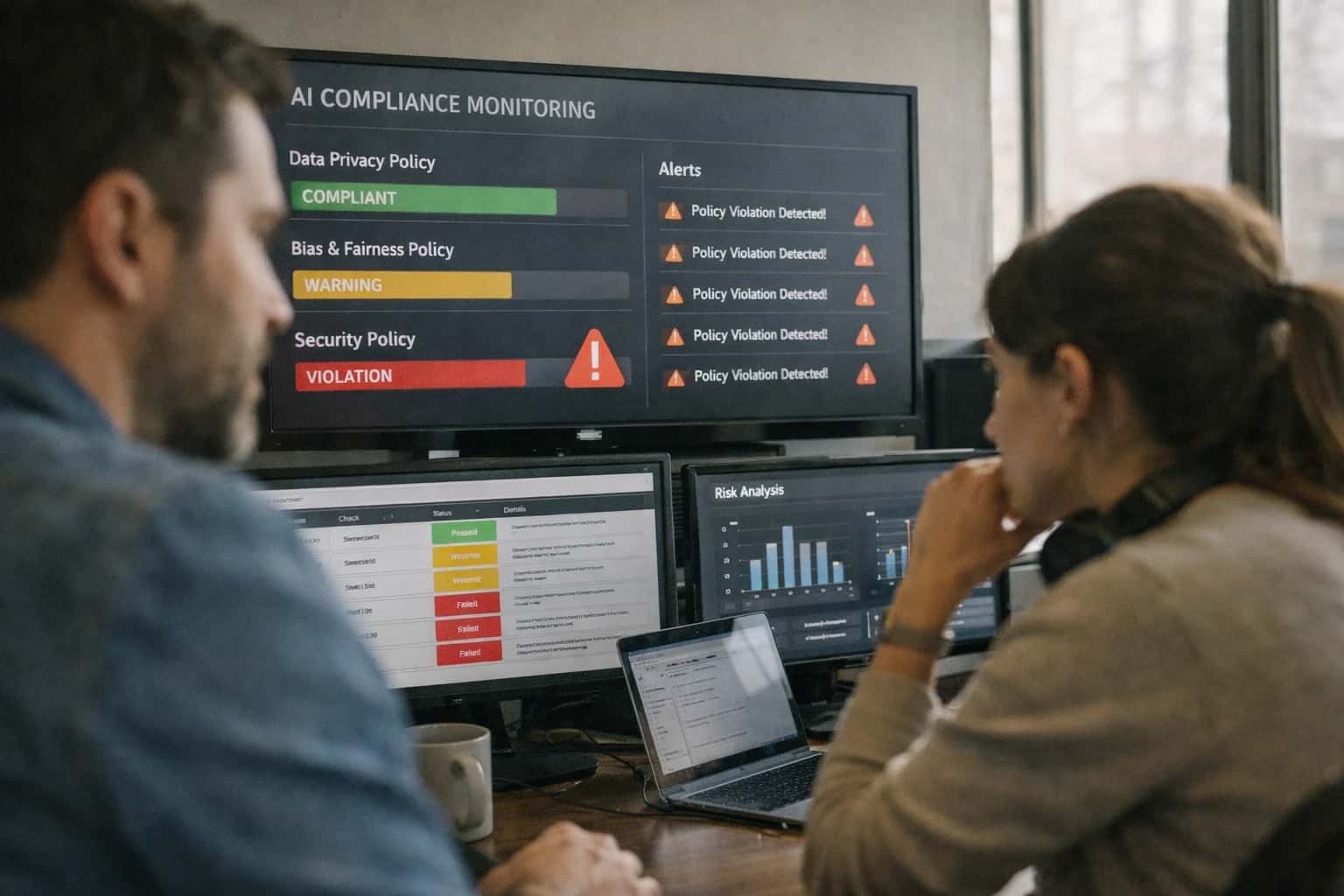
Compliance officer monitoring AI compliance agent on laptop, policy dashboards visible, modern WeWork desk setup.
ARCHITECTURE AND ROLLOUT

Where AI Fits in the Enterprise Zuora Stack

A practical blueprint for integrating AI into Zuora's core modules to automate revenue operations and enhance customer experience.

In an enterprise Zuora deployment, AI agents and workflows typically connect at three key layers: the Billing and Revenue API for transactional automation, the Zuora Object Model for data enrichment and decision support, and the Zuora Workflow Engine for orchestrating multi-step processes. High-impact integration surfaces include:

  • Zuora Billing & Payments: Automating invoice generation, dunning sequence personalization, and payment exception handling.
  • Zuora Revenue: Forecasting recognized revenue, analyzing the impact of contract modifications, and automating compliance schedules.
  • Zuora Collect: Prioritizing collection accounts, predicting payment success, and drafting personalized communications.
  • Zuora CPQ: Guiding sales with intelligent product recommendations and automated quote approvals based on historical win rates.


Implementation focuses on building stateless AI services that call Zuora's REST APIs and consume its webhooks. For example, a Predictive Dunning Agent listens for invoice.payment_failed webhooks, retrieves the customer's full payment history and product usage via the Accounts and Subscriptions objects, and uses an LLM to generate a context-aware communication—escalating to a human agent if the model's confidence score is low. These services run outside Zuora's core, ensuring auditability and allowing for A/B testing of different AI models without impacting billing integrity.

Rollout should be phased, starting with read-only analytics (e.g., churn risk scoring) before progressing to automated, but human-approved, actions (e.g., suggested payment retry schedules). Governance is critical: all AI-generated outputs, especially those that modify financial records or customer communications, must be logged with a full trace (prompt, model, source data) in your audit system. Consider implementing a human-in-the-loop approval queue in your existing RevOps tools (like Salesforce or Jira) for any AI-recommended plan changes or pricing overrides before they are executed via Zuora's API.

WHERE AI AGENTS CONNECT

Key Zuora Modules and Integration Surfaces

Core Billing and Invoicing Automation

The Zuora Billing module manages the entire subscription billing lifecycle. AI integration here focuses on automating and personalizing high-volume, repetitive tasks.

Key Integration Surfaces:

  • Invoice Generation API: Inject AI to draft personalized invoice summaries, explain complex prorations or credits in plain language, and dynamically adjust payment terms based on customer risk scores.
  • Billing Schedules & Amendments: Use AI agents to monitor for plan changes, calculate proration impacts automatically, and suggest optimal billing date adjustments to improve cash flow.
  • Tax Calculation Service: Augment with AI to review tax application for anomalies, especially in global multi-entity hierarchies, and flag potential compliance issues before invoice finalization.

Example Workflow: An AI agent triggered by a SubscriptionUpdated webhook can analyze the amendment, generate a customer-friendly explanation of the charge, and post a note to the related account in Salesforce.

ENTERPRISE SAAS

High-Value AI Use Cases for Enterprise Zuora

For large-scale SaaS companies, integrating AI with Zuora moves beyond basic automation. It enables intelligent revenue operations, proactive customer management, and data-driven decision-making across complex multi-entity hierarchies and global compliance requirements.

01

Intelligent Dunning & Collections Prioritization

AI analyzes payment history, customer health scores, and communication patterns to dynamically prioritize the collections queue and personalize dunning sequences. Instead of a one-size-fits-all retry schedule, the system predicts payment success likelihood and routes high-value, high-likelihood accounts for automated recovery while escalating complex cases to human agents.

Hours -> Minutes
Queue prioritization
02

Predictive Churn Intervention for Key Accounts

Models ingest Zuora billing data (plan changes, payment failures, usage drops) alongside CRM engagement signals to generate real-time churn risk scores for enterprise accounts. High-risk scores automatically trigger workflows in the customer success platform, prompting tailored interventions like personalized check-ins, offer generation, or account review scheduling before the next renewal date.

Same day
Risk identification
03

Automated Revenue Recognition & Schedule Management

For companies using Zuora Revenue, AI agents monitor contract modifications, new orders, and amendments to automatically generate and update ASC 606/IFRS 15 revenue schedules. The system can forecast recognized revenue, flag potential compliance deviations for review, and generate audit-ready summaries, reducing manual finance team workload during month-end close.

1 sprint
Implementation timeline
04

Global Tax Compliance & Nexus Analysis

AI reviews customer location data, invoice line items, and transactional history against constantly updated global tax rule databases. It automatically applies correct tax codes and rates within Zuora Billing, flags transactions requiring manual review for complex nexus scenarios, and generates documentation for tax filing support integrated with platforms like Avalara or Vertex.

Batch -> Real-time
Compliance check
05

Unified Customer 360 for Support & Success

An AI-powered agent layer creates a unified customer view by querying Zuora APIs for billing history, active subscriptions, and invoices, then synthesizing this with data from Salesforce, Zendesk, and product usage tools. This context powers support copilots that can explain charges, process prorations, and handle common billing inquiries without escalating to RevOps.

Hours -> Minutes
Case resolution
06

Consolidated Financial Reporting & Anomaly Detection

AI models periodically query Zuora's REST and SOAP APIs across multiple subsidiary entities to consolidate financial data (MRR, ARR, bookings) into executive dashboards. The system performs anomaly detection on revenue streams, identifies outliers in discounting or write-offs, and generates natural-language summaries of performance against forecast for leadership reviews.

ENTERPRISE SAAS PATTERNS

Example AI Agent Workflows for Zuora

For enterprise SaaS companies using Zuora, AI agents can automate complex, multi-system workflows that span billing, revenue, support, and customer success. These are production-ready patterns that connect to Zuora's APIs, webhooks, and data model.

Trigger: A new subscription, amendment, or renewal is processed in Zuora Billing, creating or modifying a Subscription and RatePlanCharge objects.

Agent Workflow:

  1. Context Pull: The agent listens to the subscription.created or subscription.updated webhook. It fetches the full contract details, including:
    • RatePlanCharge details (amount, billing timing, service period)
    • Custom fields for Product Rate Plan Charge indicating revenue treatment (e.g., revenue_recognition_template)
    • Any linked Amendment data for prorations or mid-term changes.
  2. Model Action: An LLM-based classifier reviews the contract against pre-defined revenue recognition rules (ASC 606/IFRS 15). It determines the appropriate recognition schedule—straight-line, ratable, or milestone-based—and calculates the monthly recognized revenue amounts.
  3. System Update: The agent uses the Zuora Revenue API to create or update the corresponding RevenueSchedule and RevenueEvent records. It populates the schedule with the calculated amounts and dates.
  4. Human Review Point: For any contract with non-standard terms, custom pricing, or values above a configurable threshold, the agent flags the generated schedule for review by a finance analyst in a dedicated queue (e.g., in Jira or a custom dashboard) before submission.
  5. Next Step: Once approved (or auto-approved), the schedule is posted. The agent logs the action in an audit trail and can trigger a notification to the RevOps team in Slack or Microsoft Teams.
ENTERPRISE-SCALE INTEGRATION PATTERNS

Implementation Architecture: Data Flow and System Design

A production-ready blueprint for integrating AI agents with Zuora's multi-entity data model and global compliance requirements.

A robust AI integration for Zuora operates as a middleware orchestration layer, not a point-to-point connector. It ingests webhooks from Zuora's Subscription, Payment, and Invoice objects, processes them through an event queue (like Amazon SQS or Apache Kafka), and routes them to purpose-built AI agents. For instance, a payment failure event triggers a Dunning Agent that analyzes the customer's payment history, subscription value, and dunning stage to generate a personalized communication strategy, which is then executed via Zuora's Communications API or a connected CRM like Salesforce. This design ensures the core billing system remains the source of truth while AI handles the decision logic and personalized execution.

The architecture must account for Zuora's multi-entity hierarchies and consolidated reporting. AI models require a unified customer view, which means building a real-time data pipeline that flattens and joins data across the Account, Subscription, RatePlanCharge, and RevenueSchedule objects from multiple tenant units. This enriched data is then vectorized and stored in a dedicated retrieval layer (e.g., Pinecone or Weaviate) to power Support Copilot Agents that can answer complex billing questions by grounding responses in the customer's specific contract and payment history. All AI-generated actions—like a proration adjustment or a dunning email—are written back to Zuora via its REST API, with a full audit trail logged to a separate system for compliance and model evaluation.

Rollout and governance are critical. Start with a single, high-impact workflow like intelligent dunning or invoice summarization, deploying agents in a human-in-the-loop mode where their recommendations are reviewed in a queue (e.g., in ServiceNow or Jira) before execution. Implement strict RBAC to ensure AI-initiated write-backs to Zuora—such as creating a credit memo or adjusting a payment term—follow existing approval matrices. Use Zuora's webhook retry logic and idempotency keys to guarantee exactly-once processing, and monitor agent performance through business metrics like reduction in Days Sales Outstanding (DSO) or support ticket volume for billing inquiries. This phased, governed approach de-risks the integration while delivering immediate operational value. For related architectural patterns, see our guides on [/integrations/subscription-management-and-billing-platforms/ai-integration-for-subscription-platform-data](AI-ready data pipelines) and [/integrations/api-management-and-gateway-platforms](secure API orchestration).

ZUORA API INTEGRATION PATTERNS

Code and Payload Examples

Querying Zuora Objects for AI Context

AI agents need real-time access to subscription and invoice data to power workflows like intelligent dunning or churn analysis. Use Zuora's REST API with OAuth 2.0 to retrieve key objects. The example below fetches a subscription's details, including its active rate plans and upcoming invoice preview, which is essential for generating personalized communications or predicting renewal risk.

python
import requests

# Authenticate and get access token
auth_response = requests.post(
    'https://rest.zuora.com/oauth/token',
    data={'grant_type': 'client_credentials'},
    auth=('client_id', 'client_secret')
)
access_token = auth_response.json()['access_token']

# Fetch subscription with related objects
headers = {'Authorization': f'Bearer {access_token}', 'Content-Type': 'application/json'}
subscription_id = '2c92c0f86ff7f2b3016ff9e4f8a26345'

response = requests.get(
    f'https://rest.zuora.com/v1/subscriptions/{subscription_id}?show=ratePlans,invoiceItems',
    headers=headers
)
subscription_data = response.json()
# This payload includes MRR, status, and line items for AI analysis

This data forms the foundation for RAG systems that ground agent responses in accurate billing context, served from a vector store like Pinecone.

ZUORA AI INTEGRATION

Realistic Operational Impact and Time Savings

How AI agents and workflows connected to Zuora's APIs transform key subscription management operations for enterprise SaaS.

Workflow / MetricBefore AIAfter AIImplementation Notes

Invoice Discrepancy Resolution

Manual investigation: 2-4 hours per case

AI-assisted root cause analysis: 15-30 minutes

Agent surfaces likely cause from usage logs, proration rules, and contract terms for human review.

Dunning Sequence Management

Static schedules, manual escalation review

Dynamic, predictive retry logic & comms

AI prioritizes accounts, personalizes timing/channel, and flags high-risk accounts for collections.

Revenue Recognition Schedule Updates

Manual review of contract modifications

Automated detection & draft schedule generation

AI parses amended contracts, proposes ASC 606 schedules, and flags non-standard terms for finance.

Churn Risk Scoring & Alerting

Monthly cohort analysis in BI tools

Real-time scoring of all active subscriptions

Model ingests payment history, usage decay, and support tickets; triggers alerts in CRM/CS platforms.

Multi-Entity Billing Consolidation

Manual spreadsheet consolidation for reporting

Automated aggregation & variance explanation

AI agent queries child entities, consolidates data, and highlights outliers for parent company review.

Tax Compliance Review (Global)

Periodic manual audit of tax codes & nexus

Continuous monitoring & exception reporting

AI cross-references transaction location, product tax codes, and registered nexus; flags potential errors.

Subscription Plan Change Impact Analysis

Manual calculation of proration & revenue effect

Instant simulation & approval package drafting

Agent calculates financial impact, drafts comms, and routes for approval based on deal size thresholds.

Payment Method Failure Triage

Reactive review after dunning stage failures

Proactive analysis & update recommendations

AI analyzes decline patterns, suggests optimal retry times, and prompts customer for updated payment method.

ENTERPRISE AI INTEGRATION

Governance, Security, and Phased Rollout

A practical approach to deploying AI in Zuora for enterprise SaaS, balancing automation with control.

For enterprise SaaS companies, AI integration with Zuora must operate within strict financial controls and multi-entity hierarchies. This means architecting AI agents with role-based access (RBAC) to specific Zuora tenants, subscription objects, and revenue schedules. All AI-generated actions—like a proposed dunning communication, a churn risk score, or a contract modification for revenue recognition—should be logged in an immutable audit trail, referencing the source data from Zuora's Subscription, Invoice, or Payment APIs. For global deployments, AI models must be context-aware of regional tax rules (e.g., VAT, GST) stored in Zuora's tax engine and compliance requirements before automating billing adjustments.

A phased rollout is critical. Start with a read-only analysis phase, where AI agents query Zuora data to generate insights—such as predicting payment failure likelihood or identifying accounts with complex proration patterns—and present them to finance operators in a dashboard. Next, move to a human-in-the-loop automation phase, where the AI suggests actions (e.g., "create a one-time credit for this invoice discrepancy") that require approval within Zuora's workflow engine or a separate orchestration layer. The final phase is guarded autonomy for high-confidence, low-risk workflows, like personalizing invoice email templates or automating dunning retries for low-value, non-complex accounts, with well-defined exception handling to route edge cases to human review.

Security is paramount. API credentials for Zuora must be managed via a secrets vault, not hard-coded. AI tool-calling should be mediated through a secure gateway that enforces rate limits and validates payloads against Zuora's schema. For use cases involving sensitive customer data, consider a data minimization approach: instead of sending raw data to a third-party LLM, use retrieval-augmented generation (RAG) with a private vector store (like Pinecone or Weaviate) that contains embedded, anonymized Zuora data summaries, keeping PII within your controlled environment. Connect these patterns to our broader guides on [/integrations/subscription-management-and-billing-platforms/ai-integration-for-subscription-platform-data](AI-ready data pipelines) and [/integrations/api-management-and-gateway-platforms](secure API orchestration).

IMPLEMENTATION BLUEPRINT

FAQ: AI Integration for Zuora in Enterprise SaaS

Practical answers for enterprise architects and RevOps leaders planning to embed AI into Zuora for global subscription management, revenue operations, and compliance workflows.

Connecting AI to Zuora's hierarchical tenant structure requires a layered API strategy focused on governance and auditability.

Key Integration Pattern:

  1. Service Account & OAuth 2.0: Use dedicated Zuora service accounts with scoped OAuth tokens, never user credentials. Tokens should be rotated and managed via a secrets vault.
  2. Entity-Aware API Gateway: Route all AI agent requests through a central gateway that enforces entity-level permissions. The gateway should:
    • Validate the tenant context from the incoming request.
    • Append the correct Zuora-Entity-Ids header for the target subsidiary or billing entity.
    • Log all requests with user, agent, entity, and timestamp for a full audit trail.
  3. Data Segregation: Design prompts and agent memory to be stateless per request, pulling only the necessary entity context via the gateway. Avoid caching sensitive PII or payment data.

Example Payload for Gateway:

json
{
  "agent_id": "revops-dunning-assistant",
  "tenant_id": "ent_global_corp_us",
  "action": "get_overdue_invoices",
  "parameters": {
    "status": "Posted",
    "days_overdue": ">30"
  }
}

This approach ensures AI operations comply with data residency rules and internal financial controls.

Prasad Kumkar

About the author

Prasad Kumkar

CEO & MD, Inference Systems

Prasad Kumkar is the CEO & MD of Inference Systems and writes about AI systems architecture, LLM infrastructure, model serving, evaluation, and production deployment. Over 5+ years, he has worked across computer vision models, L5 autonomous vehicle systems, and LLM research, with a focus on taking complex AI ideas into real-world engineering systems.

His work and writing cover AI systems, large language models, AI agents, multimodal systems, autonomous systems, inference optimization, RAG, evaluation, and production AI engineering.


