AI integration for Zuora Collect focuses on three core surfaces: the Payment Run Engine, the Collections Workbench, and the Communication History object. The primary goal is to inject intelligence into the standard dunning workflow (PaymentRun -> Communication -> PaymentAttempt). An AI agent can be triggered via Zuora's REST API or Event Triggers to analyze an account's PaymentMethod, Invoice history, and Communication logs before a payment run is executed. This analysis determines the optimal action: skip a communication, adjust the retry schedule, escalate to a human agent, or draft a personalized collection message using data from the Account and Subscription objects.

Integration
AI Integration for Zuora Collect
A technical blueprint for augmenting Zuora's collections module with AI to predict payment success, prioritize accounts, and automate personalized communication, turning reactive dunning into proactive revenue recovery.
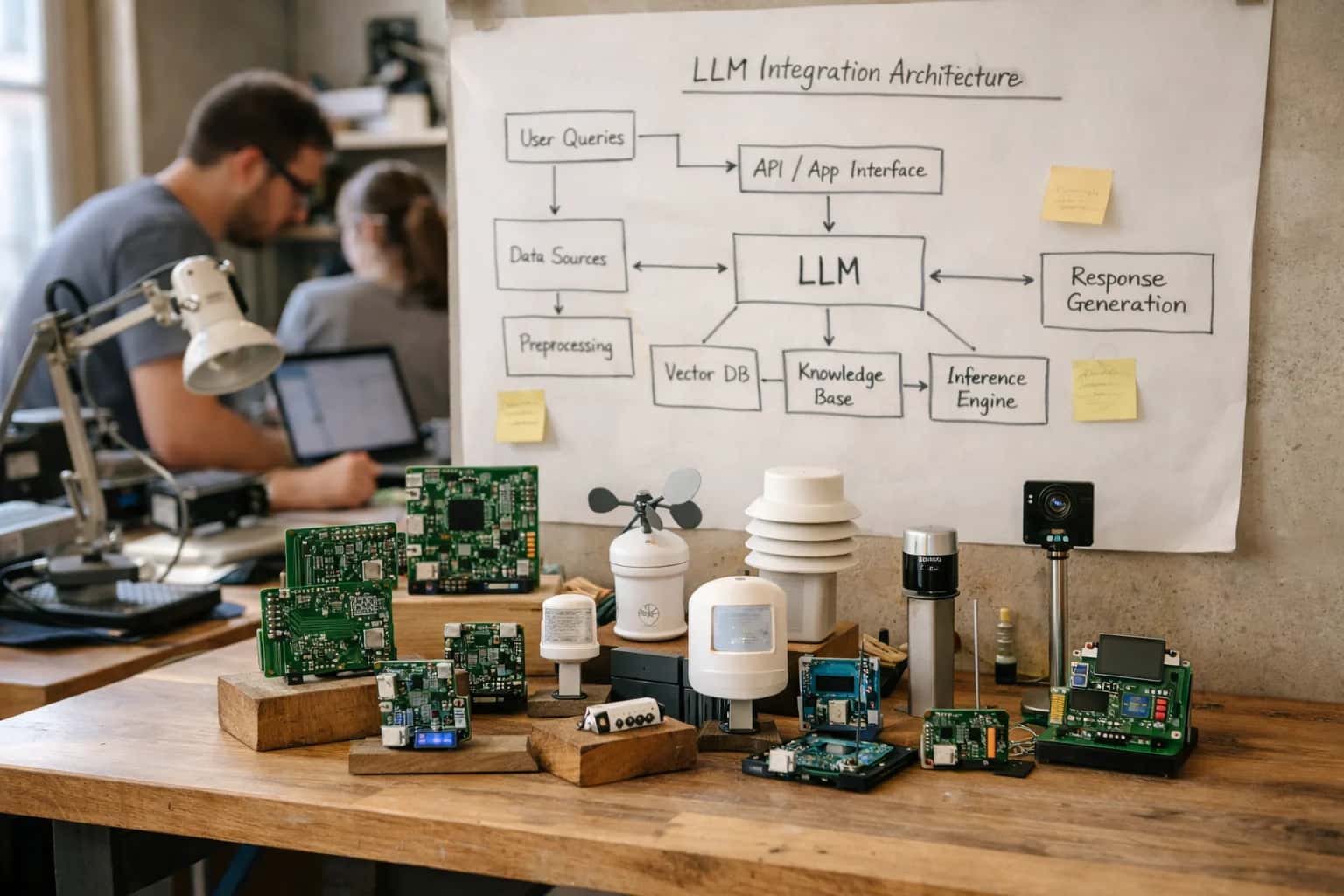
ARCHITECTING INTELLIGENT REVENUE RECOVERY
Where AI Fits into Zuora Collect
A technical blueprint for integrating AI agents into Zuora Collect to automate dunning, predict payment success, and personalize collection strategies.
In practice, this means building an orchestration layer that sits between Zuora Collect and your payment gateway. For a high-risk account, the AI can call a payment gateway API to validate or update the PaymentMethod before the scheduled run, potentially converting a likely failure into a success. For low-risk accounts with temporary issues, the AI can draft and send a personalized email via Zuora's communication templates, explaining the invoice and providing a direct payment link, all logged back to the Communication object for audit. This moves collections from a rigid, time-based sequence to a dynamic, behavior-driven process, reducing manual review queues and improving recovery rates.
Rollout should be phased, starting with a monitor-only AI that scores payment success probability and logs recommendations without taking action. Governance is critical: all AI-driven communications and schedule changes must be written to Zuora's audit trails, and a human-in-the-loop approval step should be configured for high-value accounts or any action outside predefined guardrails. This ensures the AI augments—rather than replaces—existing controls and compliance workflows within your revenue operations. For a deeper dive on orchestrating these workflows across systems, see our guide on AI Integration for Dunning Automation Platforms.
WHERE AI AGENTS CONNECT
Key Integration Surfaces in Zuora Collect
Automating Dunning Sequences and Exceptions
The core of Zuora Collect is its configurable dunning workflow engine, which defines communication steps, payment retry logic, and escalation paths. AI integration here focuses on intelligent workflow orchestration.
Instead of static, time-based triggers, an AI agent can analyze payment history, customer segment, and communication responsiveness to dynamically adjust the next action. For example:
- Predictive Retry Timing: An AI model scores the likelihood of payment success for a specific day/time or payment method, overriding the standard schedule.
- Exception Routing: Complex cases (e.g., partial payments, disputed invoices) are automatically summarized and routed to the appropriate collections specialist with recommended actions.
- Channel Optimization: The agent decides whether the next contact should be email, SMS, or an outbound call based on predicted customer preference and urgency.
Integration is via Zuora's Workflow API and webhooks to trigger, pause, or modify workflows based on AI-driven decisions.
ZUORA COLLECT
High-Value AI Use Cases for Collections
Transform Zuora Collect from a reactive dunning engine into a proactive, intelligent revenue recovery system. These AI-powered workflows leverage payment history, customer data, and predictive models to prioritize efforts, personalize outreach, and automate complex recovery logic.
01
Predictive Payment Success Scoring
Deploy a model that analyzes each customer's payment history, invoice amount, time since last successful charge, and seasonal patterns to generate a real-time payment success probability score. Use this score to dynamically prioritize the collections queue, routing high-probability accounts to automated retry sequences and flagging low-probability ones for early human review.
Batch -> Real-time
Queue prioritization
02
Intelligent, Multi-Channel Dunning Orchestration
Replace static email sequences with an AI agent that decides the optimal channel (email, SMS, in-app message), timing, and message content based on the customer's communication history and payment score. The agent can draft personalized collection messages, manage send logic via Zuora Communications or your ESP, and escalate to a human agent after a defined number of failed attempts.
1 sprint
To implement core logic
03
Automated Payment Method Update & Retry
Build an AI workflow triggered by a payment failure webhook. The agent analyzes the decline code, checks for alternative payment methods on file, and can generate a secure, personalized payment link for the customer. For known-good customers, it can attempt a retry with a backup card after a configurable delay, logging all actions back to the Zuora payment object.
Hours -> Minutes
Recovery cycle
04
Collections Agent Copilot
Embed an AI assistant within your collections team's CRM or dedicated tool. When an agent opens a delinquent account, the copilot surfaces a summary of the customer's payment history, previous dunning interactions, and AI-generated notes on likely churn risk. It can suggest negotiation talking points, appropriate payment plan options based on policy, and draft follow-up emails, reducing agent cognitive load.
Same day
Agent ramp-up
05
Exception & Write-Off Recommendation Engine
For accounts that remain delinquent, use AI to analyze the cost of continued pursuit versus potential recovery value. The system can review account tenure, total lifetime value, and collection costs to recommend when to offer a settlement, initiate a payment plan, or route to a third-party agency. It prepares a summary with rationale for manager approval, creating a clear audit trail in Zuora.
Batch -> Real-time
Decision support
06
Portfolio Health & Forecasting Dashboard
Implement an AI layer on top of Zuora Collect data and payment gateway feeds to provide real-time analytics on Days Sales Outstanding (DSO), aging trends, and cash flow forecasts. Use natural language queries (e.g., "Show me delinquent accounts from the EMEA region on Plan X") to uncover regional, product, or cohort-specific collections issues, enabling proactive strategy adjustments.
Hours -> Minutes
Insight generation
IMPLEMENTATION PATTERNS
Example AI-Augmented Collection Workflows
These workflows illustrate how AI agents can be integrated with Zuora Collect's API and webhook ecosystem to automate and enhance revenue recovery. Each pattern is triggered by a specific event, uses AI to analyze context, takes an intelligent action, and updates the system or escalates as needed.
Trigger: A payment fails on a subscription invoice.
Context Pulled: The AI agent receives a webhook from Zuora Collect and retrieves:
- Full customer payment history (success/fail patterns, methods used).
- Customer tier, lifetime value, and current subscription plan.
- Recent support tickets or notes from the CRM (e.g., Salesforce).
- The specific decline code from the payment gateway.
Agent Action: The LLM analyzes the context to determine the optimal next step:
- If decline is soft (e.g., insufficient funds): It predicts the likelihood of success on a retry in 3 days vs. 5 days based on historical patterns and drafts a personalized email explaining the retry schedule.
- If decline is hard (e.g., invalid card): It checks for an alternate payment method on file. If none exists, it drafts a secure, friendly message requesting an update via a payment link, with language tailored to the customer's tier.
- If the account has a recent high-priority support ticket: It routes the case to a human collections agent with a summary and recommends a service credit or payment plan.
System Update: The agent calls the Zuora Collect API to:
- Schedule the next automated retry at the AI-determined optimal time.
- Post the drafted communication to the customer's account notes.
- Update the dunning step in the workflow.
Human Review Point: All drafted communications are logged. Escalations to human agents are queued in the collections team's dashboard with the AI's reasoning and recommended actions.
FROM PREDICTION TO PERSONALIZED ACTION
Implementation Architecture & Data Flow
A production-ready AI integration for Zuora Collect connects predictive models to personalized workflows, automating high-value collections strategies.
The core architecture ingests key Zuora Collect objects via API and webhooks: Payment, PaymentMethod, Invoice, Account, and Communication. An AI agent processes this data to score each overdue account on payment propensity and escalation risk. High-propensity, low-risk accounts are routed to an automated, personalized communication workflow. The system drafts context-aware collection messages—referencing past payment history, open invoices, and even suggesting a payment method update—and dispatches them via Zuora's communication engine or a connected channel like email or SMS, logging all actions back to the account for audit.
For complex cases, the architecture includes a human-in-the-loop queue. Accounts flagged with high escalation risk or those that fail automated retries are surfaced in a dedicated dashboard for collections specialists. The AI provides a copilot summary with payment propensity score, predicted optimal contact channel, and a draft communication, allowing the agent to review, adjust, and execute with full context. This workflow ensures compliance and handles exceptions while maximizing team efficiency.
Rollout is typically phased, starting with read-only analysis and shadow scoring to validate model accuracy against historical collections data. Governance is critical: all AI-generated communications should be reviewed for tone and compliance before full automation, and decision logs must be stored to trace why a specific action was taken for a given account. This approach transforms collections from a reactive, batch-processed task into a dynamic, intelligent workflow that prioritizes effort and personalizes recovery strategies.
INTEGRATION PATTERNS
Code & Payload Examples
Scoring Accounts for Prioritization
Use Zuora's GET /v1/accounts/{account-key}/payments endpoint to fetch historical payment data. Combine this with account metadata and invoice details to create a feature vector for a predictive model. The AI agent scores each overdue account, allowing collections teams to prioritize high-value, high-likelihood accounts first.
Example Python Payload for Model Inference:
python{ "account_key": "A-00001234", "features": { "days_overdue": 45, "avg_payment_success_rate": 0.92, "total_outstanding": 1250.75, "payment_method_type": "credit_card", "customer_tier": "enterprise", "num_successful_payments": 22, "recent_decline_pattern": "none" } }
The model returns a score (e.g., 0.87) and a recommended action ("auto_retry", "personalized_email", "agent_call"). This score can be written back to a Zuora custom field via the PUT /v1/object/account/{id} API to drive segmented dunning workflows.
AI-POWERED COLLECTIONS
Realistic Operational Impact & Time Savings
How augmenting Zuora Collect with AI changes daily operations, reduces manual effort, and improves recovery rates.
| Metric | Before AI | After AI | Notes |
|---|---|---|---|
Account Prioritization | Manual review of aging reports | AI-scored risk & payment likelihood | Focus on high-value, high-risk accounts first |
Collection Email Drafting | Manual copy/paste from templates | AI-generated, personalized drafts | Human review and approval required before sending |
Payment Failure Analysis | Manual review of gateway codes | AI pattern detection & root cause summary | Identifies systemic issues like expired card batches |
Retry Schedule Optimization | Fixed, time-based dunning sequences | AI-predicted optimal retry timing & channel | Increases success rate without annoying customers |
Exception Case Triage | All cases reviewed by collections team | AI routes simple cases, flags complex ones | Team spends 60-70% less time on routine inquiries |
Weekly Collections Strategy | Manual analysis of past week's data | AI-generated insights & recommended actions | Provides data-driven focus for team meetings |
Customer Payment History Summaries | Manual click-through in Zuora UI | Instant AI summary for agent or customer calls | Reduces call handle time by 2-3 minutes per case |
ARCHITECTING FOR PRODUCTION
Governance, Security, and Phased Rollout
A practical approach to implementing AI in Zuora Collect that prioritizes control, compliance, and measurable impact.
A production-ready AI integration for Zuora Collect is built on a secure, event-driven architecture. The core pattern listens to Zuora's PaymentRun and Payment webhooks, triggering AI agents to analyze the underlying Account, Invoice, and PaymentMethod objects. These agents operate in a dedicated processing queue, calling LLM APIs with carefully scoped context—such as payment history, invoice aging, and communication logs—to generate recommendations. All AI-generated actions, like drafting a collection email or suggesting a payment retry schedule, are written as proposed updates to Zuora objects (e.g., a CommunicationProfile or a custom field on the PaymentRun). This creates a clear audit trail within Zuora's native logs and ensures no AI-driven change is applied without a governance checkpoint.
Rollout follows a phased, risk-managed approach. Phase 1 focuses on insight generation: AI analyzes past-due accounts to predict payment probability and surfaces prioritized lists in a dashboard or via Slack alerts for collector review. Phase 2 introduces draft automation: AI generates personalized email copy and suggested call scripts for collector approval before sending via Zuora's communication engine. Phase 3 enables closed-loop automation for low-risk, high-predictability scenarios, such as automatically sending a payment reminder for a minor overdue invoice from a historically reliable customer. Each phase includes A/B testing against a control group to validate impact on key metrics like Days Sales Outstanding (DSO) and recovery rates.
Governance is enforced through role-based access control (RBAC) and human-in-the-loop approvals. Critical actions—like changing a dunning schedule or offering a settlement—require manager approval via a configured workflow in a tool like /integrations/subscription-management-and-billing-platforms/ai-integration-for-subscription-operations-platforms. Security is paramount: all customer data is encrypted in transit and at rest, prompts are engineered to avoid generating sensitive financial advice, and API keys for LLM services are managed through a secure vault. This structured approach ensures the AI augments your team's expertise while maintaining strict compliance with financial controls and data privacy regulations.
Enabling Efficiency, Speed & Accuracy
Intelligent Analysis, Decision & Execution
We build AI systems for teams that need search across company data, workflow automation across tools, or AI features inside products and internal software.
Talk to Us
Search across company data
Give teams answers from docs, tickets, runbooks, and product data with sources and permissions.
Useful when people spend too long searching or get different answers from different systems.
Enterprise searchRAGPermissions
Read more
Automate internal workflows
Use AI to route work, draft outputs, trigger actions, and keep approvals and logs in place.
Useful when repetitive work moves across multiple tools and teams.
AI agentsWorkflow automationGovernance
Read more
Add AI to products and internal tools
Build assistants, guided actions, or decision support into the software your team or customers already use.
Useful when AI needs to be part of the product, not a separate tool.
AI integrationDecision supportModel routing
Read moreAI INTEGRATION FOR ZUORA COLLECT
Frequently Asked Questions
Practical questions about implementing AI to enhance payment collections, predict success, and automate communications within Zuora Collect.
An AI model analyzes historical Zuora Collect data to score each overdue account's likelihood of successful payment. The integration typically works by:
- Trigger: A daily batch job queries the Zuora API for accounts in the dunning process.
- Context Pulled: For each account, the system retrieves features such as:
- Payment history (success/failure patterns, decline codes)
- Customer tenure and subscription plan value
- Number of previous dunning attempts and responses
- Open support tickets related to billing
- Company data from a linked CRM (e.g., financial health signals)
- Model Action: A trained classifier (e.g., XGBoost or a lightweight LLM for reasoning) processes these features to output a probability score and a predicted reason (e.g., "payment method expired," "disputes invoice line item").
- System Update: The score and reason are written back to a custom field on the Zuora Account or Payment Method object via the Zuora API.
- Human Review Point: Collections teams can sort their work queue by this AI priority score, focusing high-value, high-probability accounts first.

About the author
Prasad Kumkar
CEO & MD, Inference Systems
Prasad Kumkar is the CEO & MD of Inference Systems and writes about AI systems architecture, LLM infrastructure, model serving, evaluation, and production deployment. Over 5+ years, he has worked across computer vision models, L5 autonomous vehicle systems, and LLM research, with a focus on taking complex AI ideas into real-world engineering systems.
His work and writing cover AI systems, large language models, AI agents, multimodal systems, autonomous systems, inference optimization, RAG, evaluation, and production AI engineering.
LinkedIn
Limited slotsGet a Free AI Consultation
Partnered with leading AI, data, and software stack.





How We Work
Custom AI workflows for your Business
One-fit-all AI don't work for modern businesses. At Inferensys, we aim to understand your business & custom requirements; which we use to define most efficient agentic workflows, the data, and the tools for your business.
01
Review the use case
We understand the task, the users, and where AI can actually help.
Read more02
Pick the right approach
We define what needs search, automation, or product integration.
Read more03
Build the first useful version
We implement the part that proves the value first.
Read more04
Improve from there
We add the checks and visibility needed to keep it useful.
Read moreThe first call is a practical review of your use case and the right next step.
Talk to Us