AI integration for Skyward Global Enrollment targets three core functional surfaces: the application intake portal, the student record (S_STU) and family modules, and the communication history logs. The primary integration points are Skyward's REST APIs and webhook system, which allow an external AI layer to react to events like a new application submission, a document upload to the file repository, or a status change on an I-20 request. For each international applicant, key data objects include scanned passports, academic transcripts, financial affidavits, and English proficiency test scores—all ideal candidates for AI-powered document intelligence.

Integration
AI Integration with Skyward Global Enrollment
A technical blueprint for embedding AI into Skyward's global enrollment workflows to automate document processing, credential evaluation, and multilingual communication for international students.
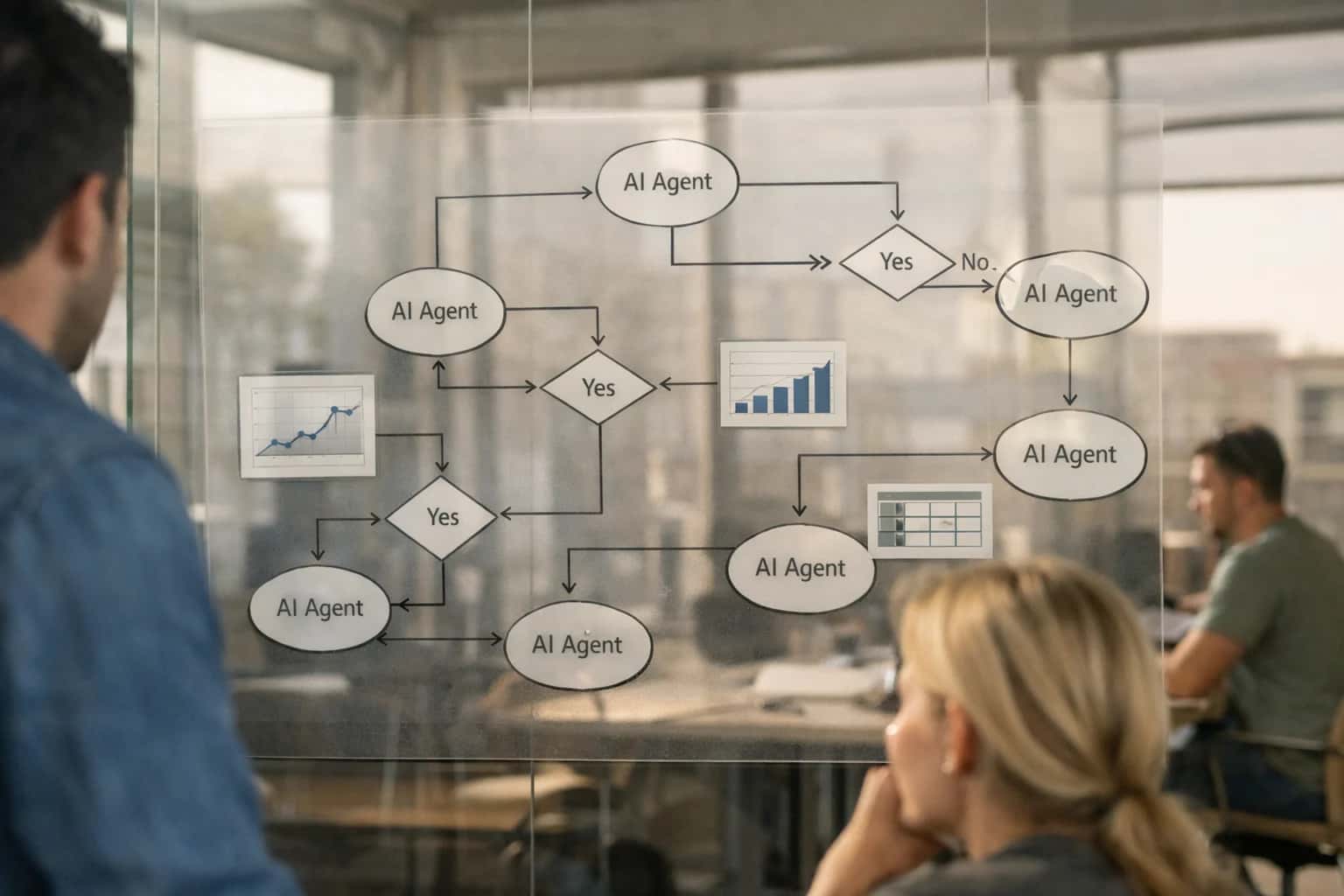
ARCHITECTURE FOR INTERNATIONAL STUDENT OPERATIONS
Where AI Fits in Skyward Global Enrollment
A technical blueprint for embedding AI into Skyward's international enrollment workflows to automate document processing, evaluation, and cross-time-zone communication.
Implementation centers on a middleware agent that orchestrates sequential workflows. For example, upon a new application, an AI agent can: 1) Extract and translate data from foreign transcripts using OCR and NLP, populating Skyward's custom fields for GPA and course credits; 2) Evaluate credentials against predefined institutional equivalency rules, flagging discrepancies for counselor review; and 3) Schedule proactive communications by analyzing the applicant's timezone in their contact record and optimizing email/SMS send times. This reduces manual data entry from hours to minutes and ensures follow-ups happen during the applicant's business day. A vector database can store extracted document data to power a RAG-based counselor copilot for instant Q&A on an applicant's full file.
Rollout requires a phased approach, starting with a single high-volume document type (e.g., transcript translation) and a human-in-the-loop review step before any AI-generated data is written back to Skyward. Governance is critical: all AI actions must be logged to Skyward's audit trail or a separate system, and role-based access controls (RBAC) in Skyward should dictate which staff roles can trigger or override AI recommendations. This architecture ensures compliance with FERPA and institutional policy while delivering tangible efficiency gains for enrollment teams managing complex, document-heavy international pipelines.
GLOBAL ENROLLMENT MODULES
Key Integration Surfaces in Skyward
Application & Document Hub
The Application Hub is the primary intake surface for international student data. AI integration here focuses on automating the ingestion and validation of unstructured documents. Key objects include Application, Applicant, and DocumentAttachment.
AI Use Cases:
- Document Translation & OCR: Automatically translate foreign-language transcripts, passports, and financial statements into English, extracting key fields (grades, dates, names) for pre-population into Skyward fields.
- Credential Evaluation: Cross-reference extracted course names and grades against known equivalency databases to provide preliminary credit recommendations for the admissions officer's review.
- Compliance Checklist: Use AI to verify that uploaded documents meet specific country or visa requirements (e.g., notarization, official seals), flagging incomplete applications.
Integration is typically event-driven via Skyward's API or database triggers when a new document is attached, kicking off an external AI processing workflow.
SKYWARD GLOBAL ENROLLMENT
High-Value AI Use Cases for Global Enrollment
International student enrollment is a document-intensive, multi-time-zone process. AI can automate key bottlenecks in Skyward's Global Enrollment module, reducing manual review, accelerating communication, and improving applicant experience.
01
Automated Document Translation & Verification
AI agents process international transcripts, passports, and financial statements uploaded to Skyward. They translate key fields, extract data (GPA, course names, dates), and flag inconsistencies against country-specific education frameworks for counselor review. This turns a multi-hour manual check into a 5-minute verification step.
Hours -> Minutes
Document review time
02
Intelligent Application Triage & Routing
Analyze the completeness and priority of incoming applications within Skyward. An AI workflow scores applications based on program fit, document readiness, and deadline proximity, then automatically routes them to the appropriate regional counselor or specialist queue. This ensures urgent cases are handled first and reduces manual sorting.
Batch -> Real-time
Application assignment
03
Cross-Time-Zone Communication Scheduler
An AI agent integrated with Skyward's communication logs and calendar APIs analyzes optimal contact times for families in different regions. It drafts personalized outreach (email/SMS) in the applicant's language, suggests meeting times, and can even schedule follow-ups in Skyward based on prior engagement patterns, keeping the process moving 24/7.
Same day
Response to inquiry
04
Visa & I-20 Document Preparation Support
Streamline the generation of immigration documents. After admission, an AI workflow pre-populates I-20/DS-2019 data from the verified Skyward application, checks for common errors (funding discrepancies, name mismatches), and generates a draft for the Designated School Official (DSO) to review and sign, cutting preparation time significantly.
1 sprint
Implementation timeline
05
Multilingual Family Portal Assistant
Deploy a context-aware chatbot on the Skyward family portal for international applicants. It answers FAQs about status, next steps, and requirements by querying Skyward APIs in real-time, and provides responses in the family's native language. This reduces repetitive emails to counselors and provides 24/7 support.
>80% Deflection
Common status inquiries
06
Predictive Yield & Capacity Modeling
Integrate AI models with Skyward enrollment data to forecast likely acceptance rates by country and program. The model analyzes historical trends, current application volume/quality, and external factors to help leadership adjust recruitment strategy and plan for housing & course capacity earlier in the cycle.
SKYWARD GLOBAL ENROLLMENT
Example AI-Powered Enrollment Workflows
These concrete workflows illustrate how AI agents can automate high-friction, manual tasks in the international student enrollment process, connecting directly to Skyward's APIs and data model to reduce processing time from weeks to days.
Trigger: A prospective international student uploads supporting documents (transcripts, passport, financial statements) via the Skyward Family Access portal or a dedicated intake form.
Context/Data Pulled: The AI agent is triggered via a webhook. It retrieves the uploaded file metadata from the StudentDocuments table and the student's declared country of origin and preferred language from the StudentDemographics table.
Model/Agent Action:
- Classification & OCR: The agent uses a vision model to classify the document type (e.g.,
Transcript,PassportBioPage,BankStatement). - Extraction: For transcripts, it extracts key fields: student name, institution name, dates, courses, grades, and grading scale.
- Translation & Verification: For non-English documents, the agent translates extracted text. It then uses a secondary verification step, comparing the AI-translated grade point average or diploma name against the student's self-reported data in Skyward to flag discrepancies.
System Update/Next Step: The agent writes structured data into a staging table (Staging_InternationalCredits) and updates the original StudentDocuments record with extraction status (processed, needs_review). A task is created in Skyward's task manager for an admissions officer if verification fails or data is ambiguous.
Human Review Point: All extracted data is flagged for a final, expedited human review before being committed to the official StudentAcademicHistory table. The officer sees the original document, the AI extraction, and the translation side-by-side in a custom UI.
BUILDING A PRODUCTION-READY INTEGRATION
Implementation Architecture: Data Flow & APIs
A secure, event-driven architecture connects AI services to Skyward's enrollment objects and communication surfaces.
The integration is built on Skyward's REST API and Event Subscription framework, creating a real-time data layer. Core objects like the StudentEnrollment record, FamilyContact profiles, and DocumentStorage attachments are synced to a secure middleware layer. This layer normalizes data, triggers AI workflows, and writes results back to designated fields (e.g., custom fields for translation_status, credential_evaluation_summary) or creates activity log entries. For document-heavy processes, files from Skyward's document management system are securely streamed to AI services for OCR and analysis, with extracted data mapped back to the student's application checklist.
Key workflows are orchestrated by AI agents that listen for specific events. For example, when a new international application is Submitted or a document is Uploaded, an agent is triggered. It might: 1) Call a translation service for non-English transcripts, storing the translated text in a linked note; 2) Invoke a credential evaluation model to compare coursework against domestic equivalents, outputting a gap analysis; 3) Schedule a follow-up communication task in the parent's local timezone by interfacing with Skyward's MessageCenter API. All agent actions are logged in a dedicated audit table with references to the source Skyward record ID for full traceability.
Governance is enforced at the API gateway, applying role-based access controls (RBAC) that mirror Skyward's security groups. Only approved AI services can write to specific fields, and all generated content (translated text, evaluation summaries) is flagged as AI-Generated in the system. A human-in-the-loop review step can be configured for high-stakes decisions before updates are committed. The rollout typically starts with a single pilot workflow—like automated document type classification—using a sandbox Skyward instance, before scaling to full translation and evaluation pipelines in production.
SKYWARD GLOBAL ENROLLMENT
Code & Payload Examples
Ingest & Translate International Documents
When a prospective international student uploads a document (e.g., a transcript or passport) to Skyward, a webhook can trigger an AI workflow for processing. This example shows a serverless function that receives the webhook, extracts text via OCR, translates it, and posts structured data back to a custom Skyward field.
pythonimport json import boto3 from typing import Dict, Any def lambda_handler(event: Dict[str, Any], context): """Process Skyward document upload webhook.""" # 1. Parse Skyward webhook payload payload = json.loads(event['body']) student_id = payload['studentId'] document_url = payload['documentUrl'] doc_type = payload.get('documentType', 'transcript') # 2. Call AI service for OCR & translation # (Using a hypothetical service client) ai_client = boto3.client('bedrock-runtime') ocr_response = ai_client.invoke_model( modelId='anthropic.claude-3-sonnet-20240229-v1:0', body=json.dumps({ "task": "ocr_and_translate", "source_url": document_url, "target_language": "en", "extract_fields": ["student_name", "institution", "grades", "graduation_date"] }) ) extracted_data = json.loads(ocr_response['body'].read()) # 3. Prepare payload for Skyward API update skyward_update = { "student": student_id, "customFields": { "intl_doc_status": "processed", "translated_" + doc_type: extracted_data['translated_text'], "source_institution": extracted_data.get('institution'), "credential_evaluation_notes": extracted_data.get('summary') } } # 4. Return result for further workflow orchestration return { 'statusCode': 200, 'body': json.dumps({ 'message': 'Document processed', 'skywardPayload': skyward_update, 'nextStep': 'queue_for_counselor_review' }) }
This handler demonstrates a key integration point: turning unstructured international documents into structured, English-language data ready for counselor review within Skyward's student record.
SKYWARD GLOBAL ENROLLMENT
Realistic Time Savings & Operational Impact
How AI integration transforms manual, cross-time-zone workflows for international student enrollment in Skyward.
| Workflow / Task | Before AI Integration | After AI Integration | Operational Impact & Notes |
|---|---|---|---|
Document Translation & Review | 24-48 hour turnaround via third-party service or internal staff | Near-initial review of transcripts, passports, and financial statements | Reduces bottlenecks; human reviewer focuses on final validation, not initial translation. |
Credential Evaluation & Equivalency | Manual research and comparison by admissions staff (1-2 hours per applicant) | AI-assisted preliminary course matching and GPA conversion (10-15 minutes) | Standardizes initial review, flags complex cases for expert staff, improving consistency. |
Communication Scheduling Across Time Zones | Manual email/calendar coordination for interviews and follow-ups | AI agent proposes optimal meeting times based on staff/student time zones and availability | Eliminates scheduling back-and-forth, reduces missed connections and delays. |
Application Completeness Check | Manual checklist review for required documents (15-20 minutes per file) | Automated scan and gap analysis upon document upload (2-3 minutes) | Identifies missing items immediately, allowing for same-day follow-up instead of weekly batch reviews. |
Initial Inquiry & FAQ Response | Manual email response during staff business hours (next-day common) | AI chatbot provides instant, context-aware answers 24/7 in multiple languages | Improves prospect experience, reduces staff inquiry volume by 40-60% for common questions. |
Visa Document Pre-Check | Final manual review before I-20/DS-2019 issuance (high-risk of human error) | AI cross-references application data with SEVIS requirements, flags inconsistencies | Minimizes issuance errors that cause student delays and compliance risks. |
Status Update to Internal Teams | Manual email or spreadsheet updates to finance, housing, etc. | Automated, triggered notifications when application milestones are reached | Keeps all departments synchronized without manual coordination, speeding up onboarding. |
ARCHITECTING FOR GLOBAL COMPLIANCE
Governance, Security & Phased Rollout
A secure, phased implementation ensures AI enhances Skyward Global Enrollment without disrupting critical international student workflows.
Start with a pilot in a controlled data domain. A common first phase is automating the intake and initial review of transcripts and academic credentials for a specific country or program. This allows you to validate the AI's extraction accuracy (e.g., GPA calculation, institution recognition) against Skyward's Student Documents module and Academic History records within a sandbox environment. Implement strict human-in-the-loop review gates before any AI-processed data is committed to the live student record, creating an audit trail in Skyward's activity logs.
Security is paramount for international student data (PII, F-1/J-1 status). The integration architecture must ensure AI models and vector stores are deployed in a compliant cloud region, with all data in transit and at rest encrypted. API calls between Skyward and the AI layer should use service accounts with role-based access controls (RBAC) scoped to the minimum necessary permissions—typically read/write access to specific Global Student objects, Communication logs, and document storage areas, but never to financial or medical data. A key governance step is implementing prompt shielding and output filtering to prevent the generation of unauthorized immigration advice or incorrect deadline information.
Phase two expands to communication and scheduling. Once document processing is reliable, introduce AI agents for cross-time-zone communication scheduling and multilingual FAQ responses. These agents interact with Skyward's Family/Contact records and Calendar/Task modules. Roll this out first to admissions officers for outbound scheduling, then as a pilot chatbot for admitted students. Final phases integrate predictive analytics for application completion likelihood or visa document readiness, requiring close collaboration with enrollment management to define model fairness and bias monitoring for diverse applicant pools.
Enabling Efficiency, Speed & Accuracy
Intelligent Analysis, Decision & Execution
We build AI systems for teams that need search across company data, workflow automation across tools, or AI features inside products and internal software.
Talk to Us
Search across company data
Give teams answers from docs, tickets, runbooks, and product data with sources and permissions.
Useful when people spend too long searching or get different answers from different systems.
Enterprise searchRAGPermissions
Read more
Automate internal workflows
Use AI to route work, draft outputs, trigger actions, and keep approvals and logs in place.
Useful when repetitive work moves across multiple tools and teams.
AI agentsWorkflow automationGovernance
Read more
Add AI to products and internal tools
Build assistants, guided actions, or decision support into the software your team or customers already use.
Useful when AI needs to be part of the product, not a separate tool.
AI integrationDecision supportModel routing
Read moreIMPLEMENTATION AND WORKFLOW
Frequently Asked Questions
Practical questions for technical and operational leaders planning AI integration with Skyward's Global Enrollment module for international student management.
This workflow automates the initial screening of application materials, reducing manual review time from days to hours.
- Trigger: A new document (transcript, diploma, passport) is uploaded to the student's file in Skyward Global Enrollment.
- Context/Data Pulled: The AI agent retrieves the document from Skyward's document storage via API, along with the applicant's country of origin and intended program of study from the student record.
- Model/Agent Action:
- Translation: The document text is extracted via OCR and translated to English using a specialized model fine-tuned for academic and legal terminology.
- Evaluation: The agent parses the translated text to identify key data points: institution name, grading scale, course titles, grades, degree conferred, and dates. It cross-references this against a knowledge base of international education systems.
- Summary: A structured evaluation summary is generated, including a suggested U.S. grade equivalence (GPA) and credit hour recommendation.
- System Update: The evaluation summary is posted back to a custom field in the Skyward applicant record and a note is added to the activity log. The original and translated documents are stored as linked files.
- Human Review Point: The admissions officer receives a notification. The AI's evaluation is presented as a recommendation, requiring final approval and any adjustments by the officer before being finalized in the system.

About the author
Prasad Kumkar
CEO & MD, Inference Systems
Prasad Kumkar is the CEO & MD of Inference Systems and writes about AI systems architecture, LLM infrastructure, model serving, evaluation, and production deployment. Over 5+ years, he has worked across computer vision models, L5 autonomous vehicle systems, and LLM research, with a focus on taking complex AI ideas into real-world engineering systems.
His work and writing cover AI systems, large language models, AI agents, multimodal systems, autonomous systems, inference optimization, RAG, evaluation, and production AI engineering.
LinkedIn
Limited slotsGet a Free AI Consultation
Partnered with leading AI, data, and software stack.





How We Work
Custom AI workflows for your Business
One-fit-all AI don't work for modern businesses. At Inferensys, we aim to understand your business & custom requirements; which we use to define most efficient agentic workflows, the data, and the tools for your business.
01
Review the use case
We understand the task, the users, and where AI can actually help.
Read more02
Pick the right approach
We define what needs search, automation, or product integration.
Read more03
Build the first useful version
We implement the part that proves the value first.
Read more04
Improve from there
We add the checks and visibility needed to keep it useful.
Read moreThe first call is a practical review of your use case and the right next step.
Talk to Us