AI integration for Blackbaud SIS scholarship management focuses on three core surfaces: the Applicant record, the Award object, and the Communication history. The primary workflow begins when an application is marked complete in the Financial Aid or Scholarships module. An AI agent, triggered via a webhook or scheduled job, can then analyze the application packet—including essays, recommendation letters, and GPA data—against a vectorized database of donor criteria and past award decisions. This automates the initial matching and scoring, surfacing a ranked list of candidates for committee review directly within the SIS interface or a connected dashboard.

Integration
AI Integration for Blackbaud SIS Scholarship Management
Automate donor-funded and institutional scholarship awarding in Blackbaud SIS using AI for applicant matching, award letter generation, and renewal tracking. Reduce manual review time from hours to minutes.
ARCHITECTURE AND IMPLEMENTATION
Where AI Fits in Blackbaud SIS Scholarship Workflows
A practical blueprint for integrating AI into donor-funded and institutional scholarship management within Blackbaud SIS.
For implementation, the AI layer typically sits as a middleware service that calls Blackbaud SIS's SKY API (e.g., GET /financialaid/applicants) to fetch applicant data and POST /scholarships/awards to draft tentative awards. Key technical considerations include:
- Data Grounding: Building a RAG system over donor agreement PDFs, past committee notes, and institutional policies to ensure AI recommendations are factually grounded.
- Approval Orchestration: Using an AI workflow engine to route matched applicants through multi-step approval chains, updating the
Award Statusfield and logging each step for audit. - Personalization: Generating first-draft, personalized award letters by merging data from the Student, Award, and Donor records, reducing manual drafting from hours to minutes per recipient.
Rollout should be phased, starting with a pilot for a single, well-defined scholarship fund. Governance is critical: establish a human-in-the-loop review for all AI-generated awards before they are posted to the student's record, and implement detailed logging to track the AI's matching rationale. This approach allows financial aid officers to manage more funds with the same team, ensures donor intent is meticulously followed, and provides a clear audit trail from application to award letter.
INTEGRATION SURFACES
Key Blackbaud SIS Modules and APIs for Scholarship AI
Core Awarding and Packaging Engine
The Scholarship and Financial Aid module is the primary system of record for all institutional and donor-funded awards. AI integration focuses on its core objects and workflows.
Key Objects for AI:
- Scholarship Records: Contain criteria, amounts, deadlines, and donor details.
- Applicant Records: Student profiles linked to applications and supporting documents.
- Award Packages: The final assembled financial aid offer for a student.
AI Integration Points:
- Applicant Matching: Use AI to score and rank applicants against complex, multi-faceted scholarship criteria that go beyond GPA, analyzing essays, recommendation letters, and extracurricular profiles.
- Package Optimization: AI agents can suggest optimal award combinations to maximize donor intent, institutional goals, and student need without over-awarding.
- Renewal Triggers: Automatically flag awards for review based on AI analysis of recipient academic performance (via integrated grade data) and updated financial need.
BLACKBAUD SIS INTEGRATION
High-Value AI Use Cases for Scholarship Management
Integrate AI directly into Blackbaud SIS to automate the scholarship lifecycle—from applicant matching and award letter generation to renewal tracking and donor reporting—reducing administrative burden and enabling more equitable, data-driven decisions.
01
Intelligent Applicant Matching & Scoring
Automate the initial screening of scholarship applications by connecting AI to the Blackbaud SIS Applicant module. Use LLMs to parse essays and letters, then score candidates against donor-defined criteria (academic merit, financial need, extracurriculars) stored in custom fields. The system generates a ranked shortlist for committee review, reducing manual triage from days to hours.
Days -> Hours
Screening time
02
Automated Award Letter & Contract Generation
Generate personalized, compliant award letters and enrollment contracts by pulling data from the student's Financial Aid and Core Records. An AI agent drafts the initial document using approved templates, inserts specific award amounts and conditions, and routes it for one-click approval and e-signature via integrated platforms like DocuSign, ensuring same-day notification.
Same day
Notification speed
03
Proactive Renewal Eligibility Tracking
Build an automated monitor that tracks scholarship renewal criteria (e.g., GPA minimums, credit completion) by querying Blackbaud SIS Gradebook and Academic History data. The AI flags at-risk students mid-term, triggering personalized outreach from the financial aid office or an automated nudge to the student's portal, moving from reactive to proactive retention of funded awards.
Batch -> Real-time
Compliance check
04
Donor Report Automation & Impact Narratives
Automate the creation of stewardship reports for donors by aggregating data across Blackbaud SIS Core, Academic, and Activity modules. An AI workflow compiles recipient profiles, academic progress, and thank-you notes into a polished narrative report, complete with visualizations. This turns a quarterly manual process into a scheduled, audit-ready output.
1 sprint
Implementation timeline
05
Unified Scholarship Search & FAQ Agent
Deploy a context-aware chatbot on the school's portal that answers student and family questions by querying the Blackbaud SIS Scholarship database in real time. Using RAG, it provides accurate details on open scholarships, eligibility, deadlines, and application status, pulling from the official record to deflect 40-60% of routine inquiries from the financial aid office.
40-60% Deflection
Routine inquiries
06
Equity & Bias Analysis in Awarding
Integrate an AI governance layer to audit historical and current scholarship awards for unintended bias. The system analyzes anonymized award data against demographic fields in Blackbaud SIS to identify disparities in selection rates or award amounts. It provides summary insights to committees, supporting more equitable decision-making and helping to ensure donor intent is met without bias.
BLACKBAUD SIS INTEGRATION PATTERNS
Example AI-Powered Scholarship Workflows
These workflows demonstrate how AI agents and automation can connect to Blackbaud SIS's scholarship data model (awards, applications, funds, donors) to reduce manual effort, improve matching accuracy, and accelerate the awarding cycle.
Trigger: A new scholarship application is submitted and marked complete in Blackbaud SIS.
Context/Data Pulled: The AI agent retrieves the applicant's:
- Academic record (GPA, courses)
- Demographic and household information
- Extracurricular activities and service hours
- Any attached essays or personal statements
- The specific scholarship fund's criteria (eligibility rules, donor preferences, essay prompts)
Model or Agent Action:
- Eligibility Check: The agent parses the fund's written criteria (e.g., "must be a first-generation student majoring in STEM") and cross-references it with the applicant's SIS data.
- Essay Analysis: Using NLP, the agent summarizes the essay's key themes and assesses alignment with the scholarship's stated values or prompts.
- Scoring & Triage: The agent generates a composite score and a brief rationale, flagging any clear disqualifiers or exceptional matches.
System Update or Next Step: The agent writes a screening note to the application record in Blackbaud SIS and assigns a status (e.g., Ready for Committee Review, Needs Additional Info, Not Eligible). High-confidence matches can be automatically moved to a shortlist.
Human Review Point: The financial aid officer or scholarship committee reviews the agent's notes and scores before making final decisions, using the AI output to prioritize their review queue.
BUILDING A PRODUCTION-READY AI LAYER
Implementation Architecture: Data Flow and Integration Points
A practical blueprint for connecting AI to Blackbaud SIS scholarship workflows, from data ingestion to award automation.
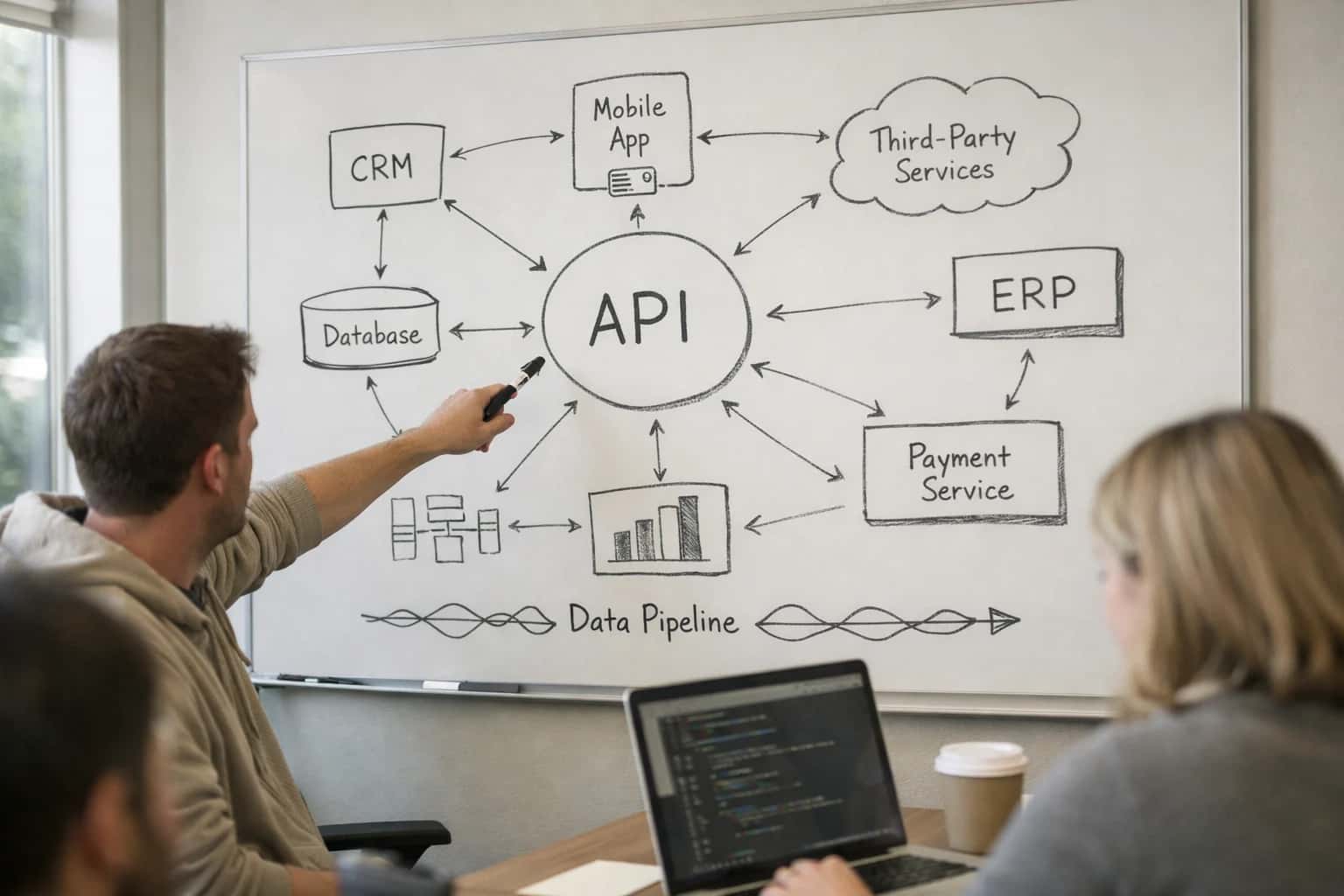
The integration architecture connects to three primary surfaces within Blackbaud SIS: the Financial Aid module for applicant and award records, the Core Student records for academic and demographic context, and the Constituent/Donor records for funding source and stewardship data. Key integration points are the Blackbaud SKY API for real-time data exchange and webhooks for triggering AI workflows based on events like a new application submission or a grade update. Data flows from these sources into a secure middleware layer where it is normalized, enriched with external data (e.g., FAFSA verification status via secure SFTP), and prepared for AI processing.
For applicant matching, an AI agent evaluates structured data (GPA, financial need) against donor criteria and uses a RAG system over unstructured documents (essays, recommendation letters) stored in Blackbaud's Document Management system to assess qualitative fit. Approved matches trigger automated workflows: a draft award letter is generated, populated with personalized details, and queued for counselor review in the SIS interface. For renewals, the system monitors academic performance via grade API calls, automatically checking continued eligibility and flagging students who fall below thresholds for manual intervention.
Rollout follows a phased approach, starting with a pilot for a single scholarship fund. Governance is critical: all AI-generated content and decisions are logged with a full audit trail back to the source SIS records. A human-in-the-loop approval step is mandated for all initial awards and any renewal flagged by the system. This architecture ensures the AI acts as a copilot, enhancing the efficiency of financial aid officers while keeping them firmly in control of final decisions and donor relationships.
BLACKBAUD SIS SCHOLARSHIP MANAGEMENT
Code and Payload Examples
Matching Donor Criteria to Student Profiles
This workflow uses AI to score and rank scholarship applicants by analyzing their SIS records against donor-defined criteria (e.g., major, GPA, extracurriculars, financial need). The agent retrieves candidate data, evaluates fit, and generates a ranked list with reasoning.
Example Python Pseudocode:
python# Pseudo-function to evaluate a student against scholarship rules def evaluate_applicant(student_id, scholarship_rules): # Fetch student profile from Blackbaud SIS API student_profile = bb_sis_api.get_student(student_id) # LLM call to evaluate match based on rules and profile evaluation_prompt = f""" Scholarship Rules: {scholarship_rules} Student Profile: {student_profile} Output a JSON with 'match_score' (0-100) and 'reasoning'. """ response = llm_client.chat_completion(evaluation_prompt) return json.loads(response) # Batch process for a scholarship pool ranked_applicants = [] for applicant in applicant_pool: result = evaluate_applicant(applicant['id'], donor_criteria) ranked_applicants.append({ 'student_id': applicant['id'], 'score': result['match_score'], 'notes': result['reasoning'] }) # Sort and return for committee review ranked_applicants.sort(key=lambda x: x['score'], reverse=True)
This pattern automates initial screening, allowing staff to focus on edge cases and final approvals.
AI-ASSISTED SCHOLARSHIP MANAGEMENT
Realistic Time Savings and Operational Impact
How AI integration transforms manual, time-intensive scholarship workflows in Blackbaud SIS into streamlined, data-driven processes. Impact is based on typical private school scholarship office operations.
| Workflow / Task | Before AI | After AI | Implementation Notes |
|---|---|---|---|
Initial Applicant Screening & Matching | Manual review of 100+ applications against 20+ criteria per donor fund (4-6 hours per batch) | AI pre-scores and ranks applicants against fund rules in minutes; human review focuses on top matches (30-45 minutes per batch) | AI uses Blackbaud SIS applicant data, uploaded essays, and donor fund parameters. Human-in-the-loop validation required for finalist selection. |
Award Letter & Communication Drafting | Manual copy-paste from templates, personalization is limited (15-20 minutes per award) | AI generates personalized first drafts with specific award details, next steps, and donor messaging (2-3 minutes per award) | Integrates with Blackbaud SIS communication module. Officer reviews and approves all outgoing messages before sending. |
Renewal Eligibility Tracking & Outreach | Quarterly manual spreadsheet review of GPA, conduct, and participation status for 200+ renewals (8-10 hours per cycle) | AI monitors SIS data feeds, flags at-risk renewals automatically, and triggers pre-built outreach sequences (1-2 hours for review and approval) | Connects to Blackbaud SIS academic and behavioral modules. Rules engine configured per scholarship's renewal terms. |
Donor Report Compilation | Manual collection of recipient profiles, grades, and thank-you notes into PDFs (3-4 hours per donor report) | AI assembles draft reports with selected data points and narrative summaries from SIS (30-45 minutes for review and formatting) | Pulls from Blackbaud SIS student records, activity data, and stored documents. Ensures FERPA-compliant data sharing. |
Exception & Appeal Triage | Ad-hoc review of special circumstance requests; routing depends on officer availability (Response in 3-5 business days) | AI categorizes and routes appeals based on content and policy, suggests relevant precedents (Initial triage and response in same day) | NLP analyzes appeal text. Integrates with Blackbaud SIS workflow engine to assign tasks to correct committee or officer. |
Fund Utilization & Forecasting | Manual analysis of award rates and remaining balances at month-end (6-8 hours monthly) | AI provides real-time dashboards on fund health, predicts annual spend, and flags underutilized funds (1-2 hours for analysis and planning) | Direct query of Blackbaud SIS financial aid and billing modules. Forecasting models trained on historical award patterns. |
Committee Meeting Preparation | Manual compilation of binders or slide decks with applicant summaries (5-7 hours pre-meeting) | AI generates secure, digital briefing packets with applicant comparisons and talking points (1-2 hours for final review) | Packets are dynamically generated from the live SIS database, ensuring committee reviews the most current data. |
ENSURING CONTROLLED, SECURE, AND MEASURABLE IMPLEMENTATION
Governance, Security, and Phased Rollout
A practical framework for deploying AI in Blackbaud SIS scholarship management with appropriate controls and a low-risk adoption path.
A production AI integration for Blackbaud SIS scholarship management must operate within the platform's existing security model and data governance policies. This means:
- API Authentication & RBAC: AI agents and workflows authenticate via Blackbaud SIS's SKY API using OAuth 2.0 and inherit the role-based permissions of the service account. Actions on
Financial Aidrecords,Constituentdata, andAwardobjects are scoped to pre-defined, least-privilege roles. - Data Flow & PII Handling: Sensitive applicant PII (SSNs, financial documents) and donor information are never sent to a third-party LLM. A retrieval-augmented generation (RAG) pattern is used, where the AI queries a secure, internal knowledge base containing anonymized, structured criteria and policy excerpts. All prompts and generated text (like award letters) are logged to an immutable audit trail linked to the source
Application IDandUser ID. - Human-in-the-Loop Gates: Critical workflows, such as final award approval or adjustments to donor-restricted funds, are designed with mandatory human review steps. The AI can propose matches and draft communications, but a financial aid officer must approve the action within the native Blackbaud SIS interface before any system-of-record data is committed.
A successful rollout follows a phased, value-driven approach to manage risk and demonstrate ROI:
- Phase 1: Document Intelligence & Triage (Weeks 1-4): Deploy AI to read and extract key data from uploaded scholarship application documents (PDFs, Word files) into structured fields in Blackbaud SIS. This automates manual data entry, reduces errors, and provides immediate time savings for staff. Impact is measured by
reduction in manual processing hours per application cycle. - Phase 2: Criteria Matching & Prioritization (Weeks 5-8): Implement an AI scoring agent that evaluates anonymized applicant profiles against published scholarship criteria (e.g., GPA thresholds, major, extracurriculars, essay themes). It outputs a ranked list with confidence scores and cited rationale for reviewers. This phase focuses on
improvement in reviewer efficiency and consistency of applicant shortlisting. - Phase 3: Communication & Award Automation (Weeks 9-12+): Integrate generative AI to draft personalized award notifications, denial letters, and renewal reminders by pulling data from the awarded
Financial Aid Awardrecord andConstituentprofile. All drafts are reviewed and sent via Blackbaud SIS's native communication tools. Success is tracked viatime-to-notifymetrics andreduction in template customization effort.
Long-term governance requires establishing an AI Steering Committee with representatives from Financial Aid, IT, Advancement, and Legal/Compliance. This group meets quarterly to:
- Review audit logs of AI-assisted decisions for bias or drift.
- Update the internal knowledge base with new scholarship criteria and policy language.
- Approve expansion to new use cases, such as AI-powered donor reporting on scholarship impact.
- By embedding controls into the integration architecture and adopting a phased rollout, institutions can harness AI's efficiency for Blackbaud SIS scholarship management while maintaining the trust, compliance, and donor stewardship required in educational philanthropy.
Enabling Efficiency, Speed & Accuracy
Intelligent Analysis, Decision & Execution
We build AI systems for teams that need search across company data, workflow automation across tools, or AI features inside products and internal software.
Talk to Us
Search across company data
Give teams answers from docs, tickets, runbooks, and product data with sources and permissions.
Useful when people spend too long searching or get different answers from different systems.
Enterprise searchRAGPermissions
Read more
Automate internal workflows
Use AI to route work, draft outputs, trigger actions, and keep approvals and logs in place.
Useful when repetitive work moves across multiple tools and teams.
AI agentsWorkflow automationGovernance
Read more
Add AI to products and internal tools
Build assistants, guided actions, or decision support into the software your team or customers already use.
Useful when AI needs to be part of the product, not a separate tool.
AI integrationDecision supportModel routing
Read moreAI INTEGRATION FOR BLACKBAUD SIS SCHOLARSHIP MANAGEMENT
Frequently Asked Questions
Practical questions and workflow walkthroughs for integrating AI into Blackbaud SIS to automate scholarship matching, award letter generation, and renewal tracking.
This workflow uses an AI agent to evaluate applicant profiles against complex, multi-criteria scholarship rules.
- Trigger: A student's application is marked complete in Blackbaud SIS (
BB_ScholarshipApplicationstatus change). - Context Pulled: The agent retrieves the applicant's full profile via the Blackbaud SKY API, including:
- Academic records (GPA, test scores, course history)
- Demographic and household data
- Extracurricular activities and essays (via linked documents)
- Past award history
- Agent Action: The AI model (e.g., GPT-4, Claude 3) is prompted with:
- The specific, often nuanced, criteria for each active scholarship (e.g., "For descendants of alumni, majoring in STEM, with financial need > $10k").
- The applicant's profile data.
- Instructions to output a confidence score (0-100) and a justification for each scholarship.
- System Update: The agent posts results back to a custom object (
AI_ScholarshipMatch) in Blackbaud SIS, linking the applicant, scholarship, score, and reasoning. - Human Review Point: The scholarship committee reviews the AI-ranked list in a custom dashboard, using the justifications to make final decisions, overriding where necessary.

About the author
Prasad Kumkar
CEO & MD, Inference Systems
Prasad Kumkar is the CEO & MD of Inference Systems and writes about AI systems architecture, LLM infrastructure, model serving, evaluation, and production deployment. Over 5+ years, he has worked across computer vision models, L5 autonomous vehicle systems, and LLM research, with a focus on taking complex AI ideas into real-world engineering systems.
His work and writing cover AI systems, large language models, AI agents, multimodal systems, autonomous systems, inference optimization, RAG, evaluation, and production AI engineering.
LinkedIn
Limited slotsGet a Free AI Consultation
Partnered with leading AI, data, and software stack.





How We Work
Custom AI workflows for your Business
One-fit-all AI don't work for modern businesses. At Inferensys, we aim to understand your business & custom requirements; which we use to define most efficient agentic workflows, the data, and the tools for your business.
01
Review the use case
We understand the task, the users, and where AI can actually help.
Read more02
Pick the right approach
We define what needs search, automation, or product integration.
Read more03
Build the first useful version
We implement the part that proves the value first.
Read more04
Improve from there
We add the checks and visibility needed to keep it useful.
Read moreThe first call is a practical review of your use case and the right next step.
Talk to Us