For independent schools, AI integration targets three primary surfaces within Blackbaud SIS: the Core Student Record, the College Counseling module, and the Advancement/Development data model. The integration connects via Blackbaud's SKY API and webhooks to inject intelligence into existing workflows—think of AI as a co-pilot layer that reads from and writes back to the SIS, never replacing it. Key data objects include Student, Application, College, Donor, Gift, and GlobalProgram records, which serve as the grounding context for all AI actions.

Integration
AI Integration for Blackbaud SIS for Independent Schools
A technical blueprint for embedding AI agents, predictive analytics, and document intelligence into Blackbaud SIS workflows for admissions, college counseling, global programs, and donor-funded initiatives in independent schools.
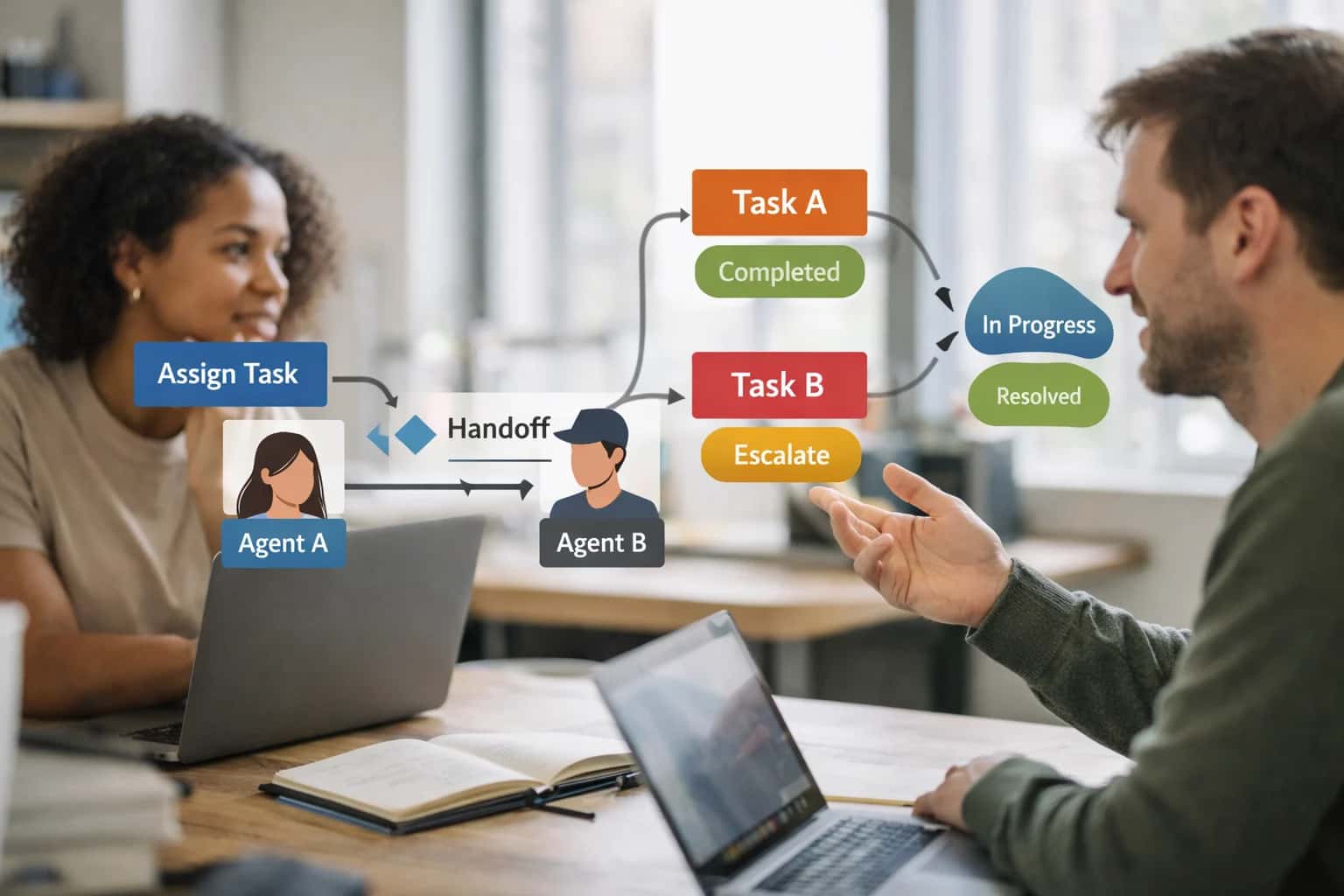
ARCHITECTURE FOR BLACKBAUD SIS
Where AI Fits in the Independent School SIS Stack
A practical blueprint for integrating AI into Blackbaud SIS to enhance college counseling, global programs, and donor-funded initiatives without disrupting core operations.
Implementation follows a hub-and-spoke pattern: a central AI orchestration layer (hosted in your cloud) processes events from Blackbaud SIS, executes logic using LLMs and custom agents, and returns structured payloads. For example, an AI agent can monitor a student's AcademicPlan and extracurriculars in the core record, then automatically draft a personalized college list recommendation in the Counseling module. Another agent can analyze donor GiftHistory and Affiliation data to generate a prospect briefing for an advancement officer, citing specific past interactions and suggested ask amounts. For global programs, AI can process Passport and Visa document images linked to student records, extract key dates, and populate custom fields or trigger compliance alerts.
Rollout is phased, starting with read-only agents for data summarization and recommendation, then progressing to assisted writing (drafting counselor notes, donor communications), and finally to conditional automation (triggering workflows, populating fields). Governance is critical: all AI-generated content should be flagged in the SIS audit trail, and key actions—like sending a communication to a family or updating a college application status—should require a human approval step in the workflow. This ensures the school maintains control while benefiting from AI's efficiency.
The impact is operational: reducing the time for college list research from hours to minutes, providing same-day donor briefings instead of next-day, and ensuring global program documents are processed and tracked as they arrive, not in a weekly batch. By fitting AI into the existing SIS stack, schools enhance their most valuable workflows—college placement, student enrichment, and fundraising—without asking staff to learn a new system. For a deeper look at connecting AI to academic operations, see our guide on AI Integration with Blackbaud SIS Academic Operations.
AI INTEGRATION FOR INDEPENDENT SCHOOLS
Key Integration Surfaces in Blackbaud SIS
Student and Family Data Hub
The core Students, Households, and Contacts tables in Blackbaud SIS are the primary source for AI context. Integration here enables personalized communication, predictive analytics, and automated support.
Key Objects & Use Cases:
- Student Demographics & Enrollment (
STU): Drive retention models and personalized academic planning. - Household & Family Relationships (
HOU): Automate family-wide communications for billing, events, or announcements. - Contact Information & Roles: Power AI agents that route inquiries to the correct staff member based on relationship (e.g., "primary parent for billing").
Integrate via Blackbaud SKY API or direct database connections to sync real-time student status, creating a live memory layer for AI agents. This data grounds responses and ensures recommendations reflect current enrollment, grade level, and family structure.
BLACKBAUD SIS INTEGRATION
High-Value AI Use Cases for Independent Schools
Practical AI integration patterns that connect directly to Blackbaud SIS modules, data objects, and workflows to enhance academic operations, student support, and advancement for private and independent schools.
01
AI-Powered College Counseling Workflow
Integrate AI with Blackbaud SIS College Counseling and Core modules to automate student profile analysis, generate personalized college list recommendations, and draft counselor letters of recommendation. Agents pull GPA, test scores, activities, and counselor notes via API to create tailored materials, reducing prep time per student from hours to minutes.
Hours -> Minutes
Profile & list prep
02
Global Program & Travel Coordination
Orchestrate complex international program logistics by connecting AI agents to Blackbaud SIS Student Records and Core. Automate parent communication for deadlines, visa documentation checklists, and health form collection. Use AI to parse passport/visa scans, validate dates, and flag discrepancies against SIS travel rosters, ensuring compliance and reducing manual follow-up.
Batch -> Real-time
Document validation
03
Donor-Funded Initiative Tracking & Reporting
Enhance Blackbaud SIS Development modules with AI to automatically link donor gifts from Raiser's Edge NXT to specific funded initiatives (e.g., scholarships, facilities). Generate personalized impact reports for donors by summarizing student beneficiary data, academic outcomes, and program highlights pulled from SIS, strengthening stewardship with less manual assembly.
1 sprint
Report automation setup
04
Academic Advising & Schedule Conflict Resolution
Build an AI copilot for advisors using Blackbaud SIS Scheduling and Student Planning data. The agent analyzes student academic plans, graduation requirements, and historical course performance to recommend optimal course loads. During registration, it proactively identifies schedule conflicts and suggests alternative sections, reducing manual back-and-forth for registrar staff.
Same day
Conflict resolution
05
Personalized Family Financial Conversation Support
Integrate AI with Blackbaud SIS Billing and Financial Aid modules to prepare for sensitive tuition conversations. Agents analyze family payment history, aid packages, and communication logs to generate talking points, suggest payment plan options, and draft personalized follow-up emails. This ensures consistency and empathy while protecting staff time.
Batch -> Guided
Conversation prep
06
Co-Curricular & Athletics Participation Analytics
Connect AI to Blackbaud SIS Activities and Attendance modules to analyze the impact of co-curricular involvement on academic performance and student wellness. Generate insights for deans and coaches on optimal activity loads, identify students at risk of over-commitment, and automate recognition communications for achievements, fostering a data-informed culture.
Real-time alerts
Risk identification
BLACKBAUD SIS FOR INDEPENDENT SCHOOLS
Example AI-Powered Workflows
These concrete workflows illustrate how AI agents and automations connect to Blackbaud SIS's core modules—College Counseling, Global Programs, and Donor-Funded Initiatives—to reduce administrative burden and enhance student support.
Trigger: A student submits their final college list and counselor approval request via the Blackbaud SIS College Counseling module.
Context Pulled: The AI agent retrieves:
- Student's full academic transcript (GPA, rigor, trends)
- Standardized test scores (SAT/ACT, AP, IB)
- Extracurricular activities and leadership roles from the Activities module
- Teacher recommendation status and past counselor notes
- Target college list with acceptance rates and average admitted student profiles
Agent Action:
- Analyzes Fit: Compares the student's profile against historical school data and public admissions statistics for each target college, flagging reaches, targets, and likelies.
- Generates Drafts: Uses a structured prompt to draft the student-specific sections of the counselor's school report or letter of recommendation, highlighting unique strengths and contextualizing any anomalies.
- Creates Checklist: Produces a personalized application readiness checklist for the student, noting missing items (e.g., a teacher rec, a final draft of the personal statement).
System Update: The draft report and checklist are posted as a note in the student's College Counseling record. An alert is sent to the counselor's SIS dashboard for review and finalization.
Human Review Point: The counselor reviews, edits, and approves all AI-generated content before it is finalized or sent to colleges. The agent does not submit any external communications.
BLACKBAUD SIS INTEGRATION PATTERNS
Implementation Architecture: Data Flow & APIs
A production-ready blueprint for wiring AI agents and automation into Blackbaud SIS's core modules and data model for independent schools.
A robust AI integration for Blackbaud SIS is built on a secure middleware layer that sits between your LLM provider (e.g., OpenAI, Anthropic) and the SIS's APIs. This layer, often deployed as a containerized service, handles authentication, request transformation, and audit logging. It connects to key Blackbaud SIS REST API endpoints for Core Student Records, Academic Planning, Enrollment Management, and Advancement/Development data. For real-time workflows, webhooks from the SIS can trigger AI agents to process events like a new application submission, a grade change, or a donor pledge. Critical data objects such as Student, CourseSection, Enrollment, Donation, and Household are extracted, often with field-level permissions, to provide context for AI operations.
For college counseling and global programs, the architecture typically involves a Retrieval-Augmented Generation (RAG) pipeline. Student portfolios, recommendation letters, and program descriptions from the SIS and connected document stores are chunked, embedded, and indexed in a vector database like Pinecone or Weaviate. When an advisor queries an AI copilot about "college fit for a student interested in engineering," the system retrieves relevant student academic history, extracurriculars, and past application outcomes before generating a grounded response. For donor-funded initiative tracking, AI agents can be orchestrated to periodically query the Financial Aid and Gifts modules, synthesize new donations against campaign goals, and automatically draft update reports for development officers, all while logging these actions for compliance.
Governance and rollout are critical. Implement role-based access control (RBAC) at the AI layer to ensure agents only access data permissible for the triggering user's role (e.g., a college counselor vs. a business office user). All AI-generated content—from communication drafts to analytic summaries—should be staged in a review queue (e.g., within a connected platform like /integrations/student-information-systems/ai-governance-for-sis) for human approval before being written back to the SIS or sent to families. A phased rollout should start with read-only use cases, such as an AI assistant that answers questions about student schedules, before progressing to automated draft generation for progress reports or personalized donor outreach, ensuring data integrity and user trust at each step.
BLACKBAUD SIS INTEGRATION PATTERNS
Code & Payload Examples
Enriching Student Records with AI
Use AI to analyze unstructured notes from advisors, teachers, and coaches stored in Blackbaud SIS to generate a holistic student profile. This pattern calls an AI service to process text fields and return structured insights for risk flags or strengths.
Example Workflow:
- Query Blackbaud SIS API for a student's
AdvisingNotes,DisciplinaryActions, andCoCurricularrecords. - Send the aggregated text to an LLM with a prompt to identify themes, sentiment, and potential concerns.
- Parse the structured JSON response and update a custom object or flag within the SIS for advisor dashboards.
Python Pseudocode (Using Blackbaud SKY API):
pythonimport requests # Fetch student notes from Blackbaud SIS student_id = "12345" notes_response = requests.get( f"https://api.sky.blackbaud.com/school/v1/students/{student_id}/notes", headers={"Bb-Api-Subscription-Key": "your_key"} ) notes_text = " ".join([note['text'] for note in notes_response.json()['value']]) # Call AI service for analysis ai_payload = { "student_id": student_id, "text": notes_text, "instruction": "Extract key themes, flag potential academic or wellness concerns, and summarize overall sentiment. Return JSON with keys: themes, concern_level, summary." } insights = requests.post("https://your-ai-service.com/analyze", json=ai_payload).json() # Write insights back to a custom field or log update_payload = { "custom_fields": { "ai_student_insight": insights['summary'], "last_insight_update": "2024-05-15" } } requests.patch( f"https://api.sky.blackbaud.com/school/v1/students/{student_id}", json=update_payload, headers={"Bb-Api-Subscription-Key": "your_key"} )
AI INTEGRATION FOR BLACKBAUD SIS
Realistic Time Savings & Operational Impact
How AI agents and automation change daily workflows for independent school administrators, advisors, and support staff.
| Workflow / Task | Before AI | After AI | Implementation Notes |
|---|---|---|---|
Prospect Application Document Review | Manual review of transcripts, recommendations, and essays (30-45 mins per file) | AI-assisted summarization and flagging for key criteria (5-10 mins per file) | Human final decision required; AI provides highlight reel and anomaly detection |
College Counseling Student Profile Prep | Advisor manually compiles GPA, activities, and notes from multiple SIS screens (60+ mins per student) | AI agent auto-generates a draft student profile from SIS data (10 mins review & edit) | Integrates with Blackbaud SIS academic, co-curricular, and note modules |
Donor-Funded Initiative Progress Reporting | Development officer manually queries gifts, pulls student data, writes narrative (Half-day per report) | AI drafts report from linked SIS/advancement data, suggests impact metrics (90 mins review) | Requires clean data mapping between Blackbaud SIS giving and student record modules |
Global Programs / Exchange Student Onboarding | Coordinator manually checks visas, immunizations, course prerequisites across spreadsheets | AI agent monitors checklist in SIS, flags discrepancies, drafts welcome communications | Built on Blackbaud SIS custom fields, document storage, and communication logs |
Daily Parent/Student Inquiry Triage | Staff manually routes emails and portal messages based on subject line and guesswork | AI classifies intent, suggests response or route, pre-fetches relevant student data | Leverages Blackbaud SIS communication API and student record lookups; human approves all sends |
Academic Alert & Intervention Workflow | Teacher manually flags concern; advisor hunts for context across grades, attendance, notes | AI synthesizes multi-source data on alert trigger, suggests context and next steps | Integrates gradebook, attendance, and advisor note modules; requires clear governance rules |
Enrollment Contract & Financial Aid Packet Generation | Manual assembly from templates, copy-paste of student/family data, error-prone review | AI populates templates from SIS, highlights inconsistencies for human review | Connects to Blackbaud SIS billing, family demographics, and document management systems |
ARCHITECTING FOR INDEPENDENT SCHOOL OPERATIONS
Governance, Security & Phased Rollout
A practical guide to implementing AI in Blackbaud SIS with the governance, security, and phased approach required for independent school environments.
For independent schools, AI integration must respect the unique trust and data sensitivity inherent in managing student records, family financials, and donor relationships. A secure architecture typically involves an AI middleware layer that sits between Blackbaud SIS and LLM APIs (like OpenAI or Anthropic). This layer handles critical functions: it tokenizes or pseudonymizes sensitive PII from core tables like Students, Households, and Constituents before sending data for processing; enforces role-based access control (RBAC) by checking the user's Blackbaud permissions; and maintains a full audit log of all AI interactions, queries, and data accessed. All AI-generated content—from college counseling suggestions to donor outreach drafts—should be flagged as AI-assisted and routed through a human review queue before being committed back to the SIS or sent to families.
A phased rollout mitigates risk and builds institutional confidence. Phase 1 (Internal Efficiency) focuses on back-office automation with high data quality, such as using AI to draft routine communications from templates, summarize meeting notes for Advising records, or classify and tag uploaded documents in the Core module. Phase 2 (Advisor & Staff Copilots) introduces AI assistants for college counselors and academic advisors, providing them with synthesized student profiles pulling from Academic Plans, Activities, and Testing history to prepare for meetings. Phase 3 (Controlled External Interaction) deploys secure, context-aware chatbots for common parent and student inquiries via the portal, answering questions about schedules, deadlines, or billing by querying the SIS APIs in real-time, but with strict guardrails preventing access to financial aid details or disciplinary records.
Governance is established through a cross-functional committee including the Head of School, Director of Technology, Registrar, and Data Privacy Officer. This group approves use cases, defines the data boundaries for AI access (e.g., no raw tuition payment data), and establishes a review process for AI-generated outputs, especially in sensitive areas like donor prospecting or student performance predictions. Regular audits of the AI system's logs and outputs ensure it operates within policy, and families are informed about how AI is used to support their student's experience, aligning with the school's values of transparency and personalized care.
Enabling Efficiency, Speed & Accuracy
Intelligent Analysis, Decision & Execution
We build AI systems for teams that need search across company data, workflow automation across tools, or AI features inside products and internal software.
Talk to Us
Search across company data
Give teams answers from docs, tickets, runbooks, and product data with sources and permissions.
Useful when people spend too long searching or get different answers from different systems.
Enterprise searchRAGPermissions
Read more
Automate internal workflows
Use AI to route work, draft outputs, trigger actions, and keep approvals and logs in place.
Useful when repetitive work moves across multiple tools and teams.
AI agentsWorkflow automationGovernance
Read more
Add AI to products and internal tools
Build assistants, guided actions, or decision support into the software your team or customers already use.
Useful when AI needs to be part of the product, not a separate tool.
AI integrationDecision supportModel routing
Read moreIMPLEMENTATION GUIDE
Frequently Asked Questions
Practical questions for independent school leaders planning an AI integration with Blackbaud SIS, covering architecture, security, rollout, and impact.
A production integration requires a layered security approach:
- API Gateway & Authentication: Use Blackbaud SKY API with OAuth 2.0 for secure, token-based access. Never store direct credentials in AI application code.
- Data Minimization: Configure the integration to pull only the specific fields needed for a given workflow (e.g., only
Student.FirstName,Student.GradeLevel,Course.Titlefor a course recommendation agent). - Zero Data Retention Policy: Structure AI agents to process data in-memory for a single transaction without persisting Blackbaud data to the AI provider's systems. Use ephemeral contexts.
- Audit Trail: Log all API calls from the AI system to Blackbaud, including the user context, endpoint accessed, and timestamp, for compliance review.
Example secure payload for a college counseling agent:
json{ "student_id": "SIS-12345", "requested_fields": ["academic_plan", "standardized_test_scores", "extracurriculars"], "purpose": "generate_college_list" }

About the author
Prasad Kumkar
CEO & MD, Inference Systems
Prasad Kumkar is the CEO & MD of Inference Systems and writes about AI systems architecture, LLM infrastructure, model serving, evaluation, and production deployment. Over 5+ years, he has worked across computer vision models, L5 autonomous vehicle systems, and LLM research, with a focus on taking complex AI ideas into real-world engineering systems.
His work and writing cover AI systems, large language models, AI agents, multimodal systems, autonomous systems, inference optimization, RAG, evaluation, and production AI engineering.
LinkedIn
Limited slotsGet a Free AI Consultation
Partnered with leading AI, data, and software stack.





How We Work
Custom AI workflows for your Business
One-fit-all AI don't work for modern businesses. At Inferensys, we aim to understand your business & custom requirements; which we use to define most efficient agentic workflows, the data, and the tools for your business.
01
Review the use case
We understand the task, the users, and where AI can actually help.
Read more02
Pick the right approach
We define what needs search, automation, or product integration.
Read more03
Build the first useful version
We implement the part that proves the value first.
Read more04
Improve from there
We add the checks and visibility needed to keep it useful.
Read moreThe first call is a practical review of your use case and the right next step.
Talk to Us