AI integration targets three core surfaces within the Jaggaer Supplier Diversity module: the supplier onboarding portal, the spend analytics engine, and the compliance reporting dashboard. For onboarding, AI agents can be connected via Jaggaer's APIs to automatically validate diversity certifications (e.g., WBENC, NMSDC, Disability:IN) by cross-referencing external databases and parsing uploaded documents, populating the Supplier Diversity Status field and triggering conditional approval workflows. This reduces manual verification from days to minutes and ensures the supplier master record is audit-ready.

Integration
AI Integration for Jaggaer Supplier Diversity Tracking
Implementation guide for automating supplier diversity certification validation, spend attribution, and reporting in Jaggaer using AI, serving diversity and inclusion officers.
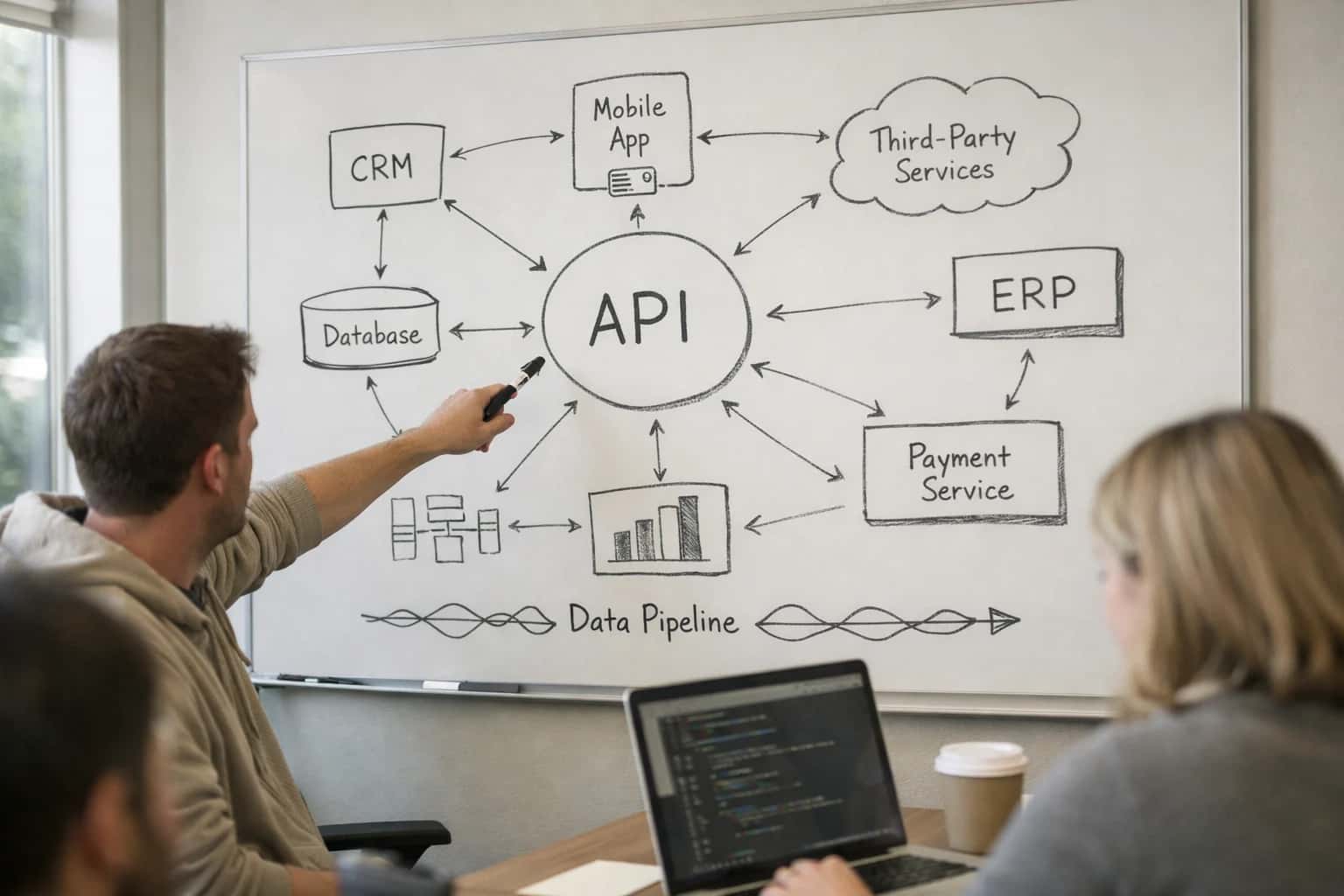
ARCHITECTURE FOR AUTOMATED CERTIFICATION AND REPORTING
Where AI Fits in Jaggaer Supplier Diversity Workflows
A technical blueprint for integrating AI agents into Jaggaer's supplier diversity module to automate certification validation, spend attribution, and compliance reporting.
The most significant operational impact comes from AI-powered spend attribution. By integrating a model that analyzes invoice line items, general ledger codes, and supplier hierarchies, AI can automatically tag transactions with the correct diversity spend category. This model typically ingests data from Jaggaer's Spend Analysis tables via batch API or event stream, classifies each transaction, and posts results back to a dedicated AI-Attributed Diversity Spend custom object. This creates a reliable, real-time feed for reporting, moving beyond quarterly manual spreadsheets. A secondary AI agent can monitor this attributed spend against diversity goals (stored in Jaggaer or a linked goal-tracking system) and generate alerts for category managers when progress lags.
For governance, the integration should be built with a human-in-the-loop review layer. All AI-generated validations and attributions should be logged in a Diversity_AI_Audit_Log with confidence scores, allowing diversity officers to spot-check and override decisions. Rollout typically follows a phased approach: start with AI as an assistant for the diversity team to review suggestions, then progress to automated updates for high-confidence classifications. This controlled deployment mitigates risk while delivering immediate efficiency gains in data preparation for mandatory reports like EEOC-1 or supplier diversity disclosures.
SUPPLIER DIVERSITY TRACKING
Jaggaer Modules and Data Surfaces for AI Integration
Core Data Foundation
The Supplier Master is the central record for AI enrichment. Key fields for diversity tracking include:
- Certification Status: Fields for MBE, WBE, DBE, VBE, LGBTBE, and other certifications.
- Certification Documents: Attached PDFs or images of certificates, expiration dates, and issuing authorities.
- Ownership Demographics: Data on ownership percentages by gender, ethnicity, veteran status, and disability.
AI integration here focuses on automated validation. An AI agent can be triggered on supplier creation or periodic review to:
- Extract and validate certification details from uploaded documents using OCR and NLP.
- Cross-reference supplier names against official diversity registry APIs (e.g., NMSDC, WBENC).
- Flag expired or soon-to-expire certifications for supplier managers.
- Enrich the supplier record with standardized taxonomy codes for reporting.
This automation replaces manual data entry and spreadsheet tracking, ensuring the diversity database is audit-ready.
JAGGEAER INTEGRATION PATTERNS
High-Value AI Use Cases for Supplier Diversity
Automating the manual, data-intensive workflows of supplier diversity tracking in Jaggaer reduces administrative burden, improves data accuracy, and accelerates reporting. These AI integration patterns connect directly to Jaggaer's supplier, contract, and spend data models.
01
Automated Certification Validation & Renewal
AI agents monitor supplier master records for expiring diversity certifications (MBE, WBE, DBE, etc.). They can scrape and validate certificates from third-party registries, update Jaggaer supplier attributes, and trigger renewal workflows or alerts to supplier managers, replacing manual checks.
Weeks -> Hours
Validation cycle
02
Spend Attribution & Tier-2 Reporting
AI analyzes Jaggaer invoice and PO line-item data to automatically tag spend to diverse suppliers, even when the prime contractor is non-diverse. This automates the painful process of manual tier-2 spend aggregation for compliance reports like OFCCP or ESG disclosures.
Batch -> Real-time
Attribution
03
Intelligent Supplier Discovery & Sourcing
When a sourcing event is created in Jaggaer, an AI agent can query diverse supplier databases and internal performance data to recommend qualified diverse candidates for the RFx. It enriches Jaggaer supplier records with capability summaries, increasing diverse spend opportunity.
1 sprint
Discovery time
04
Diversity Goal Tracking & Predictive Analytics
An AI model connected to Jaggaer's spend analytics API forecasts progress against annual diversity spend goals based on pipeline and historical patterns. It provides procurement and diversity officers with early warnings and recommends corrective sourcing actions.
Same day
Insight cadence
05
Contract Clause & Obligation Monitoring
For contracts stored in or linked from Jaggaer, AI extracts and tracks diversity-related clauses (e.g., participation goals). It monitors associated spend and performance data, alerting contract managers to deviations and automating supplier communications for compliance.
06
Executive & Board Reporting Automation
AI agents synthesize data from Jaggaer supplier, spend, and contract modules to generate narrative-driven diversity reports. They can answer ad-hoc natural language queries (e.g., "What was our Q3 diverse spend in construction?") via a chat interface, pulling live from Jaggaer APIs.
Hours -> Minutes
Report generation
IMPLEMENTATION PATTERNS
Example AI-Powered Diversity Workflows
These concrete workflows illustrate how AI agents can automate and enhance supplier diversity tracking within Jaggaer, reducing manual effort for diversity officers and procurement teams while improving data accuracy and reporting velocity.
Trigger: A new supplier submits registration data through the Jaggaer Supplier Portal or a CSV is uploaded for batch onboarding.
AI Agent Action:
- Extracts business name, DUNS number, and self-reported diversity classifications (e.g., MBE, WBE, Veteran-Owned) from the submission.
- Calls external verification APIs (e.g., Dun & Bradstreet, Supplier.io, National Minority Supplier Development Council) to cross-reference and validate certifications in real-time.
- Analyzes uploaded certification documents (PDFs, images) using an LLM with vision capabilities to confirm entity name, dates, and certifying body.
System Update:
- The agent posts a structured payload to the Jaggaer Supplier API (
PATCH /api/suppliers/{id}) to update the supplier record'sdiversityClassificationsarray andcertificationStatusfield (e.g.,"Verified", "Pending", "Expired"). - Appends an audit log entry via Jaggaer's audit trail API, noting the verification source and timestamp.
Human Review Point: If the AI detects a discrepancy between self-reported data and external sources, or if document analysis is low-confidence, it creates a task in Jaggaer's workflow engine for the diversity officer to review.
AUTOMATED CERTIFICATION VALIDATION AND SPEND ATTRIBUTION
Implementation Architecture: Data Flow and Guardrails
A production-ready blueprint for connecting AI to Jaggaer's supplier and spend data to automate diversity tracking.
The integration architecture connects to two primary data surfaces in Jaggaer: the Supplier Master and the Spend Transaction records. For validation, an AI agent is triggered via webhook on new supplier creation or certification update. It extracts attached documents (e.g., certificates, W-9s, ownership statements) from Jaggaer's document management, calls a configured LLM with a specialized prompt for classification and data extraction, and writes the validated diversity status (e.g., certified_women_owned, pending_review) back to custom fields in the Supplier Master. For spend attribution, a separate batch process queries Jaggaer's spend analytics APIs, uses the enriched supplier master to tag each transaction with its diversity classification, and pushes aggregated results to a dedicated Supplier Diversity Dashboard object or external reporting database.
Key implementation details include:
- Orchestration Layer: A lightweight middleware (e.g., n8n, custom service) handles webhooks, manages API calls to Jaggaer and the LLM provider (e.g., OpenAI, Anthropic), and enforces retry logic.
- Data Enrichment Pipeline: The LLM call is structured to return a JSON payload with fields for
certification_type,expiration_date,certifying_agency, andconfidence_score. Low-confidence results are routed to a human-in-the-loop queue, which can be managed within Jaggaer as a task or externally. - Audit Trail: Every AI interaction logs the source supplier ID, document hash, prompt version, raw LLM response, and final action to a separate audit table, ensuring full traceability for compliance audits.
Governance and rollout require a phased approach. Start with a pilot on a single supplier category (e.g., new suppliers in a specific region). Implement role-based access control (RBAC) so only diversity officers or procurement managers can override AI-classified statuses. Define clear escalation workflows in Jaggaer for disputes, linking to the audit trail. Performance is measured by reduction in manual review time (e.g., from days to hours for new supplier onboarding) and improvement in spend visibility (e.g., achieving >90% of indirect spend tagged with a diversity status). For related architectural patterns, see our guides on AI Integration for Jaggaer Supplier Risk and AI Integration for Coupa Vendor Analysis.
JAGGAER SUPPLIER DIVERSITY WORKFLOWS
Code and Payload Examples
Validating Supplier Diversity Certificates
When a supplier uploads a certification document (e.g., from NMSDC, WBENC) to their Jaggaer profile, an AI agent can be triggered via a webhook to validate its authenticity and extract key metadata. This automates a manual verification step for diversity officers.
The agent calls a vision model to parse the PDF, extracting the certifying body, certification number, expiration date, and business classifications. It then cross-references this data against the certifier's public API (if available) or a maintained database of valid certificates. The result is posted back to Jaggaer to update the supplier record, flagging it as Verified, Pending Review, or Expired.
python# Example: Webhook handler for new document upload import requests from inference_llm import process_document def handle_jaggaer_webhook(event): supplier_id = event['supplierId'] doc_url = event['documentUrl'] doc_type = event['documentType'] if doc_type == "DIVERSITY_CERTIFICATE": # Call AI service for extraction extracted_data = process_document(doc_url) # Prepare payload for Jaggaer Supplier API update_payload = { "supplier": { "customFields": { "diversityCertBody": extracted_data['issuer'], "diversityCertNumber": extracted_data['cert_id'], "diversityCertExpiry": extracted_data['expiry_date'], "diversityStatus": "VERIFIED" if extracted_data['is_valid'] else "PENDING" } } } # POST to Jaggaer API to update supplier response = requests.patch( f"https://api.jaggaer.com/suppliers/{supplier_id}", json=update_payload, headers={"Authorization": "Bearer <TOKEN>"} ) return response.status_code
SUPPLIER DIVERSITY OFFICER VIEW
Realistic Time Savings and Operational Impact
How AI integration transforms manual supplier diversity tracking in Jaggaer, based on typical workflows for certification validation, spend attribution, and reporting.
| Workflow / Task | Before AI Integration | After AI Integration | Implementation Notes |
|---|---|---|---|
Supplier Diversity Certification Validation | Manual review of PDF/paper certificates; 15-30 minutes per supplier | AI extracts & validates key fields; 2-5 minutes with human spot-check | Integrates with Jaggaer supplier profile APIs; flags discrepancies for review |
Spend Attribution to Diverse Suppliers | Manual GL code mapping and quarterly spreadsheet reconciliation | AI classifies 70-80% of spend automatically; daily attribution updates | Connects to Jaggaer spend data feeds; uses pre-trained category models |
Quarterly Diversity Reporting | 2-3 days to consolidate data, create slides, and verify numbers | Automated report generation in 2-4 hours; includes narrative summaries | Leverages Jaggaer analytics APIs; outputs to PowerPoint and PDF |
New Supplier Onboarding for Diversity Tracking | Diversity data collected via optional form fields; low compliance | AI prompts for diversity info during onboarding; auto-enriches from public sources | Uses Jaggaer supplier onboarding webhooks; integrates with third-party diversity databases |
Tier 2 Diversity Reporting (Supplier Submissions) | Manual collection of spreadsheets from prime suppliers; high effort, low response | AI-assisted portal for primes to submit data; automated validation and aggregation | Builds on Jaggaer supplier portal; includes data validation rules |
Audit & Compliance Preparation | Week-long manual effort to gather supporting documentation for audits | AI maintains audit trail and auto-generates evidence packs in 1 day | Logs all AI actions and validations in Jaggaer; integrates with document management |
Diversity Goal Tracking & Forecasting | Static quarterly reviews; reactive adjustments to sourcing strategy | Real-time dashboards with predictive insights on goal attainment | Pulls data from Jaggaer sourcing and contracts modules; provides alerts |
OPERATIONALIZING AI FOR SUPPLIER DIVERSITY
Governance, Security, and Phased Rollout
A secure, governed rollout ensures AI enhances Jaggaer's supplier diversity tracking without disrupting compliance or existing workflows.
A production integration connects to Jaggaer's Supplier Master and Spend Analysis modules via secure APIs. The AI agent acts as a middleware service, pulling supplier records and transaction data for analysis, then writing validated diversity attributes (e.g., certification_status, certification_expiry, diverse_category) back to designated custom fields. All data flows are encrypted in transit, and API credentials are managed through a secrets vault, never hard-coded. The system maintains a full audit log of all AI-generated validations, source documents reviewed, and user overrides, creating a defensible trail for internal audits and regulatory reporting.
Rollout follows a phased, risk-managed approach:
- Phase 1: Pilot & Validation. Target a single, high-volume diverse category (e.g., MBE-certified suppliers). Run the AI agent in "shadow mode," comparing its certification validations and spend attributions against manual records. Tune prompts and confidence thresholds using this feedback loop.
- Phase 2: Assisted Workflow. Enable the AI agent for a pilot user group (e.g., Supplier Diversity Officers). The agent pre-populates fields and flags discrepancies in the Jaggaer UI, but requires human review and approval before finalizing updates to the supplier record. This builds trust and captures edge cases.
- Phase 3: Automated Governance. For suppliers and certifications with high historical accuracy scores, enable fully automated updates for non-material fields. Implement a human-in-the-loop escalation rule for low-confidence matches, expired documents, or changes to a supplier's primary diversity classification. All automated actions trigger notifications and are reversible.
Governance is critical for compliance and trust. The implementation includes:
- Role-Based Access Control (RBAC): Define roles in Jaggaer (e.g.,
Diversity Admin,Procurement Viewer) that control who can view AI suggestions, approve overrides, or modify confidence thresholds. - Model & Prompt Governance: Prompts and validation logic are version-controlled and managed separately from application code. Changes undergo review to prevent drift or unintended bias in classification.
- Continuous Monitoring: Dashboards track key metrics: validation accuracy rate, automated vs. manual override rate, and processing time per supplier. A drop in accuracy triggers an alert to revert to a prior prompt version or increase human review. This controlled, iterative approach de-risks the integration, aligns with Jaggaer's data governance model, and allows the diversity team to scale their impact from day one without compromising data integrity.
Enabling Efficiency, Speed & Accuracy
Intelligent Analysis, Decision & Execution
We build AI systems for teams that need search across company data, workflow automation across tools, or AI features inside products and internal software.
Talk to Us
Search across company data
Give teams answers from docs, tickets, runbooks, and product data with sources and permissions.
Useful when people spend too long searching or get different answers from different systems.
Enterprise searchRAGPermissions
Read more
Automate internal workflows
Use AI to route work, draft outputs, trigger actions, and keep approvals and logs in place.
Useful when repetitive work moves across multiple tools and teams.
AI agentsWorkflow automationGovernance
Read more
Add AI to products and internal tools
Build assistants, guided actions, or decision support into the software your team or customers already use.
Useful when AI needs to be part of the product, not a separate tool.
AI integrationDecision supportModel routing
Read moreIMPLEMENTATION GUIDE
Frequently Asked Questions
Practical questions for procurement, diversity officers, and IT teams planning an AI integration to automate supplier diversity tracking in Jaggaer.
The AI agent automates the verification of supplier self-reported diversity data by integrating with Jaggaer's APIs and external validation sources.
Typical Workflow:
- Trigger: A new supplier is onboarded in Jaggaer, or an existing supplier submits a certification update via the supplier portal.
- Context Pulled: The agent extracts the supplier's name, DUNS number, and claimed certifications (e.g., MBE, WBE, DVBE) from the Jaggaer Supplier Master object.
- Agent Action: The agent calls configured third-party APIs (e.g., Dun & Bradstreet, Supplier.io, official state/certifying body databases) to cross-reference and validate the certification status and expiration dates.
- System Update: The agent writes the validation result, source, timestamp, and expiration date back to custom fields on the Jaggaer supplier record.
- Human Review Point: If the AI cannot find a match or encounters conflicting data, it flags the record for manual review by the diversity program manager and sends a notification via Jaggaer's workflow engine.

About the author
Prasad Kumkar
CEO & MD, Inference Systems
Prasad Kumkar is the CEO & MD of Inference Systems and writes about AI systems architecture, LLM infrastructure, model serving, evaluation, and production deployment. Over 5+ years, he has worked across computer vision models, L5 autonomous vehicle systems, and LLM research, with a focus on taking complex AI ideas into real-world engineering systems.
His work and writing cover AI systems, large language models, AI agents, multimodal systems, autonomous systems, inference optimization, RAG, evaluation, and production AI engineering.
LinkedIn
Limited slotsGet a Free AI Consultation
Partnered with leading AI, data, and software stack.





How We Work
Custom AI workflows for your Business
One-fit-all AI don't work for modern businesses. At Inferensys, we aim to understand your business & custom requirements; which we use to define most efficient agentic workflows, the data, and the tools for your business.
01
Review the use case
We understand the task, the users, and where AI can actually help.
Read more02
Pick the right approach
We define what needs search, automation, or product integration.
Read more03
Build the first useful version
We implement the part that proves the value first.
Read more04
Improve from there
We add the checks and visibility needed to keep it useful.
Read moreThe first call is a practical review of your use case and the right next step.
Talk to Us