AI integration for Jaggaer spend classification operates at the data ingestion and enrichment layer, typically intercepting transactions before or after they land in the Jaggaer Spend Analysis or Invoice Management modules. The primary integration points are the Jaggaer APIs for supplier, invoice, and GL line item data, coupled with a middleware service or agent that applies machine learning models. This service analyzes unstructured data from invoice line descriptions, supplier names, and contract documents to predict the correct UNSPSC, Jaggaer Category, Cost Center, and General Ledger Account. The enriched data is then written back to the relevant Jaggaer objects via API, creating an auditable trail of the AI's classification suggestion and the final user-accepted value.

Integration
AI Integration for Jaggaer Spend Classification
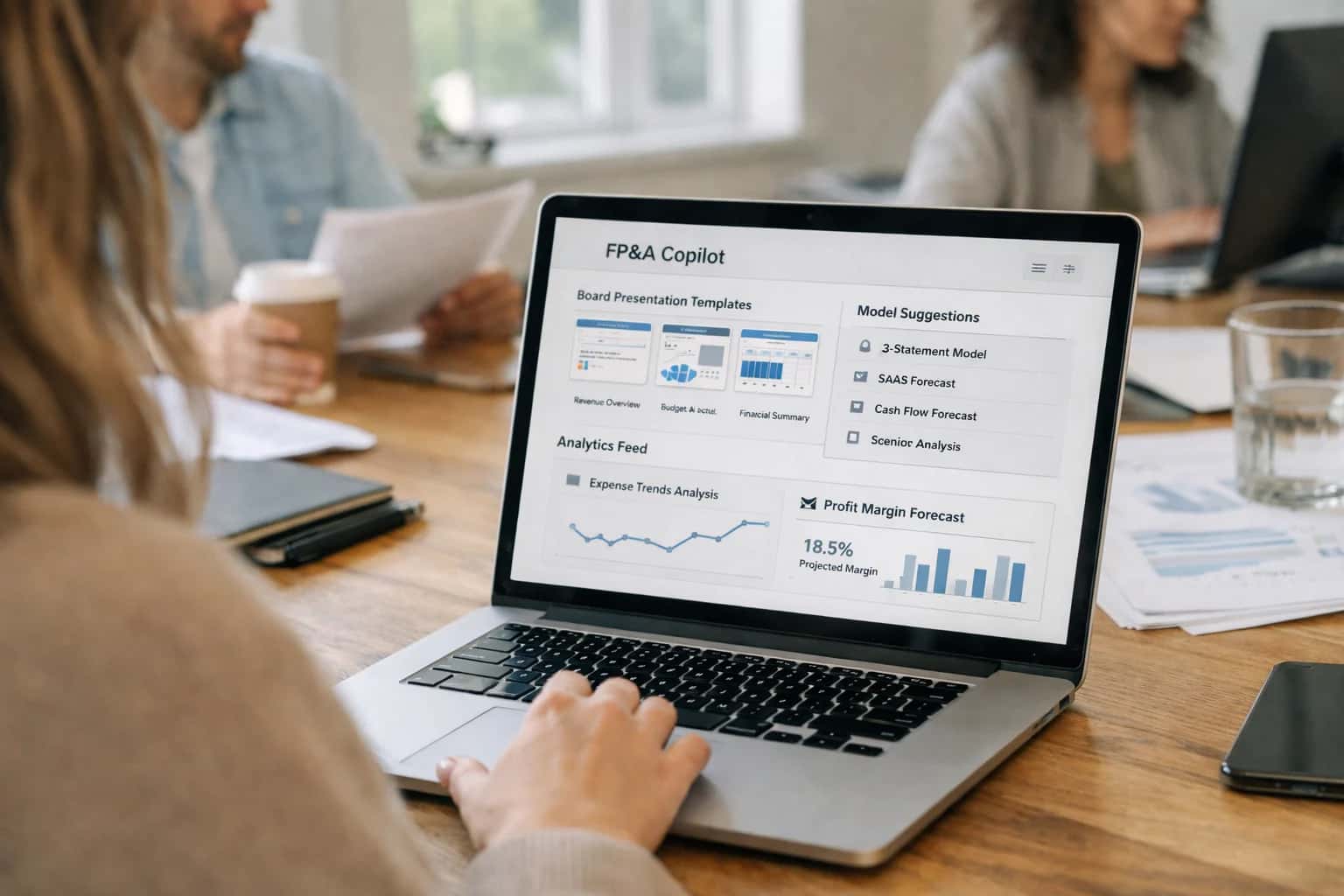
Where AI Fits into Jaggaer Spend Classification
A technical blueprint for augmenting Jaggaer's native classification with AI to map transactions to charts of accounts and category trees with higher accuracy and less manual effort.
A production implementation follows a human-in-the-loop workflow to ensure governance. For example, an AI agent can be triggered by a webhook from Jaggaer when a new invoice or procurement card transaction is created. The agent extracts the text, calls a classification model (fine-tuned on your historical, categorized spend), and returns a confidence-scored prediction. This prediction is attached to the transaction as a custom field or sent to an approval queue within Jaggaer's workflow engine. Procurement or AP analysts review medium-confidence classifications in a dedicated dashboard, accepting or overriding them, which in turn feeds back into the model for continuous learning. This pattern reduces manual classification work from hours of research to seconds of review, directly impacting the speed and accuracy of monthly close and category-level spend reporting.
Rollout requires careful data stewardship and change management. Start with a pilot on a single, high-volume spend category (e.g., IT software, professional services) where classification errors are common. Use a sample of historical, human-classified transactions from Jaggaer's Spend Visibility reports to train and validate the initial model. Architect the integration to log all AI suggestions, user overrides, and final classifications to a separate audit database, which is crucial for model retraining and compliance. For finance teams, the key outcome is a cleaner, more reliable chart of accounts feed from Jaggaer to the ERP (like SAP or Oracle), enabling trustworthy profitability analysis and budget control. For procurement, it means category managers can finally trust their spend cube analytics to drive sourcing strategies without manual data cleansing.
Jaggaer Modules and Surfaces for AI Classification
Invoice Capture and Data Extraction
AI classification integrates directly into Jaggaer's invoice processing pipeline. The primary surface is the Invoice API, which allows for the submission of raw invoice documents (PDF, image) and the retrieval of enriched, classified data.
Key Integration Points:
- Invoice Import Webhook: Trigger an AI classification service when a new invoice is captured via OCR or manual upload. The service receives the extracted line-item text and returns mapped GL accounts, cost centers, and spend categories.
- Line-Item Enrichment: Use the
PATCH /invoices/{id}/linesendpoint to append classification codes (accountingCode,costCenter,categoryId) to each line item before routing for approval. - Validation Rules: Post-classification, apply Jaggaer's native validation rules to ensure the AI's mappings comply with configured accounting segments and category trees, flagging low-confidence matches for human review.
This enables touchless processing for a high volume of invoices by replacing manual coding with AI-driven enrichment at the point of ingestion.
High-Value AI Classification Use Cases for Jaggaer
AI-powered classification transforms raw transaction data in Jaggaer into structured, actionable intelligence. By mapping spend to your chart of accounts, category trees, and supplier hierarchies, these workflows enable accurate analytics, compliance, and strategic sourcing.
Automated GL Code Assignment
Analyzes invoice line items, supplier names, and free-text descriptions to automatically assign the correct General Ledger (GL) code. Workflow: Integrates with Jaggaer's invoice API to process new transactions, calls an LLM for classification, and posts the enriched record back. Reduces manual coding for AP teams and accelerates month-end close.
Spend Category Enrichment
Maps uncategorized or miscoded spend to your procurement taxonomy (e.g., UNSPSC, custom category tree). Workflow: Uses a RAG pipeline grounded in your category definitions and historical spend patterns to suggest or apply the most accurate category. Enables reliable spend analysis for category managers without manual data cleansing.
Supplier Normalization & Tiering
Identifies and consolidates duplicate supplier entries (e.g., "ABC Inc.", "ABC Incorporated") and classifies them into tiered groups (Strategic, Preferred, Transactional). Workflow: Runs periodic jobs against the Jaggaer supplier master, using entity resolution models to clean data and enrichment APIs to assign tiers based on spend volume and criticality.
Tail Spend Identification
Continuously analyzes Jaggaer P2P data to flag transactions falling into 'tail spend'—low-value, high-variety purchases outside managed categories. Workflow: AI agent classifies each PO and invoice, identifying candidates for catalog consolidation or spot-buy routing. Provides sourcing teams with a prioritized list for savings opportunities.
Contract Compliance Checking
Cross-references classified spend data against contracted rates and approved supplier lists in Jaggaer Contracts. Workflow: After classifying an invoice line (e.g., "laptop" -> IT Hardware), the system checks the item against the relevant contract's pricing terms and flags maverick spend. Automates a key control for procurement and finance.
ESG & Diversity Spend Attribution
Classifies supplier spend into ESG (Environmental, Social, Governance) and diversity categories (e.g., Minority-Owned, Women-Owned). Workflow: Enriches Jaggaer supplier records with data from third-party certifiers, then uses NLP to analyze spend descriptions for relevant categories (e.g., renewable energy, sustainable packaging). Automates critical reporting for CSR and procurement leaders.
Example AI Classification Workflows for Jaggaer
These workflows illustrate how AI agents can be integrated into Jaggaer's data model and APIs to automate spend classification, enrich vendor records, and ensure data hygiene for downstream analytics and compliance.
Trigger: A new invoice is submitted via Jaggaer's Invoice Management API or uploaded to the portal.
Context Pulled: The integration service extracts key fields from the invoice payload: vendor_name, invoice_line_item_descriptions, amount, purchase_order_number. It also fetches the associated supplier record from Jaggaer's Supplier Management module.
AI Agent Action: A classification model (fine-tuned on historical GL mappings) analyzes the line descriptions and vendor category. It returns:
- A predicted GL account code (e.g.,
5010 - Office Supplies). - A confidence score (e.g.,
0.92). - Supporting rationale (e.g., "Matches 'printer toner' to office supplies category based on 150 similar transactions").
System Update: For predictions with confidence > 0.85, the system automatically posts the GL code to the invoice's custom ai_gl_code field via the Jaggaer API. For lower confidence scores, the invoice is routed to a "Needs Review" queue in Jaggaer with the AI's suggestion pre-populated.
Human Review Point: A procurement analyst reviews the queue. They can accept, modify, or reject the suggestion. Their decision is logged and fed back into the model for continuous learning.
Implementation Architecture: Data Flow and Integration Points
A practical blueprint for connecting AI classification models to Jaggaer's data layer to automate spend categorization and enrichment.
The integration architecture connects to Jaggaer's core transactional APIs—primarily the Spend Management and Analytics modules—to process raw invoice and purchase order data. The typical data flow begins by extracting uncleansed line-item details (vendor, description, amount, GL code) via scheduled API calls or webhook-triggered events. This raw data is sent to a dedicated AI processing service, where a fine-tuned classification model maps each transaction to your organization's chart of accounts, category tree (e.g., UNSPSC, SIC), and cost center. The enriched record, now containing standardized category codes, descriptive tags, and confidence scores, is then written back to Jaggaer via its Supplier Invoice or Spend Analysis APIs, updating the master record for downstream reporting and compliance workflows.
Key integration points focus on the Supplier Invoice Workflow for real-time classification during AP processing and the Spend Data Warehouse for batch enrichment of historical data. For real-time flows, an AI agent can be invoked via a custom approval step or middleware platform (like MuleSoft or Apache NiFi) to classify line items before they route for payment, flagging high-value or unclassified transactions for human review. For batch operations, the integration syncs with Jaggaer's analytics cubes or data export services to process spend files, ensuring category consistency across quarters. Governance is maintained by logging all AI-suggested classifications, confidence thresholds, and overrides in a separate audit table, which can be linked back to Jaggaer's transaction IDs for traceability and model retraining.
Rollout typically follows a phased approach: start with a pilot category (e.g., IT hardware or professional services) using a few months of historical data to tune the model, then expand to broader indirect spend before tackling complex direct materials. The system is designed to operate in a human-in-the-loop mode initially, where classifications above a set confidence threshold (e.g., 95%) are auto-applied, while lower-confidence suggestions are presented to AP clerks or category managers within Jaggaer's UI for validation. This approach minimizes disruption, builds trust in the AI output, and generates the labeled data needed to continuously improve accuracy. The final architecture ensures that enriched spend data flows seamlessly into Jaggaer's native reporting, supplier performance dashboards, and savings tracking modules, turning transactional data into actionable procurement intelligence.
Code and Payload Examples for Jaggaer Integration
Extracting and Structuring Invoice Data
This workflow uses an AI agent to extract line-item details from uploaded invoices (PDF, image) and enrich them with structured data before posting to Jaggaer. The agent calls a vision or document model, validates the output, and maps it to Jaggaer's Invoice and InvoiceLine objects.
Example JSON Payload for Enriched Invoice Line:
json{ "invoiceHeader": { "supplierCode": "VEND-2024-ACME", "invoiceNumber": "INV-78910", "invoiceDate": "2024-05-15", "totalAmount": 12500.75, "currency": "USD" }, "lines": [ { "lineNumber": 1, "description": "AI-Powered Spend Classification Implementation Services", "quantity": 80, "unitPrice": 125.00, "lineAmount": 10000.00, "aiEnrichment": { "predictedCategory": { "unspcCode": "81111506", "categoryName": "Software development services" }, "confidenceScore": 0.92, "glAccountRecommendation": "6400-IT Services", "costCenter": "TECH-AI-IMPLEMENTATION" } } ] }
This enriched payload is then used to create or update an invoice in Jaggaer via its REST API, populating custom fields for the AI-derived classification.
Realistic Time Savings and Business Impact
A comparison of manual versus AI-assisted processes for classifying and enriching spend transactions in Jaggaer, based on typical enterprise implementations.
| Process Step | Before AI (Manual) | After AI (Assisted) | Key Notes & Impact |
|---|---|---|---|
Transaction Categorization | 2-5 minutes per line item | Seconds per batch | AI suggests chart of accounts (CoA) codes; finance reviews/confirms. |
Supplier Name Normalization | Hours of spreadsheet work weekly | Automated matching in minutes | Resolves 'ABC Inc.' vs 'ABC Incorporated' variants; cleans vendor master. |
Spend Category Assignment | Relies on buyer memory or lookup tables | Context-aware mapping to category tree | Uses invoice description, PO data, and supplier info for accurate UNSPSC/CPV coding. |
New Supplier/Item Classification | Manual research and data entry | Automated enrichment from external sources | Pulls D&B data, industry codes; flags for risk or diversity status. |
Monthly Close Reconciliation | Days for finance team to clean data | Pre-classified data ready for review | Reduces last-minute rework; accelerates financial reporting cycles. |
Audit & Compliance Sampling | Manual sampling of high-risk transactions | AI-prioritized audit trails and exceptions | Focuses reviewer effort on transactions with low confidence scores or policy deviations. |
Category Strategy Analysis | Weeks to aggregate and clean spend data | Pre-enriched data available for analysis | Enables faster category opportunity identification and sourcing project initiation. |
Governance, Security, and Phased Rollout
A secure, phased implementation ensures AI-driven spend classification delivers reliable, auditable results without disrupting core Jaggaer operations.
AI classification touches sensitive financial data, including GL account numbers, vendor details, and transaction amounts. A production architecture typically uses a secure, asynchronous workflow: new or uncleansed transactions in Jaggaer trigger a webhook to a dedicated integration service. This service extracts the relevant line-item data (description, amount, vendor, date), redacts any PII if necessary, and sends a payload to the LLM API for classification. The response—containing the predicted chart of accounts code, spend category, and confidence score—is written back to custom fields on the Jaggaer Spend or Invoice object via its REST API. All requests and classifications are logged with a correlation ID for a complete audit trail.
Governance is enforced at multiple layers. Prompt governance ensures the LLM uses a controlled taxonomy and avoids hallucinations by grounding responses in your official chart of accounts. Data governance is maintained by limiting the AI's access to a read-only copy of necessary transaction fields and writing results only to designated, non-system fields for human review. A human-in-the-loop (HITL) approval step can be configured for low-confidence classifications or transactions above a certain monetary threshold, routing them to a procurement or finance analyst within Jaggaer's existing approval workflow for validation before final posting.
A phased rollout minimizes risk and builds trust. Phase 1 (Pilot): Target a single, low-risk spend category or a specific business unit. Run the AI classification in "shadow mode," writing results to a test field and comparing them to manual classifications to measure accuracy and refine prompts. Phase 2 (Limited Production): Enable the system for live classification on a broader set of categories but keep the HITL gate active for all transactions. Use this phase to train the team and document common edge cases. Phase 3 (Full Scale): Activate fully automated classification for high-confidence transactions, reserving HITL only for exceptions. This measured approach ensures the integration enhances data quality and operational efficiency without introducing unmanaged risk into your financial reporting. For related architectural patterns, see our guide on AI Integration for Coupa Spend Management.
Enabling Efficiency, Speed & Accuracy
Intelligent Analysis, Decision & Execution
We build AI systems for teams that need search across company data, workflow automation across tools, or AI features inside products and internal software.
Talk to Us
Search across company data
Give teams answers from docs, tickets, runbooks, and product data with sources and permissions.
Useful when people spend too long searching or get different answers from different systems.

Automate internal workflows
Use AI to route work, draft outputs, trigger actions, and keep approvals and logs in place.
Useful when repetitive work moves across multiple tools and teams.

Add AI to products and internal tools
Build assistants, guided actions, or decision support into the software your team or customers already use.
Useful when AI needs to be part of the product, not a separate tool.
Frequently Asked Questions on AI for Jaggaer Spend Classification
Practical questions and workflow blueprints for teams implementing AI-powered spend classification in Jaggaer. This FAQ covers integration patterns, data handling, and operational governance.
The integration typically connects at the transaction ingestion or enrichment layer, using Jaggaer's APIs to read raw spend data and write back enriched classifications. The core workflow is:
- Trigger: A new invoice, PO, or credit card transaction is created in Jaggaer, or a batch of unclassified historical spend is flagged for processing.
- Context Pulled: The AI agent calls the Jaggaer REST API (e.g.,
GET /api/spend/transactions) to retrieve key fields:Supplier NameLine Item DescriptionGL Account(if partially populated)Amount,Date,Business Unit
- Agent Action: A classification model (often a fine-tuned LLM or a pre-trained classifier) analyzes the text, using:
- Entity Recognition to identify products, services, and materials.
- Semantic Similarity to match against your master chart of accounts (CoA) and procurement category tree.
- Context Enrichment by optionally calling internal or third-party data sources to verify supplier or item details.
- System Update: The agent posts the predicted classification back to Jaggaer via
PATCH /api/spend/transactions/{id}, updating fields like:json{ "generalLedgerAccountCode": "5010 - Raw Materials", "procurementCategoryId": "CAT-IT-SOFTWARE", "customFields": { "aiConfidenceScore": 0.92, "aiClassificationReasoning": "Description matches 'software license' and supplier is a known SaaS vendor." } } - Human Review Point: Transactions with a confidence score below a configured threshold (e.g., <0.85) are routed to a dedicated "Review" queue in Jaggaer or a connected workflow tool for procurement specialist validation.

About the author
Prasad Kumkar
CEO & MD, Inference Systems
Prasad Kumkar is the CEO & MD of Inference Systems and writes about AI systems architecture, LLM infrastructure, model serving, evaluation, and production deployment. Over 5+ years, he has worked across computer vision models, L5 autonomous vehicle systems, and LLM research, with a focus on taking complex AI ideas into real-world engineering systems.
His work and writing cover AI systems, large language models, AI agents, multimodal systems, autonomous systems, inference optimization, RAG, evaluation, and production AI engineering.
Partnered with leading AI, data, and software stack.





How We Work
Custom AI workflows for your Business
One-fit-all AI don't work for modern businesses. At Inferensys, we aim to understand your business & custom requirements; which we use to define most efficient agentic workflows, the data, and the tools for your business.
01
Review the use case
We understand the task, the users, and where AI can actually help.
Read more02
Pick the right approach
We define what needs search, automation, or product integration.
Read more03
Build the first useful version
We implement the part that proves the value first.
Read more04
Improve from there
We add the checks and visibility needed to keep it useful.
Read moreThe first call is a practical review of your use case and the right next step.
Talk to Us