AI integration for Jaggaer Market Intelligence focuses on connecting external data streams—like commodity price APIs, geopolitical news feeds, and supplier financial data—to the core objects within Jaggaer's sourcing projects and supplier profiles. The integration surfaces at three key functional layers: 1) Project Setup, where AI analyzes the Commodity Code or Category of a new sourcing event to recommend relevant market indices and risk factors to monitor. 2) Supplier Evaluation, where AI continuously scores and updates supplier risk profiles based on real-time events, linking findings to the Supplier Master and Qualification modules. 3) Event Execution, where AI provides contextual alerts within a live RFx or Auction, advising sourcing managers on bid rationality against shifting market conditions.

Integration
AI Integration for Jaggaer Market Intelligence
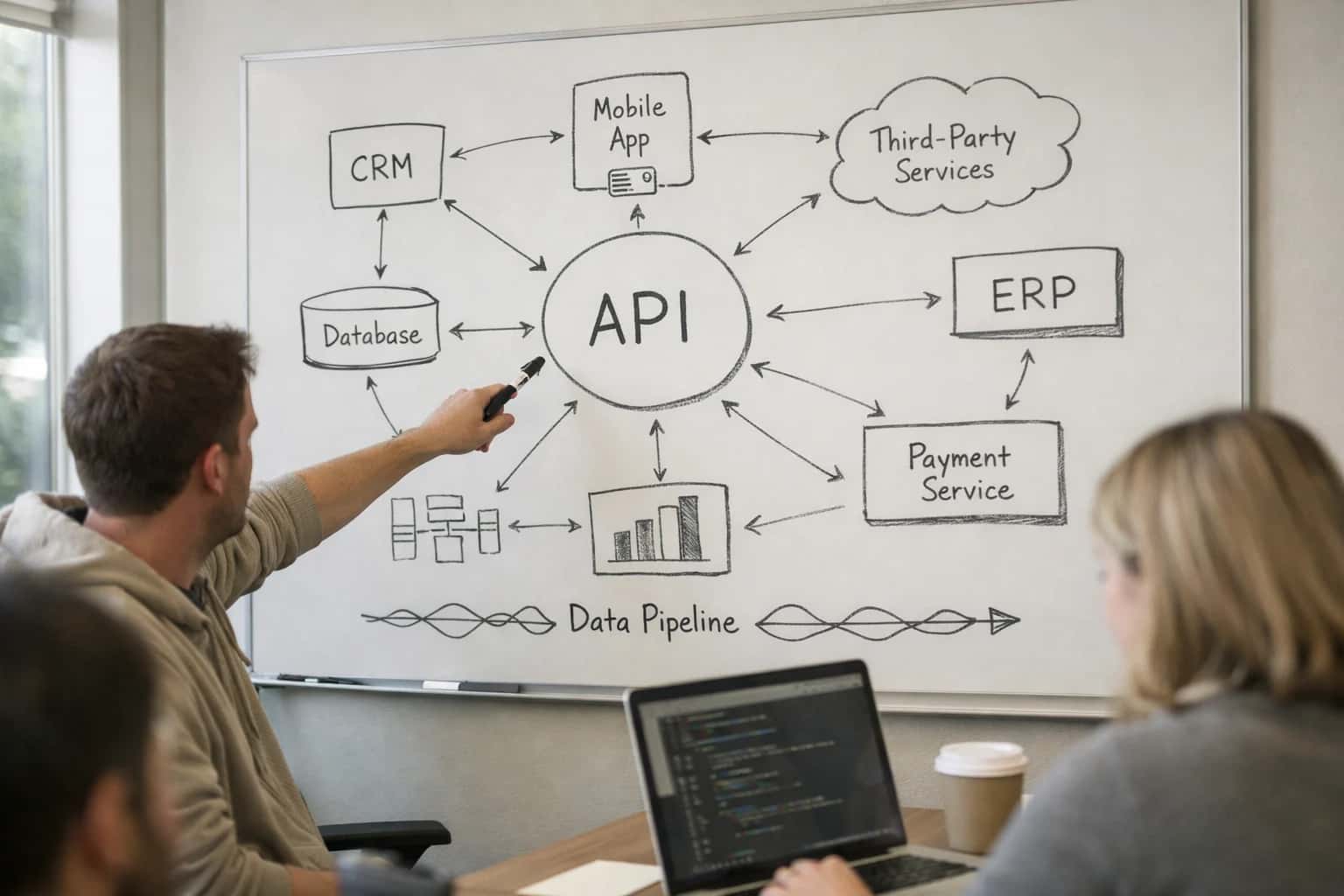
Where AI Fits into Jaggaer Market Intelligence
A technical blueprint for integrating real-time AI analysis into Jaggaer's sourcing and supplier workflows to automate market monitoring and risk alerting.
Implementation typically involves a middleware agent that subscribes to external data sources, processes them through LLMs for summarization and sentiment scoring, and then posts structured alerts back into Jaggaer via its REST APIs or webhooks. For example, a spike in lithium prices triggers an AI agent to create a Project Note in the relevant sourcing event, summarize the cause from news articles, and tag the impacted Line Items. This enables "sourcing-in-context" intelligence without forcing users to leave the Jaggaer workflow. Governance is managed through a centralized prompt library defining alert thresholds and a human-in-the-loop approval step for high-impact alerts before they are posted to ensure accuracy and avoid alert fatigue.
Rollout should be phased, starting with a single high-spend category (e.g., semiconductors or freight) to validate the data pipeline and user adoption. The AI agent's permissions must be configured within Jaggaer's Role-Based Access Control (RBAC) to post notes and update custom fields without broader system edit rights. A critical success factor is mapping the AI output to existing Jaggaer reporting, so market intelligence feeds directly into Savings Tracking and Risk Dashboards, creating a closed-loop system where external signals influence internal procurement decisions. For a deeper dive on connecting AI to Jaggaer's sourcing engine, see our guide on AI Integration for Jaggaer Sourcing Optimization.
Jaggaer Modules and Surfaces for AI Integration
Core Integration Surface for Market Data
AI market intelligence agents connect directly to Jaggaer Sourcing Projects and Sourcing Events (RFx, Auctions). The primary goal is to inject real-time external data into the sourcing lifecycle to inform strategy and negotiation.
Key Integration Points:
- Project Setup & Strategy Phase: AI analyzes the category and item data from the project to identify critical commodities, geographies, and risk factors requiring monitoring.
- Event Execution Phase: During an active RFQ or auction, AI monitors for relevant market shifts (e.g., commodity price spikes, port disruptions) and pushes alerts to the event workspace or sourcing manager's dashboard.
- Post-Event Analysis: AI correlates bid responses with market conditions at the time of submission, providing context for bid evaluation and future price benchmarking.
Integration is achieved via Jaggaer's REST APIs to read project/event metadata and write alerts/comments, and through webhooks to trigger analysis when key project milestones are reached.
High-Value Use Cases for AI-Powered Market Intelligence
Integrate real-time AI analysis of commodity prices, geopolitical events, and supply chain disruptions directly into Jaggaer sourcing workflows. These patterns connect external intelligence to internal projects, enabling proactive decision-making.
Commodity Price Alerting for Active Sourcing Events
Monitor real-time commodity indices (e.g., metals, resins, freight) and trigger alerts within Jaggaer Sourcing Projects when prices shift beyond a set threshold. AI analyzes the impact on current bids and recommends pausing an event or adjusting negotiation strategy.
Geopolitical Risk Scoring for Supplier Shortlists
Automatically enrich Jaggaer supplier records with AI-generated risk scores based on news, regulatory changes, and event data from their operational regions. Scores surface in the supplier evaluation stage of sourcing, allowing category managers to diversify or mitigate.
Supply Disruption Forecasting for Contract Renewals
During Jaggaer Contract Lifecycle renewal reviews, AI analyzes market intelligence to forecast potential supply shortages or logistics bottlenecks for key materials. Provides data-backed recommendations on contract term adjustments (e.g., volume flexibility, lead times).
Market Intelligence Synthesis for RFx Creation
AI agents ingest market reports, commodity forecasts, and industry news to automatically generate a market overview section within new Jaggaer RFx documents. Ensures sourcing teams and potential suppliers base proposals on current market conditions.
Event-Driven Supplier Communication Automation
When a major market event (e.g., port closure, tariff announcement) is detected, AI drafts contextual communications and routes them for approval to be sent via Jaggaer Supplier Portals to affected suppliers. Maintains proactive relationships and gathers contingency plans.
Should-Cost Model Refresh with Live Market Data
Integrate live commodity pricing and regional labor data into Jaggaer's costing tools. AI continuously updates should-cost models for key categories, providing sourcing managers with a current baseline for bid analysis and negotiation during events.
Example AI-Driven Workflows in Jaggaer
These workflows illustrate how AI agents can ingest, analyze, and act on real-time market data within Jaggaer sourcing projects, moving from manual monitoring to automated, actionable intelligence.
Trigger: An AI agent monitoring commodity indices (e.g., LME, Bloomberg) detects a price movement exceeding a pre-defined threshold for a key raw material.
Context/Data Pulled: The agent retrieves the impacted material code, cross-references it with active Jaggaer sourcing projects (SourcingProject object), and fetches the project's current status, target award date, and incumbent supplier bids.
Model/Agent Action: The LLM analyzes the price trend against the project timeline. It generates a summary and recommendation (e.g., "Copper up 15%; recommend accelerating award by 2 weeks or adding price escalation clause").
System Update/Next Step: The agent creates a Project Note in the relevant Jaggaer sourcing project with the analysis and tags the project owner. It can also automatically adjust the Event End Date via API if a rule-based policy is met.
Human Review Point: The sourcing manager receives an in-platform alert and must approve any timeline changes or clause modifications before the event is updated.
Implementation Architecture: Data Flow and Integration Points
A practical blueprint for integrating real-time market data and AI analysis directly into Jaggaer sourcing projects.
The integration connects three primary data streams to Jaggaer's Sourcing Projects and Supplier Management modules: 1) External Market Feeds (commodity indices, financial news, geopolitical alerts), 2) Internal Sourcing Data (RFx details, bid timelines, supplier lists), and 3) AI Analysis Engine (which processes the combined feed). The core integration point is Jaggaer's REST API, used to create and update custom objects or fields within a sourcing project to store risk scores, price alerts, and recommended actions. For real-time alerting, webhooks can push summarized intelligence to designated project owners or trigger automated tasks within Jaggaer's workflow engine.
In a typical workflow, the AI engine continuously monitors specified commodities or regions tied to an active sourcing event. When a significant price shift or disruptive event is detected, it performs a multi-step analysis: assessing impact on the category, evaluating affected suppliers from the project's bidder list, and generating a contextual alert. This alert is posted as a project update via the API and can automatically adjust a supplier's risk score in the Supplier Management module. For strategic sourcing teams, this moves market intelligence from a periodic manual report to a dynamic, event-driven input embedded in the decision-making interface.
Rollout should begin with a pilot category (e.g., electronic components, freight) where market volatility is high. Governance is critical: define clear thresholds for automated alerts versus human-in-the-loop review, especially for actions that might pause a sourcing event. All AI-generated insights should be logged in an audit trail linked to the sourcing project record. This architecture does not replace category manager judgment but provides a persistent, automated analyst that ensures external market signals are systematically factored into Jaggaer-based procurement decisions.
Code and Payload Examples
Ingesting External Intelligence Feeds
Integrating real-time market data requires a robust ingestion layer. A common pattern is to use a scheduled service (e.g., Azure Functions, AWS Lambda) to fetch data from commodity APIs, news wires, or ESG data providers, then transform and push it to a staging area for AI analysis.
Key steps include:
- API Polling: Fetch structured data (e.g., LME copper prices, S&P Global Platts indices).
- Unstructured Processing: Scrape or ingest news articles, regulatory alerts, and geopolitical reports.
- Payload Normalization: Convert diverse formats into a unified JSON schema for downstream processing.
python# Example: Fetching and normalizing commodity data import requests import json def fetch_commodity_prices(api_key, commodity_code): url = f"https://api.marketdata.example/v1/commodities/{commodity_code}/spot" headers = {"Authorization": f"Bearer {api_key}"} response = requests.get(url, headers=headers) data = response.json() # Normalize payload for Jaggaer integration normalized_payload = { "commodity": data["name"], "price": data["last_price"], "currency": data["currency"], "unit": data["unit"], "timestamp": data["timestamp"], "source": "MarketData Inc.", "confidence_score": 0.95 } return normalized_payload
This normalized data is then ready for AI analysis and storage in a vector database for retrieval-augmented generation (RAG).
Realistic Time Savings and Business Impact
This table illustrates the operational impact of integrating AI-driven market intelligence analysis directly into Jaggaer sourcing projects, focusing on time savings and improved decision velocity.
| Workflow / Task | Before AI Integration | After AI Integration | Key Impact & Notes |
|---|---|---|---|
Market Event Monitoring | Manual news & report scanning (2-4 hrs/week) | Automated alerts & summaries (15 mins/week review) | Shifts effort from collection to action; reduces risk of missed signals. |
Commodity Price Analysis for RFx | Spreadsheet compilation & historical comparison (3-5 hrs/project) | AI-generated price trend reports & forecasts (1 hr/project review) | Provides data-driven negotiation leverage; standardizes analysis. |
Geopolitical Risk Assessment | Ad-hoc research by category manager (4-8 hrs/quarter) | Continuous dashboard with risk scores & flagged suppliers (30 mins/quarter) | Enables proactive supplier diversification and contract mitigation. |
Sourcing Project Kickoff Research | Gathering background from multiple sources (1-2 days) | Pre-populated project brief with synthesized intelligence (2-4 hrs) | Accelerates project initiation; ensures teams start with shared context. |
Supplier Market Positioning | Manual review of financials & news (2-3 hrs/supplier) | AI-generated supplier profiles with competitive analysis (20 mins/supplier) | Improves supplier shortlisting quality and negotiation strategy. |
Intelligence Integration into Sourcing Event | Manual copy-paste into RFx documents (1-2 hrs/event) | AI-assisted clause & question generation based on market context (30 mins/event) | Ensures RFxs are context-aware and address current market conditions. |
Post-Event Market Debrief | Informal notes and anecdotal lessons | Structured summary of market factors affecting outcomes (1 hr) | Creates institutional knowledge for future sourcing cycles. |
Governance, Security, and Phased Rollout
A practical approach to integrating AI with Jaggaer Market Intelligence that prioritizes data security, controlled access, and measurable impact.
Integrating AI with Jaggaer Market Intelligence requires a secure, event-driven architecture. The typical pattern involves a dedicated integration service that subscribes to Jaggaer webhooks for new sourcing projects, RFx events, or supplier updates. This service fetches the relevant project context and commodity data, then calls a secured AI orchestration layer (e.g., using Azure OpenAI or Anthropic with private endpoints) to analyze market feeds, news, and pricing indices. All prompts, inputs, and generated intelligence are logged to an immutable audit trail, and any data sent externally is stripped of sensitive PII or confidential supplier terms before processing. AI-generated alerts or reports are written back to Jaggaer as custom objects or project notes via its REST APIs, maintaining a clear lineage within the sourcing record.
Rollout follows a phased, use-case-first approach to build confidence and demonstrate value:
- Phase 1 (Pilot): Target a single, high-value commodity category (e.g., semiconductors, freight). Configure the AI to monitor specific price indices and geopolitical news, generating daily summary alerts for sourcing managers within their active Jaggaer projects. This validates the data flow and user acceptance.
- Phase 2 (Expansion): Enable AI-driven "what-if" analysis for active RFQs. When a new bid response is logged in Jaggaer, the system automatically compares quoted prices against real-time market benchmarks and flags significant deviations for buyer review.
- Phase 3 (Automation): Implement conditional workflows where extreme market volatility triggers automated Jaggaer tasks, such as pausing a sourcing event or notifying the legal team to review force majeure clauses in active contracts.
Governance is enforced through role-based access within Jaggaer and the AI layer. Procurement leads may receive full AI-generated reports, while suppliers see only approved, sanitized market summaries. A weekly review of the AI's alert accuracy and sourcing manager feedback loops ensures the system remains aligned with category strategy. This controlled, incremental deployment minimizes risk while delivering tangible operational advantages—shifting market analysis from a manual, periodic task to a contextual, real-time capability embedded directly in the sourcing workflow.
Enabling Efficiency, Speed & Accuracy
Intelligent Analysis, Decision & Execution
We build AI systems for teams that need search across company data, workflow automation across tools, or AI features inside products and internal software.
Talk to Us
Search across company data
Give teams answers from docs, tickets, runbooks, and product data with sources and permissions.
Useful when people spend too long searching or get different answers from different systems.

Automate internal workflows
Use AI to route work, draft outputs, trigger actions, and keep approvals and logs in place.
Useful when repetitive work moves across multiple tools and teams.

Add AI to products and internal tools
Build assistants, guided actions, or decision support into the software your team or customers already use.
Useful when AI needs to be part of the product, not a separate tool.
Frequently Asked Questions
Common technical and operational questions for integrating real-time market intelligence into Jaggaer sourcing workflows using AI analysis and alerting.
The integration uses a multi-step orchestration layer, typically built with an agent framework like CrewAI or n8n, that sits between data sources and Jaggaer's APIs.
-
Trigger & Ingestion: Scheduled agents or webhooks ingest data from sources like:
- Commodity price APIs (e.g., Bloomberg, Reuters, Quandl)
- Geopolitical and news feeds (e.g., Reuters, Dow Jones)
- Weather and logistics disruption APIs
- Supplier financial health data providers
-
Analysis & Synthesis: An LLM (like GPT-4 or Claude) analyzes the raw data against predefined sourcing project criteria (e.g., category, region, critical suppliers). It generates concise alerts, risk scores, and recommended actions.
-
Jaggaer System Update: The orchestration layer uses Jaggaer's REST APIs to update relevant objects:
- Create/Update Project Notes or Custom Objects: Attach the AI-generated alert as a note or custom field on the sourcing project or RFx event.
- Update Supplier Records: Flag high-risk suppliers in the supplier master with a custom attribute.
- Trigger Workflow Tasks: Create a task for the sourcing manager in Jaggaer's workflow engine, linking to the analysis.
Example Payload to Jaggaer API (Create Project Note):
jsonPOST /api/v1/sourcingProjects/{projectId}/notes { "title": "AI Market Alert: Copper Price Volatility", "description": "Copper futures rose 8% in the last 48h due to supply constraints in Chile. This impacts 3 active RFQ lines for electrical components. Recommendation: Consider expanding supplier shortlist to include North American foundries or add price escalation clauses.", "severity": "HIGH", "source": "AI_Market_Intelligence" }

About the author
Prasad Kumkar
CEO & MD, Inference Systems
Prasad Kumkar is the CEO & MD of Inference Systems and writes about AI systems architecture, LLM infrastructure, model serving, evaluation, and production deployment. Over 5+ years, he has worked across computer vision models, L5 autonomous vehicle systems, and LLM research, with a focus on taking complex AI ideas into real-world engineering systems.
His work and writing cover AI systems, large language models, AI agents, multimodal systems, autonomous systems, inference optimization, RAG, evaluation, and production AI engineering.
Partnered with leading AI, data, and software stack.





How We Work
Custom AI workflows for your Business
One-fit-all AI don't work for modern businesses. At Inferensys, we aim to understand your business & custom requirements; which we use to define most efficient agentic workflows, the data, and the tools for your business.
01
Review the use case
We understand the task, the users, and where AI can actually help.
Read more02
Pick the right approach
We define what needs search, automation, or product integration.
Read more03
Build the first useful version
We implement the part that proves the value first.
Read more04
Improve from there
We add the checks and visibility needed to keep it useful.
Read moreThe first call is a practical review of your use case and the right next step.
Talk to Us