AI integration for Jaggaer compliance monitoring connects to three primary surfaces: the transactional data layer (purchase orders, invoices, contracts), the supplier master data, and the workflow engine that manages approvals and exceptions. The goal is to deploy AI agents that act as continuous auditors, scanning these data streams against configured policy rules—such as spend limits, preferred supplier lists, contract terms, and regulatory requirements (e.g., FAR/DFARS, SOX, ESG mandates). This moves compliance from a periodic, sample-based audit to a real-time, transaction-level control system.

Integration
AI Integration for Jaggaer Compliance Monitoring
A technical blueprint for embedding AI agents into Jaggaer to automate procurement policy audits, regulatory checks, and internal control monitoring, reducing manual review and accelerating compliance reporting.
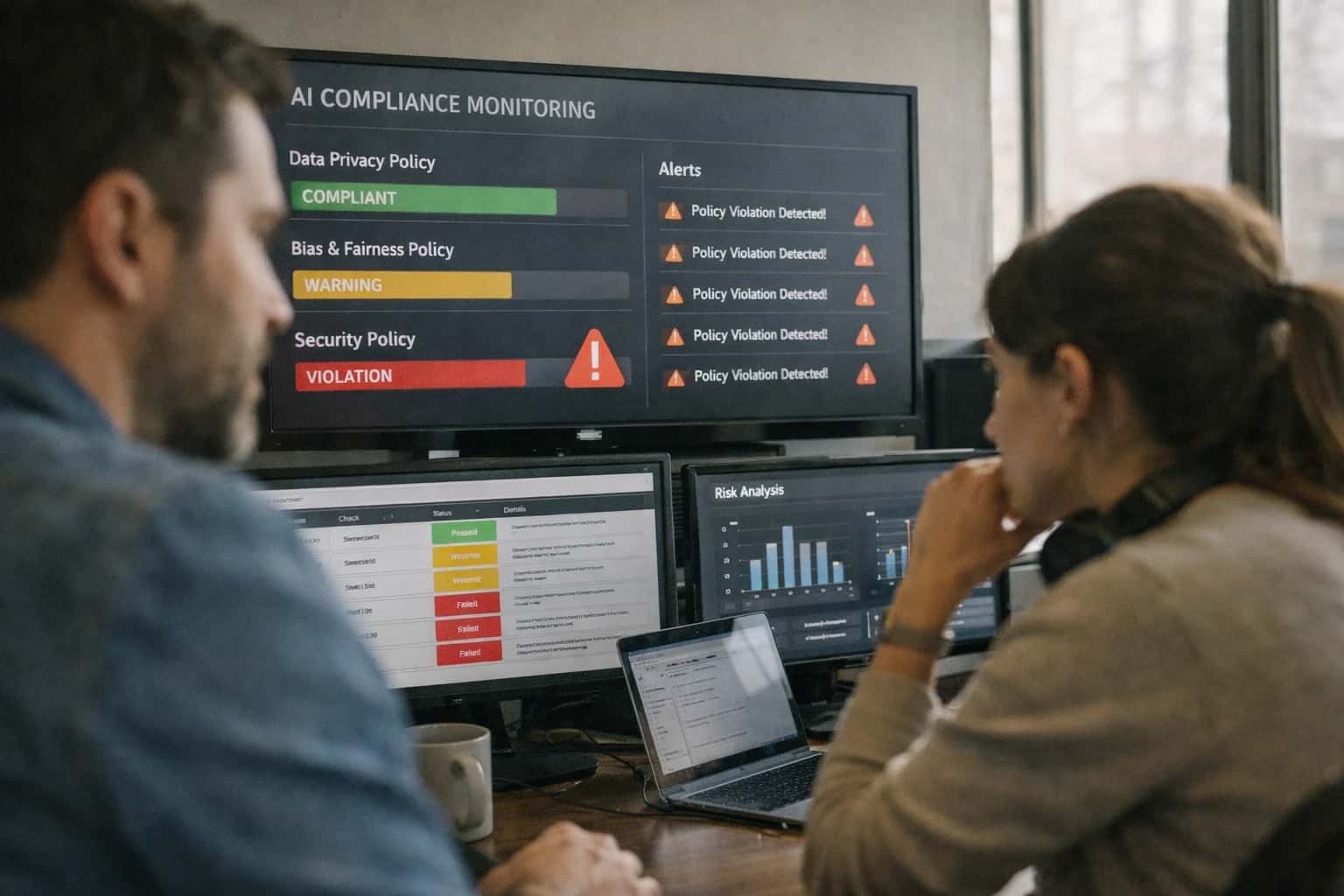
ARCHITECTURE FOR AUTOMATED MONITORING
Where AI Fits into Jaggaer Compliance Workflows
A technical blueprint for integrating AI agents into Jaggaer's procurement data and workflows to automate policy enforcement, audit preparation, and control monitoring.
Implementation typically involves a middleware layer that subscribes to Jaggaer webhooks or polls its APIs (like the Jaggaer REST API for sourcing events or the Supplier Management API) for new events. For each PO creation, invoice submission, or contract amendment, an AI agent extracts key fields, cross-references them against master data and external sources (like Dun & Bradstreet for supplier risk), and evaluates compliance. Findings are written back to Jaggaer as custom objects or used to trigger automated actions—such as routing a high-risk invoice for extra approval, flagging a contract for legal review, or generating an audit trail entry in a connected system like /integrations/data-governance-and-privacy-platforms/ai-integration-for-collibra.
Rollout requires careful governance. Start with a pilot on a single, high-volume compliance workflow—like non-catalog spend approval or supplier diversity reporting. Use a human-in-the-loop design where the AI agent recommends actions, but a compliance officer reviews and approves exceptions. This builds trust and creates labeled data to refine the models. Over time, you can increase automation for low-risk, high-frequency transactions. The architecture must also include audit logs for all AI decisions and regular model performance reviews to prevent drift, ensuring the system remains a reliable control point rather than a compliance risk itself.
COMPLIANCE MONITORING
Key Jaggaer Modules and Surfaces for AI Integration
Supplier Risk and Compliance Data Hub
The Supplier Management module is the primary system of record for compliance data. AI can monitor and analyze documents and data points stored here for automated audits.
Key Integration Surfaces:
- Supplier Profiles: Analyze uploaded certificates (ISO, diversity, financial), insurance documents, and compliance questionnaires for validity and expiration.
- Risk Indicators: Continuously evaluate structured risk scores against policy thresholds, triggering re-qualification workflows.
- Performance Data: Monitor supplier scorecards for SLA breaches or quality deviations that indicate compliance issues.
An AI agent can be triggered by document uploads or scheduled scans, using OCR and NLP to extract key dates and terms, compare them against policy rules, and flag non-conformance in the supplier record for review.
JAGGAER INTEGRATION PATTERNS
High-Value AI Use Cases for Compliance Monitoring
AI transforms Jaggaer compliance from a reactive audit function to a proactive, automated control layer. These patterns connect LLMs to Jaggaer's data model and workflows to monitor policy, regulations, and internal controls in real-time.
01
Automated Contract & PO Policy Adherence
AI agents monitor new contracts and purchase orders in real-time against a library of approved clauses, pricing models, and approval matrices. Flags deviations in payment terms, liability caps, or unauthorized suppliers before finalization, routing exceptions for legal or procurement review.
Batch -> Real-time
Policy check speed
02
Dynamic Supplier Risk & Qualification Monitoring
Continuously analyzes supplier master data and performance records against external risk feeds (financial, ESG, geopolitical). Automatically triggers re-qualification workflows, updates risk scores in Jaggaer Supplier Management, and alerts category managers of deteriorating supplier health.
Same day
Risk alerting
03
AI-Powered Audit Trail Analysis & Anomaly Detection
Processes Jaggaer's system logs, approval chains, and modification histories to detect anomalous patterns—like after-hours approvals, frequent policy overrides, or split purchases designed to circumvent thresholds. Generates summarized audit reports for internal audit teams with highlighted concerns.
Hours -> Minutes
Audit preparation
04
Regulatory Disclosure & Reporting Automation
For regulations like DFARS, ITAR, or modern slavery acts, AI extracts obligated data from contracts, supplier profiles, and spend transactions. Automatically populates compliance reports, validates required certifications are current, and manages disclosure workflows to legal and compliance officers.
1 sprint
Report setup time
05
Tail Spend & Maverick Buying Surveillance
Monitors procurement transactions to identify unmanaged tail spend and maverick buying outside negotiated contracts. Uses NLP to classify invoice descriptions, maps spend to preferred suppliers, and generates corrective action workflows for procurement ops to consolidate spend and enforce policy.
Batch -> Real-time
Spend classification
06
Intelligent Delegation of Authority (DoA) Enforcement
AI validates that approval workflows align with the latest Delegation of Authority matrix. Checks approver roles, approval amounts, and commodity codes against policy. If a violation is detected (e.g., manager approving IT software above limit), it halts the workflow and escalates to the correct authority.
100% coverage
Policy enforcement
JAGGAER IMPLEMENTATION PATTERNS
Example AI-Powered Compliance Workflows
These concrete workflows illustrate how AI agents can be integrated into Jaggaer's data model and automation layer to automate policy monitoring, audit preparation, and control validation for compliance teams.
Trigger: A new supplier contract is uploaded to Jaggaer Contracts or a contract reaches a key milestone (e.g., renewal, amendment).
Context/Data Pulled: The AI agent retrieves the contract document from Jaggaer's document store and fetches the relevant compliance policy library (e.g., required clauses, prohibited terms, insurance limits) from a connected policy management system or a configured rules database.
Model or Agent Action: A vision/LLM agent extracts key clauses (termination, liability, data privacy, payment terms). It compares them against the approved clause library and policy rules. It flags deviations (e.g., missing indemnity clause, non-standard liability cap).
System Update or Next Step: The agent creates a structured compliance findings report as a note or custom object attached to the contract record in Jaggaer. It automatically routes the contract for legal review via Jaggaer's workflow engine if high-risk deviations are found, or approves it for next-stage processing if clean.
Human Review Point: All flagged deviations are presented to the legal or procurement compliance officer with a side-by-side comparison and risk assessment. The agent does not auto-correct contracts.
AUTOMATED AUDIT WORKFLOWS
Implementation Architecture: Data Flow and System Design
A production-ready architecture for AI-powered compliance monitoring in Jaggaer connects policy rules to transaction data, automating audit evidence collection and risk reporting.
The integration is built on a real-time event-driven pipeline that listens to changes in key Jaggaer objects: Supplier, Contract, Purchase Order, Invoice, and Spend Transaction. Using Jaggaer's REST APIs and webhook subscriptions, relevant data payloads are streamed to a secure middleware layer. This layer enriches the data with context from master records and external sources (e.g., regulatory databases, ESG scores) before routing it to the AI analysis engine. The engine applies configured policy rules—such as segregation of duties, approval thresholds, or restricted category spending—using a combination of LLMs for document analysis and deterministic logic for numeric checks.
For each transaction or document, the system generates an audit trail record and a compliance score. High-risk exceptions are automatically routed to a review queue within Jaggaer's workflow engine or a connected case management system, tagged with AI-generated summaries of the violation and suggested remediation steps. Low-risk, compliant transactions are logged for periodic reporting. This design enables continuous monitoring instead of periodic sampling, allowing compliance officers to shift from manual evidence gathering to managing by exception. Key technical components include a vector database for retrieving similar past violations and a prompt management system to ensure consistent, auditable reasoning for each policy check.
Rollout follows a phased approach, starting with 2-3 high-impact policy areas (e.g., contract regulatory clause adherence or diversity spend thresholds) to validate the data pipeline and AI accuracy. Governance is maintained through a human-in-the-loop approval step for all high-severity findings before any system-generated actions are taken. All AI inferences, along with the source data and policy version, are stored in an immutable audit log, ensuring full traceability for internal and external auditors. This architecture not only automates detection but also creates a searchable knowledge base of compliance decisions, reducing the time for quarterly and annual audit preparation from weeks to days.
JAGGAER COMPLIANCE MONITORING
Code and Payload Examples
Evaluating Transactions Against Policy Rules
AI agents can be triggered via Jaggaer webhooks on key events like PO creation, invoice submission, or contract approval. The agent evaluates the transaction payload against a library of configurable policy rules (e.g., spend limits, preferred supplier lists, required approvals). It returns a structured compliance verdict.
Example Python Webhook Handler:
pythonimport json from inference_client import ComplianceAgent def jaggaer_webhook_handler(request_payload): """Process a Jaggaer PO creation webhook.""" # Extract relevant transaction data po_data = { "po_number": request_payload.get('poId'), "buyer": request_payload.get('buyerName'), "supplier": request_payload.get('supplierName'), "total_amount": request_payload.get('totalAmount'), "category": request_payload.get('categoryCode'), "cost_center": request_payload.get('costCenter') } # Initialize AI agent with policy context agent = ComplianceAgent(policy_rules='config/jaggaer_policies.yaml') # Get compliance assessment assessment = agent.evaluate_transaction(po_data) # Return result to Jaggaer via callback API for workflow routing return { "isCompliant": assessment.is_compliant, "violatedRules": assessment.violations, "recommendedAction": assessment.recommended_action, "riskScore": assessment.risk_score }
This result can be posted back to a custom field in Jaggaer to trigger automated holds or approval escalations.
AI-POWERED COMPLIANCE MONITORING
Realistic Time Savings and Operational Impact
How AI integration transforms manual, periodic compliance checks in Jaggaer into a continuous, automated monitoring system, freeing compliance officers for strategic oversight.
| Compliance Activity | Before AI | After AI | Key Notes |
|---|---|---|---|
Policy Deviation Detection | Monthly sample audits | Real-time transaction monitoring | Alerts trigger on non-catalog spend or off-contract pricing |
Supplier Qualification Review | Annual manual recertification | Continuous risk & certification monitoring | AI flags expired docs or new negative news for 10% of suppliers monthly |
Contract Obligation Tracking | Quarterly manual spreadsheet review | Automated extraction & milestone alerts | Obligations from Jaggaer contracts are parsed and tracked in a dashboard |
Spend Classification Accuracy | 70-80% manual mapping | 95%+ AI-assisted mapping with review | Reduces misclassified spend for ESG and diversity reporting |
Audit Evidence Compilation | 2-3 weeks pre-audit | On-demand report generation | Audit trails, approvals, and policy checks are queryable via natural language |
Regulatory Change Impact Assessment | Ad-hoc legal review | Semi-automated rule mapping | AI suggests which Jaggaer workflows may be affected by new regulations |
Internal Control Testing | Manual test of 5-10 controls per quarter | Automated testing of 50+ controls continuously | Focus shifts from execution to investigating exceptions |
CONTROLLED DEPLOYMENT FOR REGULATED PROCUREMENT
Governance, Security, and Phased Rollout
A practical approach to implementing AI for compliance monitoring in Jaggaer with built-in controls and iterative validation.
A production-ready integration for Jaggaer compliance monitoring is built on a secure, event-driven architecture. The core pattern listens to Jaggaer's webhooks or polls its APIs for key compliance events—such as new contract uploads, PO approvals, or supplier record changes. This data is processed through a secure middleware layer where AI models perform policy checks, clause extraction, and regulatory alignment analysis. All AI-generated findings, such as a flagged non-standard payment term or a missing diversity certification, are written back to designated custom objects or audit logs within Jaggaer, preserving a complete audit trail. Access is governed by Jaggaer's native RBAC, ensuring only authorized compliance officers and procurement managers can view and act on AI insights.
Rollout follows a phased, risk-based approach. Phase 1 targets a single, high-volume compliance workflow—such as automated checks for contract clauses against a master policy library—in a sandbox environment. This allows for prompt tuning, accuracy validation, and user acceptance testing with a controlled group. Phase 2 expands to monitor real-time procurement transactions for policy adherence (e.g., maverick spend, approval bypass) and integrates with third-party data for dynamic supplier risk scoring. Phase 3 operationalizes predictive analytics, using historical compliance data to forecast areas of high audit risk or to recommend policy updates. Each phase includes defined success metrics, such as reduction in manual audit sampling time or increase in policy violation detection rates, measured within Jaggaer's reporting framework.
Governance is critical. We recommend establishing a cross-functional steering committee (Procurement, Legal, IT, Internal Audit) to oversee the AI model's performance, review false positives/negatives, and approve expansions in scope. All AI actions should be logged in an immutable audit log separate from Jaggaer, detailing the input data, model version, and reasoning behind each compliance flag. For sensitive data, processing can be configured to use on-premise or VPC-deployed models. This structured approach ensures the AI integration enhances control and visibility without introducing unmanaged risk into your procurement operations.
Enabling Efficiency, Speed & Accuracy
Intelligent Analysis, Decision & Execution
We build AI systems for teams that need search across company data, workflow automation across tools, or AI features inside products and internal software.
Talk to Us
Search across company data
Give teams answers from docs, tickets, runbooks, and product data with sources and permissions.
Useful when people spend too long searching or get different answers from different systems.
Enterprise searchRAGPermissions
Read more
Automate internal workflows
Use AI to route work, draft outputs, trigger actions, and keep approvals and logs in place.
Useful when repetitive work moves across multiple tools and teams.
AI agentsWorkflow automationGovernance
Read more
Add AI to products and internal tools
Build assistants, guided actions, or decision support into the software your team or customers already use.
Useful when AI needs to be part of the product, not a separate tool.
AI integrationDecision supportModel routing
Read moreIMPLEMENTATION AND OPERATIONS
Frequently Asked Questions
Practical questions for procurement, compliance, and IT teams planning AI-powered compliance monitoring within Jaggaer.
The integration connects via Jaggaer's REST APIs and webhooks, creating a secure, event-driven architecture.
Primary Integration Points:
- Jaggaer API: Used to pull procurement objects (contracts, POs, invoices, supplier records) for analysis and to write back findings (e.g., compliance flags, audit logs).
- Webhook Listeners: Deployed to listen for key events like
contract.created,invoice.submitted, orsupplier.updated. This triggers the AI agent to analyze the new data in real-time. - External Data Connectors: The agent can call out to third-party APIs (e.g., sanctions lists, regulatory databases, news feeds) to enrich Jaggaer data with external risk signals.
Security & Permissions: The integration uses a dedicated service account with role-based access control (RBAC) scoped to the necessary modules (e.g., Contracts, Supplier Management, Sourcing). All data flows are encrypted in transit and at rest, with audit logs for every AI-initiated query or update.

About the author
Prasad Kumkar
CEO & MD, Inference Systems
Prasad Kumkar is the CEO & MD of Inference Systems and writes about AI systems architecture, LLM infrastructure, model serving, evaluation, and production deployment. Over 5+ years, he has worked across computer vision models, L5 autonomous vehicle systems, and LLM research, with a focus on taking complex AI ideas into real-world engineering systems.
His work and writing cover AI systems, large language models, AI agents, multimodal systems, autonomous systems, inference optimization, RAG, evaluation, and production AI engineering.
LinkedIn
Limited slotsGet a Free AI Consultation
Partnered with leading AI, data, and software stack.





How We Work
Custom AI workflows for your Business
One-fit-all AI don't work for modern businesses. At Inferensys, we aim to understand your business & custom requirements; which we use to define most efficient agentic workflows, the data, and the tools for your business.
01
Review the use case
We understand the task, the users, and where AI can actually help.
Read more02
Pick the right approach
We define what needs search, automation, or product integration.
Read more03
Build the first useful version
We implement the part that proves the value first.
Read more04
Improve from there
We add the checks and visibility needed to keep it useful.
Read moreThe first call is a practical review of your use case and the right next step.
Talk to Us