AI integration for Coupa vendor analysis connects at three primary surfaces: the Supplier Management module, the Supplier Portal, and the Analytics & Reporting APIs. The goal is to enrich the vendor master record with dynamic, AI-generated attributes. This typically involves building an orchestration layer that pulls static supplier data from Coupa (via its REST APIs or Supplier objects), augments it with third-party intelligence (e.g., financial health, news sentiment, ESG scores, diversity certifications), and writes enriched risk and performance scores back to custom fields or a connected data warehouse. Key data objects include Supplier, Supplier Site, Supplier Diversity Status, Performance Scorecard, and Risk Indicator.

Integration
AI Integration for Coupa Vendor Analysis
A technical blueprint for embedding AI agents into Coupa's supplier management workflows to automate risk scoring, performance analysis, diversity validation, and vendor master enrichment.
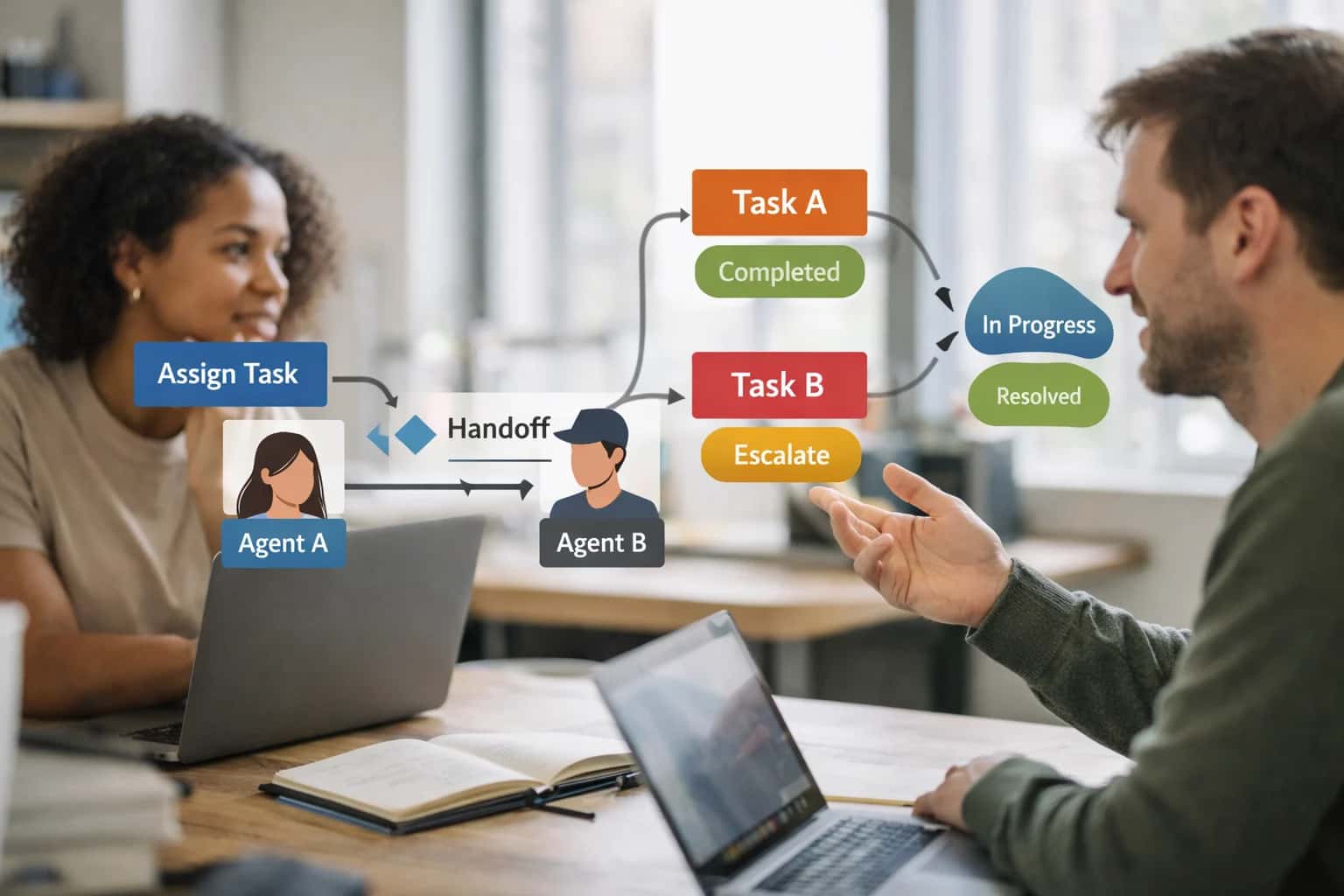
ARCHITECTURE FOR VENDOR ANALYSIS
Where AI Fits into Coupa Supplier Management
A technical blueprint for integrating AI agents into Coupa's supplier data workflows to automate risk scoring, performance analysis, and diversity tracking.
Implementation follows a poll-and-push or webhook-driven pattern. An AI agent, scheduled or triggered by supplier lifecycle events (e.g., onboarding, renewal), calls enrichment services, runs analysis, and updates Coupa. For example, a nightly job can batch-process suppliers with upcoming contract renewals, using an LLM to summarize recent news for risk and a classifier to validate diversity documentation against official databases. The output—a structured JSON payload with scores and evidence—is posted back to Coupa's API or logged for review in a separate governance dashboard before automated updates proceed.
Rollout requires careful governance. Start with a pilot group of strategic suppliers or high-spend categories. Implement a human-in-the-loop approval step for score changes above a certain threshold, logging all actions to an audit trail. Use Coupa's role-based access controls (RBAC) to ensure only authorized procurement or supplier relationship managers can view and act on AI-generated insights. The integration's value is operational: reducing manual research from hours to minutes, enabling same-day risk assessments for new vendors, and providing a single source of truth for supplier performance that updates dynamically, rather than relying on annual scorecards.
VENDOR ANALYSIS
Key Integration Surfaces in Coupa
Supplier Master & Onboarding
AI integration begins with enriching the foundational Supplier Master record. This surface involves connecting to Coupa's Supplier APIs (/suppliers, /supplier_onboarding_requests) to ingest and validate new vendor data. AI agents can automate the collection and verification of business details, certifications (e.g., diversity status, ISO), and financial documents submitted during onboarding.
Key workflows include:
- Automated Data Enrichment: Calling third-party data providers (Dun & Bradstreet, RapidAPI) to populate missing fields like D-U-N-S Number, revenue, and employee count.
- Risk Pre-screening: Performing initial financial health and adverse media checks before the supplier is fully active in the system.
- Document Intelligence: Using OCR and NLP to extract key terms from uploaded W-9s, insurance certificates, and agreements, flagging discrepancies for review.
This creates a "golden record" from day one, reducing manual data entry and accelerating time-to-procure.
SUPPLIER INTELLIGENCE
High-Value AI Use Cases for Coupa Vendor Analysis
Transform static vendor master data into a dynamic intelligence layer. These AI-powered workflows integrate third-party data directly into Coupa to automate risk scoring, performance monitoring, and compliance validation for supplier managers.
01
Automated Risk & Financial Health Monitoring
Continuously monitor supplier financial stability and external risk factors. An AI agent ingests data from sources like Dun & Bradstreet, news feeds, and ESG databases via API, analyzes it against your risk thresholds, and updates the Coupa Supplier Risk field or creates alerts in the supplier record. This shifts risk reviews from a quarterly manual process to a real-time, event-driven workflow.
Quarterly -> Real-time
Monitoring cadence
02
Diversity & Certification Validation
Automate the validation and tracking of supplier diversity certifications (e.g., MBE, WBE, Veteran-owned). The AI agent cross-references supplier-provided documents with official certification databases, validates expiration dates, and populates Coupa Supplier Diversity attributes. It schedules re-validation tasks and flags lapses, ensuring accurate reporting for compliance and sourcing goals.
Hours -> Minutes
Validation time
03
Unified Supplier Performance Scorecard
Generate composite performance scorecards by synthesizing data across systems. The AI agent pulls on-time delivery from your ERP, invoice accuracy from Coupa Invoice Pay, and quality metrics from a QMS, then uses a configurable scoring model to update a Supplier Performance field in Coupa. This gives supplier relationship managers a single, current view without manual spreadsheet consolidation.
1-2 Days -> Same Day
Scorecard refresh
04
Intelligent Supplier Onboarding Triage
Accelerate and de-risk new vendor onboarding. An AI workflow analyzes the supplier's industry, requested spend category, and submitted documents during the Coupa Supplier Information Management (SIM) process. It automatically routes high-risk or complex suppliers for enhanced due diligence, pre-populates compliance questionnaires, and recommends standard contract clauses based on category, cutting onboarding time.
Weeks -> Days
Onboarding cycle
05
Spend Concentration & Dependency Analysis
Proactively identify supply chain vulnerabilities. An AI model analyzes spend data from Coupa Analytics against supplier master attributes (location, single/sole source status, financial health). It flags over-concentration in specific geographies or with financially risky suppliers, generating alerts and visualization reports for procurement leadership to support diversification initiatives.
06
Contract Obligation & Compliance Tracking
Extract and monitor key terms from supplier contracts. Using document intelligence, the AI agent parses uploaded contracts in Coupa or integrated CLM platforms to identify SLAs, pricing terms, auto-renewal dates, and ESG commitments. It creates structured obligations linked to the supplier record and sets up workflows in Coupa Supplier Management to track compliance and trigger renewal actions.
Manual -> Automated
Obligation tracking
VENDOR ANALYSIS
Example AI Agent Workflows for Coupa
These are practical, production-ready workflows for integrating AI agents into Coupa's supplier management processes. Each example details the trigger, data flow, agent action, and system update to provide a blueprint for implementation.
Trigger: A new supplier submits a registration form in the Coupa Supplier Portal.
Context Pulled: The AI agent is triggered via a webhook from Coupa. It retrieves the supplier's submitted data (company name, DUNS number, country) and fetches the supplier's master record if it exists.
Agent Action: The agent calls a series of tools in sequence:
- Third-Party Enrichment: Calls external APIs (e.g., Dun & Bradstreet, Moody's, ESG data providers) using the supplier's legal name and location.
- News & Sentiment Scan: Performs a real-time search for recent news articles, regulatory actions, or negative sentiment related to the supplier.
- Risk Scoring: Synthesizes the data against your company's risk policy (e.g., weights for financial health, geopolitical exposure, ESG score, news sentiment).
System Update: The agent writes back a comprehensive risk score (e.g., LOW, MEDIUM, HIGH, CRITICAL) and a summary of findings to a custom field on the Coupa supplier master record via the PUT /suppliers/{id} API. It can also automatically route high-risk suppliers to a "Needs Review" queue for the supplier management team.
Human Review Point: Suppliers flagged as HIGH or CRITICAL risk are placed on hold and require manual review and approval before being activated in the system.
BUILDING A DYNAMIC SUPPLIER INTELLIGENCE LAYER
Implementation Architecture & Data Flow
A practical blueprint for connecting AI agents to Coupa's supplier master data and third-party sources to automate risk, performance, and diversity analysis.
A production-ready integration for Coupa vendor analysis typically follows a three-tier architecture that enriches the platform without disrupting core workflows. The first tier is the data ingestion layer, which polls Coupa's Supplier and Supplier Profile APIs to extract key vendor master records, performance history (on-time delivery, quality ratings), and contract terms. This layer simultaneously pulls from configured third-party sources—such as Dun & Bradstreet for financial health, ESG rating providers, and diversity certification databases—via their respective APIs or scheduled file feeds. All ingested data is normalized and staged in a secure intermediary data store, acting as the single source of truth for the AI analysis engine.
The core AI analysis and orchestration layer hosts the agent workflows. Here, retrieval-augmented generation (RAG) pipelines query the enriched vendor data to answer specific prompts. For example, an agent tasked with quarterly risk reviews might be prompted to: "Analyze supplier [Supplier_ID] for financial, operational, and geopolitical risk over the last quarter, citing trends from payment performance and external news." The agent retrieves relevant financial scores, recent news articles (via integrated news APIs), and Coupa performance metrics, then synthesizes a concise risk assessment with a recommended action (e.g., "Monitor", "Engage", "Diversify"). Similarly, agents for diversity tracking validate certifications against official registries and calculate spend attribution, while performance agents identify vendors deviating from SLA targets. These agents execute on a schedule or are triggered by events in Coupa, such as a new supplier onboarding submission or a missed delivery.
The final tier is the action and feedback loop. Analysis results and agent recommendations are written back to Coupa via its APIs to update custom fields on the Supplier object—for instance, populating a Risk_Score, Last_Diversity_Cert_Date, or Performance_Tier. This enables supplier managers to view AI-generated insights directly within their familiar Coupa workspace. Critical alerts can be routed via Coupa's notification system or to a separate dashboard. Governance is maintained through a human-in-the-loop approval step for any high-stakes recommendations (like flagging a strategic supplier as high-risk) before system updates are made, with a full audit trail of all agent actions, data sources, and prompts stored for compliance.
COUPA VENDOR ANALYSIS
Code & Payload Examples
Enriching Supplier Master with External Risk Data
This workflow calls an AI agent to fetch and synthesize risk data from third-party APIs (e.g., Dun & Bradstreet, ESG databases) and writes the enriched score back to the Coupa Supplier object via the REST API. The agent analyzes financial health, news sentiment, and compliance status.
pythonimport requests import json # Example: Call an AI agent service to analyze a vendor vendor_id = "SUP-12345" vendor_data = coupa_api.get_supplier(vendor_id) # Prepare payload for risk analysis agent agent_payload = { "supplier_name": vendor_data["name"], "duns_number": vendor_data["duns"], "country": vendor_data["address_country"] } # Call Inference Systems agent endpoint agent_response = requests.post( "https://agents.inferencesystems.com/risk-analyzer", json=agent_payload, headers={"Authorization": f"Bearer {API_KEY}"} ).json() # Parse the AI-generated risk score and rationale risk_score = agent_response["composite_risk_score"] # e.g., 0.85 (High) risk_rationale = agent_response["rationale"] # Update Coupa Supplier custom field update_payload = { "supplier": { "custom_fields": { "ai_risk_score": risk_score, "ai_risk_summary": risk_rationale, "last_risk_check": "2024-05-15" } } } coupa_api.update_supplier(vendor_id, update_payload)
VENDOR ANALYSIS WORKFLOWS
Realistic Time Savings & Operational Impact
How AI integration transforms manual, reactive vendor analysis into a proactive, data-driven process within Coupa, measured by time saved and operational improvements.
| Analysis Workflow | Before AI | After AI | Key Impact |
|---|---|---|---|
New Vendor Onboarding Screening | 2-5 business days manual review | Same-day preliminary risk score | Accelerates procurement cycles; reduces manual data gathering |
Quarterly Supplier Risk Review | Weeks for data aggregation & scoring | Automated refresh with weekly alerts | Shifts from periodic audit to continuous monitoring |
Diversity & ESG Certification Validation | Manual document review per supplier | Automated document extraction & validation | Ensures reporting accuracy; reduces compliance overhead |
Supplier Financial Health Monitoring | Ad-hoc checks during renewal cycles | Real-time alerts on credit & news events | Proactive risk mitigation before issues impact supply |
Supplier Performance Synthesis | Manual compilation of scorecards from multiple systems | Automated synthesis of quality, delivery, and service data | Frees up SRM time for strategic conversations |
Spend Categorization for Vendor Tiering | Monthly manual mapping to category trees | Continuous, AI-assisted classification at transaction level | Enables dynamic tiering and accurate supplier segmentation |
Market Intelligence for Sourcing Events | Manual research for each RFP | AI-curated insights on commodity prices & supplier news | Improves negotiation positioning and sourcing strategy |
ARCHITECTING FOR PRODUCTION
Governance, Security & Phased Rollout
A production-grade AI integration for Coupa vendor analysis requires a deliberate approach to data security, model governance, and controlled rollout to ensure value and compliance.
Start with a secure, read-only data architecture. The AI agent should connect to Coupa's APIs (like /suppliers, /supplier_lists, /supplier_risk_scores) using a service account with scoped, read-only permissions. Vendor master data, performance history, and compliance documents are ingested into a secure, isolated environment—never directly into the LLM's context. Third-party enrichment data from sources like Dun & Bradstreet or ESG ratings is fetched via separate, authenticated API calls and merged in this secure layer, creating an enriched vendor profile for analysis without exposing raw Coupa credentials or PII to external models.
Govern AI outputs with human-in-the-loop workflows. High-stakes recommendations—like flagging a critical supplier for deactivation or suggesting a high-risk diversity status change—should be routed as tasks within Coupa Supplier Management or to a dedicated review queue in a tool like Jira or ServiceNow. The AI agent provides its reasoning, citations from source data, and a confidence score. This creates an audit trail and ensures a procurement manager or supplier relationship manager retains final approval authority. For lower-risk insights, such as suggesting updated contact information or tagging suppliers for routine performance reviews, the agent can write suggestions directly to designated custom fields in the Coupa supplier object via API, with change logs enabled.
Adopt a phased rollout focused on specific user roles and risk tiers. Begin with a pilot for low-risk, non-critical suppliers (e.g., office supplies, low-spend vendors) and a controlled user group like procurement analysts. Use this phase to tune prompts, validate data enrichment accuracy, and refine approval workflows. Subsequent phases can expand to higher-spend categories and integrate with Coupa's supplier onboarding or periodic review processes. This measured approach builds trust, surfaces process gaps early, and allows for the incremental training of internal teams on the new AI-assisted workflows, ensuring the integration augments rather than disrupts existing supplier management operations.
Enabling Efficiency, Speed & Accuracy
Intelligent Analysis, Decision & Execution
We build AI systems for teams that need search across company data, workflow automation across tools, or AI features inside products and internal software.
Talk to Us
Search across company data
Give teams answers from docs, tickets, runbooks, and product data with sources and permissions.
Useful when people spend too long searching or get different answers from different systems.
Enterprise searchRAGPermissions
Read more
Automate internal workflows
Use AI to route work, draft outputs, trigger actions, and keep approvals and logs in place.
Useful when repetitive work moves across multiple tools and teams.
AI agentsWorkflow automationGovernance
Read more
Add AI to products and internal tools
Build assistants, guided actions, or decision support into the software your team or customers already use.
Useful when AI needs to be part of the product, not a separate tool.
AI integrationDecision supportModel routing
Read moreAI INTEGRATION FOR COUPA VENDOR ANALYSIS
Frequently Asked Questions
Practical questions for procurement, IT, and supplier managers planning to augment Coupa with AI for vendor risk, performance, and diversity analysis.
The integration typically follows a secure, event-driven pattern:
- Trigger: A new supplier is created in Coupa, an existing supplier record is updated, or a scheduled batch job runs.
- Data Pull: The agent calls Coupa's REST APIs (e.g.,
/suppliers,/supplier_lists) to retrieve the supplier's master data, including name, DUNS number, tax ID, and custom fields for diversity status. - Enrichment Calls: The agent uses this data to call configured third-party sources. Common patterns include:
- Risk & Financials: Calling Dun & Bradstreet, Moody's, or RapidAPI for financial health scores.
- Diversity Validation: Querying databases like Supplier.io or CertifyMyBiz to validate certifications.
- News & ESG: Aggregating news feeds for negative events or pulling ESG ratings from providers like EcoVadis.
- Synthesis & Update: The LLM synthesizes the raw data into a concise risk/performance summary. The agent then writes the enriched data (scores, flags, last validated date) back to custom fields in the Coupa supplier object via the
PUT /suppliers/{id}API.
Security Note: API credentials are managed via a secrets manager, and all data flows are logged for audit. The agent only requires read/write permissions to the Supplier API, not full admin access.

About the author
Prasad Kumkar
CEO & MD, Inference Systems
Prasad Kumkar is the CEO & MD of Inference Systems and writes about AI systems architecture, LLM infrastructure, model serving, evaluation, and production deployment. Over 5+ years, he has worked across computer vision models, L5 autonomous vehicle systems, and LLM research, with a focus on taking complex AI ideas into real-world engineering systems.
His work and writing cover AI systems, large language models, AI agents, multimodal systems, autonomous systems, inference optimization, RAG, evaluation, and production AI engineering.
LinkedIn
Limited slotsGet a Free AI Consultation
Partnered with leading AI, data, and software stack.





How We Work
Custom AI workflows for your Business
One-fit-all AI don't work for modern businesses. At Inferensys, we aim to understand your business & custom requirements; which we use to define most efficient agentic workflows, the data, and the tools for your business.
01
Review the use case
We understand the task, the users, and where AI can actually help.
Read more02
Pick the right approach
We define what needs search, automation, or product integration.
Read more03
Build the first useful version
We implement the part that proves the value first.
Read more04
Improve from there
We add the checks and visibility needed to keep it useful.
Read moreThe first call is a practical review of your use case and the right next step.
Talk to Us