Effective AI fraud detection in Coupa requires intercepting and analyzing transactions at key workflow stages. The primary integration points are the Invoice Pay and Payment Request APIs, where you can inject a fraud scoring agent before approvals are finalized. This agent analyzes the invoice header, line items, and associated metadata—such as vendor master data, historical spend patterns, and user behavior—against a trained model to generate a risk score. This score, along with flagged anomalies (e.g., new bank account for an established vendor, invoice amount deviation, or mismatched tax IDs), is appended to the transaction record via custom fields or written to a separate audit log, triggering automated holds in Coupa's approval workflows for high-risk items.

Integration
AI Integration for Coupa Fraud Detection
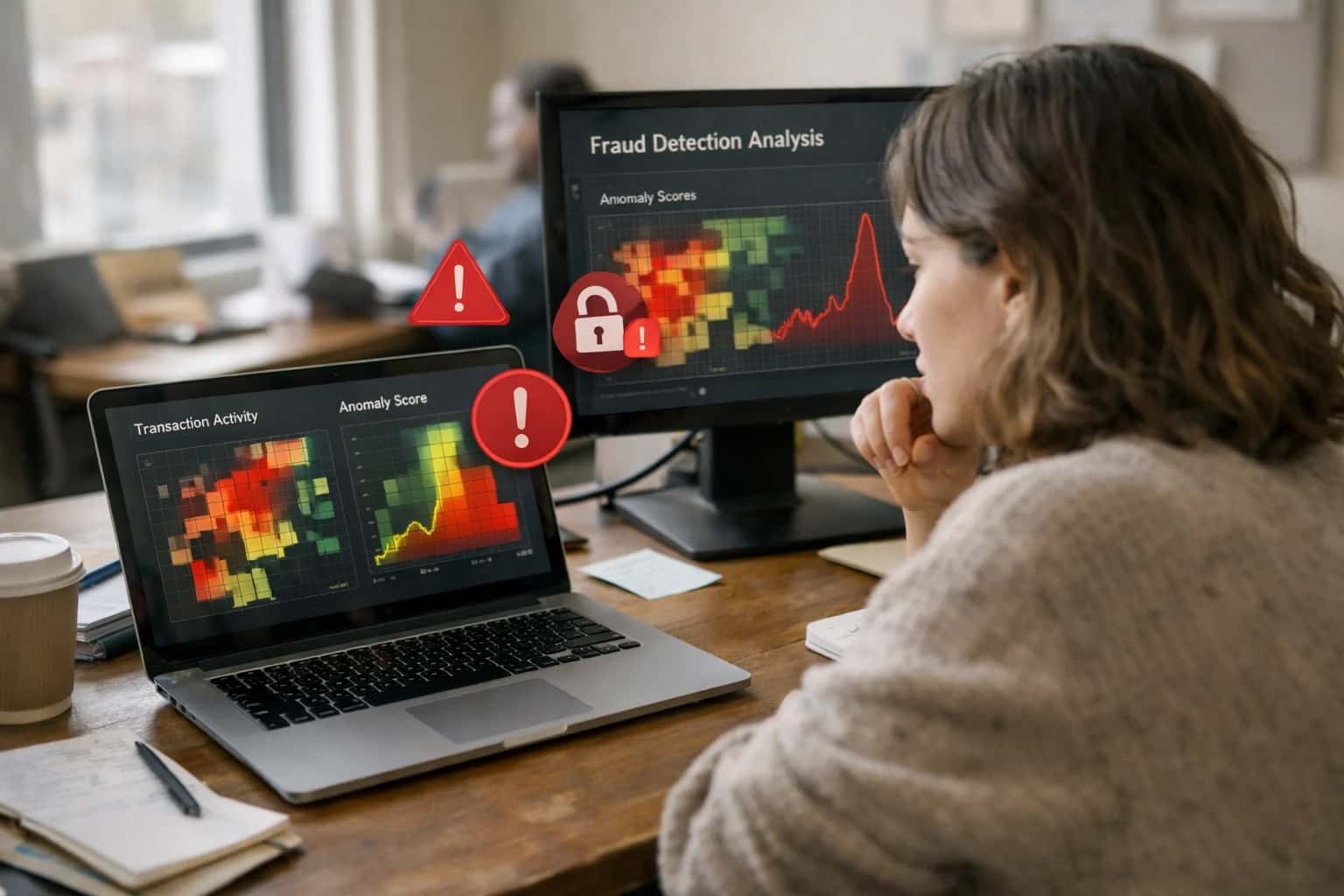
Where AI Fits into Coupa Fraud Detection
A technical blueprint for integrating real-time AI models into Coupa's procure-to-pay workflows to detect anomalous transactions before payment.
Implementation typically involves a middleware service that subscribes to Coupa webhooks for invoice.created and payment_request.created events. This service calls your fraud detection model—which could be a fine-tuned LLM for document analysis or a traditional ML model for pattern recognition—and posts the results back via the Coupa API. For real-time analysis, the service must respond within Coupa's synchronous workflow timeout, often requiring pre-computed vendor risk profiles and cached model inferences. High-value use cases include detecting shell company invoicing by cross-referencing vendor addresses and ownership data, identifying split-purchase schemes by analyzing requisition patterns across business units, and catching business email compromise by flagging sudden changes to payment instructions in supplier profiles.
Rollout should be phased, starting with a monitoring-only mode that scores transactions but does not block payments, allowing AP teams to validate model accuracy. Governance is critical: establish a clear review workflow where high-risk scores are routed to a dedicated fraud analyst queue within Coupa, and ensure all AI-driven holds include an override reason log for audit trails. Because fraud patterns evolve, the integration must support continuous model retraining using Coupa's historical transaction data—exported securely via its reporting APIs—and feedback loops where analyst overrides are used to improve detection accuracy.
Key Integration Surfaces in Coupa
Real-Time Transaction Monitoring
The primary surface for fraud detection is the continuous stream of invoice and payment data. Integrations should tap into Coupa's Invoice and Payment APIs to pull transaction payloads for real-time analysis. Key data points include:
- Invoice Header Data: Supplier ID, invoice date, amount, currency, PO number.
- Line Item Details: Descriptions, quantities, unit prices, GL account coding.
- Payment Information: Bank account details (payee and payer), payment method, scheduled payment date.
An AI agent subscribes to webhooks for invoice.created, invoice.approved, and payment.released events. For each transaction, it extracts features for anomaly detection models, such as amount deviations from historical averages, round-dollar amounts, or mismatches between invoice date and service period. The agent can then call a Coupa API to add a custom fraud risk score field to the invoice record or trigger a workflow to place a payment on hold for review.
python# Example: Fetching invoice details for analysis invoice_data = coupa_api.get(f'/api/invoices/{invoice_id}') features = { 'amount': invoice_data['total'], 'supplier_id': invoice_data['supplier']['id'], 'invoice_to_payment_days': calculate_days_diff(invoice_data['invoice_date'], payment_date), 'line_item_count': len(invoice_data['line_items']) } risk_score = fraud_model.predict(features) coupa_api.post(f'/api/invoices/{invoice_id}/custom_fields', data={'fraud_risk_score': risk_score})
High-Value AI Fraud Detection Use Cases
Integrate AI directly into Coupa's procure-to-pay workflows to detect anomalies in real-time, analyze vendor behavior patterns, and automate the review of high-risk transactions before payment.
Real-Time Invoice Anomaly Detection
Analyze every invoice line item against historical patterns, PO terms, and vendor master data. Flag mismatches in unit prices, quantities, or GL codes for immediate AP review, preventing overpayments and duplicate payments.
Vendor Master Data Poisoning & Synthetic Fraud
Monitor new vendor onboarding and master data changes for red flags. Use AI to cross-reference addresses, bank details, and tax IDs against internal records and external watchlists to detect synthetic vendors or account takeover attempts.
Behavioral Analysis for Collusion & Bribery
Model typical buying patterns for employees and suppliers. Detect outliers such as a buyer consistently awarding non-competitive contracts to a single vendor, or a supplier's pricing deviating significantly from market rates for a specific user, signaling potential collusion.
Payment Fraud & Bank Account Manipulation
Integrate with Coupa's payment execution layer. Scrutinize payment requests for last-minute bank account changes, mismatches between vendor name and account holder, or payments to high-risk jurisdictions, creating a mandatory step for secondary approval.
Expense Report Fabrication & Policy Evasion
Apply computer vision and NLP to receipt images and expense descriptions in Coupa Expense. Detect altered receipts, duplicate submissions, and policy violations (e.g., personal expenses coded as business) that traditional rule engines miss.
Consolidated Fraud Case Management
Orchestrate alerts from multiple detection models into a unified case in a system like ServiceNow or Jira. Provide AP investigators with an AI-summarized dossier of related transactions, communications, and evidence to accelerate resolution and audit reporting.
Example AI Fraud Detection Workflows
These concrete workflows demonstrate how to embed real-time AI agents into Coupa's procure-to-pay cycle to detect anomalies in invoices, payments, and vendor behavior, reducing financial loss and manual review.
Trigger: A new invoice is submitted via Coupa Invoice Pay API, Coupa UI, or supplier portal.
Context Pulled: The AI agent retrieves the invoice line items, amounts, vendor master record, historical invoices from the same vendor, and the associated purchase order (PO) or contract from Coupa's REST APIs.
Agent Action: A pre-trained model analyzes multiple risk signals:
- Unit Price Deviation: Compares line item prices against PO/contract rates or historical averages for that vendor/item.
- Quantity Mismatch: Flags invoices where quantities exceed PO tolerances or typical order patterns.
- Round Number Invoicing: Identifies invoices with suspiciously round totals (e.g., $10,000.00).
- Duplicate Detection: Checks for near-duplicate invoices based on vendor, amount, and date within a configurable window.
System Update: The agent appends a risk score (e.g., 0-100) and specific anomaly flags to the invoice's custom fields via PUT /invoices/{id}. Invoices scoring above a threshold are automatically routed to a "High-Risk Review" queue in Coupa, bypassing normal approval flows.
Human Review Point: AP analysts in the review queue see the flagged anomalies directly in the Coupa UI, accelerating investigation. The system can be configured to require secondary approval from a manager or the security team before payment release.
Implementation Architecture & Data Flow
A production-ready AI fraud detection system for Coupa operates as a real-time scoring layer, intercepting transactions before approval and payment.
The integration connects to Coupa's Invoice Pay, Expense, and Payment Request modules via its REST API and webhook system. Key data objects—invoices, expense reports, and payment requests—are streamed to a secure processing queue upon submission or update. The AI agent analyzes each transaction's payload, including line-item descriptions, amounts, vendor details, historical patterns, and attached documents (like PDF invoices), to generate a fraud risk score and flag specific anomalies.
A typical detection workflow involves: 1) Ingestion via Coupa webhooks for new/updated transactions, 2) Enrichment by fetching related vendor master data and payment history from Coupa APIs, 3) Scoring using a model that evaluates patterns (e.g., duplicate invoices, round-dollar amounts, new vendor/sudden high spend, mismatched bank details), and 4) Action via a callback that updates the Coupa record with a risk score, tags it for review, and optionally routes it to a dedicated "High-Risk" approval queue. For high-confidence fraud indicators, the system can trigger an immediate hold via the Coupa API, preventing payment until an AP or security analyst investigates.
Rollout is typically phased, starting with a monitoring-only mode that scores transactions and logs results without taking action, allowing teams to tune thresholds and reduce false positives. Governance is critical: all scores and actions are logged to an immutable audit trail, and the system should integrate with your existing SIEM or logging platform. Human review remains the final gate—the AI acts as a copilot, prioritizing the AP team's workload. For a deeper look at automating Coupa's core AP workflows, see our guide on AI Integration for Coupa AP Automation.
Code & Payload Examples
Real-Time Invoice Scoring
Integrate an AI scoring agent into Coupa's Invoice Pay or AP Workflow APIs to evaluate each invoice submission for fraud indicators before routing for approval. The agent analyzes the JSON payload from Coupa, enriched with historical vendor data, to generate a risk score and flag anomalies.
Key Analysis Points:
- Invoice amount vs. historical vendor average and PO value.
- Bank account changes relative to recent payments.
- Line-item description patterns inconsistent with the supplier's typical goods/services.
- Duplicate invoice detection based on amount, date, and vendor.
python# Example: Call to fraud scoring service from a Coupa webhook handler def evaluate_invoice_fraud(coupa_invoice_payload, vendor_history): """ Returns a risk score and flags. """ analysis_payload = { "invoice_id": coupa_invoice_payload['id'], "vendor_id": coupa_invoice_payload['supplier']['id'], "amount": coupa_invoice_payload['invoice_total'], "line_items": coupa_invoice_payload['line_items'], "bank_account": coupa_invoice_payload['payment']['bank_account'], "vendor_avg_amount": vendor_history['avg_invoice_amount'], "vendor_typical_gl_codes": vendor_history['common_gl_codes'] } # Call AI service (e.g., hosted model endpoint) risk_response = requests.post(FRAUD_API_URL, json=analysis_payload).json() return { "risk_score": risk_response['score'], "flags": risk_response['anomalies'], "recommended_action": "hold" if risk_response['score'] > 0.7 else "route" }
The result can be written back to a custom Coupa field via API to trigger automated holds or route to a dedicated "High-Risk Review" approval queue.
Realistic Time Savings & Operational Impact
This table illustrates the operational impact of integrating real-time AI fraud detection models with Coupa's transaction data, focusing on measurable improvements for AP and security teams.
| Process / Metric | Before AI Integration | After AI Integration | Implementation Notes |
|---|---|---|---|
Invoice Review for Anomalies | Manual sampling (1-2% of volume) | Automated 100% scan with risk scoring | AI flags 5-15% for human review based on confidence thresholds |
Average Time to Flag Suspicious Payment | Days to weeks (post-audit findings) | Real-time, within transaction workflow | Alerts trigger before payment approval; integrates with Coupa approval chains |
Vendor Master Data Screening | Quarterly batch checks with third-party services | Continuous monitoring of new/updated vendor records | AI cross-references sanctions lists, news, and financial data via APIs |
Duplicate Payment Detection | Rule-based checks on invoice number/amount | Semantic matching across vendor, date, and line items | Catches sophisticated duplicates (e.g., different invoice numbers for same service) |
Fraud Investigation Case Assembly | Manual data gathering from multiple Coupa modules | Automated case dossier with linked transactions, documents, and history | Reduces investigator prep time from hours to minutes |
Policy Exception & Approval Routing | Manual review of policy waivers in comments | AI analyzes request context and auto-routes to correct security/legal approver | Ensures high-risk exceptions are never missed in standard AP workflow |
False Positive Rate for Alerts | High (30-50%) with basic rule engines | Reduced (10-20%) with ML models trained on historical fraud patterns | Model retraining is automated using Coupa's audit log data |
Regulatory Reporting & Audit Trail | Manual compilation for quarterly audits | Automated report generation of all AI-scored transactions and actions | Full audit trail maintained in Coupa with tags for AI involvement and human override reasons |
Governance, Security & Phased Rollout
Deploying AI for fraud detection requires a controlled, secure architecture that integrates with Coupa's native controls and audit trails.
A secure implementation typically uses a dedicated service layer that sits between Coupa and the AI models. This layer ingests transaction data via Coupa's REST APIs or webhooks (e.g., from Invoice, PaymentRequest, or Supplier objects), applies anonymization or tokenization where required, and calls the fraud detection model. All inferences are logged back to Coupa as custom objects or comments with a clear audit trail, linking the AI's risk score and reasoning to the original transaction. This ensures the system operates within Coupa's existing RBAC and approval workflows, where flagged items can be routed to a dedicated "High-Risk Review" queue for your AP or security team.
Start with a pilot on a single, high-volume workflow—such as non-PO invoice approval or new supplier onboarding—to validate model accuracy and user feedback. Use this phase to calibrate risk thresholds and refine the prompts or features used for analysis (e.g., invoice line-item patterns, supplier bank account changes, or geographic inconsistencies). A phased rollout allows you to build trust, measure key outcomes like false-positive rate and manual review time saved, and adjust governance rules before scaling to all transactions.
Governance is critical. Establish a clear human-in-the-loop protocol for all high-risk flags. Implement regular model performance reviews against actual fraud cases and false positives. Ensure your data pipeline complies with internal data privacy policies, especially when sending data to external LLM APIs, by using techniques like payload minimization and secure API gateways. This controlled approach minimizes disruption, maintains compliance, and allows your team to incrementally harness AI while keeping full oversight over financial controls.
Enabling Efficiency, Speed & Accuracy
Intelligent Analysis, Decision & Execution
We build AI systems for teams that need search across company data, workflow automation across tools, or AI features inside products and internal software.
Talk to Us
Search across company data
Give teams answers from docs, tickets, runbooks, and product data with sources and permissions.
Useful when people spend too long searching or get different answers from different systems.

Automate internal workflows
Use AI to route work, draft outputs, trigger actions, and keep approvals and logs in place.
Useful when repetitive work moves across multiple tools and teams.

Add AI to products and internal tools
Build assistants, guided actions, or decision support into the software your team or customers already use.
Useful when AI needs to be part of the product, not a separate tool.
Frequently Asked Questions
Technical and operational questions for teams planning to integrate AI-powered fraud detection into their Coupa P2P workflows.
The integration uses a combination of Coupa's APIs and webhooks to create a real-time risk assessment layer.
-
Trigger: A webhook is configured in Coupa to fire upon key transaction events, such as:
- Invoice creation or update
- Payment run initiation
- Supplier master data change
- Purchase order issuance
-
Data Enrichment: The webhook payload (containing the transaction ID) triggers an external service that calls Coupa's REST APIs to pull the full context:
- Invoice header and line-item details
- Associated PO, receipt, and supplier data
- Historical transactions for the supplier and buyer
- User and approval chain information
-
Model Execution: This enriched payload is sent to the fraud detection model (e.g., a classifier fine-tuned on historical fraud cases). The model analyzes patterns across multiple dimensions.
-
System Update: The risk score and key findings are written back to Coupa using custom fields on the transaction record or via a dedicated "Risk Flag" object, triggering Coupa's native approval workflows or placing a payment hold.
Example API Call for Context Enrichment:
httpGET /api/invoices/{invoice_id} Authorization: Bearer {coupa_api_key}

About the author
Prasad Kumkar
CEO & MD, Inference Systems
Prasad Kumkar is the CEO & MD of Inference Systems and writes about AI systems architecture, LLM infrastructure, model serving, evaluation, and production deployment. Over 5+ years, he has worked across computer vision models, L5 autonomous vehicle systems, and LLM research, with a focus on taking complex AI ideas into real-world engineering systems.
His work and writing cover AI systems, large language models, AI agents, multimodal systems, autonomous systems, inference optimization, RAG, evaluation, and production AI engineering.
Partnered with leading AI, data, and software stack.





How We Work
Custom AI workflows for your Business
One-fit-all AI don't work for modern businesses. At Inferensys, we aim to understand your business & custom requirements; which we use to define most efficient agentic workflows, the data, and the tools for your business.
01
Review the use case
We understand the task, the users, and where AI can actually help.
Read more02
Pick the right approach
We define what needs search, automation, or product integration.
Read more03
Build the first useful version
We implement the part that proves the value first.
Read more04
Improve from there
We add the checks and visibility needed to keep it useful.
Read moreThe first call is a practical review of your use case and the right next step.
Talk to Us