AI integration for Splunk OT security connects at three primary layers: data ingestion, analytics and detection, and investigation workflows. At the data layer, AI models can pre-process and enrich raw OT protocol data (e.g., Modbus, DNP3, OPC-UA) and industrial asset logs before they hit your Splunk indexes, normalizing schemas and tagging critical process variables. Within the analytics layer, AI augments Splunk Enterprise Security's correlation rules and the Splunk Machine Learning Toolkit by establishing behavioral baselines for normal PLC operations, valve states, and network traffic between HMIs and controllers. This moves detection beyond static signatures to identify subtle anomalies like malicious command injections, unauthorized parameter changes, or reconnaissance scans that mimic legitimate engineering traffic.

Integration
AI Integration for Splunk for OT Security
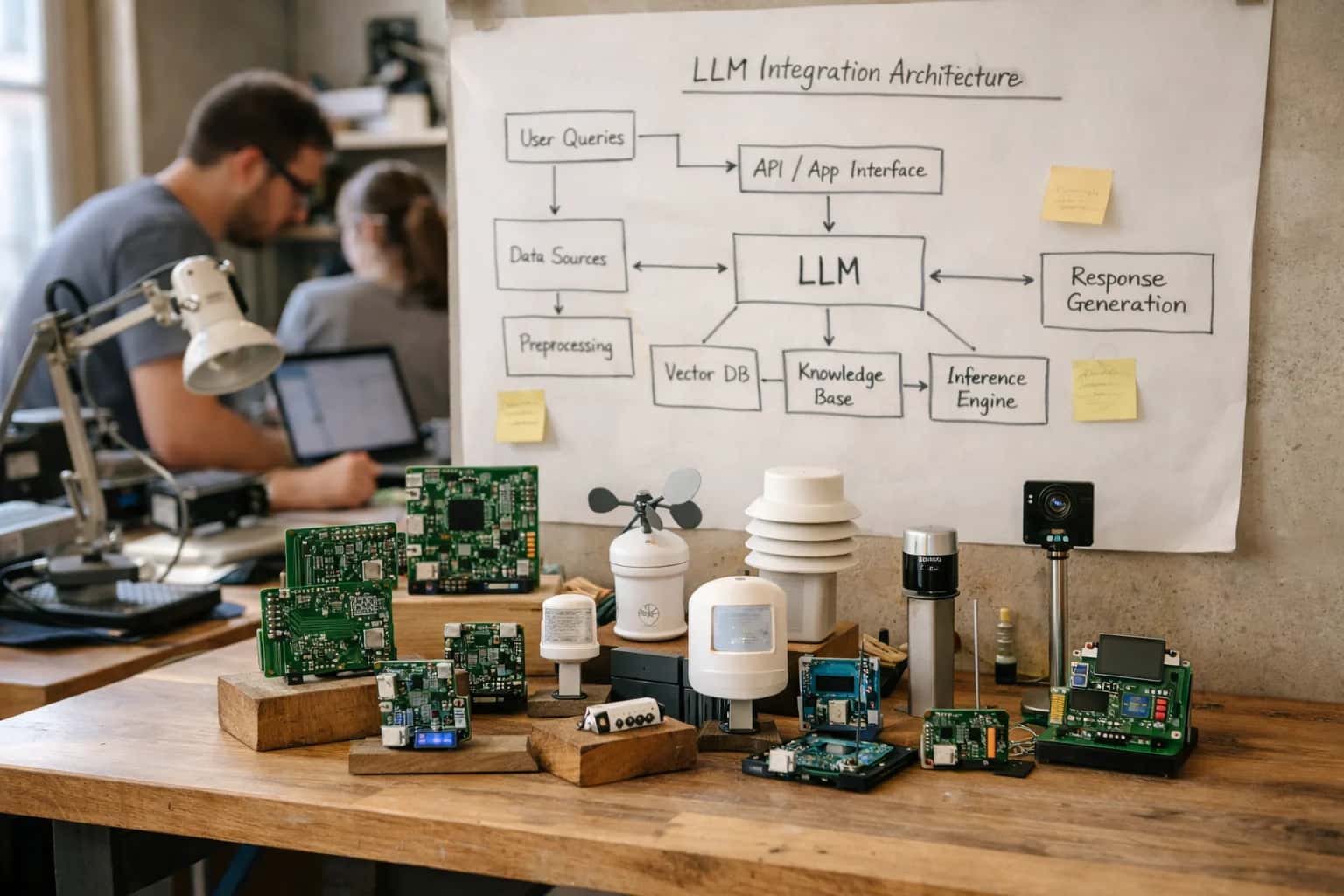
Where AI Fits in Your Splunk OT Security Stack
A practical guide to integrating AI with Splunk for OT and ICS security, focusing on anomaly detection, threat investigation, and operational integrity.
For investigation, AI acts as a threat hunting co-pilot within the Splunk search interface. When an analyst investigates a notable event from an OT data source, an integrated AI agent can automatically retrieve relevant context: pulling asset criticality from a CMDB, mapping the affected system to a process flow diagram, and suggesting related searches for lateral movement within the OT zone. This context is synthesized into a plain-language narrative for the SOC, explaining the potential impact on safety or production. Implementation typically involves deploying lightweight inference services (containerized or as a Splunk app) that subscribe to Splunk's HTTP Event Collector (HEC) or query the REST API, ensuring responses are written back to Splunk as notable event comments or custom risk objects for audit trails.
Rollout requires careful governance, especially in air-gapped or regulated OT environments. Start with a read-only, advisory phase where AI provides analysis but triggers no automated containment actions. Model outputs should be validated against known OT attack simulations (like those in Splunk Security Essentials for OT) before influencing operational decisions. A key architectural consideration is latency: real-time inference for safety-critical detections may need to run at the network edge (e.g., on a Splunk Data Stream Processor instance), while investigative enrichment can be asynchronous. Finally, ensure all AI-generated insights are stored as part of the incident's audit trail in Splunk, maintaining a clear lineage from raw telemetry to analyst action for compliance and root cause analysis.
Key Integration Surfaces Within Splunk for OT
Normalizing Industrial Protocol Data
AI integration begins at the data layer, where Splunk ingests raw telemetry from PLCs, RTUs, HMIs, and historians via add-ons like the Splunk Add-on for Industrial Control Systems (ICS). The primary surface for AI is the parsing and normalization pipeline. AI models can be applied to:
- Unstructured Logs: Parse vendor-specific, non-standard industrial protocol logs (e.g., proprietary Siemens S7 or Rockwell Allen-Bradley messages) that lack pre-built CIM-compliant field extractions.
- Time-Series Telemetry: Ingest high-volume sensor data (pressure, temperature, flow rates) and use AI to detect anomalous baselines in real-time before the data is indexed, reducing noise.
- Asset Context Enrichment: Automatically tag ingested data with asset metadata (e.g.,
criticality=high,process_unit=boiler_3) by analyzing the payload and source, building a dynamic OT asset inventory.
This creates an AI-enriched, query-ready data foundation for all downstream security analytics.
High-Value AI Use Cases for OT Security in Splunk
Applying AI to OT and ICS data in Splunk moves beyond simple threshold alerts to detect subtle, multi-stage attacks targeting industrial control systems. These use cases focus on behavioral baselining, protocol analysis, and safety-centric threat detection.
Protocol-Specific Anomaly Detection
Deploy AI models to establish behavioral baselines for industrial protocols like Modbus, DNP3, OPC-UA, and Siemens S7. Detect malicious command injections, parameter manipulations, and out-of-spec timing that indicate reconnaissance or process disruption. Integrates with Splunk's CIM for OT to normalize data before analysis.
Process Integrity Threat Hunting
Use AI to correlate sensor readings (pressure, temperature, flow), valve states, and PLC logic across the Purdue Model levels. Identify subtle deviations that suggest a safety or availability attack, such as a slow-burn increase in reactor temperature masked by spoofed sensor values. AI generates hunting hypotheses and SPL queries for analysts.
OT Asset & Network Topology Intelligence
Automatically discover and profile OT assets (PLCs, RTUs, HMIs) from network traffic and logs. AI models maintain a dynamic asset inventory, flagging rogue device connections, firmware version anomalies, and unauthorized engineering workstation access. Enriches Splunk's Asset & Identity Framework for OT.
Lateral Movement Detection in OT Zones
Analyze east-west traffic within OT zones (Levels 1-3) using AI to model normal communication patterns. Detect anomalous lateral movement indicative of an attacker pivoting from an IT-compromised workstation to a critical PLC, often using legitimate protocols in novel ways. Prioritizes alerts based on target asset criticality.
Safety System Bypass & Batching Attack Detection
Monitor safety instrumented systems (SIS) and batch process logs. AI identifies sequences where safety interlocks are deliberately bypassed or batch recipes are subtly altered to cause product defects or equipment damage—common in intellectual property theft or sabotage campaigns. Correlates with operator console logs.
AI-Enhanced OT Incident Triage & Enrichment
When a notable event is created in Splunk ES, an AI agent automatically enriches it with context from CMDBs, vulnerability scanners for OT, and threat intel on ICS malware. It drafts a plain-language summary explaining the potential impact on safety, production, or environmental controls, speeding up SOC-to-OT team handoff.
Example AI-Augmented OT Security Workflows
Concrete workflows showing how AI agents and models can be integrated with Splunk's OT data pipeline to detect, investigate, and respond to industrial threats. These patterns connect to SPL searches, asset frameworks, and orchestration actions.
Trigger: A scheduled SPL search identifies a sequence of write commands to a Programmable Logic Controller (PLC) that deviates from a learned baseline of normal operational sequences.
Context Pulled: The AI agent is invoked via a webhook from Splunk. It retrieves:
- The raw Modbus/TCP or Siemens S7 packet details from the
sourcefield. - The associated asset identity (PLC model, criticality tag) from Splunk's Asset & Identity framework.
- The last 24 hours of command history for that PLC to establish immediate context.
Agent Action: A specialized model (e.g., a fine-tuned classifier) analyzes the command sequence against known malicious patterns (e.g., ladder logic injection, setpoint manipulation) and normal engineering workflows. It generates a confidence score and a plain-language explanation: "High confidence (92%) this sequence represents an unauthorized attempt to modify the motor overload protection setpoint, consistent with sabotage TTP T0805."
System Update: The agent posts back to Splunk's HTTP Event Collector (HEC):
- A new
ot_ai_verdictfield appended to the original event. - A recommended severity (High/Critical).
- The textual explanation.
Human Review Point: A high-confidence verdict (>85%) automatically creates a Notable Event in Splunk Enterprise Security, pre-populated with the AI's analysis. Medium-confidence results trigger an alert for a Level 2 OT analyst to review the sequence and the agent's reasoning before escalation.
Implementation Architecture: Data Flow & Model Integration
A practical architecture for applying AI to Operational Technology (OT) and Industrial Control System (ICS) data within Splunk to detect subtle threats and process anomalies.
The integration connects AI inference directly to Splunk's data pipeline and search head layer. Core OT data—Modbus/TCP, DNP3, OPC-UA, and S7Comm logs, alongside process historian tags and asset inventory—is ingested via Splunk's Universal Forwarder or a dedicated Heavy Forwarder. A streaming data pipeline, using Splunk's Data Stream Processor (DSP) or a lightweight message queue (e.g., Kafka), routes normalized events to a dedicated AI inference service. This service hosts specialized models for protocol anomaly detection (e.g., unexpected function codes, out-of-range register writes), process behavior modeling (e.g., sensor readings deviating from physical constraints), and command sequence analysis to spot malicious command injections or reconnaissance.
The AI service returns structured findings—anomaly scores, predicted threat labels (e.g., 'Reconnaissance', 'Process Manipulation'), and confidence intervals—back into the Splunk CIM (Common Information Model) as a new ai_ot_findings data model. These enriched events are indexed alongside raw logs. Security teams then use Splunk Enterprise Security (ES) risk-based alerting to correlate AI findings with traditional IT security events, creating a unified risk score for assets that span the OT/IT boundary. For example, an AI-detected anomalous engineering workstation command combined with a suspicious IT lateral movement alert triggers a high-severity notable event. Splunk Phantom or Adaptive Response playbooks can be triggered for automated containment, such as issuing a quarantine command via the OT network monitoring tool's API.
Rollout is phased, starting with a non-disruptive monitoring mode on a segregated OT data copy. Governance is critical: all AI model inferences are logged with a full audit trail in a dedicated Splunk index, and any automated response action requires human-in-the-loop approval for initial workflows, defined via Splunk's RBAC and workflow actions. This architecture ensures AI augments the SOC's capability to detect OT-specific threats like stuxnet-style payloads or ransomware targeting HMIs, without replacing existing detection rules. For related architectural patterns on enriching broader security events, see our guide on AI Integration for Splunk Alert Triage.
Code & Configuration Patterns
Detecting Deviations in Industrial Control Flows
AI models analyze OT protocol logs (e.g., Modbus/TCP, DNP3, OPC UA) and process historian data ingested into Splunk to establish behavioral baselines for normal operations. The integration focuses on detecting malicious command injections, parameter manipulations, and abnormal state sequences that could indicate a cyber-physical attack.
Key Splunk Data Sources:
- Industrial Firewall Logs (e.g., Palo Alto, Cisco Cyber Vision)
- Protocol Gateways & SCADA Logs
- Historian Data (OSIsoft PI, Wonderware)
- HMI Event Logs
Implementation Pattern: A streaming ML model deployed via Splunk's Machine Learning Toolkit or an external inference service enriches raw protocol events with an anomaly score. Alerts trigger when scores exceed thresholds tuned for specific safety-critical processes, creating notable events in Splunk Enterprise Security.
Realistic Time Savings & Operational Impact
This table illustrates the operational impact of integrating AI with Splunk for OT security, focusing on measurable improvements in detection, investigation, and response workflows specific to industrial control systems and operational networks.
| Metric | Before AI | After AI | Notes |
|---|---|---|---|
Anomaly Detection in Process Values | Manual threshold review & baselining | Automated behavioral baselining & alerting | AI models learn normal PLC/RTU telemetry patterns, flagging subtle deviations indicative of manipulation. |
Malicious Command Injection Investigation | Hours of manual log correlation across IT/OT | Minutes with AI-generated attack chain narrative | AI correlates Modbus/DNP3 commands with firewall and endpoint logs to reconstruct the sequence. |
OT Network Reconnaissance Triage | Manual review of sparse firewall & netflow logs | Assisted clustering and prioritization of suspicious flows | AI groups related reconnaissance activity (e.g., port scans across PLC subnets) into single, high-fidelity alerts. |
Incident Summary for Cross-Functional Teams | Manual drafting for IT, OT, and management | Automated, role-specific report generation | AI synthesizes technical logs into plain-language summaries for operators and business impact assessments for leadership. |
Compliance Evidence Gathering (e.g., NERC CIP) | Weeks of manual search and documentation | Days with automated control mapping and evidence collection | AI maps Splunk searches to regulatory controls, runs them periodically, and compiles evidence packets. |
Threat Hunting for Novel OT Attack Patterns | Ad-hoc, experience-driven query building | Hypothesis-driven with AI-suggested SPL queries | AI analyzes threat intel and internal data to propose hunting queries for emerging ICS adversary TTPs. |
Response Playbook Execution for OT Incidents | Manual, checklist-driven steps with high coordination lag | Orchestrated, conditional workflows with AI-guided decisions | In Splunk SOAR, AI evaluates asset criticality and process state to recommend safe containment actions (e.g., isolate engineering workstation). |
Governance, Safety, and Phased Rollout
Integrating AI into Splunk for OT security demands a safety-first, phased rollout that prioritizes process integrity and human oversight.
Unlike IT environments, an OT security AI integration must be architected with safety interlocks. This means AI-driven actions—like suggesting a firewall rule to block a suspicious ICS protocol session—are never executed autonomously. Instead, they are routed as recommendations to a human-in-the-loop approval workflow within Splunk's orchestration layer (e.g., Splunk SOAR). The AI's role is to enrich alerts, generate investigative hypotheses, and draft containment playbooks, but final execution authority remains with OT engineers who understand the physical process implications.
A phased rollout is critical. Start with read-only analysis on a historical data subset. Use AI to perform retrospective threat hunting on OT network (e.g., PCAP, NetFlow) and process data (e.g., historian logs), focusing on anomaly detection for known critical assets. This 'shadow mode' validates the AI's findings against known incidents without impacting operations. Phase two introduces real-time alert enrichment in Splunk Enterprise Security, where the AI appends plain-language context to notable events, explaining why a Modbus function code 15 write to a PLC register is anomalous based on learned baselines. The final phase cautiously integrates prescriptive guidance into analyst workflows, suggesting next investigative steps or pre-populating SOAR playbook variables.
Governance is enforced through strict model and prompt versioning, audit trails for all AI-generated content, and RBAC that controls which SOC roles can see AI insights. All AI interactions with Splunk data—whether querying index=otsyslog or enriching a risk notable—are logged to a dedicated audit index. This creates a lineage trail from raw OT telemetry to AI-generated insight, which is essential for compliance (e.g., NERC CIP) and for continuous model validation. Regular reviews compare AI-prioritized alerts with analyst-closed incidents to tune prompts and reduce false positives, ensuring the system adapts to the unique rhythms of your industrial environment.
Enabling Efficiency, Speed & Accuracy
Intelligent Analysis, Decision & Execution
We build AI systems for teams that need search across company data, workflow automation across tools, or AI features inside products and internal software.
Talk to Us
Search across company data
Give teams answers from docs, tickets, runbooks, and product data with sources and permissions.
Useful when people spend too long searching or get different answers from different systems.

Automate internal workflows
Use AI to route work, draft outputs, trigger actions, and keep approvals and logs in place.
Useful when repetitive work moves across multiple tools and teams.

Add AI to products and internal tools
Build assistants, guided actions, or decision support into the software your team or customers already use.
Useful when AI needs to be part of the product, not a separate tool.
Frequently Asked Questions
Practical questions for security architects and OT engineers evaluating AI integration with Splunk for industrial control systems and operational technology networks.
AI integration connects at multiple points in Splunk's OT data flow:
- At Ingestion (Heavy Forwarder/Universal Forwarder): Lightweight models can perform initial filtering and tagging of OT protocol traffic (e.g., Modbus/TCP, DNP3, OPC UA) before full indexing, reducing noise and cost.
- During Search-Time Processing: AI models are invoked via SPL commands (like
| apply) or custom search commands to analyze already-indexed data. This is ideal for retrospective threat hunting and batch analysis of historical process data. - Via Alert Actions & Adaptive Response: When a correlation search triggers an alert, an AI agent can be called via webhook to evaluate the alert's context—such as the specific PLC involved, the process variable deviation, and time of day—to recommend or initiate a containment action (e.g., isolate a network segment via an integrated firewall).
- Through Dashboards & Visualizations: AI-generated insights, like predicted normal operating ranges or anomaly scores, can be surfaced in real-time Splunk dashboards for SOC and engineering teams.
The most common architecture uses a separate inference service (containerized or serverless) that Splunk calls via REST API. This keeps model execution scalable and separate from Splunk's search head resources.

About the author
Prasad Kumkar
CEO & MD, Inference Systems
Prasad Kumkar is the CEO & MD of Inference Systems and writes about AI systems architecture, LLM infrastructure, model serving, evaluation, and production deployment. Over 5+ years, he has worked across computer vision models, L5 autonomous vehicle systems, and LLM research, with a focus on taking complex AI ideas into real-world engineering systems.
His work and writing cover AI systems, large language models, AI agents, multimodal systems, autonomous systems, inference optimization, RAG, evaluation, and production AI engineering.
Partnered with leading AI, data, and software stack.





How We Work
Custom AI workflows for your Business
One-fit-all AI don't work for modern businesses. At Inferensys, we aim to understand your business & custom requirements; which we use to define most efficient agentic workflows, the data, and the tools for your business.
01
Review the use case
We understand the task, the users, and where AI can actually help.
Read more02
Pick the right approach
We define what needs search, automation, or product integration.
Read more03
Build the first useful version
We implement the part that proves the value first.
Read more04
Improve from there
We add the checks and visibility needed to keep it useful.
Read moreThe first call is a practical review of your use case and the right next step.
Talk to Us