AI integration for Cortex XDR Identity focuses on the Identity Events module, which ingests logs from integrated identity providers (IdPs) like Microsoft Entra ID, Okta, and Ping Identity. The primary surface areas for AI are the Identity Analytics engine and the Incident timeline. AI models analyze sequences of authentication events, privilege changes, and session data, correlating them with endpoint process execution and network connections from Cortex XDR's unified data lake. This creates a behavioral baseline for users and service accounts, moving detection beyond static rules to identify subtle, multi-stage attacks that leave faint traces across separate telemetry streams.

Integration
AI Integration for Palo Alto Cortex XDR Identity
Integrate AI with Palo Alto Cortex XDR Identity to automatically detect account takeover, correlate identity events with endpoint activity, and enrich investigations with behavioral context.
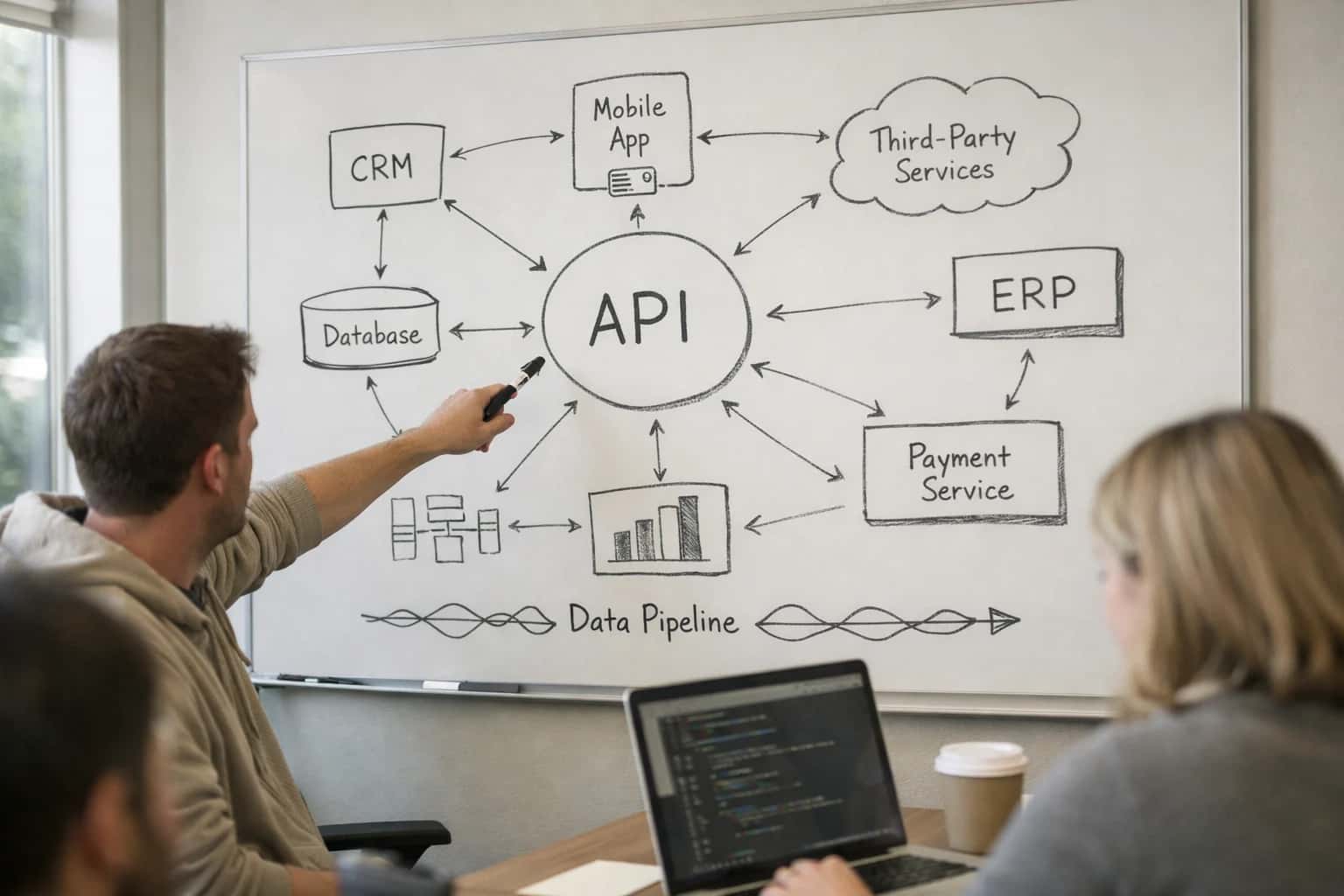
ARCHITECTURE AND ROLLOUT
Where AI Fits in Cortex XDR Identity Security
Integrating AI with Cortex XDR Identity transforms raw identity events into prioritized, contextualized insights for faster detection of account takeover and lateral movement.
A practical implementation wires an AI service (via Cortex XDR's Public API or a Data Lake Query) to consume identity risk scores and raw event JSON. Use cases include:
- Automated Triage: Clustering similar anomalous sign-in events (e.g., from unfamiliar locations combined with new device fingerprints) into a single, enriched incident, reducing alert fatigue.
- Investigation Support: When an analyst opens an incident, an AI co-pilot automatically retrieves and summarizes the user's recent privilege assignments, accessed resources, and concurrent endpoint activity, answering the question "what could an attacker do with this compromised account?"
- Proactive Hunting: Generating XQL queries for the Cortex XDR Investigation module to hunt for identity-based techniques like
Golden Ticketattacks orKerberoastingby analyzing ticket request patterns and correlating them with suspicious service creation on endpoints.
Rollout should be phased, starting with a read-only analysis of historical identity data to tune models and establish false-positive baselines. Governance is critical: ensure all AI-generated insights are logged as Incident Comments or Alert Notes with clear attribution, and maintain a human-in-the-loop for containment actions like disabling accounts. Integrate with your existing SOAR platform (like Cortex XSOAR) to automate evidence collection and step-up authentication workflows, but keep final disruptive actions under analyst approval. This approach allows security teams to move from reviewing thousands of discrete identity alerts to investigating a handful of high-fidelity, AI-curated incident narratives each day.
AI FOR IDENTITY THREAT DETECTION
Key Integration Surfaces in Cortex XDR
Core Identity Analytics Surface
The Identity & Access module in Cortex XDR ingests and correlates events from integrated identity providers (IdPs) like Okta, Microsoft Entra ID, and PingFederate. This is the primary surface for AI integration to detect account takeover (ATO) and lateral movement.
Key data objects for AI analysis include:
- Authentication Logs: Success/failure events, geolocation, device fingerprints, and risk scores from the IdP.
- Session Activities: User session creation, termination, and token refresh events.
- Privilege Changes: Administrative role assignments, group membership modifications, and permission escalations.
AI models can baseline normal user access patterns and flag anomalies—such as a user logging in from a new country and immediately querying sensitive directories—by correlating these identity events with endpoint process execution and network connections logged elsewhere in Cortex XDR.
PALO ALTO CORTEX XDR IDENTITY
High-Value AI Use Cases for Identity Security
Integrating AI with Cortex XDR Identity transforms raw identity events from integrated IdPs like Okta, Entra ID, and Ping into actionable intelligence. By correlating logins, privilege changes, and session data with endpoint and network telemetry, AI can detect sophisticated attacks like account takeover and lateral movement that traditional rules miss.
01
Real-Time Account Takeover Detection
AI models analyze sequences of identity events—impossible travel, unfamiliar device, anomalous time, followed by sensitive resource access—to detect credential stuffing and session hijacking in real-time. This surfaces high-fidelity alerts in Cortex XDR, triggering automated containment workflows like forcing re-authentication or disabling the session.
Batch -> Real-time
Detection speed
02
Lateral Movement Path Prediction
By correlating identity events (privilege escalation, group membership changes) with endpoint process execution and network connections, AI maps potential lateral movement paths before they are fully executed. This predicts the attacker's next target—such as a domain admin account or critical server—and generates proactive hunting queries in Cortex XDR.
1 sprint
Proactive defense lead time
03
Automated Identity Incident Enrichment
When Cortex XDR creates an incident involving a user entity, AI automatically enriches the case by pulling context from HR systems (employee status), the CMDB (asset access), and past behavior to answer key questions: Is this a privileged user? Are they on vacation? What critical data do they normally access? This cuts analyst investigation time significantly.
Hours -> Minutes
Investigation prep
04
Behavioral Baseline & Anomaly Scoring
AI establishes peer-group behavioral baselines for user activity (login times, accessed applications, geolocation) using Cortex XDR's identity telemetry. It then generates a dynamic risk score for each user session, feeding into the Cortex XDR Analytics Engine to prioritize alerts and reduce false positives from legitimate but unusual activity.
>80%
Noise reduction
05
Orphaned & Dormant Account Cleanup Workflows
AI identifies inactive service accounts, departed employees with active credentials, and overly permissive roles by analyzing login history, entitlement changes, and HR sync data within Cortex XDR. It then triggers automated workflows in your IdP (via Cortex XSOAR) to disable or scope down access, directly improving the identity attack surface.
Same day
Policy enforcement
06
Identity-Centric Threat Hunting
Empower threat hunters to ask natural language questions like "Show me users who logged in after a terminated employee's account." AI translates this into optimized Cortex XQL queries across identity, endpoint, and network datasets, returning a narrative summary of suspicious chains of activity for deeper investigation within the XDR console.
Hours -> Minutes
Query development
CORTEX XDR IDENTITY
Example AI-Driven Identity Investigation Workflows
These workflows demonstrate how AI agents can be integrated into Cortex XDR's identity investigation surfaces, automating the correlation of IdP events with endpoint and network telemetry to detect and respond to account takeover, lateral movement, and insider threats.
Trigger: Cortex XDR creates an incident based on a detection rule for a High-Risk Sign-In from an integrated IdP (e.g., Okta, Entra ID).
AI Agent Actions:
- Context Pull: The agent queries the Cortex XDR API for the incident details, extracting the user principal, source IP, time, and IdP risk score.
- Endpoint Correlation: It executes a pre-built XQL query to search Cortex Data Lake for endpoint activity from that user in the 30 minutes before and after the sign-in. It looks for:
- Process executions on the user's primary device.
- Network connections to internal resources or the internet.
- File modifications (e.g., mass file reads, encryption activity).
- Network Enrichment: The agent correlates the source IP with internal firewall logs (via the Strata Logging Service integration) to see if the IP communicated with other sensitive hosts around the same time.
- Synthesis & Update: The agent generates a plain-language summary of findings and updates the Cortex XDR incident with a new comment, tagging it with
AI-Enriched. It may also adjust the incident severity based on discovered lateral movement or data exfiltration patterns.
Human Review Point: The enriched incident is presented to the SOC analyst with the AI summary and key evidence highlighted. The analyst reviews the automated findings before initiating a containment playbook.
CORRELATING IDENTITY, ENDPOINT, AND NETWORK SIGNALS
Implementation Architecture & Data Flow
A practical blueprint for integrating AI with Palo Alto Networks Cortex XDR to detect identity-based threats like account takeover and lateral movement.
The integration architecture connects to the Cortex XDR API and the Cortex Data Lake to access three critical telemetry streams: Identity Events from integrated IdPs (like Entra ID or Okta), Endpoint Activity from the XDR agent, and Network Traffic logs. An AI service, deployed as a containerized microservice or within your cloud VPC, subscribes to XDR webhooks for new alerts and performs scheduled queries to fetch raw event data for analysis. The core AI model processes this federated data to establish a behavioral baseline for user and entity activities, looking for subtle anomalies that indicate compromise—such as a successful login from a new location followed by unusual process execution on an endpoint and subsequent SMB enumeration attempts across the network.
In a typical detection workflow, the AI service receives a webhook for a medium-severity alert, like 'Suspicious Authentication Activity'. It immediately queries the Cortex XDR API for the related identity event details and then executes a parallel Cortex XQL query to pull the last 24 hours of endpoint process creation and network connection logs for the associated user and host. The AI correlates these signals in real-time: if the login was followed by the execution of powershell.exe with network discovery arguments and subsequent RDP connection attempts to internal servers, the system elevates the alert to high severity. It automatically enriches the Cortex XDR incident with this narrative, tags it with relevant MITRE ATT&CK techniques (e.g., T1078, T1018, T1021), and can trigger a Cortex XSOAR playbook to isolate the endpoint or require a step-up authentication for the user account.
Governance and rollout require a phased approach. Start by deploying the AI service in a monitoring-only mode, where it analyzes data and generates recommendations without taking automated actions. Integrate its outputs into a dedicated Cortex XDR dashboard widget for analyst review. Use this phase to tune detection thresholds and build trust in the AI's correlation logic. For production, implement a human-in-the-loop approval step for any automated containment actions, logged as a note within the XDR incident timeline. Ensure all AI-driven enrichments and decisions are written back to the Cortex Data Lake for a complete audit trail, supporting compliance requirements and future model retraining with your organization's unique threat data.
IDENTITY THREAT DETECTION WORKFLOWS
Code & Payload Examples
Querying Identity Telemetry with XQL
Cortex XDR's XQL engine is the primary interface for querying identity events. Use it to hunt for anomalies like impossible travel or credential stuffing patterns across integrated IdPs (e.g., Entra ID, Okta). The query below retrieves successful logins from a user, from distinct geographic locations, within an implausible timeframe.
sql// XQL: Detect Impossible Travel for a User config timeframe = 1h | dataset = xdr_data | filter event_type = "Authentication" and action_status = "SUCCESS" and actor_process_username contains "@domain.com" | fields actor_process_username, event_timestamp, src_geo_country, src_geo_city, src_ip_address | comp actor_process_username as username, values(src_geo_country) as countries, count(src_geo_country) as country_count, array_distinct(src_geo_city) as cities | filter country_count > 1 | sort desc event_timestamp
This query can be automated via the Cortex XDR API to run periodically, feeding results into an AI model for risk scoring.
AI-ENHANCED IDENTITY THREAT DETECTION
Realistic Time Savings & Operational Impact
This table illustrates the operational impact of integrating AI with Palo Alto Cortex XDR Identity to analyze events from integrated identity providers (IdPs) like Entra ID or Okta. It compares manual processes against AI-assisted workflows for detecting account takeover, lateral movement, and privilege escalation.
| Workflow / Metric | Manual / Before AI | AI-Assisted / After AI | Implementation Notes |
|---|---|---|---|
Initial Alert Triage & Prioritization | Manual review of 100+ daily identity alerts | Automated scoring & ranking of top 5-10 high-risk events | AI evaluates login anomalies, impossible travel, and endpoint context to suppress noise. |
Account Takeover Investigation | 2-4 hours to correlate IdP logs, endpoint alerts, and network flows | 30-60 minutes with pre-correlated timeline and highlighted anomalies | AI automatically pulls related XDR alerts and session data, building an initial attack narrative. |
Lateral Movement Detection | Ad-hoc hunting based on known IOCs or user reports | Proactive alerts on anomalous authentication patterns between assets | Models baseline normal administrative and service account behavior across the environment. |
Privilege Escalation Review | Weekly manual audit of privileged group membership changes | Real-time alerting on suspicious group adds paired with endpoint activity | AI correlates Entra ID/PAM events with process execution on sensitive servers. |
Incident Summary & Reporting | Analyst writes narrative from scratch for 1-2 hours per case | AI drafts initial summary with key events, entities, and MITRE mappings in 10 minutes | Human analyst reviews, edits, and approves; ensures accuracy and adds strategic context. |
Threat Hunting Hypothesis Generation | Relies on analyst experience and external intel; can be sporadic | AI suggests hunting queries based on internal identity attack patterns and global TTPs | Generates XQL queries for Cortex Data Lake to explore related unseen activity. |
False Positive Reduction for Identity Alerts | High volume leads to alert fatigue; 60-70% false positive rate common | Context-aware filtering reduces false positives by 40-50% | AI evaluates if anomalous logins align with scheduled maintenance, known travel, or approved VPN use. |
ARCHITECTING CONTROLLED AI ACCESS TO IDENTITY DATA
Governance, Permissions & Phased Rollout
Integrating AI with Palo Alto Cortex XDR Identity requires a deliberate approach to data governance, role-based access, and incremental deployment to manage risk and build trust.
AI workflows for identity threat detection must operate within the strict permission boundaries of your Cortex XDR tenant and integrated identity providers (IdPs). This typically involves creating a dedicated service account with the minimum necessary API permissions—such as Identity Data Read and Incident Read/Write—to fetch identity events, user context, and risk scores. The AI agent should never have administrative rights to modify policies, users, or agent configurations. All queries and actions must be logged to Cortex Data Lake, creating a full audit trail of which identity records were analyzed, what conclusions were drawn, and any recommended or automated actions taken.
A phased rollout is critical for validating AI-driven insights against existing SOC processes. Start with a read-only analysis phase, where the AI system runs in parallel with your existing XDR workflows. It can generate shadow alerts and enrichment notes for analysts to review manually, comparing its detection of potential account takeover or lateral movement against your current rules and analyst intuition. Next, move to assisted triage, where the AI pre-populates investigation cases in Cortex XDR with synthesized narratives, correlated endpoint activity, and suggested next steps, but requires analyst approval before any automated containment actions (like initiating a password reset via your IdP's API). The final phase, conditional automation, can be implemented for high-confidence, low-risk scenarios, such as auto-assigning a case or adding a user to a watchlist based on a multi-factor risk model.
Governance extends to the AI models themselves. Use Cortex XDR's native telemetry and case data to continuously evaluate the AI's performance—tracking false positive rates for identity alerts and measuring the time saved in investigation. Establish a clear review workflow where SOC leads can flag AI-generated conclusions for retraining or adjustment. This closed-loop process ensures the integration remains an accurate force multiplier, adapting to your unique identity landscape and threat patterns without creating alert fatigue or operational blind spots.
Enabling Efficiency, Speed & Accuracy
Intelligent Analysis, Decision & Execution
We build AI systems for teams that need search across company data, workflow automation across tools, or AI features inside products and internal software.
Talk to Us
Search across company data
Give teams answers from docs, tickets, runbooks, and product data with sources and permissions.
Useful when people spend too long searching or get different answers from different systems.
Enterprise searchRAGPermissions
Read more
Automate internal workflows
Use AI to route work, draft outputs, trigger actions, and keep approvals and logs in place.
Useful when repetitive work moves across multiple tools and teams.
AI agentsWorkflow automationGovernance
Read more
Add AI to products and internal tools
Build assistants, guided actions, or decision support into the software your team or customers already use.
Useful when AI needs to be part of the product, not a separate tool.
AI integrationDecision supportModel routing
Read moreAI INTEGRATION FOR CORTEX XDR IDENTITY
Frequently Asked Questions
Practical questions about adding AI to analyze identity events, correlate them with endpoint/network telemetry, and automate detection of account takeover and lateral movement within Palo Alto Cortex XDR.
AI integration typically connects via the Cortex XDR API and the Cortex Data Lake. The workflow involves:
- Trigger: A scheduled query or streaming ingestion of identity-related XDR incidents and raw logs (e.g.,
xdr_datafrom integrated IdPs like Entra ID or Okta). - Context Pull: The AI agent retrieves the identity event and enriches it with:
- Related endpoint process trees from the same user/host.
- Network connections initiated around the same time.
- Historical behavior baseline for that user and peer group.
- Model Action: A model evaluates the enriched event sequence for indicators of compromise (IoCs) related to credential-based attacks, such as impossible travel, anomalous token usage, or sequences matching lateral movement patterns (e.g., Admin → DC replication).
- System Update: For high-confidence detections, the AI can:
- Create a new XDR incident with the AI-generated narrative and linked evidence.
- Add a high-risk tag to the user entity in XDR.
- Optionally, trigger a Cortex XSOAR playbook for automated response (like requiring MFA re-auth).
- Governance: All AI-generated detections are logged with a confidence score and rationale in a separate audit index, allowing for human review and model tuning.

About the author
Prasad Kumkar
CEO & MD, Inference Systems
Prasad Kumkar is the CEO & MD of Inference Systems and writes about AI systems architecture, LLM infrastructure, model serving, evaluation, and production deployment. Over 5+ years, he has worked across computer vision models, L5 autonomous vehicle systems, and LLM research, with a focus on taking complex AI ideas into real-world engineering systems.
His work and writing cover AI systems, large language models, AI agents, multimodal systems, autonomous systems, inference optimization, RAG, evaluation, and production AI engineering.
LinkedIn
Limited slotsGet a Free AI Consultation
Partnered with leading AI, data, and software stack.





How We Work
Custom AI workflows for your Business
One-fit-all AI don't work for modern businesses. At Inferensys, we aim to understand your business & custom requirements; which we use to define most efficient agentic workflows, the data, and the tools for your business.
01
Review the use case
We understand the task, the users, and where AI can actually help.
Read more02
Pick the right approach
We define what needs search, automation, or product integration.
Read more03
Build the first useful version
We implement the part that proves the value first.
Read more04
Improve from there
We add the checks and visibility needed to keep it useful.
Read moreThe first call is a practical review of your use case and the right next step.
Talk to Us